2 Years Rewriting Short Story

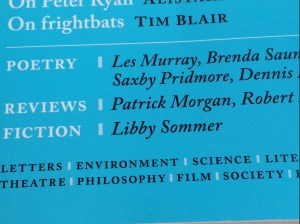
close up of September Quadrant magazine cover

My short story On Valentine’s Day appears in the September Quadrant available now in newsagents and good book stores. It took two years of rewriting before the story was accepted for publication. In Friday’s mail I received my contributor’s copy and a generous cheque. My name is on the front cover. Always a thrill. It took many years of my stories appearing in Quadrant before my name made it to the cover 🙂

The first paragraph of On Valentine’s Day reads:

You had to get out of them occasionally, those Australian country towns with the funny names:  Wagga Wagga, Wee Waa, Woy Woy. Once, after a devastating week wiped out more than $4 trillion from the global stock exchanges, one of the local papers boasted a banner headline:  WAGGA WAGGA WOMAN WEDS WOY WOY TOY BOY. You had to make an effort from time to time to get out, even if it meant flying all the way across the Nullarbor to go to a Valentine’s Day party.


My critique group will recognize the first paragraph. We meet weekly at the New South Wales Writers Centre to give and receive feedback on two pages of our writing. I brought sections of the 4,000 word On Valentine’s Day many times to the Women Writers Network at the Centre. Two dear friends also read the  story and commented. Very much appreciated. More than once my two friends read the whole of On Valentine’s Day and offered constructive criticism. I couldn’t have got the story to a publishable standard without my writing group and my two friends. Lucky me.

Quadrant is a highly regarded literary magazine: http://quadrant.org.au/september-quadrant-now-sale/
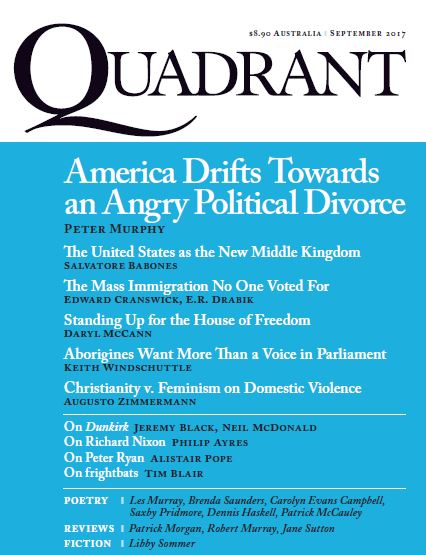
Quadrant blue magazine cover

I can’t emphasize enough how useful it is to have a weekly writing group. I work to that deadline. We take a couple of pages each and have 12 minutes to read and receive feedback. I think of it as ‘off Broadway’ and ‘on Broadway’.  Famous comedians like Jerry Seinfeld and Woody Allen say they test their material out on an ‘off Broadway’ audience before performing ‘on Broadway’.
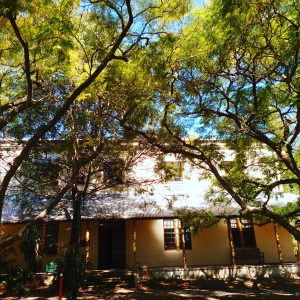
picture of the New South Wales Writers Centre with trees in foreground
New South Wales Writers Centre

What about you? Are you in a writing group? Do you find it useful?
3 Parts to the Feedback Sandwich

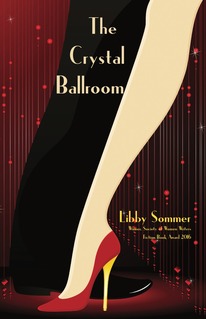
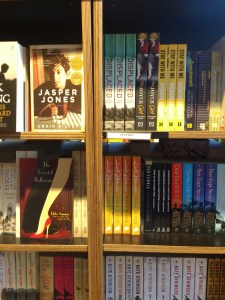
'The Crystal Ballroom' on bookshelf at bookstore

Yesterday, in the Saturday-afternoon feedback group, we began talking about the ‘off with his head’ or ‘out-it-goes’ part of writing.  We acknowledged that as a group we’d always been very supportive and encouraging of each others work.  That is because we are all in it together.  Our critiquing was not telling lies; it was from a place of open-hearted acceptance.  Everything you put on the page is acceptable.

Sometimes someone says, ‘I want a rigorous no-holds-barred assessment of my work.’  But what do you say to them when the writing is dull and boring?  Don’t give up your day job?  It doesn’t sit comfortably with most of us to be directly critical of someone’s writing.  It’s like telling someone how ugly their baby is.  All of us find it hard to separate our writing from ourselves, and are prone to take criticism personally.

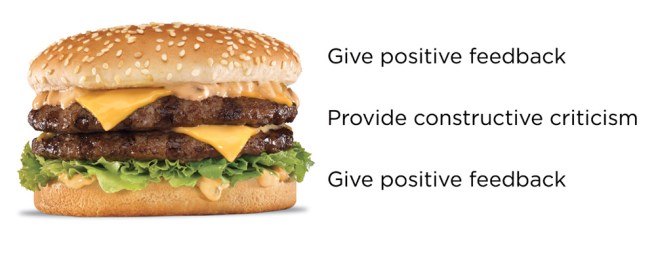
The feedback sandwich is a widely known technique for giving constructive feedback, by ‘sandwiching’ the criticism between two pieces of praise or compliments.

hamburger with cheese and two beef patties

As we passed around copies of our work (just a page or two) we started to address what William Faulkner famously said:

‘In writing, you must kill all your darlings.’

First of all, we looked for the juice in each piece.  Where did the writing come alive?  ‘Get rid of the rest,’ we said.  ‘Off with his head—out it goes.’   It’s very difficult to be this honest, and not everyone wants to hear it.  ‘I simply want gentle support and a few corrections,’ some of us might say.

Be willing to have the courage to look at your work with truthfulness.  It’s good to know where your writing has energy and vitality, rather than to spend a lot of time trying to make something come to life that is dead on the page.   Keep writing.  Something new will come up.    You don’t want to put your readers to sleep by writing a lot of boring sentences.

I hope these suggestions are useful. Do you have any tips you would add? Let me know in the comments and please share this post with a friend if you enjoyed it.  

Jump Cuts: Novel-in-progress

notepad, fountain pen, coffee on table

Below is the first page of my new novel-in-progress. I jump cut from scene to scene. Hopefully this technique is not too confusing. Have you read other novels that use this structure? At the front of the book I’ll be adding a Character List and a Character Map to show how the major characters are connected, to help with the confusion issue. The working title is ‘Missing in Cooper Park’.

1.

The tennis courts at Cooper Park were flooded in the night.  One and a half hours of non-stop rain and hail caused a landslide down through the gully.  Gypsy, a Golden Labrador came along and splashed in fast-flowing Cooper Creek.  Later, the sight of the ruined courts covered in mud and stones, leaves and tree branches like a murky swamp was to shatter Steve’s morning.

2.

Kingston (Carol’s ex) turned up again on the morning after the storm.  He stood on the doorstep looking unbalanced.  His cigarette was burned down to the filter.  His unshaven face was flecked with grey and white.  Carol wouldn’t let him in.  She’d taken his key back.

Carol didn’t tell Steve about Kingston being back but Steve told Carol about the flooded tennis courts.

3.

The moon was high in the darkening dusk as Rosemary puffed past the tennis courts at Cooper Park and continued on up through the steep incline of the gulley swinging a curved stick with tennis ball.

‘Gypsy,’ cried Rosemary.  ‘Gypsy, Gypsy, Gypsy!  Come here.’

Rosemary had purchased Gypsy after overcoming her husband’s resistance.  They were still in mourning over having to put Buddy down.

She’d promised Philip she’d make sure Gypsy didn’t jump up on the newly-cleaned couches.

He knew Rosemary slipped into depression if she didn’t have a dog to love, even though she was the mother of three children.

They’d bought a puppy who looked just like a baby Buddy.  Rosemary would have liked to say it was Buddy re-incarnated but didn’t.  This was precisely the kind of talk that made her husband go red with anger.

It was he who had named the Golden Labrador Gypsy.         The day would soon be night.

4.

Steve lay in bed waiting for Carol’s alarm to go off.  Outside someone had slept all night in a car.

‘Don’t let anyone in,’ demanded Carol in a dream.

Jump Cuts on the Page


close up head & shoulders golden Labrador with pink tongue hanging out

by Libby Sommer:

After a big storm, a golden Labrador goes missing in Sydney’s Cooper Park. This is the scene that begins my new novel-in-progress. I use the search for the dog as a linking device for my characters who are all at a turning point in their lives. I jump cut between discreet scenes (not a continuous narrative) which, unfortunately, is very confusing to the readers in my weekly feedback group.

Transitions are important in fiction because you can’t possibly show or account for every moment in a character’s day, week, or life. A story may stretch over years—readers don’t need to know what happened every minute of those years. A scene transition takes characters and readers to a new location, a new time, or a new point of view.

Scene transitions in movies are easy. The screen fades to black at just the right moment, and when it lights up again, you’re watching a new scene. But how do you write transitions on the page? How does your character get from Point A to Point B without too much boring detail and telling description?

One way to write scene transitions in novels is to Jump Cut. The term usually refers to Cinema.

‘When Jean-Luc Godard popularized the jump cut in 1959 when he made his breakthrough movie Breathless, it has since become a useful and intriguing editing tool. For those of you who don’t know what a jump cut is: (per Wikipedia): “A jump cut is a cut in film editing in which two sequential shots of the same subject are taken from camera positions that vary only slightly. This type of edit causes the subject of the shots to appear to “jump” position in a discontinuous way.”’ – posted by Tyler on Southern Vision

‘The quick-paced German thriller throbs with jump cuts, zoom shots and the speedy sense of an instinctual filmmaker.’ – Charles Taylor, reviewing Run Lola Run

If you want to keep the narrative moving at a fast pace, you can jump cut on the page from scene to scene. But each scene needs to have a beginning a middle and an end.

This technique can be confusing at times, but effective and very readable.

One way to make Jump Cuts on the Page less confusing is to have a strong sense of place. The place is the setting of the story, where the action is located. Setting can be the connective tissue. For me it’s Cooper Park with its cafe, tennis courts, children’s playground, etc.  So, the missing dog, the park and the cafe lessen the confusion, make the transitions smoother – hopefully.

golden Labrador and black and white cat on black leather couch

What about you? Do you find writing scene transitions to be one of the most challenging aspects of writing a novel?

I Am Not the Stories I Tell

two book covers: 'My Year With Sammy' and 'The Crystal Ballroom'

by Libby Sommer:

Sometimes when people read my stories they assume those stories are me.  They are not me, even if I write in the first person.  They were my thoughts and feelings at the time I wrote them.  But every minute we are all changing.  There is a great freedom in this.  At any time we can let go of our old selves and start again.  This is the writing process.  Instead of blocking us, it gives us permission to move on.  Just like in a progressive ballroom dance:  you give your undivided attention to your partner—keep eye contact for the time you are dancing together—but then you move on to the next person in the circle.

The ability to express yourself on the page—to write how you feel about an old lover, a favourite pair of dance shoes, or the memory of a dance on a chilly winter’s night in the Southern Highlands—that moment you can support how you feel inside with what you say on the page.  You experience a great freedom because you are not suppressing those feelings.  You have accepted them, aligned yourself with them.

I have a poem titled ‘This is what it feels like’. It’s a short poem.  I always think of it with gratitude  because I was able to write in a powerful way how it was to be desperate and frightened.  The act of self expression made me feel less of a victim.  But when people read it they often say nothing. I remind myself, I am not the poem, I am not the stories I write.  People react from where they are in their own lives.  That’s the way things are.  The strength is in the act of writing, of putting pen to paper.   Write your stories and poems, show them to the world, then move on.  The stories are not you.  They are moments in time that pass through you.

What is your experience? 

Publication day!


The Crystal Ballroom red and black book cover

My second novel, The Crystal Ballroom is released today! If you’re in Australia you can order a copy from your favourite bricks and mortar bookseller or directly from Ginninderra Press. Print and ebook editions are also available from Amazon, Book Depository and other online booksellers.

‘Libby Sommer lays bare the foibles of human nature in her finely observed stories of love and loss in the singles dance scene. Brilliantly drawn with wit, compassion and poignancy, the characters you meet in The Crystal Ballroom are sure to remind you of someone—maybe even yourself.’ – Jan Cornall, Writer’s Journey.

 ‘Libby Sommer exposes the secret lives of the singles who dance at The Crystal Ballroom. Authentic and powerful, this unique book will be loved by the dancers and readers.’ Frida Kotlyar, ballroom, Latin and Argentine tango dancer.

 ‘Libby Sommer’s fiction has wit but is essentially serious with a subtle but strong underlying pathos, a wry humour and accomplished satirical tone.’ – Amanda Lohrey, Australian writer, and novelist. Patrick White Award winner.

‘Sommer’s existentialism is one of the best and most articulate voices of middle age angst ever.’ –Richard English, novelist and Visiting Lecturer, Brunel University London.

The book will be launched at Collected Works Bookshop in Melbourne on 1 July. Details to follow. If you’re free, come along.

I hope you enjoy reading The Crystal Ballroom: stories of love and loss in the singles dance scene. I’m very excited that My Year With Sammy and The Crystal Ballroom are out there in the public arena – thrilled that my work has finally made it out into the world after all these years.

Fortnightly Story: Art and the Mermaid

mermaid swimming deep in the sea

I wrote this fishy tale as part of a series of stories set in Bondi:  

Once upon a time it came to pass, so it is said, that an enormous storm swept the coast of New South Wales, doing extensive damage to the ocean beaches – destroying jetties, breakwaters and washing away retaining walls.  Mountainous seas swept Bondi Beach and dashed against the cliffs carrying ruin with every roller.  At North Bondi near Ben Buckler a huge submerged block of sandstone weighing 233 tons was lifted ten feet and driven 160 feet to the edge of the cliff where it remains to this day.

One day a Sydney sculptor, Lyall Randolph, looked upon the rock and was inspired.  The sculptor was a dreamer.  Let us, he said, have two beautiful mermaids to grace the boulder.  Using two Bondi women as models he cast the two mermaids in fibreglass and painted them in gold.

Without Council approval and at his own expense he erected The Mermaids for all to see on the giant rock that had been washed up by the sea.  The Mermaids sat side by side on the rock.  One shaded her eyes as she scanned the ocean and the other leant back in a relaxed fashion with an uplifted arm sweeping her hair up at the back of her neck.  Their fishy tails complemented the curves and crevices of their bodies.

It so happened that less than a month after The Mermaids were put in place, one was stolen and damaged.  The Council held many meetings to decide if she should be replaced using ratepayers’ money.  The council had previously objected to the sculptor placing the statues there without Council permission.  The sculptor had argued that before placing The Mermaids in position he had taken all necessary steps to obtain the requisite permission.

The large boulder at Ben Buckler, upon which The Mermaids were securely bolted and concreted, he said, is not in the municipality of Waverley at all.  It is in the sea.  According to the Australian Constitution high-tide mark is the defined limit of the Waverley Council’s domain.  The Maritime Services Board and the Lands Department both advised me they had no objection to the erection of The Mermaids.

One Waverley Alderman said he wished both mermaids had been taken instead of only one.  Someone else said the sculptor didn’t need the Council’s permission to put them there in the first place and the The Mermaids had given Bondi a great attraction without any cost to the Council.  The sculptor said The Mermaids had brought great publicity to the Council.  They had been featured in films, newspapers, television and the National Geographic magazine.

The Mayor used his casting vote in favour of the mermaid and she was re-installed.

For over ten years the two beautiful golden mermaids reclined at Ben Buckler, attracting many thousands of sightseers to the beach.

Poised on the huge boulder they braved the driving storms of winter until one day one was washed off.  The Council saw its opportunity and removed the other.

Today, only the remnants of one mermaid remain – but not on the rock.  In a glass cabinet in Waverley Library at Bondi Junction all that is left of the two beautiful mermaids is a figure with half a face.  There’s a hole instead of a cheek, a dismembered torso, part of an uplifted arm, the tender groove of an armpit.  And there, down below, a complete fish’s tail.

Copyright © 2017 Libby Sommer

First published in Quadrant

Header image:  Creative Commons


Writing Tip: Exercise the Writing Muscle

writer at work at typewriter

Writing as a daily practice is a way to exercise the writing muscle. Like working out at the gym, the more you do it, the more results you get. Some days you just don’t feel like working out and you find a million reasons not to go to the gym or out for a jog, a walk, a swim, a bike ride, but you go anyway. You exercise whether you want to or not. You don’t wait around till you feel the urge to work out and have an overwhelming desire to go to the gym. It will never happen, especially if you haven’t been into health and fitness for a long time and you are pretty out of shape. But if you force yourself to exercise regularly, you’re telling your subconscious you are serious about this and it eventually releases its grip on your resistance. You just get on and do it. And in the middle of the work out, you’re actually enjoying it. You’ve felt the endorphins kick in. When you get to the end of the jog, the walk, the bike ride, the swim, the gym workout or the Pilates, Yoga or Zumba class, you don’t want it to end and you’re looking forward to the next time.

That’s how it is with writing too. Once you’ve got the flow happening, you wonder why it took you so long to turn up on the page. Bum on chair is what I used to say to my writing students. Through daily practice your writing does improve.

In The Artist’s Way, Julia Cameron’s book on discovering and recovering your creative self, she refers to daily writing practice as the morning pages. She recommends writing three pages of longhand, strictly stream-of-consciousness—moving the hand across the page and writing whatever comes to mind every day.

Author of Writing Down the Bones, Natalie Goldberg refers to writing practice as timed exercise. She says you might time yourself for ten minutes, twenty minutes, or longer. It’s up to you, but the aim is to capture first thoughts. “First thoughts have tremendous energy. It is the way the mind first flashes on something. The internal censor usually squelches them, so we live in the realm of second and third thoughts, thoughts on thought, twice and three times removed from the direct connection of the first fresh flash.”

Her rules for writing practice are:

1. Keep your hand moving.
2. Don’t cross out.
3. Don’t worry about spelling, punctuation , grammar.
4. Lose control.
5. Don’t think. Don’t get logical.
6. Go for the jugular.

In Creative Journal Writing, author Stephanie Dowrick refers to the same process as free writing; writing without judging, comparing and censoring. “Continuing to write when you don’t know what’s coming next and especially when you feel your own resistances gathering in a mob to mock you.”

Daily writing practice has been described as clearing the driveway of snow before reaching the front door. In other words, it’s what we do as a warm up before the real writing takes place.  And it’s a way to loosen up and discover our own unique writing ‘voice’.  That’s what publishers are looking for when they read through the slush pile.  The storyteller’s voice.  The authentic writing voice of the author is what engages the reader.

What about you? Are you able to carve some time out of each day to write?

Header Image:  Creative Commons

Exciting news

yoga pose at sunrise

Delighted to announce that my short story ‘Alfresco’ will be published in the May issue of Quadrant magazine. The story is set in a fictional yoga retreat in northern Queensland.

It took me two years of rewriting to finally get this story accepted. I think you’d agree that crafting a successful piece of fiction is not easy.

Header Image:  Creative Commons