Writing Tip: Don’t Tell, but Show

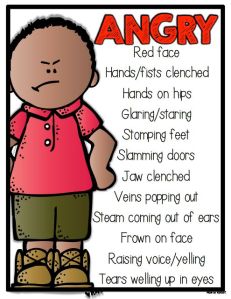
cartoon illustrating angry boy with red face


An old one but a good one: don’t tell, but show.

What does it mean exactly? It means don’t tell us about loneliness (or any of those complex words like dishonesty, secrecy, jealousy, obsession, regret, death, injustice, etc) show us what loneliness is. We will read what you’ve written and feel the bite of loneliness. Don’t tell us what to feel. Show us the situation, and that feeling will be triggered in us.
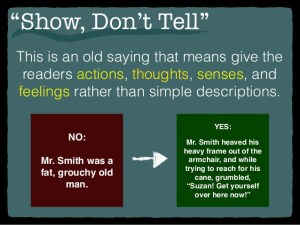
don't tell, but show

When you take your child to school on their first day you may find yourself teary and relieved at the same time. Put into words what you see: the child’s face, the wave at the gate, the other mothers saying their goodbyes, another child coming up to take your son by the hand. We will get what you’re trying to say without you telling us directly.

don't tell, but show 2

When you write, be conscious of the senses and how they connect to the experiences you are writing about. Use sight, sound, smell, touch to create concrete pictures. The senses allow you to get as close as humanly possible in words to the wedding, the sunrise, the dog, the suitcase. It’s the best way to penetrate your story and breathe life into it. Don’t tell us about something, drop deep, enter the story and take us with you.

I hope this post on show, don’t tell is useful. Do you have any tips you would add? Let me know in the comments and please share with a friend if you enjoyed it. 
Writing Tip: Slow things down

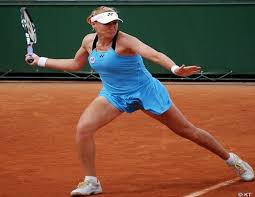
woman in blue tennis dress position to hit big forehand

So, here’s the thing:  choose something in particular to write about. For example, what it felt like having a tennis lesson after a twenty year break. Give us the specifics. Dig deep for the details, but at the same time be aware of the world around you. As you focus on what you’re writing, at the same time stay conscious of your surroundings:  the white painted cane Bentwood chairs in the café, the cool breeze from under the door on your sandaled feet, the hum of the traffic outside. Just add a sentence every now and then about the trees that overlooked the tennis courts while you were having a tennis lesson. When we focus on our writing it is good. Seeing the colour of the sky when you toss the ball gives breathing space to your story.

If you are sitting in Meditation you calm the butterfly mind by paying attention to your thoughts, giving them space by acknowledging them before returning to the breath, in and out through the nostrils. In the act of slowing down your breathing, as best you can, you remain open so that you are receptive to awareness of sounds as they arise: sounds near, sounds far, sounds in front, behind, to the side, above or below.

With every breath you take, you feel the air, the sound of the ball as it hits the racket, the players on the other courts.

To slow myself down in tennis I often use the one, two, three method when serving or when receiving a ball from the server. I count ‘one’ as I prepare the service swing, ‘two’ as I toss the ball and ‘three’ when the racket connects with the ball. When receiving a serve I count ‘one’ as the server tosses the ball, ‘two’ when the server hits the ball, ‘three’ when I hit the ball to return the serve. It helps. My tennis coach Chris at Wentworth Tennis suggested I do this, to slow things down.

We should always be living in the present, not by ignoring the world around us, but by paying close attention. It is not easy to stay alive to ‘what is’. When we slow things down in our writing (and in our tennis), it is good practice.

What about you? Do you find a daily meditation practice assists your writing practice?

The older woman in fiction

men and women dancing

My new book, The Usual Story (Ginninderra Press) is due for release mid 2018. Like The Crystal Ballroom, The Usual Story is set in the dance world and will add to a small pool of literature that addresses the issue of the older woman in fiction.

‘In this unusual book Libby Sommer puts women’s psyches under the microscope – their hopes and dreams, fears and foibles – yet always with a deft touch and a sympathetic ear.‘ –  The Crystal Ballroom review, Women’s Ink! magazine , November 2017

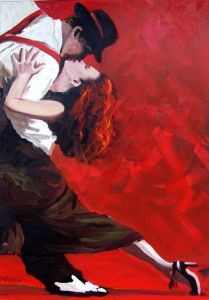
two tango dancers in red black and white

The Usual Story touches on the stages of a woman’s life:  childhood, adolescence, marriage, motherhood and grand-motherhood. It’s created from asides, snapshots, glimpses, encounters and memories. The numbered sections provide a container for the chaos as we meet this woman in mid-life change. How will she come to terms with the truth of her aging in a culture that has very little use for anything that is not young?

Set partly in a seaside suburb of Sydney the story is played out against a response to nature, using the poetry of the Australian seascape to celebrate the beauty of this country. The presence of the sea throughout suggests the enigma at the heart of all life processes, the fact that certain things can’t be captured in words, can only be hinted and gestured at.

Together with many other developed countries, Australia’s population is ageing. Over the course of the 20th century, the proportion of people aged 65 and over has tripled. The baby boomer generation form a prominent part of Australia’s population, and as most fiction readers are women over forty the book will reach a group of people who are increasing in number but who are often ignored in literature. Most novels, if they have a heroine at all, depict her as young and beautiful, whereas middle-aged women, the majority of the readership, have no role models.

Although publication of The Usual Story is still more than six months away, we are looking at ideas for the cover. It will probably have a similar look to The Crystal Ballroom, perhaps in red, black and white with a dance theme. The publisher will make the final decision.

So then comes reviews for the back cover. Any suggestions for reviewers?

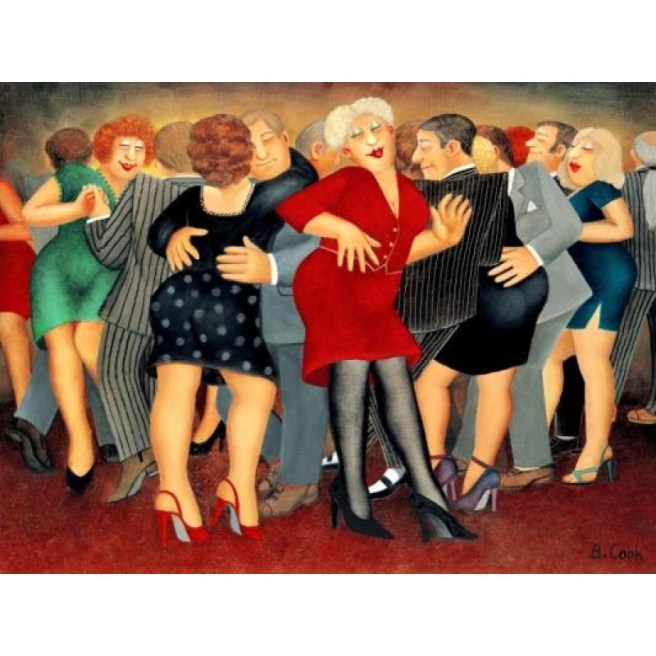
Header image Pinterest:  Beryl Cook – Dancing the Black Bottom


Writing Tip: Tell It Like It Is

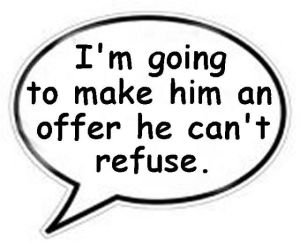
speech bubble: I'm going to make him an offer he can't refuse
Pinterest image

Use clear declarative sentences. This assertive statement was spoken by Don Corleone (played by Marlon Brando) in the movie The Godfather (1972).

It is not uncommon for women and other minority groups to add qualifiers to their statements. Such as ‘Parents need to stop organising every minute of their children’s spare time, don’t you think?’ ‘I loved that movie, didn’t you?’ In our sentence structure we look for reinforcement for our thoughts and opinions. We don’t always make declarative statements. ‘This is wonderful.’ ‘This is a catastrophe.’ We look for re-enforcement from others.

Another thing we do without realising it, is use indefinite modifiers in our speech:  perhaps, maybe, somehow. ‘Maybe I’ll take a trip somewhere.’ As if the speaker has no power to make a decision. ‘Perhaps it will change.’ Again, not a clear declarative sentence like, ‘Yes, nothing stays the same.’

It is important for us as writers to express ourselves in clear assertive sentences. ‘This is excellent.’ ‘It was a red dress.’ Not ‘The thing is, I know it sounds a bit vague, but I think maybe it was a red dress.’ Speaking in declarative sentences is a good rehearsal for trusting your own ideas, in standing up for yourself, for speaking out your truth.

When I write poetry I read through early drafts with a critical eye, taking out indefinite words and modifiers. I attempt to distill each moment to its essence by peeling off the layers until the heart of the poem is exposed. We need to take risks as writers and go deep within ourselves to find our unique voices and express ourselves with clarity.

Even if you are not 100% sure about your own opinions and thoughts write as if you are sure.  Dig deep. Be clear. Don’t be vague on the page. If you keep practicing this, you will eventually reveal your own deep knowing.

I hope this post is useful. Do you have any tips you would add? Let me know in the comments and please share this post with a friend if you enjoyed it. 

Writing Retreat for One


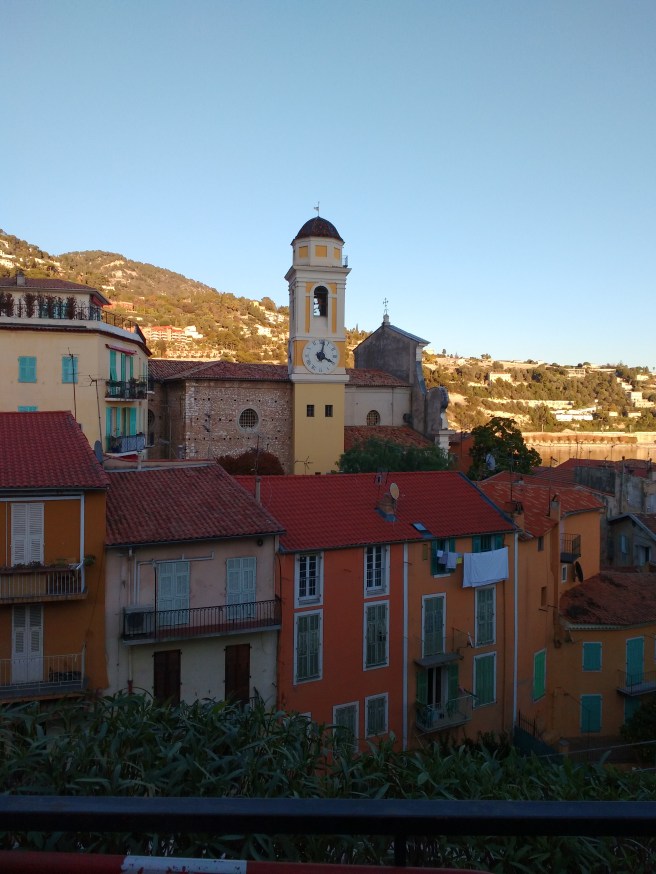
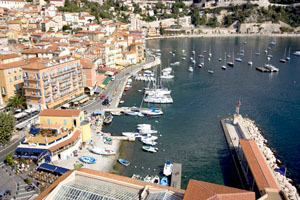
houses and clock in Villefranche sur Mer
Villefranche sur Mer

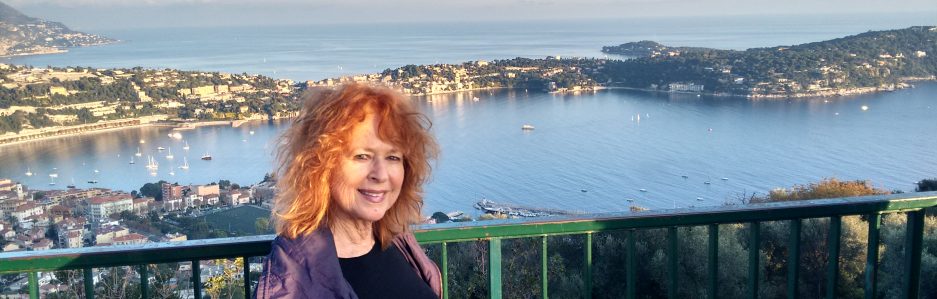
Am preparing for departure to my yearly Writing-Retreat-for-One in the south of France.  I feel very privileged. A month to myself in Villefranche sur Mer, a little fishing village on the Cote d’Azur. I go to this beautiful part of the world to regenerate, to read and to write and to go for long walks along the coast to St Jean Cap Ferrat or up up up to Mont Boron. That is the view from the top of Mont Boron in my profile pic.  Italy to the left and Nice, France to the right.

‘Overlooking one of the world’s loveliest natural quaysides, a privileged anchoring spot for the most prestigious cruise ships, Villefranche-sur-Mer has maintained its historic cachet with its port, the colorful façades of the Old Town and its Citadelle. Jean Cocteau, amongst other artists, fell under the spell of this enchanting site. Bathers and divers especially appreciate its beaches lapped by clear waters.’ – Cote d’Azur tourist information

I am able to fly directly to Nice from Sydney, Australia so I don’t have to pass through big airports like London and Paris. The small apartment I rent in the pedestrians-only fishing village of Villefranche sur Mer is a 20 minute cab ride from Nice. All very manageable considering it takes 24 hours sitting in a plane to fly across the world to get to Nice.

It will be early winter in France (summer time back home in Australia) so rents are slightly cheaper. Also, booking for one month gives a reduced price.

Villefranche-sur-Mer
Riviera Cote d’Azur

I will be seeking inspiration on the French Riviera just like the many artists who’ve been influenced by the sparkling blue waters and scenic streets, many of whom are now regarded as the world’s most influential and important. These include Pablo Picasso, Claude Monet, Paul Cezanne, Henri Matisse and Edvard Munch. Cezanne was the first to arrive in the early 1880s.

‘Since the mid-19th century, the Cote d’Azur (French Riviera) has been luring aristocrats, the rich and the famous, and esteemed artists to its picture perfect cliff-lined coastline. After France acquired this territory in 1859 and then with the arrival of the region’s first railway system, the Riviera rapidly evolved into a popular vacation locale. The Mediterranean seaboard’s mild climate appealed to socialites looking for a retreat away from the dreary winters elsewhere in Northern Europe, and this destination also captivated the hearts of numerous prominent painters. You too can experience the very same radiant sunlight, breathtaking countryside, and vibrant hues that inspired the great works of Cezanne, Monet, Munch, Matisse, Picasso and Van Gogh.’ – auto Europe

We all need time out to regenerate. I’ll be taking with me a print out of the first draft of my novel ‘Lost In Cooper Park’. I hope to make some progress on the book at my Writing-Retreat-for-One in the south of France. The perfect place to call on the writing muse.

Writing Tip: Writing In Cafes

cafes, buses, palm trees, bright blue sky, cars on Bronte Road, Bronte

I am sitting in a café across the road from the beach in Bronte, Sydney.  This stretch of road has a whole row of cafes side by side facing the sea.  This is my favourite kind of writing place:  one where I can sit comfortably for a long period of time and where the owners of the café know me and welcome me.  This café is owned by a Brazilian man and his wife and has comfortable upholstered bench chairs with a direct view of the Pacific Ocean.  For my two-hour writing session my choice could be a traditional Brazilian dish such as Coxinha, Feijoda or Moqueca.  Or a cocktail like Caipirinha or  Caipiroska.  I must order something and it must be more that a Soy Cap, because I plan to be here for a long time.  I want the owners of the café to know I appreciate the time and the space they are allowing me.

However, today I’ll be very boring and order poached eggs on gluten-free bread 🙂

Why go to all this trouble to find a place to write?  Why not just stay home and work?  Because it’s good to get out and have a change of scene.  I find I need to be happy and relaxed when I’m creating on the page and sitting in a café with a pleasant vibe works for me.  Other writers need silence in order to concentrate, but I need to feel I am out and about in a beautiful place having a good time before the creative juices flow.

Strangely, writing in a café can help to increase concentration.  The busy café atmosphere keeps the sensory part of you occupied and content, so that the hidden, quieter part of you that composes and focuses is allowed to do its work.  It is something like being cunning when trying to get a spoonful of food into a resistant toddler’s mouth:  You pretend to be an aeroplane with all the sound effects and movements before landing the food-laden plane inside the child’s mouth.  Mission accomplished.

It is preferable not to turn up at a cafe for a cup of coffee and a writing session at the cafe’s busiest times, like breakfast or lunch. Go at the in between hours when they are pleased to see you because they don’t want the place to look deserted. The beach cafes are places I frequent in spring, autumn and winter, but not much in the summer. Far too crowded and noisy.

There is a real art to finding the right place to write. For me the best place  is one that has comfortable chairs, a pleasant outlook (preferably a view of the the sky and/or green or water). A welcoming, almost homely, atmosphere.

What about you?  Do you need to be at your desk in total silence to write, or do you like to experience the swell of humanity around you—to be surrounded by other human beings?  Or at home listening to a particular kind of music? Let me know in the comments and please share this post with a friend if you enjoyed it. 
The Writing Life


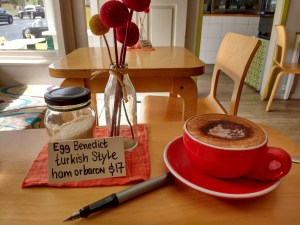
pen and cup of coffee on cafe table

It’s a tough gig being a writer. Lots of isolation, lots of intense concentration, lots of rejection from publishers and agents. Sitting in a cafe with coffee and fountain pen is one of the good bits.

Why do I write? It’s a good question to ask yourself.

  1.  Because I’m a fool.
  2.  Because I want to impress my old school friends.
  3.  So people will like me.
  4.  So my friends will hate me.
  5.  I’m no good at speaking up.
  6.  So I can invent a new way of looking at the world.
  7.  In order to write the great Australian novel and become famous.
  8.  Because I’m a nut case.
  9.  Because I’m an undiscovered literary genius.
  10.  Because I have something to tell.
  11.  Because I have nothing to tell.

Hemingway has said, ‘Not the why, but the what.’ It’s enough to know you want to write. Write.

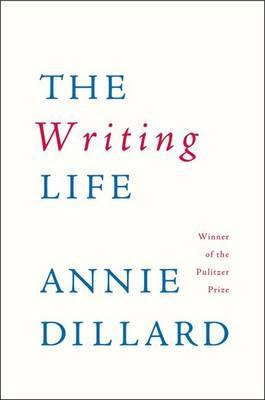
One of my favourite books on the writing process is The Writing Life by Pullitzer Prize winning Annie Dillard. It’s a small and passionate guide to the terrain of a writer’s world.

Book cover 'The Writing Life' by Annie Dillard

 Dillard begins:

When you write, you lay out a line of words. The line of words is a miner’s pick, a woodcarver’s gouge, a surgeon’s probe. You wield it, and it digs a path you follow. Soon you find yourself deep in new territory. Is it a dead end, or have you located the real subject? You will know tomorrow, or this time next year. You make the path boldly and follow it fearfully. You go where the path leads. At the end of the path, you find a box canyon. You hammer out reports, dispatch bulletins. The writing has changed, in your hands, and in a twinkling, from an expression of your notions to an epistemological tool. The new place interests you because it is not clear. You attend. In your humility, you lay down the words carefully, watching all the angles. Now the earlier writing looks soft and careless. Process is nothing; erase your tracks. The path is not the work. I hope your tracks have grown over; I hope birds ate the crumbs; I hope you will toss it all and not look back.

“A writer who waits for ideal conditions under which to work will die without putting a word on paper.” —E. B. White

There is a famous story in the Zen world:

The student, newly arrived at the monastery, asks the master, “What work will I do as I seek enlightenment?”

The master replies, “Chop wood, carry water.”

“And what work will I do once I achieve enlightenment?” asks the student.

“Chop wood, carry water,” says the master.

So how does this stay apply to the writing life? A writer writes. That’s all there is to it.

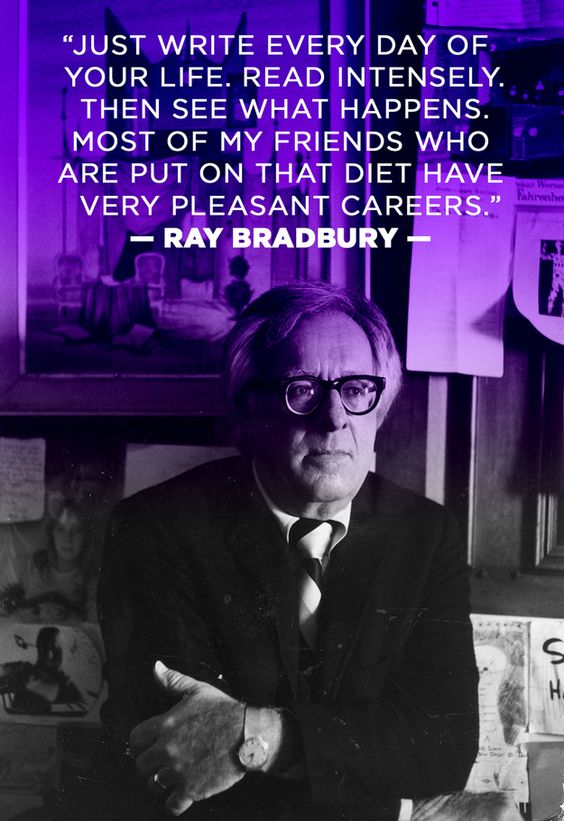
“You’ll fail only if you stop writing.” – Ray Bradbury

Harry Potter book cover

Rowling has said that Harry Potter “simply fell into [her] head” and “all of the details bubbled up in [her] brain.” She “[had] never felt such a huge rush of excitement and [she] knew immediately that it was going to be such fun to write.”

Sounds like a fairy tale beginning to a fairy tale ending, doesn’t it? Perhaps that’s all ordinary readers need to know about Rowling’s path to literary fame, but us writers need more.

We need to know the not-so-glamorous version of what it was like to write Harry Potter. We need to appreciate how disciplined Rowling had to be to develop her idea into seven hefty books. We have to know that she wasn’t lazily sipping mochas for two decades while jotting down a continuous stream of words like a literary Fountain of Youth.

All too often we convince ourselves that we would write more if only we were well-known, or had more money, or could find more time. But none of that is what makes a writer a writer. It’s simply that a writer writes. – The Friendly Editor

writing quote by Ray Bradbury with author pic

That’s why I write. What about you? Let me know in the comments and please share this post with a friend if you enjoyed it. 
One-Page Review of The Crystal Ballroom

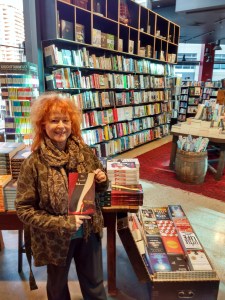
author holding copy of The Crystal Ballroom


I was delighted to see a one-page review of my novel ‘The Crystal Ballroom‘ in October Quadrant magazine (available now in newsagents or on-line).

Penelope Nelson writes:

‘Have you ever heard Latin American music coming from an upper room over a shop, and lingered briefly at the sign about dancing classes? Perhaps you have seen people–a man in built-up shoes or a woman with a surfeit of silver bangles–heading for an old town hall after dark. The world of ballroom dancing and tango lessons has its own etiquette and hierarchies. Libby Sommer’s new fiction ‘The Crystal Ballroom’ lifts the lid on the delights and pitfalls of this fascinating sub-culture …

‘Sommer has great skill in creating atmosphere. The music, the swirling scents of aftershave and sweat, the decor of ballrooms, flats, motels and shared tents are powerfully evoked …

‘Some of the best passages in the book express the joy of dancing:

We’re practising walking the length of the hall. Alberto says that in Buenos Aires students of tango spend two years just learning to walk properly.  “Extend forward,” he says, “step forward, only placing the weight on the extended leg at the last moment, toes pointed, sides of the feet staying connected on the floor.” Then backwards with a straight leg, torso pulled up, chest up and out, and with a partner again, always there’s that special connection with a partner.

Hopefully, this wonderful review by Penelope Nelson will give sales of the book a boost. ‘The Crystal Ballroom’ is available directly from Gininnderra Press, in bookstores, and online.

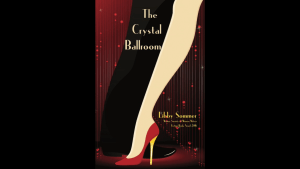
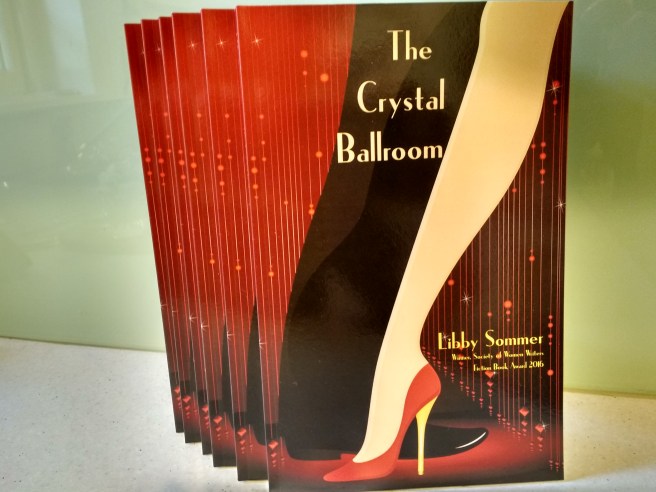
red and black The Crystal Ballroom book cover


Another great review for The Crystal Ballroom


The Crystal Ballroom book covers

I was delighted to read another wonderful and insightful review of The Crystal Ballroom this morning. It’s on Goodreads.

Here’s an extract:

An intriguing book, neither a collection of short stories nor a novel, but a series of vignettes – snapshots − of women, no longer young, but who are determined to wring every drop of verve and excitement out of life. Most of the action is revealed in conversations over coffee or drinks, between the protagonist, Sofia and her friend Ingrid. The ‘glue’ holding the story – or rather stories − together is a love of ballroom dancing and the venues in which such events are held, in particular the Crystal Ballroom, which is a character in its own right. 

In this unusual book Libby Sommer puts women’s psyches under the microscope – their hopes and dreams, fears and foibles – yet always with a deft touch and a sympathetic ear. 

You can read the whole review here.

Writing Tip: A Sense of Place

writing desk with keyboard, screen and printer in front of window
My home office

I’m sitting at my writing desk this spring morning in Sydney thinking about the need to ground our writing in a sense of place, whether landscape or cityscape.

How often have you heard someone say of a book they loved:  ‘I felt like I was there.’

Even if you relocate the poodle tied to a fake-cane chair, the sound of a game of tennis, the table of older men after their regular Sunday match at the café overlooking the tennis courts at Cooper Park that you drank a lemongrass and ginger tea at in Sydney into a café in a story in another state and time, the story will have originality and believability.  ‘But that café was in Sydney, I can’t transport it to Adelaide.’  But you can.  You can have flexibility with specific detail.  The mind is able to transport details, but using actual places that you experienced will give your writing authenticity and truthfulness.  It grounds your work in place, giving life and vitality to your writing, rather than a whole lot of exposition that floats in the air.

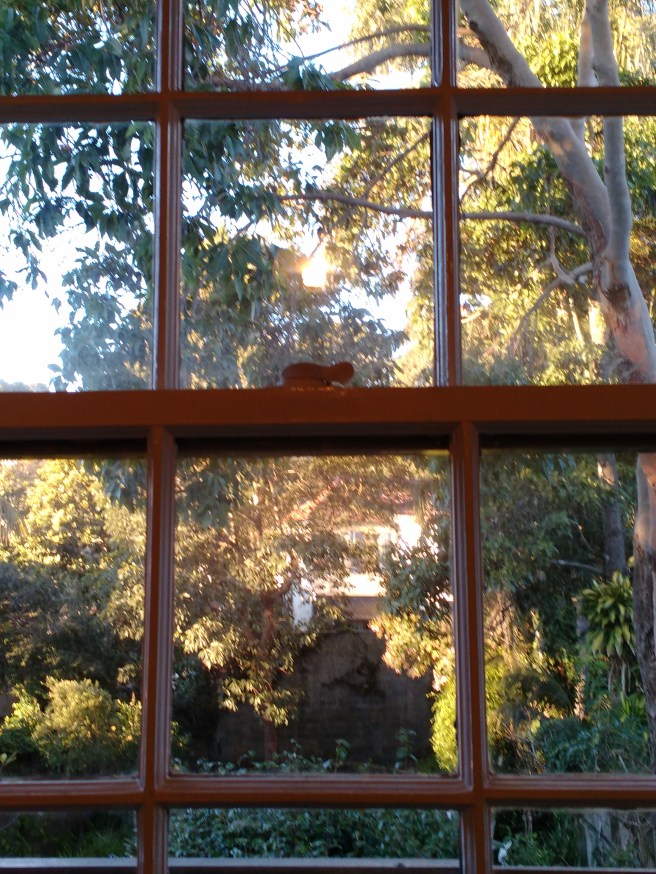
trees and house seen outside French paneled window
looking out the window from my writing desk

 If you don’t create evocative settings, your characters seem to have their conversations in vacuums or in some beige nowhere-in-particular. –  Jerome Stern

Creation of the physical world is as important to your story as action and dialogue.  If your readers can be made to see the hand-knitted socks or the row of vitamins on the kitchen benchtop, the scene becomes alive.  Readers pay attention.  Touch, sound, taste, and smell make readers feel as if their own feet are warm under the cold sheets.

Place situates the story in your reader’s mind.  Fiction that seems to happen in no particular place often seems not to take place at all. –  Jerome Stern

I hope this tip on creating a sense of place is helpful. Do you have any suggestions you would add? Let me know in the comments and please share this post with a friend if you enjoyed it.