The Positive Benefits of Poetry

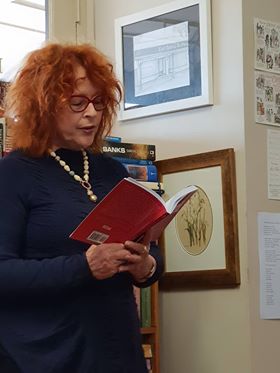
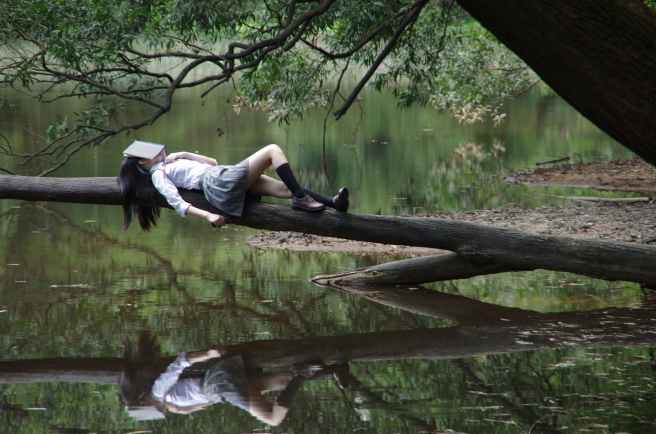
woman reading book

‘Neurologists at Exeter University, using functional magnetic resonance imaging, found that reading poetry activated different brain regions to prose – even the lyrical prose we find in fiction. When the research participants read poetry, it lit up the regions of the brain variously linked to emotion, memory, making sense of music, coherence building and moral decision-making. Poetry, the study’s authors concluded, induces a more introspective, reflective mental state among readers than does prose.’ – Sarah Holland-Batt, Weekend Australian, 21–22 March 2020

If you feel you’re losing your ability to focus on a long book while confined indoors and surrounded by digital screens (as staying up to date on a global pandemic seems to command), try turning to poetry to nurse your shrinking attention span back to life.

In the Time of Pandemic

And the people stayed home.

And they read books, and listened, and rested, and exercised, and made art, and played games, and learned new ways of being, and were still.

And they listened more deeply. Some meditated, some prayed, some danced.

Some met their shadows. And the people began to think differently.

And the people healed.

And, in the absence of people living in ignorant, dangerous, mindless, and heartless ways, the earth began to heal.

And when the danger passed, and the people joined together again, they grieved their losses, and made new choices, and dreamed new images, and created new ways to live and heal the earth fully, as they had been healed.


—Kitty O’Meara

‘Poetry is the quiet music of being human and in these days and nights when our humanity is fully vulnerable and exposed, poetry takes a small step forward. In our separate isolations, a poem is like the Tardis: bigger on the inside. Like spring – to recall TS Eliot – poetry mixes memory and desire.’ – Carol Ann Duffy, The Guardian

This poem by poet  Ian McMillan,  reminds of us of just what we lose each time a library is closed.

Adult Fiction

I always loved libraries, the quiet of them,
The smell of the plastic covers and the paper
And the tables and the silence of them,
The silence of them that if you listened wasn’t silence,
It was the murmur of stories held for years on shelves
And the soft clicking of the date stamp,
The soft clickety-clicking of the date stamp.

In late summer, just as autumn was thinking about
Turning up, and the light outside would be the colour
Of an Everyman cover and the lights in the library
Would be soft as anything, and I’d sit at a table
And flick through a book and fall in love
With the turning of the leaves, the turning of the leaves.

And then at seven o’clock Mrs Dove would say
In a voice that wasn’t too loud so it wouldn’t
Disturb the books “Seven o’clock please …”
And as I was the only one in the library’s late summer rooms
I would be the only one to stand up and close my book
And put it back on the shelf with a sound like a kiss,
Back on the shelf with a sound like a kiss.

And I’d go out of the library and Mrs Dove would stand
For a moment silhouetted by the Adult Fiction,
And then she would turn the light off and lock the door
And go to her little car and drive off into the night
That was slowly turning the colour of ink and I would stand
For two minutes and then I’d walk over to the dark library
And just stand in front of the dark library.

From Talking Myself Home, published by John Murray, 2008

‘The astronomer and poet Rebecca Elson (January 2, 1960–May 19, 1999) was twenty-nine when she was diagnosed with non-Hodgkins lymphoma — a blood cancer that typically invades people in their sixties and seventies. Throughout the bodily brutality of the treatment, throughout the haunting uncertainty of life in remission, she met reality on its own terms — reality creaturely and cosmic, terms chance-dealt by impartial laws — and made of that terrifying meeting something uncommonly beautiful.

Rebecca Elson, 1987

‘When she returned her atoms to the universe, not yet forty, Elson bequeathed to this world 56 scientific papers and a slender, stunning book of poetry titled A Responsibility to Awe (public library) — verses spare and sublime, drawn from a consciousness pulling the balloon string of the infinite through the loop of its own finitude, life-affirming the way only the most intimate contact with death — which means with nature — can be.’ – Maria Popova

Elson’s crowning achievement in verse is the poem “Antidotes to Fear of Death,”

ANTIDOTES TO FEAR OF DEATH
by Rebecca Elson

Sometimes as an antidote
To fear of death,
I eat the stars.

Those nights, lying on my back,
I suck them from the quenching dark
Til they are all, all inside me,
Pepper hot and sharp.

Sometimes, instead, I stir myself
Into a universe still young,
Still warm as blood:

No outer space, just space,
The light of all the not yet stars
Drifting like a bright mist,
And all of us, and everything
Already there
But unconstrained by form.

And sometime it’s enough
To lie down here on earth
Beside our long ancestral bones:

To walk across the cobble fields
Of our discarded skulls,
Each like a treasure, like a chrysalis,
Thinking: whatever left these husks
Flew off on bright wings.

Hope you felt the positive benefits of reading these poems.

Stay safe and be well everyone.
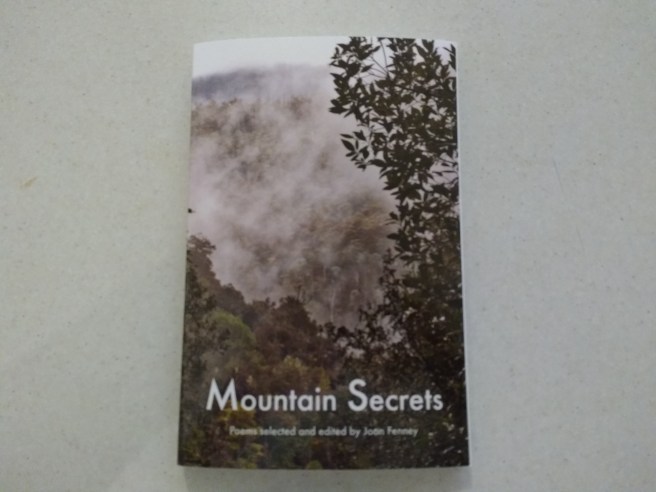
‘Mountain Secrets’ launch

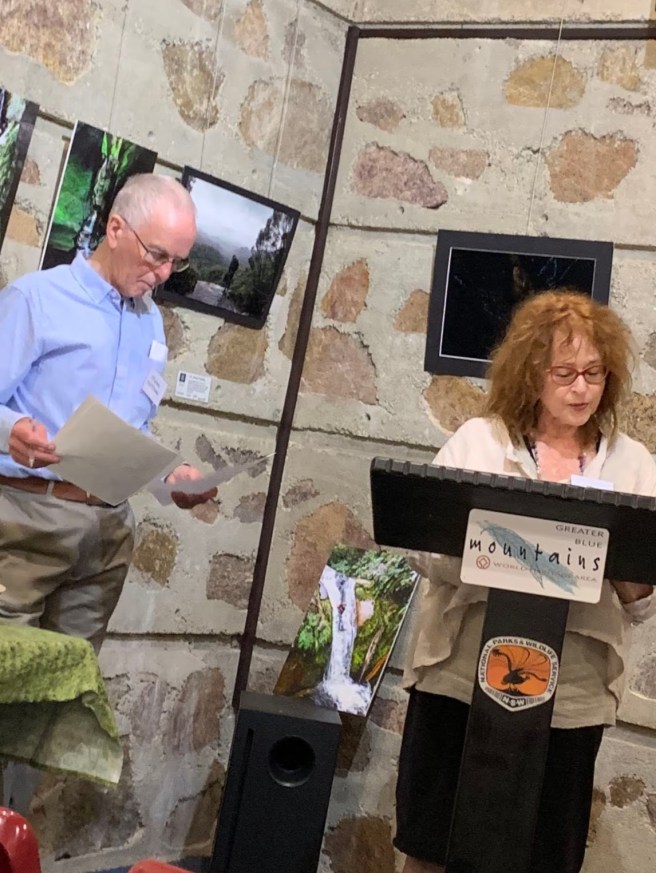
Libby Sommer reading her poem at podium watched by publisher Stephen Matthews
‘Mountains are constant but continually changing. Captive to the seasons, they reveal many faces: in winter shrouded in snow and mist, yet so visibly majestic in the summer months that they appear to touch the sky. Lost in clouds at times, so discernible at others. Places of solitude yet at the mercy of mountaineers who swarm them. Both revered and feared; mystical and earthy; elusive but tangible. Does the mystery of mountains lie in the many paradoxes that surround them? Join more than 150 poets from across Australia in a tantalising exploration of mountains around the world, real and imagined, literal and figurative.’ – Joan Fenney
That’s me reading my prose poem AMBER PUPPY at the Blackheath Heritage Centre for launch last Saturday of the anthology MOUNTAIN SECRETS (Ginninderra Press) edited by Joan Fenney. Publisher Stephen Matthews looks on.
In the Introduction to MOUNTAIN SECRETS Joan Fenney writes:
‘Mountains symbolise many aspects – overcoming obstacles, spiritual elevation, constancy, isolation and challenges. They inspire adventurers to scale their heights, and writers, lyricist, artists and photographers to portray them with words and images.’
A big thank you to Ginninderra Press for inviting all of us GP poets to bring our creativity to this anthology, exploring themes of love, loss, hurt, courage, awe, reverence and solitude. Such an honour to be included.
Mountain Secrets book cover

Short pieces or a novel?


photo of a woman reading book

It’s hard to know sometimes whether to work on the short form or a continuous narrative. I’ve talked about this several times before because it’s a constant dilemma for me. However, the short form seems to be what I do best. Last year I tried very hard to write a genre fiction, but couldn’t get any traction on a story. Instead, I returned to the short form: short stories and prose poems. I am very very happy to say that one story and three poems have now been accepted for publication in Quadrant magazine. Phew! It is such a relief. The previous Literary Editor of Quadrant, poet Les Murray, retired at the end of 2018 and I worried if the new editors of poetry and fiction would like my work. Writing is so subjective. Thank goodness they do.

Have a read of what George Thomas, Deputy Editor of Quadrant writes about the new Literary Editor, Professor Barry Spurr:

The distinguished literary scholar and critic Barry Spurr is the new Literary Editor of Quadrant, succeeding Les Murray who retired at the end of last year after serving in the position since March 1990.

In 2011, Barry was appointed the first Professor of Poetry in Australia, and has long been a world authority on the life and work of T.S. Eliot. His book Anglo-Catholic in Religion: T.S. Eliot and Christianity (Lutterworth, Cambridge, 2010) is widely regarded as the authoritative study in the field.

In an academic career of more than forty years at the University of Sydney, including two stints at St Edmund Hall, Oxford, Barry’s literary scholarship ranged from Early Modern literature to contemporary Australian poetry. He is a leading scholar in the fields of religious literature and liturgical language, most notably in the works of John Donne and T.S. Eliot, and the language, literature and music of the Anglo-Catholic tradition.

His contribution to Australian poetry education and criticism has been prolific, and includes a series of small books for students on individual Australian poets including Kenneth Slessor, Bruce Dawe, Judith Wright, Lee Cataldi, Peter Skrzynecki, Judith Beveridge, Robert Gray, John Tranter, Douglas Stewart, Rosemary Dobson, John Foulcher, as well as the novelist Christopher Koch. In 2007, he was elected Fellow of the Australian College of Educators for his “outstanding contribution to education”.

He has also been a notable public commentator, especially on the role of literature in the modern education system, and the role of the humanities in the modern university. He was the consultant on literature education to the Abbott government’s 2014 review of the national education curriculum chaired by Kevin Donnelly and Ken Wiltshire. Most of his recommendations were included in the final report, which supported “a greater emphasis on dealing with and introducing literature from the western literary canon, especially poetry.”

When he was appointed to his poetry chair by the University of Sydney, Les Murray publicly welcomed him with a letter of congratulations, saying: “It is rare to have a person interested in poetry as distinct from the furthering of what you might call Stasi-type criticism in Australia. In the last 30 years or more, poetry criticism has descended more and more into politics – and a really nasty form of politics.”

In 2016, after he left the University of Sydney, leading literary figures and former academic colleagues from both Sydney and Oxford gave him the festschrift The Free Mind: Essays and Poems in Honour of Barry Spurr (editor Catherine Runcie, publisher Edwin H. Lowe).

Barry has been a contributor to Quadrant since the 1980s. In his most recent piece in March 2018, a review of the collection of Ivan Head’s poetry The Magpie Sermons, he concluded on a severe yet positive note: “In our prosaic and crudely literal world, where just a word in jest in private can be stolen out of context and used to destroy a person’s career and reputation, and where thought, speech and expression are policed and pilloried (even, of all places, in universities), censoring and stifling the imagination, the voices of the poets, contrariwise, enlarging our vision of life and revealing the limitless capacity of language tellingly to communicate that generosity of spirit, have never been more necessary.”

I’m so grateful and blessed to have my work accepted by such a distinguished literary scholar.


A Poem

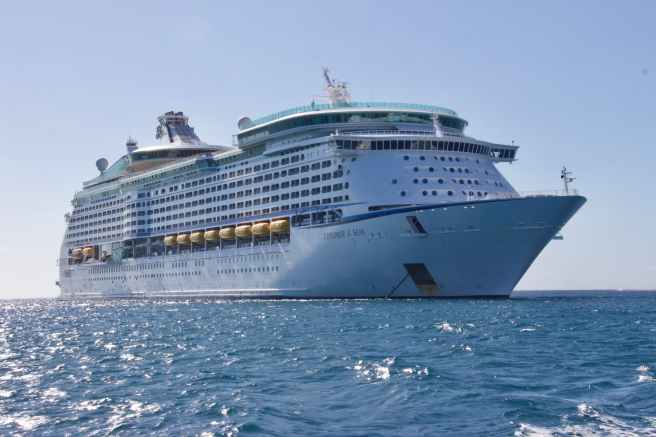
white cruise ship

My poem Between the Islands of the Pacific was first published in June Quadrant magazine with poems by Les Murray, Barbara Fisher, Craig Kurtz, Geoff Page, Dan Guenther, Gabriel Fitzmaurice and Graeme Hetherington. Big thank you to Literary Editor, Les Murray.


Between the Islands of the Pacific

Because by now we know everything is not so blue

out here.


The cities had tipped rubbish into the sea,

and we let them without even noticing.


Not even feeling our breathing clear

as gusts reaching ten knots cleaned up our days.


Not even. Today pure blue sky, blue sea,

out there the horizon drawing a line

below the clouds, the absoluteness of it. Nights

of diesel engines shuddering beneath us.


We lounge on chairs side by side on the deck.

At dusk, we stand at the railing of the ship as the sun

slips into the ocean. In the fresh sea air, their backs turned,

some raise a selfie-stick or light a cigarette while others

stand holding their breath.


Where can we go from here, and how?


Copyright © Libby Sommer 2018


Writing Tip: I am not the stories I tell

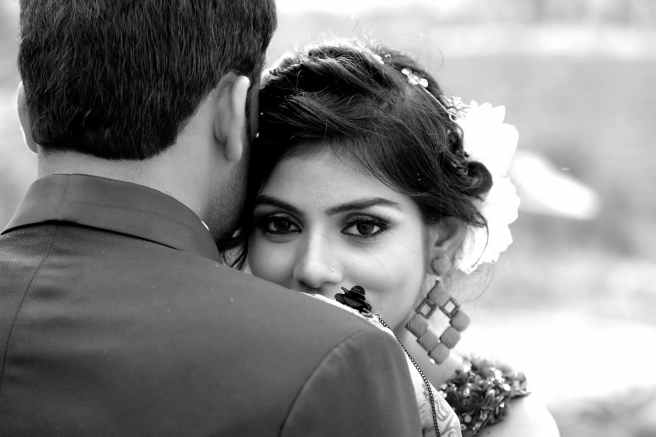
greyscale photo of man and woman
Photo by Mukesh Mohanty on Pexels.com

Sometimes when people read my stories they assume those stories are me.  They are not me, even if I write in the first person.  They were my thoughts and feelings at the time I wrote them.  But every minute we are all changing.  There is a great freedom in this.  At any time we can let go of our old selves and start again.  This is the writing process.  Instead of blocking us, it gives us permission to move on.  Just like in a progressive ballroom dance:  you give your undivided attention to your partner—keep eye contact for the time you are dancing together—but then you move on to the next person in the circle.

The ability to express yourself on the page—to write how you feel about an old lover, a favourite pair of dance shoes, or the memory of a dance on a chilly winter’s night in the Southern Highlands—that moment you can support how you feel inside with what you say on the page.  You experience a great freedom because you are not suppressing those feelings.  You have accepted them, aligned yourself with them.

I have a poem titled ‘This is what it feels like’—it’s a short poem.  I always think of it with gratitude  because I was able to write in a powerful way how it was to be desperate and frightened.  The act of self expression made me feel less of a victim.  But when people read it they often say nothing.   I remind myself, I am not the poem, I am not the stories I write.  People react from where they are in their own lives.  That’s the way things are.  The strength is in the act of writing, of putting pen to paper.   Write your stories and poems, show them to the world, then move on.  The stories are not you.  They are moments in time that pass through you.

I hope these thoughts are useful. Do you have anything you would add? Let me know in the comments and please share this post with a friend if you enjoyed it.

This is what it feels like

When a single thought

may darken and trap,

terrify, for no apparent reason.

A storm

in your senseless head.

Whatever the thought,

think implosion of self

or crazy,

any thought you have held

in tenuous reality

like lead in the chest.

Say you were heavy footed

downhill and it made you

want to stop.  At midnight

driverless cars advance on you,

but where the hell is the brake?

Copyright © 2018 Libby Sommer

Launch of WILD anthology

Libby Sommer reading from Wild poetry anthology

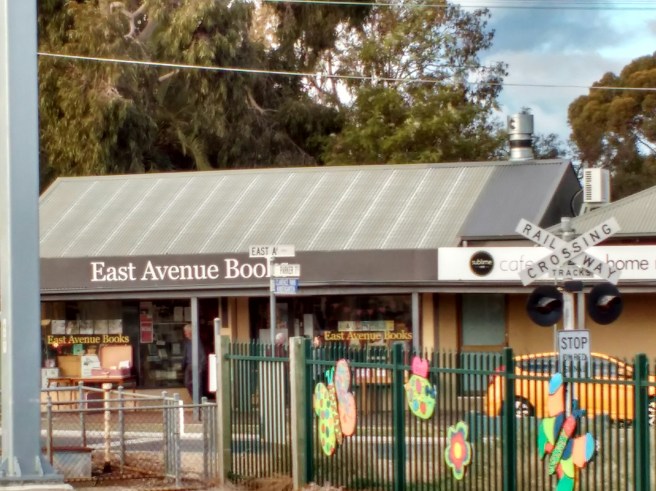
Last weekend I read my poem BRONTE BEACH at the launch of WILD anthology (Ginninderra Press), at East Avenue Bookshop, Clarence Park, Adelaide, South Australia.

More than 50 of us squeezed into the bookshop to read our poems and to listen to 30 different voices from New South Wales, Victoria, The Australian Capital Territory, Queensland, and South Australia.

In the anthology a total of 159 poets from around Australia explore the many facets of ‘wild’ – human, animal, environmental and metaphorical.

Such an honor to be included. This is my contribution to the book:


BRONTE BEACH

The surf’s been hammered by rain,

and along the pavement open-faced cafes wedge side by side:

compact, glass-fronted, in flattened

Art Deco buildings, with competing blackboard menus.

Rain drips from the edge of the canvas awning,

and a smell of fried fish in rancid oil

through the mouth of the sliding door

as an oversized bus pulls in and blocks the view.

Marooned on the swell are wet-suited board riders,

unwavering as the cliff face above the rocks that define the beach.

Beyond the rock pool the waves

remain stubbornly low spreading a shallow calm.

The rain settles, rusting roof racks in the salt air,

and those expired meters will upset the fattened

people-who-lunch in the darkening afternoon.

All day the treacherous ocean scours

the man-made sea pool, where

all-weather swimmers scan the water

for migrating dolphins or whales.

A white-hulled speedboat appears

in the grey-blue, travelling north,

and the black-clad board riders wait,

grounded, legless pigeons who can,

in a heartbeat, fan their iridescent wings.

Squabbling seagulls swoop and dive

and chase each other between the palms,

each white slow and steady flap of wings

picked up by the whiteness of the backwash

of the speed boat out there on the pastel-pink ocean,

disappearing behind the haze.

© Libby Sommer 2018

East Avenue Bookstore, Clarence Park

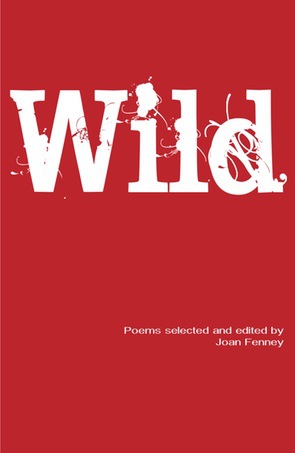
red book cover of Wild anthology

Am very grateful that my poem is in this wonderful anthology of diverse voices.

Thank you Annette Kay Jolly for the photos of me reading.


Writing Tip: A Change of Pace

adult book boring face

I’m very excited to have my poem BETWEEN THE ISLANDS OF THE PACIFIC in the June 2018 Quadrant  alongside some great poets including Les Murray, Barbara Fisher, Craig Kurtz, Geoff Page, Dan Guenther, Gabriel Fitzmaurice, Graeme Hetherington. Just received my copy.

It’s refreshing to have a change of pace. I’ve been having a break from working on long narratives by working on shorter pieces: prose poems, flash fiction, micro fiction, etc. Very gratifying to have one (so far) accepted for publication.

The poem was inspired by a cruise I did earlier this year with my family. At the time I thought I could write a book length story set on a ship, but, as things turned out, couldn’t find enough material to write a long fiction. But I was able to write a poem instead. For this I am very grateful.

Writing poetry, a synopsis or a book blurb are all good things to have to do in terms of improving our ability to compress or distill an idea. Having to get our message across in just a few words. Instagram is a useful for this too. One sentence to connect with our followers. And Facebook.  The very short forms are a good discipline for us writers.

I belong to an excellent weekly feedback poetry group. If it wasn’t for them, I wouldn’t be able to get my poems to that next level of being at a publishable standard. From good to very good. Many gratitudes.

img_20180606_144812215

What about you? Do you experiment with different forms or genres? I find it helps to keep the feeling of desperation at bay. Will I ever be able to write another word? Do you have a perspective you would add? Let me know in the comments and please share this post with a friend if you enjoyed it.

Poem in Anthology

full length of man sitting on floor


red book cover of Wild anthology

Wow! Exciting news. I’m delighted to say my poem BRONTE BEACH has been selected for inclusion in the Ginninderra Press Wild Anthology. The anthology has been edited by Joan Fenney and includes 159 talented poets from across Australia exploring the many facets of ‘wild’ – human, animal, environmental and metaphorical. The book will be launched on 7th July as part of the Ginninderra Press 10 year celebrations in Port Adelaide. I’ll be in Adelaide reading my poem at East Avenue Books in Clarence Park at 2pm on 8th July. Would be great to see you then.

Submit your work

sunrise over the ocean

Arrived home from hospital after joint replacement to the exciting news that my poem, ‘Between the Islands of the Pacific’ has been accepted for publication in Quadrant magazine. Feel honored to have a third poem accepted by this prestigious Australian literary publication. Happy happy me. The hard work pays off.

I do have a box full of rejection letters from over the years. My advice to you is to keep writing, keep reading, keep refining your work, keep submitting. ‘Between the Islands of the Pacific’ was the fifth poem I sent to Quadrant this year. The others were rejected.

P is for persistence and perseverence.

Publication of my new poem

Quadrant cover January-February 2017

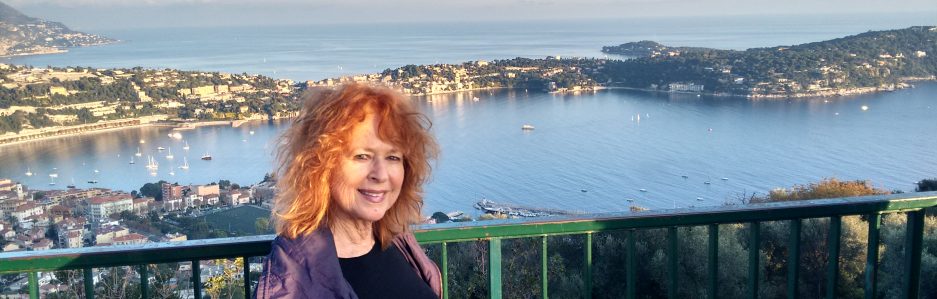
I returned home to Sydney from my Writing-Retreat-For-One on the Cote d’Azur this week to some very good news. There in the mail was my contributor’s copy of Quadrant and a very much appreciated cheque. This is the first time Quadrant has accepted one of my poems for publication. The poem is titled Lying on a Harbour Beach at Noon. I feel honored to be included as a poet in this prestigious Australian literary magazine.