Publication Update

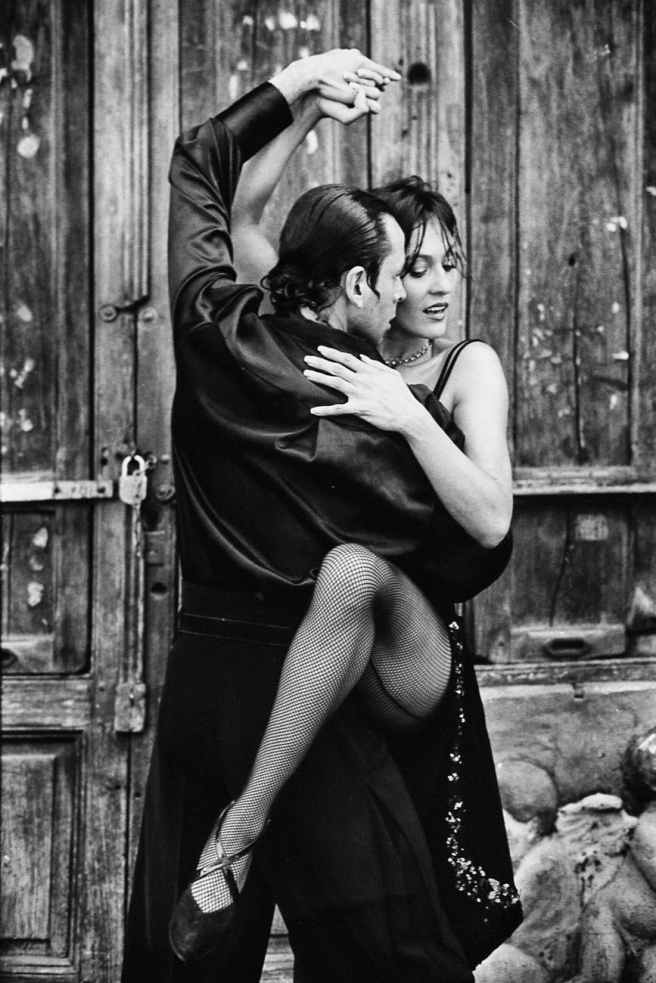
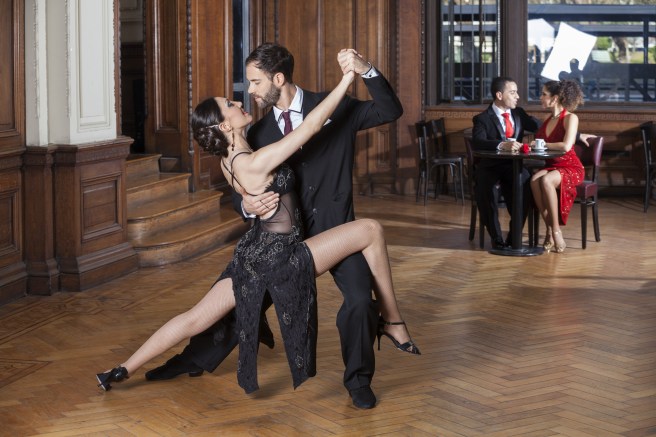
a man and woman dancing tango

On Tuesday I posted the corrected final proofs of THE USUAL STORY back to publisher Ginninderra Press.  Am now in the home stretch for July release of the book, a prequel to THE CRYSTAL BALLROOM.  Have finalised the blurb for back cover and obtained copyright approval for front cover image.

The primary goal of proofing is to serve as a tool for customer verification that the entire job is accurate. Prepress proofing (also known as off-press proofing[4]) is a cost-effective way of providing a visual copy without the expense of creating a press proof.[5] If errors are found during the printing process on press, correcting them can prove very costly to one or both parties involved. – Wikipedia

I’ve been working on the back cover Book Blurb for the last couple of months – rewritten it maybe 300 times. But I think it reads well now, so well I hope readers won’t be disappointed when they read the book itself. Hopefully the story lives up to its promise.

Like THE CRYSTAL BALLROOM, THE USUAL STORY is written in stand-alone discreet chapters. Versions of several of the chapters were first published as short stories in literary journals. I connected the stories by using segments as linking devices: the main character’s telling of the aftermath of a painful affair, her search for understanding of what went before, and the tango. It’s not an easy thing to do. My proof reader said the manuscript reads like a novel, rather than as a collection of linked stories. Am very happy to hear that. Another term for the structure of the book is novel-in-stories.

‘While the short story pauses to explore an illuminated moment, and the novel chugs toward a grand conclusion, the novel in stories moves in spirals and loops, a corkscrewing joy rode.’ – Danielle Trussoni

So corrected final proofs are now with  Ginninderra Press in Adelaide, a small but prestigious publisher.

The next step towards a July release of THE USUAL STORY –  a delicately fragmented story of memory, intrigue and passion –  is the uploading of the files to the printer.

An exciting time.

 

Poem in Anthology

full length of man sitting on floor


red book cover of Wild anthology

Wow! Exciting news. I’m delighted to say my poem BRONTE BEACH has been selected for inclusion in the Ginninderra Press Wild Anthology. The anthology has been edited by Joan Fenney and includes 159 talented poets from across Australia exploring the many facets of ‘wild’ – human, animal, environmental and metaphorical. The book will be launched on 7th July as part of the Ginninderra Press 10 year celebrations in Port Adelaide. I’ll be in Adelaide reading my poem at East Avenue Books in Clarence Park at 2pm on 8th July. Would be great to see you then.

From acceptance to publication


tango-dancing-couple-dance-style-67238.jpeg

Over the weekend I finished correcting first proofs of THE USUAL STORY, a prequel to THE CRYSTAL BALLROOM and posted them back to Ginninderra Press in Adelaide. Final proofs next. We’re on track for a July release. An exciting time.

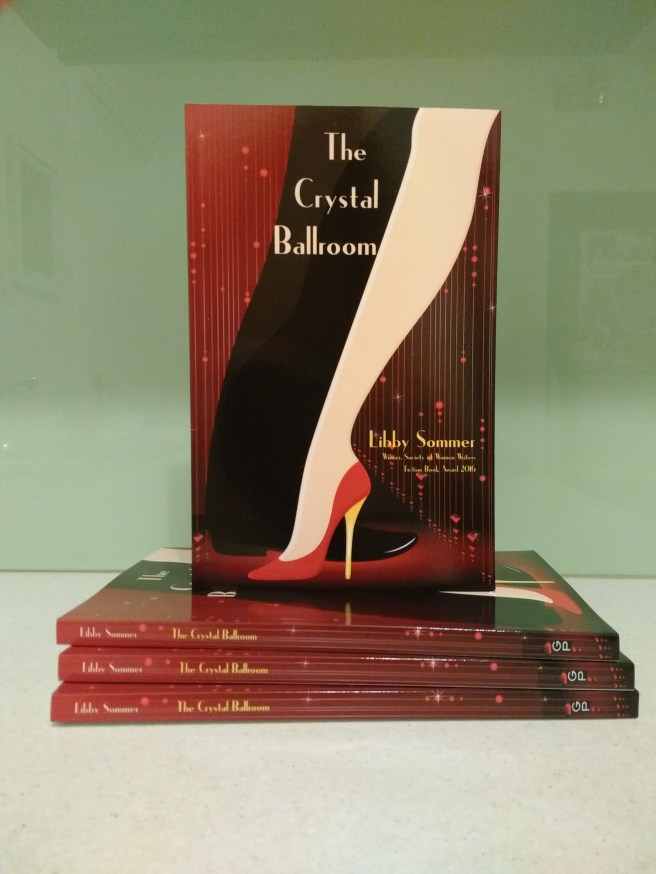
red and black book cover The Crystal Ballroom

This is my third book, so I’m getting used to the publication process. After acceptance of the manuscript by Ginninderra Press in July 2017, eight months later I received first proofs. These I’ve read and corrected.

In the meantime we have been discussing the cover image. Ginninderra Press is a small but prestigious publisher and I’m able to have a say in cover design. This doesn’t happen with a larger publisher. I am also in communication with GP about a quote to put on the front cover to attract sales and a blurb for the back cover.

Blurbs are very difficult to write. I had a chat with my good friend the talented author Susanne Gervay today about my blurb. She did a brainstorming session with me and I think we’ve got a few lines together that will make people want to read the book.

first proofs, The Usual Story by Libby Sommer

Actually, first draft of the blurb is:

‘Tango is the dance of passion, forcing partners into an intimate relationship. Sofia loves the tango, but at the dances she comes face to face with the truth of her aging in today’s culture that has very little use for anything that is not young.’

What do you think? I would LOVE some feedback on this blurb. Please give me your response in the comments section. I’m not a good big-picture-person like my friend Susanne. I’m more into observing small details, which is good for prose and poetry but not for writing pitches and blurbs.

I asked Les Murray, Nobel Prize nominee for Literature, who is also Literary Editor of Quadrant magazine, if he would read THE USUAL STORY and write a couple of lines for the back cover. He said yes. Wow! I’m so delighted. He knows my work well having published many of my short stories and poems. So first proofs have also been posted to him.

So that’s front and back cover. And then there’s a dedication page to be added, acknowledgements, etc.  Versions of three of the chapters in THE USUAL STORY were first published in Quadrant so this needs to be acknowledged.

Then comes final proofs. Professional proof readers are very expensive so I’m hoping my eldest son with the PhD will proof read for me this time. TBA.

Then comes Cover Release with a big beat up on social media. I post regularly on Instagram and Facebook and less regularly on Twitter and Pinterest. I think the cover looks terrific. It’s not all finalised yet. I asked two tango dancers I know for copyright clearance on one of their images that shows the two of them dancing the tango. It’s one of the photos they use to promote their classes at A Little Buenos Aires. They said yes, as long as I acknowledge copyright ownership. So that’s great. It’s an eye-catching pic and would look good beside THE CRYSTAL BALLROOM in book stores.

Next step is pre-release copies announcement. Social media again.

Then details of the release date of THE USUAL STORY. Champagne and balloons and a lot of brouhaha when the book is finally available to the public.

I am not planning to have a book launch. Unfortunately, I am a very shy person and hate being the centre of attention. I had a launch for my first book and it was very successful. However, I was so anxious I thought I was having a heart attack. So not doing that again. A shame because book launches are a good way to sell books. Because this book also features a lot of tango dancing, I am thinking I could have a soft launch at a milonga or tango dance. Just a slice of chocolate cake and a glass of champagne at half time. Or not.

A Fabulous Celebration

Libby Sommer reading from her book while Stephen Matthews listensNicholas Building, Melbourne

A big thank you to my publisher Stephen Matthews, Ginninderra Press for a wonderful afternoon of celebration last Saturday at Collected Works Bookshop in the historic Nicholas Building, Melbourne.

Ginninderra Press celebrated 21 years of independent publishing and Stephen Matthews launched my second book, ‘The Crystal Ballroom’. That’s him looking on as I read the first couple of pages of the story. The room was jam-packed full of people. Hopefully, the audience were enthralled and wanted to read the rest of my book.

Other Ginninderra Press writers from all over Australia attended the event and many read a poem or a story including my new friend, the award-winning Melissa Bruce.

We all enjoyed ourselves drinking wine and eating cheese and other tasty bits and telling each other about our work.

There was a long queue at the cash register at the end of the day 🙂


A novel-in-stories

The Crystal Ballroom red and black book cover

Three weeks till launch of my second novel ‘The Crystal Ballroom’, a novel-in-stories.

So what is a novel-in-stories? One famous example  is Elizabeth Strout’s Pullitzer Prize-winning ‘Olive Kitteridge’.

‘A penetrating, vibrant exploration of the human soul, the story of Olive Kitteridge will make you laugh, nod in recognition, wince in pain, and shed a tear or two.’ – Goodreads

‘In a voice more powerful and compassionate than ever before, New York Times bestselling author Elizabeth Strout binds together thirteen rich, luminous narratives into a book with the heft of a novel, through the presence of one larger-than-life, unforgettable character: Olive Kitteridge.’

yellow Olive Kitteridge book cover

A novel-in-stories, or connected short stories that together become more than the sum of their parts,  is also known as a short story cycle.

‘A short story cycle (sometimes referred to as a story sequence or compositenovel) is a collection of short stories in which the narratives are specifically composed and arranged with the goal of creating an enhanced or different experience when reading the group as a whole as opposed to its individual parts.’ – Wikipedia
The Canterbury Tales book cover
‘A novel-in-stories is a book-length collection of short stories that are interconnected. (One of the very first examples of this genre is The Canterbury Tales; a more recent example is The Girl’s Guide to Hunting and Fishing, by Melissa Bank.) A novel-in-stories overcomes two key challenges for writers: the challenge of writing a novel-length work, and the challenge of publishing a book-length work of unrelated short stories. (Few publishers are willing to publish a short-story collection from an unknown writer.) So, the novel-in-stories helps you sell a story collection like you would a novel—as long as the interconnected nature of the stories is strong and acts as a compelling hook. Another advantage to novels-in-stories is that they afford you the opportunity to publish pieces of your novel in a variety of literary magazines, which might attract the attention of an editor or agent.’ – Writer’s Digest

‘The Crystal Ballroom’ is connected by place and by a first person narrator and her friend who exchange stories about the characters they meet at the singles dances as they search for a regular dance partner.

The book will be launched by Stephen Matthews on 1 July in downtown Melbourne at Collected Works Bookshop at an afternoon of launches and book reading to celebrate Ginninderra Press’s 21 years of independent publishing.

Counting down. Can hardly wait.

Launch Event

red and black The Crystal Ballroom book cover

Save the date! Help me celebrate the launch of my new book on Saturday 1 July. My second novel The Crystal Ballroom – stories of love and loss in the singles dance scene – will be launched by Stephen Matthews at Collected Works Bookshop, Level 1, Nicholas Building, 37 Swanston Street, Melbourne at an afternoon of book launches and readings to celebrate award-winning Ginninderra Press’s  21 years of independent publishing.

Hope to see you then 🙂


Publication day!


The Crystal Ballroom red and black book cover

My second novel, The Crystal Ballroom is released today! If you’re in Australia you can order a copy from your favourite bricks and mortar bookseller or directly from Ginninderra Press. Print and ebook editions are also available from Amazon, Book Depository and other online booksellers.

‘Libby Sommer lays bare the foibles of human nature in her finely observed stories of love and loss in the singles dance scene. Brilliantly drawn with wit, compassion and poignancy, the characters you meet in The Crystal Ballroom are sure to remind you of someone—maybe even yourself.’ – Jan Cornall, Writer’s Journey.

 ‘Libby Sommer exposes the secret lives of the singles who dance at The Crystal Ballroom. Authentic and powerful, this unique book will be loved by the dancers and readers.’ Frida Kotlyar, ballroom, Latin and Argentine tango dancer.

 ‘Libby Sommer’s fiction has wit but is essentially serious with a subtle but strong underlying pathos, a wry humour and accomplished satirical tone.’ – Amanda Lohrey, Australian writer, and novelist. Patrick White Award winner.

‘Sommer’s existentialism is one of the best and most articulate voices of middle age angst ever.’ –Richard English, novelist and Visiting Lecturer, Brunel University London.

The book will be launched at Collected Works Bookshop in Melbourne on 1 July. Details to follow. If you’re free, come along.

I hope you enjoy reading The Crystal Ballroom: stories of love and loss in the singles dance scene. I’m very excited that My Year With Sammy and The Crystal Ballroom are out there in the public arena – thrilled that my work has finally made it out into the world after all these years.

Is it a short story or a novel?

white laptop,black and white notepad and pen, white mobile, on desk

Is a novel a short story that keeps going, or, is it a string of stories with connective tissue and padding, or, is it something else?  Essayist Greg Hollingshead believes that the primary difference between the short story and the novel is not length but the larger, more conceptual weight of meaning that the longer narrative must carry on its back from page to page, scene to scene.

“It’s not baggy wordage that causes the diffusiveness of the novel.  It’s this long-distance haul of meaning.”  Greg Hollingshead

There is a widespread conviction among fiction writers that sooner or later one moves on from the short story to the novel.  When John Cheever described himself as the world’s oldest living short story writer, everyone knew what he meant.

Greg Hollingshead says that every once in a while, to the salvation of literary fiction, there appears a mature writer of short stories—someone like Chekhov, or Munro—whose handling of the form at its best is so undulled, so poised, so capacious, so intelligent, that the short in short story is once again revealed as the silly adjective it is, for suddenly there are simply stories, spiritual histories, narratives amazingly porous yet concentrated and undiffused.

When you decide you want to write in a particular form—a novel, short story, poem—read a lot of writing in that form.  Notice the rhythm. How does it begin?  What makes it complete?  When you read a lot in a particular form, it becomes imprinted inside you, so when you sit at your desk to write, you produce that same structure.  In reading novels your whole being absorbs the pace of the sentences, the setting of scenes, knowing the colour of the bedspread and how the writer gets her character to move down the hallway to the front door.

I sit at my desk thinking about form as a low-slung blanket of cloud blocks my view of the sky.  Through the fly screen I inhale the sweet smell of earth after rain as another day of possibility beckons.

We might write five novels before we write a good one.  I wrote five book-length manuscripts before one was finally accepted for publication. My skill was in the short form. I’d published dozens of short stories in prestigious literary journals. So it made sense that my first book, ‘My Year With Sammy’ (Ginninderra Press) is a novella –  a small book.

What about you? Is your skill in the short form or the marathon?

book cover My Year With Sammy

Click To Buy

Writing Is Not Unlike A Sushi Roll

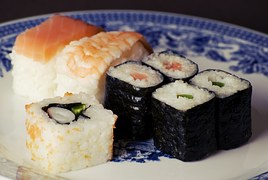
salmon, prawn, rice, seeweed sushi rolls on blue and white dish
Credit: Creative Commons Image

Sometimes there is a person in one of my creative writing classes who is obviously very talented.  I can bring to mind one in particular.  You could sense people holding their breath as she read, and often her hands shook.  The writing process opened her up.  She said she had wanted to write for years.  She was so excited about writing that she straight away wanted to write a book.  I said to her, slow down.  Just practice writing for a while.  Learn what this is all about.

In Japan becoming an itamae of sushi requires years of on-the-job training and apprenticeship.  After five years spent working with a master or teacher itamae, the apprentice is given his first important task, the preparation of the sushi rice.

Writing, like becoming a Sushi Chef,  is a life’s work and takes a lot of practice.  The process is slow, and at the start you are not sure what you are making.

Futomaki  (“thick roll” – rice on inside, nori on the outside)

Uramaki   (“inside-out roll” – rice on outside, nori on the inside)

Temaki     (“hand roll” – cone-shaped roll)

That’s how it was for me.  I thought I could jump in and write a book in 6 months.  In fact, it’s taken me 20 years to write a publishable manuscript:  ‘My Year With Sammy’, the story of a difficult yet sensitive child, published by Ginninderra Press last year.

So cut yourself some slack before you head off on a writing marathon.

Writing is like learning to prepare the rice for sushi:  the apprenticeship is long, and in the beginning you are not sure whether a Futomaki, a Uramaki or a Temaki will be the end result.