I Am Not the Stories I Tell

two book covers: 'My Year With Sammy' and 'The Crystal Ballroom'

by Libby Sommer:

Sometimes when people read my stories they assume those stories are me.  They are not me, even if I write in the first person.  They were my thoughts and feelings at the time I wrote them.  But every minute we are all changing.  There is a great freedom in this.  At any time we can let go of our old selves and start again.  This is the writing process.  Instead of blocking us, it gives us permission to move on.  Just like in a progressive ballroom dance:  you give your undivided attention to your partner—keep eye contact for the time you are dancing together—but then you move on to the next person in the circle.

The ability to express yourself on the page—to write how you feel about an old lover, a favourite pair of dance shoes, or the memory of a dance on a chilly winter’s night in the Southern Highlands—that moment you can support how you feel inside with what you say on the page.  You experience a great freedom because you are not suppressing those feelings.  You have accepted them, aligned yourself with them.

I have a poem titled ‘This is what it feels like’. It’s a short poem.  I always think of it with gratitude  because I was able to write in a powerful way how it was to be desperate and frightened.  The act of self expression made me feel less of a victim.  But when people read it they often say nothing. I remind myself, I am not the poem, I am not the stories I write.  People react from where they are in their own lives.  That’s the way things are.  The strength is in the act of writing, of putting pen to paper.   Write your stories and poems, show them to the world, then move on.  The stories are not you.  They are moments in time that pass through you.

What is your experience? 

Plotter or Pantser?

man in business suit flying

Do you plot your stories, or fly by the seat of your pants?

Plot means the story line.  When people talk about plotting, they mostly mean how to set up the situation, where to put the turning points, and what the characters will be doing in the end.  What happens.

Some fiction writers write organically, not knowing where the story they are writing is going.  These writers say it would be boring to know what’s going to happen next and they lose their enthusiasm to tell the story because they know the outcome already.  They prefer throwing themselves over the edge and into the void.  This method can be very anxiety-producing.  It means you need a lot of faith in your process.

Other writers plan the story before they begin.  In detective fiction the story definitely needs to be worked out beforehand so information can be drip-fed to the reader.

In the past, when creating my short stories, I have worked organically and not known where my stories were headed as I wrote them.  The shorter the piece of fiction, the less need for plot.  You can write an interesting story in which not very much happens.  A woman fights with her neighbour, a man quits his job, or an unhappy family goes out for a pizza.  Simple structures work better than something too complicated when the story is short.

Now that I’m working on a new novel, I feel the need to plot.

“A plot can, like a journey, begin with a single step.   A woman making up her mind to recover her father’s oil paintings may be enough to start.  The journey begins there, as it did for Raskolnikov in Crime and Punishment when he decided to commit his crime,”  Jerome Stern Making Shapely Fiction

The plot grows and develops out of what helps and what hinders the characters’ progress toward their goals.

The Writers’ Workshop   http://www.writersworkshop.co.uk/plot2.html  ask:

  • But how do you know if your draft plot has the right amount of weight to carry an entire novel?
  • What kind of structures work?
  • Is there a quick way to design your own plot template?
  • And how do you handle a book with multiple points of view?

“A good plot has a clear motivation.  It has a clear structure.  It has an outcome.  It has subplots.  A good plot looks something like the plot structure template below,” The Writers’ Workshop.


Motivation Lizzie Bennett wants to marry for love
Plot structure She meets Darcy & Wickham. She dislikes Darcy, and starts to fall for Wickham. Wickham turns out to be a bad guy; Darcy turns out to be a good guy. She now loves Darcy.
Outcome She marries Darcy
Subplot 1 Jane Bennett (Lizzie’s nice sister) loves Bingley. Bingley vanishes. He reappears. They get hitched.
Subplot 2 Lydia Bennett (Lizzie’s idiot sister) elopes with Wickham. She’s recovered.
Subplot 3 An idiot, Mr Collins, proposes marriage to Lizzie. She says no. Her friend, Charlotte, says yes.

Of course, there are a lot of things that the above plot template doesn’t tell you.  It doesn’t say where the novel is set, it doesn’t tell you anything about plot mechanics – it doesn’t say why Lizzie dislikes Mr Darcy, or how Lydia is recovered from her elopement.  It doesn’t have anything to say about character.

The Writers’ Workshop strongly advises us to build a template much like the one above before starting to write.  “If you’ve already started your MS then, for heaven’s sake, get to that template right away.”

So I’ve decided to put myself out of my misery and create a Plot Template for my new novel.  I already had my characters in place and knew what each character wanted.  But now I’m forced into planning an ending, which isn’t a bad thing.  Some writers don’t find the real beginning to their stories until they’ve written the ending.

So that’s all we need:  a beginning, a middle and an end.  Aristotle defined it like this:  a beginning is what requires nothing to precede it, an end is what requires nothing to follow it, and a middle needs something both before and after it.

Easy peasy.  Not.

What about you?  Do you plot or write organically?  What works and what sends you straight to the Writers Block Corner?

Header image:  Creative Commons
Writing Tip: Obsessions

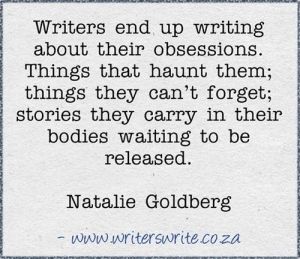
quote about obsessions

Every once in a while, when I’m scratching around for something new to write, I make a list of the things I obsess about.  Thankfully, some of them change over time, but there are always new ones to fill the gap.

It’s true that writers write about what they think about most of the time.  Things they can’t let go: things that plague them; stories they carry around in their heads waiting to be heard.

I used to get my creative writing groups to make a list of the topics they obsess about so they could see what occupied their thoughts during their waking hours.  After you write them down, you can use them for spontaneous writing before crafting them into stories.  They have much power.  This is where the juice is for writing.  They are probably driving your life, whether you realise it or not, so you may as well use them rather than waste your energy trying to push them away.  And you can come back to them repeatedly.

One of the things I’m always obsessing about is relationships:  relationships in families, relationships with friends, relationships with lovers.  That’s what I tend to write about.  I think to myself, Why not?  Rather than repress my obsessions, I explore them, go with the flow.  And life is always changing, so new material keeps presenting  itself.

We are driven by our passions.  Am I the only one who thinks this?  For me these compulsions contain the life force energy.  We can exploit that energy.  The same with writing itself.  I’m always thinking and worrying about my writing, even when I’m on holidays.  I’m driven.

But not all compulsions are a bad thing.  Get involved with your passions, read about them, talk to other people about them and then they will naturally become ‘grist for the mill’.

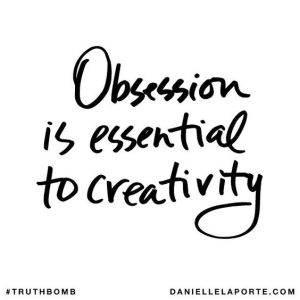
obsession quote in black writing on white card

What about you?  Do you find yourself writing about the same situations over and over again?


Fortnightly Story: Around the World in Fifty Steps

a man and a woman with backpacks looking at Leaning Tower of Pisa

‘Around the World In Fifty Steps’ was my first published short story. It was 2001 and I’d just graduated with an MA in Professional Writing from the University of Technology Sydney. A heady time to see my name in a prestigious literary journal like Overland, progressive culture since 1954. I’d written the story originally as a synopsis for a book. Although the book never did find a publisher, I was very happy that the synopsis was published as a short story. Not bad for a high school dropout. Continue reading

Writing Tip: Taste Life Twice

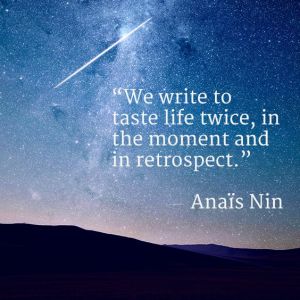
quote by Anais Nin against a night sky

“Writers live twice. They go along with their regular life, are as fast as anyone in the grocery store, crossing the street, getting dressed for work in the morning. But there’s another part of them that they have been training. The one that lives everything a second time. That sits down and sees their life again and goes over it. Looks at the texture and the details.”  – Natalie Goldberg

Fortnightly Story: Undulations

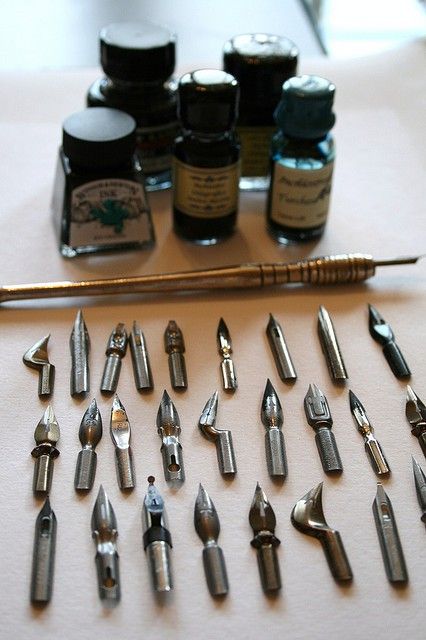
pen nibs and bottles of ink on a desk

So we’re sitting in Melbourne in a vegan restaurant reminiscing about our school days spent mucking-up in the back row and Jane (her hair still red, short and frizzy, like childhood) remembers daring me to ask our fourth-grade Geography teacher how to spell ‘undulations’.  What?  “Because I wanted to write her a message,” Jane says.  “An unsigned message saying, ‘The way you run your hands over your boobs to demonstrate undulations is disgusting,’ but didn’t know how to spell it.  So I told you that if you were my friend, you’d ask her.  You know how she always said to speak up if we couldn’t spell something?  For some reason she wrote the word down on a piece of paper, rather than on the blackboard.  Maybe she thought you couldn’t see properly from our eyrie.  So you got back to your desk and passed it to me under the chair.  I wrote in my best handwriting, ‘Your demonstrations of undulations are gross,’ blotted it carefully, and placed it furtively on her table after the recess bell had cleared the room.  When we filed in after lunch, I saw her open it up.”  Jane taps me on the arm enthusiastically.  “What happened then?” I say.  “Was she angry?  Did she think it was me?  Did I get punished?”  How forgetful was I?  Jane had mastered the art of getting the ink from the inkwell to the pen nib to the paper—no ugly blotches—her cursive as good as a professional engraver’s.  Even after all this time, she still prefers a fountain pen and has a proclivity for setting wrongs right.  “She threw the chalk in the bin, reached for her cardigan and draped it over her shoulders,” Jane says, grinning.  “Yes, that’s what happened.  And she didn’t demonstrate undulating landscapes on herself or on any of us ever again.”

Copyright © 2016 Libby Sommer

First published in Quadrant