
The older woman in fiction

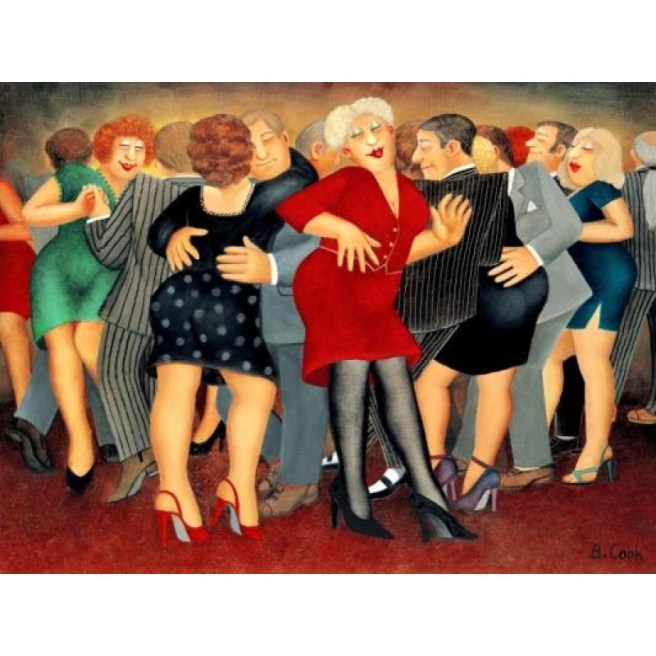
men and women dancing

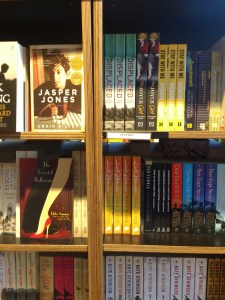
My new book, The Usual Story (Ginninderra Press) is due for release mid 2018. Like The Crystal Ballroom, The Usual Story is set in the dance world and will add to a small pool of literature that addresses the issue of the older woman in fiction.

‘In this unusual book Libby Sommer puts women’s psyches under the microscope – their hopes and dreams, fears and foibles – yet always with a deft touch and a sympathetic ear.‘ –  The Crystal Ballroom review, Women’s Ink! magazine , November 2017

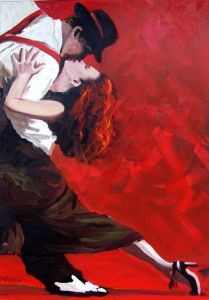
two tango dancers in red black and white

The Usual Story touches on the stages of a woman’s life:  childhood, adolescence, marriage, motherhood and grand-motherhood. It’s created from asides, snapshots, glimpses, encounters and memories. The numbered sections provide a container for the chaos as we meet this woman in mid-life change. How will she come to terms with the truth of her aging in a culture that has very little use for anything that is not young?

Set partly in a seaside suburb of Sydney the story is played out against a response to nature, using the poetry of the Australian seascape to celebrate the beauty of this country. The presence of the sea throughout suggests the enigma at the heart of all life processes, the fact that certain things can’t be captured in words, can only be hinted and gestured at.

Together with many other developed countries, Australia’s population is ageing. Over the course of the 20th century, the proportion of people aged 65 and over has tripled. The baby boomer generation form a prominent part of Australia’s population, and as most fiction readers are women over forty the book will reach a group of people who are increasing in number but who are often ignored in literature. Most novels, if they have a heroine at all, depict her as young and beautiful, whereas middle-aged women, the majority of the readership, have no role models.

Although publication of The Usual Story is still more than six months away, we are looking at ideas for the cover. It will probably have a similar look to The Crystal Ballroom, perhaps in red, black and white with a dance theme. The publisher will make the final decision.

So then comes reviews for the back cover. Any suggestions for reviewers?

Header image Pinterest:  Beryl Cook – Dancing the Black Bottom


Path to Publication

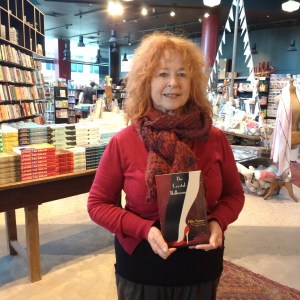
Libby Sommer holding a copy of The Crystal Ballroom in book store

Interviewer: I would like you to tell me about your Path to Publication from first idea to finished book. I’d like to know your inspirations and how The Crystal Ballroom became more than an idea. I also want to know about your writing process. Do you sit at a desk 9-5 or at a cafe during snatched lunches? Did you write the book in a spurt of three months … how long did it take from start to finish? Did you have cold readers, send it to an agent or to a publisher? Were you accepted straight away? How many rewrites and drafts?

Me:  I usually write stories about places and people that I know well. I take real events and characters but change things around and shake them all about and make things up. So, for The Crystal Ballroom, I had been dancing Argentine tango, rock and roll, jive, swing, Latin American and ballroom dancing for many many years. I used to dance five nights a week. I’d drive all over Sydney for technique classes and to dance at different venues. The place, ‘The Crystal Ballroom’, is a fiction but this dance hall becomes a character in the novel. I was inspired by the people I met at the dances and the politics of the ‘dance scene’.

I don’t sit at a desk 9-5 but I am extremely disciplined with my writing. I write 7 days a week. I treat my manuscript like an old friend, someone I need to stay in touch with regularly. I also exercise 7 days a week. So my routine is to go to a cafe before the gym with a print out of the previous day’s work. I edit from this hard copy and write the next scene. After the gym I walk home, type out the revisions, print out, go to another cafe in the afternoon. Repeat the process. I only work in the AM on a Sunday 🙂

It took me 4 years to write The Crystal Ballroom. The chapters are self-contained, so I was able to send some of the discreet episodes out to Quadrant magazine for publication.

I belong to a weekly feedback writing group where we critique each others’ work. So I write to that weekly deadline. In the early years, when I’d finish a manuscript I’d pay an editor or mentor to read it and give me feedback. I’d also ask a couple of friends to read it and give feedback. I never send a manuscript to an agent or a publisher that hasn’t been reworked 20 to 100 times – that includes the rewriting along the way.

My Year With Sammy was my first published book. It was accepted straight away by Ginninderra Press, a small but prestigious publisher (thought-provoking books for inquiring readers). It was my fifth book length manuscript. I had sent the previous books to agents and large publishers. All my confidence had been knocked out of me by all the rejections leading up to the fifth manuscript. Now though, I have Ginninderra Press who seem to like my work. They also published The Crystal Ballroom this year. The Usual Story will be published by Ginninderra Press next year.

It’s an extremely difficult road to publication and some people decide to self-publish rather than continue to be rejected. But other people are able to write a best-seller, an airport book that sells lots of copies, so big publishers like their work very much. Unfortunately, or fortunately, my books are classified as literary fiction, so a very small market. Big publishers are not interested in books that do not conform to the norm. Not enough money in it for them.

I am very grateful to have my small but prestigious publisher.

Writing Tip: A Sense of Place

writing desk with keyboard, screen and printer in front of window
My home office

I’m sitting at my writing desk this spring morning in Sydney thinking about the need to ground our writing in a sense of place, whether landscape or cityscape.

How often have you heard someone say of a book they loved:  ‘I felt like I was there.’

Even if you relocate the poodle tied to a fake-cane chair, the sound of a game of tennis, the table of older men after their regular Sunday match at the café overlooking the tennis courts at Cooper Park that you drank a lemongrass and ginger tea at in Sydney into a café in a story in another state and time, the story will have originality and believability.  ‘But that café was in Sydney, I can’t transport it to Adelaide.’  But you can.  You can have flexibility with specific detail.  The mind is able to transport details, but using actual places that you experienced will give your writing authenticity and truthfulness.  It grounds your work in place, giving life and vitality to your writing, rather than a whole lot of exposition that floats in the air.

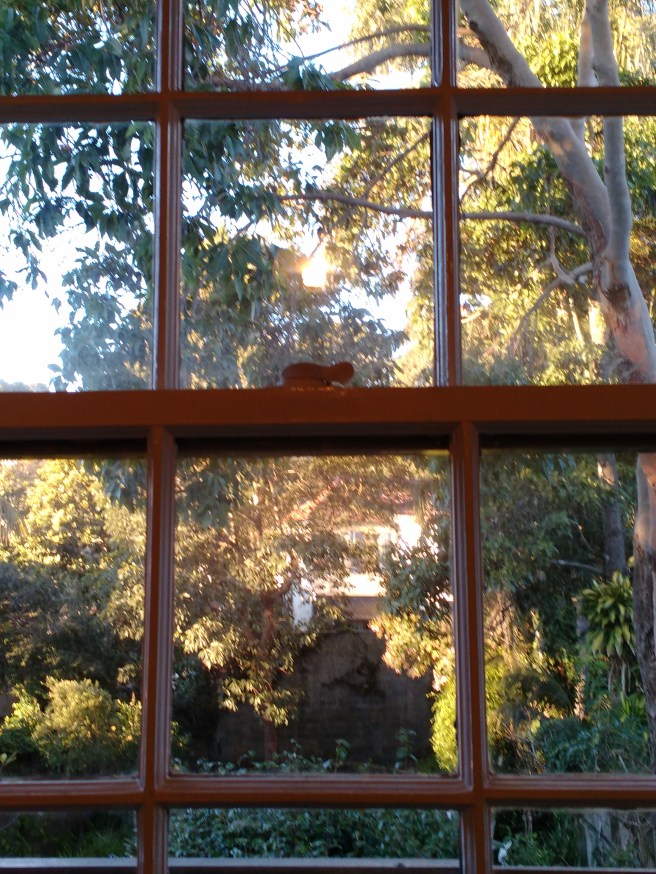
trees and house seen outside French paneled window
looking out the window from my writing desk

 If you don’t create evocative settings, your characters seem to have their conversations in vacuums or in some beige nowhere-in-particular. –  Jerome Stern

Creation of the physical world is as important to your story as action and dialogue.  If your readers can be made to see the hand-knitted socks or the row of vitamins on the kitchen benchtop, the scene becomes alive.  Readers pay attention.  Touch, sound, taste, and smell make readers feel as if their own feet are warm under the cold sheets.

Place situates the story in your reader’s mind.  Fiction that seems to happen in no particular place often seems not to take place at all. –  Jerome Stern

I hope this tip on creating a sense of place is helpful. Do you have any suggestions you would add? Let me know in the comments and please share this post with a friend if you enjoyed it.

I Wrote 5 Books Before Publication

fountain pen on page of writing

I wrote five book length manuscripts before one was finally accepted for publication by Ginninderra Press, a small but prestigious publisher. Rejection didn’t stop me from writing.

‘You write, you re-write, you edit, you tweak and when it’s perfect, you submit. And then you get rejected. Many times, maybe by a person who didn’t even read it. Rejection is painful because it instantly devalues your creation. Someone says this isn’t worth publishing. Rejectees, take heart. Many now-famous writers have been rejected before they made it big. Stephen King wrote his first novel, “Carrie,” and it was rejected 30 times. Rejections were so devastating that he threw the manuscript in the trash. “Chicken Soup for the Soul” was rejected 140 times. Margaret Mitchell’s “Gone With The Wind” was rejected by 38 publishers (and she did give a damn). James Joyce’s “Dubliner” was rejected 18 times and took nine years before it reached publication.’ – Ronald H. Balson

There are days when you feel like giving up and is seems that you are not making any progress. It’s during days like these, that sheer determination and persistence is all that’s left.

“Nothing in this world can take the place of persistence. Talent will not; nothing is more common than unsuccessful people with talent. Genius will not; unrewarded genius is almost a proverb. Education will not; the world is full of educated derelicts. Persistence and determination alone are omnipotent. The slogan “press on” has solved and always will solve the problems of the human race.” – Calvin Coolidge

Some writers continually submit the same manuscript until it is accepted. Others chose to do a more polished draft before sending it out again. A few learn from the lessons of submissions, to write a completely new book. What we all have in common is a persistence to never give up on our dream. Some decide to self-publish.

I’m very happy to say that persistence has paid off for me, and a third manuscript has now been accepted for publication by Ginninderra Press . ‘The Usual Story’ will be available in bookstores and online in July 2018.

As the saying goes: a writer writes. Writers continue to write.

A dear friend, who is also a former mentor, wrote this to me recently:  Libby, I’m not sure how you found your way to Ginninderra, but what a blessing for you and for readers! I was thinking the other day of your commitment for so many years when the door to publishing a book just wouldn’t open, and how much I admire your resolve and, of course, your amazing talent! Wonderful that the books are in the world now.

I hope this reminder about persistence is helpful. Do you have any tips you would add? Let me know in the comments and please share this post with a friend if you enjoyed it.


3 Parts to the Feedback Sandwich

'The Crystal Ballroom' on bookshelf at bookstore

Yesterday, in the Saturday-afternoon feedback group, we began talking about the ‘off with his head’ or ‘out-it-goes’ part of writing.  We acknowledged that as a group we’d always been very supportive and encouraging of each others work.  That is because we are all in it together.  Our critiquing was not telling lies; it was from a place of open-hearted acceptance.  Everything you put on the page is acceptable.

Sometimes someone says, ‘I want a rigorous no-holds-barred assessment of my work.’  But what do you say to them when the writing is dull and boring?  Don’t give up your day job?  It doesn’t sit comfortably with most of us to be directly critical of someone’s writing.  It’s like telling someone how ugly their baby is.  All of us find it hard to separate our writing from ourselves, and are prone to take criticism personally.

The feedback sandwich is a widely known technique for giving constructive feedback, by ‘sandwiching’ the criticism between two pieces of praise or compliments.

hamburger with cheese and two beef patties

As we passed around copies of our work (just a page or two) we started to address what William Faulkner famously said:

‘In writing, you must kill all your darlings.’

First of all, we looked for the juice in each piece.  Where did the writing come alive?  ‘Get rid of the rest,’ we said.  ‘Off with his head—out it goes.’   It’s very difficult to be this honest, and not everyone wants to hear it.  ‘I simply want gentle support and a few corrections,’ some of us might say.

Be willing to have the courage to look at your work with truthfulness.  It’s good to know where your writing has energy and vitality, rather than to spend a lot of time trying to make something come to life that is dead on the page.   Keep writing.  Something new will come up.    You don’t want to put your readers to sleep by writing a lot of boring sentences.

I hope these suggestions are useful. Do you have any tips you would add? Let me know in the comments and please share this post with a friend if you enjoyed it.  

Connected short stories

exterior State Library of NSW
State Library of New South Wales Sydney

I had a five minute spot last Wednesday at the Society of Women Writers monthly lunch meeting at the State Library of NSW in Sydney. I was given the opportunity to stand up in front of a microphone and speak about my two books. It was a chance to confront my fear of public speaking and tell everyone ‘The Crystal Ballroom’ (Ginninderra Press) had been launched the previous week in Melbourne. I’d only spoken in public twice before, at the two launches. It was a very scary experience. Apparently, most of us fear speaking in front of an audience more than death. So, even though I appeared confident, my hands kept up their shaking for some time after I sat down again. But very pleased with myself for doing it. Those more experienced than me tell me it gets easier every time.

Anyway, the thrust of what I said was that I am transitioning from short story writer to novelist. My debut novel, ‘My Year With Sammy’ (Ginninderra Press) is really a novella and ‘The Crystal Ballroom’ a collection of short stories that I’ve linked together with an “I” narrator and the narrator’s friend, Ingrid. The two women get together over a coffee to talk about the dances they go to, who they see there, and who is sleeping with who, and who’s paying the rent 🙂

It was a device I used to turn a collection of short stories into a novel.

What about you? Have you been able to successfully change the form you write in?


I Am Not the Stories I Tell

two book covers: 'My Year With Sammy' and 'The Crystal Ballroom'

by Libby Sommer:

Sometimes when people read my stories they assume those stories are me.  They are not me, even if I write in the first person.  They were my thoughts and feelings at the time I wrote them.  But every minute we are all changing.  There is a great freedom in this.  At any time we can let go of our old selves and start again.  This is the writing process.  Instead of blocking us, it gives us permission to move on.  Just like in a progressive ballroom dance:  you give your undivided attention to your partner—keep eye contact for the time you are dancing together—but then you move on to the next person in the circle.

The ability to express yourself on the page—to write how you feel about an old lover, a favourite pair of dance shoes, or the memory of a dance on a chilly winter’s night in the Southern Highlands—that moment you can support how you feel inside with what you say on the page.  You experience a great freedom because you are not suppressing those feelings.  You have accepted them, aligned yourself with them.

I have a poem titled ‘This is what it feels like’. It’s a short poem.  I always think of it with gratitude  because I was able to write in a powerful way how it was to be desperate and frightened.  The act of self expression made me feel less of a victim.  But when people read it they often say nothing. I remind myself, I am not the poem, I am not the stories I write.  People react from where they are in their own lives.  That’s the way things are.  The strength is in the act of writing, of putting pen to paper.   Write your stories and poems, show them to the world, then move on.  The stories are not you.  They are moments in time that pass through you.

What is your experience? 

Plotter or Pantser?

man in business suit flying

Do you plot your stories, or fly by the seat of your pants?

Plot means the story line.  When people talk about plotting, they mostly mean how to set up the situation, where to put the turning points, and what the characters will be doing in the end.  What happens.

Some fiction writers write organically, not knowing where the story they are writing is going.  These writers say it would be boring to know what’s going to happen next and they lose their enthusiasm to tell the story because they know the outcome already.  They prefer throwing themselves over the edge and into the void.  This method can be very anxiety-producing.  It means you need a lot of faith in your process.

Other writers plan the story before they begin.  In detective fiction the story definitely needs to be worked out beforehand so information can be drip-fed to the reader.

In the past, when creating my short stories, I have worked organically and not known where my stories were headed as I wrote them.  The shorter the piece of fiction, the less need for plot.  You can write an interesting story in which not very much happens.  A woman fights with her neighbour, a man quits his job, or an unhappy family goes out for a pizza.  Simple structures work better than something too complicated when the story is short.

Now that I’m working on a new novel, I feel the need to plot.

“A plot can, like a journey, begin with a single step.   A woman making up her mind to recover her father’s oil paintings may be enough to start.  The journey begins there, as it did for Raskolnikov in Crime and Punishment when he decided to commit his crime,”  Jerome Stern Making Shapely Fiction

The plot grows and develops out of what helps and what hinders the characters’ progress toward their goals.

The Writers’ Workshop   http://www.writersworkshop.co.uk/plot2.html  ask:

  • But how do you know if your draft plot has the right amount of weight to carry an entire novel?
  • What kind of structures work?
  • Is there a quick way to design your own plot template?
  • And how do you handle a book with multiple points of view?

“A good plot has a clear motivation.  It has a clear structure.  It has an outcome.  It has subplots.  A good plot looks something like the plot structure template below,” The Writers’ Workshop.


Motivation Lizzie Bennett wants to marry for love
Plot structure She meets Darcy & Wickham. She dislikes Darcy, and starts to fall for Wickham. Wickham turns out to be a bad guy; Darcy turns out to be a good guy. She now loves Darcy.
Outcome She marries Darcy
Subplot 1 Jane Bennett (Lizzie’s nice sister) loves Bingley. Bingley vanishes. He reappears. They get hitched.
Subplot 2 Lydia Bennett (Lizzie’s idiot sister) elopes with Wickham. She’s recovered.
Subplot 3 An idiot, Mr Collins, proposes marriage to Lizzie. She says no. Her friend, Charlotte, says yes.

Of course, there are a lot of things that the above plot template doesn’t tell you.  It doesn’t say where the novel is set, it doesn’t tell you anything about plot mechanics – it doesn’t say why Lizzie dislikes Mr Darcy, or how Lydia is recovered from her elopement.  It doesn’t have anything to say about character.

The Writers’ Workshop strongly advises us to build a template much like the one above before starting to write.  “If you’ve already started your MS then, for heaven’s sake, get to that template right away.”

So I’ve decided to put myself out of my misery and create a Plot Template for my new novel.  I already had my characters in place and knew what each character wanted.  But now I’m forced into planning an ending, which isn’t a bad thing.  Some writers don’t find the real beginning to their stories until they’ve written the ending.

So that’s all we need:  a beginning, a middle and an end.  Aristotle defined it like this:  a beginning is what requires nothing to precede it, an end is what requires nothing to follow it, and a middle needs something both before and after it.

Easy peasy.  Not.

What about you?  Do you plot or write organically?  What works and what sends you straight to the Writers Block Corner?

Header image:  Creative Commons

Writing Tip: Obsessions

quote about obsessions

Every once in a while, when I’m scratching around for something new to write, I make a list of the things I obsess about.  Thankfully, some of them change over time, but there are always new ones to fill the gap.

It’s true that writers write about what they think about most of the time.  Things they can’t let go: things that plague them; stories they carry around in their heads waiting to be heard.

I used to get my creative writing groups to make a list of the topics they obsess about so they could see what occupied their thoughts during their waking hours.  After you write them down, you can use them for spontaneous writing before crafting them into stories.  They have much power.  This is where the juice is for writing.  They are probably driving your life, whether you realise it or not, so you may as well use them rather than waste your energy trying to push them away.  And you can come back to them repeatedly.

One of the things I’m always obsessing about is relationships:  relationships in families, relationships with friends, relationships with lovers.  That’s what I tend to write about.  I think to myself, Why not?  Rather than repress my obsessions, I explore them, go with the flow.  And life is always changing, so new material keeps presenting  itself.

We are driven by our passions.  Am I the only one who thinks this?  For me these compulsions contain the life force energy.  We can exploit that energy.  The same with writing itself.  I’m always thinking and worrying about my writing, even when I’m on holidays.  I’m driven.

But not all compulsions are a bad thing.  Get involved with your passions, read about them, talk to other people about them and then they will naturally become ‘grist for the mill’.

obsession quote in black writing on white card

What about you?  Do you find yourself writing about the same situations over and over again?