Writing Tip: Flash Fiction

Have you tried flash fiction yet? What does flash fiction mean?

‘A flash fiction piece is a self-contained story (beginning/middle/end), 1,000 words or less, that can entertain, intrigue, and satisfy a reader during an F5 tornado. That’s it. No genre restrictions, age requirements, or prior experience needed. Just quick, clean stories.’ – Writer’s Digest

‘Part poetry, part narrative, flash fiction–also known as sudden fictionmicro fiction, short short stories, and quick fiction—is a genre that is deceptively complex.’ – The Review Review

‘Flash fiction is a fictional work of extreme brevity that still offers character and plot development. Identified varieties, many of them defined by word count, include the six-word story, the 280-character story, the “dribble”, the “drabble”, “sudden fiction”, flash fiction, nanotale, and “micro-story”.’ – Wikipedia

I like writing in a short form. I’ve been told I have the sensibility of a poet because I have the ability to distill, so the short form suits me. You may be more of a long distance runner, rather than a sprinter, and prefer the long form of a novel.

Have a read of my flash fiction titled It’s Pot Luck When You Move Into A Unit, winner of the short short fiction UTS Alumni Competition a few years ago. Hope you enjoy it.

It’s Pot Luck When You Move Into a Unit

A nice quiet weekend? the woman downstairs said.  What do you mean? I said, through the open back door, a bag of rubbish in each hand.  She smoothed her ironing on the board and said, They weren’t around over the weekend—with the baby.  She looked happy.  I’m lucky living on the top floor, I said.  She nodded towards the other side of the building.  Jim isn’t so luckyhe’s got the woman upstairs, she said, When he plays the piano and she thumps on the floor.   She put the iron back on its stand.  She’s heavy-footed, that woman.  Bang, bang, bang.   I hear her coming down the stairs every morning at six, and the slam of the front door. 

That night the wind knocked my vase off the window ledge.  I lay awake wondering if the noise of the smash had woken up the people underneath—the ones whose barbecuing sends smoke and disgusting meat smells into my unit.  Nothing clings to your furniture like the stink from last week’s burnt fat.   Sorry about the crash, I muttered to the floor, It was the wind.

Copyright © Libby Sommer 2018

Why not try your hand at writing in this short form and enter a flash fiction competition. Good luck.

Writing Tip: Spirituality and Creativity

What is the relationship between spirituality and creativity? The discipline and focused attention cultivated through meditation help us do one thing at a time, totally and absolutely, which greatly enhances our writing.

‘Contemplative practice, daily nature walks, and still, silent listening can be among the best natural meditations. They help clarify our minds and uplift the heart, dissolving our ordinary preoccupations and mental states that dissipate the fertile spirit within. Such daily disciplines are also excellent tonics for our agitated, febrile brains and weary bodies. When we ease into the realm of non-doing–what Chinese Buddhists called wu wei–there is more room for our mysterious, unfabricated inner self to naturally emerge.’ – Lama Surya Das

It’s tough being a writer. Very tough. As Thomas Mann says, A writer is someone for whom writing is more difficult than it is for other people.

Dinty Moore, in his book The Mindful Writer, Noble Truths of the Writing Life, says his lifelong pursuit of writing and creativity has helped to open him to the path of Buddhism:

‘Find inspiration and insight on writing as a spiritual practice through astute quotes, thoughtful advice, and productive exercises on both mindfulness and craft.  This isn’t your typical “how to write” book. Author Dinty W. Moore, a well-respected writing coach and teacher, thoughtfully illuminates the creative process: where writing and creativity originate, how mindfulness plays into work, how to cultivate good writing habits and grow as a person, and what it means to live a life dedicated to writing.’ – The Mindful Writer

Here’s to Mindfulness and Meditation to help us on our way through our roller coaster lives as creative writers.

Writing Tip: At the Beginning, Pen and Paper

When I used to teach classes to beginning writers, it was good.  It forced me to think back to the beginning to when I first put pen to paper.  The thing is, every time we sit down and face the blank page, it’s the same.  Every time we start a new piece of writing, we doubt that we can do it again.  A new voyage with no map.  As people say, it is like setting off towards the horizon, alone in a boat, and the only thing another person can do to help us, is to wave from the shore.

So when I used to teach a creative writing class, I had to tell them the story all over again and remember that this is the first time my students are hearing it.  I had to start at the very beginning.

First up, there’s the pen on the page.  You need this intimate relationship between the pen and the paper to get the flow of words happening.  A fountain pen is best because the ink flows quickly.  We think faster than we can write.  It needs to be a “fat” pen to avoid RSI.

Consider, too, your notebook.  It is important.  The pen and paper are your basic tools, your equipment, and they need to be with you at all times.  Choose a notebook that allows you plenty of space to write big and loose.  A plain cheap thick spiral notepad is good.

After that comes the typing up on the computer and printing out a hard copy.  It’s a right and left brain thing.  You engage the right side of the brain, the creative side, when you put pen to paper, then bring in the left side, the analytic side, when you look at the print out.  You can settle back comfortably with a drink (a cup of tea even) and read what you’ve written.  Then edit and rewrite.

Patrick White said that writing is really like shitting; and then, reading the letters of Pushkin a little later, he found Pushkin said exactly the same thing.  Writing is something you have to get out of you.

I hope this Writing Tip is helpful. Do you have any tips you would add? Let me know in the comments and please share this post with a friend if you enjoyed it.

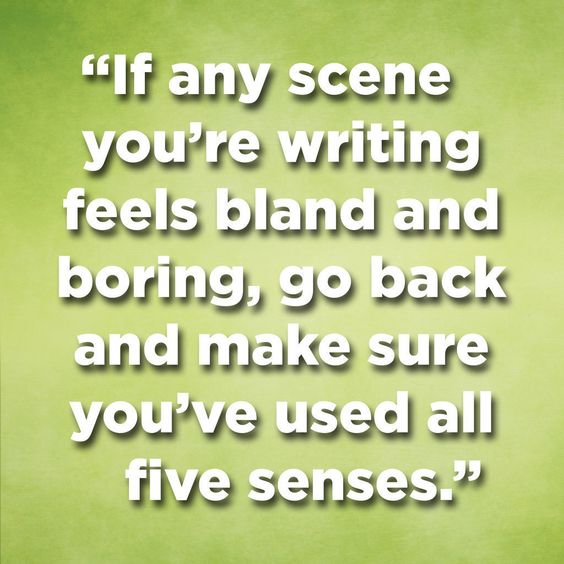
Writing Tip: Use the Senses

Sounds, sights, and smells are all part of  creating an atmosphere.

‘The creation of the physical world is as crucial to your story as action and dialogue. If your readers can be made to see the glove without fingers or the crumpled yellow tissue, the scene becomes vivid. Readers become present. Touch, sound, taste and smell make readers feel as if their own fingers are pressing the sticky windowsill.

‘If you don’t create evocative settings, your characters seem to have their conversations in vacuums or in some beige nowhere-in-particular. Some writers love description too much. They go on and on as if they were setting places at the table for an elaborate dinner that will begin later on. Beautiful language or detailed scenery does not generate momentum. Long descriptions can dissipate tension or seem self-indulgent. Don’t paint pictures. Paint action.’ – Jerome Stern, Making Shapely Fiction

Bringing in sensory detail is a way to enrich a story with texture to create the fullness of experience, to make the reader be there.

using all five senses quote on green board

What about you? Do you use the senses, apart from sight, to create atmosphere?

Writing Tip: Start Writing

When I used to teach classes to beginning writers, it was good.  It forced me to think back to the beginning to when I first put pen to paper.  The thing is, every time we sit down and face the blank page, it’s the same.  Every time we start a new piece of writing, we doubt that we can do it again.  A new journey with no map – like setting off towards the horizon alone in a boat and the only thing another person can do to help is to wave from the shore.

So when I used to teach a creative writing class, I had to tell them the story all over again and remember that this is the first time my students are hearing it.  I had to start at the very beginning.

First up, there’s the pen on the page.  You need this intimate relationship between the pen and the paper to get the flow of words happening.  A fountain pen is best because the ink flows quickly.  We think faster than we can write.  It needs to be a “fat” pen to avoid RSI.

Consider, too, your notebook.  It is important.  The pen and paper are your basic tools, your equipment, and they need to be with you at all times.  Choose a notebook that allows you plenty of space to write big and loose.  A plain cheap thick spiral notepad is good.

After that comes the typing up on the computer and printing out a hard copy.  It’s a right and left brain thing.  You engage the right side of the brain, the creative side when you put pen to paper, then bring in the left side, the analytic side, when you edit the print out as you settle back comfortably with a drink (a cup of tea, even) and read what you’ve written.

Patrick White said that writing is really like shitting; and then, reading the letters of Pushkin a little later, he found Pushkin said exactly the same thing.  Writing is something you have to get out of you.

typing writing on a pink background

Whether writing a story or writing a blog, start writing, no matter what.

How Do I Write a Book Press Release?

You wouldn’t believe I was once a Public Relations consultant with my own business. Here I am scrambling around trying to write a press release for my new book, ‘Lost In Cooper Park’. It’s many years ago since I worked in the publicity industry and so much has changed since then. I’m trying to remember how to create a gob-smacking, eye-catching, has-to-be-read press release.

My new book is soon to be released and I need to get it some traction. I’m with a small but prestigious publisher, Ginninderra Press. No budget for promotion. So here I go. I need to put on my left-brain thinking cap rather than the right-brain fiction writer/poet hat.

So, first things first. I’ll see what Google has to tell me.

Lots. Lots of info on Google and a template or two.

My book won’t be released until next month, so until I have a release date, I can’t send out the release.

In the meantime, I’ll try and find my Media List, hidden under a pile of papers, or named something obscure on my computer.

Apart from sending the press release out to the media, a press release needs to be included when you send out copies of your book for review.

One thing I learnt from my Google search is that I need to add my web site address. Damn! Now I’ll have to update my website too.

The marketing side of being a writer never ends. We all hate it. We’d rather be in our dark caves creating new stories and poems.

I’m at my writing desk now attempting to compose a first draft of the Press Release following one of the templates.

Wish me luck.

Any marketing tips you’d like to share?

Writing the book was the easy part 😦

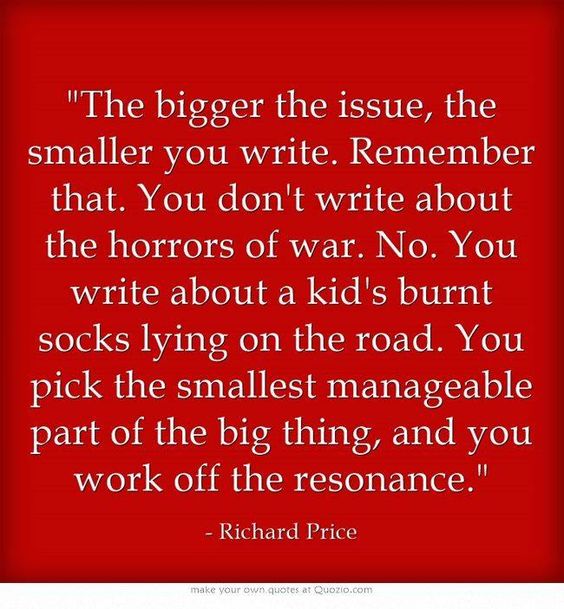
Writing Tip: The Bigger the Issue, the Smaller You Write

A quote: the bigger the issue, the smaller you write - Richard Price

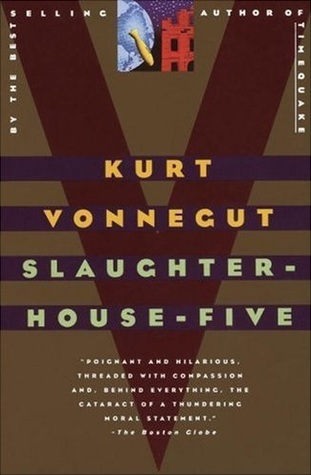
A fantastic example of this writing advice is Kurt Vonnegut’s  Slaughterhouse-Five.

Poignant and hilarious, threaded with compassion and, behind everything, the cataract of a thundering moral statement. – The Boston Globe

book cover of Kurt Vonnegut's 'Slaughterhouse-Five'

Kurt Vonnegut’s absurdist classic Slaughterhouse-Five introduces us to Billy Pilgrim, a man who becomes unstuck in time after he is abducted by aliens from the planet Tralfamadore. In a plot-scrambling display of virtuosity, we follow Pilgrim simultaneously through all phases of his life, concentrating on his (and Vonnegut’s) shattering experience as an American prisoner of war who witnesses the firebombing of Dresden.

Don’t let the ease of reading fool you – Vonnegut’s isn’t a conventional, or simple, novel. He writes, “There are almost no characters in this story, and almost no dramatic confrontations, because most of the people in it are so sick, and so much the listless playthings of enormous forces. One of the main effects of war, after all, is that people are discouraged from being characters.”

Slaughterhouse-Five is not only Vonnegut’s most powerful book, it is also as important as any written since 1945. Like Catch- 22, it fashions the author’s experiences in the Second World War into an eloquent and deeply funny plea against butchery in the service of authority. Slaughterhouse-Five boasts the same imagination, humanity, and gleeful appreciation of the absurd found in Vonnegut’s other works, but the book’s basis in rock-hard, tragic fact gives it a unique poignancy – and humor. – Goodreads

Highly recommended. A masterpiece.

Writing Tip: Taste Life Twice

quote by Anais Nin against a night sky

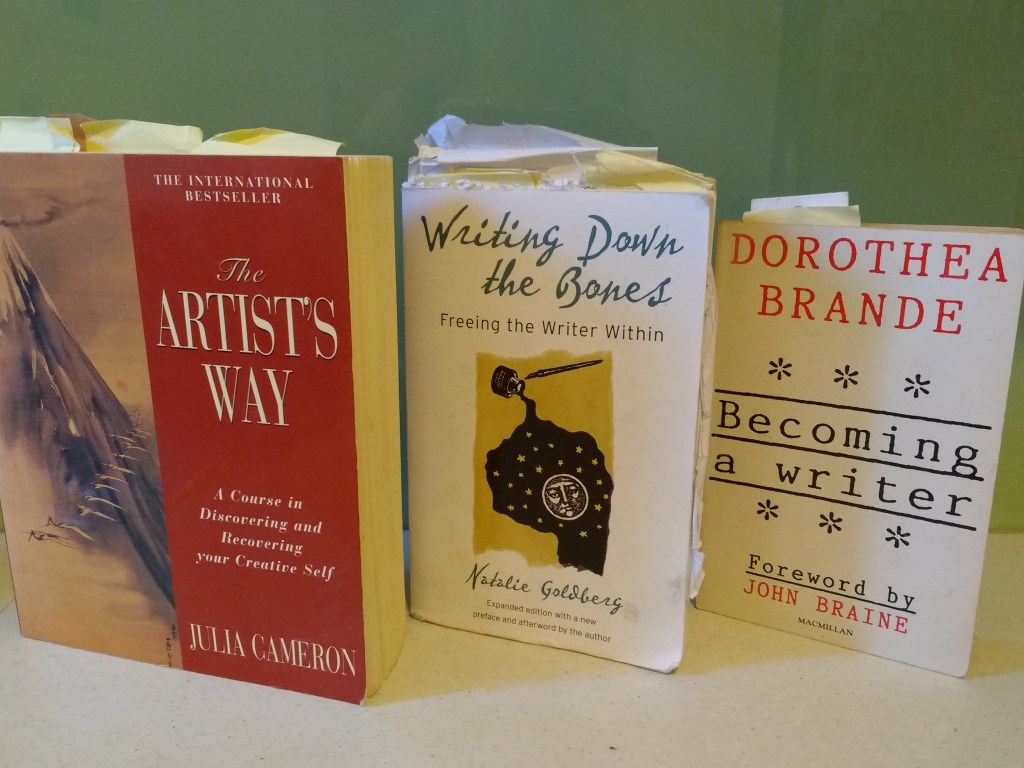
“Writers live twice. They go along with their regular life, are as fast as anyone in the grocery store, crossing the street, getting dressed for work in the morning. But there’s another part of them that they have been training. The one that lives everything a second time. That sits down and sees their life again and goes over it. Looks at the texture and the details.”  – Natalie Goldberg

My Flash Fiction, Sober Sixty

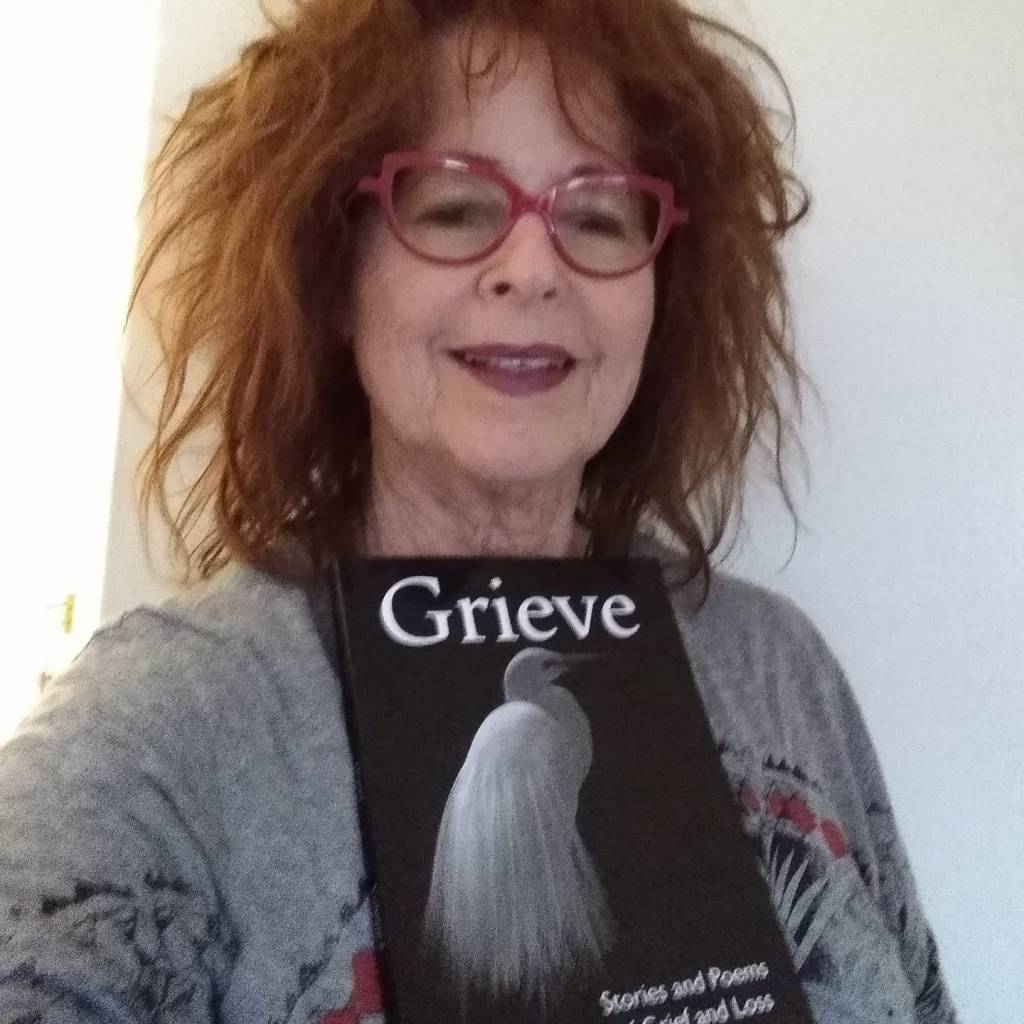
Libby Sommer and 'Grieve" anthology

Have a read of my flash fiction ‘Sober Sixty’ first published in the August 2020 Grieve Anthology, Stories and Poems of Grief and Loss.

Sober Sixty:

Samantha’s single women friends were envious, although she assured them Johnny wasn’t perfect. Mood swings, challenging stuff like that.

Nobody messed with Johnny. Nobody knew better than he did, he was always watching YouTube and learning new facts and figures. Also, he rode a motorbike and practiced shooting at weekends. There were Facebook groups for bike riders and a rifle range nearby. Johnny was proud of being a rev-head and a good shot with his gun, and not many people could disagree that he had unusual interests for a man his age.

‘Sober since forty and counting,’ he said about his sobriety. They didn’t talk about his twenties and thirties.

There’s a photograph of the two of them from Christmas day. Johnny had tried to lower himself to Samantha’s height for the photo so they’d be on the same level. ‘Stand up tall,’ she’d said. ‘Stand to your full height.’ ‘That’s right,’ he’d said. ‘You like things big.’

‘What does ATP in ATP Cup stand for?’ was the type of thing Johnny would call out while she poured him a glass of water before setting out on a stroll around the block.

Samantha thought she knew the answer, but didn’t want to risk being wrong. She’d learnt to tiptoe around his wildness and dreaded the fighting when she wasn’t attentive enough to his needs. Dry drunk, AA called it. The unpredictable rages were doing her head in. She knew she needed the courage to walk away.

Now she’s getting by a day at a time.

Her friends say she’s one of the lucky ones. She’s dodged a bullet.

Copyright © Libby Sommer 2020

Grieve 2020 Anthology available from Hunter Writer’s Centre website or Booktopia https://hunterwriterscentre.org/bookshop/

Writing Tip: How to Slow Things Down

So, here’s the thing:  choose something in particular to write about. For example, what it feels like having a tennis lesson after a twenty year break. Give us the specifics. Dig deep for the details, but at the same time be aware of the world around you. As you focus on what you’re writing, at the same time stay conscious of your surroundings:  the white painted cane Bentwood chairs in the café, the cool breeze from under the door on your sandaled feet, the hum of the traffic outside. Just add a sentence every now and then about the trees that overlooked the tennis courts while you were having a tennis lesson. When we focus on our writing it is good. Seeing the colour of the sky when you toss the ball gives breathing space to your story.

If you are sitting in Meditation you calm the butterfly mind by paying attention to your thoughts, giving them space by acknowledging them before returning to the breath, in and out through the nostrils. In the act of slowing down your breathing, as best you can, you remain open so that you are receptive to awareness of sounds as they arise: sounds near, sounds far, sounds in front, behind, to the side, above or below.

With every breath you take, you feel the air, the sound of the ball as it hits the racket, the  players on the other courts.

We should always be living in the present, not by ignoring the world around us, but by paying close attention. It is not easy to stay alive to ‘what is’. When we slow things down in our writing, it is good practice.

What about you? Do you find a daily meditation practice assists your writing practice?