You Know I Am Not the Stories I Tell

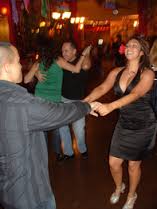
Sometimes when people read my stories they assume those stories are me.  They are not me, even if I write in the first person.  They were my thoughts and feelings at the time I wrote them.  But every minute we are all changing.  There is a great freedom in this.  At any time we can let go of our old selves and start again.  This is the writing process.  Instead of blocking us, it gives us permission to move on.  Just like in a progressive ballroom dance:  you give your undivided attention to your partner—keep eye contact for the time you are dancing together—but then you move on to the next person in the circle.

Creative Commons photo

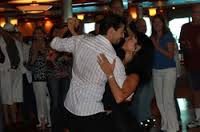
The ability to express yourself on the page—to write how you feel about an old lover, a favourite pair of dance shoes, or the memory of a dance on a chilly winter’s night in the Southern Highlands—that moment you can support how you feel inside with what you say on the page.  You experience a great freedom because you are not suppressing those feelings.  You have accepted them, aligned yourself with them.

Creative Commons photo

I have a poem titled ‘This is what it feels like’—it’s a short poem.  I always think of it with gratitude  because I was able to write in a powerful way how it was to be desperate and frightened.  The act of self expression made me feel less of a victim.  But when people read it they often say nothing.   I remind myself, I am not the poem, I am not the stories I write.  People react from where they are in their own lives.  That’s the way things are.  The strength is in the act of writing, of putting pen to paper.   Write your stories and poems, show them to the world, then move on.  The stories are not you.  They are moments in time that pass through you.

Writing Tip: Endings

pen writing notes studying

Beginnings and endings are the hardest part of creating a successful story and the most important. More important than plot and character, in my opinion, especially in short stories. “Conclusions are the weak points of most authors,” George Eliot remarked, “but some of the fault lies in the very nature of a conclusion, which is at best a negation.”

“As Jane Austen pointed out in a metafictional aside in Northanger Abbey, a novelist cannot conceal the timing of the end of the story (as a dramatist or film-maker can, for instance) because of the telltale compression of the pages.” – The Art of Fiction

The closer and closer you get to the ending, the more weight every word has, so that by the time you get to the last several words each one carries an enormous meaning. A single gesture or image at the end can outweigh all that has gone before. Choose each word carefully – even simple words like dark or down, light or up drastically affect the sense of the ending and therefore the entire story. Anything revelatory or portentous at the end of the story is very heavy indeed. Heavy-handed, in fact, is the way it’s likely to come out.

In beginning the story certain tensions, ideas, and characters have been launched. These themes then fly in intricate formations. The ending doesn’t have to provide a surprise. All it has to do is land safely. – Jerome Stern, Making Shapely Fiction

I’m rather proud of this ending to my short story Jean-Pierre, first published in Quadrant in July-August 2016. It’s the last page of a 5,000 word piece.

During that last day she thought of nothing but Jean-Pierre as she packed and cleaned out her little apartment.

‘What do you do, you have a stopover in Dubai?’ Jean-Pierre said, standing next to her at the taxi rank in the early morning chill.  A bitter wind blew from the mountains.  He had come over to carry her bag down the stairs.

‘I go straight through.  It’s three hours on the ground in Dubai, so I walk around the airport then read my book.’

Jean-Pierre looked directly into her eyes.  ‘I’ve bought you a little gift,’ he said.

‘You have?’

‘Don’t unwrap it until you’re on the plane.’

She smiled.  ‘Okay.”  Then she looked at his face, to place him clearly in her mind.  He was wearing a white t-shirt and blue jeans under a padded coat.  She kissed him on the lips, then got into the taxi.

‘Something to take with you,’ he said, leaning in the window.  In his hand he clasped a small gift-wrapped box.  The sun, still low on the horizon, cast an amber glow on his precious face.

‘Thank you,’ she said.  She reached for his hand through the window and then put on her seatbelt.

And she thought about this all twenty-four hours of the journey across the Indian Ocean.  She would keep opening the little box to admire the marquisite earrings he’d given her.  She would catch a taxi from the airport and at home notice the house smelt musty; she would open all the doors and windows to let the air move through, the curtains blowing and air coming in and out.  From a far-away-place, and at night, he would ring to say, resignedly, ‘My mother is living with me now.’  His gift, when she’d take the earrings out of their black box, would remind her of something that had happened to her once.

She felt like someone who she had always known, that old friend of herself, grounded in home, decisions already made, and behind her somewhere, like the shadow of an identical twin, her other self, who must remain in the far-off distance,  never to be exposed to the light.

Copyright © Libby Sommer 2016

For further reading, check out my posts  My 3 Favourite How-To-Write Books and Why Do You Write?. And to make sure not to miss anything from Libby Sommer Author you can follow me on Facebook  or Instagram.


Writing Tip: Tell It Like It Is

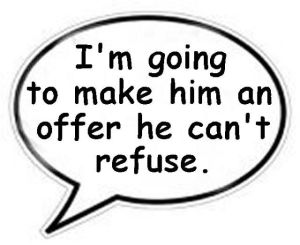
speech bubble: I'm going to make him an offer he can't refuse
Pinterest image

Use clear declarative sentences. This assertive statement was spoken by Don Corleone (played by Marlon Brando) in the movie The Godfather (1972).

It is not uncommon for women and other minority groups to add qualifiers to their statements. Such as ‘Parents need to stop organising every minute of their children’s spare time, don’t you think?’ ‘I loved that movie, didn’t you?’ In our sentence structure we look for reinforcement for our thoughts and opinions. We don’t always make declarative statements. ‘This is wonderful.’ ‘This is a catastrophe.’ We look for re-enforcement from others.

Another thing we do without realising it, is use indefinite modifiers in our speech:  perhaps, maybe, somehow. ‘Maybe I’ll take a trip somewhere.’ As if the speaker has no power to make a decision. ‘Perhaps it will change.’ Again, not a clear declarative sentence like, ‘Yes, nothing stays the same.’

It is important for us as writers to express ourselves in clear assertive sentences. ‘This is excellent.’ ‘It was a red dress.’ Not ‘The thing is, I know it sounds a bit vague, but I think maybe it was a red dress.’ Speaking in declarative sentences is a good rehearsal for trusting your own ideas, in standing up for yourself, for speaking out your truth.

When I write poetry I read through early drafts with a critical eye, taking out indefinite words and modifiers. I attempt to distill each moment to its essence by peeling off the layers until the heart of the poem is exposed. We need to take risks as writers and go deep within ourselves to find our unique voices and express ourselves with clarity.

Even if you are not 100% sure about your own opinions and thoughts write as if you are sure.  Dig deep. Be clear. Don’t be vague on the page. If you keep practicing this, you will eventually reveal your own deep knowing.

I hope this post is useful. Do you have any tips you would add? Let me know in the comments and please share this post with a friend if you enjoyed it. 

Narrative Momentum: ‘but then’

firstPostPic

This is my first blog post.  I intend to post either once a week or once a fortnight on matters related to creative writing.  Probably each Sunday evening.

So here goes.

I was listening to someone talk about the craft of creative writing the other day and she was speaking about the necessity of forward momentum in narrative in order to keep the reader engaged.

The speaker suggested keeping in mind the words:  “but then …”


Using those two words, either on the page, or in your head, gives a twist or complication to the story.


Seems a good idea to me.