At a literary event I heard someone say, “The thing to do is put the idea in your subconscious. Your brain will do the work.”
It takes time for our experience to make its way through our consciousness. For example, it is hard to write about a journey while you are still in the midst of the adventure. We have no distance from what is happening to us. The only things we seem to be able to say are “having a great time”, “the weather is good”, “wish you were here”. It is also hard to write about a place we just moved to, we haven’t absorbed it yet. We don’t really know where we are, even if we can walk to the train station without losing our way. We haven’t experienced three scorching summers in this country or seen the dolphins migrating south along the coast in the winter.
“Maybe away from Paris I could write about Paris as in Paris I could write about Michigan. I did not know it was too early for that because I did not know Paris well enough.” – Ernest Hemingway, A Moveable Feast (New York: Charles Scribner’s Sons, 1964).
So we take in experience, but we need to let things make their way through our consciousness for a while and be absorbed by our whole selves. We are bower birds, collecting experience, and from the thrown away apple skins, outer lettuce layers, tea leaves, and chicken bones of our minds come our ideas for stories and poems and songs. But this does not come any time soon. It takes a very long time (three to ten years in the case of literary fiction). We need to keep picking through those scraps until some of the thoughts together form a pattern or can be organised around a central theme, something we can shape into a narrative. We mine our hidden thoughts for ideas. But the ideas need time to percolate: to slowly filter through.
Our work is to keep rummaging through the rubbish bins of our minds, exercising the writing muscle, in readiness to answer that knock at the door when it comes.
Rumi, the thirteenth-century Sufi poet, summed up what could be the creative process when he wrote “The Guest House”:
This being human is a guest house.
Each morning a new arrival.
A joy, a depression, a meanness,
some momentary awareness comes
as an unexpected visitor.
Welcome and entertain them all!
Even if they are a crowd of sorrows,
who violently sweep your house
empty of its furniture,
still, treat each guest honorably.
He may be clearing you out
for some new delight.
The dark thought, the shame, the malice,
meet them at the door laughing and invite
them in.
Be grateful for whoever comes,
because each has been sent
as a guide from beyond.
Jalaluddin Rumi, in The Essential Rumi Translated by Coleman Barks, 1999
As the author Vivian Gornick said, “The writers life is the pits. You live alone and you work alone, every day I have to recreate myself.” She paused and laughed. “But when the work is going well there is nothing that compares.”
What about you? Are you ready to answer the knock at the door?
Have a read of my short story, ‘Towards the End’, first published in Quadrant Magazine. ‘Towards the End’ is one of the tales in my collection, ‘Stories from Bondi‘ (Ginninderra Press).
I hope you enjoy it.
Towards the End:
He leaned back on the chrome chair, stretched his legs out under the square black table and placed his mobile phone in front of him. He looked over to the counter at the back of the cafe at the cakes and muffins on display and the Italian biscuits in jars. He turned back to the glass windows and wondered if he had the guts to tell her today. He wanted to. By Christ he wanted to. He straightened up, his elbows on the table, his hands clasped together in front of his face. There’d been some good times, that’s for sure. But what the heck. A man’s got to do what a man’s got to do.
The sliding glass door clanked open and Anny walked in. He looked over at her, first from the rear as she closed the door and then as she approached, her face flushed, her dark hair flying back from her shoulders. Not bad looking. A bit on the heavy side but not a bad looker all the same. Yes, there’d been some good times. Especially in the sack.
Anny removed her sunglasses as she walked over and he looked into the bright green of her eyes as she bent down and kissed him on the cheek. He felt the moisture on her face as her skin touched his.
She took off her sunshade and hung it on the back of the chair and sat down.
You’ll never guess what happened, she said.
What?
I’m still so angry I can hardly speak. She pushed her hair away from her forehead as she dabbed at the sweat with a serviette.
What happened?
This man, she said. This dreadful man. Anny used her fingers to wipe the moisture from under her eyes. I was walking along the cliff path from Bondi to Bronte, like I usually do, minding my own business, when I heard a jogger behind me.
Nothing unusual about that.
So I moved further to the left to let him pass.
Yeah. That’s the rules, keep to the left.
He must have been about to pass on the inside because next moment I heard a thud and there he was picking himself up from the side of the track.
Anny stopped talking as the waitress approached with notepad and pen.
A spaghetti marinara for me, said Daniel smiling at the waitress. And a coffee.
How do you like your coffee?
He grinned at her. Hot and black, thanks.
Anny turned away from him and squinted at the blackboard. I’ll have the Greek salad and a decaf skimmed cap. And a glass of water, please.
And I’ll have an orange juice as well, said Daniel.
Daniel’s eyes followed her as she walked towards the kitchen. Then his mobile buzzed from the table. He picked it up and held it to his ear.
Yep, he said. I can give them a ballpark figure, but that’s about it. Just a ballpark. Yeah, okay then. Here’s his number. Daniel opened the front of the phone and pressed a button. 0413 501 583, he said. He put the phone back on the table its antennae sticking out towards Anny. I hate it when people say things like that, he said.
What?
Oh nothing. Just the usual crap. They all think they can get something for nothing.
Daniel’s pasta arrived first and he began to eat. He sucked in a spaghetti tail and then impatiently cut some of the pasta with his knife. He dispensed with the knife and continued to eat with his fork. He scooped up the marinara with its splayed-like prongs.
So what happened? he said as he sucked in a loose strand of spaghetti, catching its long skinny tail with his fork.
He must have caught his foot on the edge between the footpath and the grass. I was about to say ‘are you all right’ when he roared out at me ‘it’s all your fault you know’. ‘I was keeping to the left’ I said. He ignored me and ran on, red shiny shorts flapping. How dare he speak to me like that. ‘Asshole’ I called out after him. He gave me the finger up sign and kept running. I was furious.
Daniel didn’t answer as he waited for the waitress to place a plate of salad in front of Anny. He blew on his pasta before placing another mouthful towards the back of his tongue, his thin lips closing over the fork.
When I reached Bronte, said Anny. This man had finished his circuit and was on his way back. We recognised each other and he started telling me off about which side of the path I could walk on. ‘Don’t tell me where to walk mate’ I hissed. That’s when he stopped jogging and moved towards me. I thought he was going to punch me.
Really?
I was a bit scared I can tell you, but I braced myself. That’s when he said ‘you’ve got some chip on your shoulder because you’re fat and ugly’. I laughed at him because it sounded so ridiculous and as far as that was concerned it proved my point. What an asshole. Just thinking about it makes me angry.
Daniel turned away from her. He couldn’t tell her now. Not after that. He looked out the window to the truck parked across the road. ‘Dean’s Premium Natural Fruit Juice: the way it should be’ emblazoned on the side. The way it should be. That’s a bit of a joke. Well I know this is the way it shouldn’t be. He couldn’t get Louise out of his head.. That last time – her tight white t-shirt over those tight little breasts – leaning over her plate. Eating that huge roll. The sight of her opening her mouth so wide he thought the sides of her lips would crack. Stuffing it in she was. Later at her place when he couldn’t wait. Coming up behind her as she cleaned her teeth. Ramming it in.
He tore the crusty white Italian bread into small pieces and used it to mop up the remains of the sauce and wiped the red sauce from the corner of his mouth. He reached for his glass and sucked up the remains of his orange juice through a yellowed straw, then burped. He put the glass down, his broad hand wrapped around the grooved surface and leaned across the table. He looked into Anny’s face.
I have to go.
Go where?
I’ll pay the bill.
What’s wrong?
I want to make a move on that Elizabeth Bay deal.
He stood up, his keys dangling from the loop at the back of his trousers, his rubber soled shoes silent as he headed towards the door. Only the sound of his keys and then the bang of the door.
Outside he pulled out his mobile and dialed.
I’m leaving now honey, he said. I’ll be there in a few minutes.
In the cafe Anny watched from the window. She sighed, stood up slowly and then walked over to the cake counter. He’s a workaholic that bloke.
I’ll have a slice of that chocolate mud cake and a cappuccino, she said to the girl behind the register.
My short story, ‘At the Festival’ was first published in Quadrant Magazine. It is one of the stories in my collection ‘Stories from Bondi‘ (Ginninderra Press): “The strength of Libby Sommer’s work is its engagement with the contemporary mores and sexual manners of urban Australian life.” – Amanda Lohrey, Patrick White award winner.
Have a read of ‘At the Festival’. Hope you enjoy it.
At the Festival:
It was six o’clock in the evening when she finally passed the wind turbines. There, at last, stood Lake George, where long-woolled sheep grazed the field and to the west the Brindabella mountain range was coloured grey and pink by the setting sun. On she drove along an ink-black strip of road where, on either side, tall green-grey eucalypts had formed a welcoming archway. The way flattened out then curved into a narrow empty road. Not one person did she see, not one building, just a handful of brown-bellied cows and later a group of kangaroos standing formidable and still in the headlights. The turn for Watson wasn’t clearly sign-posted but she felt confident in turning east along the row of liquid ambers in autumn bloom that took her to the cabins.
Twice on the journey she had pulled into a service station and shut her eyes and briefly rested but now, as she neared Canberra, she felt wide awake and full of energy. Even the dark length of road which progressed flatly to Reception seemed to hold the promise of a new beginning. She sensed the towering, protective presence of the mountain range, the forested hills and, further on, just past the turnoff, the clear, pleasant thump of music coming from the festival.
The receptionist gave her a key, and eagerly she drove further on to cabin number five. Inside, the room was renovated: the two single beds replaced by a double. The same compact kitchenette set into one end of the room but a new television secured to the wall by a multidirectional wall bracket. In between, on the bare linoleum floor, stood a small table laminated with melamine and two matching chairs. She set her keys and mobile on the table and reached for the electric jug for tea.
After filling the kettle with water from the hand basin in the bathroom, she pressed the remote to turn on the heating, then threw the slippery embroidered cushions from the bed into a corner of the room. Just between the curtains the row of early winter azaleas was quivering brightly under the security lights. She showered, lay down and reached for her Kindle and read the first page of a Katherine Mansfield story. It seemed like an engrossing tale but when she reached the end of the page she felt her eyelids closing, and reluctantly she turned out the light, although she knew that she had all day tomorrow, to work, to read and to walk along the Federal Highway to the festival.
When she woke, she grabbed at the tail of a flimsy dream—a feeling, like a wisp of gossamer—dissipating like the touch of a soap bubble; her sleep had been short and annoyingly elusive. She turned the kettle on and hung her clothes on the wooden hangers on the rack. She had brought little: a Kindle downloaded with books, a small esky of groceries. There was the laptop and several creased bits of paper on which notes were written with arrows and numbered inserts in between the typed paragraphs.
The sky was a calm blue lined with clouds. Up at the festival the Poets’ Breakfast would be underway already. She felt impatient to get there to collect her wrist band and program, although she also felt she could lie there on the big bed for days, reading and working, seeing no one. She was thinking about her work, and wondering how she would begin when her mobile alerted her to a text message. For several minutes the woman sat there not looking at the phone. She reached out not so much to read the message as to move past this distraction.
There was a vacancy after all for the Poetry Workshop.
When she put the phone down she turned on the heater again and returned to the Mansfield story. It had no plot or tight dramatic structure. The story followed a character as she prepared to hold a dinner party, sharing her anticipation and her disillusionment when things didn’t quite go to plan. At the end of the evening she realises her husband is having an affair.
Something about this story now put the woman in mind of how she had been at another point in her life, when she was contemplating moving in with a man who said he wanted her to live with him, a man she loved, but who had never said he loved her, as though the saying of it would bind him to her, or hide the fact that he didn’t.
Once, when she was getting ready for bed, she had stood at the mirror in her cotton nightgown brushing her hair and had sensed him watching her from behind. She was fatter then, and in her forties. He didn’t say anything but she sensed he didn’t like the look of her at that moment. Perhaps it was the practical night wear he didn’t like; or was it that he’d prefer her to wear something more seductive, briefer, more enticing?
She thought of him now as she looked out the window to the azaleas.
‘If you move in, I would not want you to make a claim on my money,’ he had said. ‘I want what I have to go to my children.’
His family, she had known, would always come first.
Now she felt a strong urge to write but told herself it was not something she could do, because she needed to get to the workshop on time. She would just be warming up when she would have to leave and the telling of the story would be interrupted and she would have to put her pen down. She did not like stopping once she was underway.
She cleaned up the breakfast dishes then hurried up the road by the liquid ambers to the Federal Highway. The path beside the road was overhung with trees. She put her hand on top of her head to protect herself from swooping birds.
When she found the workshop venue, she sat on a chair by the wall with the others as the last session packed up their musical instruments and left. When the Poetry tutor set up at a table they pulled their chairs around. She was a short middle-aged woman in a spotted dress and woollen cardigan.
‘Welcome everyone,’ she said handing out pieces of paper and blocks of ruled pages for those who needed them. ‘Move your chairs in closer. We’re only a small group.’
The tutor spoke to them about syllables, matching metre, the rhythm of poems. ‘You can get inspiration for your poems anywhere,’ she said. ‘A news report on the radio. A conversation with someone. Some people need a quiet place to write, and others can work in front of the television.’
*
She hadn’t really noticed him at the workshop, he must have been one of the people who had hung back, didn’t move their chairs in. But when she saw him again, outside the big marquee where the Bush Poets vs All-Other-Kinds-of-Poets debate was about to begin, she recognised his face. He walked up to her and smiled hello.
‘Do you write much poetry?’ His tone indicated he was respectful of people who devoted themselves to the written word.
‘A little,’ she said. ‘And you? Do you write?’
‘No, no,’ he said dismissively. ‘But I like going to poetry readings.’
At the end of the session in the marquee, when she saw him waiting in the aisle on the other side of the big tent, she rose from her seat and moved slowly across the fake grass floor in his direction. He stood there as she progressed to the exit until their paths crossed. His hair was thick and white and across his back, secured by thick straps, hung a slim and contoured cyclists’ backpack.
‘Hello again,’ she said.
‘Feel like a coffee?’ he asked.
‘Sounds good to me,’ she nodded.
‘Which place do you like to go to here?’
‘Whichever one has the shortest queue.’
‘Let’s try next door then.’
He stood in line to order their coffees and suggested she find somewhere for them to sit. ‘How about a slice of cake to share?’ he said. ‘They bake some good tucker here.’ He pointed to the end of the counter. ‘What about that coconut cake?’
‘Looks nice.’
He brought over the drinks and the cake and placed them on the table between them. He used a plastic spoon to cut the slice in half.
I don’t usually eat sugary things like this, she reminded herself. But it wasn’t something she’d expected, to be sitting here with a man.
He began telling her about his experiences at the yearly festival and how he liked coming each day to the Poets Breakfast the best to listen to people recite poems and tell long yarns. He’d been a regular since the death of his wife.
‘Why don’t you meet me here tomorrow?’ he said.
‘The breakfast is a bit early for me,’ she said. ‘But I’ll try and get myself up here in time.’ She wondered at that moment if she should be interrupting her morning work routine to join him. She would feel obliged to proceed in that direction rather than in the direction of where the work may take her.
*
Back at the cabin, she made herself a light dinner of tuna and avocado on toast, and ate at the table. When the dishes were rinsed and put away, she turned on the heater and lay on the bed and saw again the woman in the Katherine Mansfield story and the blissful happiness this character had felt preparing to spend the evening with friends who were soon to arrive for a dinner party. Is she blissfully happy because she is in denial about her husband’s affair? Or is she simply happy without that subconscious knowledge of betrayal? She took up her Kindle and began to closely read every last sentence again. As it turned out, the woman, on finding out about her husband’s affair, resigns herself to a life of loneliness.
She lay back and looked through the window and thought about the man with the backpack. Beyond the window was a darkening sky, and a thickly forested hill.
‘I am fifty-five years old,’ she said, her voice sounding stupid and shrill in the austere room.
*
The next morning she got up early, showered and dressed quickly. She looked at herself in the mirror, brushed her hair until it shone, then picked up her jacket and walked back along the road to the festival gates. Out over the hills a thick mist wound its way between the peaks, a soft belt of white embracing the contours of the valley. The shuttle bus that would travel from the Main Ticket Office to the Entertainment Zone was waiting.
‘Slam the door behind you love,’ said the driver when she climbed in.
As the bus circled the main campground she looked out at the people still asleep in their cars and vans, some in the pre-erected Rent-A-Tents, others under canvas beside their cars, their washing strung up on the support ropes: towels, t-shirts, shorts.
The woman beside her pointed out the window. ‘Look. There are the smalls,’ she laughed.
It was cold when she stepped off the bus. Never had she seen the place so quiet, so empty of people and music—the grassed areas and the wide gravel avenues all deserted—although the food stalls were opening their shutters. She wondered what time the place would come to life again and where she could get a hot drink.
The thing was, she really should be back at the cabin working at her desk. She could quickly walk to one of the gates, hop on a shuttle bus and return to the room. Instead, she stopped at one of the rectangular Water Stations to fill her paraben-free bottle. A volunteer, in distinguishing bright yellow vest, was using a hose to refill the dispenser.
‘Is it plain tap water?’ she asked.
‘Clean Canberra water,’ he said proudly.
‘The same as in the Ladies?’
‘Yes. Pure water, but a better atmosphere.’
She laughed, then looked around and saw a bearded man in moleskins, singlet top and akubra hat boiling water in huge vats over a roaring fire. Awkwardly, she stepped over the logs to a table set up with Billy Tea and toasted damper for sale.
She sat there at the fire and kicked at the earth beneath her feet as the golden line of the sunrise made its way above the line of trees. She found herself relaxing into the moment as warmth spread down and over her face and neck and into her shoulders. This, she said to herself, is where she should be, at this moment, in her life.
On the branch of a tree a large-beaked bird purposefully surveyed the terrain, his head moving rapidly from left to right before he hopped to another branch. He was not a pretty bird, ink black feathers, and what looked like a white mask circling his eyes, as if he’d donned a Zorro cape before he’d flown out of the house. He flew down to the edge of the gravel path where it merged with the grass, oblivious to the pigeons already scratching in the dust. He pecked at the road, then stopped, loosened his wings, and swooped back up to his eyrie in the tree.
Sitting there, watching the bird do battle with the pigeons for tiny treasures, she’d thought of her work. The mug of tea was hot and satisfying, the treacle spread thickly on the damper. While she savoured the smoky bread and the sweet orange-coloured treat, a part of her mind was also pre-occupied with meeting up again with the man with the backpack. She wondered, for a moment, what colour his eyes were, exactly how tall was he? Tall, but how tall?
At eight thirty she walked down the path past the Circus tent towards the Poets Breakfast marquee. She paused at the entry looking for him. She stood there a moment then made her way to sit down beside him.
*
On the Sunday, after a week of spending each day together at the festival, attending events and sharing stories of their lives over coffees and cake and beers and takeaway meals, she couldn’t see him at their usual meeting place, so waited just outside the tent. When she glanced around and saw the back of a tall man with a contoured backpack enter the marquee, accompanied by a woman, she wasn’t sure if it was him at first. She waited in a spot where she couldn’t be seen as they sat down side by side. She watched as the woman took a health bar out of her handbag, bite into it, then give him the other half. Her hand rested on his thigh.
So, he wasn’t single after all. What a stupid mistake she’d made. She stood there watching the two of them, feeling angry, with him and with herself. Had she learnt nothing? A woman of her age. What had she expected? What had she wanted from this man?
It was late when she returned to the cabin. A whole week had passed her by but there she found herself, back at the desk, looking out at the hedge of azaleas. There was a highway out there, a mountain range and forested hills standing erect and dignified. She thought of the Katherine Mansfield’s character, Bertha who was deceived by her husband. She thought of the tall man and how he’d divided the slice of cake to share with her that first day, and began to imagine the life he must have with the woman. There was a power point located under the table, she plugged her laptop in and turned it on. Not until she typed in her password and heard the ‘ready’ chime did she realise she was struggling to control the shaking of her fingers over the keyboard.
Canberra Folk Festival, she typed, and the date. She thought of the woman’s hand on the man’s thigh, and for no reason her breath caught in her chest. She wanted to say what it was like when he’d introduced his partner and how he’d invited her to join them for coffee.
‘This is Elaine,’ he’d said. ‘She had nothing to do today.’ He’d said the words with apology in his tone. Was it an apology?
She’d stood in line beside him to place their coffee order and had insisted on paying her own way this time. Elaine waited at the table. When they’d returned with the drinks she’d noticed Elaine had removed the man’s small cyclists’ bag from the chair between them and relocated him beside herself at the end.
And then Elaine’s questioning: Why have you come all this way? Where are your friends? You did come to the festival with friends didn’t you?
Several times as she typed she thought of the Bertha character who’d resigned herself to a life of loneliness. At one point she stopped and looked at the moon’s position in the sky. When she glanced up again the moon was concealed behind a thick layer of cloud. By this time, her central character was following part of the Tour de France route on his new lightweight bicycle. She went over the paragraph where his bike strikes a curb near Chamonix in the French Alps—his body limp and unconscious on the road—and realised her back was aching. When she got up she felt stiff but satisfied. She looked out at the moonlight now hitting the hedge of azaleas and anticipated a good night’s sleep. As she turned the kettle on, she lengthened her spine and was planning his months ahead in the Geneva hospital, and his slow and very painful road to recovery.
I highly recommend this book a friend from London gave me many years ago at the beginning of my writing journey. It’s an old one, but a good one.
‘A reissue of a classic work published in 1934 on writing and the creative process, Becoming a Writer recaptures the excitement of Dorothea Brande’s creative writing classroom of the 1920s. Decades before brain research “discovered” the role of the right and left brain in all human endeavor, Dorothea Brande was teaching students how to see again, how to hold their minds still, how to call forth the inner writer.’ – Amazon
‘Refreshingly slim, beautifully written and deliciously elegant, Dorothea Brande’s Becoming a Writer remains evergreen decades after it was first written. Brande believed passionately that although people have varying amounts of talent, anyone can write. It’s just a question of finding the “writer’s magic”–a degree of which is in us all. She also insists that writing can be both taught and learned. So she is enraged by the pessimistic authors of so many writing books who rejoice in trying to put off the aspiring writer by constantly stressing how difficult it all is.
With close reference to the great writers of her day–Wolfe, Forster, Wharton and so on–Brande gives practical but inspirational advice about finding the right time of day to write and being very self disciplined about it–“You have decided to write at four o’clock, and at four o’clock you must write.” She’s strong on confidence building and there’s a lot about cheating your unconscious which will constantly try to stop you writing by coming up with excuses. Then there are exercises to help you get into the right frame of mind and to build up writing stamina. She also shows how to harness the unconscious, how to fall into the “artistic coma,” then how to re-emerge and be your own critic.
This is Dorothea Brande’s legacy to all those who have ever wanted to express their ideas in written form. A sound, practical, inspirational and charming approach to writing, it fulfills on finding “the writer’s magic.”‘ – John Gardner
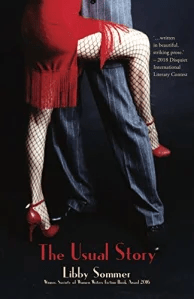
Have a read of my short story, ‘Mother’ first published in Quadrant Magazine. ‘Mother’ is one of the self-contained chapters in my book, The Usual Story (Ginninderra Press) – a delicately fragmented story of memory, intrigue and passion.
MOTHER:
The day is softening into night, my desk in shadow as the sun moves behind the building. Birds hover in the trees as the wind blows across the surface of the sea. It’s hard to know which way to go. Every day I fear that I can’t do it. So I’m watching as it gets dark.
Tonight I’m thinking about the saddest bits. Thinking, for example, that the night was alight with thunder. Lightening cracked the sky. Just a flash and then darkness again.
That I loved him, and sometimes he loved me too.
I’ll begin with the birds. Three birds flying in perfect but constantly changing alignment. So often there are three. And then a lone bird darts across the sky in the opposite direction.
On the radio a voice says: ‘We need to know the history, the history of the before, and then to know how the person chose to continue living, what baggage they chose to bring with them, to incorporate the memory into themselves or to leave it behind.’
A door bangs shut behind me; footsteps sound on the concrete driveway leading from the back door just a second or two after the door bangs. The flame tree throws a shadow on the cane chairs on the balcony. I stop working, put my hands and then my arms around my body and think of the feel of his skin.
How appealing, how irresistible that prospect of intimacy is, with the very person who can never give it.
After a day in which I have evoked Jack again, all the pain and disappointment and wanting him all over again came back. I try to guess where he might be and what he might be doing but cannot imagine it. His absence is still as heavy as the wave about to break above me, a wave that has appeared suddenly, and then it curls over me forcing me down to the bottom of the sea where I am helpless in the power and pull of its rip.
Last night I dreamt about a man with a hook for an arm. I didn’t realise at first that the man had a disability because he’d kept it hidden behind the counter. On the spur of the moment I told the man I was going to see a free film as part of the film festival and asked if he would like to come with me. To my surprise he closed up the shop, put on a freshly laundered shirt and said he’d come. That’s when I saw the hook arm. As the evening progressed I was surprised by how very quick and skilful he was in the use of it. He hooked me a chair and one for himself when we found the small cinema where the film was shown. He seemed interested in me but I wondered how I would cope with his disability.
Sitting at my desk this morning, trying to work, I saw the line of the horizon as the sun beat down, heating up something outside so that its taint floated in on a breeze. It was the dank scent of the earth after rain, entering through the open door. It reminded me of the smell of his hair in the mornings and it came between me and my work. I wondered why all of this has to go on for so long.
*
It’s dark tonight with only a small crescent-shaped moon over the sea. I’ve decided to take a walk to the house where I lived as a child. I put on a cardigan and step out into the night.
The house itself is no longer there. It has been torn down and a block of units stands in its place. As I walk down the steps towards the beach and mount the hill, waves loom in the fading light; streaks of white against the dark sea. Above me clouds gather against a starless sky. I walk up the steps then stand at the lookout as the sea rolls in.
When I was growing up, this suburb was full of large houses and blocks of art deco units. Some of the houses were very grand and others fallen into disrepair like ours. Mother was ashamed of our house. It was basically a mass of rooms surrounded on three sides by wide verandas and wooden painted rails.
Walking along my old street and its rows of gums and mix of glass and chrome home units and white-painted mansions, I see the stairs that connect this street to Birriga Road. Those stairs that I walked up every day to catch the bus to school until Mother decided it was important that she drive me to school before she went to work. ‘What will the neighbours think with you talking to boys at the bus stop?’
And there’s the house where the boy with diabetes used to live. The boy who used to double me on his bicycle. I can still feel the imprint of his ribs under my hands. ‘It’s not ladylike for a girl to ride a bike,’ Mother said. This boy’s house had seemed a long walk from mine but now it seems just a short distance as I walk up our old driveway.
Sixty apartments share our old address. Forty units across the back yard and twenty on the driveway. The trees I used to climb in the back yard are all gone. No wild foliage, just bricks, concrete and cement, although one scrawny hibiscus droops over garage number twelve. A couple of branchless tree trunks wedge between the units and the fence of the block next door. Nowhere for the trees to branch out. No sunlight. Suffocating. Vines strangling trunks. Trees choking to death. I feel a thudding in my chest.
Drowning again and again. A recurring dream. And then I would wake and lie there waiting for the sound of the birds and the light of the dawn. I’d count slowly: one, two, three on the in breath, one, two, three on the out breath until I would notice the waves lapping up and into my bedroom again.
It was already too late when I was eight. I grew old at eight. It came on very suddenly. I saw the blood spreading over my grey school bloomers. As the year lightened and turned hot, it got worse. ‘Don’t tell anyone,’ whispered Mother. ‘Especially your brother.’ January was too bright so I stayed in bed in the darkened bedroom. I was ashamed of how I’d changed. I wasn’t prepared for it. I leant against the pillow in disgust. I lost the desire to move. But as dusk came one evening in February, there was the gentle sound of the wind through the leaves.
I see my former self. The small child with hair pulled severely back at the sides of her large forehead revealing an open face that seems always to be frowning. I can bring to mind a tall gawky adolescent with pimply skin with her arms crossed over her chest. She wears dark wool skirts in the winter with long shapeless jumpers over the top, perhaps a long pendant, or cotton print dresses in the summer with a cardigan. Her hands would clasp and unclasp in front of her. Ridiculous. Her hair looked ridiculous. The hair must have been cut into a fringe but instead it bounced up into one tight little ridiculous ball in the middle of her forehead.
So I was eight and three quarters. Mother made me wear dresses with pleats and frills. I wore them with loathing. I looked fat and childish in the dresses that were gathered at the waist and had a Peter Pan collar at the neck.
That day my hair was in bunches hanging down to my shoulders, not cut short at the back as usual, but long enough for me to put an elastic band at each side. To my own hair I had added the hair of our housekeeper. I wore her hair attached to my own. I was using makeup already. A crème pancake base that Mother had given me. ‘Cover up those hideous freckles.’ I don’t know where I got the pink lipstick and the clear nail polish. Perhaps I stole them. I was wearing a little 4711 eau de Cologne.
*
Today the early morning light shines through the thick curtains, the mysterious light when it’s raining but the sun is still shining through the clouds. But there is the exhausting and suffocating heat of Sydney’s humid summer days and nights to cope with. It’s seven forty-five already. I have overslept. There is no sound in the building. No footsteps, no cars reversing. I guess that everyone has gone to work.
On the radio: ‘Just a couple of drops of rain during the night here and there.’
I’m remembering Mother reclining in bed. Her eyes closed and her hands crossed against her chest. Her mouth open. Now and then she’d catch her breath as if gulping the air. At that moment, she appeared to be asleep.
Beside her I pulled the dead bits off the flowers. I put the vase into place on the shelf above the bed and stared at a Picasso print of a woman’s body sectioned into geometric pieces. I smiled at its startling arrangement of shapes. I reached for another vase and began my pruning.
Mother leaned towards me, and in a rush of tenderness, unusual in her, tried to hug me. I recoiled, unable to check the repugnance I felt for the touch of her.
My half-sister entered the room quietly. I got up at once throwing the bruised and browning petals into the wire basket by the door. I went over to the bed, and looked at Mother, who kept her eyes closed.
‘She’s resting,’ I said.
My sister went over and turned off the bedside light until there was only the weak light from the window. She sat down so she could see Mother. She stroked Mother’s forehead; leaned down over the face, using her fingers to exert pressure on the place between Mother’s eyes, pulled the skin across her forehead, pressed gently into the sides of her face.
Mother opened her eyes. ‘You smell of garlic. I can smell it on your breath.’ But then she let herself sink again. ‘You are very good to me,’ she whispered. ‘I don’t deserve all the things that you do for me.’
Inez continued to massage her head and face until Mother fell asleep.
Inez said, ‘I think about Mother nearly every day. When Mother spoke to me in her clipped determined way, I often didn’t understand what she wanted from me. I tried so hard, but of course I never managed to please her. Then she’d show her impatience. She was always impatient. With all of us. She’d had a hard life and I forgive her. I loved her because she was so—I don’t know what to say, exactly—because she was always such an overpowering presence. But she could be so cold. I would come to her wanting some affection, some understanding even, she’d turn away from me and be so cruel or she was just too busy to listen. Yet I felt for her, I understood, and now that I’m older I forgive her totally. If only I could see her again and tell her I wish now that I had tried harder and that if I had, things may have turned out differently.’
‘Your sister has decided to smooth the surfaces and to remember her mother as a saint,’ Dr Ross concluded. ‘Her mother had a hard life and now she’s turned her into a saint.’
I’m imagining walking into the old house. Across a big enclosed verandah and in through the front door. A coat cupboard to the right, along another corridor to the maid’s room and bathroom, painted a light green, then out to the back porch and the lockup garage. To the left of the maid’s room is the large kitchen with a table in the middle and a pantry to the side. Behind the kitchen is the laundry, the room where I’d do the ironing.
Mother is at the table with Father in the dining room, with its mahogany furniture and red and gold flocked wallpaper. It is already dark and the thick lined curtains are closed. The silver candlesticks on top of the white linen tablecloth reflect the light of the chandelier.
Husband and wife are dressed formally. Perhaps they’ve been to synagogue, or else they’ve been to the Chevra Kaddisha to pray for a dead relative, or they may have been to an afternoon tea at a friend’s house.
Father is two years younger; his face jowled, his mouth relaxed, his eyes small and piercing; his smile is kindly but wary. His hands shake slightly. His hands are broad, with thick blunt fingers, and are mottled with pigmentation spots. The short moustache and the grey hair are neatly trimmed.
Husband and wife eat in silence. The silence is full of contempt—a shared contempt.
She wears white gold wedding rings that are simple in design, and two diamond rings. And around her neck is a necklace of marquisette with drop earrings to match. He has given her many presents of jewellery over the years.
He turns to Mother and tells her he’s going to adjourn into the lounge room with the newspapers, is she going to join him?
She shakes her head. He shrugs at this, confirming: Let’s see who will break first. Who will be weakest in this mutual destruction of each other.
‘What are you laughing at?’ he says.
‘Nothing. I’m not laughing.’
‘Will we listen to a record in the lounge or will we go upstairs to bed?’
‘I don’t want to hear any records, thanks.’
She knocks the sugar bowl over as she reaches for the teapot. The fine bone china dish breaks into pieces and the brown granules spread over the white cloth. She glances at him in barely disguised fear, but he keeps on stirring his tea, looks straight ahead. He finishes his tea, wipes his moustache with meticulous care then throws the creased napkin onto the table and stands up.
‘It’s getting late. See you up there.’
To the right of the top of the staircase is their bedroom. I imagine Mother sitting down at the dressing table and taking the pins out of her hair. It falls to her shoulders, the heavy weight of it released. She puts on her nightgown and then stands in the middle of the room.
‘It’s a man’s world,’ she says in an absent-minded, dispassionate voice.
Father enters the bedroom, walks towards her. He is wearing a navy blue satin dressing gown and is holding a book in his hand, his glasses pushed up high on his forehead. She walks past him, pulls back the sheet. The sheet is spotted with blood. He sees the blood. She smiles to herself.
*
At twilight the sky is a deeper darker shade of blue. The clouds are puffy but stagnant. Faint hush of the sea. Traffic noises in the distance. A brief hammering. The sea turns from blue to soft grey as the waves move south in lines of darker grey. Thudding music from the house in front starts up but then it stops. The rumble of a plane overhead as it nears and then recedes. Moves closer—moves away. Kitchen sounds from the unit next door. Another plane rumbles in the distance.
The heat is leaving the day although the leaves and branches of the trees are not moving. Then a breeze picks up. A dog barks; the cicadas start up. Street lights, headlights. The sea darkens and the thudding party starts up again in the house in front.
It’s enough for me now just to think of Jack’s face with that peculiar, stricken look. Was it only later that as I searched for the memory of his face and looked at it and then his whole body, so often motionless and turned in on itself that I either took his face out of my memory or returned it to when I stood looking at him still asleep in the bed?
If he is living around here, he may be beginning a day’s work just now, since he never was one for an early start, or he may be sleeping with the doona over his head, unable to face another day. He may be listening to the sounds of the people around him preparing for work. Or he could be with that woman with the three children. Or he could just as well be living out west again.
Mother thought that God was cruel and hard. But in her prayers she still turned to Christ. She converted to Judaism when she married Father. I’m imagining her long honey hair rolled in a bun, her fine cheekbones, her mouth held in an ungenerous curve.
Her eyes are red with lack of sleep. She had been lying for several hours wandering whether to get up or not. It’s better to get up, straighten out the body, turn on the bedside light, try and read.
She gets up and stands for a long time by the hospital window. There is moisture on the pebbles of the veranda outside. Everything out there in the garden is blurred and hazy.
‘Thank you dear Lord for giving me daughters. I needn’t worry so much about what will happen … sometimes I think I’ve had enough of this world. How am I to cope?’ She lets herself sink. There is only one solution.
She turns off the bedside light then hears footsteps in the corridor. A nurse comes in and takes her pulse and her temperature, makes notes on the clipboard before replacing it at the end of the bed.
Or this is how I imagined it.
Outside the window a bird clutches a branch. Leaves surround and envelop him as the wind moves through the leaves. He trills a contralto then darts off towards the sky, swift as an arrow. The wind heaves the branches and scatters the leaves as another bird with a flurry of wings and a nod of his head darts off.
I must have been five when I came running in with a painting to show Mother, the picture of the birds in front of the clouds, the red sun to the left with its rays of sunlight. ‘I’ve got a present for you,’ I said. ‘Close your eyes.’ I put the painting in her hands. ‘Open your eyes.’ She looked at it. I pointed at the birds. ‘One bird, two birds, three, four, five, six black birds,’ I said. ‘It’s alright,’ she said in her dismissive voice. ‘You don’t have to count them all.’ I showed her the swirls of blue. ‘And this is me with my feet in the water,’ I said. ‘And this is you standing behind me watching. And this is the purple woolly rug that we had on the picnic. This is you and this is me.’
This may be the last time that I make the effort of remembering Jack. The last time that I let him make me suffer. It’s the forgetting that takes so long.
Memories of Mother have almost faded altogether. I don’t remember if I ever loved her. In my mind I no longer have the feel of her skin, nor in my ears the sound of her voice. I can’t remember the exact colour of her eyes, except sometimes I can see them all misty and watery with some secret. Her weeping I can’t hear any more – neither her weeping nor her laughter. It’s over with her, I don’t recall the details.
That night in June a strong wind had blown through the leaves. So strong it blew small branches off the trees and on to the car. Dirt blew along the road. Thunder, louder this time. A car alarm sounded for three beats and then it was silent again. A plane flew into the grey, its lights flickering as the horizon blurred and the sea turned into deep dark grey. People had flocked to the beach during the 34 degrees but now they hurried home as lightning split the sky. The thunder grew louder but, strangely, the sky was still blue above the ocean still lit by the setting sun even as it began to rain.
I’d taken off my nightie and sunk into the hot salt and oil, stretched out as the phone continued to ring. I lay there and listened. He hung up without leaving a message.
I’d felt the grief rising up from my stomach.
A bird plummets to the earth and Jack is no longer here. I sometimes find it hard to bear. After all this time I am talking about it to be free of it all, although I know I never can be. Over there to the east is the same sky reflected in the same water. But I am not the same, not the same as I was then, and not the same after telling it.
Dawn through the curtains casts long shafts of light across the carpet. There is a gentle breeze through the bamboo as I step outside and notice a white sail in front of the low hanging cloud. I stand there and watch as the yacht progresses along the flat line of the horizon.
Sometimes there would be a person in one of my creative writing classes who was obviously very talented. I can bring to mind one in particular. You could sense people holding their breath as she read, and often her hands shook. The writing process opened her up. She said she had wanted to write for years. She was so excited about writing that she straight away wanted to write a book. I said to her, slow down. Just practice writing for a while. Learn what this is all about.
In Japan becoming an itamae of sushi requires years of on-the-job training and apprenticeship. After five years spent working with a master or teacher itamae, the apprentice is given his first important task, the preparation of the sushi rice.
Writing, like becoming a Sushi Chef, is a life’s work and takes a lot of practice. The process is slow, and at the start you are not sure what you are making.
Futomaki (“thick roll” – rice on inside, nori on the outside)
Uramaki (“inside-out roll” – rice on outside, nori on the inside)
Temaki (“hand roll” – cone-shaped roll)
That’s how it was for me. I thought I could jump in and write a book in 6 months. In fact, it took me 20 years to write a publishable manuscript: ‘My Year With Sammy’ (Ginninderra Press) the story of a difficult yet sensitive child, was my first published book in 2015. Five books have followed since then.
So cut yourself some slack before you head off on a writing marathon.
Writing is like learning to prepare the rice for sushi: the apprenticeship is long, and in the beginning you are not sure whether a Futomaki, a Uramaki or a Temaki will be the end result.
‘Samuel Beckett, answering a hopeless question from a Paris newspaper – “Why do you write?” – said it was all he was good for: “Bon qu’a ca.” Georges Bernanos said that writing was like rowing a boat out to sea: The shoreline disappears, it is too late to turn back, and the rower becomes a galley slave. When Colette was seventy-five and crippled with arthritis she said that now, at last, she could write anything she wanted without having to count on what it would bring in. Marguerite Yourcenar said that if she had inherited the estate left by her mother and then gambled away by her father, she might never have written another word. Jean-Paul Sartre said that writing is an end in itself. (I was twenty-two and working on a newspaper in Montreal when I interviewed him. I had not asked him the why of the matter but the what.) The Polish poet Aleksander Wat told me that it was like the story of the camel and the Bedouin; in the end, the camel takes over. So that was the writing life: an insistent camel.’ – extract from the Preface of The Selected Stories of Mavis Gallant.
Sometimes we sit at our desks to write and can’t think of anything to write. We face the blank page. We sit there until blood pours from our foreheads, as one famous author was heard to say.
Making a list can be good. It makes you start noticing material for writing in your daily life, and your writing comes out of a relationship with your life in all its richness.
10 ideas for writing practice:
Begin with “I don’t remember”. If you get stumped, just repeat the words “I don’t remember” on the page again and keep going.
Tell about sound as it arises. Be aware of sounds from all directions as they arise: sounds near, sounds far, sounds in front, behind, to the side, above or below. Notice any spaces between sounds.
Tell me about last evening. Dinner, sitting on the couch, preparing for bed. Be as detailed as you can. Take your time to locate the specifics and relive your evening on the page.
Tell me what boredom feels like.
See in your mind a place you’ve always loved. Visualise the colours, the sounds, the smells, the tastes.
Write about “saying goodbye”. Tackle it any way you like. Write about your marriage breakup, leaving home, the death of a loved one.
What was your first job?
Write about the most scared you’ve ever been.
Write in cafes. Write what is going on around you.
Describe a parent or a child.
Some people have a jar full of words written on pieces of paper and select one piece of paper at random each day and write from that. Others use a line of a poem to start them off. Then every time they get stuck they rewrite that line and keep going.
Be honest. Cut through the crap and get to the real heart of things.
Zen Buddhist, psychotherapist, writer and teacher, Gail Sher in her book One Continuous Mistake says the solution for her came via haiku (short unrhymed Japanese poems capturing the essence of a moment).
“For several years I wrote one haiku a day and then spent hours polishing those I had written on previous days. This tiny step proved increasingly satisfying,” Gail Sher.
She said it gradually dawned on her that it was not the haiku but the “one per day.” Without even knowing it, she had developed a “practice.” Every day, no matter what, she wrote one haiku. In her mind she became the person who writes “a haiku a day.” And that was the beginning of knowing who she was.
Gail Sher suggests writing on the same subject every day for two weeks.
“Revisiting the same subject day after day will force you to exhaust stale, inauthentic, spurious thought patterns and dare you to enter places of subtler, more ‘fringe’ knowing,” Gail Sher.
She writes in One Continuous Mistake that the Four Noble Truths for writers are:
Writers write.
Writing is a process.
You don’t know what your writing will be until the end of the process.
If writing is your practice, the only way to fail is to not write.
So start coming up with your own list of ideas for practice writing. Life happening around us is good grist-for-the-mill.
My short story ‘After the Games’ was first published in Quadrant magazine and is included in my collection of short fictions titled ‘Stories from Bondi’ published by Ginninderra Press. Have a read. Hope you enjoy it.
After the Games:
1.
Anny saw him again today. He looked older. Their paths crossed on the cliffs between Bronte and Bondi. He walked with a woman she had never seen before. The woman had long beautiful legs – bronzed a clear nut-brown. She was wearing a man’s undershirt and brown shorts and had a crochet bag hanging loosely from a black nylon strap draped over her hips. Her hair was long and it flicked out in golden corkscrews over her shoulders and down her back. They were laughing. He walked right past Anny and kept right on walking.
2.
The beach seems unusually quiet today apart from a yoga class taking place on the grassy verge behind the Pavillion. On the ocean, surfers in wetsuits loll motionless on surfboards. On the sand, a gaggle of seagulls stand rigid as Irish dancers. And over on the rocks at the southern end of the beach other seagulls laze in the early sun in groups of three or four, or six or eight – their chests puffed out, feathers bristling in the spring breeze, as they nestle into the face of the rock.
It is shortly after the Sydney 2000 Olympic Games and Anny is on a rostered day off from her job with the ABC. She is also a poet but she doesn’t refer to that unless it is something people know already. She doesn’t think of making a living as a poet, not only because the income would be non-existent, but because she thinks, as she has innumerable times in her life, that probably she will not write any more poems.
On the grass a woman works out with her female personal trainer. The trainer holds an oblong plastic cushion at waist height while the woman kicks the bag.
One, two, three, calls out the trainer.
Kick, kick, kick, goes the woman’s leg hard into the cushion.
Four, five, six.
Kick, kick.
That’s the way, the trainer encourages.
Nine, ten, she continues with a rising inflection in her voice.
The trainer is forced backwards slightly with each kick but makes a quick recovery to her original position.
3.
A man and a woman lie together kissing, sheltered by the shadow of the rocks at the southern end of the beach. Anny came here at night with Howard and they sat over there near the rocks with their arms around each other into the night. The pull of the tide kept bringing the waves closer to their feet. Anny saw the froth advancing and retreating and her own toes digging into the sand. All the time he spoke she saw her feet and when they started to go numb in the damp sand she knew without looking up what he was going to say; the whole of her seemed to be in her toes. Her love was in the waves. For some reason she thought that if the waves reached her, things would work out between them. The waves advanced and retreated but never quite reached the rock where they sat: never quite bridged the gap, the space between them and the ocean.
4.
On the sand a one-legged seagull hops towards the water laboring over the crumbs of loose sand which break away and roll down as he passes over them. The one-legged seagull seems to have a definite goal in sight differing from the high-hopping tangerine-footed bird who attempts to cross in front of him, and who waits for a moment with his black beak trembling as if in deliberation, and then hops off as rapidly and strangely in the opposite direction. A line of seaweed with deep green lakes in the hollows lies between the seagull and the water’s edge where the other gulls are pecking for food. The seagull waits, undecided whether to circumvent the mountain of seaweed or to breast it.
Anny stops and watches the struggle of the seagull.
5.
The ocean is grey and flat today. It is so quiet in fact that she can hear the tiny whisper of the breeze, the rustling of the waves approaching the shore, the creaking of the wings of a gull-like bird which flies low over the Promenade and the flapping of her own thin skirt as it blows against her legs. But there is no wind, nothing but a steady pressure forward as she progresses along the beach. Somewhere behind the veil of clouds there is a pale sun which can be seen, in the far distance, that casts a white gleam on the water.
Who would know there had been a Beach Volleyball Stadium here on the beach at Bondi? She bought tickets for the preliminaries for herself and her son. They hadn’t been out, just the two of them, since he was a little boy when she took him to a Kiss concert.
After the game they’d walked back to her place and he’d come in briefly for a glass of water before saying goodbye. She’d kissed him on the neck – on that soft groove that she used to know so well when he was a little boy.
When he’d left she couldn’t think of anything for the rest of the afternoon except that soft part of his neck and the kiss.
6.
Near the end of the Promenade a woman cradles a baby in her arms. Anny can see the baby’s face clearly as it is lit by the sun. She can almost smell the baby’s soft hair, that familiar baby smell she once knew so well. The woman strokes the baby and looks down at it and the baby looks back up at her. She looks up again with a faraway gaze that all new mothers seem to have and rocks slowly from side, to side, her feet shuffling against the cement. The light picks up the woman’s high cheekbones and glints off her glasses.
Anny moves to the left as a woman pushing a three wheeled stroller runs past. The baby clutches the sides of the pram, the front wheel lifting as the woman negotiates the corner.
7.
Anny first met Howard at a dinner party at a mutual friend’s house. He’d talked business with the host and she hadn’t really connected with him. It was only towards the end of the meal when he’d passed her the chocolate-covered strawberries and encouraged her to eat one that she’d warmed to him slightly. Go on, he’d said. Have one. Chocolate is good for you. He was a chunky sort of a bloke, a thick head of brown hair, greying at the sides. She had to admit that she wasn’t attracted to him when they first met. You were disappointed I could tell, he said later. A week after the dinner he’d rung and asked her out for dinner. He’d come over to pick her up and they’d walked down to Bondi. Coming back to her place later he told her he knew she was interested in him because she kept brushing into his arm as they walked up the hill.
8.
Anny trusts what she makes of things – usually. She trusts what she thinks about friends and chance acquaintances, but she feels stupid and helpless when contemplating the collision of herself and Howard. She has plenty to say about it, given the chance, because she likes to explain things, but she doesn’t trust what she says, even to herself; it doesn’t help her.
Because everything and everyone else in his life came before me, she might say. His two businesses, his children, his ex-wife who lived across the road.
9.
The one-legged seagull has now considered every possible method of reaching his goal without going round the line of seaweed or climbing over it. Aside from the effort required to climb the seaweed, he is doubtful whether the slippery texture will bear his weight. This determines him finally to creep beneath it, for there is a point where the seaweed curves high enough from the ground to admit him. He inserts his head in the opening and takes stock of the high brown roof and is getting used to the cool brown light before deciding what to do next.
10.
Howard had said he uses his air rifle to kill birds. He said he’s proud to shoot introduced birds around his house – and has no hesitation in killing dive-bombing magpies and noisy possums.
She remembers his house well. Big, two-stories, red-brick, four bedrooms, two bathrooms, a swimming pool out the back. Black leather and chrome, art books on the coffee tables. Huge original paintings on the walls.
He’d stay in the family room when his children were visiting, which was seven days out of fourteen – everyone in their own special seat at a computer or watching television or talking on the telephone. There was no spare seat for Anny and not enough light to read by.
She bought flowers. She bought presents for his children; clothes for the girls; she talked music with his son. She learned pathways around the house and found places outside where she could sit.
She’d felt flattered when he said that he wanted her to move in with him. He offered to build her a studio out the back. A dog house, a friend had said. He wants you out the back in the dog house so he can keep an eye on you. So you can be on hand whenever it suits him.
Howard talked about all the women his friends had lined up for him – waiting to be introduced. He spoke about a former girlfriend and how he wanted her to move in with him but she wouldn’t, so he ended the relationship. Later Anny found out that Howard had kept on seeing the former girlfriend even ringing her from Paris from the conference Anny had foolishly agreed to attend with him. She’d stupidly insisted on paying her own business class airfare, which she couldn’t afford, in order to be by his side.
She didn’t know any of this until it was too late – until she’d become needy and dependent.
You just want a handbag, a doormat, a warm body in the bed, she’d accused him.
I have a fatal flaw, he’d explained. I only want what I cannot have.
And what are Anny’s flaws? Angry, demanding, unco-operative Anny. Anny, the unsatisfactory poet.
11.
Two pigeons waddle along the concrete in search of food. Their tails wag back and forth, their necks jut in and out like finely linked springs moving to the rhythm of their webbed feet. On the grass the men and women practicing yoga twist their bodies into unimaginable knots and drop into breathtaking back bends, seeming to hang suspended in the air as they jump from one position to the next. The clear measured voice of the female yoga teacher calls out instructions:
Push down through the buttocks
Pull up through the rib cage
Relax the head down
Spread the fingers out wide
Toes under
Push the hips up
Keep the mind focussed in the moment
Roll over on to your back
And come into the corpse position
If you live alone and you can’t close your hand, it makes life very difficult as you get older, says the yoga instructor. Not being able to open a jar or turn a key in the lock. Every morning when I wake up I take the time to stretch out my body, she continues. I rotate my ankles, stretch out my feet and arms, and then I stand up and stretch out my neck. How many of you stretch in the mornings? Living in the city takes a toll on our health. We sit at a desk writing or sit at the computer – but we need to stretch the hands, the wrists, the hip flexors and to keep our bodies moving.
Anny wonders if the early morning stretches are only for people who live alone – for people who don’t wake up with their lover beside them.
12.
The last time she saw Howard they sat in her car near Ben Buckler in the rain. She rested her hands against the steering wheel, then leant back and listened as the windscreen started to fog. She felt the rise and the fall of her own breathing but she couldn’t hear her heart or her breath. She knew without seeing that the waves were colliding. Below, the swells rolled against the brown cliffs that she couldn’t see.
When she drove back to her apartment she sat down on a chair in her bedroom. She sat for an hour or so, then went to the bathroom, undressed, put on her nightgown, and got into bed. In bed she felt relief, that she had got myself home safely and would not have to think about anything any more.
In fact her only memory now is of the sound of the windscreen wipers swinging back and forth as she and Howard sat in silence in her car.
After the Maccabi bridge collapse in Israel she rang to see if his daughter had been involved. She left a message on his answer machine but he never returned her call.
He wrote to her care of the ABC, to say he’d pack and send her things.
13.
The grey underside of wings flap as a triangle of seagulls fly past in perfect formation above the rocks. They climb to a thousand feet, then, flapping their wings as hard as they can, they push over into a blazing steep dive toward the waves. They pull sharply upward again into a full loop and then fly all the way around to a dead-slow stand-up landing on the sand.
14.
Effortlessly the one-legged seagull spreads his wings and lifts into the air. In the light breeze he curves his feathers to lift himself without a single flap of wing from sand to cloud and down again.
He climbs two thousand feet above the sea, and without a moment for thought of failure and death, he brings his fore wings tight in to his body, leaving only the narrow swept wingtips extended into the wind, and falls into a vertical dive.
With the faintest twist of his wingtips he eases out of the dive and shoots above the waves, a gray cannonball under the sun.
He trembles ever so slightly with delight.
15.
She had his sweater draped over her shoulders. They were laughing. Anny watched their backs move away. She waited by the sea until the sun went down.
16.
The swell is up, the Pacific Ocean expressing its power across the rocks below Anny in spectacular explosions of spray.
It is colder now and the day is fading. A little wind has blown up. The wind tears at her hair. With a wild gesture she pulls her hair loose from its side combs and lets it stream across her face and then lets it fly back in the wind.
A weak sun emerges. She stands still and lifts her face.
17.
Keep your hips still, swing your arms, keep your lower abdominals tight to protect your back. Try to keep your chest high, a nice long neck. Keep your arms out nice and long. Relax the shoulders. Stand tall. Go over to the right side, keep your knees soft. Very slowly. And the other side. Forward roll. Drop the chin into the neck. Hold it. Keep your knees soft and come back up. Really concentrate on spinal articulation here – vertebrae by vertebrae slowly roll it up, shoulders relaxed. Chin in, roll it down. Keep those knees soft. Bend your knees as much as you have to. Go down for four, push it in. Stretch out the shoulders there. Hold it and release the hands on to the ground and roll it back up. Take your right leg out in front. Hands on the hips, keep the hips square. We’re going over in a nice square line. Should be able to stretch the hamstrings there.









 Libby Sommer, Author