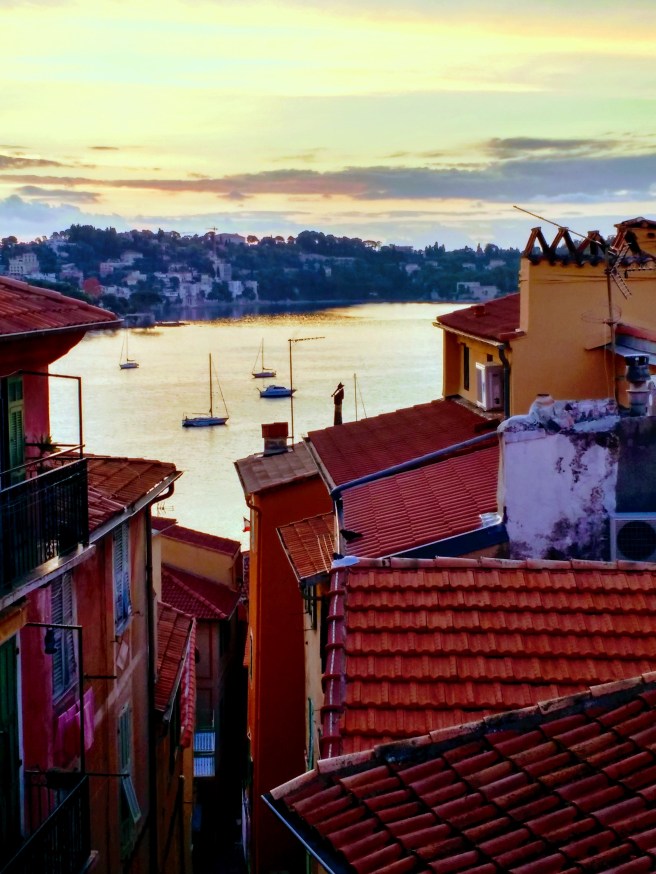
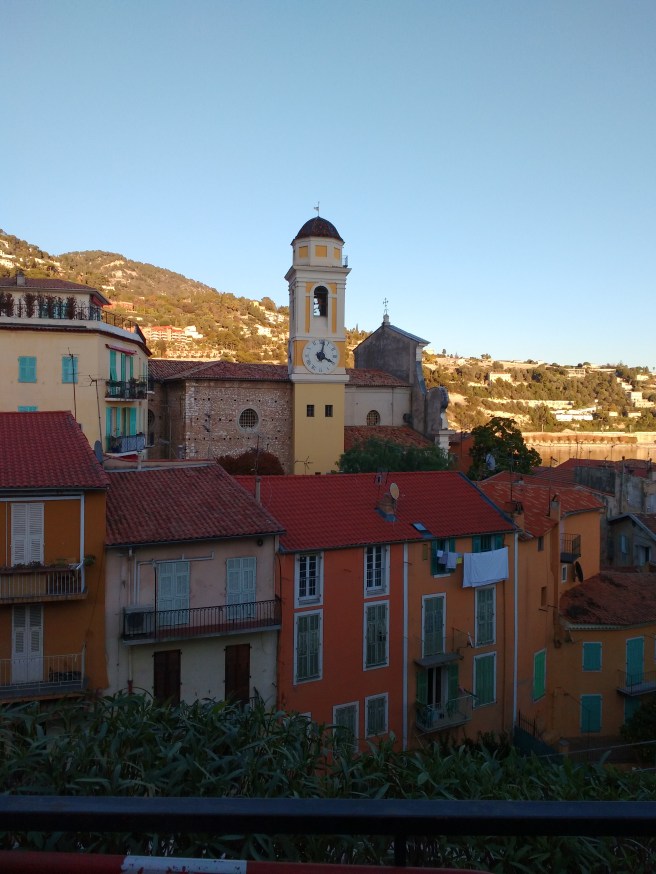
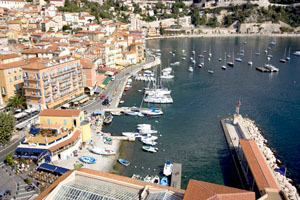
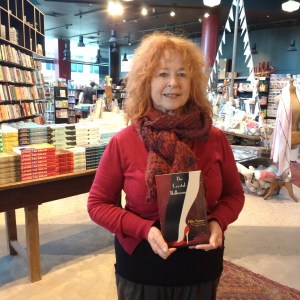
‘Jean-Pierre’, first published in Quadrant magazine in July 2016, was inspired by my frequent visits to a small fishing village in the south of France. Basically, I am always looking for story ideas. I use anything that moves or makes a noise, is what I tend to tell people. And as I like to ground my stories in a strong sense of place, Villefranche-sur-Mer was my inspiration:
This was in a far distant land. There were Pilates classes but no surfing beaches or vegan restaurants. People said to hell with low-fat diets and tiny portions. Charles, who had wanted her to hire his friend Jean-Pierre as tour guide, had encouraged her in yoga class. ‘Look, Zina, you’re a facilitator—you’ve been running those groups—for what—thirty years?’
‘Only twenty, for goodness sake.’ She had turned forty-nine and frowned at him upside down between the legs of a downward facing dog. She had a face marked by the sun, a face left to wrinkle and form crevasses by years of smoking, a face made shiny by the application of six drops of jojoba oil, although the shop girl had recommended she use only three. ‘I love that word facilitator. It says so much.’
‘Twenty. All right. This guy’s not at all your type. He’s a numbers man. He shows tourists around in between Engineering contracts. He can show you how to buy a bus or a train ticket, how to withdraw money out of the wall—get your bearings. You can hire him for half a day. Or, in your case, half a day and half the night.’
‘Very funny,’ she said, stifling a laugh. Now they were on all fours arching their backs like cats, then flattening their spines to warm up the discs. Indian chanting music took your mind off the fact that the person behind you was confronted with your broad derriere. ‘So what’s the story with Jean-Pierre?’ Continue reading →
When I used to teach classes to beginning writers, it was good. It forced me to think back to the beginning to when I first put pen to paper. The thing is, every time we sit down and face the blank page, it’s the same. Every time we start a new piece of writing, we doubt that we can do it again. A new voyage with no map. As people say, it is like setting off towards the horizon, alone in a boat, and the only thing another person can do to help us, is to wave from the shore.
So when I used to teach a creative writing class, I had to tell them the story all over again and remember that this is the first time my students are hearing it. I had to start at the very beginning.
First up, there’s the pen on the page. You need this intimate relationship between the pen and the paper to get the flow of words happening. A fountain pen is best because the ink flows quickly. We think faster than we can write. It needs to be a “fat” pen to avoid RSI.
Consider, too, your notebook. It is important. The pen and paper are your basic tools, your equipment, and they need to be with you at all times. Choose a notebook that allows you plenty of space to write big and loose. A plain cheap thick spiral notepad is good.
After that comes the typing up on the computer and printing out a hard copy. It’s a right and left brain thing. You engage the right side of the brain, the creative side, when you put pen to paper, then bring in the left side, the analytic side, when you look at the print out. You can settle back comfortably with a drink (a cup of tea even 🙂 ) and read what you’ve written. Then edit and rewrite.
Patrick White said that writing is really like shitting; and then, reading the letters of Pushkin a little later, he found Pushkin said exactly the same thing. Writing is something you have to get out of you.
I hope this Writing Tip is helpful. Do you have any tips you would add? Let me know in the comments and please share this post with a friend if you enjoyed it.
Hope you enjoy reading this short story ‘Alfresco’ first published in May-June Quadrant 2017. It took me a year of rewrites until finally reaching a publishable standard. What gave me the idea for the story was that I’d booked into a yoga retreat in Queensland and thought I’d probably get some creative writing ideas when there. But what happened was the retreat was cancelled due to lack of bookings. As I’d written a beginning for the story already I had to make the rest up. It had amused me that you could make a booking for a room with an ‘alfresco’ bathroom:
She remembers the exact moment she agreed to go to the mid-winter yoga retreat. Her friend Vivian had been there before and said she would come back a new person. Transformed. Continue reading →
When people ask me where I get my ideas from, I tell them I use the world around me. Life is so abundant, if you can write down the actual details of the way things were and are, you hardly need anything else. Even if you relocate the French doors, fast-spinning overhead fan, small red laptop, and low kneeling-chair from your office that you work in in Sydney into an Artist’s Atelier in the south of France at another time, the story will have truth and groundedness.
In Hermione Hoby’s interview with Elizabeth Strout in the Guardian newspaper the Pulitzer prize winner said her stories have always begun with a person, and her eyes and ears are forever open to these small but striking human moments, squirreling them away for future use. “Character, I’m just interested in character,” she said.
“You know, there’s always autobiography in all fiction,” Strout said, referring to her new novel, My Name is Lucy Barton. “There are pieces of me in every single character, whether it’s a man or a woman, because that’s my starting point, I’m the only person I know.” She went on to explain: “You can’t write fiction and be careful. You just can’t. I’ve seen it with my students over the years, and I think actually the biggest challenge a writer has is to not be careful. So many times students would say, ‘Well, I can’t write that, my boyfriend would break up with me.’ And I’d think, you have to do something that’s going to say something, and if you’re careful it’s just not going to work.”
In 2016 at the launch of my debut novel My Year With Sammy the launcher said: “Libby’s level of detail creates poignant insights into character and relationships. If people know Libby they may find themselves subtly entwined in one of her stories.”
On Goodreads’ website they locate The Bell Jar by Sylvia Plath under “Autobiographical Fiction” and describe the book as Plath’s shocking, realistic, and intensely emotional novel about a woman falling into the grip of insanity:
“Esther Greenwood is brilliant, beautiful, enormously talented, and successful, but slowly going under—maybe for the last time. In her acclaimed and enduring masterwork, Sylvia Plath brilliantly draws the reader into Esther’s breakdown with such intensity that her insanity becomes palpably real, even rational—as accessible an experience as going to the movies. A deep penetration into the darkest and most harrowing corners of the human psyche, The Bell Jar is an extraordinary accomplishment and a haunting American classic.” – Goodreads
My advice to you is to be awake to the details around you, but don’t be self-conscious. So here it is. I’m at a Valentine’s Day party. It’s 33 degrees outside. The hostess is sweltering over a hot oven in the kitchen. She is serving up cheese and spinach triangles as aperitifs. Relax, enjoy the party, be present with your eyes and ears open. You will naturally take it all in, and later, sitting at your desk, you will be able to remember just how it was to be eating outside in the heat under a canvas umbrella, attempting to make conversation with the people on either side of you, and thinking how you can best make an early exit.
“I don’t want to write melodrama; I’m not interested in good and bad, I’m interested in all those little ripples that we all live with. And I think that if one gets a truthful emotion down, or a truthful something down, it is timeless.” – Elizabeth Strout, the Guardian
What about you? Is there autobiography in your fiction?
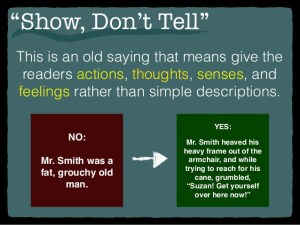
What does it mean exactly? It means don’t tell us about loneliness (or any of those complex words like dishonesty, secrecy, jealousy, obsession, regret, death, injustice, etc) show us what loneliness is. We will read what you’ve written and feel the bite of loneliness. Don’t tell us what to feel. Show us the situation, and that feeling will be triggered in us.
When you take your child to school on their first day you may find yourself teary and relieved at the same time. Put into words what you see: the child’s face, the wave at the gate, the other mothers saying their goodbyes, another child coming up to take your son by the hand. We will get what you’re trying to say without you telling us directly.
When you write, be conscious of the senses and how they connect to the experiences you are writing about. Use sight, sound, smell, touch to create concrete pictures. The senses allow you to get as close as humanly possible in words to the wedding, the sunrise, the dog, the suitcase. It’s the best way to penetrate your story and breathe life into it. Don’t tell us about something, drop deep, enter the story and take us with you.
I hope this post on show, don’t tell is useful. Do you have any tips you would add? Let me know in the comments and please share with a friend if you enjoyed it.
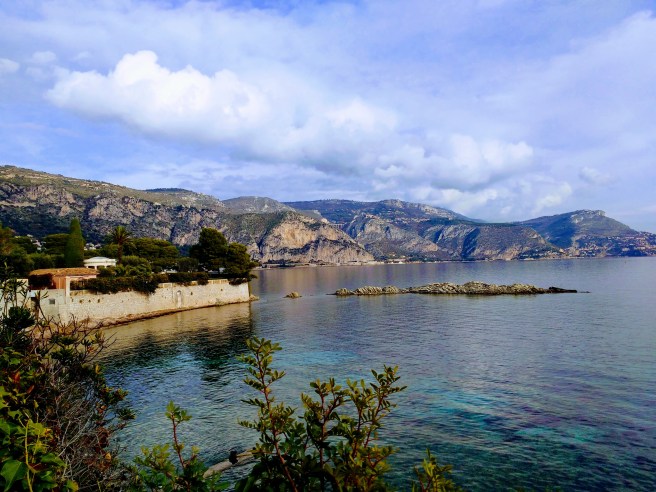
I’ve been living for two weeks now in Villefranche sur Mer a small fishing village on the French Riviera. This is the fourth year I’ve rented an apartment here and had a month to myself to read and to write and go for long walks around the stunning coastline of the Cote d’Azur.
I’ve had my ups and downs, but what’s new? I love being in this magnificent part of the world but find it challenging being alone in a foreign country where I don’t speak the language. I have tried to learn French, but languages aren’t my forte. It’s certainly a good opportunity to dig deep in silence.
Check out this article in the Huffington Post on Why Silence Is So Good For Your Brain.
As our internal and external environments become louder and louder, more people are beginning to seek out silence, whether through a practice of sitting quietly for 10 minutes every morning or heading off to a 10-day silent retreat.
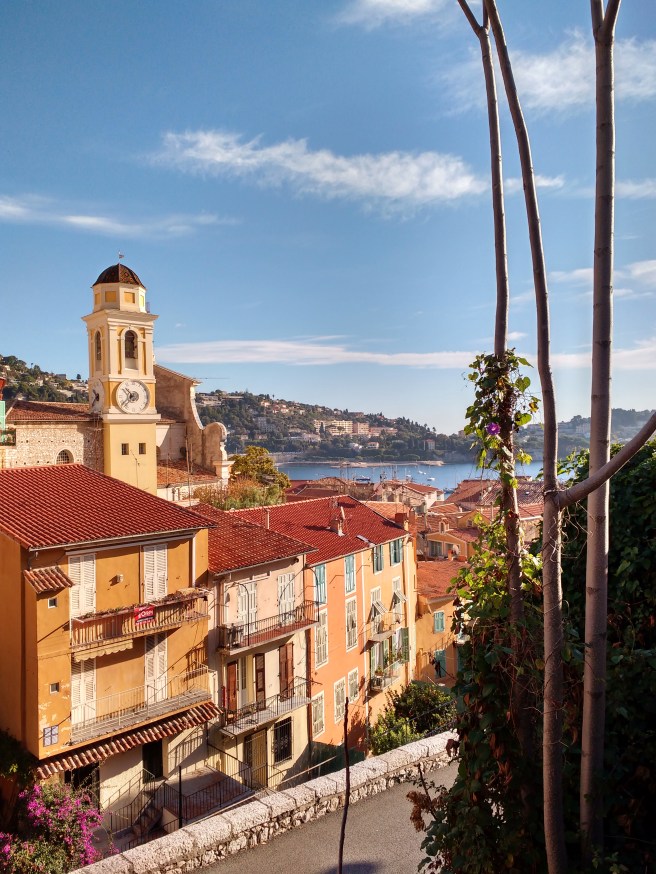
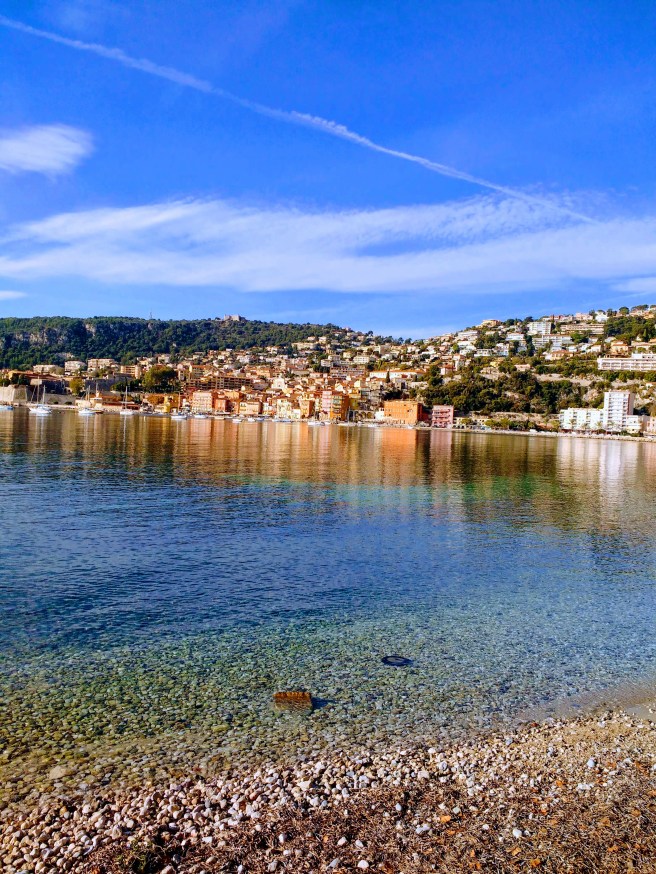
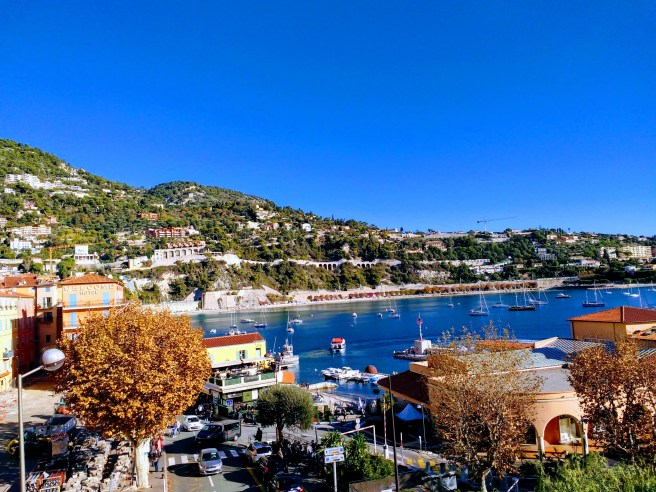
It’s mild early winter here on the Mediterranean and on sunny days people still swim and sunbake on the beach. The Bay of Villefranche, reputed as one of the five most beautiful bays in the world, is anchored by two major cities – Nice and Monaco – on either side. Villefranche is still a traditional Nicoise fishing village, pedestrians-only in the Old Town.
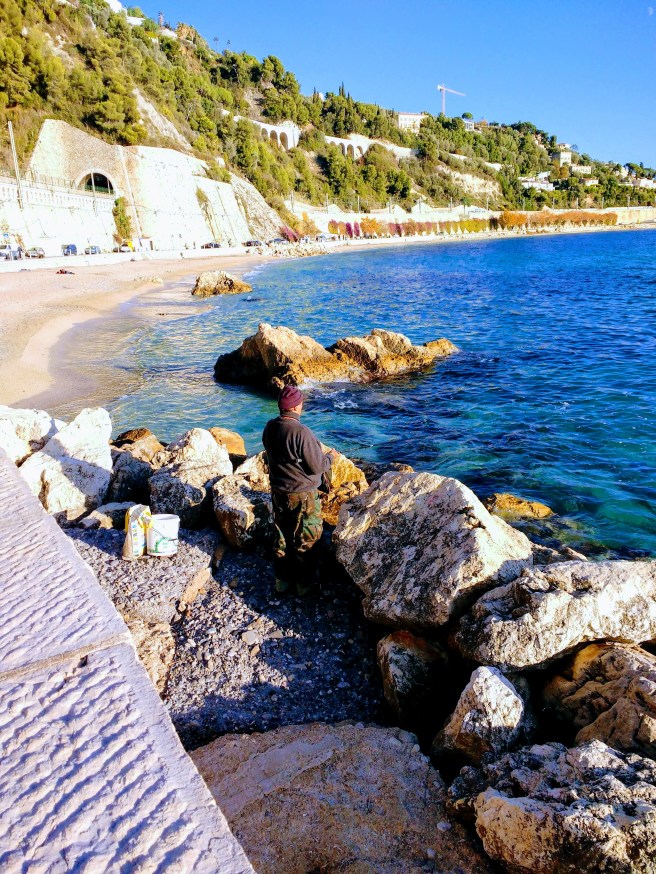
Twice a week there is a fabulous fresh market in the garden square. I especially like the cheese man on a Saturday where I buy Roquefort and Camembert. On Wednesdays I buy Italian Parmesan from the Italian man. Villefranche is close to the border with Italy, so we are able to enjoy a few special Italian treats like pizza and capuccinos. The Wednesday Italian man sells charcuterie and fresh pasta too. Another man cooks and sells socca and pissaladiere, two traditonal favourites of this area. And then there’s the man selling tapinades. The black olive tapinade is my favourite. And, of course, being a fishing village, there’s the fish monger with his freshly caught catch of the day.
fisherman
Surrounding Villefranche’s large bay are cliffs and steep hillsides, brimming with olive and citrus trees, Mediterranean pines, bougainvillea and flowering plants. The lush vegetation meets the water’s edge where the shades of blue are dazzling.
The stunning light levels here on the French Riviera have long attracted the artist and writer community (Matisse, Chagall, Picasso, Renoir, F. Scott Fitzgerald, Chanel, Cocteau and Nietzsche, to name a few).
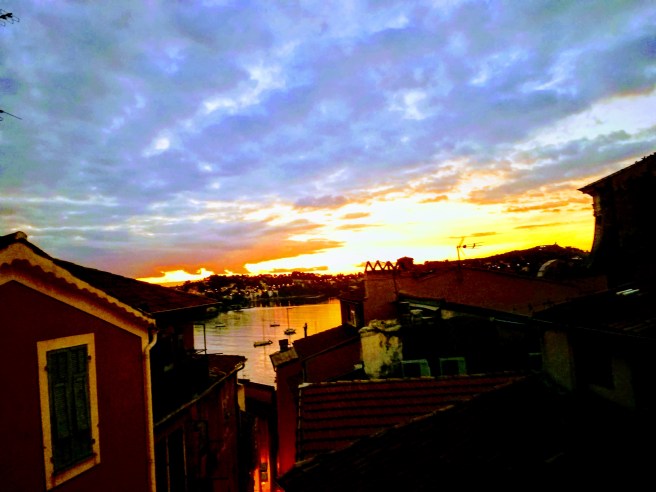
I’ve gone a bit overboard on the sunrise and sunset shots as seen from my apartment Sur le Toit (under the roof), but the colours are so stunning they are one of the highlights of my time here. Inspirational.
‘In the neutral state of aloneness, the psychoemotional line between solitude and loneliness can be as thin as a razor’s edge and as lacerating to the soul. How to draw it skillfully in orienting ourselves to the world, exterior and interior, is what poet, novelist, and memoirist May Sarton (May 3, 1912–July 16, 1995) explores in a beautiful poem she penned ten days after her twenty-sixth birthday, decades before she came to contemplate solitude in stunning prose. Originally titled “Considerations,” the poem was slightly revised and published the following year as “Canticle 6” in Sarton’s second poetry collection, the altogether sublime Inner Landscape (public library).’ – Maria Popova
CANTICLE 6 by May Sarton
Alone one is never lonely: the spirit
adventures, waking
In a quiet garden, in a cool house, abiding single there;
The spirit adventures in sleep, the sweet thirst-slaking
When only the moon’s reflection touches the wild hair.
There is no place more intimate than the spirit alone:
It finds a lovely certainty in the evening and the morning.
It is only where two have come together bone against bone
That those alonenesses take place, when, without warning
The sky opens over their heads to an infinite hole in space;
It is only turning at night to a lover that one learns
He is set apart like a star forever and that sleeping face
(For whom the heart has cried, for whom the frail hand burns)
Is swung out in the night alone, so luminous and still,
The waking spirit attends, the loving spirit gazes
Without communion, without touch, and comes to know at last
Out of a silence only and never when the body blazes
That love is present, that always burns alone, however steadfast.
I’ve brought with me to France on this writing-retreat-for-one the first 40 pages of my novel-in-progress and am working on the story, line by line, to add depth and characterisation. Am having difficulty concentrating on my manuscript though as I struggle with the emotional rollercoaster of jetlag and then a leaking apartment. Feel more settled today since I moved out of Sur le Toit and down to the waterfront. A good night’s sleep helps.
I returned to my manuscript and wrote a new sentence 🙂
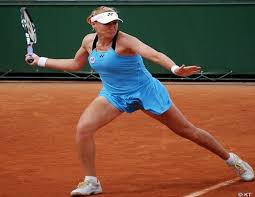
So, here’s the thing: choose something in particular to write about. For example, what it felt like having a tennis lesson after a twenty year break. Give us the specifics. Dig deep for the details, but at the same time be aware of the world around you. As you focus on what you’re writing, at the same time stay conscious of your surroundings: the white painted cane Bentwood chairs in the café, the cool breeze from under the door on your sandaled feet, the hum of the traffic outside. Just add a sentence every now and then about the trees that overlooked the tennis courts while you were having a tennis lesson. When we focus on our writing it is good. Seeing the colour of the sky when you toss the ball gives breathing space to your story.
If you are sitting in Meditation you calm the butterfly mind by paying attention to your thoughts, giving them space by acknowledging them before returning to the breath, in and out through the nostrils. In the act of slowing down your breathing, as best you can, you remain open so that you are receptive to awareness of sounds as they arise: sounds near, sounds far, sounds in front, behind, to the side, above or below.
With every breath you take, you feel the air, the sound of the ball as it hits the racket, the players on the other courts.
To slow myself down in tennis I often use the one, two, three method when serving or when receiving a ball from the server. I count ‘one’ as I prepare the service swing, ‘two’ as I toss the ball and ‘three’ when the racket connects with the ball. When receiving a serve I count ‘one’ as the server tosses the ball, ‘two’ when the server hits the ball, ‘three’ when I hit the ball to return the serve. It helps. My tennis coach Chris at Wentworth Tennis suggested I do this, to slow things down.
We should always be living in the present, not by ignoring the world around us, but by paying close attention. It is not easy to stay alive to ‘what is’. When we slow things down in our writing (and in our tennis), it is good practice.
What about you? Do you find a daily meditation practice assists your writing practice?
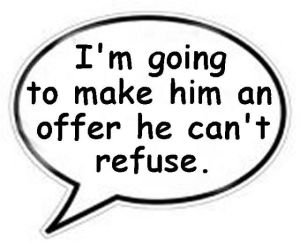
Use clear declarative sentences. This assertive statement was spoken by Don Corleone (played by Marlon Brando) in the movie The Godfather (1972).
It is not uncommon for women and other minority groups to add qualifiers to their statements. Such as ‘Parents need to stop organising every minute of their children’s spare time, don’t you think?’ ‘I loved that movie, didn’t you?’ In our sentence structure we look for reinforcement for our thoughts and opinions. We don’t always make declarative statements. ‘This is wonderful.’ ‘This is a catastrophe.’ We look for re-enforcement from others.
Another thing we do without realising it, is use indefinite modifiers in our speech: perhaps, maybe, somehow. ‘Maybe I’ll take a trip somewhere.’ As if the speaker has no power to make a decision. ‘Perhaps it will change.’ Again, not a clear declarative sentence like, ‘Yes, nothing stays the same.’
It is important for us as writers to express ourselves in clear assertive sentences. ‘This is excellent.’ ‘It was a red dress.’ Not ‘The thing is, I know it sounds a bit vague, but I think maybe it was a red dress.’ Speaking in declarative sentences is a good rehearsal for trusting your own ideas, in standing up for yourself, for speaking out your truth.
When I write poetry I read through early drafts with a critical eye, taking out indefinite words and modifiers. I attempt to distill each moment to its essence by peeling off the layers until the heart of the poem is exposed. We need to take risks as writers and go deep within ourselves to find our unique voices and express ourselves with clarity.
Even if you are not 100% sure about your own opinions and thoughts write as if you are sure. Dig deep. Be clear. Don’t be vague on the page. If you keep practicing this, you will eventually reveal your own deep knowing.
I hope this post is useful. Do you have any tips you would add? Let me know in the comments and please share this post with a friend if you enjoyed it.
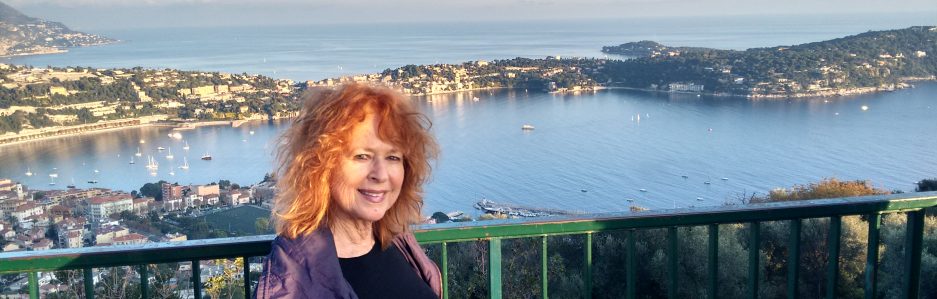
Am preparing for departure to my yearly Writing-Retreat-for-One in the south of France. I feel very privileged. A month to myself in Villefranche sur Mer, a little fishing village on the Cote d’Azur. I go to this beautiful part of the world to regenerate, to read and to write and to go for long walks along the coast to St Jean Cap Ferrat or up up up to Mont Boron. That is the view from the top of Mont Boron in my profile pic. Italy to the left and Nice, France to the right.
‘Overlooking one of the world’s loveliest natural quaysides, a privileged anchoring spot for the most prestigious cruise ships, Villefranche-sur-Mer has maintained its historic cachet with its port, the colorful façades of the Old Town and its Citadelle. Jean Cocteau, amongst other artists, fell under the spell of this enchanting site. Bathers and divers especially appreciate its beaches lapped by clear waters.’ – Cote d’Azur tourist information
I am able to fly directly to Nice from Sydney, Australia so I don’t have to pass through big airports like London and Paris. The small apartment I rent in the pedestrians-only fishing village of Villefranche sur Mer is a 20 minute cab ride from Nice. All very manageable considering it takes 24 hours sitting in a plane to fly across the world to get to Nice.
It will be early winter in France (summer time back home in Australia) so rents are slightly cheaper. Also, booking for one month gives a reduced price.
Riviera Cote d’Azur
I will be seeking inspiration on the French Riviera just like the many artists who’ve been influenced by the sparkling blue waters and scenic streets, many of whom are now regarded as the world’s most influential and important. These include Pablo Picasso, Claude Monet, Paul Cezanne, Henri Matisse and Edvard Munch. Cezanne was the first to arrive in the early 1880s.
‘Since the mid-19th century, the Cote d’Azur (French Riviera) has been luring aristocrats, the rich and the famous, and esteemed artists to its picture perfect cliff-lined coastline. After France acquired this territory in 1859 and then with the arrival of the region’s first railway system, the Riviera rapidly evolved into a popular vacation locale. The Mediterranean seaboard’s mild climate appealed to socialites looking for a retreat away from the dreary winters elsewhere in Northern Europe, and this destination also captivated the hearts of numerous prominent painters. You too can experience the very same radiant sunlight, breathtaking countryside, and vibrant hues that inspired the great works of Cezanne, Monet, Munch, Matisse, Picasso and Van Gogh.’ – auto Europe
We all need time out to regenerate. I’ll be taking with me a print out of the first draft of my novel ‘Lost In Cooper Park’. I hope to make some progress on the book at my Writing-Retreat-for-One in the south of France. The perfect place to call on the writing muse.
Interviewer: I would like you to tell me about your Path to Publication from first idea to finished book. I’d like to know your inspirations and how The Crystal Ballroom became more than an idea. I also want to know about your writing process. Do you sit at a desk 9-5 or at a cafe during snatched lunches? Did you write the book in a spurt of three months … how long did it take from start to finish? Did you have cold readers, send it to an agent or to a publisher? Were you accepted straight away? How many rewrites and drafts?
Me: I usually write stories about places and people that I know well. I take real events and characters but change things around and shake them all about and make things up. So, for The Crystal Ballroom, I had been dancing Argentine tango, rock and roll, jive, swing, Latin American and ballroom dancing for many many years. I used to dance five nights a week. I’d drive all over Sydney for technique classes and to dance at different venues. The place, ‘The Crystal Ballroom’, is a fiction but this dance hall becomes a character in the novel. I was inspired by the people I met at the dances and the politics of the ‘dance scene’.
I don’t sit at a desk 9-5 but I am extremely disciplined with my writing. I write 7 days a week. I treat my manuscript like an old friend, someone I need to stay in touch with regularly. I also exercise 7 days a week. So my routine is to go to a cafe before the gym with a print out of the previous day’s work. I edit from this hard copy and write the next scene. After the gym I walk home, type out the revisions, print out, go to another cafe in the afternoon. Repeat the process. I only work in the AM on a Sunday 🙂
It took me 4 years to write The Crystal Ballroom. The chapters are self-contained, so I was able to send some of the discreet episodes out to Quadrant magazine for publication.
I belong to a weekly feedback writing group where we critique each others’ work. So I write to that weekly deadline. In the early years, when I’d finish a manuscript I’d pay an editor or mentor to read it and give me feedback. I’d also ask a couple of friends to read it and give feedback. I never send a manuscript to an agent or a publisher that hasn’t been reworked 20 to 100 times – that includes the rewriting along the way.
My Year With Sammy was my first published book. It was accepted straight away by Ginninderra Press, a small but prestigious publisher (thought-provoking books for inquiring readers). It was my fifth book length manuscript. I had sent the previous books to agents and large publishers. All my confidence had been knocked out of me by all the rejections leading up to the fifth manuscript. Now though, I have Ginninderra Press who seem to like my work. They also published The Crystal Ballroom this year. The Usual Story will be published by Ginninderra Press next year.
It’s an extremely difficult road to publication and some people decide to self-publish rather than continue to be rejected. But other people are able to write a best-seller, an airport book that sells lots of copies, so big publishers like their work very much. Unfortunately, or fortunately, my books are classified as literary fiction, so a very small market. Big publishers are not interested in books that do not conform to the norm. Not enough money in it for them.
I am very grateful to have my small but prestigious publisher.