Sometimes we sit at our desks to write and can’t think of anything to write about. We face the blank page. We sit there until blood pours from our foreheads, as one famous author was heard to say.
Making a list can be good. It makes you start noticing material for writing in your daily life, and your writing comes out of a relationship with your life in all its richness.
10 ideas for writing practice:
Begin with “I don’t remember”. If you get stumped, just repeat the words “I don’t remember” on the page again and keep going.
Tell about sound as it arises. Be aware of sounds from all directions as they arise: sounds near, sounds far, sounds in front, behind, to the side, above or below. Notice any spaces between sounds.
Tell me about last evening. Dinner, sitting on the couch, preparing for bed. Be as detailed as you can. Take your time to locate the specifics and relive your evening on the page.
Tell me what boredom feels like.
See in your mind a place you’ve always loved. Visualise the colours, the sounds, the smells, the tastes.
Write about “saying goodbye”. Tackle it any way you like. Write about your marriage breakup, leaving home, the death of a loved one.
What was your first job?
Write about the most scared you’ve ever been.
Write in cafes. Write what is going on around you.
Describe a parent or a child.
Some people have a jar full of words written on pieces of paper and select one piece of paper at random each day and write from that. Others use a line of a poem to start them off. Then every time they get stuck they rewrite that line and keep going.
Be honest. Cut through the crap and get to the real heart of things.
Zen Buddhist, psychotherapist, writer and teacher, Gail Sher in her book One Continuous Mistake says the solution for her came via haiku (short unrhymed Japanese poems capturing the essence of a moment).
“For several years I wrote one haiku a day and then spent hours polishing those I had written on previous days. This tiny step proved increasingly satisfying,” Gail Sher.
She said it gradually dawned on her that it was not the haiku but the “one per day.” Without even knowing it, she had developed a “practice.” Every day, no matter what, she wrote one haiku. In her mind she became the person who writes “a haiku a day.” And that was the beginning of knowing who she was.
Gail Sher suggests writing on the same subject every day for two weeks.
“Revisiting the same subject day after day will force you to exhaust stale, inauthentic, spurious thought patterns and dare you to enter places of subtler, more ‘fringe’ knowing,” Gail Sher.
She writes in One Continuous Mistake that the Four Noble Truths for writers are:
Writers write.
Writing is a process.
You don’t know what your writing will be until the end of the process.
If writing is your practice, the only way to fail is to not write.
So start coming up with your own list of ideas for practice writing. Life happening around us is good grist-for-the-mill.
How many wonderful ideas have we had in our lives that never became anything more than ideas? What stopped them from becoming reality? Probably lack of drive, or fear, or both.
If the idea of writing a story, writing a memoir, or writing a blog lights a spark within you, sets off a signal, causes you to drool—or fills you with unspeakable anxiety—then you are ready to write. What is holding you back is not lack of drive, but fear. Unadulterated, stark fear.
Fear of what?
Fear of being unable to write well and being criticized by others?
Fear of being unable to stay on track long enough to get to an ending?
Fear that you just don’t have what it takes to maintain focus to tell a good story?
Research into the way the brain operates has revealed that there are two sides to the brain, left and right. Much of our fear of writing comes from the way these two sides do or don’t work together.
“We might term the right brain ‘the creator,’ for apparently it allows us to do creative things—make connections, manifest ideas, imagine situations, see pictures of events. The left side analyses, categorizes, recalls words, and performs its learning functions in a step-by-step manner,” Bernard Selling, Writing From Within.
The analytic left brain has a compartment that houses the “critic.” He or she is the person in us who says,
Watch out!
You can’t do that!
You’ll fail, so don’t even try.
You know you’re not good at that!
“If those two voices in you want to fight, let them fight. Meanwhile, the sane part of you should quietly get up, go over to your notebook, and begin to write from a deeper, more peaceful place. Unfortunately, those two fighters often come with you to your notebook since they are inside your head. So you might have to give them five or ten minutes of voice in your notebook. Let them carry on in writing. It is amazing that when you give those voices writing space, their complaining quickly gets boring and you get sick of them,” Natalie Goldberg, Writing Down the Bones.
It’s just resistance.
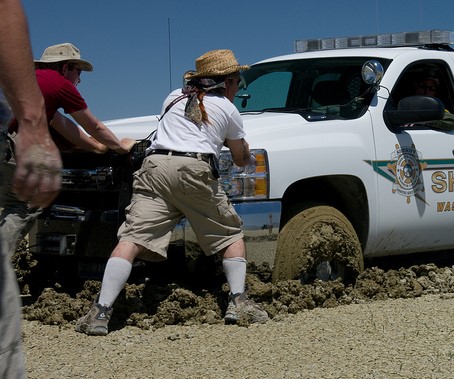
Sometimes, the harder you try, the more you become stuck in your own negativity. It can feel like car tyres spinning in a bog and you just can’t move forward with ‘the work’. Your resistance is actually greater than your desire to write. That’s when you need to say ‘stop’ and put it aside for now. Look for another outlet for your energy before starting again. Take a break and read books by wonderful writers. When I get stuck I turn to contemporary poetry for inspiration – thoughtful and passionate poems about living in the modern world. Some of my favourite poets are: Mary Oliver, Naomi Shihab Nye, Les Murray and Joanne Burns.
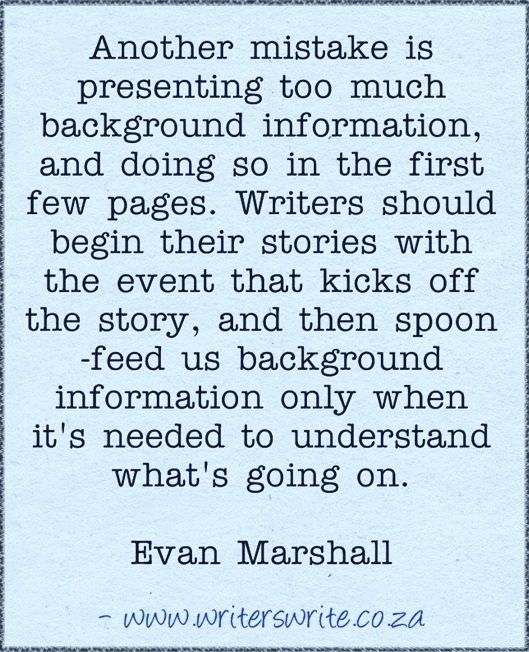
Sometimes I start another writing project before going back to the original one to get more perspective on things. Other times I will study the beginning and endings of books to get inspiration for a new beginning or a new ending, or sometimes work backwards from the ending as a way to restart.
But don’t get caught in the endless cycle of guilt, avoidance, and pressure. When it is your time to write, write. Put yourself out of your misery and just do it.
What about you? Any tips you’d like to share about overcoming the resistance to write?
At a literary event I heard someone say, “The thing to do is put the idea in your subconscious. Your brain will do the work.”
It takes time for our experience to make its way through our consciousness. For example, it is hard to write about a journey while you are still in the midst of the adventure. We have no distance from what is happening to us. The only things we seem to be able to say are “having a great time”, “the weather is good”, “wish you were here”. It is also hard to write about a place we just moved to, we haven’t absorbed it yet. We don’t really know where we are, even if we can walk to the train station without losing our way. We haven’t experienced three scorching summers in this country or seen the dolphins migrating south along the coast in the winter.
“Maybe away from Paris I could write about Paris as in Paris I could write about Michigan. I did not know it was too early for that because I did not know Paris well enough.” – Ernest Hemingway, A Moveable Feast (New York: Charles Scribner’s Sons, 1964).
So we take in experience, but we need to let things make their way through our consciousness for a while and be absorbed by our whole selves. We are bower birds, collecting experience, and from the thrown away apple skins, outer lettuce layers, tea leaves, and chicken bones of our minds come our ideas for stories and poems and songs. But this does not come any time soon. It takes a very long time (three to ten years in the case of literary fiction). We need to keep picking through those scraps until some of the thoughts together form a pattern or can be organised around a central theme, something we can shape into a narrative. We mine our hidden thoughts for ideas. But the ideas need time to percolate: to slowly filter through.
Our work is to keep rummaging through the rubbish bins of our minds, exercising the writing muscle, in readiness to answer that knock at the door when it comes.
Rumi, the thirteenth-century Sufi poet, summed up what could be the creative process when he wrote “The Guest House”:
This being human is a guest house.
Each morning a new arrival.
A joy, a depression, a meanness,
some momentary awareness comes
as an unexpected visitor.
Welcome and entertain them all!
Even if they are a crowd of sorrows,
who violently sweep your house
empty of its furniture,
still, treat each guest honorably.
He may be clearing you out
for some new delight.
The dark thought, the shame, the malice,
meet them at the door laughing and invite
them in.
Be grateful for whoever comes,
because each has been sent
as a guide from beyond.
Jalaluddin Rumi, in The Essential Rumi Translated by Coleman Barks, 1999
As the author Vivian Gornick said, “The writers life is the pits. You live alone and you work alone, every day I have to recreate myself.” She paused and laughed. “But when the work is going well there is nothing that compares.”
What about you? Are you ready to answer the knock at the door?
Have a read of my short story, ‘Towards the End’, first published in Quadrant Magazine. ‘Towards the End’ is one of the tales in my collection, ‘Stories from Bondi‘ (Ginninderra Press).
I hope you enjoy it.
Towards the End:
He leaned back on the chrome chair, stretched his legs out under the square black table and placed his mobile phone in front of him. He looked over to the counter at the back of the cafe at the cakes and muffins on display and the Italian biscuits in jars. He turned back to the glass windows and wondered if he had the guts to tell her today. He wanted to. By Christ he wanted to. He straightened up, his elbows on the table, his hands clasped together in front of his face. There’d been some good times, that’s for sure. But what the heck. A man’s got to do what a man’s got to do.
The sliding glass door clanked open and Anny walked in. He looked over at her, first from the rear as she closed the door and then as she approached, her face flushed, her dark hair flying back from her shoulders. Not bad looking. A bit on the heavy side but not a bad looker all the same. Yes, there’d been some good times. Especially in the sack.
Anny removed her sunglasses as she walked over and he looked into the bright green of her eyes as she bent down and kissed him on the cheek. He felt the moisture on her face as her skin touched his.
She took off her sunshade and hung it on the back of the chair and sat down.
You’ll never guess what happened, she said.
What?
I’m still so angry I can hardly speak. She pushed her hair away from her forehead as she dabbed at the sweat with a serviette.
What happened?
This man, she said. This dreadful man. Anny used her fingers to wipe the moisture from under her eyes. I was walking along the cliff path from Bondi to Bronte, like I usually do, minding my own business, when I heard a jogger behind me.
Nothing unusual about that.
So I moved further to the left to let him pass.
Yeah. That’s the rules, keep to the left.
He must have been about to pass on the inside because next moment I heard a thud and there he was picking himself up from the side of the track.
Anny stopped talking as the waitress approached with notepad and pen.
A spaghetti marinara for me, said Daniel smiling at the waitress. And a coffee.
How do you like your coffee?
He grinned at her. Hot and black, thanks.
Anny turned away from him and squinted at the blackboard. I’ll have the Greek salad and a decaf skimmed cap. And a glass of water, please.
And I’ll have an orange juice as well, said Daniel.
Daniel’s eyes followed her as she walked towards the kitchen. Then his mobile buzzed from the table. He picked it up and held it to his ear.
Yep, he said. I can give them a ballpark figure, but that’s about it. Just a ballpark. Yeah, okay then. Here’s his number. Daniel opened the front of the phone and pressed a button. 0413 501 583, he said. He put the phone back on the table its antennae sticking out towards Anny. I hate it when people say things like that, he said.
What?
Oh nothing. Just the usual crap. They all think they can get something for nothing.
Daniel’s pasta arrived first and he began to eat. He sucked in a spaghetti tail and then impatiently cut some of the pasta with his knife. He dispensed with the knife and continued to eat with his fork. He scooped up the marinara with its splayed-like prongs.
So what happened? he said as he sucked in a loose strand of spaghetti, catching its long skinny tail with his fork.
He must have caught his foot on the edge between the footpath and the grass. I was about to say ‘are you all right’ when he roared out at me ‘it’s all your fault you know’. ‘I was keeping to the left’ I said. He ignored me and ran on, red shiny shorts flapping. How dare he speak to me like that. ‘Asshole’ I called out after him. He gave me the finger up sign and kept running. I was furious.
Daniel didn’t answer as he waited for the waitress to place a plate of salad in front of Anny. He blew on his pasta before placing another mouthful towards the back of his tongue, his thin lips closing over the fork.
When I reached Bronte, said Anny. This man had finished his circuit and was on his way back. We recognised each other and he started telling me off about which side of the path I could walk on. ‘Don’t tell me where to walk mate’ I hissed. That’s when he stopped jogging and moved towards me. I thought he was going to punch me.
Really?
I was a bit scared I can tell you, but I braced myself. That’s when he said ‘you’ve got some chip on your shoulder because you’re fat and ugly’. I laughed at him because it sounded so ridiculous and as far as that was concerned it proved my point. What an asshole. Just thinking about it makes me angry.
Daniel turned away from her. He couldn’t tell her now. Not after that. He looked out the window to the truck parked across the road. ‘Dean’s Premium Natural Fruit Juice: the way it should be’ emblazoned on the side. The way it should be. That’s a bit of a joke. Well I know this is the way it shouldn’t be. He couldn’t get Louise out of his head.. That last time – her tight white t-shirt over those tight little breasts – leaning over her plate. Eating that huge roll. The sight of her opening her mouth so wide he thought the sides of her lips would crack. Stuffing it in she was. Later at her place when he couldn’t wait. Coming up behind her as she cleaned her teeth. Ramming it in.
He tore the crusty white Italian bread into small pieces and used it to mop up the remains of the sauce and wiped the red sauce from the corner of his mouth. He reached for his glass and sucked up the remains of his orange juice through a yellowed straw, then burped. He put the glass down, his broad hand wrapped around the grooved surface and leaned across the table. He looked into Anny’s face.
I have to go.
Go where?
I’ll pay the bill.
What’s wrong?
I want to make a move on that Elizabeth Bay deal.
He stood up, his keys dangling from the loop at the back of his trousers, his rubber soled shoes silent as he headed towards the door. Only the sound of his keys and then the bang of the door.
Outside he pulled out his mobile and dialed.
I’m leaving now honey, he said. I’ll be there in a few minutes.
In the cafe Anny watched from the window. She sighed, stood up slowly and then walked over to the cake counter. He’s a workaholic that bloke.
I’ll have a slice of that chocolate mud cake and a cappuccino, she said to the girl behind the register.
I highly recommend this book a friend from London gave me many years ago at the beginning of my writing journey. It’s an old one, but a good one.
‘A reissue of a classic work published in 1934 on writing and the creative process, Becoming a Writer recaptures the excitement of Dorothea Brande’s creative writing classroom of the 1920s. Decades before brain research “discovered” the role of the right and left brain in all human endeavor, Dorothea Brande was teaching students how to see again, how to hold their minds still, how to call forth the inner writer.’ – Amazon
‘Refreshingly slim, beautifully written and deliciously elegant, Dorothea Brande’s Becoming a Writer remains evergreen decades after it was first written. Brande believed passionately that although people have varying amounts of talent, anyone can write. It’s just a question of finding the “writer’s magic”–a degree of which is in us all. She also insists that writing can be both taught and learned. So she is enraged by the pessimistic authors of so many writing books who rejoice in trying to put off the aspiring writer by constantly stressing how difficult it all is.
With close reference to the great writers of her day–Wolfe, Forster, Wharton and so on–Brande gives practical but inspirational advice about finding the right time of day to write and being very self disciplined about it–“You have decided to write at four o’clock, and at four o’clock you must write.” She’s strong on confidence building and there’s a lot about cheating your unconscious which will constantly try to stop you writing by coming up with excuses. Then there are exercises to help you get into the right frame of mind and to build up writing stamina. She also shows how to harness the unconscious, how to fall into the “artistic coma,” then how to re-emerge and be your own critic.
This is Dorothea Brande’s legacy to all those who have ever wanted to express their ideas in written form. A sound, practical, inspirational and charming approach to writing, it fulfills on finding “the writer’s magic.”‘ – John Gardner
‘Samuel Beckett, answering a hopeless question from a Paris newspaper – “Why do you write?” – said it was all he was good for: “Bon qu’a ca.” Georges Bernanos said that writing was like rowing a boat out to sea: The shoreline disappears, it is too late to turn back, and the rower becomes a galley slave. When Colette was seventy-five and crippled with arthritis she said that now, at last, she could write anything she wanted without having to count on what it would bring in. Marguerite Yourcenar said that if she had inherited the estate left by her mother and then gambled away by her father, she might never have written another word. Jean-Paul Sartre said that writing is an end in itself. (I was twenty-two and working on a newspaper in Montreal when I interviewed him. I had not asked him the why of the matter but the what.) The Polish poet Aleksander Wat told me that it was like the story of the camel and the Bedouin; in the end, the camel takes over. So that was the writing life: an insistent camel.’ – extract from the Preface of The Selected Stories of Mavis Gallant.
Sometimes we sit at our desks to write and can’t think of anything to write. We face the blank page. We sit there until blood pours from our foreheads, as one famous author was heard to say.
Making a list can be good. It makes you start noticing material for writing in your daily life, and your writing comes out of a relationship with your life in all its richness.
10 ideas for writing practice:
Begin with “I don’t remember”. If you get stumped, just repeat the words “I don’t remember” on the page again and keep going.
Tell about sound as it arises. Be aware of sounds from all directions as they arise: sounds near, sounds far, sounds in front, behind, to the side, above or below. Notice any spaces between sounds.
Tell me about last evening. Dinner, sitting on the couch, preparing for bed. Be as detailed as you can. Take your time to locate the specifics and relive your evening on the page.
Tell me what boredom feels like.
See in your mind a place you’ve always loved. Visualise the colours, the sounds, the smells, the tastes.
Write about “saying goodbye”. Tackle it any way you like. Write about your marriage breakup, leaving home, the death of a loved one.
What was your first job?
Write about the most scared you’ve ever been.
Write in cafes. Write what is going on around you.
Describe a parent or a child.
Some people have a jar full of words written on pieces of paper and select one piece of paper at random each day and write from that. Others use a line of a poem to start them off. Then every time they get stuck they rewrite that line and keep going.
Be honest. Cut through the crap and get to the real heart of things.
Zen Buddhist, psychotherapist, writer and teacher, Gail Sher in her book One Continuous Mistake says the solution for her came via haiku (short unrhymed Japanese poems capturing the essence of a moment).
“For several years I wrote one haiku a day and then spent hours polishing those I had written on previous days. This tiny step proved increasingly satisfying,” Gail Sher.
She said it gradually dawned on her that it was not the haiku but the “one per day.” Without even knowing it, she had developed a “practice.” Every day, no matter what, she wrote one haiku. In her mind she became the person who writes “a haiku a day.” And that was the beginning of knowing who she was.
Gail Sher suggests writing on the same subject every day for two weeks.
“Revisiting the same subject day after day will force you to exhaust stale, inauthentic, spurious thought patterns and dare you to enter places of subtler, more ‘fringe’ knowing,” Gail Sher.
She writes in One Continuous Mistake that the Four Noble Truths for writers are:
Writers write.
Writing is a process.
You don’t know what your writing will be until the end of the process.
If writing is your practice, the only way to fail is to not write.
So start coming up with your own list of ideas for practice writing. Life happening around us is good grist-for-the-mill.
My short story ‘After the Games’ was first published in Quadrant magazine and is included in my collection of short fictions titled ‘Stories from Bondi’ published by Ginninderra Press. Have a read. Hope you enjoy it.
After the Games:
1.
Anny saw him again today. He looked older. Their paths crossed on the cliffs between Bronte and Bondi. He walked with a woman she had never seen before. The woman had long beautiful legs – bronzed a clear nut-brown. She was wearing a man’s undershirt and brown shorts and had a crochet bag hanging loosely from a black nylon strap draped over her hips. Her hair was long and it flicked out in golden corkscrews over her shoulders and down her back. They were laughing. He walked right past Anny and kept right on walking.
2.
The beach seems unusually quiet today apart from a yoga class taking place on the grassy verge behind the Pavillion. On the ocean, surfers in wetsuits loll motionless on surfboards. On the sand, a gaggle of seagulls stand rigid as Irish dancers. And over on the rocks at the southern end of the beach other seagulls laze in the early sun in groups of three or four, or six or eight – their chests puffed out, feathers bristling in the spring breeze, as they nestle into the face of the rock.
It is shortly after the Sydney 2000 Olympic Games and Anny is on a rostered day off from her job with the ABC. She is also a poet but she doesn’t refer to that unless it is something people know already. She doesn’t think of making a living as a poet, not only because the income would be non-existent, but because she thinks, as she has innumerable times in her life, that probably she will not write any more poems.
On the grass a woman works out with her female personal trainer. The trainer holds an oblong plastic cushion at waist height while the woman kicks the bag.
One, two, three, calls out the trainer.
Kick, kick, kick, goes the woman’s leg hard into the cushion.
Four, five, six.
Kick, kick.
That’s the way, the trainer encourages.
Nine, ten, she continues with a rising inflection in her voice.
The trainer is forced backwards slightly with each kick but makes a quick recovery to her original position.
3.
A man and a woman lie together kissing, sheltered by the shadow of the rocks at the southern end of the beach. Anny came here at night with Howard and they sat over there near the rocks with their arms around each other into the night. The pull of the tide kept bringing the waves closer to their feet. Anny saw the froth advancing and retreating and her own toes digging into the sand. All the time he spoke she saw her feet and when they started to go numb in the damp sand she knew without looking up what he was going to say; the whole of her seemed to be in her toes. Her love was in the waves. For some reason she thought that if the waves reached her, things would work out between them. The waves advanced and retreated but never quite reached the rock where they sat: never quite bridged the gap, the space between them and the ocean.
4.
On the sand a one-legged seagull hops towards the water laboring over the crumbs of loose sand which break away and roll down as he passes over them. The one-legged seagull seems to have a definite goal in sight differing from the high-hopping tangerine-footed bird who attempts to cross in front of him, and who waits for a moment with his black beak trembling as if in deliberation, and then hops off as rapidly and strangely in the opposite direction. A line of seaweed with deep green lakes in the hollows lies between the seagull and the water’s edge where the other gulls are pecking for food. The seagull waits, undecided whether to circumvent the mountain of seaweed or to breast it.
Anny stops and watches the struggle of the seagull.
5.
The ocean is grey and flat today. It is so quiet in fact that she can hear the tiny whisper of the breeze, the rustling of the waves approaching the shore, the creaking of the wings of a gull-like bird which flies low over the Promenade and the flapping of her own thin skirt as it blows against her legs. But there is no wind, nothing but a steady pressure forward as she progresses along the beach. Somewhere behind the veil of clouds there is a pale sun which can be seen, in the far distance, that casts a white gleam on the water.
Who would know there had been a Beach Volleyball Stadium here on the beach at Bondi? She bought tickets for the preliminaries for herself and her son. They hadn’t been out, just the two of them, since he was a little boy when she took him to a Kiss concert.
After the game they’d walked back to her place and he’d come in briefly for a glass of water before saying goodbye. She’d kissed him on the neck – on that soft groove that she used to know so well when he was a little boy.
When he’d left she couldn’t think of anything for the rest of the afternoon except that soft part of his neck and the kiss.
6.
Near the end of the Promenade a woman cradles a baby in her arms. Anny can see the baby’s face clearly as it is lit by the sun. She can almost smell the baby’s soft hair, that familiar baby smell she once knew so well. The woman strokes the baby and looks down at it and the baby looks back up at her. She looks up again with a faraway gaze that all new mothers seem to have and rocks slowly from side, to side, her feet shuffling against the cement. The light picks up the woman’s high cheekbones and glints off her glasses.
Anny moves to the left as a woman pushing a three wheeled stroller runs past. The baby clutches the sides of the pram, the front wheel lifting as the woman negotiates the corner.
7.
Anny first met Howard at a dinner party at a mutual friend’s house. He’d talked business with the host and she hadn’t really connected with him. It was only towards the end of the meal when he’d passed her the chocolate-covered strawberries and encouraged her to eat one that she’d warmed to him slightly. Go on, he’d said. Have one. Chocolate is good for you. He was a chunky sort of a bloke, a thick head of brown hair, greying at the sides. She had to admit that she wasn’t attracted to him when they first met. You were disappointed I could tell, he said later. A week after the dinner he’d rung and asked her out for dinner. He’d come over to pick her up and they’d walked down to Bondi. Coming back to her place later he told her he knew she was interested in him because she kept brushing into his arm as they walked up the hill.
8.
Anny trusts what she makes of things – usually. She trusts what she thinks about friends and chance acquaintances, but she feels stupid and helpless when contemplating the collision of herself and Howard. She has plenty to say about it, given the chance, because she likes to explain things, but she doesn’t trust what she says, even to herself; it doesn’t help her.
Because everything and everyone else in his life came before me, she might say. His two businesses, his children, his ex-wife who lived across the road.
9.
The one-legged seagull has now considered every possible method of reaching his goal without going round the line of seaweed or climbing over it. Aside from the effort required to climb the seaweed, he is doubtful whether the slippery texture will bear his weight. This determines him finally to creep beneath it, for there is a point where the seaweed curves high enough from the ground to admit him. He inserts his head in the opening and takes stock of the high brown roof and is getting used to the cool brown light before deciding what to do next.
10.
Howard had said he uses his air rifle to kill birds. He said he’s proud to shoot introduced birds around his house – and has no hesitation in killing dive-bombing magpies and noisy possums.
She remembers his house well. Big, two-stories, red-brick, four bedrooms, two bathrooms, a swimming pool out the back. Black leather and chrome, art books on the coffee tables. Huge original paintings on the walls.
He’d stay in the family room when his children were visiting, which was seven days out of fourteen – everyone in their own special seat at a computer or watching television or talking on the telephone. There was no spare seat for Anny and not enough light to read by.
She bought flowers. She bought presents for his children; clothes for the girls; she talked music with his son. She learned pathways around the house and found places outside where she could sit.
She’d felt flattered when he said that he wanted her to move in with him. He offered to build her a studio out the back. A dog house, a friend had said. He wants you out the back in the dog house so he can keep an eye on you. So you can be on hand whenever it suits him.
Howard talked about all the women his friends had lined up for him – waiting to be introduced. He spoke about a former girlfriend and how he wanted her to move in with him but she wouldn’t, so he ended the relationship. Later Anny found out that Howard had kept on seeing the former girlfriend even ringing her from Paris from the conference Anny had foolishly agreed to attend with him. She’d stupidly insisted on paying her own business class airfare, which she couldn’t afford, in order to be by his side.
She didn’t know any of this until it was too late – until she’d become needy and dependent.
You just want a handbag, a doormat, a warm body in the bed, she’d accused him.
I have a fatal flaw, he’d explained. I only want what I cannot have.
And what are Anny’s flaws? Angry, demanding, unco-operative Anny. Anny, the unsatisfactory poet.
11.
Two pigeons waddle along the concrete in search of food. Their tails wag back and forth, their necks jut in and out like finely linked springs moving to the rhythm of their webbed feet. On the grass the men and women practicing yoga twist their bodies into unimaginable knots and drop into breathtaking back bends, seeming to hang suspended in the air as they jump from one position to the next. The clear measured voice of the female yoga teacher calls out instructions:
Push down through the buttocks
Pull up through the rib cage
Relax the head down
Spread the fingers out wide
Toes under
Push the hips up
Keep the mind focussed in the moment
Roll over on to your back
And come into the corpse position
If you live alone and you can’t close your hand, it makes life very difficult as you get older, says the yoga instructor. Not being able to open a jar or turn a key in the lock. Every morning when I wake up I take the time to stretch out my body, she continues. I rotate my ankles, stretch out my feet and arms, and then I stand up and stretch out my neck. How many of you stretch in the mornings? Living in the city takes a toll on our health. We sit at a desk writing or sit at the computer – but we need to stretch the hands, the wrists, the hip flexors and to keep our bodies moving.
Anny wonders if the early morning stretches are only for people who live alone – for people who don’t wake up with their lover beside them.
12.
The last time she saw Howard they sat in her car near Ben Buckler in the rain. She rested her hands against the steering wheel, then leant back and listened as the windscreen started to fog. She felt the rise and the fall of her own breathing but she couldn’t hear her heart or her breath. She knew without seeing that the waves were colliding. Below, the swells rolled against the brown cliffs that she couldn’t see.
When she drove back to her apartment she sat down on a chair in her bedroom. She sat for an hour or so, then went to the bathroom, undressed, put on her nightgown, and got into bed. In bed she felt relief, that she had got myself home safely and would not have to think about anything any more.
In fact her only memory now is of the sound of the windscreen wipers swinging back and forth as she and Howard sat in silence in her car.
After the Maccabi bridge collapse in Israel she rang to see if his daughter had been involved. She left a message on his answer machine but he never returned her call.
He wrote to her care of the ABC, to say he’d pack and send her things.
13.
The grey underside of wings flap as a triangle of seagulls fly past in perfect formation above the rocks. They climb to a thousand feet, then, flapping their wings as hard as they can, they push over into a blazing steep dive toward the waves. They pull sharply upward again into a full loop and then fly all the way around to a dead-slow stand-up landing on the sand.
14.
Effortlessly the one-legged seagull spreads his wings and lifts into the air. In the light breeze he curves his feathers to lift himself without a single flap of wing from sand to cloud and down again.
He climbs two thousand feet above the sea, and without a moment for thought of failure and death, he brings his fore wings tight in to his body, leaving only the narrow swept wingtips extended into the wind, and falls into a vertical dive.
With the faintest twist of his wingtips he eases out of the dive and shoots above the waves, a gray cannonball under the sun.
He trembles ever so slightly with delight.
15.
She had his sweater draped over her shoulders. They were laughing. Anny watched their backs move away. She waited by the sea until the sun went down.
16.
The swell is up, the Pacific Ocean expressing its power across the rocks below Anny in spectacular explosions of spray.
It is colder now and the day is fading. A little wind has blown up. The wind tears at her hair. With a wild gesture she pulls her hair loose from its side combs and lets it stream across her face and then lets it fly back in the wind.
A weak sun emerges. She stands still and lifts her face.
17.
Keep your hips still, swing your arms, keep your lower abdominals tight to protect your back. Try to keep your chest high, a nice long neck. Keep your arms out nice and long. Relax the shoulders. Stand tall. Go over to the right side, keep your knees soft. Very slowly. And the other side. Forward roll. Drop the chin into the neck. Hold it. Keep your knees soft and come back up. Really concentrate on spinal articulation here – vertebrae by vertebrae slowly roll it up, shoulders relaxed. Chin in, roll it down. Keep those knees soft. Bend your knees as much as you have to. Go down for four, push it in. Stretch out the shoulders there. Hold it and release the hands on to the ground and roll it back up. Take your right leg out in front. Hands on the hips, keep the hips square. We’re going over in a nice square line. Should be able to stretch the hamstrings there.
Writing as a daily practice is a way to exercise the writing muscle. Like working out at the gym, the more you do it, the more results you get. Some days you just don’t feel like working out and you find a million reasons not to go to the gym or out for a jog, a walk, a swim, a bike ride, but you go anyway. You exercise whether you want to or not. You don’t wait around till you feel the urge to work out and have an overwhelming desire to go to the gym. It will never happen, especially if you haven’t been into health and fitness for a long time and you are pretty out of shape. But if you force yourself to exercise regularly, you’re telling your subconscious you are serious about this and it eventually releases its grip on your resistance. You just get on and do it. And in the middle of the work out, you’re actually enjoying it. You’ve felt the endorphines kick in. When you get to the end of the jog, the walk, the bike ride, the swim, the gym workout or the Pilates, Yoga or Zumba class, you don’t want it to end and you’re looking forward to the next time.
That’s how it is with writing too. Once you’ve got the flow happening, you wonder why it took you so long to turn up on the page. Bum on chair is what I say to my writing students. Through daily practice your writing does improve.
In The Artist’s Way, Julia Cameron’s book on discovering and recovering your creative self, she refers to daily writing practice as the morning pages. She recommends writing three pages of longhand, strictly stream-of-consciousness—moving the hand across the page and writing whatever comes to mind every day.
Author of Writing Down the Bones, Natalie Goldberg refers to writing practice as timed exercise. She says you might time yourself for ten minutes, twenty minutes, or longer. It’s up to you, but the aim is to capture first thoughts. “First thoughts have tremendous energy. It is the way the mind first flashes on something. The internal censor usually squelches them, so we live in the realm of second and third thoughts, thoughts on thought, twice and three times removed from the direct connection of the first fresh flash.”
Her rules for writing practice are:
1. Keep your hand moving. 2. Don’t cross out. 3. Don’t worry about spelling, punctuation , grammar. 4. Lose control. 5. Don’t think. Don’t get logical. 6. Go for the jugular.
In Creative Journal Writing, author Stephanie Dowrick refers to the same process as free writing; writing without judging, comparing and censoring. “Continuing to write when you don’t know what’s coming next and especially when you feel your own resistances gathering in a mob to mock you.”
Daily writing practice has been described as clearing the driveway of snow before reaching the front door. In other words, it’s what we do as a warm up before the real writing takes place. And it’s a way to loosen up and discover our own unique writing ‘voice’. That’s what publishers are looking for when they read through the slush pile. The storyteller’s voice. The authentic writing voice of the author is what engages the reader.









 Libby Sommer, Author