My Short Story, ‘Michael’

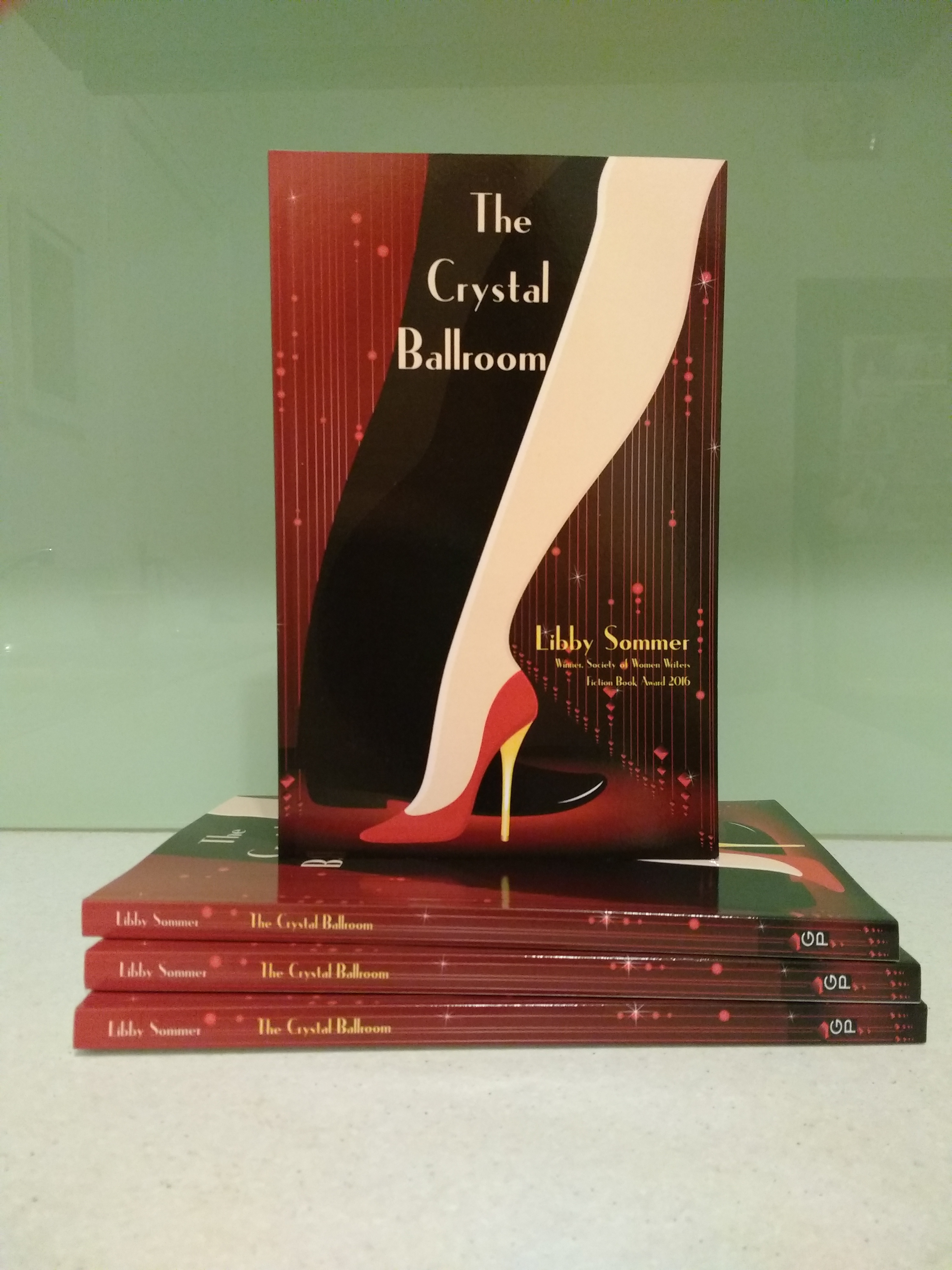
Have a read of my short story, ‘Michael’, first published in Quadrant Magazine. It’s one of the stories in my collection ‘The Crystal Ballroom‘ (Ginninderra Press).

Michael:

He’s waiting at the bottom of the ramp, just inside the steel fence that cordons off the entry to the station.  He said to give him a ring from her mobile when the train passed Gosford.  She quickens her pace, adjusts the overnight bag on her shoulder. She is close enough to see the soft fold of his graying hair, the clear smooth glow of his skin.  In his white socks and slip-on loafers he looks very English.

It wasn’t easy to get herself on a train and up to the Central Coast.  It took a lot of encouragement on his part and a steely determination on her side of things to get out of Sydney.  But now she’s glad already that he kept pressing.  ‘It will do you good,’ he said on the phone, ‘to get out of the city for a couple of days.  It will give you a new perspective on things.’

He knows about her tendency to brood and her struggle to manage the drowsiness that follows.  They talk about these things on the telephone.  He also struggles to get through the days, suffers with the same lethargy.  He says he prefers to tell people he has ‘chronic fatigue’.  People understand the term ‘chronic fatigue’.

He sees the deepening of laugh lines around her mouth and eyes, her face browned by the sun, her hair spiked and in shock.  He tells her that she looks the same as he remembers.  She assures him he looks very well and living away from the city obviously agrees with him.

Would she like a coffee?  Or would she prefer to have a shower first?  Some people needed to have a shower before they could do anything.

For goodness sake.  It was only a couple of hours on the train.  She would like to wash her hands though.  They smelt of the tuna sandwich she’d eaten on the train.

Sure, sure.  He’s been waiting all day for a coffee.  They’ll go somewhere close by.

She’d agreed on the phone that there’d be no post mortem.  ‘Don’t worry,’ she said.  ‘I’m happy to be in the present.  I don’t need any analysis.  You’re the one who goes on and on … on the telephone.’

How well she remembers that first time she had seen him.  He was at one of the Saturday night dances that she used to frequent.  He was standing at the side of the hall, his thick blonde hair brushed back off his forehead. He’d asked her to dance, said she danced well.  Then they’d met up regularly and got to know each other.  He wanted them to hire a hall and practice their dance routines.  ‘But we mustn’t get involved, you and me,’ he warned.  ‘Too dangerous.’  They were sitting in his car at the time, so close in the front seat that she could smell the Palmolive soap on his skin.  She watched his hands as he put the car into gear and reversed up the driveway.

Now, he opens the back door of his car and motions for her to get in.

‘Sorry about the mess,’ he says.  ‘It’s easier if you sit in the back.  Easier than moving all that stuff on the front seat.’

It’s the same car as last time, an orangy-red Mitsubishi with scratches down the side, the same cracked glass of the headlights.  She slides across the vinyl of the back seat, her eyes dazzled by a blaze of early-summer sunlight passing through the spotted salt stains on the windscreen.

He puts her bag in the boot and she pushes the tapes and DVDs and beach towels a little more to the other side.  She snaps on the seatbelt, looks through the window at an older man in loose baggy clothes slumped on a wooden bench staring at the concrete of the pavement between his knees.  She imagines she can hear his sighs.

Michael opens the window across from the driver’s side as he drives, then rests his arm along the empty front passenger seat and turns to speak to her. ‘Is it too windy for you?’

She reminds him his fast driving makes her nervous.

‘I didn’t know that.  I’ll slow down, now that you’ve told me.  I’d better anyway because I’ve lost my license.’

‘Again?  Every time I see you it’s the same story.’

‘That’s a bit harsh.  It’s a lesson I still need to learn.’

It’s like being in a taxi in a way, sitting in the back like this, not too close to the driver.  A memory flashes into her mind of when she was a child and had seen a taxi parked by the side of the road.  She’d looked in as she walked past.  The driver had his hand between a woman’s legs and the woman, an older woman, not a young woman, maybe the same age as she is now, had a funny glazed look on her face that she, Madelaine, had never seen before.  She remembers it vividly.  The man, the odd position of the two of them in the front seat, the look on the woman’s face.

‘How come you’ve lost your license again?’ she asks.

‘The twelve points were up,’ he says.  ‘You lose three points for an infringement?’

‘Parking infringement?’

‘No.  If you get an infringement in the holiday period they double the points, so it doesn’t take much from there to get to the twelve points.’

‘Speeding?’

‘You’ve got to be very careful where the schools are, which are forty.  Six double demerit points.’

With one arm resting on the ledge of the open window he runs his fingers through his hair.  He’d been ringing every few weeks since they reconnected.  Sometimes she tries to ring him, to save him the expense of the long telephone calls, but he’s impossible to contact.  It was only recently that he gave her his address.  No answer machine, no mobile, no internet, and he doesn’t answer the telephone.  In fact he said he pulls the phone out of its socket.

He belongs to some strange group that he won’t give a name.  Calls it a meditation group, but she knows it’s something else.  At first she thought it must be AA but now she thinks it might be some kind of a secret sect.

He honks his horn at the woman in front as they wait at a roundabout.  ‘This wouldn’t happen in the U.K.,’ he says. ‘They don’t know how to use roundabouts here.’

It was always his dream to work hard and then retire young and live somewhere by the sea.  He finds a place to park in the shade on the top floor of a shopping centre, so they can walk straight in.  He takes her hand when they get out of the car.

‘We’re holding hands are we?’ she says. She lets him do it, passively leaves her hand in his.  ‘Don’t forget they smell fishy.’

He shrugs.

They find a seat near the back.  She had been looking forward to sitting by the water somewhere and breathing in the salt air, rather than sitting in a shopping centre, but doesn’t express her disappointment.

On the phone he’d said something about telling people in the cafe that she’s his wife.  That they could read their newspapers while drinking coffee each day.  She said they’d look like an old married couple if they drank coffee hidden behind their separate papers.  That’s when he said he’d tell everyone they were married.

‘They only give you one shot of coffee at this place,’ he says.  ‘Other cafes give you two.’

Shots?  The word reminds her of the days when his drinking was out of control.  Not that she knew him then.

Now that they are seated together he says, ‘I knew it would be like this.  That we’d pick up from where we left off.  No different from last time.’

 *

How dull all sounds are by the water, she thinks.  Dull but sharp, like the cheepings in the branches of the trees in front of the motel.  It must be the serenity of so much water.  She decided to take the motel option even though he said she could stay in the guest room at his house.  His front door was broken and you had to climb in through the back, the water taps were temperamental, the sliding glass door on the shower needed to be handled just so, the carpet in front of the television only to be walked on with bare feet.

‘Why don’t you get the lock fixed?’ she asked when they walked back out to his car.

‘Not before I go away,’ he said.  ‘When I go to Europe to visit my mother I’ll get the door fixed.’

His mother again.  He’s been saying for the last two years that he’s going back to the U.K. to visit his mother.

Madelaine chose to stay at the first place he showed her, a motel across the road from the beach.  It was just a couple of minutes drive from his house, so they could still meet up each day.    It’s an upstairs room, with two beds and a view of the road and the palm trees in front.

She lay on top of the covers on the spare bed of the motel room, reading.  He said if it was him, he’d sleep on that bed.  You’d get more of a through breeze.

He’s been to the beach for a swim.  He arrived unannounced at the sliding screen door, knocked and walked in.  Now he is looking at himself in the mirror in front of the bed.  He turns from side to side inspecting his body, admiring his reflection, bare chest above the white shorts, says something about her being a good five years older than him.

‘I’m not older than you,’ she scowls.  ‘You say that every time.  We’re the same age.’

He rubs her foot a little.  It doesn’t really matter so much, does it?  We’re friends, aren’t we?  He was getting ready to say that they’d known each other for a long time, when she turns on him and says, If you say we’ve known each other a long time again and it doesn’t matter, I’ll scream.

 *

The family, who own the motel, are very friendly.  The old grandfather sweeps the leaves on the driveway each morning and the grandchildren go off to school with a bang of their screen door.  The children’s father hands the local newspaper up to her through the railing when he sees her sitting outside her room eating breakfast.  They probably watch when Michael picks her up in his car and she climbs into the back seat.

Now that she’s here on his home territory he won’t go on any walks with her, won’t show her where the tracks lead.  Says it’s best if she finds out for herself.

She says in the city she wouldn’t head out on an unknown bush track on her own.

‘The city,’ he sighs from the front seat where she can’t see his face.  ‘Ah … I keep thinking they’ll design a new Almanac Cognac.’

‘Cognac?’

He laughs.

It’s a shame he didn’t take her with him when he went for a swim, she would like to know the best place to go for a dip.  She’s enjoying being a passenger though, being chauffeured around.

‘I tried to ring you at Christmas to see how you were going,’ she says.  ‘I know it’s a difficult time for you, with no family here.  I tried at least six times – in the mornings and in the night times.’

‘There’s no point in ringing in the mornings,’ he says.  ‘The phone doesn’t go back on till after coffee.’

‘What do you mean?’

‘I take it off the hook when I go to sleep, I don’t want people ringing from the other side of the world.  They forget it’s an eleven hour time difference.  So I don’t put it back on the hook until I come back from having a coffee.  I don’t want the phone breaking up my morning routine.  And at night time I don’t come back in from the garden until after eight.’

Probably avoiding his mother.  ‘I’ve rung after eight,’ she says.  ‘You’re so hard to contact.  It’s a wonder you’ve got any friends at all.  I sent you a Christmas card by the way.  Did you get it?’

He shakes his head.

‘That’s a shame.  I sent the card to your post office box, like you said.’

‘I’m going to get rid of my post box at the house.  Every time the postman rides his bike up he ruins the grass.’  He sniffs deeply, with a heaving of his chest.  ‘When I go to the shopping centre there’s nowhere to park in the holiday period and people park on the lawns.  I guess it’s like that in the city?’

‘Probably.  I try and walk everywhere.  I’m trying to lose weight.’

‘That’s good.  Cutting back on the pasta?’

Her eyes narrow at the back of his head.  ‘I don’t eat pasta.’

He twists around and smirks.  ‘That’s right.  You’re into healthy foods.’

Back at his place he’d tried to play with her bare feet when he sat next to her on the couch.  She’d pulled them away. On the bed in the motel room he’d hugged her and wanted to lie back on the bed.

When he turns off the motor she opens the door slowly and lets the strong salty wind flood into the car in one cool, cleansing breath.

His words are carried off into the breeze.

*

They’ve had an altercation, in a café down near the beach.  The diamond in the nostril of the girl behind the coffee machine had flared beneath the fluorescent light.   The girl was silently mouthing the words to a song playing in the background when Madelaine got up and walked out.

‘You should speak up sooner,’ he called after her.  ‘You should speak up before it gets to this point.’

She has heard this before, or something like it.  She turned around briefly but did not stop.

‘You send knives into the heart when you speak like that,’ he called.  ‘Madelaine?’

She kept walking until she got to the bush track by the sea.  She heard the echo of her own footsteps on the earth.  He made her so angry.  She wanted to be free of him.  He made it so impossible.

‘You need to be careful,’ he’d said.  ‘Or you’ll go under.  All the way under.’

An insistent fly buzzed near her face.

She walks.

The track keeps weaving away from the sea and makes it difficult to keep close to the water.  She has no idea where she is headed or how far she needs to go to escape her anger.  Tree roots stumble away from her sandshoes.  Flies buzz too close to her ears.    She brings to mind a bird that she saw with friends recently.  She can’t recall exactly who she was with and where she was, just that someone said, ‘Look at that bird.  It’s so big.’  A black and white bird with a large wing span flying through a gorge.  Maybe that’s where she was?  Cataract Gorge, in Launceston.  Walking along that track alone, but with all those other people going in the same direction.  The best part was approaching the gorge and being so surprised to see such natural beauty in the middle of a city.

She walks.  After all, she’s free as a bird.  Her children are grown up and lead their own lives.  He always said he prefers a woman who’s had children. There’s something about women who’ve had children that he finds very appealing.  The sound of the wind in the trees; the setting sun over her shoulder casts shadows on the dirt track.  The sweet smell of earth. So why did she come then?  She wanted to get out of Sydney, that’s all.  A change of scene.  She needed a holiday and she didn’t want to be alone.

As she moves deeper into the bush of the landscape – the ebb and the flow of the waves to her left – she begins to forget his limitations … and her own.

Loneliness.  That’s all.

In the mid-afternoon haze, she just feels the need to keep going, to keep moving on.  When she’s ready she will go back and apologise for her behaviour.  After all, they’ve known each other a long time.

She lets him diminish from her thoughts, and moves deeper into the tender late-afternoon light.  The sea, always in motion, not too far away.  She walks, and the great swelling of sound begins to recede behind her.  Her feet at last on the ground.  ‘Put your feet on the ground, sit up with a straight back,’ the counsellor had said in an attempt to get her to pull herself together.  Perhaps the counsellor was uncomfortable with all the tears.  But who knows?  The last counsellor had let her cry, but not too much.  Do they let you cry for a set period of time at those places?

They’d slept together only once.  It took him five years to speak to her again.  Five years.  Later, he said something about her breasts reminding him of his mother’s.

The bird sounds have softened, got gentler, more mellow.  As the sun makes its slow arch, she observes the changes in the bush, what is revealed, and what is hidden.  It’s so peaceful she’s almost afraid to breath.

There is no specific place she is heading towards.  She could stop at any time, turn around, go back.  The stillness of it all.  An insect flitters between the twigs.

The landscape of shrubs and trees she has been moving through is now more like a rainforest.  She watches the filtered light between the long thin strands of fern.  All around is a canopy of leaves –  fern leaves, frond leaves, mossy leaves – bright green leaves skating on the breeze.  And tree trunks:  hollered out, split in two, grooved and gnarled.

She looks up.  What direction are the clouds traveling?  She’s lost her bearings.   She forgot to look for the position of the setting sun before she entered the forest.  It is so hot.  She is sweating.

But, as she walks on she is happy in her own self.  In a new self, not the old one that she’s left behind.

She looks back the way she’s come.

Is she lost?

She reminds herself not to panic and, standing there absorbing the landscape, breathes in deeply to the count of four, and then out again … four, three, two, one.

She sees another insect on a rollercoaster with the air.  The web of a spider made visible in the glow.

In the humidity and sleepy afternoon light, she could keep going forever, all the way back to Sydney.

Copyright © Libby Sommer 2023

First published in Quadrant
Story Mosaic

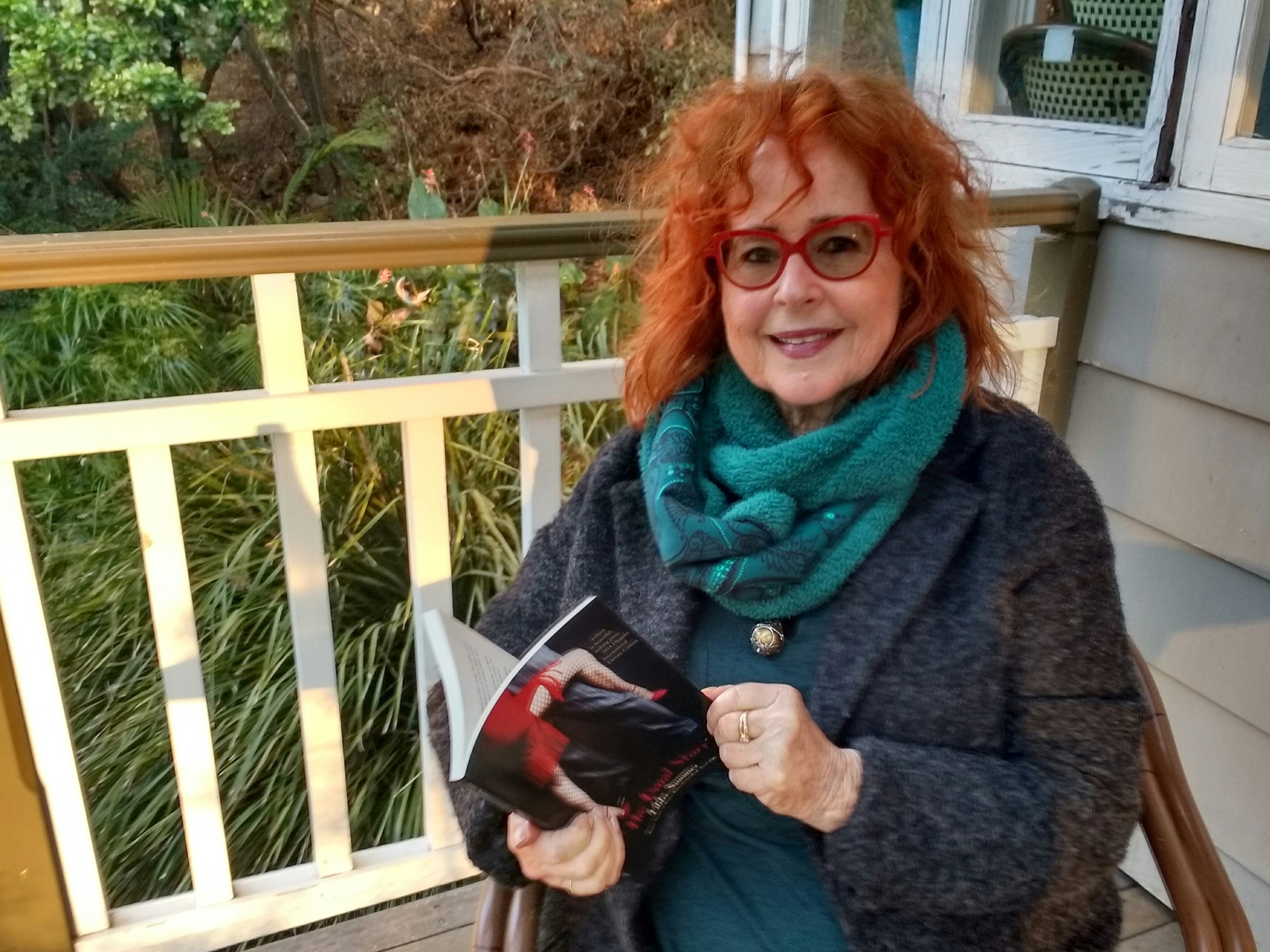
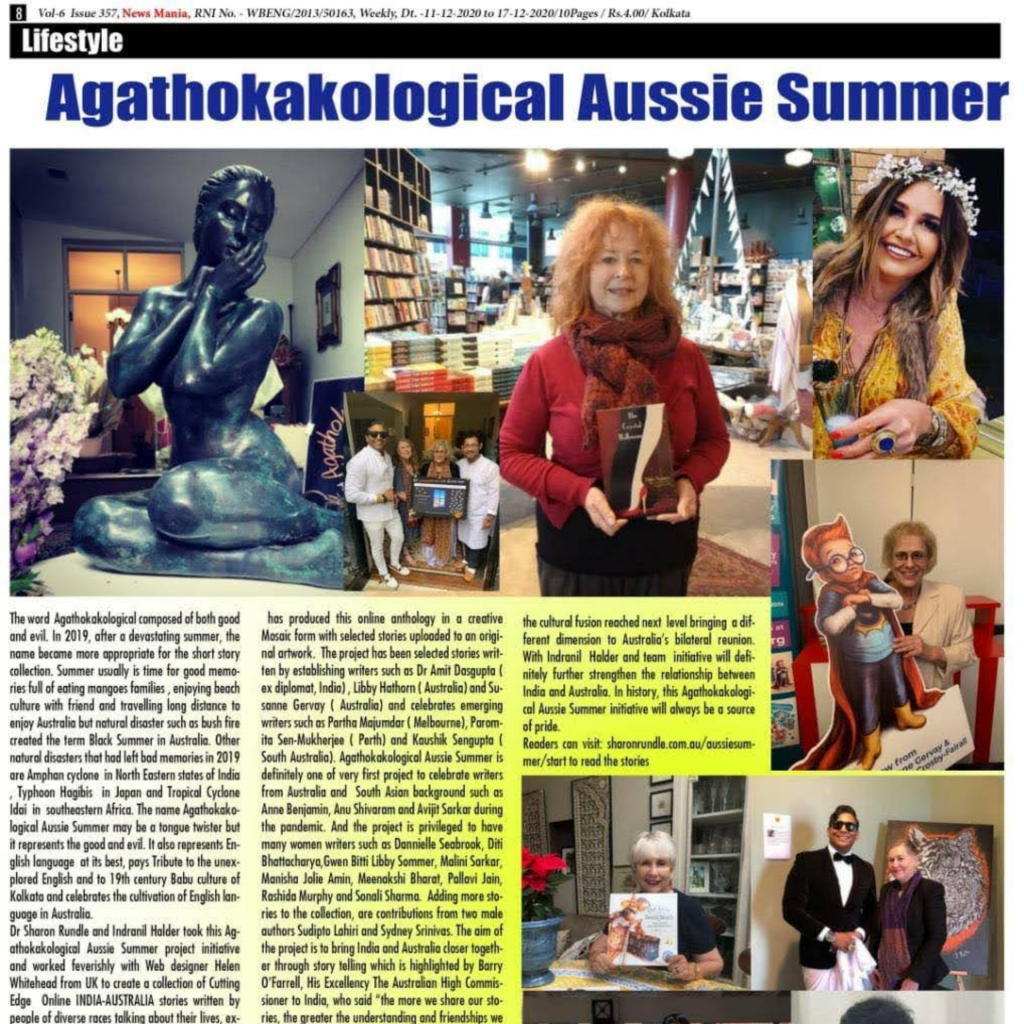
Famous in India! That’s me holding my book, ‘The Crystal Ballroom’. My stories ‘Aravind’ and ‘Aravind Again’, included in Agathokakological Aussie Summer story mosaic, are self-contained chapters from ‘The Crystal Ballroom’. A great review of the story mosaic is in Indian national newspaper, News Mania. Well done to editors Sharon Rundle and Indranil Bengal Halder

Agathokakological Aussie Summer is an Australia – India collaborative online story mosaic. All free! Enjoy the stories at:

www.sharonrundle.com.au/aussiesummer/start or

https://aussiesummer.com.au

Just press a star to begin.

The Champagne Corks Popped

Libby Sommer with The Usual Story book

THE USUAL STORY has been released into the world. The champagne corks popped in celebration. Will THE USUAL STORY fly off the shelves in book stores all over Australia and around the world? Will it rocket up the charts on Amazon? Fingers crossed.

champagne cork popping

Here’s the book blurb:

“Tango is a dance of passion. It draws partners into an intimate relationship. Sofia loves to tango but, as she dances, she is confronted by society’s infatuation with the young and the beautiful.

In the painful aftermath of a brief affair, Sofia seeks to find out what she actually knows about herself and the past. She looks for answers in dark corners and begins to see the elusiveness of understanding and memory – the psychological space where recollection and loss collide.

If you liked THE CRYSTAL BALLROOM, you’ll love THE USUAL STORY, a delicately fragmented story of memory, intrigue and passion.”


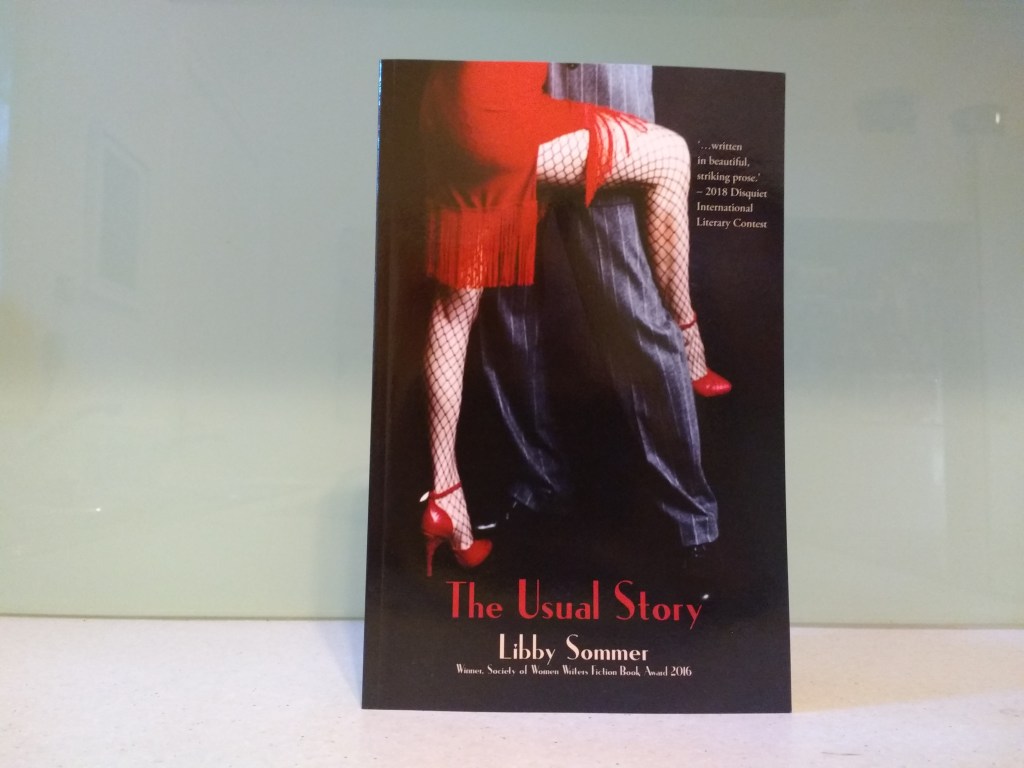
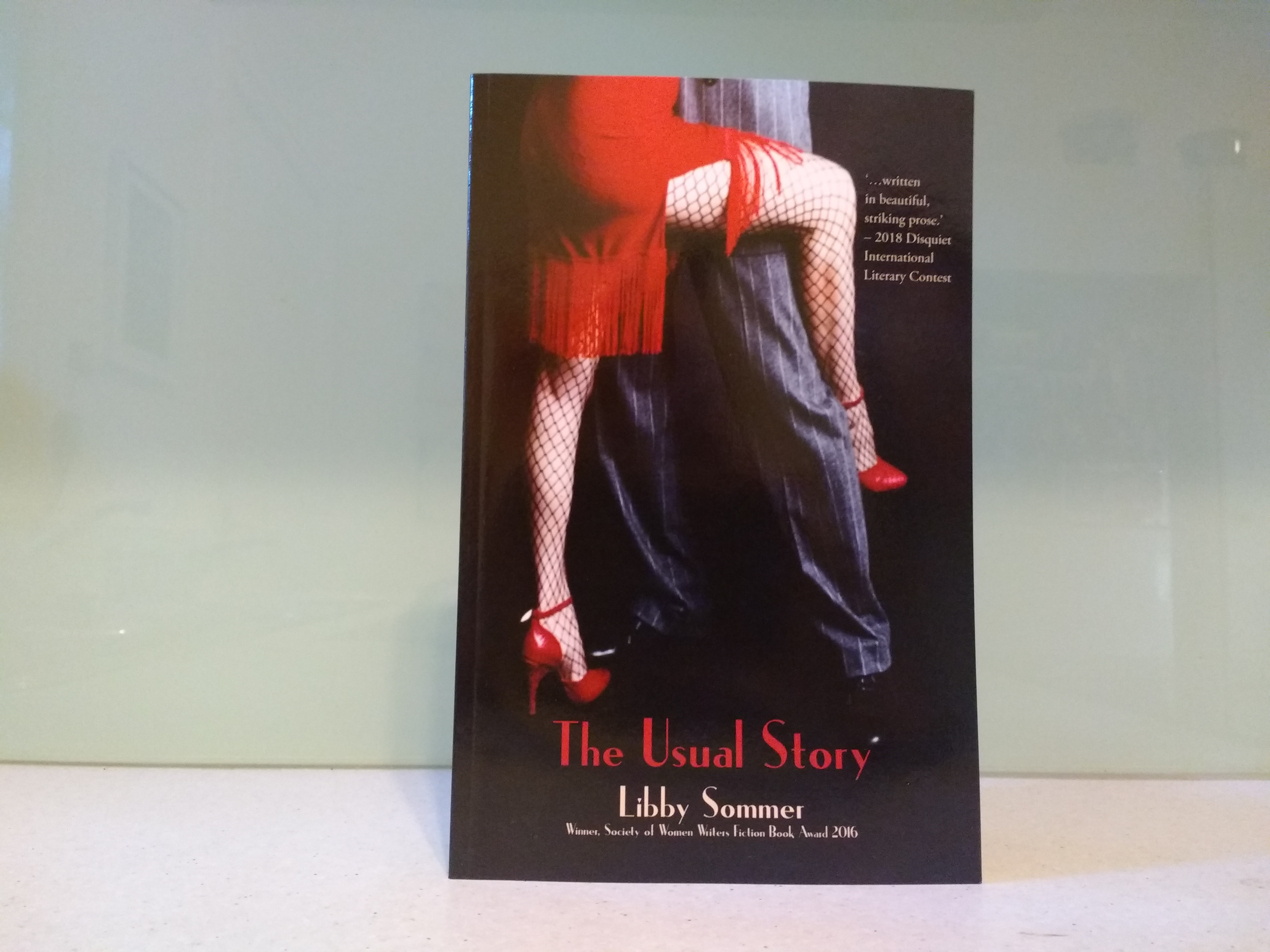
a grey-suited man and a woman in a red fringed dress, red shoes and fishnet stockings, are in a tango stance, her leg wrapped around him.

Available from Ginninderra Press; also print and ebook editions from Amazon, Book Depository and other online booksellers.

Hope you enjoy it.

Cover Reveal

a grey-suited man and a woman in a red fringed dress, red shoes and fishnet stockings, are in a tango stance, her leg wrapped around him.

Woohoo. Here’s the cover of ‘The Usual Story’ – a delicately fragmented story of memory, intrigue and passion. The book will be released on 25 July. Much excitement.

The cover image shows the fabulous legs of tango dancers and teachers Mimi and Teddy from ‘A Little Buenos Aires‘.  Mimi and Teddy, who run regular tango workshops and milongas, very kindly let me use their photo.

“Tango is a dance of passion. It draws partners into an intimate relationship. Sofia loves to tango but, as she dances, she is confronted by society’s infatuation with the young and the beautiful.”

Pre-release copies available from publisher Ginninderra Press or you can order a copy from your favourite bricks and mortar bookseller, online retailers or on Kindle, etc.

I’m so excited about ‘The Usual Story‘, a prequel to ‘The Crystal Ballroom.  And thrilled my books are out in the world where people can read them.

If you’d like to write a review of the book on Amazon or Goodreads it would be fantastic.

Counting down to launch.

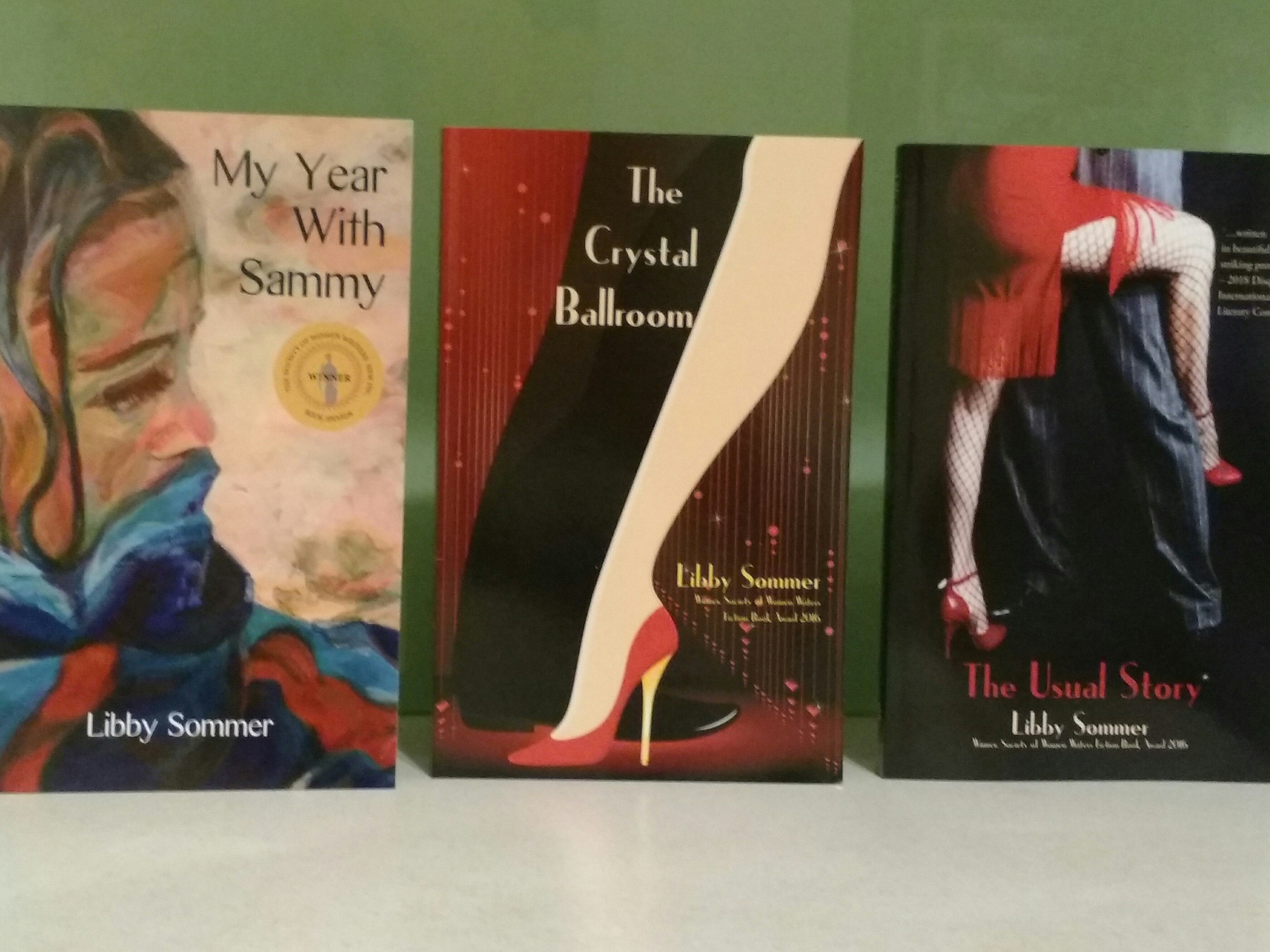
ThreeBookCovers3


Publication Update

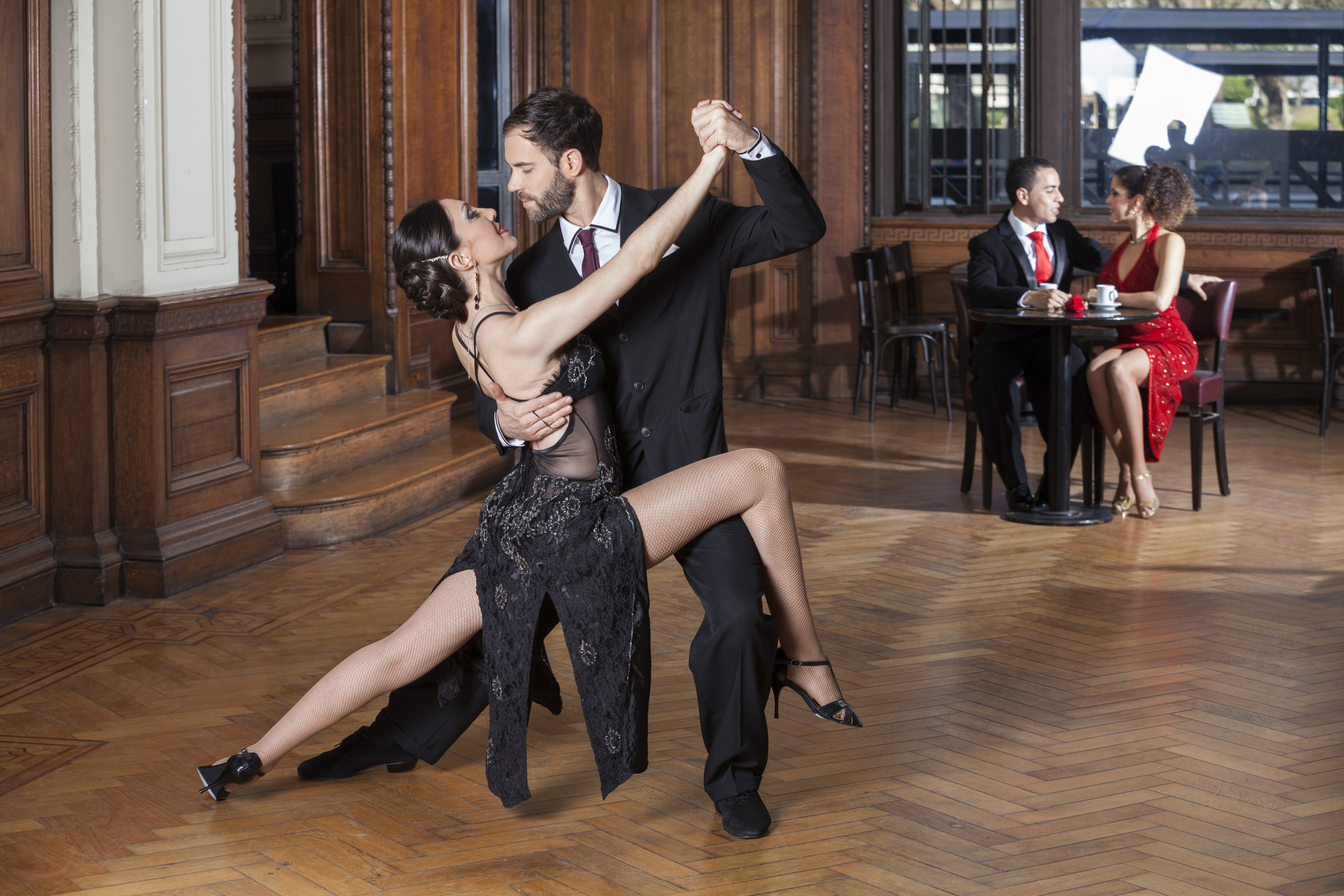
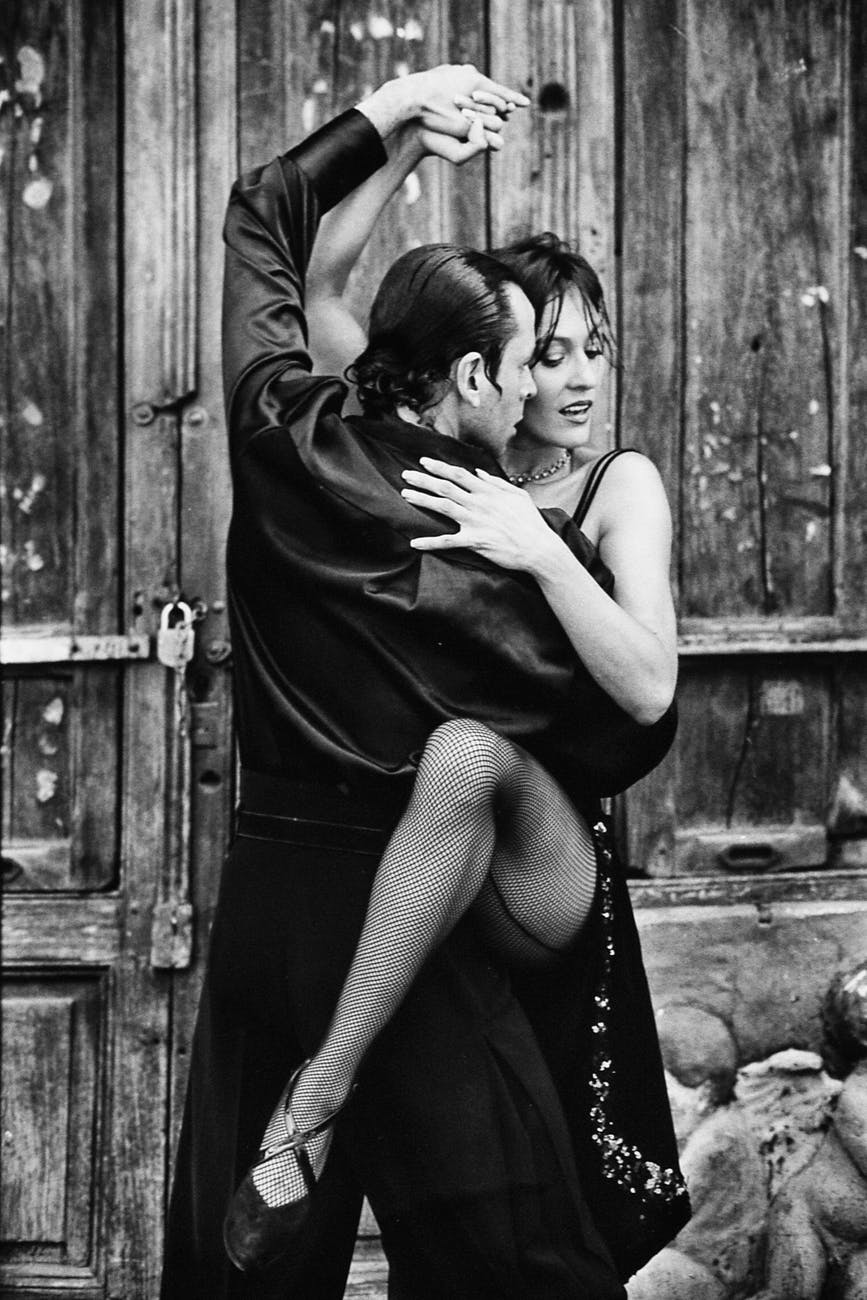
a man and woman dancing tango

On Tuesday I posted the corrected final proofs of THE USUAL STORY back to publisher Ginninderra Press.  Am now in the home stretch for July release of the book, a prequel to THE CRYSTAL BALLROOM.  Have finalised the blurb for back cover and obtained copyright approval for front cover image.

The primary goal of proofing is to serve as a tool for customer verification that the entire job is accurate. Prepress proofing (also known as off-press proofing[4]) is a cost-effective way of providing a visual copy without the expense of creating a press proof.[5] If errors are found during the printing process on press, correcting them can prove very costly to one or both parties involved. – Wikipedia

I’ve been working on the back cover Book Blurb for the last couple of months – rewritten it maybe 300 times. But I think it reads well now, so well I hope readers won’t be disappointed when they read the book itself. Hopefully the story lives up to its promise.

Like THE CRYSTAL BALLROOM, THE USUAL STORY is written in stand-alone discreet chapters. Versions of several of the chapters were first published as short stories in literary journals. I connected the stories by using segments as linking devices: the main character’s telling of the aftermath of a painful affair, her search for understanding of what went before, and the tango. It’s not an easy thing to do. My proof reader said the manuscript reads like a novel, rather than as a collection of linked stories. Am very happy to hear that. Another term for the structure of the book is novel-in-stories.

‘While the short story pauses to explore an illuminated moment, and the novel chugs toward a grand conclusion, the novel in stories moves in spirals and loops, a corkscrewing joy rode.’ – Danielle Trussoni

So corrected final proofs are now with  Ginninderra Press in Adelaide, a small but prestigious publisher.

The next step towards a July release of THE USUAL STORY –  a delicately fragmented story of memory, intrigue and passion –  is the uploading of the files to the printer.

An exciting time.


From acceptance to publication


tango-dancing-couple-dance-style-67238.jpeg

Over the weekend I finished correcting first proofs of THE USUAL STORY, a prequel to THE CRYSTAL BALLROOM and posted them back to Ginninderra Press in Adelaide. Final proofs next. We’re on track for a July release. An exciting time.

red and black book cover The Crystal Ballroom

This is my third book, so I’m getting used to the publication process. After acceptance of the manuscript by Ginninderra Press in July 2017, eight months later I received first proofs. These I’ve read and corrected.

In the meantime we have been discussing the cover image. Ginninderra Press is a small but prestigious publisher and I’m able to have a say in cover design. This doesn’t happen with a larger publisher. I am also in communication with GP about a quote to put on the front cover to attract sales and a blurb for the back cover.

Blurbs are very difficult to write. I had a chat with my good friend the talented author Susanne Gervay today about my blurb. She did a brainstorming session with me and I think we’ve got a few lines together that will make people want to read the book.

first proofs, The Usual Story by Libby Sommer

Actually, first draft of the blurb is:

‘Tango is the dance of passion, forcing partners into an intimate relationship. Sofia loves the tango, but at the dances she comes face to face with the truth of her aging in today’s culture that has very little use for anything that is not young.’

What do you think? I would LOVE some feedback on this blurb. Please give me your response in the comments section. I’m not a good big-picture-person like my friend Susanne. I’m more into observing small details, which is good for prose and poetry but not for writing pitches and blurbs.

I asked Les Murray, Nobel Prize nominee for Literature, who is also Literary Editor of Quadrant magazine, if he would read THE USUAL STORY and write a couple of lines for the back cover. He said yes. Wow! I’m so delighted. He knows my work well having published many of my short stories and poems. So first proofs have also been posted to him.

So that’s front and back cover. And then there’s a dedication page to be added, acknowledgements, etc.  Versions of three of the chapters in THE USUAL STORY were first published in Quadrant so this needs to be acknowledged.

Then comes final proofs. Professional proof readers are very expensive so I’m hoping my eldest son with the PhD will proof read for me this time. TBA.

Then comes Cover Release with a big beat up on social media. I post regularly on Instagram and Facebook and less regularly on Twitter and Pinterest. I think the cover looks terrific. It’s not all finalised yet. I asked two tango dancers I know for copyright clearance on one of their images that shows the two of them dancing the tango. It’s one of the photos they use to promote their classes at A Little Buenos Aires. They said yes, as long as I acknowledge copyright ownership. So that’s great. It’s an eye-catching pic and would look good beside THE CRYSTAL BALLROOM in book stores.

Next step is pre-release copies announcement. Social media again.

Then details of the release date of THE USUAL STORY. Champagne and balloons and a lot of brouhaha when the book is finally available to the public.

I am not planning to have a book launch. Unfortunately, I am a very shy person and hate being the centre of attention. I had a launch for my first book and it was very successful. However, I was so anxious I thought I was having a heart attack. So not doing that again. A shame because book launches are a good way to sell books. Because this book also features a lot of tango dancing, I am thinking I could have a soft launch at a milonga or tango dance. Just a slice of chocolate cake and a glass of champagne at half time. Or not.

The older woman in fiction

men and women dancing

My new book, The Usual Story (Ginninderra Press) is due for release mid 2018. Like The Crystal Ballroom, The Usual Story is set in the dance world and will add to a small pool of literature that addresses the issue of the older woman in fiction.

‘In this unusual book Libby Sommer puts women’s psyches under the microscope – their hopes and dreams, fears and foibles – yet always with a deft touch and a sympathetic ear.‘ –  The Crystal Ballroom review, Women’s Ink! magazine , November 2017

two tango dancers in red black and white

The Usual Story touches on the stages of a woman’s life:  childhood, adolescence, marriage, motherhood and grand-motherhood. It’s created from asides, snapshots, glimpses, encounters and memories. The numbered sections provide a container for the chaos as we meet this woman in mid-life change. How will she come to terms with the truth of her aging in a culture that has very little use for anything that is not young?

Set partly in a seaside suburb of Sydney the story is played out against a response to nature, using the poetry of the Australian seascape to celebrate the beauty of this country. The presence of the sea throughout suggests the enigma at the heart of all life processes, the fact that certain things can’t be captured in words, can only be hinted and gestured at.

Together with many other developed countries, Australia’s population is ageing. Over the course of the 20th century, the proportion of people aged 65 and over has tripled. The baby boomer generation form a prominent part of Australia’s population, and as most fiction readers are women over forty the book will reach a group of people who are increasing in number but who are often ignored in literature. Most novels, if they have a heroine at all, depict her as young and beautiful, whereas middle-aged women, the majority of the readership, have no role models.

Although publication of The Usual Story is still more than six months away, we are looking at ideas for the cover. It will probably have a similar look to The Crystal Ballroom, perhaps in red, black and white with a dance theme. The publisher will make the final decision.

So then comes reviews for the back cover. Any suggestions for reviewers?

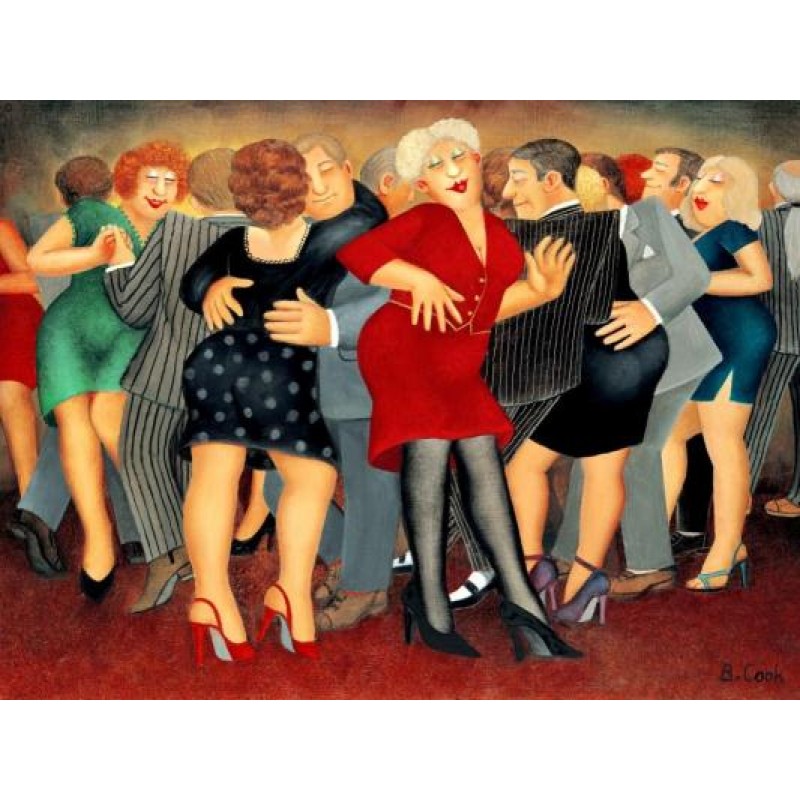
Header image Pinterest:  Beryl Cook – Dancing the Black Bottom


Path to Publication

Libby Sommer holding a copy of The Crystal Ballroom in book store

Interviewer: I would like you to tell me about your Path to Publication from first idea to finished book. I’d like to know your inspirations and how The Crystal Ballroom became more than an idea. I also want to know about your writing process. Do you sit at a desk 9-5 or at a cafe during snatched lunches? Did you write the book in a spurt of three months … how long did it take from start to finish? Did you have cold readers, send it to an agent or to a publisher? Were you accepted straight away? How many rewrites and drafts?

Me:  I usually write stories about places and people that I know well. I take real events and characters but change things around and shake them all about and make things up. So, for The Crystal Ballroom, I had been dancing Argentine tango, rock and roll, jive, swing, Latin American and ballroom dancing for many many years. I used to dance five nights a week. I’d drive all over Sydney for technique classes and to dance at different venues. The place, ‘The Crystal Ballroom’, is a fiction but this dance hall becomes a character in the novel. I was inspired by the people I met at the dances and the politics of the ‘dance scene’.

I don’t sit at a desk 9-5 but I am extremely disciplined with my writing. I write 7 days a week. I treat my manuscript like an old friend, someone I need to stay in touch with regularly. I also exercise 7 days a week. So my routine is to go to a cafe before the gym with a print out of the previous day’s work. I edit from this hard copy and write the next scene. After the gym I walk home, type out the revisions, print out, go to another cafe in the afternoon. Repeat the process. I only work in the AM on a Sunday 🙂

It took me 4 years to write The Crystal Ballroom. The chapters are self-contained, so I was able to send some of the discreet episodes out to Quadrant magazine for publication.

I belong to a weekly feedback writing group where we critique each others’ work. So I write to that weekly deadline. In the early years, when I’d finish a manuscript I’d pay an editor or mentor to read it and give me feedback. I’d also ask a couple of friends to read it and give feedback. I never send a manuscript to an agent or a publisher that hasn’t been reworked 20 to 100 times – that includes the rewriting along the way.

My Year With Sammy was my first published book. It was accepted straight away by Ginninderra Press, a small but prestigious publisher (thought-provoking books for inquiring readers). It was my fifth book length manuscript. I had sent the previous books to agents and large publishers. All my confidence had been knocked out of me by all the rejections leading up to the fifth manuscript. Now though, I have Ginninderra Press who seem to like my work. They also published The Crystal Ballroom this year. The Usual Story will be published by Ginninderra Press next year.

It’s an extremely difficult road to publication and some people decide to self-publish rather than continue to be rejected. But other people are able to write a best-seller, an airport book that sells lots of copies, so big publishers like their work very much. Unfortunately, or fortunately, my books are classified as literary fiction, so a very small market. Big publishers are not interested in books that do not conform to the norm. Not enough money in it for them.

I am very grateful to have my small but prestigious publisher.

One-Page Review of The Crystal Ballroom

author holding copy of The Crystal Ballroom


I was delighted to see a one-page review of my novel ‘The Crystal Ballroom‘ in October Quadrant magazine (available now in newsagents or on-line).

Penelope Nelson writes:

‘Have you ever heard Latin American music coming from an upper room over a shop, and lingered briefly at the sign about dancing classes? Perhaps you have seen people–a man in built-up shoes or a woman with a surfeit of silver bangles–heading for an old town hall after dark. The world of ballroom dancing and tango lessons has its own etiquette and hierarchies. Libby Sommer’s new fiction ‘The Crystal Ballroom’ lifts the lid on the delights and pitfalls of this fascinating sub-culture …

‘Sommer has great skill in creating atmosphere. The music, the swirling scents of aftershave and sweat, the decor of ballrooms, flats, motels and shared tents are powerfully evoked …

‘Some of the best passages in the book express the joy of dancing:

We’re practising walking the length of the hall. Alberto says that in Buenos Aires students of tango spend two years just learning to walk properly.  “Extend forward,” he says, “step forward, only placing the weight on the extended leg at the last moment, toes pointed, sides of the feet staying connected on the floor.” Then backwards with a straight leg, torso pulled up, chest up and out, and with a partner again, always there’s that special connection with a partner.

Hopefully, this wonderful review by Penelope Nelson will give sales of the book a boost. ‘The Crystal Ballroom’ is available directly from Gininnderra Press, in bookstores, and online.

red and black The Crystal Ballroom book cover


Another great review for The Crystal Ballroom


The Crystal Ballroom book covers

I was delighted to read another wonderful and insightful review of The Crystal Ballroom this morning. It’s on Goodreads.

Here’s an extract:

An intriguing book, neither a collection of short stories nor a novel, but a series of vignettes – snapshots − of women, no longer young, but who are determined to wring every drop of verve and excitement out of life. Most of the action is revealed in conversations over coffee or drinks, between the protagonist, Sofia and her friend Ingrid. The ‘glue’ holding the story – or rather stories − together is a love of ballroom dancing and the venues in which such events are held, in particular the Crystal Ballroom, which is a character in its own right. 

In this unusual book Libby Sommer puts women’s psyches under the microscope – their hopes and dreams, fears and foibles – yet always with a deft touch and a sympathetic ear. 

You can read the whole review here.