The other day I was listening to someone talk about the craft of creative writing and she was speaking about the necessity of forward momentum in narrative in order to keep the reader engaged.
The speaker suggested keeping in mind the words: “but then …”
Using those two words, either on the page, or in your head, gives a twist or complication to the story.
‘Around the World In Fifty Step’ was my first published story. It appeared in Overland Literary Journal Autumn, 2000. Since then, more than 50 of my stories and poems have been accepted for publication in prestigious literary journals including Quadrant, Overland and The Canberra Times.
Have a read of this first one. Hope you enjoy it.
Around the World In Fifty Steps:
Copyright Libby Sommer 2022
Joanna lives in a Sydney suburb with her two sons. It’s 1992 and Australia is in recession.
“I’m sick of licking arse in a service industry,” she says of her marketing business. “And I’m fed up with financial insecurity, the feast or famine of too many projects or not enough and chasing new business and getting clients to pay their bills.”
“I’m thinking of renting the house out and travelling,” she tells her grown up sons after reading “The Pitter Patter of Thirty-Year-Old Feet” in the Sydney Morning Herald.
“You’re ready to leave home are you mum?” said one son.
“Why don’t you just go on a long holiday instead,” said the other.
“I want a new beginning, a change of career, a new home, a community of people, an intimate relationship with a significant other, that sort of thing.”
“You could always get yourself a dog,” suggests a friend.
Her son moves out when she puts his rent up.
“Are you going to wait till he buys a new house for cash before you ask for a decent rent?” her mother had said.
“I’ve decided to go and live with Dad for a change,” says the other son.
“I’ll be away for six to twelve months,” Joanna says as she throws her client files on the rubbish tip.
She spends the spring in Italy. The summer in England, Scotland and Ireland. The autumn walking the gorge country of the Ardeche in France.
In the winter she rents a studio apartment in Villefranche on the French Riviera. The studio belongs to a friend of a friend so she’s able to get it at a good price. She works as a casual deck hand on one of the luxury cruisers in dry dock for maintenance. “The first thing I want you to do,” says her boss when she arrives at work on the first day, “is blitz the tender.” After a backbreaking morning of hard physical work cleaning the small run-about she goes to lunch. She orders a salad nicoise and a coffee and realises her lunch will cost her a morning’s pay.
A young and handsome French man who lives in Paris but comes to Villefranche to visit his grandmother most weekends, pursues her. Joanna comes to realise that French men love and cherish women as much as they appreciate good food.
She shops at the markets, paints and reads and falls in love with the light and the colours of the south of France.
“I’m able to live contentedly alone without a regular job, without a car, without speaking the language,” she writes to her friends back home.
In the summer she moves on again before the tourist masses arrive and the rent goes up.
She gives away to her new friends in Villefranche all the things that won’t now fit in her backpack but keeps her paint brushes and pallet knife.
On the Greek island of Skyros she joins a group of landscape artists led by a famous English painter.
“My purpose in leading this group is to help everyone find their own unique style,” says the woman.
Joanna spends the autumn in London meeting with other artists from the island and the woman becomes her mentor and they meet for a cup of tea every week and talk about the isolation of being an artist as well as many other things.
“It’s important to stop and regenerate before the creative battery runs flat,” she says.
Joanna paints every day and goes out with an English man named Clive.
“Your painting is vivid and alive,” says the famous English artist. “I’ll write you a letter of introduction to my contacts in Australia when you’re ready to exhibit this collection.”
Clive has a strong face with chiselled square cheekbones. Dark brown eyes and dark hair that falls in a square fringe on his forehead. His fingers are long and sensitive for playing the piano.
“What are you doing there?” her mother asks on the phone from across the ocean.
“I’m painting,” says Joanna.
“But what are you doing?”
“My mother is like a poisonous gas that can cross from one side of the world to the other,” Joanna says.
Joanna dreams about her sons every night and Clive tells her she cries in her sleep.
She yearns for the bright Australian light and for the sound of the ocean.
She returns to Australia for her eldest son’s wedding.
In Sydney, Joanna supplements her income from the house rental by getting a job as a casual for a clothing company. She unpacks boxes and steampresses the garments. Her back, neck and shoulders ache and she suspects she’s getting RSI from the steampresser.
Clive rings to say he’s coming to visit her.
In preparation for his arrival she moves all her furniture out of storage and rents a small place near the beach hoping that he’ll love it in Australia and decide to stay.
Two weeks before his arrival Clive rings to say he’s not coming and Joanna finds out through a friend that he’s met someone else and is moving in with her.
She tears up his photos and throws his Christmas present at the wall.
Joanna stops painting.
She reflects on the past and all that she’s lost.
I thought when love for you died, I should die. It’s dead. Alone, most strangely, I live on. Rupert Brooke.
Joanna stays in bed most days but still feels so tired that she can only remain vertical for four hours in any twenty-four hour period.
The phone stops ringing.
She rehearses her own death by going to the edge of the cliff.
From the edge she sketches the waves breaking on rocks, the lone seagull on the shore at the water’s edge.
At home she fills in the drawing, blending black charcoal and white pastel reminding herself the darkest hour is before the dawn.
And, after winter spring always comes.
Joanna sells the house where she lived with her children and spends half the money on a home unit overlooking the ocean and the rest of the money on Australian shares.
Her new home faces the east and she can smell the salt from the ocean.
“It takes twenty years to be a successful artist,” echoes in her mind.
On a new canvas she drags the colours of the sunrise across the blank white space.
Have a read of my prose poem, ‘The Cellist’ first published in Quadrant September 2020.
Hope you enjoy it.
‘The Cellist‘:
I was grudgingly ancient. Not older, wiser and ancient. But easily recognisable as ancient. Skin was the culprit – the human body’s largest organ. I had his mobile number and he had mine, the cellist from the seniors’ dating site. I examined its configuration. Was there a pattern I needed to decode? I hated initiating, but he needed reassurance. It might take him forever to ring. Composing a text, my palms sweated. My heart thumped. Was he okay with texting? I hated my impatience. I hated my unexpected fragility. I sent the text. Yesterday’s meet-up was fun. I’d like to go for a ride on your motorbike sometime, although the helmet will squash my hair.
Then I worried I’d gone too far. My legs wrapped around him on a bike? I sounded like a whore. A desperado. A woman too long without a man. His reply was immediate. Had he been holding the phone in his hand? We can start with a short ride around the block. I’ve got a large helmet. Everyone gets hat hair.
I don’t want you to go on his motorbike, my daughter warned. I’ll go for a ride on his bike, my granddaughter offered. What sort of boat’s he got? A tinnie or a sail boat? asked my grandson. I googled: ‘what to expect when riding pillion’. Hang on. Brace for braking and acceleration by holding on to the rider’s waist. Bikes must lean to corner. Relax. Tyres provide plenty of grip.
We had dinner, exchanged silly jokes, leaned towards each other, went back to my place – and had incredible sex. The sensitivity of a stringed instrumentalist was really something else. If I knew how, I would have burst into song.
‘My attention span had gone out on me; I no longer had the patience to try to write novels. … I know it has much to do now with why I write poems and short stories. Get in, get out. Don’t linger. Go on.’
‘Every great or even every very good writer makes the world over according to his own specifications.’
‘It is his world and no other. This is one of the things that distinguishes one writer from another. Not talent.’
‘Isak Dinesan said that she wrote a little every day, without hope and without despair.’
‘”Fundamental accuracy of statement is the ONE sole morality of writing,” Ezra Pound.’
‘It is possible to write a line of seemingly innocuous dialogue and have it send a chill along the reader’s spine – the source of artistic delight, as Nabokov would have it. That’s the kind of writing that most interests me.’
‘That’s all we have, finally, the words, and they had better be the right ones, with the punctuation in the right places so that they can best say what they are meant to say.’
‘I like it when there is some feeling of threat or sense of menace in short stories.’
‘I made the story just as I’d make a poem; one line and then the next, and the next.’
‘V.S. Pritchett’s definition of a short story is “something glimpsed from the corner of the eye, in passing.” Notice the “glimpse” part of this. First the glimpse.’
‘The short story writer’s task is to invest the glimpse with all that is in his power. He’ll bring his intelligence and literary skill to bear (his talent), his sense of proportion and sense of the fitness of things – like no one else sees them. And this is done through the use of clear and specific language, language used so as to bring to life the details that will light up the story for the reader. For the details to be concrete and convey meaning, the language must be accurate and precisely given. The words can be so precise they may even sound flat, but they can still carry, if used right, they can hit all the notes.’
Raymond Carver, Fires, Vintage 1989
So who is Raymond Carver?
Raymond Carver, in full Raymond Clevie Carver, (born May 25, 1938, Clatskanie, Oregon, U.S.—died August 2, 1988, Port Angeles, Washington), American short-story writer and poet whose realistic writings about the working poor mirrored his own life. – Encyclopedia Britannica
At a literary event I heard someone say, “The thing to do is put the idea in your subconscious. Your brain will do the work.”
It takes time for our experience to make its way through our consciousness. For example, it is hard to write about a journey while you are still in the midst of the adventure. We have no distance from what is happening to us. The only things we seem to be able to say are “having a great time”, “the weather is good”, “wish you were here”. It is also hard to write about a place we just moved to, we haven’t absorbed it yet. We don’t really know where we are, even if we can walk to the train station without losing our way. We haven’t experienced three scorching summers in this country or seen the dolphins migrating south along the coast in the winter.
“Maybe away from Paris I could write about Paris as in Paris I could write about Michigan. I did not know it was too early for that because I did not know Paris well enough.” – Ernest Hemingway, A Moveable Feast (New York: Charles Scribner’s Sons, 1964).
So we take in experience, but we need to let things make their way through our consciousness for a while and be absorbed by our whole selves. We are bower birds, collecting experience, and from the thrown away apple skins, outer lettuce layers, tea leaves, and chicken bones of our minds come our ideas for stories and poems and songs. But this does not come any time soon. It takes a very long time (three to ten years in the case of literary fiction). We need to keep picking through those scraps until some of the thoughts together form a pattern or can be organised around a central theme, something we can shape into a narrative. We mine our hidden thoughts for ideas. But the ideas need time to percolate: to slowly filter through.
Rumi, the thirteenth-century Sufi poet, summed up what could be the creative process when he wrote “The Guest House”:
This being human is a guest house.
Each morning a new arrival.
A joy, a depression, a meanness,
some momentary awareness comes
as an unexpected visitor.
Welcome and entertain them all!
Even if they are a crowd of sorrows,
who violently sweep your house
empty of its furniture,
still, treat each guest honorably.
He may be clearing you out
for some new delight.
The dark thought, the shame, the malice,
meet them at the door laughing and invite
them in.
Be grateful for whoever comes,
because each has been sent
as a guide from beyond.
Jalaluddin Rumi, in The Essential Rumi, translated by Coleman Barks, 1999
Our work is to keep rummaging through the rubbish bins of our minds, exercising the writing muscle, in readiness to answer that knock at the door when it comes.
As the author Vivian Gornick said, “The writers life is the pits. You live alone and you work alone, every day I have to recreate myself.” She paused and laughed. “But when the work is going well there is nothing that compares.”
What about you? Are you ready to answer the knock at the door?
At a literary event I heard someone say, “The thing to do is put the idea in your subconscious. Your brain will do the work.”
It takes time for our experience to make its way through our consciousness. For example, it is hard to write about a journey while you are still in the midst of the adventure. We have no distance from what is happening to us. The only things we seem to be able to say are “having a great time”, “the weather is good”, “wish you were here”. It is also hard to write about a place we just moved to, we haven’t absorbed it yet. We don’t really know where we are, even if we can walk to the train station without losing our way. We haven’t experienced three scorching summers in this country or seen the dolphins migrating south along the coast in the winter.
“Maybe away from Paris I could write about Paris as in Paris I could write about Michigan. I did not know it was too early for that because I did not know Paris well enough.” – Ernest Hemingway, A Moveable Feast (New York: Charles Scribner’s Sons, 1964).
So we take in experience, but we need to let things make their way through our consciousness for a while and be absorbed by our whole selves. We are bower birds, collecting experience, and from the thrown away apple skins, outer lettuce layers, tea leaves, and chicken bones of our minds come our ideas for stories and poems and songs. But this does not come any time soon. It takes a very long time (three to ten years in the case of literary fiction). We need to keep picking through those scraps until some of the thoughts together form a pattern or can be organised around a central theme, something we can shape into a narrative. We mine our hidden thoughts for ideas. But the ideas need time to percolate: to slowly filter through.
Our work is to keep rummaging through the rubbish bins of our minds, exercising the writing muscle, in readiness to answer that knock at the door when it comes.
Rumi, the thirteenth-century Sufi poet, summed up what could be the creative process when he wrote “The Guest House”:
This being human is a guest house.
Each morning a new arrival.
A joy, a depression, a meanness,
some momentary awareness comes
as an unexpected visitor.
Welcome and entertain them all!
Even if they are a crowd of sorrows,
who violently sweep your house
empty of its furniture,
still, treat each guest honorably.
He may be clearing you out
for some new delight.
The dark thought, the shame, the malice,
meet them at the door laughing and invite
them in.
Be grateful for whoever comes,
because each has been sent
as a guide from beyond.
Jalaluddin Rumi, in The Essential Rumi Translated by Coleman Barks, 1999
As the author Vivian Gornick said, “The writers life is the pits. You live alone and you work alone, every day I have to recreate myself.” She paused and laughed. “But when the work is going well there is nothing that compares.”
What about you? Are you ready to answer the knock at the door?
It is essential to separate the creator and the editor, or inner critic when you practice writing, so that the creator has plenty of room to breathe, experiment, and tell it like it really is. If the inner critic is being too much of a problem and you can’t distinguish it from your authentic writing voice, sit down whenever you find it necessary to have some distance from it and put down on paper what the critic is saying, put a spotlight on the words—“You have nothing original to say, what made you think you could write anything anyone would want to read, your writing is crap, you’re a loser, I’m humiliated, you write a load of rubbish, your work is pathetic, and your grammar stinks …” On and on it goes!
Say to yourself, It’s OK to feel this. It’s OK to be open to this.
You can learn to cultivate compassion for yourself during this internal process by practicing Mindfulness Meditation. Sit up straight, close your eyes, bring your awareness to your inner experience. Now, redirect your attention to the physical sensations of the breath in the abdomen … expanding as the breath comes in … and falling back as the breath goes out. Use each breath to anchor yourself in the present. Continue, concentrating on the breath for several minutes. Now, expand your field of awareness to include the words of the inner critic. Turn your attention to where in your body you feel the unpleasant thoughts, so you can attend, moment by moment, to the physical reactions to your thoughts.
“Stay with the bodily sensations, accepting them, letting them be, exploring them without judgment as best you can.”—Mindfulness, Mark Williams and Danny Penman.
Every time you realise that you’re judging yourself, that realisation in itself is an indicator that you’re becoming more aware.
The thing is, the more clearly you know yourself, the more you can accept the critic in you and use it. If the voice says, “You have nothing interesting to say,” hear the words as white noise, like the churning of a washing machine. It will change to another cycle and eventually end, just like your thoughts that come and go like trains at the station. But, in the meantime, you return to your notebook and practice your writing. You put the fear and the resistance down on the page.
Do you struggle with an inner critic? Any words of wisdom you’d like to share?
Have you tried flash fiction yet? What does flash fiction mean?
‘A flash fiction piece is a self-contained story (beginning/middle/end), 1,000 words or less, that can entertain, intrigue, and satisfy a reader during an F5 tornado. That’s it. No genre restrictions, age requirements, or prior experience needed. Just quick, clean stories.’ – Writer’s Digest
‘Part poetry, part narrative, flash fiction–also known as sudden fiction, micro fiction, short short stories, and quick fiction—is a genre that is deceptively complex.’ – The Review Review
‘Flash fiction is a fictional work of extreme brevity that still offers character and plot development. Identified varieties, many of them defined by word count, include the six-word story, the 280-character story, the “dribble”, the “drabble”, “sudden fiction”, flash fiction, nanotale, and “micro-story”.’ – Wikipedia
I like writing in a short form. I’ve been told I have the sensibility of a poet because I have the ability to distill, so the short form suits me. You may be more of a long distance runner, rather than a sprinter, and prefer the long form of a novel.
Have a read of my flash fiction titled It’s Pot Luck When You Move Into A Unit, winner of the short short fiction UTS Alumni Competition a few years ago. Hope you enjoy it.
It’s Pot Luck When You Move Into a Unit
A nice quiet weekend? the woman downstairs said. What do you mean? I said, through the open back door, a bag of rubbish in each hand. She smoothed her ironing on the board and said, They weren’t around over the weekend—with the baby. She looked happy. I’m lucky living on the top floor, I said. She nodded towards the other side of the building. Jim isn’t so lucky—he’s got the woman upstairs, she said, When he plays the piano and she thumps on the floor. She put the iron back on its stand. She’s heavy-footed, that woman. Bang, bang, bang. I hear her coming down the stairs every morning at six, and the slam of the front door.
That night the wind knocked my vase off the window ledge. I lay awake wondering if the noise of the smash had woken up the people underneath—the ones whose barbecuing sends smoke and disgusting meat smells into my unit. Nothing clings to your furniture like the stink from last week’s burnt fat. Sorry about the crash, I muttered to the floor, It was the wind.
Copyright 2018 Libby Sommer
Why not try your hand at writing in this short form and enter a flash fiction competition. Good luck.
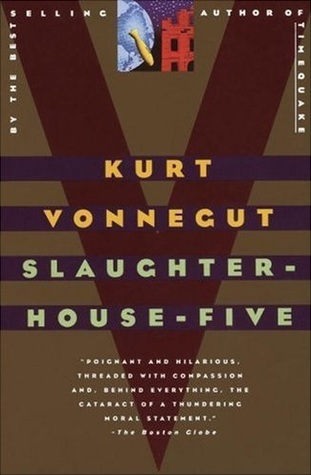
A fantastic example of this writing advice is Kurt Vonnegut’s Slaughterhouse-Five.
Poignant and hilarious, threaded with compassion and, behind everything, the cataract of a thundering moral statement. – The Boston Globe
Kurt Vonnegut’s absurdist classic Slaughterhouse-Five introduces us to Billy Pilgrim, a man who becomes unstuck in time after he is abducted by aliens from the planet Tralfamadore. In a plot-scrambling display of virtuosity, we follow Pilgrim simultaneously through all phases of his life, concentrating on his (and Vonnegut’s) shattering experience as an American prisoner of war who witnesses the firebombing of Dresden.
Don’t let the ease of reading fool you – Vonnegut’s isn’t a conventional, or simple, novel. He writes, “There are almost no characters in this story, and almost no dramatic confrontations, because most of the people in it are so sick, and so much the listless playthings of enormous forces. One of the main effects of war, after all, is that people are discouraged from being characters.”
Slaughterhouse-Five is not only Vonnegut’s most powerful book, it is also as important as any written since 1945. Like Catch- 22, it fashions the author’s experiences in the Second World War into an eloquent and deeply funny plea against butchery in the service of authority. Slaughterhouse-Five boasts the same imagination, humanity, and gleeful appreciation of the absurd found in Vonnegut’s other works, but the book’s basis in rock-hard, tragic fact gives it a unique poignancy – and humor. – Goodreads
Have a read of my flash fiction ‘Sober Sixty’ first published in the Grieve Anthology, August 2020, Stories and Poems of Grief and Loss.
Sober Sixty
Samantha’s single women friends were envious, although she assured them Johnny wasn’t perfect. Mood swings, challenging stuff like that.
Nobody messed with Johnny. Nobody knew better than he did, he was always watching YouTube and learning new facts and figures. Also, he rode a motorbike and practiced shooting at weekends. There were Facebook groups for bike riders and a rifle range nearby. Johnny was proud of being a rev-head and a good shot with his gun, and not many people could disagree that he had unusual interests for a man his age.
Sober since forty and counting, he said about his sobriety. They didn’t talk about his twenties and thirties.
There’s a photograph of the two of them from Christmas day. Johnny had tried to lower himself to Samantha’s height for the photo so they’d be on the same level. Stand up tall, she’d said. Stand to your full height. That’s right, he’d said. You like things big.
What does ATP in ATP Cup stand for? was the type of thing Johnny would call out while she poured him a glass of water before setting out on a stroll around the block.
Samantha thought she knew the answer, but didn’t want to risk being wrong. She’d learnt to tiptoe around his wildness and dreaded the fighting when she wasn’t attentive enough to his needs. Dry drunk, AA called it. The unpredictable rages were doing her head in. She knew she needed the courage to walk away.
Now she’s getting by a day at a time.
Her friends say she’s one of the lucky ones. She’s dodged a bullet.







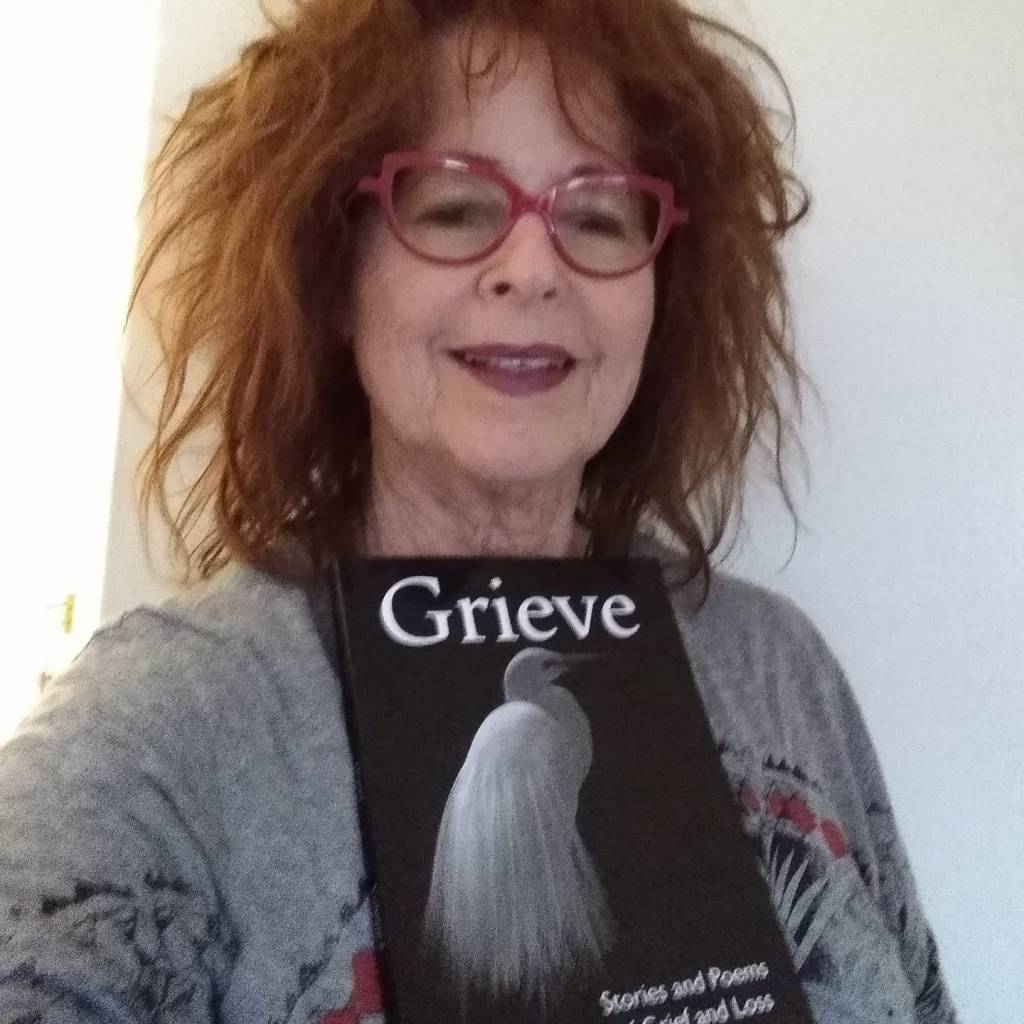
 Libby Sommer, Author