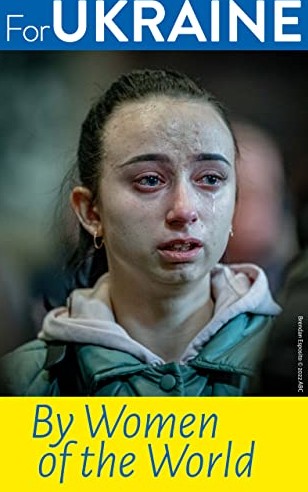
For Ukraine: by Women of the World

Dr Diann Rogers Healey, founder of the Australian Centre for Leadership for Women called for and brought together a collection of poetry and prose ‘For Ukraine: by Women of the World’.

35 writers from Australia, Fiji, New Zealand, United States, and the United Kingdom have written in solidarity with those impacted by Russia’s invasion of Ukraine.

I’m honoured that my poem ‘Twisted Tea’ has been included in this important collection. Professor Shirley Randell AO, wrote the Foreword. She mentions a few pieces that stood out for her including ‘Twisted Tea’.

All proceeds from the sale of the book will go to United Nations Women Australia for assistance in Ukraine. The book is available on Amazon and other online outlets. Please read and review.

The 2020 Grieve Anthology

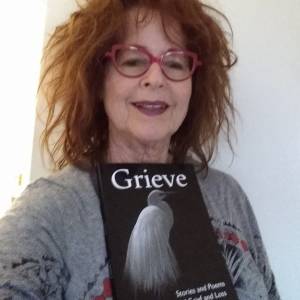
Libby Sommer and 'Grieve" anthology
I received my contributor’s copy of the 2020 Grieve anthology from the Hunter Writer’s Centre today. Stories and Poems of Grief and Loss. My short story ‘Sober Sixty’ is part of the collection.
The back cover reads,
‘2020 is the 8th year of the Grieve Project. Since 2013, Australians have submitted poems and stories about their experience with parental grief, sibling grief, loss of a home and numerous other forms of grief and loss.
‘2020 was a year of collective grief for Australia and the world. Yet the telling of grief here is much the same as in previous years. While tales of devastating bushfires and the crippling consequences of the coronavirus do feature in this anthology, its core remains unchanged: grief is universal arising from a multitude of experiences and we express it in myriad ways.
‘Writing about grief is a most notable expression. This anthology exposes that nobility and humility. It also gives us, the readers, hope.’
I feel honored to be part of this book.
Available from Hunters Writer’s Centre website or Booktopia

The Bigger the Issue, the Smaller You Write

pexels-photo-851213.jpeg


A quote: the bigger the issue, the smaller you write - Richard Price

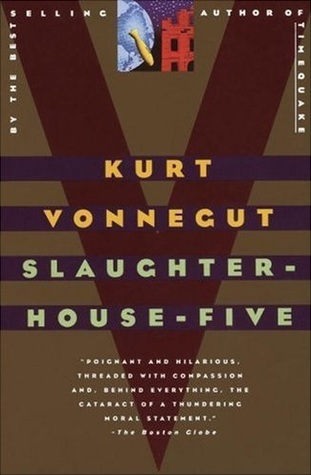
A fantastic example of this writing advice is Kurt Vonnegut’s  Slaughterhouse-Five.

Poignant and hilarious, threaded with compassion and, behind everything, the cataract of a thundering moral statement. – The Boston Globe

book cover of Kurt Vonnegut's 'Slaughterhouse-Five'

Kurt Vonnegut’s absurdist classic Slaughterhouse-Five introduces us to Billy Pilgrim, a man who becomes unstuck in time after he is abducted by aliens from the planet Tralfamadore. In a plot-scrambling display of virtuosity, we follow Pilgrim simultaneously through all phases of his life, concentrating on his (and Vonnegut’s) shattering experience as an American prisoner of war who witnesses the firebombing of Dresden.

Don’t let the ease of reading fool you – Vonnegut’s isn’t a conventional, or simple, novel. He writes, “There are almost no characters in this story, and almost no dramatic confrontations, because most of the people in it are so sick, and so much the listless playthings of enormous forces. One of the main effects of war, after all, is that people are discouraged from being characters.”

Slaughterhouse-Five is not only Vonnegut’s most powerful book, it is also as important as any written since 1945. Like Catch- 22, it fashions the author’s experiences in the Second World War into an eloquent and deeply funny plea against butchery in the service of authority. Slaughterhouse-Five boasts the same imagination, humanity, and gleeful appreciation of the absurd found in Vonnegut’s other works, but the book’s basis in rock-hard, tragic fact gives it a unique poignancy – and humor. – Goodreads

Highly recommended. A masterpiece.

Launch: Stories from Bondi

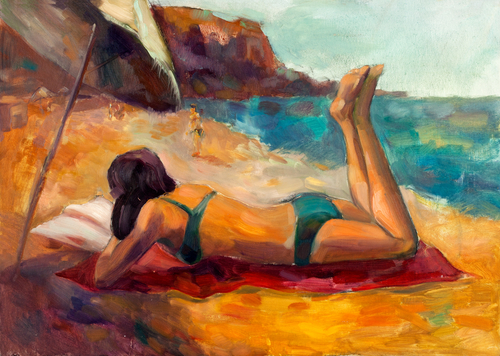
painting of girl lying on beach in torquoise bikini reading a book

I was very lucky to have award-winning Australian author Susanne Gervay OAM launch my 4th book STORIES FROM BONDI on 2 November at the Blue Mountains Heritage Centre.  Susanne and I first became friends about seven years ago when I stayed at her hotel in Woollahra for three weeks while recovering from major surgery. I’d mentioned our mutual friend Sharon Rundle and Susanne had said that anyone who was a friend of Sharon’s was a friend of hers. Susanne would notice me each morning in the corner of the cafe at the hotel working on my stories and she’d often come over and have a chat. Since that time she has continued to show an interest in my work and my writing career. She would encourage me to enter competitions and always remained positive about publication possibilities. Susanne is now one of my best friends. Lucky me.

It’s been a twenty year journey to book publication. I had five book length manuscripts written before I had one accepted for publication by Ginninderra Press. I am forever grateful to Stephen Matthews for giving me a chance. MY YEAR WITH SAMMY, the fifth book I’d written, went on to be Pick of the Week in Spectrum Books in the Sydney Morning Herald and was winner of the Society of Women Writers Fiction Book Award 2016.

So then I sent Stephen Matthews at Ginninderra Press manuscript numbers four, three, and two. He has published one book a year since 2015:  MY YEAR WITH SAMMY, THE CRYSTAL BALLROOM, THE USUAL STORY and now, STORIES FROM BONDI.

A massive thank you to my publisher.

And thank you to all those who supported me at the launch by buying copies of  my books.

In an animated entertaining presentation Susanne Gervay launched STORIES FROM BONDI by saying in her introduction:

‘Libby’s a red head. That’s the only thing I can think of for her extraordinary life. From my intense research, I know that redheads represent less than 2% of the population so they are a rare breed. They are sensitive, fiery, passionate, and also have more sex than blondes or brunettes. Sorry Libby, I learnt that from Cosmopolitan magazine.’

Susanne is a wonderful guest speaker. She had the whole room laughing wholeheartedly.

stories from bondi amazon cover image


Slow Things Down in Your Writing

woman in blue tennis dress position to hit big forehand

So, here’s the thing:  choose something in particular to write about. For example, what it felt like having a tennis lesson after a twenty year break. Give us the specifics. Dig deep for the details, but at the same time be aware of the world around you. As you focus on what you’re writing, at the same time stay conscious of your surroundings:  the white painted cane Bentwood chairs in the café, the cool breeze from under the door on your sandaled feet, the hum of the traffic outside. Just add a sentence every now and then about the trees that overlooked the tennis courts while you were having a tennis lesson. When we focus on our writing it is good. Seeing the colour of the sky when you toss the ball gives breathing space to your story.

If you are sitting in Meditation you calm the butterfly mind by paying attention to your thoughts, giving them space by acknowledging them before returning to the breath, in and out through the nostrils. In the act of slowing down your breathing, as best you can, you remain open so that you are receptive to awareness of sounds as they arise: sounds near, sounds far, sounds in front, behind, to the side, above or below.

With every breath you take, you feel the air, the sound of the ball as it hits the racket, the  players on the other courts.

We should always be living in the present, not by ignoring the world around us, but by paying close attention. It is not easy to stay alive to ‘what is’. When we slow things down in our writing, it is good practice.

What about you? Do you find a daily meditation practice assists your writing practice?

First Amazon Review of ‘Glass Walls’

Editors Meenakshi Bharat and Sharon Rundle at launch of Glass Walls

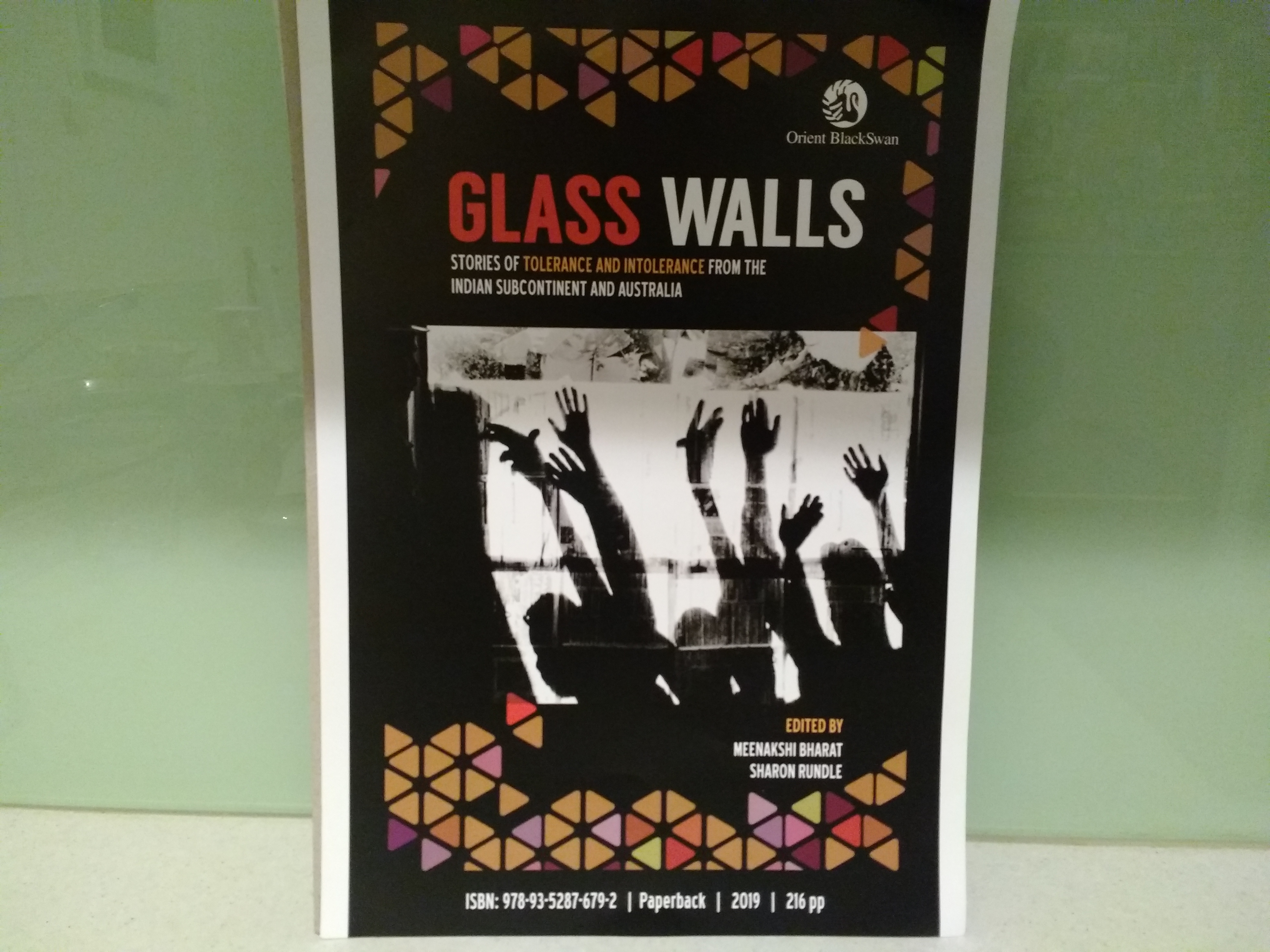
First review on Amazon of GLASS WALLS, published by Orient BlackSwan, stories of tolerance and intolerance from the Indian sub-continent and Australia edited by Meenakshi Bharat and Sharon Rundle (pictured). Thrilled to see my short story HENRY received a special mention. GLASS WALLS was launched recently at the Australian Short Story Festival in Melbourne. Have a read of Punekar’s review:

“This collection of stories tackles a wide variety of subjects and is categorised into Family, Race, Gender, Religion and so on and that is why I enjoyed the book. One could pick and choose a story to read depending on one’s mood. I specifically liked the stories on Family and Gender. The stories on race brought out the dichotomy that exists in all of us, as mentioned in the introduction to the book. Right thinking people are determined not to be biased and want to do the right thing but the subconscious mind often has another agenda. The rational aspect of the personality loses out in certain circumstances. This is brought out in the stories on family too, particularly the story titled “The Wedding Gift”. Another story I liked was the one titled “Henry”. We behave in the most irrational ways but we are not bad people, not really, just human. All the stories are not equally good, but all of them touch something inside your heart.” – Punekar

GLASS WALLS is available from Indian publisher Orient BlackSwan.

Use Declarative Sentences – Reblog

pexels-photo.jpg

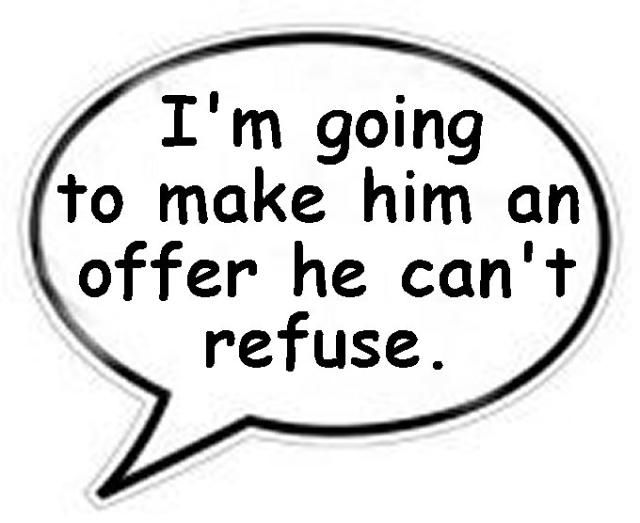
speech bubble: I'm going to make him an offer he can't refuse

This declarative sentence was spoken by Don Corleone (played by Marlon Brando) in the movie The Godfather (1972).

It is not uncommon for women and other minority groups to add qualifiers to their statements. Such as ‘Parents need to stop organising every minute of their children’s spare time, don’t you think?’ ‘I loved that movie, didn’t you?’ In our sentence structure we look for reinforcement for our thoughts and opinions. We don’t always make declarative statements. ‘This is wonderful.’ ‘This is a catastrophe.’ We look for re-enforcement from others.

Another thing we do without realising it, is use indefinite modifiers in our speech:  perhaps, maybe, somehow. ‘Maybe I’ll take a trip somewhere.’ As if the speaker has no power to make a decision. ‘Perhaps it will change.’ Again, not a clear declarative sentence like, ‘Yes, nothing stays the same.’

It is important for us as writers to express ourselves in clear assertive sentences. ‘This is excellent.’ ‘It was a red dress.’ Not ‘The thing is, I know it sounds a bit vague, but I think maybe it was a red dress.’ Speaking in declarative sentences is a good rehearsal for trusting your own ideas, in standing up for yourself, for speaking out your truth.

When I write poetry I read through early drafts with a critical eye, taking out indefinite words and modifiers. I attempt to distill each moment to its essence by peeling off the layers until the heart of the poem is exposed. We need to take risks as writers and go deep within ourselves to find our unique voices and express ourselves with clarity.

Even if you are not 100% sure about your own opinions and thoughts write as if you are sure.  Dig deep. Be clear. Don’t be vague on the page. If you keep practicing this, you will eventually reveal your own deep knowing.

Have you noticed this tendency to qualify in your conversations with others, or in your creative writing, or in blog posts? Would love to hear your thoughts.
‘Glass Walls’ Pre-launch


'glass walls' book cover

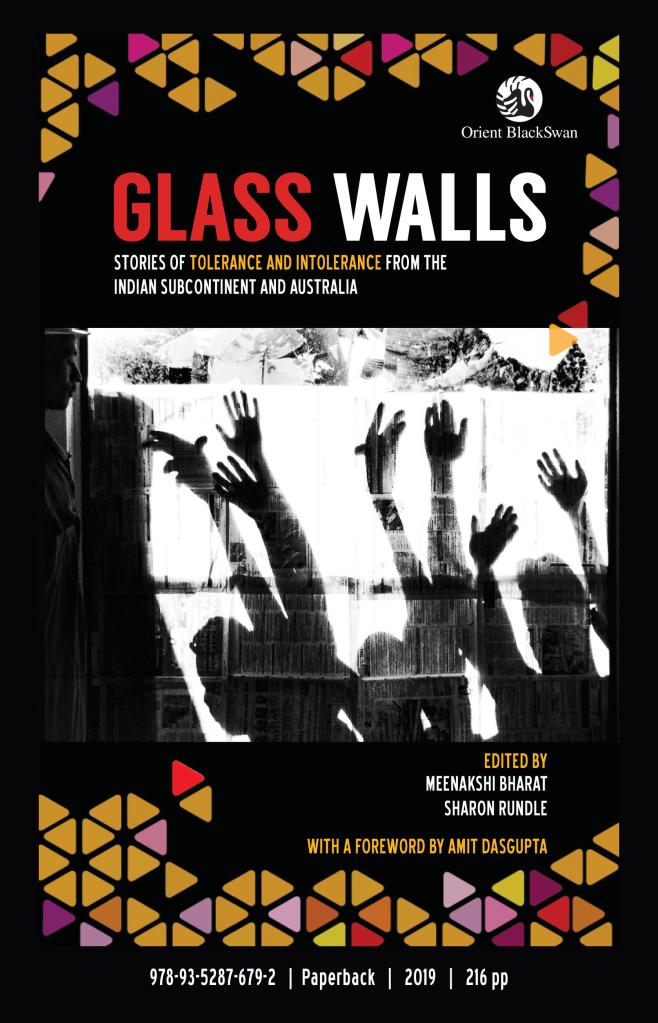
Such a thrill to see my name in the list of contributors to ‘Glass Walls’, stories of tolerance and intolerance from the Indian Subcontinent and Australia, alongside famous authors  including David Malouf, Elizabeth Jolley, Bruce Pascoe, Debra Adelaide, Roanna Gonsalves.

‘Glass Walls’ had a pre-launch at SAFAL (South Asian Festival of Art and Literature) at the weekend.  At the event I was invited to read my short story ‘Henry’ (first published in Quadrant). Am honoured to have my work in this important book published by Orient BlackSwan, edited by Meenakshi Bharat and Sharon Rundle. The book will be released this month.  It will be fully launched at the Australian Short Story Festival 2019 in Melbourne October 18-20.

‘Glass Walls’ challenges readers to look deeply into their own prejudices and reveals how small intimacies of intolerance become the bedrock of world tragedies that tear humanity apart. A powerful anthology.’ – Susanne Gervay OAM

book cover 'Glass Walls'

‘Stories From Bondi’

painting of girl lying on beach in torquoise bikini reading a book

Woohoo. I finished correcting first proofs of my new collection STORIES FROM BONDI due for publication by Ginninderra Press in September. A big job. Final proofs are the next step in the publishing process.

So what are first proofs?

Initial proofs of the book from the typesetter, sometimes still delivered in galley format.

For the author, this first set of author proofs can be a challenge because often what is delivered is the raw typesetting output. Text will have been formatted and a key task for the author is to check that no text corruptions occurred at the file conversion stage of typesetting.

However, because tables, illustrations, etc. may not yet have been added, what these first proofs still lack are the real page breaks and an indication of the book’s final extent. For this reason, careful scrutiny still needs to be given to the final proofs.

This definition is extracted (and expanded on) from the book Getting Published: A Companion for the Humanities and Social Sciences by Gerald Jackson and Marie Lenstrup.

You Are Not the Stories You Tell

woman reading book

Sometimes when people read my stories they assume those stories are me.  They are not me, even if I write in the first person.  They were my thoughts and feelings at the time I wrote them.  But every minute we are all changing.  There is a great freedom in this.  At any time we can let go of our old selves and start again.  This is the writing process.  Instead of blocking us, it gives us permission to move on.  Just like in a progressive ballroom dance:  you give your undivided attention to your partner—keep eye contact for the time you are dancing together—but then you move on to the next person in the circle.

The ability to express yourself on the page—to write how you feel about an old lover, a favourite pair of dance shoes, or the memory of a dance on a chilly winter’s night in the Southern Highlands—that moment you can support how you feel inside with what you say on the page.  You experience a great freedom because you are not suppressing those feelings.  You have accepted them, aligned yourself with them.

I have a poem titled ‘This is what it feels like’—it’s a short poem.  I always think of it with gratitude  because I was able to write in a powerful way how it was to be desperate and frightened.  The act of self expression made me feel less of a victim.  But when people read it they often say nothing.  I remind myself, I am not the poem, I am not the stories I write.  People react from where they are in their own lives.  That’s the way things are.  The strength is in the act of writing, of putting pen to paper.   Write your stories and poems, show them to the world, then move on.  The stories are not you.  They are moments in time that pass through you.