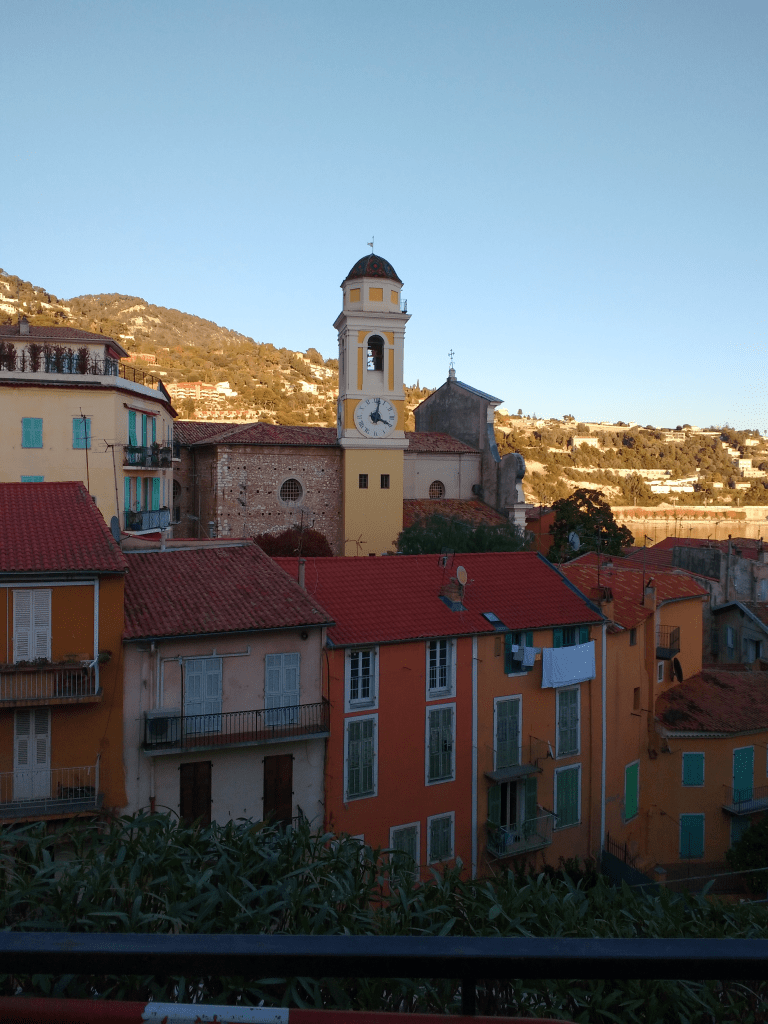
My Story, ‘Jean-Pierre’

Have a read of my short story, ”Jean-Pierre’, first published in Quadrant Magazine. It’s one of the stories in my collection ‘Stories from Bondi‘ (Ginninderra Press).

I hope you enjoy it.

Jean-Pierre

This was in a far distant land.  There were Pilates classes but no surfing beaches or vegan restaurants.  People said to hell with low-fat diets and tiny portions.  Charles, who had wanted her to hire his friend Jean-Pierre as tour guide, had encouraged her in yoga class.    ‘Look, Zina, you’re a facilitator—you’ve been running those groups—for what—thirty years?’

‘Only twenty, for goodness sake.’  She had turned forty-nine and frowned at him upside down between the legs of a downward facing dog.  She had a face marked by the sun, a face left to wrinkle and form crevasses by years of smoking, a face made shiny by the application of six drops of jojoba oil, although the shop girl had recommended she use only three.  ‘I love that word facilitator.  It says so much.’

‘Twenty.  All right.  This guy’s not at all your type.  He’s a numbers man.  He shows tourists around in between Engineering contracts.  He can show you how to buy a bus or a train ticket, how to withdraw money out of the wall—get your bearings.  You can hire him for half a day.  Or, in your case, half a day and half the night.’

‘Very funny,’ she said, stifling a laugh.  Now they were on all fours arching their backs like cats, then flattening their spines to warm up the discs.  Indian chanting music took your mind off the fact that the person behind you was confronted with your broad derriere. ‘So what’s the story with Jean-Pierre?’

‘Someone I met at a conference in Monaco,’ said Charles on an out-breath. ‘Large-yacht communications.  He’s charismatic, let me tell you.’  Charles dyed his hair and beard a rich brown, and in yoga class it stood on end to reveal a circle of grey at the crown.  He had paid many visits to this far away country since he started learning the language.  She’d never had the courage to have a go herself.  She knew how to say good morning, Madame every time she walked into a shop, how to ask for the bill, how to say please and thank you.  What else did you need?  Charles had moved on to German classes and was planning a trip to Berlin with his wife.  They were even taking their two kids.  Toledo and Paris they called them.

‘Look, you’re going to the land of endless rail strikes,’ Charles said.  ‘You’ll need Jean-Pierre, or you’ll be stranded on train platforms, not knowing what to do or where to go.’

‘Come on now.  You’re such an exaggerator.  They’re not always on strike.’

They lay on their backs, legs wide open in the air in a happy baby pose.  ‘All right, I suppose so,’ she said. ‘You can give me his email address.’

‘I love croissants and baguettes and all of that,’ said Charles, sighing over his shoulder.

The yoga instructor was walking around the room, checking out their poses and had reached the back row.  ‘Focus inwards, be in the moment,’ he reprimanded Zina and Charles.

‘Let the soles of your feet reach for the ceiling,’ he said before returning to the stage to demonstrate the cosmic egg.  He eased his face between his thighs. ‘Now bury your eye sockets into your kneecaps.’

‘I’m not trying to fix you up with JP,’ Charles whispered.  ‘I really hate that kind of thing.’  He twinkled across at her.

‘Lift your hips high off the mat and boom your heart toward the back wall.’

Jean-Pierre was still charismatic, and, on close examination, was still handsome.  About sixty, with a splendid head of hair.  His face was persuasive, his forehead, his large nose.      They ate croissants at Cosmo, the busiest café in the village.  She drank green tea infused with fresh mint, the leaves determined to block the spout of the tea pot.  Jean-Pierre sipped on an espresso.

He nodded at her tea.  ‘English,’ he said with a note of barely disguised distain.    ‘The English drink tea.’

She bristled.  A racist.  A narrow-minded, insular, arrogant racist.

She looked at his intense face as he stroked the black and white head of his dog who peeped out above the zip of his jacket and felt sorry for his preconceptions and a little sorry for herself when she reflected on it, because, really, he seemed to know very little about Australia.  Do you have black Africans living off social security?  Poor Jean-Pierre didn’t know an African from an Aborigine.

‘No, green tea is not English,’ she said haughtily, giving him the evil-eye, to show him, to show him this:  ‘Green tea originated in China.’

Madame?’ said the waiter, reaching for her empty plate.

‘Merci,’ she nodded.

‘Did you fly Business?’ Jean-Pierre said abruptly.  ‘Such a long flight from Australia.’

‘Economy.  I’m a poor struggling facilitator.’

‘You have to get out there and promote your courses.  Then you can fly Business.’

‘We don’t all do things just for  the money.’

Jean-Pierre looked down the narrow cobbled pedestrian-only street.  ‘There are two things you must watch out for here,’ he said.  ‘The motor bikes … and the dog pooh.’

‘Thanks,’ she said, then, trying to be friendly.  ‘In New York they say you can tell the tourists from the locals because the tourists are the ones looking up at the skyscrapers and the locals are the ones looking down for the dog pooh.’

He twisted the gold band that girded the blowsy fat of his finger.  ‘I was married to a New York lawyer once.  Very clever.  She read four books a week.  I read only one a month.  Are you married?’

‘Not currently.’

‘My son speaks four languages,’ said Jean-Pierre.  ‘My mother likes to say that anyone can get a Masters, but if you’ve got four languages—rather than three—you’ll be a success in life.  I’ve only got three.  What about you?  Any children?’

Eli had stayed at her place for the week just before she left home.  He’d sat in the lounge room, eyes fixed to his iPad.  She would sometimes watch on as he played a combat game.  He’d build a village, train his troops and take them into battle.  She would watch his face deep in concentration, so focused he seemed unable to hear when she asked him to set the table, or unstack the dishwasher.  She didn’t like the every-second-week-deal with his father, so disruptive to getting a routine in place.  Eli would come with her to the gym sometimes, or they’d go for a jog around the oval.  It’s not as if his father did any of those things.  She did her best:  drove Eli to cricket and footie, helped with his homework, listened whenever he was willing to talk, always made sure there was meat in the house when it was her week “on”.  Eli said to her, ‘When you and Dad were together, we always ate with the TV turned off.  Now you’re divorced, you and me can eat dinner in front of the tele if we feel like it.  Much better.’

‘Yes,’ she said to Jean-Pierre.  ‘I have a son.’

‘It’s different in this country.  We’re Catholics.  We don’t usually divorce.  Not when there are children.  Are you a Catholic?’

‘No.’

‘Religious?’

‘Spiritual, but not religious.  We could do with less religion in the world, in my opinion.  Why?’

‘I was going to suggest I show you the island of Saint Honorat off Antibes, but tourists only go there in order to see the sacred abbey.  The thing is, I grew up in Antibes.  I know it like the back of my hand.  I could hire a car and we can drive to different parts that the tourists don’t see.  We can spend a few hours in Antibes, then, after that, if you want, we can have lunch.  What do you think?’

‘What would it cost?’

‘Well, there’s the cost of the car, then my time.  So … all up, 180 euros.

‘I’ll give it some thought.’

Jean-Pierre lowered his dog to the ground, reached for his wallet, pulled out a ten euro note and placed it on the edge of the table for the waiter.

She unzipped her handbag to pay her share but he patted her on the arm and said proudly, ‘No. No.  Put your money away.  I’m a Frenchman.’

The second time they met up, they went for a walk into Nice via the foreshore.  It was a difficult walk.  Eighty sets of steps interspersed with slippery limestone rocks.  When she asked why the gate was locked at the end of the walk, necessitating a dangerous climb over a high fence on the edge of a cliff, Jean-Pierre said the authorities probably kept the gate locked because they didn’t want tourists getting washed off the rocks at high tide.  It wasn’t a good look.

Now he wanted to have lunch at the Port.

‘Where do you like to eat?’ she asked.  She was still thinking about the climb over the gate, when she’d been so afraid that she wouldn’t be able to get her leg high enough and would crash to an early death on the rocks below.  She’d needed to sit on the stone wall to compose herself afterwards.  It was Jean-Pierre who had acknowledged her courage, had said she’d done well, that she’d even looked graceful when she’d executed the tricky maneuver and swung herself out into the void before throwing herself over the top.  Before they’d left on the walk he’d told her he hadn’t followed the coastline into Nice for a long time, and was really looking forward to walking it again.  He wouldn’t be charging her his usual hourly rate, as it was something he’d been wanting to do for ages.  ‘My wife kept me on a tight leash.’

‘There are plenty of places to eat at the Port,’ he said.  They walked down the hill and he leaned in and gave her shoulder a quick squeeze.  ‘You did well,’ he repeated.  She blushed with embarrassment at the intimacy of his gesture.  She’d only just met him, after all.  And anyway, she was no good at relationships.  There were people she knew who were good at them and people who weren’t.  She was no good.

‘What sort of restaurant do you like to lunch at back home?’ he said.

‘We mostly don’t have a big meal in the middle of the day.’

‘No?  What do you do?’

‘Well, um, we usually jog around the park, then stand in line to order large skimmed lattes.’

‘Ah,’ he said, and put his hand over hers where it rested on the table.  She felt her hand go still like a frightened animal.  Jean-Pierre’s hand was rough and warm as it lay over hers.  Maybe she shouldn’t have drunk two beers in the middle of the day.

On Saturday afternoon Jean-Pierre took her and a group of American tourists by ferry to an old island prison.  ‘You’ll find this place worth a visit,’ he said, as they waited on the wharf.  ‘An infamous jail for deportees, prisoners convicted of political crimes, such as espionage or conspiracy.’

‘Interesting,’ she said, stepping across the gangplank.  She sat down beside Jean-Pierre at the front of the boat.  The four American couples filed down to the back row of seats.  ‘We can throw Smarties at you from here,’ one of them joked.

Jean-Pierre tapped on her sunshade.  ‘You won’t need this.  It’s dark in the cells.’  He pulled a map out of his pocket and opened it out, pointing to the layout of the buildings.  ‘The locations of the public toilets,’ he said.  ‘That’s what every tour guide needs to know.’  He folded up his map and put it in his breast-pocket.  ‘I want to give you a quick kiss now, before we get into one of those dark cells,’ he said.  ‘I won’t be able to see you in there.’  He turned towards her, and suddenly his face, up very close, appeared at the end of her nose, floating, as she leant against the back of the seat.  He shut his eyes and kissed her, soft and probing, and she kept her sunshade on for privacy, lips, mouth, teeth and tongue, his hand moving very slowly up her arm, up to her shoulder and to her bare neck, and hovered there for only a moment, cradling her face, before he moved away, straightened his trousers, and quietly pulled out his map again.

She adjusted herself and stared out the window to the water.  Jean-Pierre gave the signal that they were nearing their destination and to prepare for disembarkation.

‘We don’t do things like that in Sydney,’ murmured Zina.  She refreshed her lipstick.

‘No?’  Jean-Pierre grinned and levelled out her visor.

‘No, it’s um, all those coffees.  You just keep running.  Forever and ever.  You spend your whole life,’ her hands juggled an imaginary Tai Chi ball—‘on the run.’

Well-kept concrete walkways led up, over and around the island’s hill.  Jean-Pierre steered them through a rustic entrance to the old prison complex.

‘And now,’ he said, ‘we come to that part of our tour most likely to give you claustrophobia.  The Reclusion Disciplinaire area.’

They stepped up and through a narrow hallway toward the low, dark solitary confinement cells.

‘This is where prisoners were kept in silence and darkness,’ Jean-Pierre was saying.  He led the way into the dark of the single-person cells.  ‘You won’t be able to see a thing in there.’

She squinted ahead at the front of the group, which had now gathered by the doorway.  It looked scary.  She took off her sunglasses and shade, but could see nothing as she stepped in.  The blackness lay heavily all around, not like a moonless sky, but like a creepy cupboard with stone walls and low roof, a stone tomb.  There was something inhuman in the cruelty of the space, a place where the light never shone, hidden, despair-inducing.

‘I’m right behind you,’ Jean-Pierre said, moving close, ‘in case you’re frightened.’  He gave her hand a squeeze, then placed his arm around her waist.  She could smell his after-shave—or was it cologne?—feel the warmth of his breath on her neck, and leaned, unseeing and anxious, into his body.  She reached for his arm and clutched at his hand where it rested on her waist.

***

When they went to bed together, she almost broke into joyous laughter.  He’d drawn her in without even trying.  His face, his voice, his eyes.  It was a whole-package thing.  He  made her feel so special.  He was more appreciative than anyone she had ever known.  He hugged and kissed and even offered to go downstairs and get her cigarettes out of her handbag.

He got out of bed and went over to the piano.  He fumbled with some sheet music in the semi-dark, holding each up to the light until he found what he wanted.

‘I play this sometimes,’ he said, in a quiet voice. ‘It starts with a single note, a B natural, growing in dynamic from a soft pianissimo to a very loud fortissimo.’  She listened as he played the one note, building up to full strength.  Who was this guy?

When he’d finished, he turned to her and said, ‘Especially for you.  I use my music to express my feelings.’

They made love again.  Once more he got out of bed and sat beneath the black and white photograph of himself with his mother and his brother.  He began to play.  After a while he stopped playing and went into the bathroom to wash his hands.    When he returned he wore the hand towel looped over his erect penis.  She rolled over to have a look and kissed him, his face glowing with pride.

Morning.  The bakeries were laying out their breads and pastries filling the air with the mouth-watering aroma of freshly baked baguettes.  In the antique shop windows, as the sun struck them, the cleaners hosed the cobbled alleys.  Jean-Pierre rose early and walked to the boulangerie.

He laid the breakfast out on a tray and brought it in to her in bed.  Outside the window, the sky was a clear faded blue, and patches of sun, geometric designs of light, streaked the doona.  He put the tray on the bed, and she sat up and stroked his face, his skin still chilled from the morning air.  She pointed at the pain au chocolat.

‘So I need to forget about the diet?’

Oui.’  His mouth was already filled with pastry, chocolate oozing between his lips.  ‘It’s good for you.  Don’t you know that the flour in this country is so good, and so different, that even gluten-intolerant people can eat the bread and quiches?’

Her workshops, as she wrote to Eli back home, were going well.  She’d managed to book a space in an old 16th century Citadel overlooking the Mediterranean.  And she’d made a new friend.  Something had happened to her in an old isolation cell, she didn’t know what exactly.  But she had to get back home.  I hope you and Dad are getting on okay and he hasn’t had any more nasty blow-ups.  It’s a mild winter here.  Some people are even swimming and sunbaking on the beach.  Love, Mum

They went on the bus to visit his mother, the music of Bach on a score above his head.  In Bach there was not only symmetry and logic but more, a system, a reiteration which everything hinged on.  His hair was uncombed.  His face had the modesty, the unpretentious lips of someone secretly able to calculate the frequencies of the string vibrations.  His mother met him at the door and took his dark face in her hands.  She stepped back to see better.

‘Your hair,’ she said.

He combed it down with his fingers.  His brother came from the kitchen to embrace him.

‘Where have you been?’ he cried.

At night Jean-Pierre began to sleep with one hand resting on her solar plexus, the other curled around her shoulder, as if to shield her from bad dreams.

When she slept against him like that, her life on the other side of the world crumpled into her backpack that hung on a hook behind the door.  Could she live the rest of her life in a far-away-country?  Maybe she could.  Except for that funny feeling in the pit of her.  Like a rock in the guts.

On Sunday morning Jean-Pierre took her for a walk up to Mont Baron.  ‘You’ll love the view from the old Fort,’ he said.  ‘You can see Italy to the left and Nice to the right.’

‘Sounds wonderful!’ she said, closing the door behind them.  They climbed the steep steps that led up the hill.  The sky was gold with light.

‘Why don’t you come with me to Australia?’ she said.

‘I don’t think so.’

She listened to the sound of water over rocks.

‘No?’ she said.

He was silent.  After a moment he said, ‘I can’t.’

She began to imagine she could hear the sound of a kookaburra laughing.

‘No,’ she said.  ‘I think I should stay here with you.’  She reached for his hand.

‘No, you can’t.  I can see you phoning Eli to tell him you’d decided to stay and him crying, No, Mummy.  Come home.’

‘You know us Australians,’ she said, suddenly desperate.  ‘We’re like boomerangs.  We keep on coming back.’

She went into the bedroom to change her clothes.  He started to follow her but sat down again instead.  He could hear intermittent, familiar sounds, drawers opening and being shut, stretches of silence.  It was as if she were packing.

‘Are you really leaving on Saturday?’ he said.

‘What did you say?’

‘Saturday.  Is that it then?’

‘Why don’t you come with me?’

‘I could never live in a country with no European history.  But I’ll surprise you one day.   I’ll ring Eli early and ask what beach you’re walking on and I’ll just turn up on the sand.’

During that last day she thought of nothing but Jean-Pierre as she packed and cleaned out her little apartment.

‘What do you do, you have a stopover in Dubai?’ Jean-Pierre said, standing next to her at the taxi rank in the early morning chill.  A bitter wind blew from the mountains.  He had come over to carry her bag down the stairs.

‘I go straight through.  It’s three hours on the ground in Dubai, so I walk around the airport then read my book.’

Jean-Pierre looked directly into her eyes.  ‘I’ve bought you a little gift,’ he said.

‘You have?’

‘Don’t unwrap it until you’re on the plane.’

She smiled.  ‘Okay.”  Then she looked at his face, to place him clearly in her mind.  He was wearing a white t-shirt and blue jeans under a padded coat.  She kissed him on the lips, then got into the taxi.

‘Something to take with you,’ he said, leaning in the window.  In his hand he clasped a small gift-wrapped box.  The sun, still low on the horizon, cast an amber glow on his precious face.

‘Thank you,’ she said.  She reached for his hand through the window and then put on her seatbelt.

And she thought about this all twenty-four hours of the journey across the Indian Ocean.  She would keep opening the little box to admire the marquisite earrings he’d given her.  She would catch a taxi from the airport and at home notice the house smelt musty; she would open all the doors and windows to let the air move through, the curtains blowing and air coming in and out.  From a far-away-place, and at night, he would ring to say, resignedly, ‘My mother is living with me now.’  His gift, when she’d take the earrings out of their black box, would remind her of something that had happened to her once.

She felt like someone who she had always known, that old friend of herself, grounded in home, decisions already made, and behind her somewhere, like the shadow of an identical twin, her other self, who must remain in the far-off distance,  never to be exposed to the light.

Copyright © 2023 Libby Sommer

My Short Story, ‘Aunt Helen’

Have a read of my short story, ‘Aunt Helen’ first published in Quadrant Magazine. ‘Aunt Helen’ is one of the stories in my collection, ‘Stories from Bondi‘ (Ginninderra Press).

I hope you enjoy it.

Aunt Helen:

Although she loved her nieces and nephews, it was when she turned thirty-nine that driving young children around in her car seemed to make her nervous—a tightening in the stomach.  “Aunty Helen, would you like to take Naomi to see The Muppets?  Are you free?”  Always these requests from one of her sisters looking tired and desperate—one of her younger siblings, they used to be so close—and Helen would force herself to make the effort to be the good aunty.  The responsibility of passengers in her car always made her anxious.  She was anxious about one thing or the other most of the time, but wanted to appear selfless and generous-spirited.  Her availability, or non-availability, was noted, itemised, either in her favour, or against her.  She didn’t want to be labelled self-obsessed.  She had entered an era when the nicest thing a person could say to her was, “You’re a fabulous aunty.  The kids love you.” 

Continue reading

My Short Story, ‘After the Games’

My short story ‘After the Games’ was first published in Quadrant magazine and is included in my collection of short fictions titled ‘Stories from Bondi’ published by Ginninderra Press. Have a read. Hope you enjoy it.

After the Games:

1.

Anny saw him again today.  He looked older.  Their paths crossed on the cliffs between Bronte and Bondi.  He walked with a woman she had never seen before. The woman had long beautiful legs – bronzed a clear nut-brown.   She was wearing a man’s undershirt and brown shorts and had a crochet bag hanging loosely from a black nylon strap draped over her hips.  Her hair was long and it flicked out in golden corkscrews over her shoulders and down her back.   They were laughing.  He walked right past Anny and kept right on walking.

2.

The beach seems unusually quiet today apart from a yoga class taking place on the grassy verge behind the Pavillion.  On the ocean, surfers in wetsuits loll motionless on surfboards.  On the sand, a gaggle of seagulls stand rigid as Irish dancers.  And over on the rocks at the southern end of the beach other seagulls laze in the early sun in groups of three or four, or six or eight – their chests puffed out, feathers bristling in the spring breeze, as they nestle into the face of the rock.

It is shortly after the Sydney 2000 Olympic Games and Anny is on a rostered day off from her job with the ABC.  She is also a poet but she doesn’t  refer to that unless it is something people know already.  She doesn’t think of making a living as a poet, not only because the income would be non-existent, but because she thinks, as she has innumerable times in her life, that probably she will not write any more poems.

On the grass a woman works out with her female personal trainer.  The trainer holds an oblong plastic cushion at waist height while the woman kicks the bag.

One, two, three, calls out the trainer.

Kick, kick, kick, goes the woman’s leg hard into the cushion.

Four, five, six.

Kick, kick.

That’s the way, the trainer encourages.

Nine, ten, she continues with a rising inflection in her voice.

The trainer is forced backwards slightly with each kick but makes a quick recovery to her original position.

3.

A man and a woman lie together kissing, sheltered by the shadow of the rocks at the southern end of the beach.  Anny came here at night with Howard and they sat over there near the rocks with their arms around each other into the night. The pull of the tide kept bringing the waves closer to their feet.  Anny saw the froth advancing and retreating and her own toes digging into the sand.  All the time he spoke she saw her feet and when they started to go numb in the damp sand she  knew without looking up what he was going to say;  the whole of her seemed to be in her toes.  Her love was in the waves.  For some reason she thought that if the waves reached her, things would work out between them.  The waves advanced and retreated but never quite reached the rock where they sat:  never quite bridged the gap, the space between them and the ocean.

4.

On the sand a one-legged seagull hops towards the water laboring over the crumbs of loose sand which break away and roll down as he passes over them.  The one-legged seagull seems to have a definite goal in sight differing from the high-hopping tangerine-footed bird who attempts to cross in front of him, and who waits for a moment with his black beak trembling as if in deliberation, and then hops off as rapidly and strangely in the opposite direction.  A line of seaweed with deep green lakes in the hollows lies between the seagull and the water’s edge where the other gulls are pecking for food.  The seagull waits, undecided whether to circumvent the mountain of seaweed or to breast it.

Anny stops and watches the struggle of the seagull.

5.

The ocean is grey and flat today.  It is so quiet in fact that she can hear the tiny whisper of the breeze, the rustling of the waves approaching the shore, the creaking of the wings of a gull-like bird which flies low over the Promenade and the flapping of her own thin skirt as it blows against her legs.  But there is no wind, nothing but a steady pressure forward as she progresses along the beach.  Somewhere behind the veil of clouds there is a pale sun which can be seen, in the far distance, that casts a white gleam on the water.

Who would know there had been a Beach Volleyball Stadium here on the beach at Bondi?  She bought tickets for the preliminaries for herself and her son.  They hadn’t been out, just the two of them, since he was a little boy when she took him to a Kiss concert.

After the game they’d walked back to her place and he’d come in briefly for a glass of water before saying goodbye.  She’d  kissed him on the neck – on that soft groove that she used to know so well when he was a little boy.

When he’d left she couldn’t think of anything for the rest of the afternoon except that soft part of his neck and the kiss.

6.

Near the end of the Promenade a woman cradles a baby in her arms.  Anny can see the baby’s face clearly as it is lit by the sun.  She can almost smell the baby’s soft hair, that familiar baby smell she once knew so well.  The woman strokes the baby and looks down at it and the baby looks back up at her.  She looks up again with a faraway gaze that all new mothers seem to have and rocks slowly from side, to side, her feet shuffling against the cement.  The light picks up the woman’s high cheekbones and glints off her glasses.

Anny moves to the left as a woman pushing a three wheeled stroller runs past.  The baby clutches the sides of the pram, the front wheel lifting as the woman negotiates the corner.

7.

Anny first met Howard at a dinner party at a mutual friend’s house.  He’d talked business with the host and she hadn’t really connected with him.  It was only towards the end of the meal when he’d passed her the chocolate-covered strawberries and encouraged her to eat one that she’d warmed to him slightly.  Go on, he’d said.  Have one.  Chocolate is good for you.  He was a chunky sort of a bloke, a thick head of brown hair, greying at the sides.  She had to admit that she wasn’t attracted to him when they first met. You were disappointed I could tell, he said later. A week after the dinner he’d rung and asked her out for dinner.  He’d come over to pick her up and they’d walked down to Bondi.  Coming back to her place later he told her he knew she was interested in him because she kept brushing into his arm as they walked up the hill.

8.

Anny trusts what she makes of things –  usually.  She trusts what she thinks about friends and chance acquaintances, but she feels stupid and helpless when contemplating the collision of herself and Howard.  She has  plenty to say about it, given the chance, because she likes to explain things, but she doesn’t trust what she says, even to herself; it doesn’t help her.

Because everything and everyone else in his life came before me, she might say.  His two businesses, his children, his ex-wife who lived across the road.

9.

The one-legged seagull has now considered every possible method of reaching his goal without going round the line of seaweed or climbing over it.  Aside from the effort required to climb the seaweed, he is doubtful whether the slippery texture will bear his weight.  This determines him finally to creep beneath it, for there is a point where the seaweed curves high enough from the ground to admit him.  He inserts his head in the opening and takes stock of the high brown roof and is getting used to the cool brown light before deciding what to do next.

10.

Howard had said he uses his air rifle to kill birds.  He said he’s proud to shoot introduced birds around his house – and has no hesitation in killing dive-bombing magpies and noisy possums.

She remembers his house well.  Big, two-stories, red-brick, four bedrooms, two bathrooms, a swimming pool out the back. Black leather and chrome, art books on the coffee tables.  Huge original paintings on the walls.

He’d stay in the family room when his children were visiting, which was seven days out of fourteen – everyone in their own special seat at a computer or watching television or talking on the telephone.  There was no spare seat for Anny and not enough light to read by.

She bought flowers.  She bought presents for his children;  clothes for the girls; she talked music with his son.  She learned pathways around the house and found places outside where she could sit.

She’d felt flattered when he said that he wanted her to move in with him. He offered to build her a studio out the back.  A dog house, a friend had said.  He wants you out the back in the dog house so he can keep an eye on you.  So you can be on hand whenever it suits him.

Howard talked about all the women his friends had lined up for him – waiting to be introduced.  He spoke about a former girlfriend and how he wanted her to move in with him but she wouldn’t, so he ended the relationship.  Later Anny found out that Howard had kept on seeing the former girlfriend even ringing her from Paris from the conference Anny had foolishly agreed to attend with him.  She’d stupidly insisted on paying her own business class airfare, which she couldn’t afford, in order to be by his side.

She didn’t know any of this until it was too late –  until she’d  become needy and dependent.

You just want a handbag, a doormat, a warm body in the bed, she’d accused him.

I have a fatal flaw, he’d explained.  I only want what I cannot have.

And what are Anny’s flaws?  Angry, demanding, unco-operative Anny.  Anny, the unsatisfactory poet.

11.

Two pigeons waddle along the concrete in search of food.  Their tails wag back and forth, their necks jut in and out like finely linked springs moving to the rhythm of their webbed feet.  On the grass the men and women practicing yoga twist their bodies into unimaginable knots and drop into breathtaking back bends, seeming to hang suspended in the air as they jump from one position to the next.  The clear measured voice of the female yoga teacher calls out instructions:

Push down through the buttocks

Pull up through the rib cage

Relax the head down

Spread the fingers out wide

Toes under

Push the hips up

Keep the mind focussed in the moment

Roll over on to your back

And come into the corpse position

If you live alone and you can’t close your hand, it makes life very difficult as you get older, says the yoga instructor.  Not being able to open a jar or turn a key in the lock.  Every morning when I wake up I take the time to stretch out my body, she continues.  I rotate my ankles, stretch out my feet and arms, and then I stand up and stretch out my neck.  How many of you stretch in the mornings? Living in the city takes a toll on our health.  We sit at a desk writing or sit at the computer – but we need to stretch the hands, the wrists, the hip flexors and to keep our bodies moving.

Anny wonders if the early morning stretches are only for people who live alone – for  people who don’t wake up with their lover beside them.

12.

The last time she saw Howard they sat in her car near Ben Buckler in the rain.  She rested her hands against the steering wheel, then leant back and listened as the windscreen started to fog.  She felt the rise and the fall of her own breathing but she couldn’t hear her heart or her breath.  She knew without seeing that the waves were colliding.  Below, the swells rolled against the brown cliffs that she couldn’t see.

When she drove back to her apartment she sat down on a chair in her bedroom.   She sat for an hour or so, then went to the bathroom, undressed, put on her nightgown, and got into bed.  In bed she felt relief, that she had got myself home safely and would not have to think about anything any more.

In fact her only memory now is of the sound of the windscreen wipers swinging back and forth as she and Howard sat in silence in her car.

After the Maccabi bridge collapse in Israel she rang to see if his daughter had been involved.  She left a message on his answer machine but he never returned her call.

He wrote to her care of the ABC, to say he’d pack and send her things.

13.

The grey underside of wings flap as a triangle of seagulls fly past in perfect formation above the rocks.  They climb to a thousand feet, then, flapping their wings as hard as they can, they push over into a blazing steep dive toward the waves.  They pull sharply upward again into a full loop and then fly all the way around to a dead-slow stand-up landing on the sand.

14.

Effortlessly the one-legged seagull spreads his wings and lifts into the air. In the light breeze he curves his feathers to lift himself without a single flap of wing from sand to cloud and down again.

He climbs two thousand feet above the sea, and without a moment for thought of failure and death, he brings his fore wings tight in to his body, leaving only the narrow swept wingtips extended into the wind, and falls into a vertical dive.

With the faintest twist of his wingtips he eases out of the dive and shoots above the waves, a gray cannonball under the sun.

He trembles ever so slightly with delight.

15.

She had his sweater draped over her shoulders. They were laughing.  Anny watched their backs move away.  She waited by the sea until the sun went down.

16.

The swell is up, the Pacific Ocean expressing its power across the rocks below Anny in spectacular explosions of spray.

It is colder now and the day is fading. A little wind has blown up.  The wind tears at her hair.  With a wild gesture she pulls her hair loose from its side combs and lets it stream across her face and then lets it fly back in the wind.

A weak sun emerges.  She stands still and lifts her face.

17.

Keep your hips still, swing your arms, keep your lower abdominals tight to protect your back.  Try to keep your chest high, a nice long neck.  Keep your arms out nice and long.  Relax the shoulders.  Stand tall.  Go over to the right side, keep your knees soft.  Very slowly.  And the other side.  Forward roll.  Drop the chin into the neck.  Hold it.  Keep your knees soft and come back up.  Really concentrate on spinal articulation here – vertebrae by vertebrae slowly roll it up, shoulders relaxed.  Chin in, roll it down.  Keep those knees soft.  Bend your knees as much as you have to.  Go down for four, push it in. Stretch out the shoulders there.  Hold it and release the hands on to the ground and roll it back up. Take your right leg out in front.  Hands on the hips, keep the hips square.  We’re going over in a nice square line.  Should be able to stretch the hamstrings there. 

 And … coming back up.

 The End

Copyright © 2022 Libby Sommer

My Short Story ‘Towards the End’

My short story ‘Towards the End’ was first published in Quadrant magazine a few years ago. It’s one of the pieces in my collection ‘Stories From Bondi’ released by Ginninderra Press in 2019. Have a read. Hope you enjoy it.

Towards the End:

He leaned back on the chrome chair, stretched his legs out under the square black table and placed his mobile phone in front of him. He looked over to the counter at the back of the cafe at the cakes and muffins on display and the Italian biscuits in jars. He turned back to the glass windows and wondered if he had the guts to tell her today. He wanted to. By Christ he wanted to. He straightened up, his elbows on the table, his hands clasped together in front of his face. There’d been some good times, that’s for sure. But what the heck. A man’s got to do what a man’s got to do.

The sliding glass door clanked open and Anny walked in. He looked over at her, first from the rear as she closed the door and then as she approached, her face flushed, her dark hair flying back from her shoulders. Not bad looking. A bit on the heavy side but not a bad looker all the same. Yes, there’d been some good times. Especially in the sack.

Anny removed her sunglasses as she walked over and he looked into the bright green of her eyes as she bent down and kissed him on the cheek. He felt the moisture on her face as her skin touched his.

She took off her sunshade and hung it on the back of the chair and sat down.

You’ll never guess what happened, she said.

What?

I’m still so angry I can hardly speak. She pushed her hair away from her forehead as she dabbed at the sweat with a serviette.

What happened?

This man, she said. This dreadful man. Anny used her fingers to wipe the moisture from under her eyes. I was walking along the cliff path from Bondi to Bronte, like I usually do, minding my own business, when I heard a jogger behind me.

Nothing unusual about that.

So I moved further to the left to let him pass.

Yeah. That’s the rules, keep to the left.

He must have been about to pass on the inside because next moment I heard a thud and there he was picking himself up from the side of the track.

Anny stopped talking as the waitress approached with notepad and pen.

A spaghetti marinara for me, said Daniel smiling at the waitress. And a coffee.

How do you like your coffee?

He grinned at her. Hot and black, thanks.

Anny turned away from him and squinted at the blackboard. I’ll have the Greek salad and a decaf skimmed cap. And a glass of water, please.

And I’ll have an orange juice as well, said Daniel.

Daniel’s eyes followed her as she walked towards the kitchen. Then his mobile buzzed from the table. He picked it up and held it to his ear.

Yep, he said. I can give them a ballpark figure, but that’s about it. Just a ballpark. Yeah, okay then. Here’s his number. Daniel opened the front of the phone and pressed a button. 0413 501 583, he said. He put the phone back on the table its antennae sticking out towards Anny. I hate it when people say things like that, he said.

What?

Oh nothing. Just the usual crap. They all think they can get something for nothing.

Daniel’s pasta arrived first and he began to eat. He sucked in a spaghetti tail and then impatiently cut some of the pasta with his knife. He dispensed with the knife and continued to eat with his fork. He scooped up the marinara with its splayed-like prongs.

So what happened? he said as he sucked in a loose strand of spaghetti, catching its long skinny tail with his fork.

He must have caught his foot on the edge between the footpath and the grass. I was about to say ‘are you all right’ when he roared out at me ‘it’s all your fault you know’. ‘I was keeping to the left’ I said. He ignored me and ran on, red shiny shorts flapping. How dare he speak to me like that. ‘Asshole’ I called out after him. He gave me the finger up sign and kept running. I was furious.

Daniel didn’t answer as he waited for the waitress to place a plate of salad in front of Anny. He blew on his pasta before placing another mouthful towards the back of his tongue, his thin lips closing over the fork.

When I reached Bronte, said Anny. This man had finished his circuit and was on his way back. We recognised each other and he started telling me off about which side of the path I could walk on. ‘Don’t tell me where to walk mate’ I hissed. That’s when he stopped jogging and moved towards me. I thought he was going to punch me.

Really?

I was a bit scared I can tell you, but I braced myself. That’s when he said ‘you’ve got some chip on your shoulder because you’re fat and ugly’. I laughed at him because it sounded so ridiculous and as far as that was concerned it proved my point. What an asshole. Just thinking about it makes me angry.

Daniel turned away from her. He couldn’t tell her now. Not after that. He looked out the window to the truck parked across the road. ‘Dean’s Premium Natural Fruit Juice: the way it should be’ emblazoned on the side. The way it should be. That’s a bit of a joke. Well I know this is the way it shouldn’t be. He couldn’t get Louise out of his head.. That last time – her tight white t-shirt over those tight little breasts – leaning over her plate. Eating that huge roll. The sight of her opening her mouth so wide he thought the sides of her lips would crack. Stuffing it in she was. Later at her place when he couldn’t wait. Coming up behind her as she cleaned her teeth. Ramming it in.

He tore the crusty white Italian bread into small pieces and used it to mop up the remains of the sauce and wiped the red sauce from the corner of his mouth. He reached for his glass and sucked up the remains of his orange juice through a yellowed straw, then burped. He put the glass down, his broad hand wrapped around the grooved surface and leaned across the table. He looked into Anny’s face.

I have to go.

Go where?

I’ll pay the bill.

What’s wrong?

I want to make a move on that Elizabeth Bay deal.

He stood up, his keys dangling from the loop at the back of his trousers, his rubber soled shoes silent as he headed towards the door. Only the sound of his keys and then the bang of the door.

Outside he pulled out his mobile and dialed.

I’m leaving now honey, he said. I’ll be there in a few minutes.

In the cafe Anny watched from the window. She sighed, stood up slowly and then walked over to the cake counter. He’s a workaholic that bloke.

I’ll have a slice of that chocolate mud cake and a cappuccino, she said to the girl behind the register.

Copyright © 2022 Libby Sommer

Book Review: ‘Stories from Bondi’

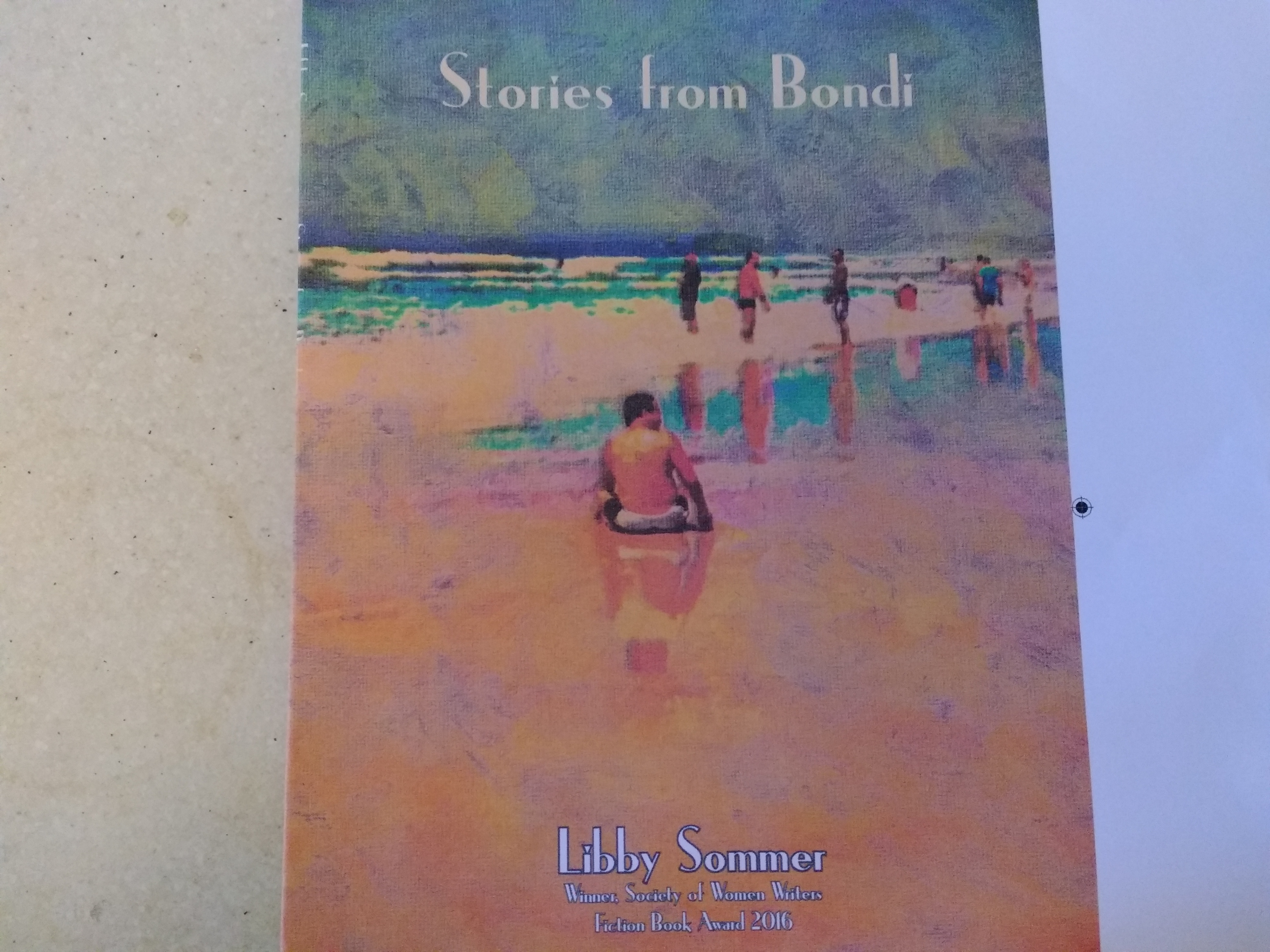
book cover of 'Stories from Bondi' showing people on the sand by the sea
Book reviewer Dr Beatriz Copello, D.C.A. (Creative Writing) U.O.W., Cultural Editor of Semanario El Español and Psychologist, has written a wonderful review of  my new book STORIES FROM BONDI.
She writes:

Stories from Bondi is a collection of short stories by Libby Sommer.  Libby Sommer is the award-winning Australian author of My Year with Sammy (2015), The Crystal Ballroom (2017) and The Usual Story (2018) and is a regular contributor of stories and poems to Quadrant Magazine.

The stories contained in this book are varied in tone, mood and themes and they go from the very light and funny to sombre and sad, and from the innocent to the complex.  Most of the stories are set in the Eastern Suburbs of Sydney and for the inhabitants of this city it is fun to recognise familiar places and people from foreign places will learn about the beauty of  Sydney.

Australian humour is sprinkled over the pages as well as truly Australian expressions, typical social comments and comments about the style of clothing the characters wear. Some authors describe characters’ clothes in a way that is pedantic.  This is not the case with Sommer, the way this author dresses her characters emphasize aspects of their personality.

Various stories are about Anny, a well-defined character who the reader gets to know through her many and varied experiences.  Through Anny’s point of view the reader encounters reflections about modern women, their issues, concerns and sexual mores.

In Stories From Bondi the sea is ever present, as well as the seagulls … seagulls flapping wings, seagulls walking on sand or seaweed, seagulls flying … seagulls who are witnesses of Anny’s life.

Strong women’s issues are covered in some of the stories, but also issues that many women readers would identify as their own, issues such as body image, for example in “After The Rain” where Anny expresses concerns about her figure, the author writes:

“Although there are fans on the ceiling, it’s very hot in the restaurant.  Anny wants to take off her cardigan but she doesn’t want to expose her upper arms that is, that are less than perfect even though she does weights and other things at the gym.

She wears a jacket or a cardigan always now to draw the eyes and attention away from that part of her body that is growing larger at a more rapid rate than the rest of her, which is causing her much alarm.”

Sommer with her imaginative mind take us to places, where many women on their own would not dare to go, like lonely overseas trips or to Sex Clubs.  Yes, Anny visits a sex club in the story titled “Around Midnight”, story which is packed with the unexpected and with humour.  Although, I enjoyed reading this story I would have loved for it to have stronger and more explicit sex scenes.  Humour is also found in other stories like in “It’s Not Easy Being On Holidays”, she writes:

“Anny said, On New Year’s Eve I ran my hand up the inside of a man’s trousers from the ankles up and discovered he wasn’t wearing any underwear either.

You discover a little something?

A big something, she said.

They both laughed.”

In the story mentioned above there are also a few really funny passages full of innocence, one of these is when Anny phones her son to tell him about her holidays, Sommer writes:

“And Pamela and Annabel all over each other in front of me.  I can’t stand it.

Would it worry you so much if they were straight?

I can’t stand anyone being passionate in front of me — straight or gay.  It makes me jealous.  It’s inconsiderate of them.

Well, what did you expect going on holidays with two gays, two lesbians, a bisexual and a dog?

You’re right.”

Sommer has the ability to create believable characters and place them in real life situations, whether these situations are arranged or occur by chance. The ‘unusual’ sometimes is found in this writer’s narrative, like when she describes different types of Glutei Maximi, for those unacquainted with Latin this mean simply ‘bums’. Sommer is a good observer and as such gives us good descriptions of ‘bums’, the character Anny comments:

“Gradually the men on the beach sauntered towards the boat with money clasped in their bare hands.  They lined up one behind the other as they waited their turn, assorted body shapes and colours.  Tight firm bums, droopy wrinkly bums. Some with tell-tale underwear marks and others browned all over.”

Slices of life are brought to the reader with cinematic qualities: sceneries, the characters, the situations, all can be seen in the mind’s eye like in a movie. The following is a small example:

“Max leant back on his elbows nibbling on a bunch of grapes.  He knocked the bottle of red wine beside him.  The bright red liquid seeped into the white sand.

A fly buzzed around the apples.

A trail of ants marched towards the bread.

The Brie softened in the sun.”

The above paragraph is the ending of one of the stories, a simple ending that says so much.

In the collection there is one very sad story of abuse and growing up too quickly and not knowing how to stop abusers who prey on innocent girls.  There are also issues experienced by the characters which are very common to women one of this is the need to feel safe, the story “The Backpack” has that need very clearly expressed by the character:

“I knew my children would be pleased I had a base.  I didn’t want them to worry. It was the thing I wanted the most secretly, studying maps, absorbing travel books. To be safe, a desire whispered to the moon that moved behind my shoulder at night.  If you guide me to a safe haven, I promise to be happy.  And the moon listened.  I did my best.”  How many women would identify with this? Many it is my guess.

All the main characters in Stories From Bondi are women, mainly writers who are portrayed as intelligent, inquisitive, reflective and observant who experience an array of emotions, men would find the stories fascinating and would learn about what goes in women’s heads.

Bondi is not the only setting mentioned in the book, other Australian cities and small towns are the background of some the stories, places like Perth, Cairns, Wee Wa, Brindabella as well as European cities.

Sometimes the author transitions from omniscient narrator to first person narrator, this works in most of the stories but in some small sections this does not happen. This minor issue does not demerit the stories at all.

There is one experimental story in the collection: “Around The World In Fifty Steps” where the author writes sentences and short paragraphs and numbers them from 1 to 50. Some of the sentences are dialogues, others propositions, information about the character and suggestions. The result is positive, the reader gets to know the character and what is going on in her life.

Some of the stories mirror women’s fantasy about escaping the routine, pain, loneliness, disappointment and sorrows as well as those close relationships that can be so complicated such as between mother and daughter. Also the reader will find sad possible romances that never get anywhere like in her previous novel The Usual Story.

Stories from Bondi is a book well written, with an interesting narrative and with characters true to life. Again Sommer brings to light another book in which the reader can submerge themselves into place and characters. Highly recommended.

About the Reviewer:

Dr Beatriz Copello, is a former member of NSW Writers Centre Management Committee, she writes poetry, reviews, fiction and plays. The author’s poetry books are: Women Souls and Shadows, Meditations At the Edge of a Dream, Flowering Roots, Under the Gums Long Shade, and Lo Irrevocable del Halcon (In Spanish).

Beatriz’s poetry has been published in literary journals such as Southerly and Australian Women’s Book Review and in many feminist publications.  She has read her poetry at events organised by the Sydney Writers Festival, the NSW Writers Centre, the Multicultural Arts Alliance, Refugee Week Committee, Humboldt University (USA), Ubud (Bali) Writers Festival.


Launch: Stories from Bondi

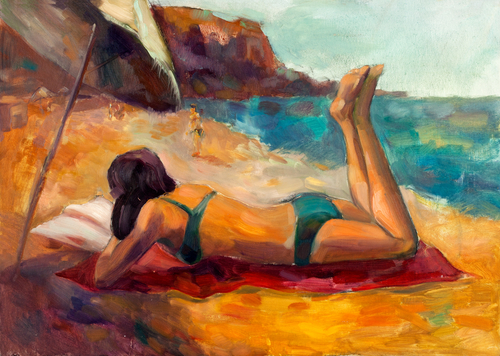
painting of girl lying on beach in torquoise bikini reading a book

I was very lucky to have award-winning Australian author Susanne Gervay OAM launch my 4th book STORIES FROM BONDI on 2 November at the Blue Mountains Heritage Centre.  Susanne and I first became friends about seven years ago when I stayed at her hotel in Woollahra for three weeks while recovering from major surgery. I’d mentioned our mutual friend Sharon Rundle and Susanne had said that anyone who was a friend of Sharon’s was a friend of hers. Susanne would notice me each morning in the corner of the cafe at the hotel working on my stories and she’d often come over and have a chat. Since that time she has continued to show an interest in my work and my writing career. She would encourage me to enter competitions and always remained positive about publication possibilities. Susanne is now one of my best friends. Lucky me.

It’s been a twenty year journey to book publication. I had five book length manuscripts written before I had one accepted for publication by Ginninderra Press. I am forever grateful to Stephen Matthews for giving me a chance. MY YEAR WITH SAMMY, the fifth book I’d written, went on to be Pick of the Week in Spectrum Books in the Sydney Morning Herald and was winner of the Society of Women Writers Fiction Book Award 2016.

So then I sent Stephen Matthews at Ginninderra Press manuscript numbers four, three, and two. He has published one book a year since 2015:  MY YEAR WITH SAMMY, THE CRYSTAL BALLROOM, THE USUAL STORY and now, STORIES FROM BONDI.

A massive thank you to my publisher.

And thank you to all those who supported me at the launch by buying copies of  my books.

In an animated entertaining presentation Susanne Gervay launched STORIES FROM BONDI by saying in her introduction:

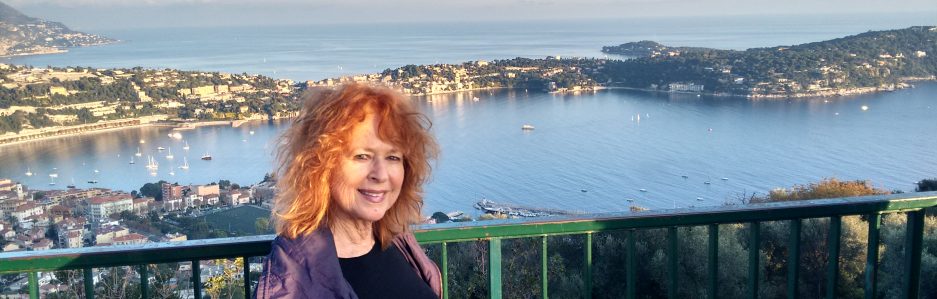
‘Libby’s a red head. That’s the only thing I can think of for her extraordinary life. From my intense research, I know that redheads represent less than 2% of the population so they are a rare breed. They are sensitive, fiery, passionate, and also have more sex than blondes or brunettes. Sorry Libby, I learnt that from Cosmopolitan magazine.’

Susanne is a wonderful guest speaker. She had the whole room laughing wholeheartedly.

stories from bondi amazon cover image


Book shop supports local author


Exterior of Harry Hartog Bookseller

It’s so good to have the support of a local bookstore. Harry Hartog Bookseller at Bondi Junction keep my books in stock.

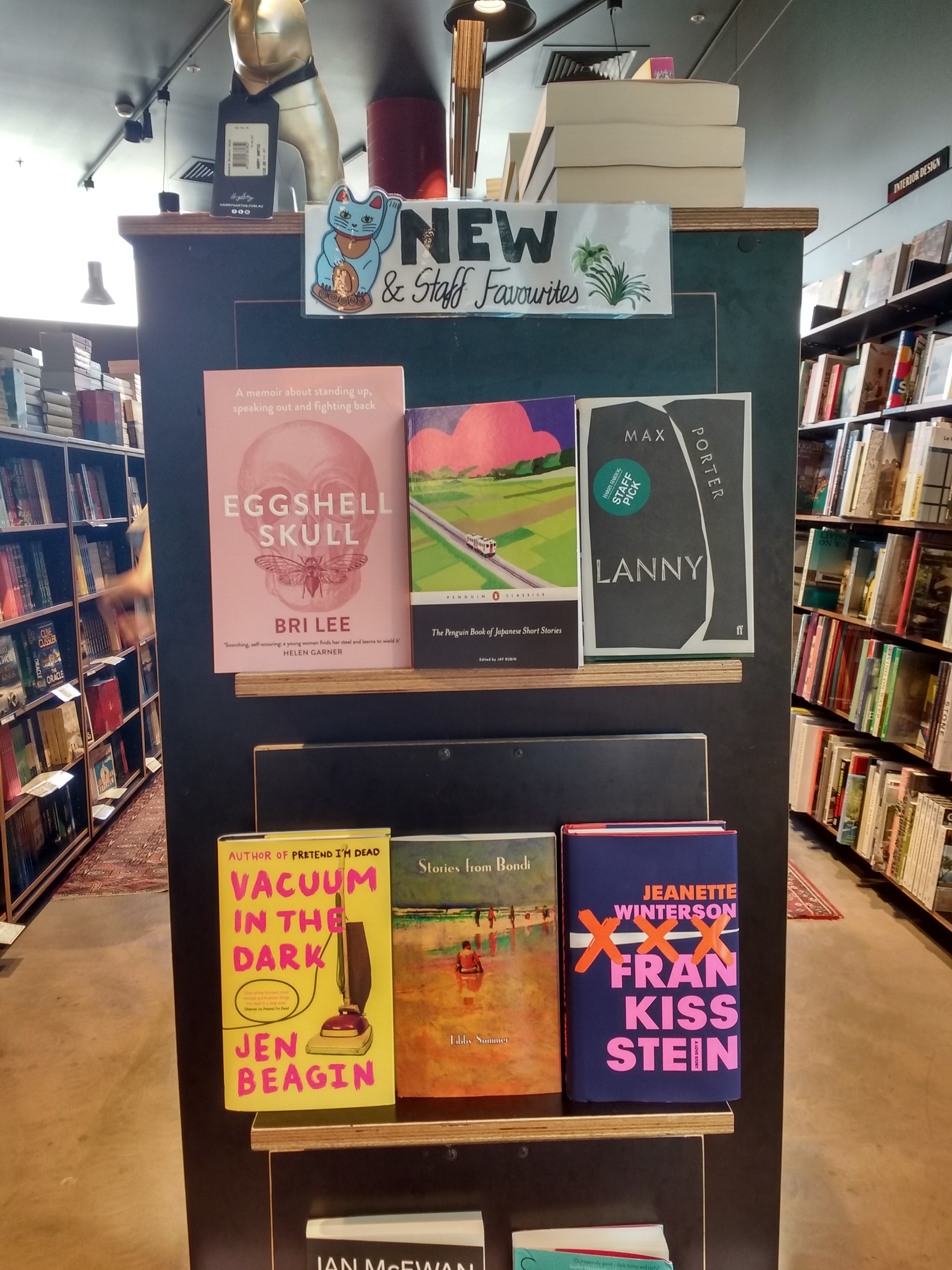
Bookshelves displaying New & Staff Favourites in Harry Hartog Bookseller

There’s my newly released STORIES FROM BONDI  in the ‘New & Staff Favourites’ section. Bottom shelf in the middle, next to Jeanette Winterson’s latest book.

If anyone would like to buy one of my books, they can be ordered from any book store. Otherwise order directly from publisher Ginninderra Press or online from Amazon, Book Depository and others.


Release of my new collection


painting of girl lying on beach in torquoise bikini reading a book

My new book STORIES FROM BONDI, a collection of stories set mostly in Bondi, is now available for pre-order. Target US are even advertising it! Don’t know how that happened. The book will be released as a paperback on 13 September but can be purchased as Kindle Edition from Amazon and as an eBook from Booktopia and other online sites now. As a paperback it can be ordered from bookstores, online and from the publisher, Ginninderra Press.

And here’s my author page on Amazon. Click the link. Feeling pretty proud. I think my four books look fabulous together, if I may say so myself 🙂


Back Cover Blurb: ‘Stories from Bondi’

book cover of 'Stories from Bondi' showing people on the sand by the sea

Here is the back cover blurb for STORIES FROM BONDI due for September release by Ginninderra Press. What do you think?

Libby Sommer’s sensitively-drawn characters live and breathe within the echoes of the everyday. Stories from Bondi centre on women – their joys, doubts, loves and realisations. The foibles of human nature, with all their pathos and humour, are laid bare for the reader.

“From the opening story ‘Art and the Mermaid’, to a moving piece set in a health retreat that closes the collection, these stories beautifully capture the intimacies of women. Like My Year With Sammy and The Crystal Ballroom, this is classic Sommer.” – SUSANNE GERVAY OAM, author.

So what is a book blurb?

blurb is a short promotional piece accompanying a piece of creative work. It may be written by the author or publisher or quote praise from others. Blurbs were originally printed on the back or rear dust-jacket of a book, and are now found on web portals and news websites. – Wikipedia

A big thank you to fellow author Roslyn McFarland for giving me feedback on the blurb.  I’d only reworked it about a thousand times, but still Ros was able to help me make it clearer.


Cover Reveal: Stories from Bondi

book cover of 'Stories from Bondi' showing people on the sand by the sea

In the final stretch now towards publication next month of STORIES FROM BONDI. I received final proofs from the publisher Ginninderra Press. They are now being read by another set of eyes before posting back to Adelaide. 19 contemporary stories about men and women and life and the whole damn thing set mostly in and around Bondi. 

There will be a launch of the book in the Blue Mountains on 2 November. Details to follow.

So what are final proofs?

‘Proofs created by the printer for approval by the publisher before going to press are called final proofs. At this stage in production, all mistakes are supposed to have been corrected and the pages are set up in imposition for folding and cutting on the press. To correct a mistake at this stage entails an extra cost per page, so authors are discouraged from making many changes to final proofs, while last-minute corrections by the in-house publishing staff may be accepted.

‘In the final proof stage, page layouts are examined closely. Additionally, because final page proofs contain the final pagination, if an index was not compiled at an earlier stage in production, this pagination facilitates compiling a book’s index and correcting its table of contents.’ – Wikipedia

I’m very excited and can’t help boasting that this is my fourth book in four years. Phew. What a marathon it’s been!