The Art of Writing: From Short Stories to Novels

Wooden desk with open journal, pen, desk lamp, steaming coffee mug, and pencils by window at sunset

Is a novel a short story that keeps going, or, is it a string of stories with connective tissue and padding, or, is it something else?  Essayist Greg Hollingshead believes that the primary difference between the short story and the novel is not length but the larger, more conceptual weight of meaning that the longer narrative must carry on its back from page to page, scene to scene.

“It’s not baggy wordage that causes the diffusiveness of the novel.  It’s this long-distance haul of meaning.”  Greg Hollingshead

There is a widespread conviction among fiction writers that sooner or later one moves on from the short story to the novel.  When John Cheever described himself as the world’s oldest living short story writer, everyone knew what he meant.

Greg Hollingshead says that every once in a while, to the salvation of literary fiction, there appears a mature writer of short stories—someone like Chekhov, or Munro—whose handling of the form at its best is so undulled, so poised, so capacious, so intelligent, that the short in short story is once again revealed as the silly adjective it is, for suddenly there are simply stories, spiritual histories, narratives amazingly porous yet concentrated and undiffused.

When you decide you want to write in a particular form—a novel, short story, poem—read a lot of writing in that form.  Notice the rhythm. How does it begin?  What makes it complete?  When you read a lot in a particular form, it becomes imprinted inside you, so when you sit at your desk to write, you produce that same structure.  In reading novels your whole being absorbs the pace of the sentences, the setting of scenes, knowing the colour of the bedspread and how the writer gets her character to move down the hallway to the front door.

I sit at my desk thinking about form as a low-slung blanket of cloud blocks my view of the sky.  Through the fly screen I inhale the sweet smell of earth after rain as another day of possibility beckons.

We might write five novels before we write a good one.  I wrote five book-length manuscripts before one was finally accepted for publication. My skill was in the short form. I’d published dozens of short stories in prestigious literary journals. So it made sense that my first book, ‘My Year With Sammy’ (Ginninderra Press) is a novella –  a small book.

What about you? Is your skill in the short form or the marathon?
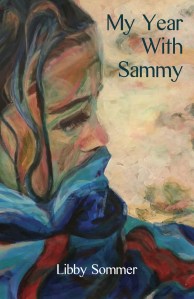
book cover My Year With Sammy

Click To Buy

You Can Read Forever on a Kindle

kindle technology amazon tablet

I never thought I’d prefer reading on a Kindle to reading a real book. It’s just that it’s so quick and easy to keep downloading to Kindle, and the books are not expensive. If you finish a novel at 10pm and are desperate to read the next book in the series, as I was with the Elena Ferrante novels, it takes mere seconds to have a new story in your hands.

At the moment I’m reading Sapiens: A Brief History of Humankind by Yuval Noah Harari. Fabulous. Highly recommended.

Dymocks says about Sapiens,

What makes us brilliant? What makes us deadly? What makes us Sapiens? This bestselling history of our species challenges everything we know about being human.

Planet Earth is 4.5 billion years old. In just a fraction of that time, one species among countless others has conquered it. Us.

We are the most advanced and most destructive animals ever to have lived. What makes us brilliant? What makes us deadly? What makes us Sapiens?

In this bold and provocative book, Yuval Noah Harari explores who we are, how we got here and where we’re going.

Sapiens is a thrilling account of humankind’s extraordinary history – from the Stone Age to the Silicon Age – and our journey from insignificant apes to rulers of the world

‘It tackles the biggest questions of history and of the modern world, and it is written in unforgettably vivid language. You will love it!’ Jared Diamond, author of Guns, Germs and Steel

Amazon says about Sapiens:

A Summer Reading Pick for President Barack Obama, Bill Gates, and Mark Zuckerberg

From a renowned historian comes a groundbreaking narrative of humanity’s creation and evolution—a #1 international bestseller—that explores the ways in which biology and history have defined us and enhanced our understanding of what it means to be “human.”

One hundred thousand years ago, at least six different species of humans inhabited Earth. Yet today there is only one—homo sapiens. What happened to the others? And what may happen to us?

Most books about the history of humanity pursue either a historical or a biological approach, but Dr. Yuval Noah Harari breaks the mold with this highly original book that begins about 70,000 years ago with the appearance of modern cognition. From examining the role evolving humans have played in the global ecosystem to charting the rise of empires, Sapiens integrates history and science to reconsider accepted narratives, connect past developments with contemporary concerns, and examine specific events within the context of larger ideas.

Dr. Harari also compels us to look ahead, because over the last few decades humans have begun to bend laws of natural selection that have governed life for the past four billion years. We are acquiring the ability to design not only the world around us, but also ourselves. Where is this leading us, and what do we want to become?

A terrific book. I think reading is one of the best way to relax, especially during this crazy holiday period.

For tips on writing process, check out my posts  Writing Tip: Use Your Obsessions and Writing Is Like Becoming a Sushi Chef.  And to make sure not to miss anything from Libby Sommer Author you can follow me on Facebook or Instagram.