Writing Tip: A Sense of Place

writing desk with keyboard, screen and printer in front of window
My home office

I’m sitting at my writing desk this spring morning in Sydney thinking about the need to ground our writing in a sense of place, whether landscape or cityscape.

How often have you heard someone say of a book they loved:  ‘I felt like I was there.’

Even if you relocate the poodle tied to a fake-cane chair, the sound of a game of tennis, the table of older men after their regular Sunday match at the café overlooking the tennis courts at Cooper Park that you drank a lemongrass and ginger tea at in Sydney into a café in a story in another state and time, the story will have originality and believability.  ‘But that café was in Sydney, I can’t transport it to Adelaide.’  But you can.  You can have flexibility with specific detail.  The mind is able to transport details, but using actual places that you experienced will give your writing authenticity and truthfulness.  It grounds your work in place, giving life and vitality to your writing, rather than a whole lot of exposition that floats in the air.
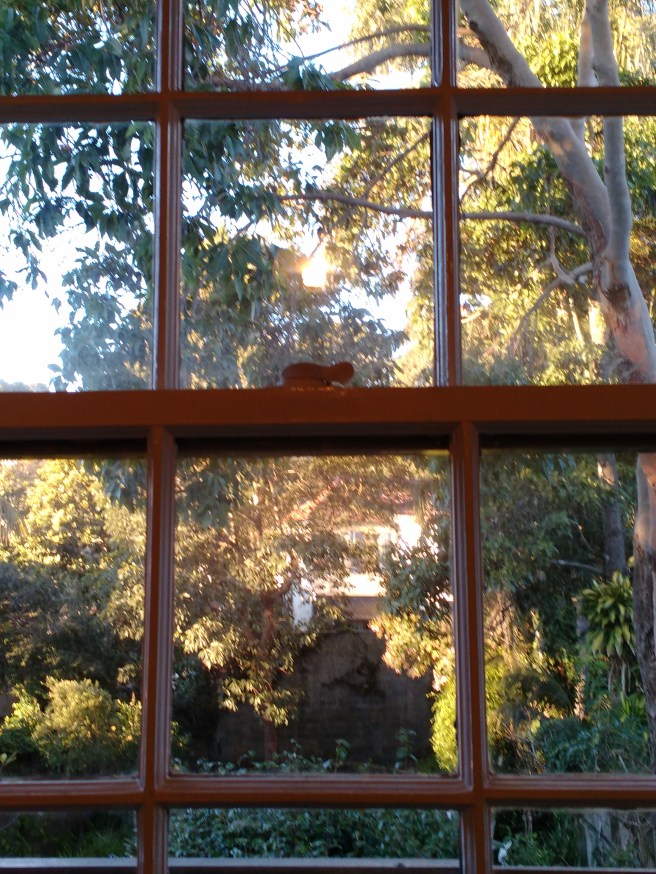
trees and house seen outside French paneled window
looking out the window from my writing desk

 If you don’t create evocative settings, your characters seem to have their conversations in vacuums or in some beige nowhere-in-particular. –  Jerome Stern

Creation of the physical world is as important to your story as action and dialogue.  If your readers can be made to see the hand-knitted socks or the row of vitamins on the kitchen benchtop, the scene becomes alive.  Readers pay attention.  Touch, sound, taste, and smell make readers feel as if their own feet are warm under the cold sheets.

Place situates the story in your reader’s mind.  Fiction that seems to happen in no particular place often seems not to take place at all. –  Jerome Stern

I hope this tip on creating a sense of place is helpful. Do you have any suggestions you would add? Let me know in the comments and please share this post with a friend if you enjoyed it.
I Wrote 5 Books Before Publication

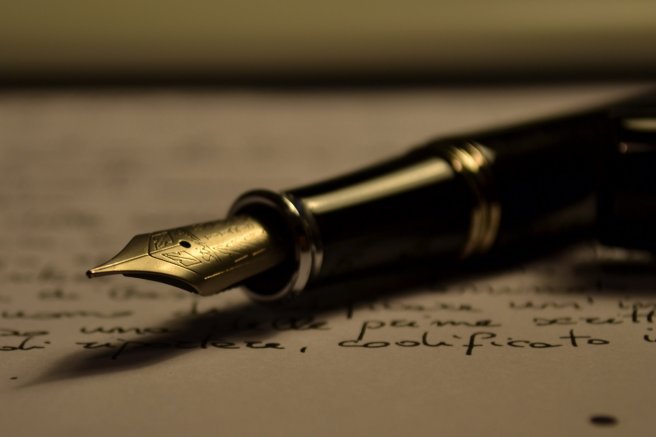
fountain pen on page of writing

I wrote five book length manuscripts before one was finally accepted for publication by Ginninderra Press, a small but prestigious publisher. Rejection didn’t stop me from writing.

‘You write, you re-write, you edit, you tweak and when it’s perfect, you submit. And then you get rejected. Many times, maybe by a person who didn’t even read it. Rejection is painful because it instantly devalues your creation. Someone says this isn’t worth publishing. Rejectees, take heart. Many now-famous writers have been rejected before they made it big. Stephen King wrote his first novel, “Carrie,” and it was rejected 30 times. Rejections were so devastating that he threw the manuscript in the trash. “Chicken Soup for the Soul” was rejected 140 times. Margaret Mitchell’s “Gone With The Wind” was rejected by 38 publishers (and she did give a damn). James Joyce’s “Dubliner” was rejected 18 times and took nine years before it reached publication.’ – Ronald H. Balson

There are days when you feel like giving up and is seems that you are not making any progress. It’s during days like these, that sheer determination and persistence is all that’s left.

“Nothing in this world can take the place of persistence. Talent will not; nothing is more common than unsuccessful people with talent. Genius will not; unrewarded genius is almost a proverb. Education will not; the world is full of educated derelicts. Persistence and determination alone are omnipotent. The slogan “press on” has solved and always will solve the problems of the human race.” – Calvin Coolidge

Some writers continually submit the same manuscript until it is accepted. Others chose to do a more polished draft before sending it out again. A few learn from the lessons of submissions, to write a completely new book. What we all have in common is a persistence to never give up on our dream. Some decide to self-publish.

I’m very happy to say that persistence has paid off for me, and a third manuscript has now been accepted for publication by Ginninderra Press . ‘The Usual Story’ will be available in bookstores and online in July 2018.

As the saying goes: a writer writes. Writers continue to write.

A dear friend, who is also a former mentor, wrote this to me recently:  Libby, I’m not sure how you found your way to Ginninderra, but what a blessing for you and for readers! I was thinking the other day of your commitment for so many years when the door to publishing a book just wouldn’t open, and how much I admire your resolve and, of course, your amazing talent! Wonderful that the books are in the world now.

I hope this reminder about persistence is helpful. Do you have any tips you would add? Let me know in the comments and please share this post with a friend if you enjoyed it.


Connected short stories

exterior State Library of NSW
State Library of New South Wales Sydney

I had a five minute spot last Wednesday at the Society of Women Writers monthly lunch meeting at the State Library of NSW in Sydney. I was given the opportunity to stand up in front of a microphone and speak about my two books. It was a chance to confront my fear of public speaking and tell everyone ‘The Crystal Ballroom’ (Ginninderra Press) had been launched the previous week in Melbourne. I’d only spoken in public twice before, at the two launches. It was a very scary experience. Apparently, most of us fear speaking in front of an audience more than death. So, even though I appeared confident, my hands kept up their shaking for some time after I sat down again. But very pleased with myself for doing it. Those more experienced than me tell me it gets easier every time.

Anyway, the thrust of what I said was that I am transitioning from short story writer to novelist. My debut novel, ‘My Year With Sammy’ (Ginninderra Press) is really a novella and ‘The Crystal Ballroom’ a collection of short stories that I’ve linked together with an “I” narrator and the narrator’s friend, Ingrid. The two women get together over a coffee to talk about the dances they go to, who they see there, and who is sleeping with who, and who’s paying the rent 🙂

It was a device I used to turn a collection of short stories into a novel.

What about you? Have you been able to successfully change the form you write in?


‘Painstaking Progress’ revisited


sunset over the ocean

‘Painstaking Progress’ is another of my stories, like ‘Art and the Mermaid’, that was first published in Quadrant Magazine. It shows the difficulties of the writing process for the narrator as she tries to make sense of  her family history and agonizes about the relationship with her young lover.

Painstaking Progress

by Libby Sommer

I’m imagining a cloudy autumn morning.  There’s a room.  Half office, half bedroom.  Not too large and not too small.  The windows of the room face east and look out towards the ocean across the expanse of a green gully.

I picture a woman sitting on a bed with pillows behind her back.  The windows are open.  Perhaps it is Saturday morning.  On the bedside table is a mug of tea and a photograph of the woman’s daughter on her wedding day.

The wind begins to stir the big trees outside and the morning haze is beginning to move and for a short moment the sun lightens the carpet and heavy dark wood furniture.  The shadows of the curtains’ curves darken the floor, almost invisible to the woman on the bed.   The morning sun lightens the CD player, the alarm clock, the piles of books stacked on the revolving Victorian bookcase.

She looks out at the water and at the triangle of beach.  Sometimes it seems that nothing much changes out there, although on some days the waves break close to shore and at other times further out to sea.  She can see it all from the bed, even at night time.  The bed faces the beach and the ocean, and so does the desk.  The room is like standing at the rail of a ship.

On the radio:  ‘Waves, to me, are a reason to live,’ says the surfer.  ‘When you see the roar, the jaws, there is nothing that touches it on the face of the earth.’

In June the twilight begins in the afternoon.  The days close in on me, here in

this room.  The infinite possibilities in the sky and the sea and the possibility of nothing.

What is this writing life?  It tears me to pieces every day.

Continue reading

Fortnightly Story: The Backpack


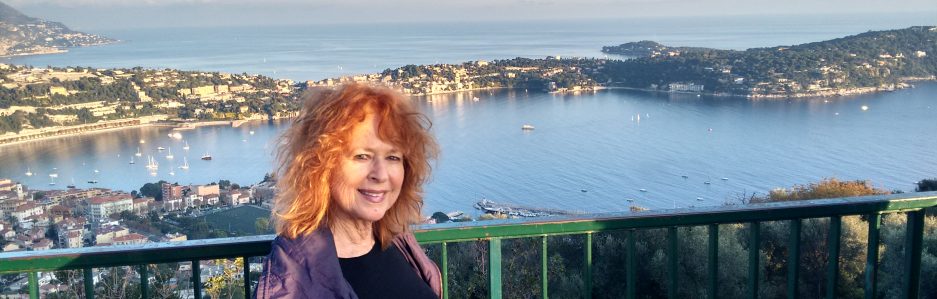
view of Villefranche sur Mer harbour from Mt Baron

What can a man who meets you at the station and offers to carry your backpack mean to a woman traveling the world alone?

I was scared, like anyone who has no sense of direction.  The journey was a series of stops and starts.  Whether to use the Eurail pass or post it back home and ask the kids to get me a refund.  Giovanni appeared one European winter, thick padded jacket, woolen beanie, scarf and gloves, tall and imposing,  I’ll carry your bag.

I was small, the backpack the length of my spine, the zip-off bag on one shoulder, the daypack positioned in front like a nine-month baby bump.  That evening, as we climbed the steps of the Corniche – the wind bitter across the Mediterranean, the metal stairs covered with slippery ice, the railing melting beneath my hand.  Soon it would become my railway platform, my steps, and Giovanni my landlord.

We walked there in the crisp night air.  My own place.  It didn’t cost much.  No-one yet knew I was here.  I could ask Giovanni if I needed any help.  I knew my children would be pleased I had a base.  I didn’t want them to worry.  It was the thing I wanted the most secretly, studying maps, absorbing travel books.  To be safe, a desire whispered to the moon that moved behind my shoulder at night.  If you guide me to a safe haven I promise to be happy.  And the moon listened.  I did my best.

The winter sky closed down and the spring began its flowering.  I took photos and painted and rang the children every week.  Watch your money, don’t talk to strangers, be careful walking at night – you know the drill.  The pebbly beach, the weekend markets, it was all there for the exploring.  A glimpse of the sea between terracotta roofs – a vision in turquoise.  The cobbled streets could show which way to follow – and none of them wrong.  A room at the top of the stairs – till June I stayed reading the English books Giovanni had left in the bookcase, shopping for food, telling my kids and friends they should come for a visit.

Where had the months gone?  Almost two years on the road.  Summer approached. The rents would go up and the tourists arrive.  Time to move on.  I could only take with me what I could carry on my back.  A Jewish gypsy they said.  One more step into the unknown.  Pack up, give away what I couldn’t manage, but keep the palette knife and miniature easel.  There was stuff happening back home.    The boys were grown and earning a living.  Their sister turned twenty-one.  People were reinventing themselves all over the place then coming back home.  A thousand train rides later, my mother nearly eighty.  I won’t be around much longer, she cried.

His was a helping hand in a world that says, but what are you doing there?  What are you doing?

First published in Quadrant

Copyright © Libby Sommer 2016


Fortnightly Story: Tom

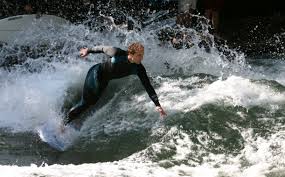
man in black wetsuit riding a wave

May Ling steps across the skipping rope.  I’m waiting for her with her baby brother, outside the school hall, but she hasn’t seen me yet.   Every Thursday when she finishes her Hip Hop class I hang about with the other mothers and grandmothers and carers.  It’s a routine I enjoy—walking up here with the baby in the stroller and then chatting with May Ling as we walk home. Continue reading