Have you tried writing flash fiction yet? What does flash fiction mean?
‘A flash fiction piece is a self-contained story (beginning/middle/end), 1,000 words or less, that can entertain, intrigue, and satisfy a reader during an F5 tornado. That’s it. No genre restrictions, age requirements, or prior experience needed. Just quick, clean stories.’ – Writer’s Digest
‘Part poetry, part narrative, flash fiction–also known as sudden fiction, micro fiction, short short stories, and quick fiction—is a genre that is deceptively complex.’ – The Review Review
‘Flash fiction is a fictional work of extreme brevity that still offers character and plot development. Identified varieties, many of them defined by word count, include the six-word story, the 280-character story, the “dribble”, the “drabble”, “sudden fiction”, flash fiction, nanotale, and “micro-story”.’ – Wikipedia
I like writing in a short form. I’ve been told I have the sensibility of a poet because I have the ability to distill, so the short form suits me. You may be more of a long distance runner, rather than a sprinter, and prefer the long form of a novel.
Have a read of my flash fiction titled It’s Pot Luck When You Move Into A Unit, winner of the short short fiction UTS Alumni Competition a few years ago. Hope you enjoy it.
It’s Pot Luck When You Move Into a Unit
A nice quiet weekend? the woman downstairs said. What do you mean? I said, through the open back door, a bag of rubbish in each hand. She smoothed her ironing on the board and said, They weren’t around over the weekend—with the baby. She looked happy. I’m lucky living on the top floor, I said. She nodded towards the other side of the building. Jim isn’t so lucky—he’s got the woman upstairs, she said, When he plays the piano and she thumps on the floor. She put the iron back on its stand. She’s heavy-footed, that woman. Bang, bang, bang. I hear her coming down the stairs every morning at six, and the slam of the front door.
That night the wind knocked my vase off the window ledge. I lay awake wondering if the noise of the smash had woken up the people underneath—the ones whose barbecuing sends smoke and disgusting meat smells into my unit. Nothing clings to your furniture like the stink from last week’s burnt fat. Sorry about the crash, I muttered to the floor, It was the wind.
Copyright 2023 Libby Sommer
Why not try your hand at writing in this short form and enter a flash fiction competition. Good luck.
Have a read of my short story, ”Jean-Pierre’, first published in Quadrant Magazine. It’s one of the stories in my collection ‘Stories from Bondi‘ (Ginninderra Press).
I hope you enjoy it.
Jean-Pierre
This was in a far distant land. There were Pilates classes but no surfing beaches or vegan restaurants. People said to hell with low-fat diets and tiny portions. Charles, who had wanted her to hire his friend Jean-Pierre as tour guide, had encouraged her in yoga class. ‘Look, Zina, you’re a facilitator—you’ve been running those groups—for what—thirty years?’
‘Only twenty, for goodness sake.’ She had turned forty-nine and frowned at him upside down between the legs of a downward facing dog. She had a face marked by the sun, a face left to wrinkle and form crevasses by years of smoking, a face made shiny by the application of six drops of jojoba oil, although the shop girl had recommended she use only three. ‘I love that word facilitator. It says so much.’
‘Twenty. All right. This guy’s not at all your type. He’s a numbers man. He shows tourists around in between Engineering contracts. He can show you how to buy a bus or a train ticket, how to withdraw money out of the wall—get your bearings. You can hire him for half a day. Or, in your case, half a day and half the night.’
‘Very funny,’ she said, stifling a laugh. Now they were on all fours arching their backs like cats, then flattening their spines to warm up the discs. Indian chanting music took your mind off the fact that the person behind you was confronted with your broad derriere. ‘So what’s the story with Jean-Pierre?’
‘Someone I met at a conference in Monaco,’ said Charles on an out-breath. ‘Large-yacht communications. He’s charismatic, let me tell you.’ Charles dyed his hair and beard a rich brown, and in yoga class it stood on end to reveal a circle of grey at the crown. He had paid many visits to this far away country since he started learning the language. She’d never had the courage to have a go herself. She knew how to say good morning, Madame every time she walked into a shop, how to ask for the bill, how to say please and thank you. What else did you need? Charles had moved on to German classes and was planning a trip to Berlin with his wife. They were even taking their two kids. Toledo and Paris they called them.
‘Look, you’re going to the land of endless rail strikes,’ Charles said. ‘You’ll need Jean-Pierre, or you’ll be stranded on train platforms, not knowing what to do or where to go.’
‘Come on now. You’re such an exaggerator. They’re not always on strike.’
They lay on their backs, legs wide open in the air in a happy baby pose. ‘All right, I suppose so,’ she said. ‘You can give me his email address.’
‘I love croissants and baguettes and all of that,’ said Charles, sighing over his shoulder.
The yoga instructor was walking around the room, checking out their poses and had reached the back row. ‘Focus inwards, be in the moment,’ he reprimanded Zina and Charles.
‘Let the soles of your feet reach for the ceiling,’ he said before returning to the stage to demonstrate the cosmic egg. He eased his face between his thighs. ‘Now bury your eye sockets into your kneecaps.’
‘I’m not trying to fix you up with JP,’ Charles whispered. ‘I really hate that kind of thing.’ He twinkled across at her.
‘Lift your hips high off the mat and boom your heart toward the back wall.’
Jean-Pierre was still charismatic, and, on close examination, was still handsome. About sixty, with a splendid head of hair. His face was persuasive, his forehead, his large nose. They ate croissants at Cosmo, the busiest café in the village. She drank green tea infused with fresh mint, the leaves determined to block the spout of the tea pot. Jean-Pierre sipped on an espresso.
He nodded at her tea. ‘English,’ he said with a note of barely disguised distain. ‘The English drink tea.’
She bristled. A racist. A narrow-minded, insular, arrogant racist.
She looked at his intense face as he stroked the black and white head of his dog who peeped out above the zip of his jacket and felt sorry for his preconceptions and a little sorry for herself when she reflected on it, because, really, he seemed to know very little about Australia. Do you have black Africans living off social security? Poor Jean-Pierre didn’t know an African from an Aborigine.
‘No, green tea is not English,’ she said haughtily, giving him the evil-eye, to show him, to show him this: ‘Green tea originated in China.’
Madame?’ said the waiter, reaching for her empty plate.
‘Merci,’ she nodded.
‘Did you fly Business?’ Jean-Pierre said abruptly. ‘Such a long flight from Australia.’
‘Economy. I’m a poor struggling facilitator.’
‘You have to get out there and promote your courses. Then you can fly Business.’
‘We don’t all do things just for the money.’
Jean-Pierre looked down the narrow cobbled pedestrian-only street. ‘There are two things you must watch out for here,’ he said. ‘The motor bikes … and the dog pooh.’
‘Thanks,’ she said, then, trying to be friendly. ‘In New York they say you can tell the tourists from the locals because the tourists are the ones looking up at the skyscrapers and the locals are the ones looking down for the dog pooh.’
He twisted the gold band that girded the blowsy fat of his finger. ‘I was married to a New York lawyer once. Very clever. She read four books a week. I read only one a month. Are you married?’
‘Not currently.’
‘My son speaks four languages,’ said Jean-Pierre. ‘My mother likes to say that anyone can get a Masters, but if you’ve got four languages—rather than three—you’ll be a success in life. I’ve only got three. What about you? Any children?’
Eli had stayed at her place for the week just before she left home. He’d sat in the lounge room, eyes fixed to his iPad. She would sometimes watch on as he played a combat game. He’d build a village, train his troops and take them into battle. She would watch his face deep in concentration, so focused he seemed unable to hear when she asked him to set the table, or unstack the dishwasher. She didn’t like the every-second-week-deal with his father, so disruptive to getting a routine in place. Eli would come with her to the gym sometimes, or they’d go for a jog around the oval. It’s not as if his father did any of those things. She did her best: drove Eli to cricket and footie, helped with his homework, listened whenever he was willing to talk, always made sure there was meat in the house when it was her week “on”. Eli said to her, ‘When you and Dad were together, we always ate with the TV turned off. Now you’re divorced, you and me can eat dinner in front of the tele if we feel like it. Much better.’
‘Yes,’ she said to Jean-Pierre. ‘I have a son.’
‘It’s different in this country. We’re Catholics. We don’t usually divorce. Not when there are children. Are you a Catholic?’
‘No.’
‘Religious?’
‘Spiritual, but not religious. We could do with less religion in the world, in my opinion. Why?’
‘I was going to suggest I show you the island of Saint Honorat off Antibes, but tourists only go there in order to see the sacred abbey. The thing is, I grew up in Antibes. I know it like the back of my hand. I could hire a car and we can drive to different parts that the tourists don’t see. We can spend a few hours in Antibes, then, after that, if you want, we can have lunch. What do you think?’
‘What would it cost?’
‘Well, there’s the cost of the car, then my time. So … all up, 180 euros.
‘I’ll give it some thought.’
Jean-Pierre lowered his dog to the ground, reached for his wallet, pulled out a ten euro note and placed it on the edge of the table for the waiter.
She unzipped her handbag to pay her share but he patted her on the arm and said proudly, ‘No. No. Put your money away. I’m a Frenchman.’
The second time they met up, they went for a walk into Nice via the foreshore. It was a difficult walk. Eighty sets of steps interspersed with slippery limestone rocks. When she asked why the gate was locked at the end of the walk, necessitating a dangerous climb over a high fence on the edge of a cliff, Jean-Pierre said the authorities probably kept the gate locked because they didn’t want tourists getting washed off the rocks at high tide. It wasn’t a good look.
Now he wanted to have lunch at the Port.
‘Where do you like to eat?’ she asked. She was still thinking about the climb over the gate, when she’d been so afraid that she wouldn’t be able to get her leg high enough and would crash to an early death on the rocks below. She’d needed to sit on the stone wall to compose herself afterwards. It was Jean-Pierre who had acknowledged her courage, had said she’d done well, that she’d even looked graceful when she’d executed the tricky maneuver and swung herself out into the void before throwing herself over the top. Before they’d left on the walk he’d told her he hadn’t followed the coastline into Nice for a long time, and was really looking forward to walking it again. He wouldn’t be charging her his usual hourly rate, as it was something he’d been wanting to do for ages. ‘My wife kept me on a tight leash.’
‘There are plenty of places to eat at the Port,’ he said. They walked down the hill and he leaned in and gave her shoulder a quick squeeze. ‘You did well,’ he repeated. She blushed with embarrassment at the intimacy of his gesture. She’d only just met him, after all. And anyway, she was no good at relationships. There were people she knew who were good at them and people who weren’t. She was no good.
‘What sort of restaurant do you like to lunch at back home?’ he said.
‘We mostly don’t have a big meal in the middle of the day.’
‘No? What do you do?’
‘Well, um, we usually jog around the park, then stand in line to order large skimmed lattes.’
‘Ah,’ he said, and put his hand over hers where it rested on the table. She felt her hand go still like a frightened animal. Jean-Pierre’s hand was rough and warm as it lay over hers. Maybe she shouldn’t have drunk two beers in the middle of the day.
On Saturday afternoon Jean-Pierre took her and a group of American tourists by ferry to an old island prison. ‘You’ll find this place worth a visit,’ he said, as they waited on the wharf. ‘An infamous jail for deportees, prisoners convicted of political crimes, such as espionage or conspiracy.’
‘Interesting,’ she said, stepping across the gangplank. She sat down beside Jean-Pierre at the front of the boat. The four American couples filed down to the back row of seats. ‘We can throw Smarties at you from here,’ one of them joked.
Jean-Pierre tapped on her sunshade. ‘You won’t need this. It’s dark in the cells.’ He pulled a map out of his pocket and opened it out, pointing to the layout of the buildings. ‘The locations of the public toilets,’ he said. ‘That’s what every tour guide needs to know.’ He folded up his map and put it in his breast-pocket. ‘I want to give you a quick kiss now, before we get into one of those dark cells,’ he said. ‘I won’t be able to see you in there.’ He turned towards her, and suddenly his face, up very close, appeared at the end of her nose, floating, as she leant against the back of the seat. He shut his eyes and kissed her, soft and probing, and she kept her sunshade on for privacy, lips, mouth, teeth and tongue, his hand moving very slowly up her arm, up to her shoulder and to her bare neck, and hovered there for only a moment, cradling her face, before he moved away, straightened his trousers, and quietly pulled out his map again.
She adjusted herself and stared out the window to the water. Jean-Pierre gave the signal that they were nearing their destination and to prepare for disembarkation.
‘We don’t do things like that in Sydney,’ murmured Zina. She refreshed her lipstick.
‘No?’ Jean-Pierre grinned and levelled out her visor.
‘No, it’s um, all those coffees. You just keep running. Forever and ever. You spend your whole life,’ her hands juggled an imaginary Tai Chi ball—‘on the run.’
Well-kept concrete walkways led up, over and around the island’s hill. Jean-Pierre steered them through a rustic entrance to the old prison complex.
‘And now,’ he said, ‘we come to that part of our tour most likely to give you claustrophobia. The Reclusion Disciplinaire area.’
They stepped up and through a narrow hallway toward the low, dark solitary confinement cells.
‘This is where prisoners were kept in silence and darkness,’ Jean-Pierre was saying. He led the way into the dark of the single-person cells. ‘You won’t be able to see a thing in there.’
She squinted ahead at the front of the group, which had now gathered by the doorway. It looked scary. She took off her sunglasses and shade, but could see nothing as she stepped in. The blackness lay heavily all around, not like a moonless sky, but like a creepy cupboard with stone walls and low roof, a stone tomb. There was something inhuman in the cruelty of the space, a place where the light never shone, hidden, despair-inducing.
‘I’m right behind you,’ Jean-Pierre said, moving close, ‘in case you’re frightened.’ He gave her hand a squeeze, then placed his arm around her waist. She could smell his after-shave—or was it cologne?—feel the warmth of his breath on her neck, and leaned, unseeing and anxious, into his body. She reached for his arm and clutched at his hand where it rested on her waist.
***
When they went to bed together, she almost broke into joyous laughter. He’d drawn her in without even trying. His face, his voice, his eyes. It was a whole-package thing. He made her feel so special. He was more appreciative than anyone she had ever known. He hugged and kissed and even offered to go downstairs and get her cigarettes out of her handbag.
He got out of bed and went over to the piano. He fumbled with some sheet music in the semi-dark, holding each up to the light until he found what he wanted.
‘I play this sometimes,’ he said, in a quiet voice. ‘It starts with a single note, a B natural, growing in dynamic from a soft pianissimo to a very loud fortissimo.’ She listened as he played the one note, building up to full strength. Who was this guy?
When he’d finished, he turned to her and said, ‘Especially for you. I use my music to express my feelings.’
They made love again. Once more he got out of bed and sat beneath the black and white photograph of himself with his mother and his brother. He began to play. After a while he stopped playing and went into the bathroom to wash his hands. When he returned he wore the hand towel looped over his erect penis. She rolled over to have a look and kissed him, his face glowing with pride.
Morning. The bakeries were laying out their breads and pastries filling the air with the mouth-watering aroma of freshly baked baguettes. In the antique shop windows, as the sun struck them, the cleaners hosed the cobbled alleys. Jean-Pierre rose early and walked to the boulangerie.
He laid the breakfast out on a tray and brought it in to her in bed. Outside the window, the sky was a clear faded blue, and patches of sun, geometric designs of light, streaked the doona. He put the tray on the bed, and she sat up and stroked his face, his skin still chilled from the morning air. She pointed at the pain au chocolat.
‘So I need to forget about the diet?’
‘Oui.’ His mouth was already filled with pastry, chocolate oozing between his lips. ‘It’s good for you. Don’t you know that the flour in this country is so good, and so different, that even gluten-intolerant people can eat the bread and quiches?’
Her workshops, as she wrote to Eli back home, were going well. She’d managed to book a space in an old 16th century Citadel overlooking the Mediterranean. And she’d made a new friend. Something had happened to her in an old isolation cell, she didn’t know what exactly. But she had to get back home. I hope you and Dad are getting on okay and he hasn’t had any more nasty blow-ups. It’s a mild winter here. Some people are even swimming and sunbaking on the beach. Love, Mum
They went on the bus to visit his mother, the music of Bach on a score above his head. In Bach there was not only symmetry and logic but more, a system, a reiteration which everything hinged on. His hair was uncombed. His face had the modesty, the unpretentious lips of someone secretly able to calculate the frequencies of the string vibrations. His mother met him at the door and took his dark face in her hands. She stepped back to see better.
‘Your hair,’ she said.
He combed it down with his fingers. His brother came from the kitchen to embrace him.
‘Where have you been?’ he cried.
At night Jean-Pierre began to sleep with one hand resting on her solar plexus, the other curled around her shoulder, as if to shield her from bad dreams.
When she slept against him like that, her life on the other side of the world crumpled into her backpack that hung on a hook behind the door. Could she live the rest of her life in a far-away-country? Maybe she could. Except for that funny feeling in the pit of her. Like a rock in the guts.
On Sunday morning Jean-Pierre took her for a walk up to Mont Baron. ‘You’ll love the view from the old Fort,’ he said. ‘You can see Italy to the left and Nice to the right.’
‘Sounds wonderful!’ she said, closing the door behind them. They climbed the steep steps that led up the hill. The sky was gold with light.
‘Why don’t you come with me to Australia?’ she said.
‘I don’t think so.’
She listened to the sound of water over rocks.
‘No?’ she said.
He was silent. After a moment he said, ‘I can’t.’
She began to imagine she could hear the sound of a kookaburra laughing.
‘No,’ she said. ‘I think I should stay here with you.’ She reached for his hand.
‘No, you can’t. I can see you phoning Eli to tell him you’d decided to stay and him crying, No, Mummy. Come home.’
‘You know us Australians,’ she said, suddenly desperate. ‘We’re like boomerangs. We keep on coming back.’
She went into the bedroom to change her clothes. He started to follow her but sat down again instead. He could hear intermittent, familiar sounds, drawers opening and being shut, stretches of silence. It was as if she were packing.
‘Are you really leaving on Saturday?’ he said.
‘What did you say?’
‘Saturday. Is that it then?’
‘Why don’t you come with me?’
‘I could never live in a country with no European history. But I’ll surprise you one day. I’ll ring Eli early and ask what beach you’re walking on and I’ll just turn up on the sand.’
During that last day she thought of nothing but Jean-Pierre as she packed and cleaned out her little apartment.
‘What do you do, you have a stopover in Dubai?’ Jean-Pierre said, standing next to her at the taxi rank in the early morning chill. A bitter wind blew from the mountains. He had come over to carry her bag down the stairs.
‘I go straight through. It’s three hours on the ground in Dubai, so I walk around the airport then read my book.’
Jean-Pierre looked directly into her eyes. ‘I’ve bought you a little gift,’ he said.
‘You have?’
‘Don’t unwrap it until you’re on the plane.’
She smiled. ‘Okay.” Then she looked at his face, to place him clearly in her mind. He was wearing a white t-shirt and blue jeans under a padded coat. She kissed him on the lips, then got into the taxi.
‘Something to take with you,’ he said, leaning in the window. In his hand he clasped a small gift-wrapped box. The sun, still low on the horizon, cast an amber glow on his precious face.
‘Thank you,’ she said. She reached for his hand through the window and then put on her seatbelt.
And she thought about this all twenty-four hours of the journey across the Indian Ocean. She would keep opening the little box to admire the marquisite earrings he’d given her. She would catch a taxi from the airport and at home notice the house smelt musty; she would open all the doors and windows to let the air move through, the curtains blowing and air coming in and out. From a far-away-place, and at night, he would ring to say, resignedly, ‘My mother is living with me now.’ His gift, when she’d take the earrings out of their black box, would remind her of something that had happened to her once.
She felt like someone who she had always known, that old friend of herself, grounded in home, decisions already made, and behind her somewhere, like the shadow of an identical twin, her other self, who must remain in the far-off distance, never to be exposed to the light.
Have a read of my short story, ‘Aunt Helen’ first published in Quadrant Magazine. ‘Aunt Helen’ is one of the stories in my collection, ‘Stories from Bondi‘ (Ginninderra Press).
I hope you enjoy it.
Aunt Helen:
Although she loved her nieces and nephews, it was when she turned thirty-nine that driving young children around in her car seemed to make her nervous—a tightening in the stomach. “Aunty Helen, would you like to take Naomi to see The Muppets? Are you free?” Always these requests from one of her sisters looking tired and desperate—one of her younger siblings, they used to be so close—and Helen would force herself to make the effort to be the good aunty. The responsibility of passengers in her car always made her anxious. She was anxious about one thing or the other most of the time, but wanted to appear selfless and generous-spirited. Her availability, or non-availability, was noted, itemised, either in her favour, or against her. She didn’t want to be labelled self-obsessed. She had entered an era when the nicest thing a person could say to her was, “You’re a fabulous aunty. The kids love you.”
When I used to teach classes to beginning writers, it was good. It forced me to think back to the beginning to when I first put pen to paper. The thing is, every time we sit down and face the blank page, it’s the same. Every time we start a new piece of writing, we doubt that we can do it again. A new journey with no map – like setting off towards the horizon alone in a boat and the only thing another person can do to help is to wave from the shore.
So when I used to teach a creative writing class, I had to tell them the story all over again and remember that this is the first time my students are hearing it. I had to start at the very beginning.
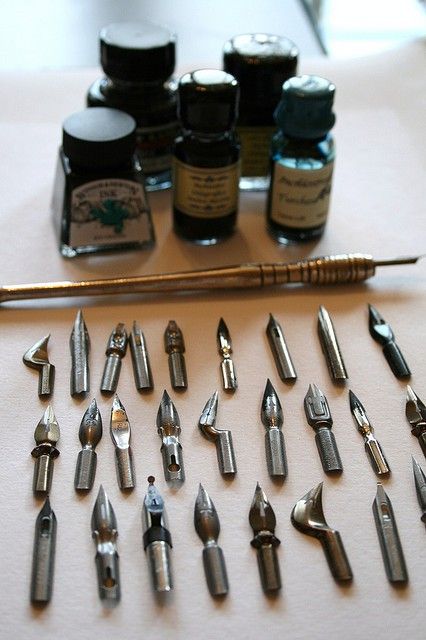
First up, there’s the pen on the page. You need this intimate relationship between the pen and the paper to get the flow of words happening. A fountain pen is best because the ink flows quickly. We think faster than we can write. It needs to be a “fat” pen to avoid RSI.
Consider, too, your notebook. It is important. The pen and paper are your basic tools, your equipment, and they need to be with you at all times. Choose a notebook that allows you plenty of space to write big and loose. A plain cheap thick spiral notepad is good.
After that comes the typing up on the computer and printing out a hard copy. It’s a right and left brain thing. You engage the right side of the brain, the creative side when you put pen to paper, then bring in the left side, the analytic side, when you edit the print out as you settle back comfortably with a drink (a cup of tea, even) and read what you’ve written.
Patrick White said that writing is really like shitting; and then, reading the letters of Pushkin a little later, he found Pushkin said exactly the same thing. Writing is something you have to get out of you.
Whether writing a story or writing a blog, start writing, no matter what.
My short story, ‘At the Festival’ was first published in Quadrant Magazine. It is one of the stories in my collection ‘Stories from Bondi‘ (Ginninderra Press): “The strength of Libby Sommer’s work is its engagement with the contemporary mores and sexual manners of urban Australian life.” – Amanda Lohrey, Patrick White award winner.
Have a read of ‘At the Festival’. Hope you enjoy it.
At the Festival:
It was six o’clock in the evening when she finally passed the wind turbines. There, at last, stood Lake George, where long-woolled sheep grazed the field and to the west the Brindabella mountain range was coloured grey and pink by the setting sun. On she drove along an ink-black strip of road where, on either side, tall green-grey eucalypts had formed a welcoming archway. The way flattened out then curved into a narrow empty road. Not one person did she see, not one building, just a handful of brown-bellied cows and later a group of kangaroos standing formidable and still in the headlights. The turn for Watson wasn’t clearly sign-posted but she felt confident in turning east along the row of liquid ambers in autumn bloom that took her to the cabins.
Twice on the journey she had pulled into a service station and shut her eyes and briefly rested but now, as she neared Canberra, she felt wide awake and full of energy. Even the dark length of road which progressed flatly to Reception seemed to hold the promise of a new beginning. She sensed the towering, protective presence of the mountain range, the forested hills and, further on, just past the turnoff, the clear, pleasant thump of music coming from the festival.
The receptionist gave her a key, and eagerly she drove further on to cabin number five. Inside, the room was renovated: the two single beds replaced by a double. The same compact kitchenette set into one end of the room but a new television secured to the wall by a multidirectional wall bracket. In between, on the bare linoleum floor, stood a small table laminated with melamine and two matching chairs. She set her keys and mobile on the table and reached for the electric jug for tea.
After filling the kettle with water from the hand basin in the bathroom, she pressed the remote to turn on the heating, then threw the slippery embroidered cushions from the bed into a corner of the room. Just between the curtains the row of early winter azaleas was quivering brightly under the security lights. She showered, lay down and reached for her Kindle and read the first page of a Katherine Mansfield story. It seemed like an engrossing tale but when she reached the end of the page she felt her eyelids closing, and reluctantly she turned out the light, although she knew that she had all day tomorrow, to work, to read and to walk along the Federal Highway to the festival.
When she woke, she grabbed at the tail of a flimsy dream—a feeling, like a wisp of gossamer—dissipating like the touch of a soap bubble; her sleep had been short and annoyingly elusive. She turned the kettle on and hung her clothes on the wooden hangers on the rack. She had brought little: a Kindle downloaded with books, a small esky of groceries. There was the laptop and several creased bits of paper on which notes were written with arrows and numbered inserts in between the typed paragraphs.
The sky was a calm blue lined with clouds. Up at the festival the Poets’ Breakfast would be underway already. She felt impatient to get there to collect her wrist band and program, although she also felt she could lie there on the big bed for days, reading and working, seeing no one. She was thinking about her work, and wondering how she would begin when her mobile alerted her to a text message. For several minutes the woman sat there not looking at the phone. She reached out not so much to read the message as to move past this distraction.
There was a vacancy after all for the Poetry Workshop.
When she put the phone down she turned on the heater again and returned to the Mansfield story. It had no plot or tight dramatic structure. The story followed a character as she prepared to hold a dinner party, sharing her anticipation and her disillusionment when things didn’t quite go to plan. At the end of the evening she realises her husband is having an affair.
Something about this story now put the woman in mind of how she had been at another point in her life, when she was contemplating moving in with a man who said he wanted her to live with him, a man she loved, but who had never said he loved her, as though the saying of it would bind him to her, or hide the fact that he didn’t.
Once, when she was getting ready for bed, she had stood at the mirror in her cotton nightgown brushing her hair and had sensed him watching her from behind. She was fatter then, and in her forties. He didn’t say anything but she sensed he didn’t like the look of her at that moment. Perhaps it was the practical night wear he didn’t like; or was it that he’d prefer her to wear something more seductive, briefer, more enticing?
She thought of him now as she looked out the window to the azaleas.
‘If you move in, I would not want you to make a claim on my money,’ he had said. ‘I want what I have to go to my children.’
His family, she had known, would always come first.
Now she felt a strong urge to write but told herself it was not something she could do, because she needed to get to the workshop on time. She would just be warming up when she would have to leave and the telling of the story would be interrupted and she would have to put her pen down. She did not like stopping once she was underway.
She cleaned up the breakfast dishes then hurried up the road by the liquid ambers to the Federal Highway. The path beside the road was overhung with trees. She put her hand on top of her head to protect herself from swooping birds.
When she found the workshop venue, she sat on a chair by the wall with the others as the last session packed up their musical instruments and left. When the Poetry tutor set up at a table they pulled their chairs around. She was a short middle-aged woman in a spotted dress and woollen cardigan.
‘Welcome everyone,’ she said handing out pieces of paper and blocks of ruled pages for those who needed them. ‘Move your chairs in closer. We’re only a small group.’
The tutor spoke to them about syllables, matching metre, the rhythm of poems. ‘You can get inspiration for your poems anywhere,’ she said. ‘A news report on the radio. A conversation with someone. Some people need a quiet place to write, and others can work in front of the television.’
*
She hadn’t really noticed him at the workshop, he must have been one of the people who had hung back, didn’t move their chairs in. But when she saw him again, outside the big marquee where the Bush Poets vs All-Other-Kinds-of-Poets debate was about to begin, she recognised his face. He walked up to her and smiled hello.
‘Do you write much poetry?’ His tone indicated he was respectful of people who devoted themselves to the written word.
‘A little,’ she said. ‘And you? Do you write?’
‘No, no,’ he said dismissively. ‘But I like going to poetry readings.’
At the end of the session in the marquee, when she saw him waiting in the aisle on the other side of the big tent, she rose from her seat and moved slowly across the fake grass floor in his direction. He stood there as she progressed to the exit until their paths crossed. His hair was thick and white and across his back, secured by thick straps, hung a slim and contoured cyclists’ backpack.
‘Hello again,’ she said.
‘Feel like a coffee?’ he asked.
‘Sounds good to me,’ she nodded.
‘Which place do you like to go to here?’
‘Whichever one has the shortest queue.’
‘Let’s try next door then.’
He stood in line to order their coffees and suggested she find somewhere for them to sit. ‘How about a slice of cake to share?’ he said. ‘They bake some good tucker here.’ He pointed to the end of the counter. ‘What about that coconut cake?’
‘Looks nice.’
He brought over the drinks and the cake and placed them on the table between them. He used a plastic spoon to cut the slice in half.
I don’t usually eat sugary things like this, she reminded herself. But it wasn’t something she’d expected, to be sitting here with a man.
He began telling her about his experiences at the yearly festival and how he liked coming each day to the Poets Breakfast the best to listen to people recite poems and tell long yarns. He’d been a regular since the death of his wife.
‘Why don’t you meet me here tomorrow?’ he said.
‘The breakfast is a bit early for me,’ she said. ‘But I’ll try and get myself up here in time.’ She wondered at that moment if she should be interrupting her morning work routine to join him. She would feel obliged to proceed in that direction rather than in the direction of where the work may take her.
*
Back at the cabin, she made herself a light dinner of tuna and avocado on toast, and ate at the table. When the dishes were rinsed and put away, she turned on the heater and lay on the bed and saw again the woman in the Katherine Mansfield story and the blissful happiness this character had felt preparing to spend the evening with friends who were soon to arrive for a dinner party. Is she blissfully happy because she is in denial about her husband’s affair? Or is she simply happy without that subconscious knowledge of betrayal? She took up her Kindle and began to closely read every last sentence again. As it turned out, the woman, on finding out about her husband’s affair, resigns herself to a life of loneliness.
She lay back and looked through the window and thought about the man with the backpack. Beyond the window was a darkening sky, and a thickly forested hill.
‘I am fifty-five years old,’ she said, her voice sounding stupid and shrill in the austere room.
*
The next morning she got up early, showered and dressed quickly. She looked at herself in the mirror, brushed her hair until it shone, then picked up her jacket and walked back along the road to the festival gates. Out over the hills a thick mist wound its way between the peaks, a soft belt of white embracing the contours of the valley. The shuttle bus that would travel from the Main Ticket Office to the Entertainment Zone was waiting.
‘Slam the door behind you love,’ said the driver when she climbed in.
As the bus circled the main campground she looked out at the people still asleep in their cars and vans, some in the pre-erected Rent-A-Tents, others under canvas beside their cars, their washing strung up on the support ropes: towels, t-shirts, shorts.
The woman beside her pointed out the window. ‘Look. There are the smalls,’ she laughed.
It was cold when she stepped off the bus. Never had she seen the place so quiet, so empty of people and music—the grassed areas and the wide gravel avenues all deserted—although the food stalls were opening their shutters. She wondered what time the place would come to life again and where she could get a hot drink.
The thing was, she really should be back at the cabin working at her desk. She could quickly walk to one of the gates, hop on a shuttle bus and return to the room. Instead, she stopped at one of the rectangular Water Stations to fill her paraben-free bottle. A volunteer, in distinguishing bright yellow vest, was using a hose to refill the dispenser.
‘Is it plain tap water?’ she asked.
‘Clean Canberra water,’ he said proudly.
‘The same as in the Ladies?’
‘Yes. Pure water, but a better atmosphere.’
She laughed, then looked around and saw a bearded man in moleskins, singlet top and akubra hat boiling water in huge vats over a roaring fire. Awkwardly, she stepped over the logs to a table set up with Billy Tea and toasted damper for sale.
She sat there at the fire and kicked at the earth beneath her feet as the golden line of the sunrise made its way above the line of trees. She found herself relaxing into the moment as warmth spread down and over her face and neck and into her shoulders. This, she said to herself, is where she should be, at this moment, in her life.
On the branch of a tree a large-beaked bird purposefully surveyed the terrain, his head moving rapidly from left to right before he hopped to another branch. He was not a pretty bird, ink black feathers, and what looked like a white mask circling his eyes, as if he’d donned a Zorro cape before he’d flown out of the house. He flew down to the edge of the gravel path where it merged with the grass, oblivious to the pigeons already scratching in the dust. He pecked at the road, then stopped, loosened his wings, and swooped back up to his eyrie in the tree.
Sitting there, watching the bird do battle with the pigeons for tiny treasures, she’d thought of her work. The mug of tea was hot and satisfying, the treacle spread thickly on the damper. While she savoured the smoky bread and the sweet orange-coloured treat, a part of her mind was also pre-occupied with meeting up again with the man with the backpack. She wondered, for a moment, what colour his eyes were, exactly how tall was he? Tall, but how tall?
At eight thirty she walked down the path past the Circus tent towards the Poets Breakfast marquee. She paused at the entry looking for him. She stood there a moment then made her way to sit down beside him.
*
On the Sunday, after a week of spending each day together at the festival, attending events and sharing stories of their lives over coffees and cake and beers and takeaway meals, she couldn’t see him at their usual meeting place, so waited just outside the tent. When she glanced around and saw the back of a tall man with a contoured backpack enter the marquee, accompanied by a woman, she wasn’t sure if it was him at first. She waited in a spot where she couldn’t be seen as they sat down side by side. She watched as the woman took a health bar out of her handbag, bite into it, then give him the other half. Her hand rested on his thigh.
So, he wasn’t single after all. What a stupid mistake she’d made. She stood there watching the two of them, feeling angry, with him and with herself. Had she learnt nothing? A woman of her age. What had she expected? What had she wanted from this man?
It was late when she returned to the cabin. A whole week had passed her by but there she found herself, back at the desk, looking out at the hedge of azaleas. There was a highway out there, a mountain range and forested hills standing erect and dignified. She thought of the Katherine Mansfield’s character, Bertha who was deceived by her husband. She thought of the tall man and how he’d divided the slice of cake to share with her that first day, and began to imagine the life he must have with the woman. There was a power point located under the table, she plugged her laptop in and turned it on. Not until she typed in her password and heard the ‘ready’ chime did she realise she was struggling to control the shaking of her fingers over the keyboard.
Canberra Folk Festival, she typed, and the date. She thought of the woman’s hand on the man’s thigh, and for no reason her breath caught in her chest. She wanted to say what it was like when he’d introduced his partner and how he’d invited her to join them for coffee.
‘This is Elaine,’ he’d said. ‘She had nothing to do today.’ He’d said the words with apology in his tone. Was it an apology?
She’d stood in line beside him to place their coffee order and had insisted on paying her own way this time. Elaine waited at the table. When they’d returned with the drinks she’d noticed Elaine had removed the man’s small cyclists’ bag from the chair between them and relocated him beside herself at the end.
And then Elaine’s questioning: Why have you come all this way? Where are your friends? You did come to the festival with friends didn’t you?
Several times as she typed she thought of the Bertha character who’d resigned herself to a life of loneliness. At one point she stopped and looked at the moon’s position in the sky. When she glanced up again the moon was concealed behind a thick layer of cloud. By this time, her central character was following part of the Tour de France route on his new lightweight bicycle. She went over the paragraph where his bike strikes a curb near Chamonix in the French Alps—his body limp and unconscious on the road—and realised her back was aching. When she got up she felt stiff but satisfied. She looked out at the moonlight now hitting the hedge of azaleas and anticipated a good night’s sleep. As she turned the kettle on, she lengthened her spine and was planning his months ahead in the Geneva hospital, and his slow and very painful road to recovery.
Have a read of my prose poem, ‘Tell Me What Happened On New Year’s Eve’, first published in Quadrant Magazine. Hope you enjoy it.
Tell Me What Happened On New Year’s Eve:
I’d looked out the top-floor hospital window towards Coogee to the night sky lit by fireworks and saw the miserable face of the moon and thought that I’d never felt as detached from life as at that moment. At the same time, I realised that I probably felt so despicable due to the weeks spent lying in hospital and the excruciatingly slow and painful road to recovery. By sheer force of will, I stopped looking at the dark mirror of the moon. No one could have told me how much the distant celebrations, the sound of the explosions and the changing shapes and colours of the fireworks could jolt me into the present and away from the unbearable lethargy, the severed muscles and tendons and the nausea caused by the drugs and pain killers. Was it that I could sense, without glancing up again, that clouds were making their way across the moon and that made me realise: how would it be to feel this would be your last new year?
Have a read of my flash fiction, ‘It’s Pot Luck When You Move Into A Unit’. My story was the winning entry in the UTS Alumni Short Short Story Competition and was first published in UTS Writers Connect.
It’s Pot Luck When You Move Into A Unit:
A nice quiet weekend? the woman downstairs said. What do you mean? I said, through the open back door, a bag of rubbish in each hand. She smoothed her ironing on the board and said, They weren’t around over the weekend—with the baby. She looked happy. I’m lucky living on the top floor, I said. She nodded towards the other side of the building. Jim isn’t so lucky—he’s got the woman upstairs, she said, When he plays the piano and she thumps on the floor. She put the iron back on its stand. She’s heavy-footed, that woman. Bang, bang, bang. I hear her coming down the stairs every morning at six, and the slam of the front door.
That night the wind knocked my vase off the window ledge. I lay awake wondering if the noise of the smash had woken up the people underneath—the ones whose barbecuing sends smoke and disgusting meat smells into my unit. Nothing clings to your furniture like the stink from last week’s burnt fat. Sorry about the crash, I muttered to the floor, It was the wind.
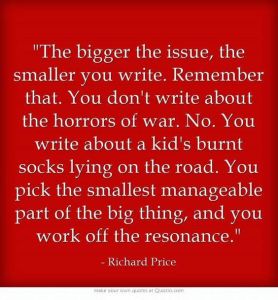
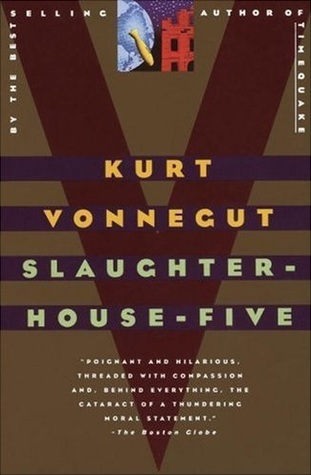
A fantastic example of this writing advice is Kurt Vonnegut’s Slaughterhouse-Five.
Poignant and hilarious, threaded with compassion and, behind everything, the cataract of a thundering moral statement. – The Boston Globe
Kurt Vonnegut’s absurdist classic Slaughterhouse-Five introduces us to Billy Pilgrim, a man who becomes unstuck in time after he is abducted by aliens from the planet Tralfamadore. In a plot-scrambling display of virtuosity, we follow Pilgrim simultaneously through all phases of his life, concentrating on his (and Vonnegut’s) shattering experience as an American prisoner of war who witnesses the firebombing of Dresden.
Don’t let the ease of reading fool you – Vonnegut’s isn’t a conventional, or simple, novel. He writes, “There are almost no characters in this story, and almost no dramatic confrontations, because most of the people in it are so sick, and so much the listless playthings of enormous forces. One of the main effects of war, after all, is that people are discouraged from being characters.”
Slaughterhouse-Five is not only Vonnegut’s most powerful book, it is also as important as any written since 1945. Like Catch- 22, it fashions the author’s experiences in the Second World War into an eloquent and deeply funny plea against butchery in the service of authority. Slaughterhouse-Five boasts the same imagination, humanity, and gleeful appreciation of the absurd found in Vonnegut’s other works, but the book’s basis in rock-hard, tragic fact gives it a unique poignancy – and humor. – Goodreads
Have a read of my micro-fiction, ‘Undulations’, first published in Quadrant Magazine.
Undulations:
So we’re sitting in Melbourne in a vegan restaurant reminiscing about our school days spent mucking-up in the back row and Jane (her hair still red, short and frizzy, like childhood) remembers daring me to ask our fourth-grade Geography teacher how to spell ‘undulations’. What? “Because I wanted to write her a message,” Jane says. “An unsigned message saying, ‘The way you run your hands over your boobs to demonstrate undulations is disgusting,’ but didn’t know how to spell it. So I told you that if you were my friend, you’d ask her. You know how she always said to speak up if we couldn’t spell something? For some reason she wrote the word down on a piece of paper, rather than on the blackboard. Maybe she thought you couldn’t see properly from our eyrie. So you got back to your desk and passed it to me under the chair. I wrote in my best handwriting, ‘Your demonstrations of undulations are gross,’ blotted it carefully, and placed it furtively on her table after the recess bell had cleared the room. When we filed in after lunch, I saw her open it up.” Jane taps me on the arm enthusiastically. “What happened then?” I say. “Was she angry? Did she think it was me? Did I get punished?” How forgetful was I? Jane had mastered the art of getting the ink from the inkwell to the pen nib to the paper—no ugly blotches—her cursive as good as a professional engraver’s. Even after all this time, she still prefers a fountain pen and has a proclivity for setting wrongs right. “She threw the chalk in the bin, reached for her cardigan and draped it over her shoulders,” Jane says, grinning. “Yes, that’s what happened. And she didn’t demonstrate undulating landscapes on herself or on any of us ever again.”
Have a read of my prose poem, ‘The Backpack” first published in Quadrant Magazine. Hope you enjoy it.
The Backpack:
What can a man who meets you at the station and offers to carry your backpack mean to a woman traveling the world alone?
I was scared, like anyone who has no sense of direction. The journey was a series of stops and starts. Whether to use the Eurail pass or post it back home and ask the kids to get me a refund. Giovanni appeared one European winter, thick padded jacket, woolen beanie, scarf and gloves, tall and imposing, I’ll carry your bag.
I was small, the backpack the length of my spine, the zip-off bag on one shoulder, the daypack positioned in front like a nine-month baby bump. That evening, as we climbed the steps of the Corniche – the wind bitter across the Mediterranean, the metal stairs covered with slippery ice, the railing melting beneath my hand. Soon it would become my railway platform, my steps, and Giovanni my landlord.
We walked there in the crisp night air. My own place. It didn’t cost much. No-one yet knew I was here. I could ask Giovanni if I needed any help. I knew my children would be pleased I had a base. I didn’t want them to worry. It was the thing I wanted the most secretly, studying maps, absorbing travel books. To be safe, a desire whispered to the moon that moved behind my shoulder at night. If you guide me to a safe haven I promise to be happy. And the moon listened. I did my best.
The winter sky closed down and the spring began its flowering. I took photos and painted and rang the children every week. Watch your money, don’t talk to strangers, be careful walking at night – you know the drill. The pebbly beach, the weekend markets, it was all there for the exploring. A glimpse of the sea between terracotta roofs – a vision in turquoise. The cobbled streets could show which way to follow – and none of them wrong. A room at the top of the stairs – till June I stayed reading the English books Giovanni had left in the bookcase, shopping for food, telling my kids and friends they should come for a visit.
Where had the months gone? Almost two years on the road. Summer approached. The rents would go up and the tourists arrive. Time to move on. I could only take with me what I could carry on my back. A Jewish gypsy they said. One more step into the unknown. Pack up, give away what I couldn’t manage, but keep the palette knife and miniature easel. There was stuff happening back home. The boys were grown and earning a living. Their sister turned twenty-one. People were reinventing themselves all over the place then coming back home. A thousand train rides later, my mother nearly eighty. I won’t be around much longer, she cried.
His was a helping hand in a world that says, but what are you doing there? What are you doing?






 Libby Sommer, Author