I highly recommend this book a friend from London gave me many years ago at the beginning of my writing journey. It’s an old one, but a good one.
‘A reissue of a classic work published in 1934 on writing and the creative process, Becoming a Writer recaptures the excitement of Dorothea Brande’s creative writing classroom of the 1920s. Decades before brain research “discovered” the role of the right and left brain in all human endeavor, Dorothea Brande was teaching students how to see again, how to hold their minds still, how to call forth the inner writer.’ – Amazon
‘Refreshingly slim, beautifully written and deliciously elegant, Dorothea Brande’s Becoming a Writer remains evergreen decades after it was first written. Brande believed passionately that although people have varying amounts of talent, anyone can write. It’s just a question of finding the “writer’s magic”–a degree of which is in us all. She also insists that writing can be both taught and learned. So she is enraged by the pessimistic authors of so many writing books who rejoice in trying to put off the aspiring writer by constantly stressing how difficult it all is.
With close reference to the great writers of her day–Wolfe, Forster, Wharton and so on–Brande gives practical but inspirational advice about finding the right time of day to write and being very self disciplined about it–“You have decided to write at four o’clock, and at four o’clock you must write.” She’s strong on confidence building and there’s a lot about cheating your unconscious which will constantly try to stop you writing by coming up with excuses. Then there are exercises to help you get into the right frame of mind and to build up writing stamina. She also shows how to harness the unconscious, how to fall into the “artistic coma,” then how to re-emerge and be your own critic.
This is Dorothea Brande’s legacy to all those who have ever wanted to express their ideas in written form. A sound, practical, inspirational and charming approach to writing, it fulfills on finding “the writer’s magic.”‘ – John Gardner
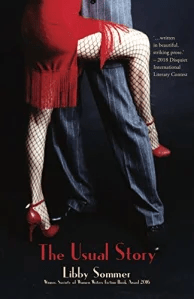
Have a read of my short story, ‘Mother’ first published in Quadrant Magazine. ‘Mother’ is one of the self-contained chapters in my book, The Usual Story (Ginninderra Press) – a delicately fragmented story of memory, intrigue and passion.
MOTHER:
The day is softening into night, my desk in shadow as the sun moves behind the building. Birds hover in the trees as the wind blows across the surface of the sea. It’s hard to know which way to go. Every day I fear that I can’t do it. So I’m watching as it gets dark.
Tonight I’m thinking about the saddest bits. Thinking, for example, that the night was alight with thunder. Lightening cracked the sky. Just a flash and then darkness again.
That I loved him, and sometimes he loved me too.
I’ll begin with the birds. Three birds flying in perfect but constantly changing alignment. So often there are three. And then a lone bird darts across the sky in the opposite direction.
On the radio a voice says: ‘We need to know the history, the history of the before, and then to know how the person chose to continue living, what baggage they chose to bring with them, to incorporate the memory into themselves or to leave it behind.’
A door bangs shut behind me; footsteps sound on the concrete driveway leading from the back door just a second or two after the door bangs. The flame tree throws a shadow on the cane chairs on the balcony. I stop working, put my hands and then my arms around my body and think of the feel of his skin.
How appealing, how irresistible that prospect of intimacy is, with the very person who can never give it.
After a day in which I have evoked Jack again, all the pain and disappointment and wanting him all over again came back. I try to guess where he might be and what he might be doing but cannot imagine it. His absence is still as heavy as the wave about to break above me, a wave that has appeared suddenly, and then it curls over me forcing me down to the bottom of the sea where I am helpless in the power and pull of its rip.
Last night I dreamt about a man with a hook for an arm. I didn’t realise at first that the man had a disability because he’d kept it hidden behind the counter. On the spur of the moment I told the man I was going to see a free film as part of the film festival and asked if he would like to come with me. To my surprise he closed up the shop, put on a freshly laundered shirt and said he’d come. That’s when I saw the hook arm. As the evening progressed I was surprised by how very quick and skilful he was in the use of it. He hooked me a chair and one for himself when we found the small cinema where the film was shown. He seemed interested in me but I wondered how I would cope with his disability.
Sitting at my desk this morning, trying to work, I saw the line of the horizon as the sun beat down, heating up something outside so that its taint floated in on a breeze. It was the dank scent of the earth after rain, entering through the open door. It reminded me of the smell of his hair in the mornings and it came between me and my work. I wondered why all of this has to go on for so long.
*
It’s dark tonight with only a small crescent-shaped moon over the sea. I’ve decided to take a walk to the house where I lived as a child. I put on a cardigan and step out into the night.
The house itself is no longer there. It has been torn down and a block of units stands in its place. As I walk down the steps towards the beach and mount the hill, waves loom in the fading light; streaks of white against the dark sea. Above me clouds gather against a starless sky. I walk up the steps then stand at the lookout as the sea rolls in.
When I was growing up, this suburb was full of large houses and blocks of art deco units. Some of the houses were very grand and others fallen into disrepair like ours. Mother was ashamed of our house. It was basically a mass of rooms surrounded on three sides by wide verandas and wooden painted rails.
Walking along my old street and its rows of gums and mix of glass and chrome home units and white-painted mansions, I see the stairs that connect this street to Birriga Road. Those stairs that I walked up every day to catch the bus to school until Mother decided it was important that she drive me to school before she went to work. ‘What will the neighbours think with you talking to boys at the bus stop?’
And there’s the house where the boy with diabetes used to live. The boy who used to double me on his bicycle. I can still feel the imprint of his ribs under my hands. ‘It’s not ladylike for a girl to ride a bike,’ Mother said. This boy’s house had seemed a long walk from mine but now it seems just a short distance as I walk up our old driveway.
Sixty apartments share our old address. Forty units across the back yard and twenty on the driveway. The trees I used to climb in the back yard are all gone. No wild foliage, just bricks, concrete and cement, although one scrawny hibiscus droops over garage number twelve. A couple of branchless tree trunks wedge between the units and the fence of the block next door. Nowhere for the trees to branch out. No sunlight. Suffocating. Vines strangling trunks. Trees choking to death. I feel a thudding in my chest.
Drowning again and again. A recurring dream. And then I would wake and lie there waiting for the sound of the birds and the light of the dawn. I’d count slowly: one, two, three on the in breath, one, two, three on the out breath until I would notice the waves lapping up and into my bedroom again.
It was already too late when I was eight. I grew old at eight. It came on very suddenly. I saw the blood spreading over my grey school bloomers. As the year lightened and turned hot, it got worse. ‘Don’t tell anyone,’ whispered Mother. ‘Especially your brother.’ January was too bright so I stayed in bed in the darkened bedroom. I was ashamed of how I’d changed. I wasn’t prepared for it. I leant against the pillow in disgust. I lost the desire to move. But as dusk came one evening in February, there was the gentle sound of the wind through the leaves.
I see my former self. The small child with hair pulled severely back at the sides of her large forehead revealing an open face that seems always to be frowning. I can bring to mind a tall gawky adolescent with pimply skin with her arms crossed over her chest. She wears dark wool skirts in the winter with long shapeless jumpers over the top, perhaps a long pendant, or cotton print dresses in the summer with a cardigan. Her hands would clasp and unclasp in front of her. Ridiculous. Her hair looked ridiculous. The hair must have been cut into a fringe but instead it bounced up into one tight little ridiculous ball in the middle of her forehead.
So I was eight and three quarters. Mother made me wear dresses with pleats and frills. I wore them with loathing. I looked fat and childish in the dresses that were gathered at the waist and had a Peter Pan collar at the neck.
That day my hair was in bunches hanging down to my shoulders, not cut short at the back as usual, but long enough for me to put an elastic band at each side. To my own hair I had added the hair of our housekeeper. I wore her hair attached to my own. I was using makeup already. A crème pancake base that Mother had given me. ‘Cover up those hideous freckles.’ I don’t know where I got the pink lipstick and the clear nail polish. Perhaps I stole them. I was wearing a little 4711 eau de Cologne.
*
Today the early morning light shines through the thick curtains, the mysterious light when it’s raining but the sun is still shining through the clouds. But there is the exhausting and suffocating heat of Sydney’s humid summer days and nights to cope with. It’s seven forty-five already. I have overslept. There is no sound in the building. No footsteps, no cars reversing. I guess that everyone has gone to work.
On the radio: ‘Just a couple of drops of rain during the night here and there.’
I’m remembering Mother reclining in bed. Her eyes closed and her hands crossed against her chest. Her mouth open. Now and then she’d catch her breath as if gulping the air. At that moment, she appeared to be asleep.
Beside her I pulled the dead bits off the flowers. I put the vase into place on the shelf above the bed and stared at a Picasso print of a woman’s body sectioned into geometric pieces. I smiled at its startling arrangement of shapes. I reached for another vase and began my pruning.
Mother leaned towards me, and in a rush of tenderness, unusual in her, tried to hug me. I recoiled, unable to check the repugnance I felt for the touch of her.
My half-sister entered the room quietly. I got up at once throwing the bruised and browning petals into the wire basket by the door. I went over to the bed, and looked at Mother, who kept her eyes closed.
‘She’s resting,’ I said.
My sister went over and turned off the bedside light until there was only the weak light from the window. She sat down so she could see Mother. She stroked Mother’s forehead; leaned down over the face, using her fingers to exert pressure on the place between Mother’s eyes, pulled the skin across her forehead, pressed gently into the sides of her face.
Mother opened her eyes. ‘You smell of garlic. I can smell it on your breath.’ But then she let herself sink again. ‘You are very good to me,’ she whispered. ‘I don’t deserve all the things that you do for me.’
Inez continued to massage her head and face until Mother fell asleep.
Inez said, ‘I think about Mother nearly every day. When Mother spoke to me in her clipped determined way, I often didn’t understand what she wanted from me. I tried so hard, but of course I never managed to please her. Then she’d show her impatience. She was always impatient. With all of us. She’d had a hard life and I forgive her. I loved her because she was so—I don’t know what to say, exactly—because she was always such an overpowering presence. But she could be so cold. I would come to her wanting some affection, some understanding even, she’d turn away from me and be so cruel or she was just too busy to listen. Yet I felt for her, I understood, and now that I’m older I forgive her totally. If only I could see her again and tell her I wish now that I had tried harder and that if I had, things may have turned out differently.’
‘Your sister has decided to smooth the surfaces and to remember her mother as a saint,’ Dr Ross concluded. ‘Her mother had a hard life and now she’s turned her into a saint.’
I’m imagining walking into the old house. Across a big enclosed verandah and in through the front door. A coat cupboard to the right, along another corridor to the maid’s room and bathroom, painted a light green, then out to the back porch and the lockup garage. To the left of the maid’s room is the large kitchen with a table in the middle and a pantry to the side. Behind the kitchen is the laundry, the room where I’d do the ironing.
Mother is at the table with Father in the dining room, with its mahogany furniture and red and gold flocked wallpaper. It is already dark and the thick lined curtains are closed. The silver candlesticks on top of the white linen tablecloth reflect the light of the chandelier.
Husband and wife are dressed formally. Perhaps they’ve been to synagogue, or else they’ve been to the Chevra Kaddisha to pray for a dead relative, or they may have been to an afternoon tea at a friend’s house.
Father is two years younger; his face jowled, his mouth relaxed, his eyes small and piercing; his smile is kindly but wary. His hands shake slightly. His hands are broad, with thick blunt fingers, and are mottled with pigmentation spots. The short moustache and the grey hair are neatly trimmed.
Husband and wife eat in silence. The silence is full of contempt—a shared contempt.
She wears white gold wedding rings that are simple in design, and two diamond rings. And around her neck is a necklace of marquisette with drop earrings to match. He has given her many presents of jewellery over the years.
He turns to Mother and tells her he’s going to adjourn into the lounge room with the newspapers, is she going to join him?
She shakes her head. He shrugs at this, confirming: Let’s see who will break first. Who will be weakest in this mutual destruction of each other.
‘What are you laughing at?’ he says.
‘Nothing. I’m not laughing.’
‘Will we listen to a record in the lounge or will we go upstairs to bed?’
‘I don’t want to hear any records, thanks.’
She knocks the sugar bowl over as she reaches for the teapot. The fine bone china dish breaks into pieces and the brown granules spread over the white cloth. She glances at him in barely disguised fear, but he keeps on stirring his tea, looks straight ahead. He finishes his tea, wipes his moustache with meticulous care then throws the creased napkin onto the table and stands up.
‘It’s getting late. See you up there.’
To the right of the top of the staircase is their bedroom. I imagine Mother sitting down at the dressing table and taking the pins out of her hair. It falls to her shoulders, the heavy weight of it released. She puts on her nightgown and then stands in the middle of the room.
‘It’s a man’s world,’ she says in an absent-minded, dispassionate voice.
Father enters the bedroom, walks towards her. He is wearing a navy blue satin dressing gown and is holding a book in his hand, his glasses pushed up high on his forehead. She walks past him, pulls back the sheet. The sheet is spotted with blood. He sees the blood. She smiles to herself.
*
At twilight the sky is a deeper darker shade of blue. The clouds are puffy but stagnant. Faint hush of the sea. Traffic noises in the distance. A brief hammering. The sea turns from blue to soft grey as the waves move south in lines of darker grey. Thudding music from the house in front starts up but then it stops. The rumble of a plane overhead as it nears and then recedes. Moves closer—moves away. Kitchen sounds from the unit next door. Another plane rumbles in the distance.
The heat is leaving the day although the leaves and branches of the trees are not moving. Then a breeze picks up. A dog barks; the cicadas start up. Street lights, headlights. The sea darkens and the thudding party starts up again in the house in front.
It’s enough for me now just to think of Jack’s face with that peculiar, stricken look. Was it only later that as I searched for the memory of his face and looked at it and then his whole body, so often motionless and turned in on itself that I either took his face out of my memory or returned it to when I stood looking at him still asleep in the bed?
If he is living around here, he may be beginning a day’s work just now, since he never was one for an early start, or he may be sleeping with the doona over his head, unable to face another day. He may be listening to the sounds of the people around him preparing for work. Or he could be with that woman with the three children. Or he could just as well be living out west again.
Mother thought that God was cruel and hard. But in her prayers she still turned to Christ. She converted to Judaism when she married Father. I’m imagining her long honey hair rolled in a bun, her fine cheekbones, her mouth held in an ungenerous curve.
Her eyes are red with lack of sleep. She had been lying for several hours wandering whether to get up or not. It’s better to get up, straighten out the body, turn on the bedside light, try and read.
She gets up and stands for a long time by the hospital window. There is moisture on the pebbles of the veranda outside. Everything out there in the garden is blurred and hazy.
‘Thank you dear Lord for giving me daughters. I needn’t worry so much about what will happen … sometimes I think I’ve had enough of this world. How am I to cope?’ She lets herself sink. There is only one solution.
She turns off the bedside light then hears footsteps in the corridor. A nurse comes in and takes her pulse and her temperature, makes notes on the clipboard before replacing it at the end of the bed.
Or this is how I imagined it.
Outside the window a bird clutches a branch. Leaves surround and envelop him as the wind moves through the leaves. He trills a contralto then darts off towards the sky, swift as an arrow. The wind heaves the branches and scatters the leaves as another bird with a flurry of wings and a nod of his head darts off.
I must have been five when I came running in with a painting to show Mother, the picture of the birds in front of the clouds, the red sun to the left with its rays of sunlight. ‘I’ve got a present for you,’ I said. ‘Close your eyes.’ I put the painting in her hands. ‘Open your eyes.’ She looked at it. I pointed at the birds. ‘One bird, two birds, three, four, five, six black birds,’ I said. ‘It’s alright,’ she said in her dismissive voice. ‘You don’t have to count them all.’ I showed her the swirls of blue. ‘And this is me with my feet in the water,’ I said. ‘And this is you standing behind me watching. And this is the purple woolly rug that we had on the picnic. This is you and this is me.’
This may be the last time that I make the effort of remembering Jack. The last time that I let him make me suffer. It’s the forgetting that takes so long.
Memories of Mother have almost faded altogether. I don’t remember if I ever loved her. In my mind I no longer have the feel of her skin, nor in my ears the sound of her voice. I can’t remember the exact colour of her eyes, except sometimes I can see them all misty and watery with some secret. Her weeping I can’t hear any more – neither her weeping nor her laughter. It’s over with her, I don’t recall the details.
That night in June a strong wind had blown through the leaves. So strong it blew small branches off the trees and on to the car. Dirt blew along the road. Thunder, louder this time. A car alarm sounded for three beats and then it was silent again. A plane flew into the grey, its lights flickering as the horizon blurred and the sea turned into deep dark grey. People had flocked to the beach during the 34 degrees but now they hurried home as lightning split the sky. The thunder grew louder but, strangely, the sky was still blue above the ocean still lit by the setting sun even as it began to rain.
I’d taken off my nightie and sunk into the hot salt and oil, stretched out as the phone continued to ring. I lay there and listened. He hung up without leaving a message.
I’d felt the grief rising up from my stomach.
A bird plummets to the earth and Jack is no longer here. I sometimes find it hard to bear. After all this time I am talking about it to be free of it all, although I know I never can be. Over there to the east is the same sky reflected in the same water. But I am not the same, not the same as I was then, and not the same after telling it.
Dawn through the curtains casts long shafts of light across the carpet. There is a gentle breeze through the bamboo as I step outside and notice a white sail in front of the low hanging cloud. I stand there and watch as the yacht progresses along the flat line of the horizon.
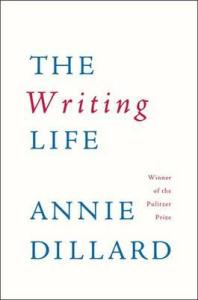
Another of my favourite books on the writing process is The Writing Life by Annie Dillard. A small and passionate guide to the terrain of a writer’s world.
Annie Dillard has written eleven books, including the memoir of her parents, An American Childhood; the Northwest pioneer epic The Living; and the nonfiction narrative Pilgrim at Tinker Creek winner of the 1975 Pullizer Prize. A gregarious recluse, she is a member of the American Academy of Arts and Letters.
“For non-writers, The Writing Life is a glimpse into the trials and satisfactions of a life spent with words. For writers, it is a warm, rambling, conversation with a stimulating and extraordinarily talented colleague.””–Chicago Tribune””A kind of spiritual Strunk & White, a small and brilliant guidebook to the landscape of a writer’s task…Dillard brings the same passion and connective intelligence to this narrative as she has to her other work.”– “Boston Globe””For her book is…scattered with pearls. Each reader will be attracted to different bright parts…Gracefully and simply told, these little stories illuminate the writing life…Her advice to writers is encouraging and invigorating.”– “Cleveland Plain Dealer””The Writing Life is a spare volume…that has the power and force of a detonating bomb…A book bursting with metaphors and prose bristling with incident.”– “Detroit News”
Dillard begins:
When you write, you lay out a line of words. The line of words is a miner’s pick, a woodcarver’s gouge, a surgeon’s probe. You wield it, and it digs a path you follow. Soon you find yourself deep in new territory. Is it a dead end, or have you located the real subject? You will know tomorrow, or this time next year. You make the path boldly and follow it fearfully. You go where the path leads. At the end of the path, you find a box canyon. You hammer out reports, dispatch bulletins. The writing has changed, in your hands, and in a twinkling, from an expression of your notions to an epistemological tool. The new place interests you because it is not clear. You attend. In your humility, you lay down the words carefully, watching all the angles. Now the earlier writing looks soft and careless. Process is nothing; erase your tracks. The path is not the work. I hope your tracks have grown over; I hope birds ate the crumbs; I hope you will toss it all and not look back.
Which books on writing process have you found to be inspiring?
Have a read of my short story, ‘Michael’, first published in Quadrant Magazine. The story is part of my collection titled ‘The Crystal Ballroom‘ (Ginninderra Press) – stories of love and loss in the singles dance scene. Hope you enjoy the story.
Michael:
He’s waiting at the bottom of the ramp, just inside the steel fence that cordons off the entry to the station. He said to give him a ring from her mobile when the train passed Gosford. She quickens her pace, adjusts the overnight bag on her shoulder. She is close enough to see the soft fold of his graying hair, the clear smooth glow of his skin. In his white socks and slip-on loafers he looks very English.
It wasn’t easy to get herself on a train and up to the Central Coast. It took a lot of encouragement on his part and a steely determination on her side of things to get out of Sydney. But now she’s glad already that he kept pressing. ‘It will do you good,’ he said on the phone, ‘to get out of the city for a couple of days. It will give you a new perspective on things.’
He knows about her tendency to brood and her struggle to manage the drowsiness that follows. They talk about these things on the telephone. He also struggles to get through the days, suffers with the same lethargy. He says he prefers to tell people he has ‘chronic fatigue’. People understand the term ‘chronic fatigue’.
He sees the deepening of laugh lines around her mouth and eyes, her face browned by the sun, her hair spiked and in shock. He tells her that she looks the same as he remembers. She assures him he looks very well and living away from the city obviously agrees with him.
Would she like a coffee? Or would she prefer to have a shower first? Some people needed to have a shower before they could do anything.
For goodness sake. It was only a couple of hours on the train. She would like to wash her hands though. They smelt of the tuna sandwich she’d eaten on the train.
Sure, sure. He’s been waiting all day for a coffee. They’ll go somewhere close by.
She’d agreed on the phone that there’d be no post mortem. ‘Don’t worry,’ she said. ‘I’m happy to be in the present. I don’t need any analysis. You’re the one who goes on and on … on the telephone.’
How well she remembers that first time she had seen him. He was at one of the Saturday night dances that she used to frequent. He was standing at the side of the hall, his thick blonde hair brushed back off his forehead. He’d asked her to dance, said she danced well. Then they’d met up regularly and got to know each other. He wanted them to hire a hall and practice their dance routines. ‘But we mustn’t get involved, you and me,’ he warned. ‘Too dangerous.’ They were sitting in his car at the time, so close in the front seat that she could smell the Palmolive soap on his skin. She watched his hands as he put the car into gear and reversed up the driveway.
Now, he opens the back door of his car and motions for her to get in.
‘Sorry about the mess,’ he says. ‘It’s easier if you sit in the back. Easier than moving all that stuff on the front seat.’
It’s the same car as last time, an orangy-red Mitsubishi with scratches down the side, the same cracked glass of the headlights. She slides across the vinyl of the back seat, her eyes dazzled by a blaze of early-summer sunlight passing through the spotted salt stains on the windscreen.
He puts her bag in the boot and she pushes the tapes and DVDs and beach towels a little more to the other side. She snaps on the seatbelt, looks through the window at an older man in loose baggy clothes slumped on a wooden bench staring at the concrete of the pavement between his knees. She imagines she can hear his sighs.
Michael opens the window across from the driver’s side as he drives, then rests his arm along the empty front passenger seat and turns to speak to her. ‘Is it too windy for you?’
She reminds him his fast driving makes her nervous.
‘I didn’t know that. I’ll slow down, now that you’ve told me. I’d better anyway because I’ve lost my license.’
‘Again? Every time I see you it’s the same story.’
‘That’s a bit harsh. It’s a lesson I still need to learn.’
It’s like being in a taxi in a way, sitting in the back like this, not too close to the driver. A memory flashes into her mind of when she was a child and had seen a taxi parked by the side of the road. She’d looked in as she walked past. The driver had his hand between a woman’s legs and the woman, an older woman, not a young woman, maybe the same age as she is now, had a funny glazed look on her face that she, Madelaine, had never seen before. She remembers it vividly. The man, the odd position of the two of them in the front seat, the look on the woman’s face.
‘How come you’ve lost your license again?’ she asks.
‘The twelve points were up,’ he says. ‘You lose three points for an infringement?’
‘Parking infringement?’
‘No. If you get an infringement in the holiday period they double the points, so it doesn’t take much from there to get to the twelve points.’
‘Speeding?’
‘You’ve got to be very careful where the schools are, which are forty. Six double demerit points.’
With one arm resting on the ledge of the open window he runs his fingers through his hair. He’d been ringing every few weeks since they reconnected. Sometimes she tries to ring him, to save him the expense of the long telephone calls, but he’s impossible to contact. It was only recently that he gave her his address. No answer machine, no mobile, no internet, and he doesn’t answer the telephone. In fact he said he pulls the phone out of its socket.
He belongs to some strange group that he won’t give a name. Calls it a meditation group, but she knows it’s something else. At first she thought it must be AA but now she thinks it might be some kind of a secret sect.
He honks his horn at the woman in front as they wait at a roundabout. ‘This wouldn’t happen in the U.K.,’ he says. ‘They don’t know how to use roundabouts here.’
It was always his dream to work hard and then retire young and live somewhere by the sea. He finds a place to park in the shade on the top floor of a shopping centre, so they can walk straight in. He takes her hand when they get out of the car.
‘We’re holding hands are we?’ she says. She lets him do it, passively leaves her hand in his. ‘Don’t forget they smell fishy.’
He shrugs.
They find a seat near the back. She had been looking forward to sitting by the water somewhere and breathing in the salt air, rather than sitting in a shopping centre, but doesn’t express her disappointment.
On the phone he’d said something about telling people in the cafe that she’s his wife. That they could read their newspapers while drinking coffee each day. She said they’d look like an old married couple if they drank coffee hidden behind their separate papers. That’s when he said he’d tell everyone they were married.
‘They only give you one shot of coffee at this place,’ he says. ‘Other cafes give you two.’
Shots? The word reminds her of the days when his drinking was out of control. Not that she knew him then.
Now that they are seated together he says, ‘I knew it would be like this. That we’d pick up from where we left off. No different from last time.’
*
How dull all sounds are by the water, she thinks. Dull but sharp, like the cheepings in the branches of the trees in front of the motel. It must be the serenity of so much water. She decided to take the motel option even though he said she could stay in the guest room at his house. His front door was broken and you had to climb in through the back, the water taps were temperamental, the sliding glass door on the shower needed to be handled just so, the carpet in front of the television only to be walked on with bare feet.
‘Why don’t you get the lock fixed?’ she asked when they walked back out to his car.
‘Not before I go away,’ he said. ‘When I go to Europe to visit my mother I’ll get the door fixed.’
His mother again. He’s been saying for the last two years that he’s going back to the U.K. to visit his mother.
Madelaine chose to stay at the first place he showed her, a motel across the road from the beach. It was just a couple of minutes drive from his house, so they could still meet up each day. It’s an upstairs room, with two beds and a view of the road and the palm trees in front.
She lay on top of the covers on the spare bed of the motel room, reading. He said if it was him, he’d sleep on that bed. You’d get more of a through breeze.
He’s been to the beach for a swim. He arrived unannounced at the sliding screen door, knocked and walked in. Now he is looking at himself in the mirror in front of the bed. He turns from side to side inspecting his body, admiring his reflection, bare chest above the white shorts, says something about her being a good five years older than him.
‘I’m not older than you,’ she scowls. ‘You say that every time. We’re the same age.’
He rubs her foot a little. It doesn’t really matter so much, does it? We’re friends, aren’t we? He was getting ready to say that they’d known each other for a long time, when she turns on him and says, If you say we’ve known each other a long time again and it doesn’t matter, I’ll scream.
*
The family, who own the motel, are very friendly. The old grandfather sweeps the leaves on the driveway each morning and the grandchildren go off to school with a bang of their screen door. The children’s father hands the local newspaper up to her through the railing when he sees her sitting outside her room eating breakfast. They probably watch when Michael picks her up in his car and she climbs into the back seat.
Now that she’s here on his home territory he won’t go on any walks with her, won’t show her where the tracks lead. Says it’s best if she finds out for herself.
She says in the city she wouldn’t head out on an unknown bush track on her own.
‘The city,’ he sighs from the front seat where she can’t see his face. ‘Ah … I keep thinking they’ll design a new Almanac Cognac.’
‘Cognac?’
He laughs.
It’s a shame he didn’t take her with him when he went for a swim, she would like to know the best place to go for a dip. She’s enjoying being a passenger though, being chauffeured around.
‘I tried to ring you at Christmas to see how you were going,’ she says. ‘I know it’s a difficult time for you, with no family here. I tried at least six times – in the mornings and in the night times.’
‘There’s no point in ringing in the mornings,’ he says. ‘The phone doesn’t go back on till after coffee.’
‘What do you mean?’
‘I take it off the hook when I go to sleep, I don’t want people ringing from the other side of the world. They forget it’s an eleven hour time difference. So I don’t put it back on the hook until I come back from having a coffee. I don’t want the phone breaking up my morning routine. And at night time I don’t come back in from the garden until after eight.’
Probably avoiding his mother. ‘I’ve rung after eight,’ she says. ‘You’re so hard to contact. It’s a wonder you’ve got any friends at all. I sent you a Christmas card by the way. Did you get it?’
He shakes his head.
‘That’s a shame. I sent the card to your post office box, like you said.’
‘I’m going to get rid of my post box at the house. Every time the postman rides his bike up he ruins the grass.’ He sniffs deeply, with a heaving of his chest. ‘When I go to the shopping centre there’s nowhere to park in the holiday period and people park on the lawns. I guess it’s like that in the city?’
‘Probably. I try and walk everywhere. I’m trying to lose weight.’
‘That’s good. Cutting back on the pasta?’
Her eyes narrow at the back of his head. ‘I don’t eat pasta.’
He twists around and smirks. ‘That’s right. You’re into healthy foods.’
Back at his place he’d tried to play with her bare feet when he sat next to her on the couch. She’d pulled them away. On the bed in the motel room he’d hugged her and wanted to lie back on the bed.
When he turns off the motor she opens the door slowly and lets the strong salty wind flood into the car in one cool, cleansing breath.
His words are carried off into the breeze.
*
They’ve had an altercation, in a café down near the beach. The diamond in the nostril of the girl behind the coffee machine had flared beneath the fluorescent light. The girl was silently mouthing the words to a song playing in the background when Madelaine got up and walked out.
‘You should speak up sooner,’ he called after her. ‘You should speak up before it gets to this point.’
She has heard this before, or something like it. She turned around briefly but did not stop.
‘You send knives into the heart when you speak like that,’ he called. ‘Madelaine?’
She kept walking until she got to the bush track by the sea. She heard the echo of her own footsteps on the earth. He made her so angry. She wanted to be free of him. He made it so impossible.
‘You need to be careful,’ he’d said. ‘Or you’ll go under. All the way under.’
An insistent fly buzzed near her face.
She walks.
The track keeps weaving away from the sea and makes it difficult to keep close to the water. She has no idea where she is headed or how far she needs to go to escape her anger. Tree roots stumble away from her sandshoes. Flies buzz too close to her ears. She brings to mind a bird that she saw with friends recently. She can’t recall exactly who she was with and where she was, just that someone said, ‘Look at that bird. It’s so big.’ A black and white bird with a large wing span flying through a gorge. Maybe that’s where she was? Cataract Gorge, in Launceston. Walking along that track alone, but with all those other people going in the same direction. The best part was approaching the gorge and being so surprised to see such natural beauty in the middle of a city.
She walks. After all, she’s free as a bird. Her children are grown up and lead their own lives. He always said he prefers a woman who’s had children. There’s something about women who’ve had children that he finds very appealing. The sound of the wind in the trees; the setting sun over her shoulder casts shadows on the dirt track. The sweet smell of earth. So why did she come then? She wanted to get out of Sydney, that’s all. A change of scene. She needed a holiday and she didn’t want to be alone.
As she moves deeper into the bush of the landscape – the ebb and the flow of the waves to her left – she begins to forget his limitations … and her own.
Loneliness. That’s all.
In the mid-afternoon haze, she just feels the need to keep going, to keep moving on. When she’s ready she will go back and apologise for her behaviour. After all, they’ve known each other a long time.
She lets him diminish from her thoughts, and moves deeper into the tender late-afternoon light. The sea, always in motion, not too far away. She walks, and the great swelling of sound begins to recede behind her. Her feet at last on the ground. ‘Put your feet on the ground, sit up with a straight back,’ the counsellor had said in an attempt to get her to pull herself together. Perhaps the counsellor was uncomfortable with all the tears. But who knows? The last counsellor had let her cry, but not too much. Do they let you cry for a set period of time at those places?
They’d slept together only once. It took him five years to speak to her again. Five years. Later, he said something about her breasts reminding him of his mother’s.
The bird sounds have softened, got gentler, more mellow. As the sun makes its slow arch, she observes the changes in the bush, what is revealed, and what is hidden. It’s so peaceful she’s almost afraid to breath.
There is no specific place she is heading towards. She could stop at any time, turn around, go back. The stillness of it all. An insect flitters between the twigs.
The landscape of shrubs and trees she has been moving through is now more like a rainforest. She watches the filtered light between the long thin strands of fern. All around is a canopy of leaves – fern leaves, frond leaves, mossy leaves – bright green leaves skating on the breeze. And tree trunks: hollered out, split in two, grooved and gnarled.
She looks up. What direction are the clouds traveling? She’s lost her bearings. She forgot to look for the position of the setting sun before she entered the forest. It is so hot. She is sweating.
But, as she walks on she is happy in her own self. In a new self, not the old one that she’s left behind.
She looks back the way she’s come.
Is she lost?
She reminds herself not to panic and, standing there absorbing the landscape, breathes in deeply to the count of four, and then out again … four, three, two, one.
She sees another insect on a rollercoaster with the air. The web of a spider made visible in the glow.
In the humidity and sleepy afternoon light, she could keep going forever, all the way back to Sydney.
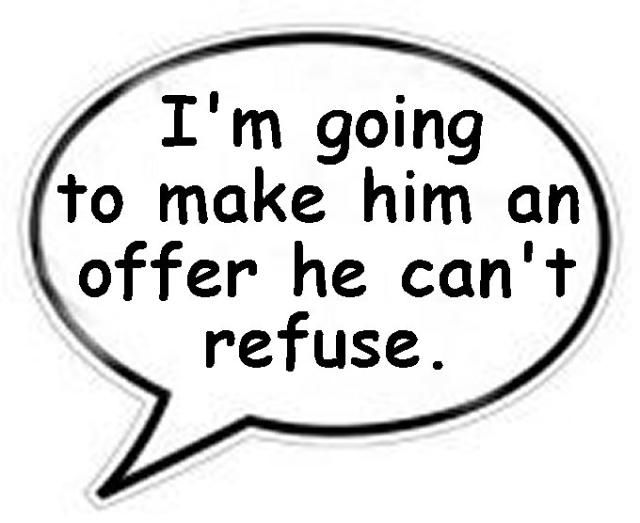
This declarative sentence was spoken by Don Corleone (played by Marlon Brando) in the movie The Godfather (1972).
We don’t always make declarative statements. It is not uncommon for women and other minority groups to add qualifiers to their statements. Such as ‘Parents need to stop organising every minute of their children’s spare time, don’t you think?’ ‘I loved that movie, didn’t you?’ In our sentence structure we look for reinforcement for our thoughts and opinions. We don’t always make declarative statements such as: ‘This is wonderful.’ ‘This is a catastrophe.’ We look for re-enforcement from others.
Another thing we do without realising it, is use indefinite modifiers in our speech: perhaps, maybe, somehow. ‘Maybe I’ll take a trip somewhere.’ As if the speaker has no power to make a decision. ‘Perhaps it will change.’ Again, not a clear declarative sentence like, ‘Yes, nothing stays the same.’
It is important for us as writers to express ourselves in clear assertive sentences. ‘This is excellent.’ ‘It was a red dress.’ Not ‘The thing is, I know it sounds a bit vague, but I think maybe it was a red dress.’ Speaking in declarative sentences is a good rehearsal for trusting your own ideas, in standing up for yourself, for speaking out your truth.
When I write poetry I read through early drafts with a critical eye, taking out indefinite words and modifiers. I attempt to distill each moment to its essence by peeling off the layers until the heart of the poem is exposed. We need to take risks as writers and go deep within ourselves to find our unique voices and express ourselves with clarity.
Even if you are not 100% sure about your own opinions and thoughts write as if you are sure. Dig deep. Be clear. Don’t be vague on the page. If you keep practicing this, you will eventually reveal your own deep knowing.
What about you? Have you noticed this tendency to qualify in your conversations with others, or in your creative writing, or in your blog posts?
Sometimes there would be a person in one of my creative writing classes who was obviously very talented. I can bring to mind one in particular. You could sense people holding their breath as she read, and often her hands shook. The writing process opened her up. She said she had wanted to write for years. She was so excited about writing that she straight away wanted to write a book. I said to her, slow down. Just practice writing for a while. Learn what this is all about.
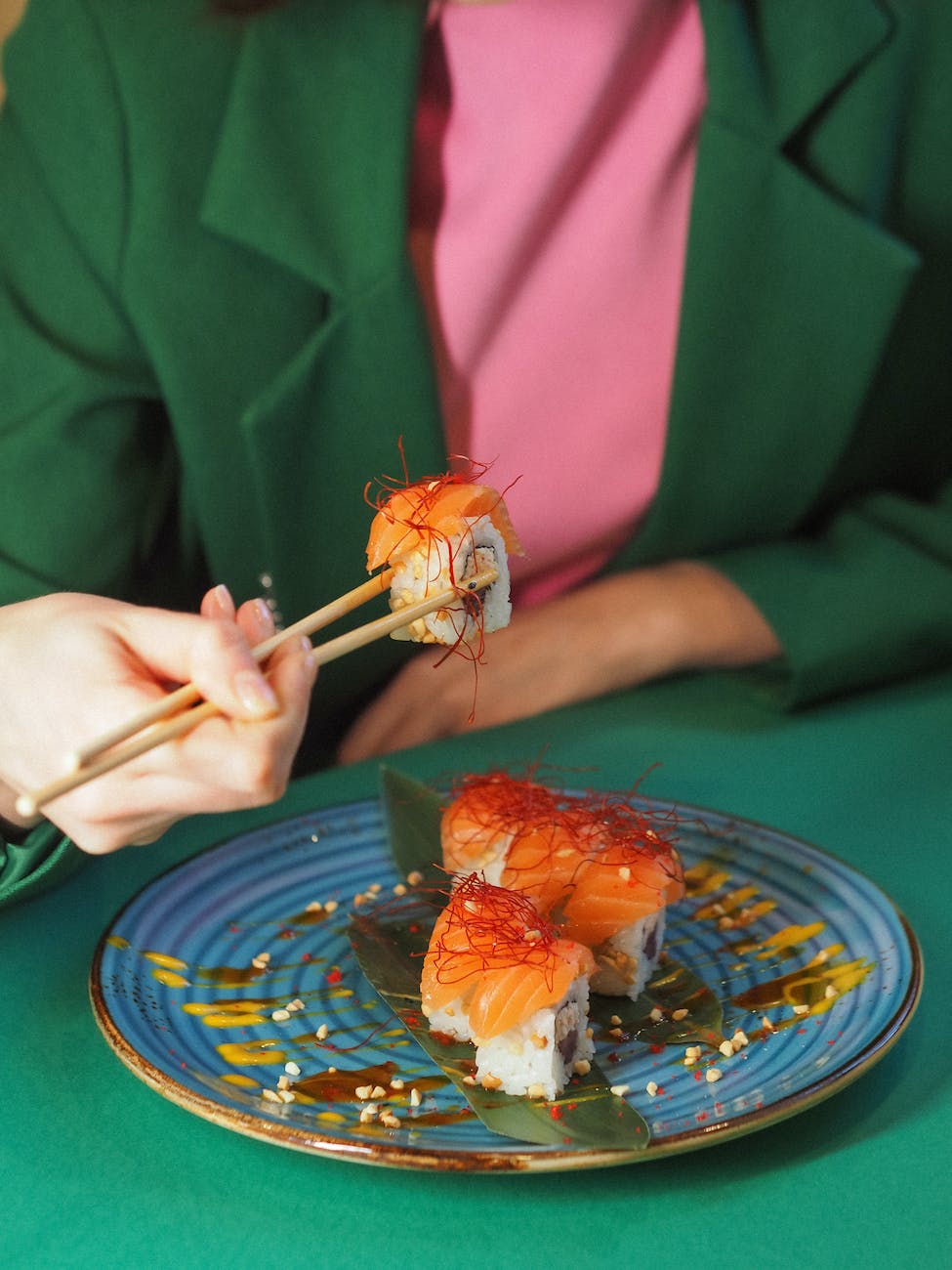
In Japan becoming an itamae of sushi requires years of on-the-job training and apprenticeship. After five years spent working with a master or teacher itamae, the apprentice is given his first important task, the preparation of the sushi rice.
Writing, like becoming a Sushi Chef, is a life’s work and takes a lot of practice. The process is slow, and at the start you are not sure what you are making.
Futomaki (“thick roll” – rice on inside, nori on the outside)
Uramaki (“inside-out roll” – rice on outside, nori on the inside)
Temaki (“hand roll” – cone-shaped roll)
That’s how it was for me. I thought I could jump in and write a book in 6 months. In fact, it took me 20 years to write a publishable manuscript: ‘My Year With Sammy’ (Ginninderra Press) the story of a difficult yet sensitive child, was my first published book in 2015. Five books have followed since then.
So cut yourself some slack before you head off on a writing marathon.
Writing is like learning to prepare the rice for sushi: the apprenticeship is long, and in the beginning you are not sure whether a Futomaki, a Uramaki or a Temaki will be the end result.
Have a read of my short story, ‘Michael’, first published in Quadrant Magazine. It’s one of the stories in my collection ‘The Crystal Ballroom‘ (Ginninderra Press).
Michael:
He’s waiting at the bottom of the ramp, just inside the steel fence that cordons off the entry to the station. He said to give him a ring from her mobile when the train passed Gosford. She quickens her pace, adjusts the overnight bag on her shoulder. She is close enough to see the soft fold of his graying hair, the clear smooth glow of his skin. In his white socks and slip-on loafers he looks very English.
It wasn’t easy to get herself on a train and up to the Central Coast. It took a lot of encouragement on his part and a steely determination on her side of things to get out of Sydney. But now she’s glad already that he kept pressing. ‘It will do you good,’ he said on the phone, ‘to get out of the city for a couple of days. It will give you a new perspective on things.’
He knows about her tendency to brood and her struggle to manage the drowsiness that follows. They talk about these things on the telephone. He also struggles to get through the days, suffers with the same lethargy. He says he prefers to tell people he has ‘chronic fatigue’. People understand the term ‘chronic fatigue’.
He sees the deepening of laugh lines around her mouth and eyes, her face browned by the sun, her hair spiked and in shock. He tells her that she looks the same as he remembers. She assures him he looks very well and living away from the city obviously agrees with him.
Would she like a coffee? Or would she prefer to have a shower first? Some people needed to have a shower before they could do anything.
For goodness sake. It was only a couple of hours on the train. She would like to wash her hands though. They smelt of the tuna sandwich she’d eaten on the train.
Sure, sure. He’s been waiting all day for a coffee. They’ll go somewhere close by.
She’d agreed on the phone that there’d be no post mortem. ‘Don’t worry,’ she said. ‘I’m happy to be in the present. I don’t need any analysis. You’re the one who goes on and on … on the telephone.’
How well she remembers that first time she had seen him. He was at one of the Saturday night dances that she used to frequent. He was standing at the side of the hall, his thick blonde hair brushed back off his forehead. He’d asked her to dance, said she danced well. Then they’d met up regularly and got to know each other. He wanted them to hire a hall and practice their dance routines. ‘But we mustn’t get involved, you and me,’ he warned. ‘Too dangerous.’ They were sitting in his car at the time, so close in the front seat that she could smell the Palmolive soap on his skin. She watched his hands as he put the car into gear and reversed up the driveway.
Now, he opens the back door of his car and motions for her to get in.
‘Sorry about the mess,’ he says. ‘It’s easier if you sit in the back. Easier than moving all that stuff on the front seat.’
It’s the same car as last time, an orangy-red Mitsubishi with scratches down the side, the same cracked glass of the headlights. She slides across the vinyl of the back seat, her eyes dazzled by a blaze of early-summer sunlight passing through the spotted salt stains on the windscreen.
He puts her bag in the boot and she pushes the tapes and DVDs and beach towels a little more to the other side. She snaps on the seatbelt, looks through the window at an older man in loose baggy clothes slumped on a wooden bench staring at the concrete of the pavement between his knees. She imagines she can hear his sighs.
Michael opens the window across from the driver’s side as he drives, then rests his arm along the empty front passenger seat and turns to speak to her. ‘Is it too windy for you?’
She reminds him his fast driving makes her nervous.
‘I didn’t know that. I’ll slow down, now that you’ve told me. I’d better anyway because I’ve lost my license.’
‘Again? Every time I see you it’s the same story.’
‘That’s a bit harsh. It’s a lesson I still need to learn.’
It’s like being in a taxi in a way, sitting in the back like this, not too close to the driver. A memory flashes into her mind of when she was a child and had seen a taxi parked by the side of the road. She’d looked in as she walked past. The driver had his hand between a woman’s legs and the woman, an older woman, not a young woman, maybe the same age as she is now, had a funny glazed look on her face that she, Madelaine, had never seen before. She remembers it vividly. The man, the odd position of the two of them in the front seat, the look on the woman’s face.
‘How come you’ve lost your license again?’ she asks.
‘The twelve points were up,’ he says. ‘You lose three points for an infringement?’
‘Parking infringement?’
‘No. If you get an infringement in the holiday period they double the points, so it doesn’t take much from there to get to the twelve points.’
‘Speeding?’
‘You’ve got to be very careful where the schools are, which are forty. Six double demerit points.’
With one arm resting on the ledge of the open window he runs his fingers through his hair. He’d been ringing every few weeks since they reconnected. Sometimes she tries to ring him, to save him the expense of the long telephone calls, but he’s impossible to contact. It was only recently that he gave her his address. No answer machine, no mobile, no internet, and he doesn’t answer the telephone. In fact he said he pulls the phone out of its socket.
He belongs to some strange group that he won’t give a name. Calls it a meditation group, but she knows it’s something else. At first she thought it must be AA but now she thinks it might be some kind of a secret sect.
He honks his horn at the woman in front as they wait at a roundabout. ‘This wouldn’t happen in the U.K.,’ he says. ‘They don’t know how to use roundabouts here.’
It was always his dream to work hard and then retire young and live somewhere by the sea. He finds a place to park in the shade on the top floor of a shopping centre, so they can walk straight in. He takes her hand when they get out of the car.
‘We’re holding hands are we?’ she says. She lets him do it, passively leaves her hand in his. ‘Don’t forget they smell fishy.’
He shrugs.
They find a seat near the back. She had been looking forward to sitting by the water somewhere and breathing in the salt air, rather than sitting in a shopping centre, but doesn’t express her disappointment.
On the phone he’d said something about telling people in the cafe that she’s his wife. That they could read their newspapers while drinking coffee each day. She said they’d look like an old married couple if they drank coffee hidden behind their separate papers. That’s when he said he’d tell everyone they were married.
‘They only give you one shot of coffee at this place,’ he says. ‘Other cafes give you two.’
Shots? The word reminds her of the days when his drinking was out of control. Not that she knew him then.
Now that they are seated together he says, ‘I knew it would be like this. That we’d pick up from where we left off. No different from last time.’
*
How dull all sounds are by the water, she thinks. Dull but sharp, like the cheepings in the branches of the trees in front of the motel. It must be the serenity of so much water. She decided to take the motel option even though he said she could stay in the guest room at his house. His front door was broken and you had to climb in through the back, the water taps were temperamental, the sliding glass door on the shower needed to be handled just so, the carpet in front of the television only to be walked on with bare feet.
‘Why don’t you get the lock fixed?’ she asked when they walked back out to his car.
‘Not before I go away,’ he said. ‘When I go to Europe to visit my mother I’ll get the door fixed.’
His mother again. He’s been saying for the last two years that he’s going back to the U.K. to visit his mother.
Madelaine chose to stay at the first place he showed her, a motel across the road from the beach. It was just a couple of minutes drive from his house, so they could still meet up each day. It’s an upstairs room, with two beds and a view of the road and the palm trees in front.
She lay on top of the covers on the spare bed of the motel room, reading. He said if it was him, he’d sleep on that bed. You’d get more of a through breeze.
He’s been to the beach for a swim. He arrived unannounced at the sliding screen door, knocked and walked in. Now he is looking at himself in the mirror in front of the bed. He turns from side to side inspecting his body, admiring his reflection, bare chest above the white shorts, says something about her being a good five years older than him.
‘I’m not older than you,’ she scowls. ‘You say that every time. We’re the same age.’
He rubs her foot a little. It doesn’t really matter so much, does it? We’re friends, aren’t we? He was getting ready to say that they’d known each other for a long time, when she turns on him and says, If you say we’ve known each other a long time again and it doesn’t matter, I’ll scream.
*
The family, who own the motel, are very friendly. The old grandfather sweeps the leaves on the driveway each morning and the grandchildren go off to school with a bang of their screen door. The children’s father hands the local newspaper up to her through the railing when he sees her sitting outside her room eating breakfast. They probably watch when Michael picks her up in his car and she climbs into the back seat.
Now that she’s here on his home territory he won’t go on any walks with her, won’t show her where the tracks lead. Says it’s best if she finds out for herself.
She says in the city she wouldn’t head out on an unknown bush track on her own.
‘The city,’ he sighs from the front seat where she can’t see his face. ‘Ah … I keep thinking they’ll design a new Almanac Cognac.’
‘Cognac?’
He laughs.
It’s a shame he didn’t take her with him when he went for a swim, she would like to know the best place to go for a dip. She’s enjoying being a passenger though, being chauffeured around.
‘I tried to ring you at Christmas to see how you were going,’ she says. ‘I know it’s a difficult time for you, with no family here. I tried at least six times – in the mornings and in the night times.’
‘There’s no point in ringing in the mornings,’ he says. ‘The phone doesn’t go back on till after coffee.’
‘What do you mean?’
‘I take it off the hook when I go to sleep, I don’t want people ringing from the other side of the world. They forget it’s an eleven hour time difference. So I don’t put it back on the hook until I come back from having a coffee. I don’t want the phone breaking up my morning routine. And at night time I don’t come back in from the garden until after eight.’
Probably avoiding his mother. ‘I’ve rung after eight,’ she says. ‘You’re so hard to contact. It’s a wonder you’ve got any friends at all. I sent you a Christmas card by the way. Did you get it?’
He shakes his head.
‘That’s a shame. I sent the card to your post office box, like you said.’
‘I’m going to get rid of my post box at the house. Every time the postman rides his bike up he ruins the grass.’ He sniffs deeply, with a heaving of his chest. ‘When I go to the shopping centre there’s nowhere to park in the holiday period and people park on the lawns. I guess it’s like that in the city?’
‘Probably. I try and walk everywhere. I’m trying to lose weight.’
‘That’s good. Cutting back on the pasta?’
Her eyes narrow at the back of his head. ‘I don’t eat pasta.’
He twists around and smirks. ‘That’s right. You’re into healthy foods.’
Back at his place he’d tried to play with her bare feet when he sat next to her on the couch. She’d pulled them away. On the bed in the motel room he’d hugged her and wanted to lie back on the bed.
When he turns off the motor she opens the door slowly and lets the strong salty wind flood into the car in one cool, cleansing breath.
His words are carried off into the breeze.
*
They’ve had an altercation, in a café down near the beach. The diamond in the nostril of the girl behind the coffee machine had flared beneath the fluorescent light. The girl was silently mouthing the words to a song playing in the background when Madelaine got up and walked out.
‘You should speak up sooner,’ he called after her. ‘You should speak up before it gets to this point.’
She has heard this before, or something like it. She turned around briefly but did not stop.
‘You send knives into the heart when you speak like that,’ he called. ‘Madelaine?’
She kept walking until she got to the bush track by the sea. She heard the echo of her own footsteps on the earth. He made her so angry. She wanted to be free of him. He made it so impossible.
‘You need to be careful,’ he’d said. ‘Or you’ll go under. All the way under.’
An insistent fly buzzed near her face.
She walks.
The track keeps weaving away from the sea and makes it difficult to keep close to the water. She has no idea where she is headed or how far she needs to go to escape her anger. Tree roots stumble away from her sandshoes. Flies buzz too close to her ears. She brings to mind a bird that she saw with friends recently. She can’t recall exactly who she was with and where she was, just that someone said, ‘Look at that bird. It’s so big.’ A black and white bird with a large wing span flying through a gorge. Maybe that’s where she was? Cataract Gorge, in Launceston. Walking along that track alone, but with all those other people going in the same direction. The best part was approaching the gorge and being so surprised to see such natural beauty in the middle of a city.
She walks. After all, she’s free as a bird. Her children are grown up and lead their own lives. He always said he prefers a woman who’s had children. There’s something about women who’ve had children that he finds very appealing. The sound of the wind in the trees; the setting sun over her shoulder casts shadows on the dirt track. The sweet smell of earth. So why did she come then? She wanted to get out of Sydney, that’s all. A change of scene. She needed a holiday and she didn’t want to be alone.
As she moves deeper into the bush of the landscape – the ebb and the flow of the waves to her left – she begins to forget his limitations … and her own.
Loneliness. That’s all.
In the mid-afternoon haze, she just feels the need to keep going, to keep moving on. When she’s ready she will go back and apologise for her behaviour. After all, they’ve known each other a long time.
She lets him diminish from her thoughts, and moves deeper into the tender late-afternoon light. The sea, always in motion, not too far away. She walks, and the great swelling of sound begins to recede behind her. Her feet at last on the ground. ‘Put your feet on the ground, sit up with a straight back,’ the counsellor had said in an attempt to get her to pull herself together. Perhaps the counsellor was uncomfortable with all the tears. But who knows? The last counsellor had let her cry, but not too much. Do they let you cry for a set period of time at those places?
They’d slept together only once. It took him five years to speak to her again. Five years. Later, he said something about her breasts reminding him of his mother’s.
The bird sounds have softened, got gentler, more mellow. As the sun makes its slow arch, she observes the changes in the bush, what is revealed, and what is hidden. It’s so peaceful she’s almost afraid to breath.
There is no specific place she is heading towards. She could stop at any time, turn around, go back. The stillness of it all. An insect flitters between the twigs.
The landscape of shrubs and trees she has been moving through is now more like a rainforest. She watches the filtered light between the long thin strands of fern. All around is a canopy of leaves – fern leaves, frond leaves, mossy leaves – bright green leaves skating on the breeze. And tree trunks: hollered out, split in two, grooved and gnarled.
She looks up. What direction are the clouds traveling? She’s lost her bearings. She forgot to look for the position of the setting sun before she entered the forest. It is so hot. She is sweating.
But, as she walks on she is happy in her own self. In a new self, not the old one that she’s left behind.
She looks back the way she’s come.
Is she lost?
She reminds herself not to panic and, standing there absorbing the landscape, breathes in deeply to the count of four, and then out again … four, three, two, one.
She sees another insect on a rollercoaster with the air. The web of a spider made visible in the glow.
In the humidity and sleepy afternoon light, she could keep going forever, all the way back to Sydney.
My short story, ‘Tango’ was first published in Quadrant Magazine. Have. a read. Hope you enjoy it.
TANGO:
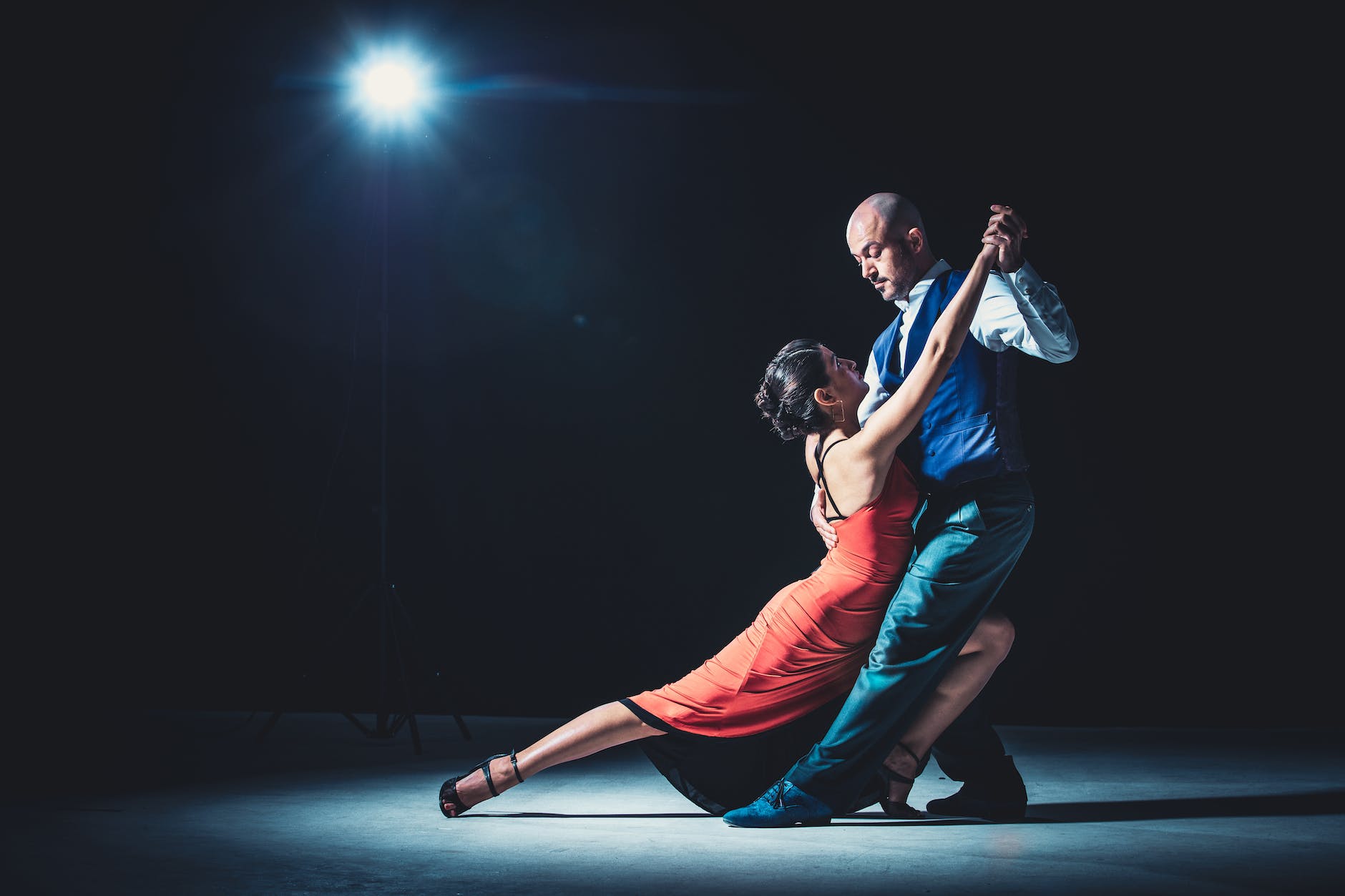
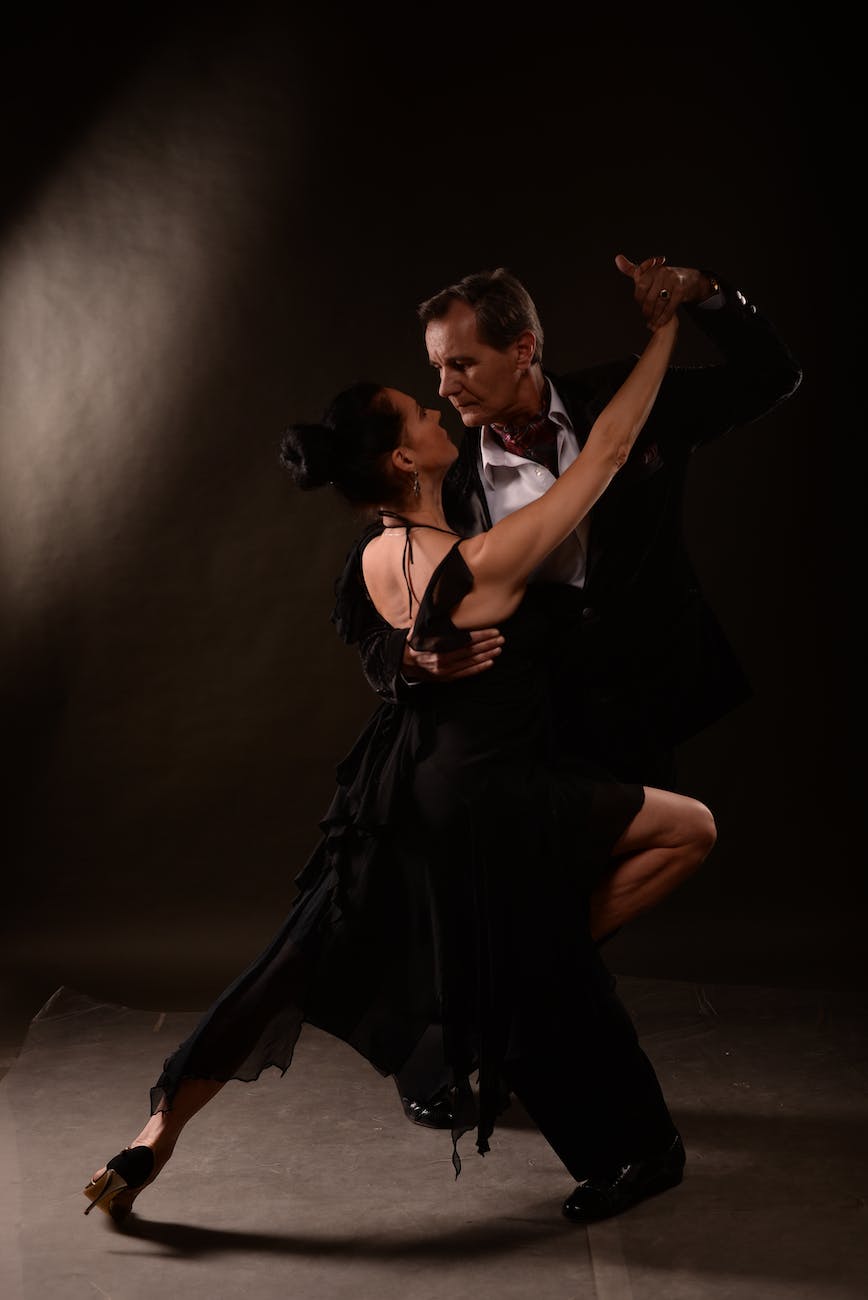
Tango is a passionate dance. A conversation between two people in which they can express every musical mood through steps and improvised movement. (Source Unknown)
1.
Just before nine o’clock in the evening, Sofya gets out of her car and looks up at the sky. She has sensed a shift in the weather. There is another breath of wind, a whispering in the air, but the clouds are stagnant against the dark night. She turns and moves downhill towards the club, ejecting the chewing gum out of her mouth with a loud splat into the bushes, feels the first drops of rain on her bare arms. She passes the public phone box where frangipanis lie on the grass, picks one up, sniffs at it, throws it back, then quickly enters the club.
It is not one of her best days. She doesn’t know why. Her dress is not uncomfortable, her skirt just right around the waist, the outfit not faded or balled, her black strappy shoes high, not too high, wrapped around her feet following the shape of her instep, and the new shampoo and conditioner make her hair curl naturally around her face. For reassurance she strokes the pearl and bronze necklace nestled into the groove of her neck.
At reception she pauses to flash her card and takes the lift to the third floor and then continues along the long hall, at the end of which is the thud and bounce of Latin American dance music.
She turns into the room, which is set up with tables and chairs in a horseshoe shape around the wooden dance floor, the dee jay on the stage above and a bar at the back of the room. She sees Nino down the front sitting with that older couple he usually sits with and wonders whether to join them or not. It is not easy coming to these places. It takes a whole day of psyching herself up.
2.
‘Sofya, you’ll never find a rich husband if you’re fat,’ said Mother, raising her glass. It was Mother’s 53rd birthday. Her hair was silvery with flecks of white now that she’d let her own natural colour grow through.
‘How would you know?’ Sofya’s older brother said picking his nose and flicking the snot across the table at his mother. Everyone said he was a radical, that boy. He did things a certain way. But somehow they still thought the sun shone out of his arse. Everyone laughed. The entire family – even the aunt and uncle and the two boy cousins – drinking the kosher wine at the seder table. The moment passed.
Alone in her room, Sofya sang along with the radio station, turned way up. The Happy Wanderer. ‘I love to go a wandering along the mountain streams, and as I go I love to sing, my knapsack on my back.’
She would practice her leaps across the room in front of the mirror. See how far she could cross in one amazing jump, her back leg extended behind her as she leapt into the air from a running start.
3.
She dances with Nino at the Randwick dance every Friday night. Now that Nino is semi-retired he dances four nights a week, plays tennis and works out at the gym when he’s not working part-time as an accountant. He has grey hair combed back from a high forehead and around his neck is a brown leather thong with a small silver medallion. The leather thong makes him look more attractive, more unusual, more interesting. He likes to show the younger women how to dance.
The tall Portuguese man with the dyed black hair (she assumes it’s dyed), described Nino as a vampire. But then he is probably jealous of the number of different women that Nino is able to get to join him at his table.
Jordan, the taxi driver, who dances to keep his weight down, said that Nino only likes to dance the tango so he can feel the women’s breasts pressed against him.
‘He didn’t say that,’ said Sofya in disbelief. ‘Nino is a gentleman, he wouldn’t say that.’
Jordan was ready to wave Nino over to confirm the story.
Sometimes Sofya sits by herself with her coat on the chair beside her, pretending she is here with a friend, and the friend is on the dance floor and that’s why she’s sitting there alone.
4.
Sofya works freelance and is working on a book of family history that she has been commissioned to write. Things have changed very much, several times since she grew up, and like everyone in Sydney, she has led several lives and she still leads some of them. Since she started the book she has gone out with two South American tango dancers, one Irish dance teacher, and a revolutionary playwright who patted her thigh and said, ‘Where is this relationship going? I would like it to be more. My wife isn’t interested in sex any more.’
Her children are grown up and lead their own lives. Sometimes the sheer unpredictability, the randomness of the way she is living, what she is doing, fills her with exhilaration.
For the past six months she had been seeing a man from Leichhardt. As far as she can see, this is over. She calls him J, as if he were a character in a novel that pretends to be true.
J is the first letter of his name, but she chose it also because it seems to suit him. The letter J seems to give a promise of youth and vitality. It is upright and strong, with very straight vertebrae. And using just the letter, not needing a name, is in line with a system she often employs these days. She says to herself, France, 1993, and she sees a whole succession of scenes, the apricots and salmons of the buildings and the turquoise of the Mediterranean Sea.
5.
Dressed for salsa? said the doctor with a grin as he closed the door behind her.
I don’t remember telling you that I danced salsa, she said as he extracted her file from the drawer of the metal filing cabinet. I think you’re getting me confused with someone else.
In O’Connell Street or Liverpool Street. I can picture it.
I used to dance at Glebe Town Hall on Sunday nights, but that was ages ago.
Your salsa phase, he confirmed.
He moved from the filing cabinet to the large grey seat opposite her.
Any stallions beating at your door? he said with a note of expectancy in his voice.
They’re all pathetic. It’s hopeless.
He gasped in a pretending way.
Not all of them, she corrected herself. Just the ones I engage with.
He wrote that down.
It’s all over with the Fireman, she volunteered. He’s married anyway.
You can cross Fireman off the list now.
I’ve been through the list. It’s been so many years. I’ve met one of everything.
Z, he said with a smirk. Of course. Zookeeper.
She shrugged, remembering the organic gardener.
I’ve probably met one of those too.
6.
The last time she saw J, or rather, what she thought would be the last time, she was standing at the turnstiles at Town Hall station and he came through the gate sweating, his face and body flushed, his hair damp.
It was a hot night in September. They’d had a meal together at a Spanish Restaurant in the city. She remembers how flushed his skin was, but has to imagine his boots, his broad white thighs as he crouched or sat, and the open friendly expression he must have worn on his face, talking to her, she, who wanted nothing from him anymore. She knows she was conscious of how she looked standing there under the neon light, and that in this glare she might seem even older to him than she was, and also that he might find her less attractive.
He went to get a cup of coffee, then came back out. He stood beside her and looked down with his arm almost around her. She sensed his hesitation to touch her. She kissed him on the cheek and he looked deep into her eyes and she knew what he wanted her to say. Saw the pleading expression he must have worn on his face.
7.
Have you lost weight? she asks Dan, one of her regular dance partners as she flicks her foot back and behind his knee into a gancho. The movement is like a horse trying to shake its shoe from its hoof.
Make sure your heel is up when you do the gancho, Alfred had told her. Sweep your leg along the floor and out. Not up with the leg, but up with the heel.
She reminds herself to make sure her shoulders are down. Firm arms, shoulders down. She’s sure that’s why she gets so much neck pain.
Alfred, bald, shiny-headed Alfred, who Nino says looks like a gangster with his shaved head and black tee shirt, still thinks everyone on the dance floor sets out to block his movement around the room. There’s no doubt about him. At least he started out friendly enough.
Dan smells good for a change and he’s lost his big stomach that used to come between them. Sometimes she would gag with the smell of him.
Yes, he says as they bounce lightly to the beat of a milonga. I got sick with the flu for a couple of weeks last year and decided to keep the weight off.
During a break in the sets she sits down next to Alfred.
What do I look like? Alfred says inclining his head towards the dance floor. I wish I knew what I looked like.
I don’t know, she says. I wasn’t watching you.
He sighs with disappointment.
And he’s made up a step. She must tell him she doesn’t want to do his stupid made up step which is a cross with her left leg, but when she feels his opposite hip against hers she doesn’t know if it’s a gancho or not. But the main problem, which she must tell him, is that he pulls her off her axis, her centre.
Would you do it if it wasn’t made up? he says now they’re up and dancing a vals.
It’s not that I won’t do it, she says. I can’t do it. I’m not deliberately not doing it, she says unable to disguise her anger. Should she make a scene and leave the dance floor and leave him standing there because he’s being so rude and aggressive because she can’t do his stupid made up step?
Do you speak to the other women like you speak to me?’ She says not caring who can hear.
I can’t understand why you won’t do it.
I can’t do it.
I wish I knew what that little voice was saying in your head.
His hip pushes hard into her, very hard, so she is forced into the backward lock from the left leg.
8.
Wheep wheep, wheep wheep, wheep wheep, went the big shiny knife against the hard grey stone. Father would carve the roast lamb each week for the Sunday lunch. After lunch they’d go to the hospital to visit Grandpa. Grandpa without his left leg, then without his right leg. Gangrene. He died piece by piece.
Left foot, left leg. Right foot, right leg.
9.
The women at the dances look beautiful in a cruel way, with their blood-red lips and their nails long and sharp. They are not very friendly. Sofya is just a casual, after all. She hasn’t signed up for a ten week course and she doesn’t go to the beginners lesson at 7.30.
Things have not changed very much on the dance scene since she started there so many years ago. ‘Same old, same old,’ as she heard the Turkish woman describe the previous Saturday’s dance at Marrickville to the Egyptian woman with the red red lips.
What a beautiful smile you have, said the woman on the door who takes the money. Did anyone tell you that your whole face smiles when you smile?
She’s nice. She’s the partner of the man who runs the dance. She says she doesn’t mind that she doesn’t get to dance on the Friday nights because she dances nearly every other night of the week at the lessons. She’s very beautiful. Russian with long blonde hair against her tanned smooth olive skin, very long shiny legs and always one of her very short cut up the side skirts that she makes herself. She’s Sofya’s age.
10.
When Father came back from the factory in the evenings, the children, pale and silent, joined him for his dinner. After dinner, Father listened to the radio in the lounge with his newspaper, and at seven Mother, having washed up, joined him. The family were together only at dinner, after which Mother and Father sat behind their newspapers and the children went upstairs to their rooms. Sometimes a stupid child would pull the wings off a fly or even a butterfly and watch it suffer.
11.
A new man makes his way around the dance floor. Good posture. Straight back, strong arm position. Looks like he’d be a good strong lead.
The music stops and he comes over and sits on the spare seat beside Sofya.
‘It’s all too heat making for an old man like me,’ he jokes as he fans himself furiously with a Bingo brochure. ‘I’m a Postman from Perth on holiday in Sydney,’ he says by way of an introduction in a well-modulated English voice. ‘I could have had a two week holiday in Paris for the price of his three day trip to Sydney.’
She smiles. ‘Have you read The Post Office by Charles Bukowski?’
‘We’re not very cultural in Perth.’
‘You speak very well for a Postman.’
‘Well,’ he shrugs, as if that is a whole other story that he will not go into at this stage. ‘Dancing the tango allows me to meet famous people all over the world,’ he says. ‘In Paris, London, New York. My name is Fabian by the way.’
‘That’s a very romantic name. I grew up in the era of Fabian the pop star.’
‘In Perth we all live in one big Waiting Room,’ he adds. ‘We’re all waiting. Not much culture or adventure. There are many French and Italian speaking women who dress like the women you see in Paris. The tango community is very close. If one person learns a new step, then everyone learns it. Two weeks later, we’re all doing it.’
12.
‘You’ve lost weight?’ the doctor said when she’d walked in.
She shrugged. ‘It’s wonderful what black does. Just one item of black.’
He looked down at his shoes with the regular pattern of holes punched towards the pointed toes. ‘What about black shoes?’ he asked.
‘Your feet look smaller,’ she reassured him.
‘You know what they say about small feet,’ he laughed.
She assumed he meant small feet, small penis. She sat down opposite him, a box of tissues between them on the small square table. ‘It’s hands,’ she says. ‘Not feet. Fingers.’
He uncapped his pen, looked down at his notes.
‘You’re not going to start on that track already are you?’ she said. ‘Not so early in the session.’
13.
I grew up dancing the polka in Italy, says Nino as they turn into a Viennese walz.
How was your holiday? she says.
Very boring.
Didn’t you play tennis with your grandsons?
He pulls a face.
Did you meet any nice European men while you were away, he asks.
I was married to an Austrian. From Vienna.
Did you see him there?
He lives in Sydney.
She says this simply to establish that she had a husband once, that she had been married, and to a European man, an interesting man, a man of cultural heritage. She wants to assure Nino that she was not always alone, unattached.
Does Anthony ask you to dance? Nino asks.
No. He doesn’t.
He should.
There are no shoulds. I asked him once and he went off across the floor doing his own thing. It was very humiliating.
Nino nods and grins with no understanding in his demeanour.
Anthony has many choices, he says, as if that would explain it. He’s young and he’s a good dancer. A lot of the women are after him.
14.
She remembers Mother saying to her when she was a teenager: ‘It’s a man’s world.’ But Mother had two children by the time she was 17.
Sofya’s daughter is an artist. Sometimes Sofya minds Kate’s two children while Kate goes out painting. This afternoon she was over at Kate’s house looking after the baby and the two year old.
‘I feel like Superman when I mind the kids and then go out tango dancing,’ Sofya likes to tell her friends. ‘At three o’clock I’m on the oval kicking a football around with my grandson and then at 7.30 I’m changing into my tight skirt with a split up the side and my red top and my strappy high heeled shoes and I’m out the door again. Like Clarke Kent changing into his Superman cape.’
Have you got a dance partner? her friends, or maybe her brother, might ask.
Various, she’ll say. I’ve got various. Several.
Today when Kate got back Sofya told her she’d brought the washing in because it had started to sprinkle with rain.
Was it dry?
I think so.
You think so?
Well I was rushing to bring it in before it poured with rain and I had two children to look after at the same time and the baby was awake and the noise of the builders next door and the electrician with his ladder and his cords everywhere and I couldn’t even get to the toilet.
Well, when you brought the washing in did you do all the ironing? Did you iron all the clothes when you brought them in?
They both laughed. It was a joke.
15.
Sofya doesn’t really own a tight skirt with a split up the side, but she wishes she did have one. And nice long legs to show off. Instead she usually wears the same pair of black trousers that she hopes will slim her down, and one of her many pretty tops. Well, actually, that’s not true either. She wears the same black camisole top, or one of the two similar black camisole tops, and a sheer cardigan on the top to disguise, to cover, to conceal, to pretend, that her arms aren’t so fat, that her freckled skin doesn’t look so blotchy in the light. But usually it gets so hot she has to strip down to the black pants and the black camisole top with her hair pulled high on top of her head so it doesn’t hang in wet cats tails around her face.
16.
‘I think the baby looks like me,’ Sofya said to Kate as she reached for the old brown photo album.
‘Have a look,’ she said pointing to a photograph of herself in Class 8. ‘Here I am. Can you see me?’
‘Oh yes.’
‘I’m the one on the end. The little Miss Perfect sitting up so straight.’
‘You do look different to the others.’
‘I’m the one trying too hard.’
‘You’re the only one wearing a tie.’
17.
‘Can we get a photocopy of her,’ Alfred says as Jordan comes over and leads her towards the dance floor.
Jordan’s style is firm and masculine. She likes the smell of the mint that he always sucks or chews. After a good half hour of dancing in the hot auditorium, he speaks, ‘If they have a Latin bracket,’ he says. ‘Will you dance it with me?’
Afterwards they sit back at Nino’s table with the much older couple.
‘You and Jordan dance well together,’ says the man so stiff with arthritis it takes him a long time to stand up, to unwrap his legs and put his whole weight on his feet. But he does. He gets up each week to dance with his lady friend and they shuffle around over in a dark corner after a couple of glasses of white wine and they are into their second packet of potato chips.
‘You look like you should be married,’ the older man continues. ‘Like you should have babies together.’
‘Who? Me and Jordan?’ Sofya says, trying to sound casual about the possibility of her and Jordan. She quite likes Jordan. But only because he dances salsa and rhumba and rock and roll so well. He smells nice, he dances well, what more could she want? But of course Jordan has a regular girlfriend, but the girlfriend doesn’t come to the Friday night dances.
Jordan laughs. ‘She’s a grandmother already,’ he says with a dismissive flick of his hand towards Sofya. ‘We couldn’t have children together.’
18.
‘Here is a photo of Grandpa and me. I’m standing beside his wheelchair. It’s a black and white photo that shows him only from just above the knees, which is where the rug would have ended that covers his lap. I look about 13 in this picture. My tall gawky stage. Long hair pulled back severely, a cardigan to hide my developing breasts. Mother hated my hair. I think she must have spent her whole life telling me how dreadful my hair looked. I’m smiling in the photo and leaning down to put my face a little bit closer to Grandpa.’
19.
Outside a bird chimed in a cheerful tone and the leaves of the jacaranda tree whispered in the wind. The beautiful jacaranda tree. They had one like that once. She thought she’d miss that tree and that house but although she did at first, after a while she came to love the different place where she moved to. And then this place where she lives now, by the sea, the place where J came to live with her. The place where they pretended they could live together. Where he went off to work every day and she kissed him goodbye at the front door. The place where he’d come home to her at night.
20.
‘I’ll fill in a form for you to have a blood test whenever you want. You won’t have to come and see me first. You can go straight there.’
He walks over to his desk. ‘Anything else you want tested?’
‘You’d better add iron. And the test for blood sugar. A family history of diabetes.’
‘Those arms look like they’ve done a lot of work,’ said the nurse as she tightened the strap around Sofya’s arm.
‘What do you mean? How can you tell?’
‘The veins. You’ve got good veins. The veins are connected to the muscles.’
21.
When she was a teenager she’d wanted to have dance lessons. ‘I learnt to dance without lessons,’ Mother had said. ‘So you can too.’
There were huge waves out to sea after the winds of the night. The biggest she’d ever seen in fact. They really were magnificent. She’d listened to the winds as they’d thrashed the ocean waves through the branches of the trees.
22.
Step further across for the forwards ochos, said the visiting Argentinian dance teacher. Step further back behind me for the turn and swivel. Keep your left hip down when doing a forwards ocho. Caress the floor with your feet. No feet in the air. Relax your right shoulder. Keep your shoulders down. Do the cross whether the man leads you into it or not (she thinks that’s what he said). Be heavy on the front foot in the cross. Weight forwards.
Keep your knees together when you do an adornment. Keep the adornments simple. Just do one or two. Polish the leg and then down again; then step over. Slow down on the turns. Don’t run. Keep your right wrist firm. In the open embrace let your arms go up and down the man’s arm. Up to behind his neck and then down to his forearm.’
‘You’ve had a lesson with the best,’ said Pedro.
‘I’ve been saving myself,’ she’d said proudly.
23.
It was about 6.30 on a Friday. Early summer. The bougainvilleas and the jacarandas were already in bloom but no frangipanis yet. She’d been waiting for J to come home, looking forward to his return from the city, hoping they’d sit together with a drink outside on the balcony. He’d have a shower and get changed and then they’d go out for the meal that he’d promised her.
Instead he was on the phone, his face slightly in shadow but well lit enough for her to see the ever present cigarette. Half inside, half outside so he could exhale out the door. His voice droned on and on. The wind increased in force. A strong wind, blowing against her head, her hair, her hands. Her furious heart beat hard against the walls of her ribs. Then the wind died down again and she could only hear his voice ; not the sound of the birds anymore or the movement of the leaves on the trees.
It rained a lot that night. The sound of the waterfall below. The sound of water after rain.
24.
It’s all your fault anyway, she said to the doctor.
He looked puzzled.
You said to me, ‘It’s your body. You can do what you like with it,’ in that moralising tone of yours.
I would have only said that, he said gently, if I thought you were being too generous with your body.
After that bit of moralising I’ve turned that whole side of myself off. Anyway, I have no libido. So it’s not such an issue anymore.
Well, that’s good.
He took a sip of his coffee that surely must be cold already.
There’s more to me than you think, he said.
You’re very blinkered, she said. She held up her hands beside her face to imitate a horse with covers at the side of his eyes. Straight. You haven’t got an open mind, in some areas, she clarified.
He pulled a face.
I bet your daughter, or daughters, tell you that.
They’re too polite.
Your daughter looked lovely by the way. The one I saw last time.
The blonde?
Yes. I thought you had a son and a daughter.
No. I’ve got three daughters.
Three daughters? And a son?
Yes. So you think I need to open my chakras? he joked.
She shrugged. Chakras spin, they don’t open.
You might be surprised. I could be a Buddhist.
Is my time up? She said with an anxious glance at the clock.
It’s okay, he reassured her. I hadn’t noticed.
25.
At dusk the last of the brightness of the pink sighed above the horizon. The sea a woolly blanket of blue and white. The same four palm trees all in a row between the road and the beach. The pale face of the moon two thirds of the way to the sky. One eighth of the side of its face missing but still the moon looked down, almost expressionless. A woman flashed the blue of her helmet as she cycled with strong thighs up Bronte Road, head bent in concentration on the road ahead as a bus bellowed black dust. The pink of the sky turned into mauve mixed with blue as the French cook arrived with his pale blue scarve knotted like a boy scout tight around his neck. With his right hand he checked his balls for reassurance as he mounted the step into the café.
It is unusual for Sofya to be outside these days, but no more odd than spending hours inside at the Mitchell Library looking at microfilm or walking through Waverley Cemetry looking for graves, no more odd than her work, or the people stuck on hot trains and buses trying to get home from work, or other places where people find themselves as they struggle to get through their days.
Times change, your life changes and you need to shift.
26.
At our age we’re not going to improve our game of tennis, said the man on Bare Island.
Speak for yourself, she’d said.
The brown bird with a black triangle on his head jumped on the green see saw of a branch. Up and down he went, up and down, until he flew off again in a southerly direction.
27.
‘The bastards,’ the doctor said as a joke, with a tilt of his head and a puffing out his cheeks as if he was about to spit on the ground in disgust.
‘I love it when you do that,’ she laughed. ‘That’s the way it is exactly.’
28.
Back home after the dance, she’d gone straight to her room. She’d turned on the lamp and knelt on the bed to pile the cushions up. Tears came almost to her eyes, her stomach empty with sadness. It was all such a bloody fantasy. She stared around at the night silence, then huddled in her bed.
She had a box of 100 Dilmah tea bags that she’d bought especially for J. When the box is empty, she told herself, the pain will have eased.
Six months later, she walked outside to the balcony, sat on the chaisse lounge that they’d chosen together and looked down the gully at the grey sea. She drank the last tea bag from the box.
The tea was strong and hot, and so bitter it parched her tongue.
In the Saturday-afternoon feedback group recently, we talked about the ‘off with his head’ or ‘out-it-goes’ part of writing. We acknowledged that as a group we’d always been very supportive and encouraging of each others work. That was because we were all in it together. Our critiquing was not telling lies; it was from a place of open hearted acceptance. Everything you put on the page is acceptable.
Sometimes someone says, ‘I want a rigorous no-holds-barred assessment of my work.’ But what do you say to them when the writing is dull and boring? Don’t give up your day job? It doesn’t sit comfortably with most of us to be directly critical of someone’s writing. It’s like telling someone how ugly their baby is. All of us find it hard to separate our writing from ourselves, and are prone to take criticism personally.
The feedback sandwich is a widely known technique for giving constructive feedback, by ‘sandwiching’ the criticism between two pieces of praise or compliments.
Yesterday, as we passed around copies of our work (just a page or two) we started to address what William Faulkner famously said:
‘In writing, you must kill all your darlings.’
First of all, we looked for the juice in each piece. Where did the writing come alive? ‘Get rid of the rest,’ we said. ‘Off with his head—out it goes.’ It’s very difficult to be this honest, and not everyone wants to hear it. ‘I simply want gentle support and a few corrections,’ some of us might say.
Be willing to have the courage to look at your work with truthfulness. It’s good to know where your writing has energy and vitality, rather than to spend a lot of time trying to make something come to life that is dead on the page. Keep writing. Something new will come up. You don’t want to put your readers to sleep by writing a lot of boring stuff.
Tango is a passionate dance. A conversation between two people in which they can express every musical mood through steps and improvised movement. (Source Unknown)
1.
Just before nine o’clock in the evening, Sofya gets out of her car and looks up at the sky. She has sensed a shift in the weather. There is another breath of wind, a whispering in the air, but the clouds are stagnant against the dark night. She turns and moves downhill towards the club, ejecting the chewing gum out of her mouth with a loud splat into the bushes, feels the first drops of rain on her bare arms. She passes the public phone box where frangipanis lie on the grass, picks one up, sniffs at it, throws it back, then quickly enters the club.
It is not one of her best days. She doesn’t know why. Her dress is not uncomfortable, her skirt just right around the waist, the outfit not faded or balled, her black strappy shoes high, not too high, wrapped around her feet following the shape of her instep, and the new shampoo and conditioner make her hair curl naturally around her face. For reassurance she strokes the pearl and bronze necklace nestled into the groove of her neck.
At reception she pauses to flash her card and takes the lift to the third floor and then continues along the long hall, at the end of which is the thud and bounce of Latin American dance music.
She turns into the room, which is set up with tables and chairs in a horseshoe shape around the wooden dance floor, the dee jay on the stage above and a bar at the back of the room. She sees Nino down the front sitting with that older couple he usually sits with and wonders whether to join them or not. It is not easy coming to these places. It takes a whole day of psyching herself up.
2.
‘Sofya, you’ll never find a rich husband if you’re fat,’ said Mother, raising her glass. It was Mother’s 53rd birthday. Her hair was silvery with flecks of white now that she’d let her own natural colour grow through.
‘How would you know?’ Sofya’s older brother said picking his nose and flicking the snot across the table at his mother. Everyone said he was a radical, that boy. He did things a certain way. But somehow they still thought the sun shone out of his arse. Everyone laughed. The entire family – even the aunt and uncle and the two boy cousins – drinking the kosher wine at the seder table. The moment passed.
Alone in her room, Sofya sang along with the radio station, turned way up. The Happy Wanderer. ‘I love to go a wandering along the mountain streams, and as I go I love to sing, my knapsack on my back.’
She would practice her leaps across the room in front of the mirror. See how far she could cross in one amazing jump, her back leg extended behind her as she leapt into the air from a running start.
3.
She dances with Nino at the Randwick dance every Friday night. Now that Nino is semi-retired he dances four nights a week, plays tennis and works out at the gym when he’s not working part-time as an accountant. He has grey hair combed back from a high forehead and around his neck is a brown leather thong with a small silver medallion. The leather thong makes him look more attractive, more unusual, more interesting. He likes to show the younger women how to dance.
The tall Portuguese man with the dyed black hair (she assumes it’s dyed), described Nino as a vampire. But then he is probably jealous of the number of different women that Nino is able to get to join him at his table.
Jordan, the taxi driver, who dances to keep his weight down, said that Nino only likes to dance the tango so he can feel the women’s breasts pressed against him.
‘He didn’t say that,’ said Sofya in disbelief. ‘Nino is a gentleman, he wouldn’t say that.’
Jordan was ready to wave Nino over to confirm the story.
Sometimes Sofya sits by herself with her coat on the chair beside her, pretending she is here with a friend, and the friend is on the dance floor and that’s why she’s sitting there alone.
4.
Sofya works freelance and is working on a book of family history that she has been commissioned to write. Things have changed very much, several times since she grew up, and like everyone in Sydney, she has led several lives and she still leads some of them. Since she started the book she has gone out with two South American tango dancers, one Irish dance teacher, and a revolutionary playwright who patted her thigh and said, ‘Where is this relationship going? I would like it to be more. My wife isn’t interested in sex any more.’
Her children are grown up and lead their own lives. Sometimes the sheer unpredictability, the randomness of the way she is living, what she is doing, fills her with exhilaration.
For the past six months she had been seeing a man from Leichhardt. As far as she can see, this is over. She calls him J, as if he were a character in a novel that pretends to be true.
J is the first letter of his name, but she chose it also because it seems to suit him. The letter J seems to give a promise of youth and vitality. It is upright and strong, with very straight vertebrae. And using just the letter, not needing a name, is in line with a system she often employs these days. She says to herself, France, 1993, and she sees a whole succession of scenes, the apricots and salmons of the buildings and the turquoise of the Mediterranean Sea.
5.
Dressed for salsa? said the doctor with a grin as he closed the door behind her.
I don’t remember telling you that I danced salsa, she said as he extracted her file from the drawer of the metal filing cabinet. I think you’re getting me confused with someone else.
In O’Connell Street or Liverpool Street. I can picture it.
I used to dance at Glebe Town Hall on Sunday nights, but that was ages ago.
Your salsa phase, he confirmed.
He moved from the filing cabinet to the large grey seat opposite her.
Any stallions beating at your door? he said with a note of expectancy in his voice.
They’re all pathetic. It’s hopeless.
He gasped in a pretending way.
Not all of them, she corrected herself. Just the ones I engage with.
He wrote that down.
It’s all over with the Fireman, she volunteered. He’s married anyway.
You can cross Fireman off the list now.
I’ve been through the list. It’s been so many years. I’ve met one of everything.
Z, he said with a smirk. Of course. Zookeeper.
She shrugged, remembering the organic gardener.
I’ve probably met one of those too.
6.
The last time she saw J, or rather, what she thought would be the last time, she was standing at the turnstiles at Town Hall station and he came through the gate sweating, his face and body flushed, his hair damp.
It was a hot night in September. They’d had a meal together at a Spanish Restaurant in the city. She remembers how flushed his skin was, but has to imagine his boots, his broad white thighs as he crouched or sat, and the open friendly expression he must have worn on his face, talking to her, she, who wanted nothing from him anymore. She knows she was conscious of how she looked standing there under the neon light, and that in this glare she might seem even older to him than she was, and also that he might find her less attractive.
He went to get a cup of coffee, then came back out. He stood beside her and looked down with his arm almost around her. She sensed his hesitation to touch her. She kissed him on the cheek and he looked deep into her eyes and she knew what he wanted her to say. Saw the pleading expression he must have worn on his face.
7.
Have you lost weight? she asks Dan, one of her regular dance partners as she flicks her foot back and behind his knee into a gancho. The movement is like a horse trying to shake its shoe from its hoof.
Make sure your heel is up when you do the gancho, Alfred had told her. Sweep your leg along the floor and out. Not up with the leg, but up with the heel.
She reminds herself to make sure her shoulders are down. Firm arms, shoulders down. She’s sure that’s why she gets so much neck pain.
Alfred, bald, shiny-headed Alfred, who Nino says looks like a gangster with his shaved head and black tee shirt, still thinks everyone on the dance floor sets out to block his movement around the room. There’s no doubt about him. At least he started out friendly enough.
Dan smells good for a change and he’s lost his big stomach that used to come between them. Sometimes she would gag with the smell of him.
Yes, he says as they bounce lightly to the beat of a milonga. I got sick with the flu for a couple of weeks last year and decided to keep the weight off.
During a break in the sets she sits down next to Alfred.
What do I look like? Alfred says inclining his head towards the dance floor. I wish I knew what I looked like.
I don’t know, she says. I wasn’t watching you.
He sighs with disappointment.
And he’s made up a step. She must tell him she doesn’t want to do his stupid made up step which is a cross with her left leg, but when she feels his opposite hip against hers she doesn’t know if it’s a gancho or not. But the main problem, which she must tell him, is that he pulls her off her axis, her centre.
Would you do it if it wasn’t made up? he says now they’re up and dancing a vals.
It’s not that I won’t do it, she says. I can’t do it. I’m not deliberately not doing it, she says unable to disguise her anger. Should she make a scene and leave the dance floor and leave him standing there because he’s being so rude and aggressive because she can’t do his stupid made up step?
Do you speak to the other women like you speak to me?’ She says not caring who can hear.
I can’t understand why you won’t do it.
I can’t do it.
I wish I knew what that little voice was saying in your head.
His hip pushes hard into her, very hard, so she is forced into the backward lock from the left leg.
8.
Wheep wheep, wheep wheep, wheep wheep, went the big shiny knife against the hard grey stone. Father would carve the roast lamb each week for the Sunday lunch. After lunch they’d go to the hospital to visit Grandpa. Grandpa without his left leg, then without his right leg. Gangrene. He died piece by piece.
Left foot, left leg. Right foot, right leg.
9.
The women at the dances look beautiful in a cruel way, with their blood-red lips and their nails long and sharp. They are not very friendly. Sofya is just a casual, after all. She hasn’t signed up for a ten week course and she doesn’t go to the beginners lesson at 7.30.
Things have not changed very much on the dance scene since she started there so many years ago. ‘Same old, same old,’ as she heard the Turkish woman describe the previous Saturday’s dance at Marrickville to the Egyptian woman with the red red lips.
What a beautiful smile you have, said the woman on the door who takes the money. Did anyone tell you that your whole face smiles when you smile?
She’s nice. She’s the partner of the man who runs the dance. She says she doesn’t mind that she doesn’t get to dance on the Friday nights because she dances nearly every other night of the week at the lessons. She’s very beautiful. Russian with long blonde hair against her tanned smooth olive skin, very long shiny legs and always one of her very short cut up the side skirts that she makes herself. She’s Sofya’s age.
10.
When Father came back from the factory in the evenings, the children, pale and silent, joined him for his dinner. After dinner, Father listened to the radio in the lounge with his newspaper, and at seven Mother, having washed up, joined him. The family were together only at dinner, after which Mother and Father sat behind their newspapers and the children went upstairs to their rooms. Sometimes a stupid child would pull the wings off a fly or even a butterfly and watch it suffer.
11.
A new man makes his way around the dance floor. Good posture. Straight back, strong arm position. Looks like he’d be a good strong lead.
The music stops and he comes over and sits on the spare seat beside Sofya.
‘It’s all too heat making for an old man like me,’ he jokes as he fans himself furiously with a Bingo brochure. ‘I’m a Postman from Perth on holiday in Sydney,’ he says by way of an introduction in a well-modulated English voice. ‘I could have had a two week holiday in Paris for the price of his three day trip to Sydney.’
She smiles. ‘Have you read The Post Office by Charles Bukowski?’
‘We’re not very cultural in Perth.’
‘You speak very well for a Postman.’
‘Well,’ he shrugs, as if that is a whole other story that he will not go into at this stage. ‘Dancing the tango allows me to meet famous people all over the world,’ he says. ‘In Paris, London, New York. My name is Fabian by the way.’
‘That’s a very romantic name. I grew up in the era of Fabian the pop star.’
‘In Perth we all live in one big Waiting Room,’ he adds. ‘We’re all waiting. Not much culture or adventure. There are many French and Italian speaking women who dress like the women you see in Paris. The tango community is very close. If one person learns a new step, then everyone learns it. Two weeks later, we’re all doing it.’
12.
‘You’ve lost weight?’ the doctor said when she’d walked in.
She shrugged. ‘It’s wonderful what black does. Just one item of black.’
He looked down at his shoes with the regular pattern of holes punched towards the pointed toes. ‘What about black shoes?’ he asked.
‘Your feet look smaller,’ she reassured him.
‘You know what they say about small feet,’ he laughed.
She assumed he meant small feet, small penis. She sat down opposite him, a box of tissues between them on the small square table. ‘It’s hands,’ she says. ‘Not feet. Fingers.’
He uncapped his pen, looked down at his notes.
‘You’re not going to start on that track already are you?’ she said. ‘Not so early in the session.’
13.
I grew up dancing the polka in Italy, says Nino as they turn into a Viennese walz.
How was your holiday? she says.
Very boring.
Didn’t you play tennis with your grandsons?
He pulls a face.
Did you meet any nice European men while you were away, he asks.
I was married to an Austrian. From Vienna.
Did you see him there?
He lives in Sydney.
She says this simply to establish that she had a husband once, that she had been married, and to a European man, an interesting man, a man of cultural heritage. She wants to assure Nino that she was not always alone, unattached.
Does Anthony ask you to dance? Nino asks.
No. He doesn’t.
He should.
There are no shoulds. I asked him once and he went off across the floor doing his own thing. It was very humiliating.
Nino nods and grins with no understanding in his demeanour.
Anthony has many choices, he says, as if that would explain it. He’s young and he’s a good dancer. A lot of the women are after him.
14.
She remembers Mother saying to her when she was a teenager: ‘It’s a man’s world.’ But Mother had two children by the time she was 17.
Sofya’s daughter is an artist. Sometimes Sofya minds Kate’s two children while Kate goes out painting. This afternoon she was over at Kate’s house looking after the baby and the two year old.
‘I feel like Superman when I mind the kids and then go out tango dancing,’ Sofya likes to tell her friends. ‘At three o’clock I’m on the oval kicking a football around with my grandson and then at 7.30 I’m changing into my tight skirt with a split up the side and my red top and my strappy high heeled shoes and I’m out the door again. Like Clarke Kent changing into his Superman cape.’
Have you got a dance partner? her friends, or maybe her brother, might ask.
Various, she’ll say. I’ve got various. Several.
Today when Kate got back Sofya told her she’d brought the washing in because it had started to sprinkle with rain.
Was it dry?
I think so.
You think so?
Well I was rushing to bring it in before it poured with rain and I had two children to look after at the same time and the baby was awake and the noise of the builders next door and the electrician with his ladder and his cords everywhere and I couldn’t even get to the toilet.
Well, when you brought the washing in did you do all the ironing? Did you iron all the clothes when you brought them in?
They both laughed. It was a joke.
15.
Sofya doesn’t really own a tight skirt with a split up the side, but she wishes she did have one. And nice long legs to show off. Instead she usually wears the same pair of black trousers that she hopes will slim her down, and one of her many pretty tops. Well, actually, that’s not true either. She wears the same black camisole top, or one of the two similar black camisole tops, and a sheer cardigan on the top to disguise, to cover, to conceal, to pretend, that her arms aren’t so fat, that her freckled skin doesn’t look so blotchy in the light. But usually it gets so hot she has to strip down to the black pants and the black camisole top with her hair pulled high on top of her head so it doesn’t hang in wet cats tails around her face.
16.
‘I think the baby looks like me,’ Sofya said to Kate as she reached for the old brown photo album.
‘Have a look,’ she said pointing to a photograph of herself in Class 8. ‘Here I am. Can you see me?’
‘Oh yes.’
‘I’m the one on the end. The little Miss Perfect sitting up so straight.’
‘You do look different to the others.’
‘I’m the one trying too hard.’
‘You’re the only one wearing a tie.’
17.
‘Can we get a photocopy of her,’ Alfred says as Jordan comes over and leads her towards the dance floor.
Jordan’s style is firm and masculine. She likes the smell of the mint that he always sucks or chews. After a good half hour of dancing in the hot auditorium, he speaks, ‘If they have a Latin bracket,’ he says. ‘Will you dance it with me?’
Afterwards they sit back at Nino’s table with the much older couple.
‘You and Jordan dance well together,’ says the man so stiff with arthritis it takes him a long time to stand up, to unwrap his legs and put his whole weight on his feet. But he does. He gets up each week to dance with his lady friend and they shuffle around over in a dark corner after a couple of glasses of white wine and they are into their second packet of potato chips.
‘You look like you should be married,’ the older man continues. ‘Like you should have babies together.’
‘Who? Me and Jordan?’ Sofya says, trying to sound casual about the possibility of her and Jordan. She quite likes Jordan. But only because he dances salsa and rhumba and rock and roll so well. He smells nice, he dances well, what more could she want? But of course Jordan has a regular girlfriend, but the girlfriend doesn’t come to the Friday night dances.
Jordan laughs. ‘She’s a grandmother already,’ he says with a dismissive flick of his hand towards Sofya. ‘We couldn’t have children together.’
18.
‘Here is a photo of Grandpa and me. I’m standing beside his wheelchair. It’s a black and white photo that shows him only from just above the knees, which is where the rug would have ended that covers his lap. I look about 13 in this picture. My tall gawky stage. Long hair pulled back severely, a cardigan to hide my developing breasts. Mother hated my hair. I think she must have spent her whole life telling me how dreadful my hair looked. I’m smiling in the photo and leaning down to put my face a little bit closer to Grandpa.’
19.
Outside a bird chimed in a cheerful tone and the leaves of the jacaranda tree whispered in the wind. The beautiful jacaranda tree. They had one like that once. She thought she’d miss that tree and that house but although she did at first, after a while she came to love the different place where she moved to. And then this place where she lives now, by the sea, the place where J came to live with her. The place where they pretended they could live together. Where he went off to work every day and she kissed him goodbye at the front door. The place where he’d come home to her at night.
20.
‘I’ll fill in a form for you to have a blood test whenever you want. You won’t have to come and see me first. You can go straight there.’
He walks over to his desk. ‘Anything else you want tested?’
‘You’d better add iron. And the test for blood sugar. A family history of diabetes.’
‘Those arms look like they’ve done a lot of work,’ said the nurse as she tightened the strap around Sofya’s arm.
‘What do you mean? How can you tell?’
‘The veins. You’ve got good veins. The veins are connected to the muscles.’
21.
When she was a teenager she’d wanted to have dance lessons. ‘I learnt to dance without lessons,’ Mother had said. ‘So you can too.’
There were huge waves out to sea after the winds of the night. The biggest she’d ever seen in fact. They really were magnificent. She’d listened to the winds as they’d thrashed the ocean waves through the branches of the trees.
22.
Step further across for the forwards ochos, said the visiting Argentinian dance teacher. Step further back behind me for the turn and swivel. Keep your left hip down when doing a forwards ocho. Caress the floor with your feet. No feet in the air. Relax your right shoulder. Keep your shoulders down. Do the cross whether the man leads you into it or not (she thinks that’s what he said). Be heavy on the front foot in the cross. Weight forwards.
Keep your knees together when you do an adornment. Keep the adornments simple. Just do one or two. Polish the leg and then down again; then step over. Slow down on the turns. Don’t run. Keep your right wrist firm. In the open embrace let your arms go up and down the man’s arm. Up to behind his neck and then down to his forearm.’
‘You’ve had a lesson with the best,’ said Pedro.
‘I’ve been saving myself,’ she’d said proudly.
23.
It was about 6.30 on a Friday. Early summer. The bougainvilleas and the jacarandas were already in bloom but no frangipanis yet. She’d been waiting for J to come home, looking forward to his return from the city, hoping they’d sit together with a drink outside on the balcony. He’d have a shower and get changed and then they’d go out for the meal that he’d promised her.
Instead he was on the phone, his face slightly in shadow but well lit enough for her to see the ever present cigarette. Half inside, half outside so he could exhale out the door. His voice droned on and on. The wind increased in force. A strong wind, blowing against her head, her hair, her hands. Her furious heart beat hard against the walls of her ribs. Then the wind died down again and she could only hear his voice ; not the sound of the birds anymore or the movement of the leaves on the trees.
It rained a lot that night. The sound of the waterfall below. The sound of water after rain.
24.
It’s all your fault anyway, she said to the doctor.
He looked puzzled.
You said to me, ‘It’s your body. You can do what you like with it,’ in that moralising tone of yours.
I would have only said that, he said gently, if I thought you were being too generous with your body.
After that bit of moralising I’ve turned that whole side of myself off. Anyway, I have no libido. So it’s not such an issue anymore.
Well, that’s good.
He took a sip of his coffee that surely must be cold already.
There’s more to me than you think, he said.
You’re very blinkered, she said. She held up her hands beside her face to imitate a horse with covers at the side of his eyes. Straight. You haven’t got an open mind, in some areas, she clarified.
He pulled a face.
I bet your daughter, or daughters, tell you that.
They’re too polite.
Your daughter looked lovely by the way. The one I saw last time.
The blonde?
Yes. I thought you had a son and a daughter.
No. I’ve got three daughters.
Three daughters? And a son?
Yes. So you think I need to open my chakras? he joked.
She shrugged. Chakras spin, they don’t open.
You might be surprised. I could be a Buddhist.
Is my time up? She said with an anxious glance at the clock.
It’s okay, he reassured her. I hadn’t noticed.
25.
At dusk the last of the brightness of the pink sighed above the horizon. The sea a woolly blanket of blue and white. The same four palm trees all in a row between the road and the beach. The pale face of the moon two thirds of the way to the sky. One eighth of the side of its face missing but still the moon looked down, almost expressionless. A woman flashed the blue of her helmet as she cycled with strong thighs up Bronte Road, head bent in concentration on the road ahead as a bus bellowed black dust. The pink of the sky turned into mauve mixed with blue as the French cook arrived with his pale blue scarve knotted like a boy scout tight around his neck. With his right hand he checked his balls for reassurance as he mounted the step into the café.
It is unusual for Sofya to be outside these days, but no more odd than spending hours inside at the Mitchell Library looking at microfilm or walking through Waverley Cemetry looking for graves, no more odd than her work, or the people stuck on hot trains and buses trying to get home from work, or other places where people find themselves as they struggle to get through their days.
Times change, your life changes and you need to shift.
26.
At our age we’re not going to improve our game of tennis, said the man on Bare Island.
Speak for yourself, she’d said.
The brown bird with a black triangle on his head jumped on the green see saw of a branch. Up and down he went, up and down, until he flew off again in a southerly direction.
27.
‘The bastards,’ the doctor said as a joke, with a tilt of his head and a puffing out his cheeks as if he was about to spit on the ground in disgust.
‘I love it when you do that,’ she laughed. ‘That’s the way it is exactly.’
28.
Back home after the dance, she’d gone straight to her room. She’d turned on the lamp and knelt on the bed to pile the cushions up. Tears came almost to her eyes, her stomach empty with sadness. It was all such a bloody fantasy. She stared around at the night silence, then huddled in her bed.
She had a box of 100 Dilmah tea bags that she’d bought especially for J. When the box is empty, she told herself, the pain will have eased.
Six months later, she walked outside to the balcony, sat on the chaisse lounge that they’d chosen together and looked down the gully at the grey sea. She drank the last tea bag from the box.
The tea was strong and hot, and so bitter it parched her tongue.