My Short Story ‘Tango’

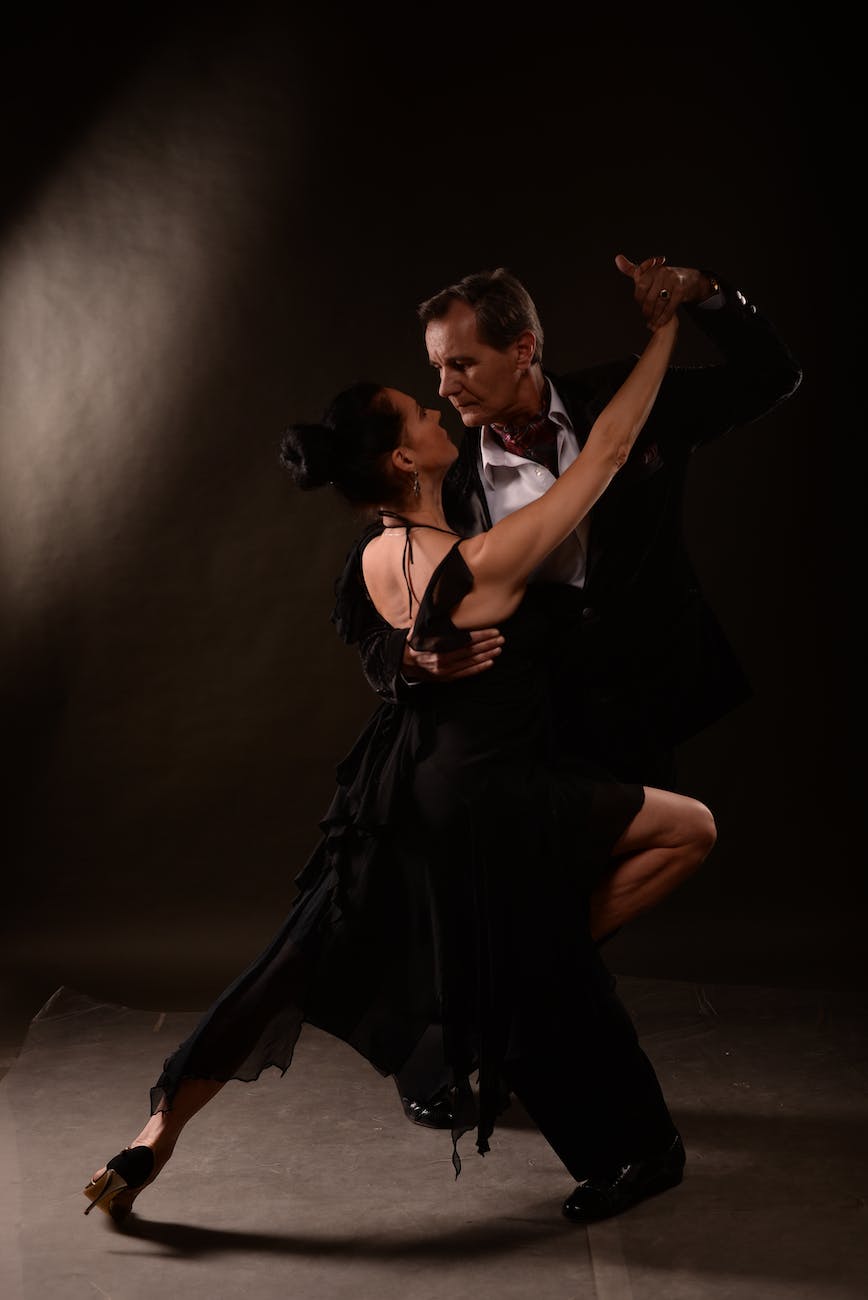
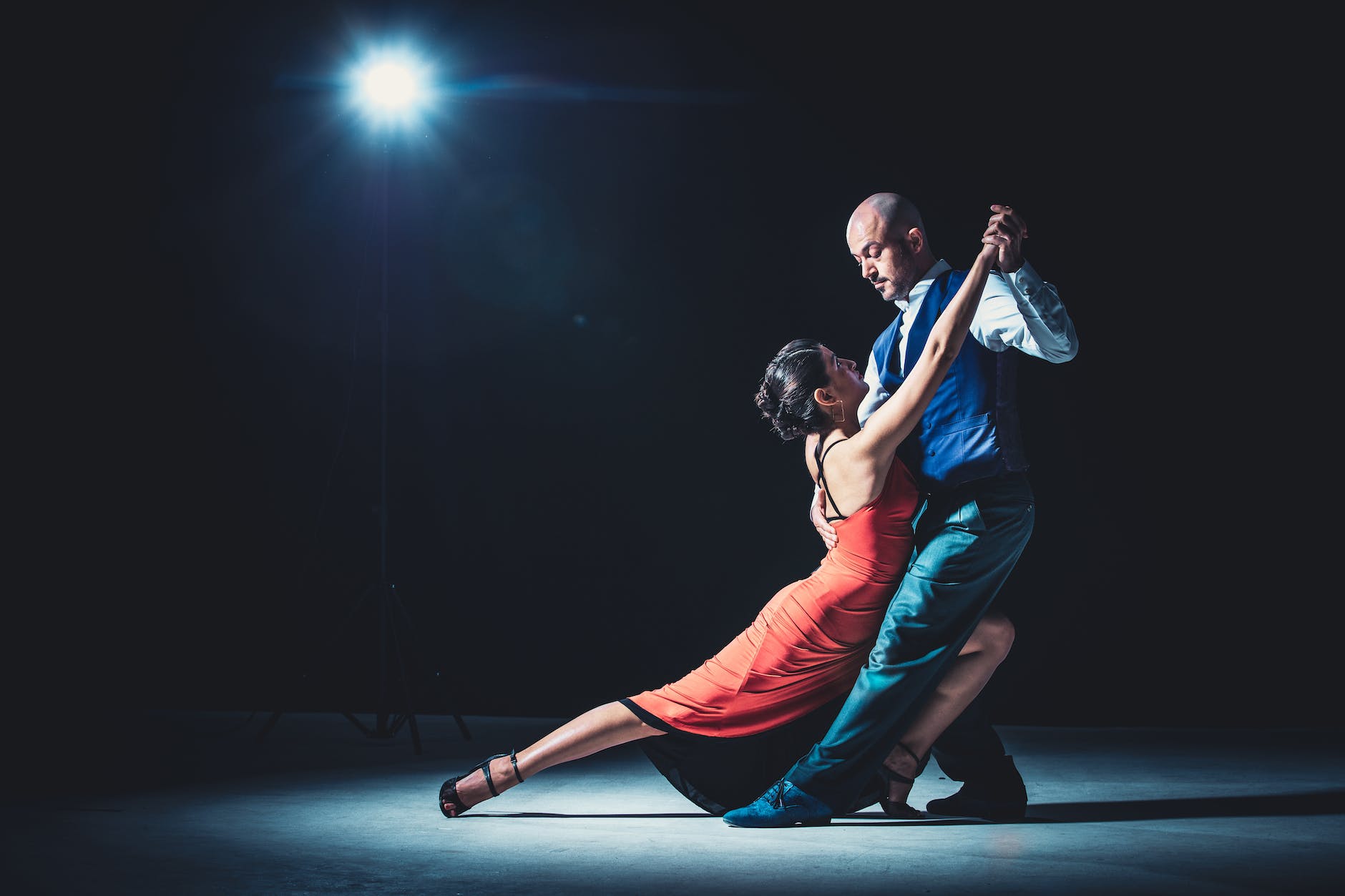
Tango is a passionate dance.  A conversation between two people in which they can express every musical mood through steps and improvised movement.  (Source Unknown)

1.

Just before nine o’clock in the evening, Sofya gets out of her car and looks up at the sky.  She has sensed a shift in the weather.  There is another breath of wind, a whispering in the air, but the clouds are stagnant against the dark night.  She turns and moves downhill towards the club, ejecting the chewing gum out of her mouth with a loud splat into the bushes, feels the first drops of rain on her bare arms.  She passes the public phone box where frangipanis lie on the grass, picks one up, sniffs at it, throws it back, then quickly enters the club. 

It is not one of her best days.  She doesn’t know why.  Her dress is not uncomfortable, her skirt just right around the waist, the outfit not faded or balled, her black strappy shoes high, not too high, wrapped around her feet following the shape of her instep, and the new shampoo and conditioner make her hair curl naturally around her face.  For reassurance she strokes the pearl and bronze necklace nestled into the groove of her neck.

At reception she pauses to flash her card and takes the lift to the third floor and then continues along the long hall, at the end of which is the thud and bounce of Latin American dance music.

She turns into the room, which is set up with tables and chairs in a horseshoe shape around the wooden dance floor, the dee jay on the stage above and a bar at the back of the room.  She sees Nino down the front sitting with that older couple he usually sits with and wonders whether to join them or not.  It is not easy coming to these places.  It takes a whole day of psyching herself up.

2.

‘Sofya, you’ll never find a rich husband if you’re fat,’ said Mother, raising her glass.  It was Mother’s 53rd birthday.  Her hair was silvery with flecks of white now that she’d let her own natural colour grow through.

‘How would you know?’ Sofya’s older brother said picking his nose and flicking the snot across the table at his mother.  Everyone said he was a radical, that boy.  He did things a certain way.  But somehow they still thought the sun shone out of his arse.  Everyone laughed.  The entire family – even the aunt and uncle and the two boy cousins – drinking the kosher wine at the seder table.  The moment passed.

Alone in her room, Sofya sang along with the radio station, turned way up.  The Happy Wanderer.  ‘I love to go a wandering along the mountain streams, and as I go I love to sing, my knapsack on my back.’

She would practice her leaps across the room in front of the mirror.  See how far she could cross in one amazing jump, her back leg extended behind her as she leapt into the air from a running start.

3.

She dances with Nino at the Randwick dance every Friday night.  Now that Nino is semi-retired he dances four nights a week, plays tennis and works out at the gym when he’s not working part-time as an accountant.  He has grey hair combed back from a high forehead and around his neck is a brown leather thong with a small silver medallion.  The leather thong makes him look more attractive, more unusual, more interesting.  He likes to show the younger women how to dance.

The tall Portuguese man with the dyed black hair (she assumes it’s dyed), described Nino as a vampire.  But then he is probably jealous of the number of different women that Nino is able to get to join him at his table.

Jordan, the taxi driver, who dances to keep his weight down, said that Nino only likes to dance the tango so he can feel the women’s breasts pressed against him.

‘He didn’t say that,’ said Sofya in disbelief.  ‘Nino is a gentleman, he wouldn’t say that.’

Jordan was ready to wave Nino over to confirm the story.

Sometimes Sofya sits by herself with her coat on the chair beside her, pretending she is here with a friend, and the friend is on the dance floor and that’s why she’s sitting there alone.

4.

Sofya works freelance and is working on a book of family history that she has been commissioned to write.  Things have changed very much, several times since she grew up, and like everyone in Sydney, she has led several lives and she still leads some of them.   Since she started the book she has gone out with two South American tango dancers, one Irish dance teacher, and a revolutionary playwright who patted her thigh and said, ‘Where is this relationship going?  I would like it to be more.  My wife isn’t interested in sex any more.’

Her children are grown up and lead their own lives.  Sometimes the sheer unpredictability, the randomness of the way she is living, what she is doing, fills her with exhilaration.

For the past six months she had been seeing a man from Leichhardt.  As far as she can see, this is over.  She calls him J, as if he were a character in a novel that pretends to be true.

J is the first letter of his name, but she chose it also because it seems to suit him.  The letter J seems to give a promise of youth and vitality.  It is upright and strong, with very straight vertebrae.  And using just the letter, not needing a name, is in line with a system she often employs these days.  She says to herself, France, 1993, and she sees a whole succession of scenes, the apricots and salmons of the buildings and the turquoise of the Mediterranean Sea.

5.

Dressed for salsa? said the doctor with a grin as he closed the door behind her.

I don’t remember telling you that I danced salsa, she said as he extracted her file from the drawer of the metal filing cabinet.  I think you’re getting me confused with someone else.

In O’Connell Street or Liverpool Street.  I can picture it.

I used to dance at Glebe Town Hall on Sunday nights, but that was ages ago.

Your salsa phase, he confirmed.

He moved from the filing cabinet to the large grey seat opposite her.

Any stallions beating at your door? he said with a note of expectancy in his voice.

They’re all pathetic.  It’s hopeless.

He gasped in a pretending way.

Not all of them, she corrected herself.  Just the ones I engage with.

He wrote that down.

It’s all over with the Fireman, she volunteered.  He’s married anyway.

You can cross Fireman off the list now.

I’ve been through the list.  It’s been so many years.  I’ve met one of everything.

Z, he said with a smirk.  Of course.  Zookeeper.

She shrugged, remembering the organic gardener.

I’ve probably met one of those too.

6.

The last time she saw J, or rather, what she thought would be the last time, she was standing at the turnstiles at Town Hall station and he came through the gate sweating, his face and body flushed, his hair damp.

It was a hot night in September.  They’d had a meal together at a Spanish Restaurant in the city.  She remembers how flushed his skin was, but has to imagine his boots, his broad white thighs as he crouched or sat, and the open friendly expression he must have worn on his face, talking to her, she, who wanted nothing from him anymore.  She knows she was conscious of how she looked standing there under the neon light, and that in this glare she might seem even older to him than she was, and also that he might find her less attractive.

He went to get a cup of coffee, then came back out.  He stood beside her and looked down with his arm almost around her.  She sensed his hesitation to touch her.  She kissed him on the cheek and he looked deep into her eyes and she knew what he wanted her to say.  Saw the pleading expression he must have worn on his face.

7.

Have you lost weight? she asks Dan, one of her regular dance partners as she flicks her foot back and behind his knee into a gancho.  The movement is like a horse trying to shake its shoe from its hoof.

Make sure your heel is up when you do the gancho, Alfred had told her.  Sweep your leg along the floor and out.  Not up with the leg, but up with the heel.

She reminds herself to make sure her shoulders are down.  Firm arms, shoulders down.  She’s sure that’s why she gets so much neck pain.

Alfred, bald, shiny-headed Alfred, who Nino says looks like a gangster with his shaved head and black tee shirt, still thinks everyone on the dance floor sets out to block his movement around the room.  There’s no doubt about him.  At least he started out friendly enough.

Dan smells good for a change and he’s lost his big stomach that used to come between them.  Sometimes she would gag with the smell of him.

Yes, he says as they bounce lightly to the beat of a milonga.  I got sick with the flu for a couple of weeks last year and decided to keep the weight off.

During a break in the sets she sits down next to Alfred.

What do I look like? Alfred says inclining his head towards the dance floor.  I wish I knew what I looked like.

I don’t know, she says.  I wasn’t watching you.

He sighs with disappointment.

And he’s made up a step.  She must tell him she doesn’t want to do his stupid made up step which is a cross with her left leg, but when she feels his opposite hip against hers she doesn’t know if it’s a gancho or not.  But the main problem, which she must tell him, is that he pulls her off her axis, her centre.

Would you do it if it wasn’t made up? he says now they’re up and dancing a vals.

It’s not that I won’t do it, she says.  I can’t do it.  I’m not deliberately not doing it, she says unable to disguise her anger.  Should she make a scene and leave the dance floor and leave him standing there because he’s being so rude and aggressive because she can’t do his stupid made up step?

Do you speak to the other women like you speak to me?’ She says not caring who can hear.

I can’t understand why you won’t do it.

I can’t do it.

I wish I knew what that little voice was saying in your head.

His hip pushes hard into her, very hard, so she is forced into the backward lock from the left leg.

8.

Wheep wheep, wheep wheep, wheep wheep, went the big shiny knife against the hard grey stone.  Father would carve the roast lamb each week for the Sunday lunch.  After lunch they’d go to the hospital to visit Grandpa.  Grandpa without his left leg, then without his right leg.  Gangrene.  He died piece by piece.

Left foot, left leg.  Right foot, right leg.

9.

The women at the dances look beautiful in a cruel way, with their blood-red lips and their nails long and sharp. They are not very friendly.  Sofya is just a casual, after all.  She hasn’t signed up for a ten week course and she doesn’t go to the beginners lesson at 7.30.

Things have not changed very much on the dance scene since she started there so many years ago.  ‘Same old, same old,’ as she heard the Turkish woman describe the previous Saturday’s dance at Marrickville to the Egyptian woman with the red red lips.

What a beautiful smile you have, said the woman on the door who takes the money.  Did anyone tell you that your whole face smiles when you smile?

She’s nice.  She’s the partner of the man who runs the dance.  She says she doesn’t mind that she doesn’t get to dance on the Friday nights because she dances nearly every other night of the week at the lessons.  She’s very beautiful.  Russian with long blonde hair against her tanned smooth olive skin, very long shiny legs and always one of her very short cut up the side skirts that she makes herself.  She’s Sofya’s age.

10.

When Father came back from the factory in the evenings, the children, pale and silent, joined him for his dinner.  After dinner, Father listened to the radio in the lounge with his newspaper, and at seven Mother, having washed up, joined him.  The family were together only at dinner, after which Mother and Father sat behind their newspapers and the children went upstairs to their rooms.  Sometimes a stupid child would pull the wings off a fly or even a butterfly and watch it suffer.

11.

A new man makes his way around the dance floor.  Good posture.  Straight back, strong arm position.  Looks like he’d be a good strong lead.

The music stops and he comes over and sits on the spare seat beside Sofya.

‘It’s all too heat making for an old man like me,’ he jokes as he fans himself furiously with a Bingo brochure. ‘I’m a Postman from Perth on holiday in Sydney,’ he says by way of an introduction in a well-modulated English voice.  ‘I could have had a two week holiday in Paris for the price of his three day trip to Sydney.’

She smiles.  ‘Have you read The Post Office by Charles Bukowski?’

‘We’re not very cultural in Perth.’

‘You speak very well for a Postman.’

‘Well,’ he shrugs, as if that is a whole other story that he will not go into at this stage.  ‘Dancing the tango allows me to meet famous people all over the world,’ he says.  ‘In Paris, London, New York.  My name is Fabian by the way.’

‘That’s a very romantic name.  I grew up in the era of Fabian the pop star.’

‘In Perth we all live in one big Waiting Room,’  he adds.  ‘We’re all waiting.  Not much culture or adventure.  There are many French and Italian speaking women who dress like the women you see in Paris.  The tango community is very close.  If one person learns a new step, then everyone learns it.  Two weeks later, we’re all doing it.’

12.

‘You’ve lost weight?’ the doctor said when she’d walked in.

She shrugged.  ‘It’s wonderful what black does.  Just one item of black.’

He looked down at his shoes with the regular pattern of holes punched towards the pointed toes.  ‘What about black shoes?’ he asked.

‘Your feet look smaller,’ she reassured him.

‘You know what they say about small feet,’ he laughed.

She assumed he meant small feet, small penis.  She sat down opposite him, a box of tissues between them on the small square table.  ‘It’s hands,’ she says.  ‘Not feet.  Fingers.’

He uncapped his pen, looked down at his notes.

‘You’re not going to start on that track already are you?’ she said.  ‘Not so early in the session.’

13.

I grew up dancing the polka in Italy, says Nino as they turn into a Viennese walz.

How was your holiday? she says.

Very boring.

Didn’t you play tennis with your grandsons?

He pulls a face.

Did you meet any nice European men while you were away, he asks.

I was married to an Austrian.  From Vienna.

Did you see him there?

He lives in Sydney.

She says this simply to establish that she had a husband once, that she had been married, and to a European man, an interesting man, a man of cultural heritage.  She wants to assure Nino that she was not always alone, unattached.

Does Anthony ask you to dance? Nino asks.

No.  He doesn’t.

He should.

There are no shoulds.  I asked him once and he went off across the floor doing his own thing.  It was very humiliating.

Nino nods and grins with no understanding in his demeanour.

Anthony has many choices, he says, as if that would explain it.  He’s young and he’s a good dancer.  A lot of the women are after him.

14.

She remembers Mother saying to her when she was a teenager:  ‘It’s a man’s world.’  But Mother had two children by the time she was 17.

Sofya’s daughter is an artist.  Sometimes Sofya minds Kate’s two children while Kate goes out painting.  This afternoon she was over at Kate’s house looking after the baby and the two year old.

‘I feel like Superman when I mind the kids and then go out tango dancing,’ Sofya likes to tell her friends.  ‘At three o’clock I’m on the oval kicking a football around with my grandson and then at 7.30 I’m changing into my tight skirt with a split up the side and my red top and my strappy high heeled shoes and I’m out the door again.  Like Clarke Kent changing into his Superman cape.’

Have you got a dance partner? her friends, or maybe her brother, might ask.

Various, she’ll say.  I’ve got various.  Several.

Today when Kate got back Sofya told her she’d brought the washing in because it had started to sprinkle with rain.

Was it dry?

I think so.

You think so?

Well I was rushing to bring it in before it poured with rain and I had two children to look after at the same time and the baby was awake and the noise of the builders next door and the electrician with his ladder and his cords everywhere and I couldn’t even get to the toilet.

Well, when you brought the washing in did you do all the ironing?  Did you iron all the clothes when you brought them in?

They both laughed.  It was a joke.

15.

Sofya doesn’t really own a tight skirt with a split up the side, but she wishes she did have one.  And nice long legs to show off.  Instead she usually wears the same pair of black trousers that she hopes will slim her down, and one of her many pretty tops.  Well, actually, that’s not true either.  She wears the same black camisole top, or one of the two similar black camisole tops, and a sheer cardigan on the top to disguise, to cover, to conceal, to pretend, that her arms aren’t so fat, that her freckled skin doesn’t look so blotchy in the light.  But usually it gets so hot she has to strip down to the black pants and the black camisole top with her hair pulled high on top of her head so it doesn’t hang in wet cats tails around her face.

16.

‘I think the baby looks like me,’ Sofya said to Kate as she reached for the old brown photo album.

‘Have a look,’ she said pointing to a photograph of herself in Class 8.  ‘Here I am.  Can you see me?’

‘Oh yes.’

‘I’m the one on the end.  The little Miss Perfect sitting up so straight.’

‘You do look different to the others.’

‘I’m the one trying too hard.’

‘You’re the only one wearing a tie.’

17.

‘Can we get a photocopy of her,’ Alfred says as Jordan comes over and leads her towards the dance floor.

Jordan’s style is firm and masculine.  She likes the smell of the mint that he always sucks or chews.  After a good half hour of dancing in the hot auditorium, he speaks,  ‘If they have a Latin bracket,’ he says.  ‘Will you dance it with me?’

Afterwards they sit back at Nino’s table with the much older couple.

‘You and Jordan dance well together,’ says the man so stiff with arthritis it takes him a long time to stand up, to unwrap his legs and put his whole weight on his feet.  But he does.  He gets up each week to dance with his lady friend and they shuffle around over in a dark corner after a couple of glasses of white wine and they are into their second packet of potato chips.

‘You look like you should be married,’ the older man continues.  ‘Like you should have babies together.’

‘Who?  Me and Jordan?’ Sofya says, trying to sound casual about the possibility of her and Jordan.  She quite likes Jordan.  But only because he dances salsa and rhumba and rock and roll so well.  He smells nice, he dances well, what more could she want?  But of course Jordan has a regular girlfriend, but the girlfriend doesn’t come to the Friday night dances.

Jordan laughs.  ‘She’s a grandmother already,’ he says with a dismissive flick of his hand towards Sofya.  ‘We couldn’t have children together.’

18.

‘Here is a photo of Grandpa and me.  I’m standing beside his wheelchair.  It’s a black and white photo that shows him only from just above the knees, which is where the rug would have ended that covers his lap.  I look about 13 in this picture.  My tall gawky stage.  Long hair pulled back severely, a cardigan to hide my developing breasts.  Mother hated my hair.  I think she must have spent her whole life telling me how dreadful my hair looked.  I’m smiling in the photo and leaning down to put my face a little bit closer to Grandpa.’

19.

Outside a bird chimed in a cheerful tone and the leaves of the jacaranda tree whispered in the wind.  The beautiful jacaranda tree.  They had one like that once.  She thought she’d miss that tree and that house but although she did at first, after a while she came to love the different place where she moved to.  And then this place where she lives now, by the sea, the place where J came to live with her.  The place where they pretended they could live together.  Where he went off to work every day and she kissed him goodbye at the front door.  The place where he’d come home to her at night.

20.

‘I’ll fill in a form for you to have a blood test whenever you want.  You won’t have to come and see me first.  You can go straight there.’

He walks over to his desk.  ‘Anything else you want tested?’

‘You’d better add iron.  And the test for blood sugar.  A family history of diabetes.’

‘Those arms look like they’ve done a lot of work,’ said the nurse as she tightened the strap around Sofya’s arm.

‘What do you mean?  How can you tell?’

‘The veins.  You’ve got good veins.  The veins are connected to the muscles.’

21.

When she was a teenager she’d wanted to have dance lessons.  ‘I learnt to dance without lessons,’ Mother had said.  ‘So you can too.’

There were huge waves out to sea after the winds of the night.  The biggest she’d ever seen in fact.  They really were magnificent.  She’d listened to the winds as they’d thrashed the ocean waves through the branches of the trees.

22.

Step further across for the forwards ochos, said the visiting Argentinian dance teacher.  Step further back behind me for the turn and swivel.  Keep your left hip down when doing a forwards ocho.  Caress the floor with your feet.  No feet in the air.  Relax your right shoulder.  Keep your shoulders down.  Do the cross whether the man leads you into it or not (she thinks that’s what he said).  Be heavy on the front foot in the cross.  Weight forwards.

Keep your knees together when you do an adornment.  Keep the adornments simple.  Just do one or two.  Polish the leg and then down again; then step over.  Slow down on the turns.  Don’t run.  Keep your right wrist firm.  In the open embrace let your arms go up and down the man’s arm.  Up to behind his neck and then down to his forearm.’

‘You’ve had a lesson with the best,’ said Pedro.

‘I’ve been saving myself,’ she’d said proudly.

23.

It was about 6.30 on a Friday.  Early summer.  The bougainvilleas and the jacarandas were already in bloom but no frangipanis yet.  She’d been waiting for J to come home, looking forward to his return from the city, hoping they’d sit together with a drink outside on the balcony.  He’d have a shower and get changed and then they’d go out for the meal that he’d promised her.

Instead he was on the phone, his face slightly in shadow but well lit enough for her to see the ever present cigarette.  Half inside, half outside so he could exhale out the door.  His voice droned on and on.  The wind increased in force.  A strong wind, blowing against her head, her hair, her hands.  Her furious heart beat hard against the walls of her ribs.  Then the wind died down again and she could only hear his voice ; not the sound of the birds anymore or the movement of the leaves on the trees.

It rained a lot that night.  The sound of the waterfall below.  The sound of water after rain.

24.

It’s all your fault anyway, she said to the doctor.

He looked puzzled.

You said to me, ‘It’s your body.  You can do what you like with it,’ in  that moralising tone of yours.

I would have only said that, he said gently,  if I thought you were being too generous with your body.

After that bit of moralising I’ve turned that whole side of myself off.  Anyway, I have no libido.  So it’s not such an issue anymore.

Well, that’s good.

He took a sip of his coffee that surely must be cold already.

There’s more to me than you think, he said.

You’re very blinkered, she said.  She held up her hands beside her face to imitate a horse with covers at the side of his eyes.  Straight.  You haven’t got an open mind, in some areas, she clarified.

He pulled a face.

I bet your daughter, or daughters, tell you that.

They’re too polite.

Your daughter looked lovely by the way.  The one I saw last time.

The blonde?

Yes.  I thought you had a son and a daughter.

No.  I’ve got three daughters.

Three daughters?  And a son?

Yes.  So you think I need to open my chakras? he joked.

She shrugged.  Chakras spin, they don’t open.

You might be surprised.  I could be a Buddhist.

Is my time up? She said with an anxious glance at the clock.

It’s okay, he reassured her.  I hadn’t noticed.

25.

At dusk the last of the brightness of the pink sighed above the horizon.  The sea a woolly blanket of blue and white.  The same four palm trees all in a row between the road and the beach.  The pale face of the moon two thirds of the way to the sky.  One eighth of the side of its face missing but still the moon looked down, almost expressionless.  A woman flashed the blue of her helmet as she cycled with strong thighs up Bronte Road, head bent in concentration on the road ahead as a bus bellowed black dust.  The pink of the sky turned into mauve mixed with blue as the French cook arrived with his pale blue scarve knotted like a boy scout tight around his neck.  With his right hand he checked his balls for reassurance as he mounted the step into the café.

It is unusual for Sofya to be outside these days, but no more odd than spending hours inside at the Mitchell Library looking at microfilm or walking through Waverley Cemetry looking for graves, no more odd than her work, or the people stuck on hot trains and buses trying to get home from work, or other places where people find themselves as they struggle to get through their days.

Times change, your life changes and you need to shift.

26.

At our age we’re not going to improve our game of tennis, said the man on Bare Island.

Speak for yourself, she’d said.

The brown bird with a black triangle on his head jumped on the green see saw of a branch.  Up and down he went, up and down, until he flew off again in a southerly direction.

27.

‘The bastards,’ the doctor said as a joke, with a tilt of his head and a puffing out his cheeks as if he was about to spit on the ground in disgust.

‘I love it when you do that,’ she laughed.  ‘That’s the way it is exactly.’

28.

Back home after the dance, she’d gone straight to her room.  She’d turned on the lamp and knelt on the bed to pile the cushions up.  Tears came almost to her eyes, her stomach empty with sadness.  It was all such a bloody fantasy.  She stared around at the night silence, then huddled in her bed.

She had a box of 100 Dilmah tea bags that she’d bought especially for J.  When the box is empty, she told herself, the pain will have eased.

Six months later, she walked outside to the balcony, sat on the chaisse lounge that they’d chosen together and looked down the gully at the grey sea.  She drank the last tea bag from the box.

The tea was strong and hot, and so bitter it parched her tongue.

First published in Quadrant Magazine

Copyright © 2022 Libby Sommer

You Know I Am Not the Stories I Tell

Sometimes when people read my stories they assume those stories are me.  They are not me, even if I write in the first person.  They were my thoughts and feelings at the time I wrote them.  But every minute we are all changing.  There is a great freedom in this.  At any time we can let go of our old selves and start again.  This is the writing process.  Instead of blocking us, it gives us permission to move on.  Just like in a progressive ballroom dance:  you give your undivided attention to your partner—keep eye contact for the time you are dancing together—but then you move on to the next person in the circle.

Creative Commons photo

The ability to express yourself on the page—to write how you feel about an old lover, a favourite pair of dance shoes, or the memory of a dance on a chilly winter’s night in the Southern Highlands—that moment you can support how you feel inside with what you say on the page.  You experience a great freedom because you are not suppressing those feelings.  You have accepted them, aligned yourself with them.

Creative Commons photo

I have a poem titled ‘This is what it feels like’—it’s a short poem.  I always think of it with gratitude  because I was able to write in a powerful way how it was to be desperate and frightened.  The act of self expression made me feel less of a victim.  But when people read it they often say nothing.   I remind myself, I am not the poem, I am not the stories I write.  People react from where they are in their own lives.  That’s the way things are.  The strength is in the act of writing, of putting pen to paper.   Write your stories and poems, show them to the world, then move on.  The stories are not you.  They are moments in time that pass through you.

Writing Tip: 10 Topics for Writing Practice

Sometimes we sit at our desks to write and can’t think of anything to write.  We face the blank page.  We sit there until blood pours from our foreheads, as one famous author was heard to say.

Making a list can be good.  It makes you start noticing material for writing in your daily life, and your writing comes out of a relationship with your life in all its richness.

10 ideas for writing practice:

  1. Begin with “I don’t remember”. If you get stumped, just repeat the words “I don’t remember” on the page again and keep going.
  2. Tell about sound as it arises. Be aware of sounds from all directions as they arise:  sounds near, sounds far, sounds in front, behind, to the side, above or below.  Notice any spaces between sounds.
  3. Tell me about last evening. Dinner, sitting on the couch, preparing for bed.  Be as detailed as you can.  Take your time to locate the specifics and relive your evening on the page.
  4. Tell me what boredom feels like.
  5. See in your mind a place you’ve always loved. Visualise the colours, the sounds, the smells, the tastes.
  6. Write about “saying goodbye”. Tackle it any way you like.  Write about your marriage breakup, leaving home, the death of a loved one.
  7. What was your first job?
  8. Write about the most scared you’ve ever been.
  9. Write in cafes. Write what is going on around you.
  10. Describe a parent or a child.

Some people have a jar full of words written on pieces of paper and select one piece of paper at random each day and write from that.  Others use a line of a poem to start them off.  Then every time they get stuck they rewrite that line and keep going.

Be honest.  Cut through the crap and get to the real heart of things.

Zen Buddhist, psychotherapist, writer and teacher, Gail Sher in her book One Continuous Mistake says the solution for her came via haiku (short unrhymed Japanese poems capturing the essence of a moment).

 “For several years I wrote one haiku a day and then spent hours polishing those I had written on previous days.  This tiny step proved increasingly satisfying,” Gail Sher.

She said it gradually dawned on her that it was not the haiku but the “one per day.”  Without even knowing it, she had developed a “practice.”  Every day, no matter what, she wrote one haiku.  In her mind she became the person who writes “a haiku a day.”  And that was the beginning of knowing who she was.

Gail Sher suggests writing on the same subject every day for two weeks.

“Revisiting the same subject day after day will force you to exhaust stale, inauthentic, spurious thought patterns and dare you to enter places of subtler, more ‘fringe’ knowing,” Gail Sher.

She writes in One Continuous Mistake that the Four Noble Truths for writers are:

  1. Writers write.
  2. Writing is a process.
  3. You don’t know what your writing will be until the end of the process.
  4. If writing is your practice, the only way to fail is to not write.

So start coming up with your own list of ideas for practice writing.  Life happening around us is good grist-for-the-mill.

Copyright © 2022 Libby Sommer

Writing Tip: Exercise the Writing Muscle

Writing as a daily practice is a way to exercise the writing muscle. Like working out at the gym, the more you do it, the more results you get. Some days you just don’t feel like working out and you find a million reasons not to go to the gym or out for a jog, a walk, a swim, a bike ride, but you go anyway. You exercise whether you want to or not. You don’t wait around till you feel the urge to work out and have an overwhelming desire to go to the gym. It will never happen, especially if you haven’t been into health and fitness for a long time and you are pretty out of shape. But if you force yourself to exercise regularly, you’re telling your subconscious you are serious about this and it eventually releases its grip on your resistance. You just get on and do it. And in the middle of the work out, you’re actually enjoying it. You’ve felt the endorphines kick in. When you get to the end of the jog, the walk, the bike ride, the swim, the gym workout or the Pilates, Yoga or Zumba class, you don’t want it to end and you’re looking forward to the next time.

That’s how it is with writing too. Once you’ve got the flow happening, you wonder why it took you so long to turn up on the page. Bum on chair is what I say to my writing students. Through daily practice your writing does improve.

In The Artist’s Way, Julia Cameron’s book on discovering and recovering your creative self, she refers to daily writing practice as the morning pages. She recommends writing three pages of longhand, strictly stream-of-consciousness—moving the hand across the page and writing whatever comes to mind every day.

Author of Writing Down the Bones, Natalie Goldberg refers to writing practice as timed exercise. She says you might time yourself for ten minutes, twenty minutes, or longer. It’s up to you, but the aim is to capture first thoughts. “First thoughts have tremendous energy. It is the way the mind first flashes on something. The internal censor usually squelches them, so we live in the realm of second and third thoughts, thoughts on thought, twice and three times removed from the direct connection of the first fresh flash.”

Her rules for writing practice are:

1. Keep your hand moving.
2. Don’t cross out.
3. Don’t worry about spelling, punctuation , grammar.
4. Lose control.
5. Don’t think. Don’t get logical.
6. Go for the jugular.

In Creative Journal Writing, author Stephanie Dowrick refers to the same process as free writing; writing without judging, comparing and censoring. “Continuing to write when you don’t know what’s coming next and especially when you feel your own resistances gathering in a mob to mock you.”

Daily writing practice has been described as clearing the driveway of snow before reaching the front door. In other words, it’s what we do as a warm up before the real writing takes place.  And it’s a way to loosen up and discover our own unique writing ‘voice’.  That’s what publishers are looking for when they read through the slush pile.  The storyteller’s voice.  The authentic writing voice of the author is what engages the reader.

Copyright © 2022 Libby Sommer

Short Story or Novel?

Is a novel a short story that keeps going, or, is it a string of stories with connective tissue and padding, or, is it something else? 

Essayist Greg Hollingshead believes that the primary difference between the short story and the novel is not length but the larger, more conceptual weight of meaning that the longer narrative must carry on its back from page to page, scene to scene.

“It’s not baggy wordage that causes the diffusiveness of the novel.  It’s this long-distance haul of meaning.”  Greg Hollingshead

There is a widespread conviction among fiction writers that sooner or later one moves on from the short story to the novel.  When John Cheever described himself as the world’s oldest living short story writer, everyone knew what he meant.

Greg Hollingshead says that every once in a while, to the salvation of literary fiction, there appears a mature writer of short stories—someone like Chekhov, or Munro—whose handling of the form at its best is so undulled, so poised, so capacious, so intelligent, that the short in short story is once again revealed as the silly adjective it is, for suddenly here are simply stories, spiritual histories, narratives amazingly porous yet concentrated and undiffused.

When you decide you want to write in a particular form—a novel, short story, poem—read a lot of writing in that form.  Notice the rhythm of the form.  How does it begin?  What makes it complete?  When you read a lot in a particular form, it becomes imprinted inside you, so when you sit at your desk to write, you produce that same structure.  In reading novels your whole being absorbs the pace of the sentences, the setting of scenes, knowing the colour of the bedspread and how the writer gets her character to move down the hallway to the front door.

I sit at my desk thinking about form as a low-slung blanket of cloud blocks my view of the sky.  Through the fly screen I inhale the sweet smell of earth after rain as another day of possibility beckons.

The thing is, we might write five novels before we write a good one.  I wrote five book-length manuscripts before one was finally accepted for publication, even though I’d published 30 short stories.  So form is important, we need to learn form, but we should also remember to fill form with life.  All it takes is practice.

Copyright 2022 Libby Sommer

My short story, ‘Around Midnight’

Have a read of my short story, Around Midnight, first published in Quadrant Magazine. The story is part of my short fiction collection Stories From Bondi published by Ginninderra Press (2019).

I hope you enjoy it.

Around Midnight

‘When are you open?’ Anny asks the woman on the telephone.

‘We have a party twice a day.  Every day.  Twelve thirty to four thirty and seven thirty to midnight.’

‘Oh.  Every day?  I thought it was Saturday nights only.’

‘No darling.  Every day.’

‘So what’s the setup?’

‘$120 for a couple.  Nothing if you come on your own.  What’s your position.  How would you come along?’

‘On my own.’

‘It would cost you nothing then.’

‘But what do you do?  I mean, I know what goes on there.’

‘You’ve been here before?’

‘No.  A friend told me about it.  What do you wear?  What’s the setup?’

‘It’s all up to you love.  If you fancy a gentleman you invite him into one of the rooms.’

‘What do you wear though?  My friend said something about robes.’

‘Towels. They’re towels love.  You wear whatever you like.  Normal clothes.’

Anny is sitting at a café at North Bondi having breakfast with her friend Dita telling her about it.  Anny has ordered the scrambled tofu and Dita is having fried eggs and bacon.

I’m dying to know how you went, Dita says, pulling her chair closer to the table.

Well, Anny says, this is what happened.

It’s eight thirty on Saturday night when I approach a big steel gate with a street number in bold letters.   I open the gate and go up the lane way beside the Thai restaurant and follow the fairy lights upstairs.   There’s nothing else to indicate what goes on inside this three-bedroom apartment on a busy road in Bondi.  I follow the fairy lights along a corridor until I come to a wooden front door with no number on it.   I hesitate not knowing whether to knock or just walk in.  I open the door.

Inside, draped around the room, are about ten men and women in various stages of undress sitting on stools beside small bar tables – the men bare-chested, the women topless or wearing bras.  Some of them are giving each other neck and shoulder massages.  And they’re all wearing towels.    Not a very attractive sight in my opinion –  a man in a towel.

It’s a large room with a pretend-bar, a kitchen on the right and sliding glass doors that lead to a covered balcony with an above-the-ground spa pool.  Standing by the door are two Japanese men in black jeans and black tee-shirts.  I walk over to the kitchen which acts as the Reception area.

The only other fully dressed people in the room are the man and the woman who run the place.   She’s Czech, young and very attractive in a green lace figure-revealing dress.  Her blonde hair cascades down her back. She’s in the kitchen and doesn’t exactly greet me but asks me what I’d like to drink.  A glass of wine would be nice, I say.  She goes to the fridge and from a cask on the bottom shelf pours me a glass.   With drink in hand I stand near the door and look around.

And wonder what I’ll do next.

The two Japanese men avoid eye contact with me.  They obviously want to keep to themselves.   I don’t particularly want to join the group of men and women on the stools as I don’t intend to take any of my clothes off.

I ask the woman who runs the place to show me around.  She shrugs without much enthusiasm then leads the way along a narrow hallway.  The first bedroom on the right has a double bed with a bedside light on a table and white lace curtains on the window.  She looks out between the lace peering around outside before pulling them closed.  She shows me another bedroom at the end of the corridor with an en-suite bathroom.  We stand at the door looking in to the empty bed but she doesn’t show me in.  And then she leads the way to the third bedroom back along the corridor towards the front door.

This is the Orgy Room, she says from the open doorway.

I avert my eyes but I can see from the corner of one eye a double bed and several naked bodies doing things to each other.  Backs and thighs and bums exposed.  Not very becoming.  It all seems tacky and I begin to doubt my wisdom in coming to a place like this.  I clutch my handbag across my body and find myself a seat in the front room with my back to the wall.

There are corn chips and an onion dip on a platter that the women in the group hand around.  I decline the chips and the dip.  If there’s one thing I can’t stand it’s the smell of onion breathe.  A woman in a white lace bra and a towel around her waist stubs out her cigarette in the ashtray in front of me and asks if I’ve been here before.

No, I say.  And you?

I come here all the time. What do you do for a living? She continues.

A bit of this and that.

She nods knowingly.

What do you do? I ask.

I’m a psychologist at a clinic at St Leonards.

I’m very surprised.  For some reason I thought women with important jobs wouldn’t come to a place like this.

A man edges over towards me and tries to get in on our conversation.  He asks the same things as she does.  Do you come here often?  What do you do for a living?  In the old days, or, rather, in the olden days, as my children like to say, when I used to frequent bars from time to time, I’d answer the first question with “only in the mating season” and the second question with “I live off the income from my investments”.  Both replies would be met with a stunned silence or an impressed “ah” or, sometimes, “is this the mating season?”

The man keeps smiling at me and I avert my eyes but somehow he is able to maneuver himself around so he’s constantly in my line of vision.  It gives me the shits.

Not your type?   Dita puts in.

No.  Absolutely not.

What did you wear in the end? Dita asks.

Only four items of clothing.

Something you could take off quickly?

Yes.  And no jewelry.  Apparently the men have to shower and put on a towel as soon as they arrive.  Although one woman kept saying to me, where’s your towel?  She wanted me to get undressed and hang about in a towel like everyone else.

Another woman tells me I should leave my bag locked up in the kitchen with the man and woman who own the place.

You don’t know these men, cautions the woman.  Lock up your bag.

I decide to keep my bag with me although I’ve left my umbrella beside the door.  Another man edges his stool over towards me and we have a conversation.  At least he’s got a brain in his head and got something to say for himself.  He tells me he’s Dutch and he’s here in Sydney on business.

It’s my first time to this place, he says.  But I’ve been to others in other cities in the world.  I travel a lot for business.

We talk a little about travel and countries we’ve visited.

He lets me know in a non-threatening way that he’d be willing to go into one of the bedrooms with me.  I feel embarrassed knocking him back seeing as we’ve had such a nice conversation and I don’t want him to be wasting time with me if he wants to be chatting up some other woman.

I’m not ready, I say politely.  Maybe later.

The other man who’s been trying to catch my eye, the pain-in-the-bum-persistent-dag who listens in to my every word, leans over towards me and says, When you’re ready would you go into one of the rooms with me?

No thanks, I say.   Sorry, I smile at him hoping all the same that I haven’t hurt his feelings.

The Dutch man tells me there’s no need to apologise.

A few new people wander in.  A man and a woman, a couple, a few single men of various ages and shapes and a fat girl draped in layers of chiffon.  Then two very well-proportioned young men.  I remind myself that I’m the one meant to be doing the choosing here.  One of the very well-proportioned young men is quite cute actually.  The other young man is not very tall, a bit too muscle-bound for my taste, and has that short spiky hair almost- shaved-at-the-side that I find most unattractive.  The two of them are younger than both my son – but that’s nothing new.

One of the women ushers them out into the back bedroom to shower and put on a towel.  They don’t return to the main room where I’m sitting jammed up between various men and in front of me a blank video screen high up on the wall.  The fat girl does some sort of disco dance in front of the wall under the video screen.  She dances in time to the music but nothing special.  Then the woman who owns the place uses her remote to turn on a video.

I’ve never seen such an explicit porn video before, Dita.  I can’t watch but I glimpse the extreme closeups of women’s genitalia and pierced intimate body parts and things being stuck in and up and it’s all too horrible.

Why didn’t you go home then?  Asks Dita.

I thought I’d wait just a bit longer.  It had taken such an enormous effort of will to get there.

The Czech blonde who runs the place with her Indian husband enjoys the video immensely.

Look at that, she keeps saying.

I have nowhere to turn my head.  In front of me the video, to my left the persistent dag.  To my right is the smaller young muscley man who now also keeps trying to attract my attention but I’m claustrophobic and I just want out of there but for some reason I’m stuck to my seat.  I don’t want to stand up and have everyone look at me – anything that moves is closely observed in this room.  I look at the floor, at the space between my stool and the spa area, and the floor towards the front door.  I’m willing myself to stand up, to walk into the spa room away from these men, or straight out the front door.

So that’s how come I end up talking to the young Italian muscley bloke.  He reaches his hand out to me and invites me to sit in the spa room with him away from the noise of the video.  I use his hand to stand up but then remove it from his grasp before walking outside to the balcony.  I don’t want to look as if I’ve been claimed.

I tell the muscley Italian man that the men here are too predatory and I’m feeling guilty because I keep knocking them back and then find myself apologising.  You don’t have to apologise when you knock someone back, he assures me. But I’m finding him intimidating right now wedged up beside me and I don’t know how to get rid of him.

We sit on the black vinyl lounge, me squashed in the corner beside him.  The tang of chlorine from the empty spa assaults my nostrils.

Can I kiss your cheek? he asks.

No.

Can I hold your hand?  he says.

No.

I wedge my hand that lays beside him under my thigh making sure he can’t hold it.

His friend, the cutie, comes out through the door and sits beside us. We smile at each other.

I was very nervous before coming to this place, he says to me.  I nearly didn’t come.

I look into his open face and his nice round eyes and thick head of curly hair.

It was the same for me, I say.

When I came in, he says, I saw you sitting there and that woman in the green dress and I thought this looks all right and so I came in.

She’s very attractive, I say.  That woman in the green dress.

I asked her husband if she participates but he said no.

Do you think it’s good value for money here? I ask in order to keep the conversation going. I mean it’s concerning me that the men have paid $180 each to come into this place and it’s free for me.

No, he says, I don’t think I’ve got good value for money.  Not so far.

His friend puts his hand on my leg.  I consider removing his hand but think it may seem churlish of me so I don’t.  And anyway if I’ve come to a place like this what am I doing knocking all the blokes back?

What does it cost to have sex with a hooker? I ask the cutie.

He looks at me with horrified wide eyes.  I don’t know.  I’ve never had sex with a hooker.

I was just trying to do a price comparison.  A value for money price comparison.

How many women have you had sex with tonight?  I persist.

Two.  One on arrival.  A woman started massaging me when I had a shower and then we had sex.  And then a second one almost straight afterwards.  The fat girl.

How was that?  I ask.  How was the sex?

She had big bruises all over her body as if she’d been bashed up or drugs or something.  Her arms and legs were all bruised.  It was awful.   I wished I was unconscious.

I nod with sympathy.

I noticed you go into the bedroom with the fat girl, I say.

He smiles at me and extends his hands towards me, palms upturned.  I could give you a great massage, he says with enthusiasm.  I’ve got very strong hands.  I’m trained in martial arts.

Mm, I say breathing out with a sigh.

But the problem is I can’t get rid of his bloody friend.  He’s latched on to me and has territorial control with his bloody hand resting on my thigh.

There are six of us in the spa room now.  The cutie, his friend, a middle-aged Maori couple and the Indian husband of the Czech woman.  I’d noticed some of the girls flirting with the Indian husband and then laughing.  He stays close by the side of his wife.  Now though, he chats to us.

We’ve only had this business for eight weeks, he says.  We took it over from the previous owner who’d been here for six and a half years.  It costs us $1000 a month in rent and $1000 for advertising on the web, in the Telegraph and in the Wentworth Courier.  It isn’t easy to make money.

We talk about business and making money for awhile then he leaves us to it.

Do you think some of those girls are being paid to be here? asks the Italian.

Prostitutes?

Well, why would a single woman come to a place like this? says the cutie who’s disappointed there aren’t more women here.  A single woman can go out any time and pick up a bloke at a pub.

I don’t say anything.  I don’t say it’s probably safer here than to take a stranger home or to go back to his place in the middle of nowhere.  And what are you meant to do anyway if you don’t have a boyfriend?

He complains that when he rang up to make inquiries they told him there is a huge spa that fits twenty people.  They could fit about eight people in this spa, he says.  And even then it would be squashed.  Twenty people – they’d all be on top of each other.

I must say that when my friend Richard, who told me about the place, mentioned that there is a large spa I did imagine a Grecian-type setting with women and men reclining and relaxing around the edges of the water.

If he was a good businessman, says the Cutie, he’d offer to give us our money back at the door.  That’s how you do business.  Keep the customers happy.

There’s no privacy in the rooms here, says the Italian.  People walk in all the time. The Japanese men paid $50 each just to watch.

We had to jam towels up against the door to stop people walking in, says the Maori husband.

Now that the Maori couple have joined in the conversation I use the opportunity to ask them how they’re going.  What they’ve experienced so far.  I’d noticed them come out of the bedroom at the end of the house.

The wife tells me in a quiet voice that they went into the room with another woman to have a threesome.  But it didn’t work out, she says.  He couldn’t do any good, she says indicating with a nod her husband’s lap and the area between his legs.  We don’t like it much here.  We’ve been to other singles clubs where it’s all couples.  Much better.  Not with all these men hanging around staring at you.

Why did you come here? I ask.

He wants to have sex with other women.  So coming to a place like this, he’s not doing it behind my back.  I know what he’s up to and I’m included.

Her husband glows smugly.

Why did you come here? I ask the cutie.

Curiosity.  Why did you come here? He asks me.

Curiosity.  We all came here for curiosity, I say summing up the conversation.

The Italian muscle-man gets up to go to the toilet.

Save me that space beside you, he instructs me.  Promise, he adds loudly.

I nod.

When he leaves the room I ask the cutie if he’s been into the Orgy Room.

No, he says.  What Orgy Room?

It’s up the hallway.  I had a look around when I arrived.  But an Orgy Room isn’t something I’m interested in trying.

Me either, he agrees.

I’m just waiting for him to finish with you, he says indicating the empty seat between us, and  then I’ll be next.

I lower my eyes discretely and suppress a smirk.

The Italian returns from the toilet and takes his seat between us.

The cutie turns to me and says:   You can give him a massage, indicating his friend, and  I’ll give you a massage.

I laugh.

The Maori couple encourage me from the sidelines.

Go on, says the Maori husband.  Give it a go.  If you don’t like it, leave.

Sure, I think to myself.  As if I’d be able to leave after going into a bedroom with two men and taking off all my clothes.  Although I wouldn’t mind going in to one of the rooms with the cutie, if I could lock the door that is, and if it wasn’t so late already.

I giggle nervously.  I have four people on my case now trying to pursuade me to go with the two young men, as if it’s my responsibility to keep everybody happy.  Hoping they’ll understand and lay off I tell them I’m laughing because I’m nervous.

Would a drink calm you down? says the husband.

No thanks.

His wife smiles at me.  In a gentle voice she says, Would you like me to calm you down?

Thank you very much, but no, I say, feeling guilty as usual.

Her husband makes some more noises along the lines of the two of them could help me out with my nervousness problem.

I sigh and then stand up brushing the hand off my leg.  I walk over to the side of the spa where the Cutie is standing.

I ease two fingers into the water as if to test the temperature.  Warm, I say.

Not warm enough, he says.

I move towards him then lift the corner of his towel to just above his knee.  I dry my fingers.

His friend jumps up from the lounge and moves in front me with his bare hairy back just inches from my face.

My back is cold, he says.  Warm me up, he commands.

I hold out one hand and lay it briefly on his shoulder, then take it away.

Let’s go for a walk, he whispers to me.

No thanks.

Give me your phone number and we’ll meet up another time then.

No.

Why not?

I don’t want to.

I laugh nervously.  How I hate these situations I find myself in.

I’m now wedged into the corner of the spa room.  My eyes fix on the door.  I hesitate wondering whether I should be polite and say anything to the Maori couple. But I feel the need for haste.  I’m worried he’ll follow me although a man in a towel isn’t going to get very far outside on the street.

Dita adds butter and a sprinkle of salt to her turkish bread and then mops up the remains of her egg yolk and the slimy gleam of the bacon fat.

And then?

That’s it. I leave.

There was a full moon.  The silver glistened and vibrated on the sea as she neared the northern end of the beach on her walk back home that night.  She passed the Bondi RSL club, the Bidigal reserve and the single Bondi sandhill up on her left. There weren’t many people around at that hour.  Heading along Campbell Parade, it was quiet. The pub and the cafes were closed.

The surf was big, the waves crashed dramatically over the rocks, the reef and the swimming pool at the south end of the beach.  In Notts Avenue she stopped at the surf viewing area just before the baths and watched the rising swell of the ocean for a few moments. She continued along Bondi Road walking fast up the hill pleased the steepness doesn’t faze her, not panting, managing it nice and easy, even in her high heels.  She crossed at the lights near the pub on the corner.

A cold wind blew and then it began to rain.

She passed the laneway on her right and was heading for the shortcut home.   She planned to cross the open car park of the block of units, and then down through the little park that leads to the hole in the fence that usually gets her home in no time.  It was not until she was in the empty car park that she heard her own footsteps squelching on the wet surface and realized that there was another set of sounds behind her.  Her shoes made a squench, squash noise and that’s why she didn’t  realize at first what the other sound was – and that the sound has been there for some time.

“The man has a gruff, heavily accented Australian voice, his face was masked with a dark balaclava and he wore dark-coloured tracksuit pants – the same description given by his first two victims.  His threats, including that he was armed with a knife, were similar to words spoken in the first two attacks and appeared well rehearsed.  After each attack he casually walked away.” 

Anny veered left as she changed course and retraced her steps without turning towards the footsteps.   After moving some distance away and towards the safety of the lights of the units and a door that she could bang on in case of emergency she turned around to see if the person was still there.  He was there all right.  In joggers, tracksuit, medium height, average build.  He’d stopped at the point where she veered left and was looking down into the empty park.

Sorry, she thought she heard him say as he looked over towards her.

She turned and hurried back towards the road and the street lights leaving him behind.  She walked on the side of the road towards the on-coming traffic just like she does when she’s on her solitary travels in Europe and the man receded into the distance.

Dita’s plate looks so shiny clean now after her mop up with the Turkish bread it’s as if the plate has come straight out of the dishwasher.  Anny tells her that before she went out that night she’d worried that she’d feel tacky when she got home.

You would have if you’d gone against your instincts and allowed those people to talk you into doing something you didn’t want to do, Dita says.

I feel bad though that this whole sex thing is such an issue for me when there’s all the killing going on in Israel and the Para Olympians in wheelchairs on the television every night.

You’re not going around complaining.  You’re doing something about it.  It’s better than those singles dances. I only went to a couple but I felt like a lump of meat being looked up and down.

But I’m such a wimp, Anny says.

No, you’re not.  You went.  You’re not a wimp if you can go.

I’m a wimp when it comes to getting rid of guys.  Some boring man always latches on to me and I end up leaving just to get rid of him or some man attempts to follow me home.

Anny breathes out heavily and tells Dita that Richard was the one who’d told her about the place.

You know Richard, the one I met on the internet.

You met him in a chat room?

No not a chat room, Anny says sensing Dita’s disapproval.  There are all sorts of loonies in chat rooms.  No.  A singles web site.  Richard said the women at these clubs do the choosing and there’d be lots of young men for me to pick from and plenty who’d want to give me a massage.  In fact I got so excited about the idea of me doing the choosing that I’d look at the men in the gym and sitting on the train and I’d think:  would I choose you if you were there.  Richard offered to come with me as my partner but why would I want to pay $120 to go as a couple when I can go for nothing.  And anyway, I wouldn’t want to see Richard with another woman.

It wasn’t very complimentary to you that Richard offered to go with you, Dita says, a harsh satisfaction in her voice.  Anny can see Dita is pleased somehow telling her this about Richard – as if Anny doesn’t  know it already.

Dita pouts her lips to apply a tangerine lipstick to her mouth.  The lipstick  matches her perfectly manicured toenails that are revealed at the end of her stiletto sandals.  She puts the lipstick away in her handbag, sits back and looks out to the ocean, then twists her wedding ring around her finger.

It’s a can that I’ve always wanted to open, Dita says.  To see what goes on in these places.

She stands up decisively and pulls her tee-shirt down at the sides accentuating the waisteless bulge of her torso that protrudes for some distance from her body.  She slides her hands up and down over her stomach like a proud pregnant woman, but Dita isn’t pregnant.

She thrusts her shoulders back and her chest out.  Who cares if my gut hangs out, she says proudly.  I’ve got a gorgeous husband, two mortgages, two kids and a great business.  What more could a girl want?

Anny feels depressed.  But she won’t tell her that.  She’s said enough already.

Copyright © 2022 Libby Sommer

At the Beginning, Pen & Paper

When I used to teach classes to beginning writers, it was good.  It forced me to think back to the beginning to when I first put pen to paper.  The thing is, every time we sit down and face the blank page, it’s the same.  Every time we start a new piece of writing, we doubt that we can do it again.  A new voyage with no map.  As people say, it is like setting off towards the horizon, alone in a boat, and the only thing another person can do to help us, is to wave from the shore.

So when I used to teach a creative writing class, I had to tell them the story all over again and remember that this is the first time my students are hearing it.  I had to start at the very beginning.

First up, there’s the pen on the page.  You need this intimate relationship between the pen and the paper to get the flow of words happening.  A fountain pen is best because the ink flows quickly.  We think faster than we can write.  It needs to be a “fat” pen to avoid RSI.

Consider, too, your notebook.  It is important.  The pen and paper are your basic tools, your equipment, and they need to be with you at all times.  Choose a notebook that allows you plenty of space to write big and loose.  A plain cheap thick spiral notepad is good.

After that comes the typing up on the computer and printing out a hard copy.  It’s a right and left brain thing.  You engage the right side of the brain, the creative side, when you put pen to paper, then bring in the left side, the analytic side, when you look at the print out.  You can settle back comfortably with a drink (a cup of tea, even) and read what you’ve written.  Then edit and rewrite.

Patrick White said that writing is really like shitting; and then, reading the letters of Pushkin a little later, he found Pushkin said exactly the same thing.  Writing is something you have to get out of you.

Copyright © 2022Libby Sommer

My Short Story ‘Towards the End’

My short story ‘Towards the End’ was first published in Quadrant magazine a few years ago. It’s one of the pieces in my collection ‘Stories From Bondi’ released by Ginninderra Press in 2019. Have a read. Hope you enjoy it.

Towards the End:

He leaned back on the chrome chair, stretched his legs out under the square black table and placed his mobile phone in front of him. He looked over to the counter at the back of the cafe at the cakes and muffins on display and the Italian biscuits in jars. He turned back to the glass windows and wondered if he had the guts to tell her today. He wanted to. By Christ he wanted to. He straightened up, his elbows on the table, his hands clasped together in front of his face. There’d been some good times, that’s for sure. But what the heck. A man’s got to do what a man’s got to do.

The sliding glass door clanked open and Anny walked in. He looked over at her, first from the rear as she closed the door and then as she approached, her face flushed, her dark hair flying back from her shoulders. Not bad looking. A bit on the heavy side but not a bad looker all the same. Yes, there’d been some good times. Especially in the sack.

Anny removed her sunglasses as she walked over and he looked into the bright green of her eyes as she bent down and kissed him on the cheek. He felt the moisture on her face as her skin touched his.

She took off her sunshade and hung it on the back of the chair and sat down.

You’ll never guess what happened, she said.

What?

I’m still so angry I can hardly speak. She pushed her hair away from her forehead as she dabbed at the sweat with a serviette.

What happened?

This man, she said. This dreadful man. Anny used her fingers to wipe the moisture from under her eyes. I was walking along the cliff path from Bondi to Bronte, like I usually do, minding my own business, when I heard a jogger behind me.

Nothing unusual about that.

So I moved further to the left to let him pass.

Yeah. That’s the rules, keep to the left.

He must have been about to pass on the inside because next moment I heard a thud and there he was picking himself up from the side of the track.

Anny stopped talking as the waitress approached with notepad and pen.

A spaghetti marinara for me, said Daniel smiling at the waitress. And a coffee.

How do you like your coffee?

He grinned at her. Hot and black, thanks.

Anny turned away from him and squinted at the blackboard. I’ll have the Greek salad and a decaf skimmed cap. And a glass of water, please.

And I’ll have an orange juice as well, said Daniel.

Daniel’s eyes followed her as she walked towards the kitchen. Then his mobile buzzed from the table. He picked it up and held it to his ear.

Yep, he said. I can give them a ballpark figure, but that’s about it. Just a ballpark. Yeah, okay then. Here’s his number. Daniel opened the front of the phone and pressed a button. 0413 501 583, he said. He put the phone back on the table its antennae sticking out towards Anny. I hate it when people say things like that, he said.

What?

Oh nothing. Just the usual crap. They all think they can get something for nothing.

Daniel’s pasta arrived first and he began to eat. He sucked in a spaghetti tail and then impatiently cut some of the pasta with his knife. He dispensed with the knife and continued to eat with his fork. He scooped up the marinara with its splayed-like prongs.

So what happened? he said as he sucked in a loose strand of spaghetti, catching its long skinny tail with his fork.

He must have caught his foot on the edge between the footpath and the grass. I was about to say ‘are you all right’ when he roared out at me ‘it’s all your fault you know’. ‘I was keeping to the left’ I said. He ignored me and ran on, red shiny shorts flapping. How dare he speak to me like that. ‘Asshole’ I called out after him. He gave me the finger up sign and kept running. I was furious.

Daniel didn’t answer as he waited for the waitress to place a plate of salad in front of Anny. He blew on his pasta before placing another mouthful towards the back of his tongue, his thin lips closing over the fork.

When I reached Bronte, said Anny. This man had finished his circuit and was on his way back. We recognised each other and he started telling me off about which side of the path I could walk on. ‘Don’t tell me where to walk mate’ I hissed. That’s when he stopped jogging and moved towards me. I thought he was going to punch me.

Really?

I was a bit scared I can tell you, but I braced myself. That’s when he said ‘you’ve got some chip on your shoulder because you’re fat and ugly’. I laughed at him because it sounded so ridiculous and as far as that was concerned it proved my point. What an asshole. Just thinking about it makes me angry.

Daniel turned away from her. He couldn’t tell her now. Not after that. He looked out the window to the truck parked across the road. ‘Dean’s Premium Natural Fruit Juice: the way it should be’ emblazoned on the side. The way it should be. That’s a bit of a joke. Well I know this is the way it shouldn’t be. He couldn’t get Louise out of his head.. That last time – her tight white t-shirt over those tight little breasts – leaning over her plate. Eating that huge roll. The sight of her opening her mouth so wide he thought the sides of her lips would crack. Stuffing it in she was. Later at her place when he couldn’t wait. Coming up behind her as she cleaned her teeth. Ramming it in.

He tore the crusty white Italian bread into small pieces and used it to mop up the remains of the sauce and wiped the red sauce from the corner of his mouth. He reached for his glass and sucked up the remains of his orange juice through a yellowed straw, then burped. He put the glass down, his broad hand wrapped around the grooved surface and leaned across the table. He looked into Anny’s face.

I have to go.

Go where?

I’ll pay the bill.

What’s wrong?

I want to make a move on that Elizabeth Bay deal.

He stood up, his keys dangling from the loop at the back of his trousers, his rubber soled shoes silent as he headed towards the door. Only the sound of his keys and then the bang of the door.

Outside he pulled out his mobile and dialed.

I’m leaving now honey, he said. I’ll be there in a few minutes.

In the cafe Anny watched from the window. She sighed, stood up slowly and then walked over to the cake counter. He’s a workaholic that bloke.

I’ll have a slice of that chocolate mud cake and a cappuccino, she said to the girl behind the register.

Copyright © 2022 Libby Sommer

Writing Tip: Narrative Momentum

The other day I was listening to someone talk about the craft of creative writing and she was speaking about the necessity of forward momentum in narrative in order to keep the reader engaged.

The speaker suggested keeping in mind the words:  “but then …”

Using those two words, either on the page, or in your head, gives a twist or complication to the story.

Sound a good idea to me. What do you think?

My Poem ‘Twisted Tea’

Have a read of my poem ‘Twisted Tea’ first published in ‘For Ukraine: by Women of the World‘.

Dr Diann Rogers Healey, founder of the Australian Centre for Leadership for Women called for and brought together a collection of poetry and prose by 35 writers from Australia, Fiji, New Zealand, United States, and the United Kingdom. We wrote in solidarity with those impacted by Russia’s invasion of Ukraine.

All proceeds from the sale of the book will go to United Nations Women Australia for assistance in Ukraine. Available on Amazon and other online outlets. Please read the book and review.

Twisted Tea

I splattered the last of my favourite

loose leaf tea all over the floor today,

when I lost my grip on the lid.

Twisted Oolong produced in Ukraine

it said on the label.

But it is a time of such sadness,

a spilt canister of loose leaf

is hardly worth mentioning.

So many shattered tea sets

buried in the rubble.

Ceramic pots and porcelain mugs,

smashed.

Fierce railroads bombed, buildings, farms.

Civilians tortured.

“Filthy scumbags,”

said President Zelensky.

“What else can you call them?”

I watch a woman sob on camera.

“Their soldiers are barbaric.

They don’t understand.

They are murderers.”

It is hard to consider sipping tea

without crying into the cup.

Will the small tea plantation

—out of the line of fire for now—

be spared?

I’m holding as tight as I can

to the thought that one day

we’ll be able to celebrate

with a pot of rare twisted oolong loose

leaf tea produced on a small farm

tucked away somewhere

in a corner of Ukraine.

Copyright 2022 Libby Sommer