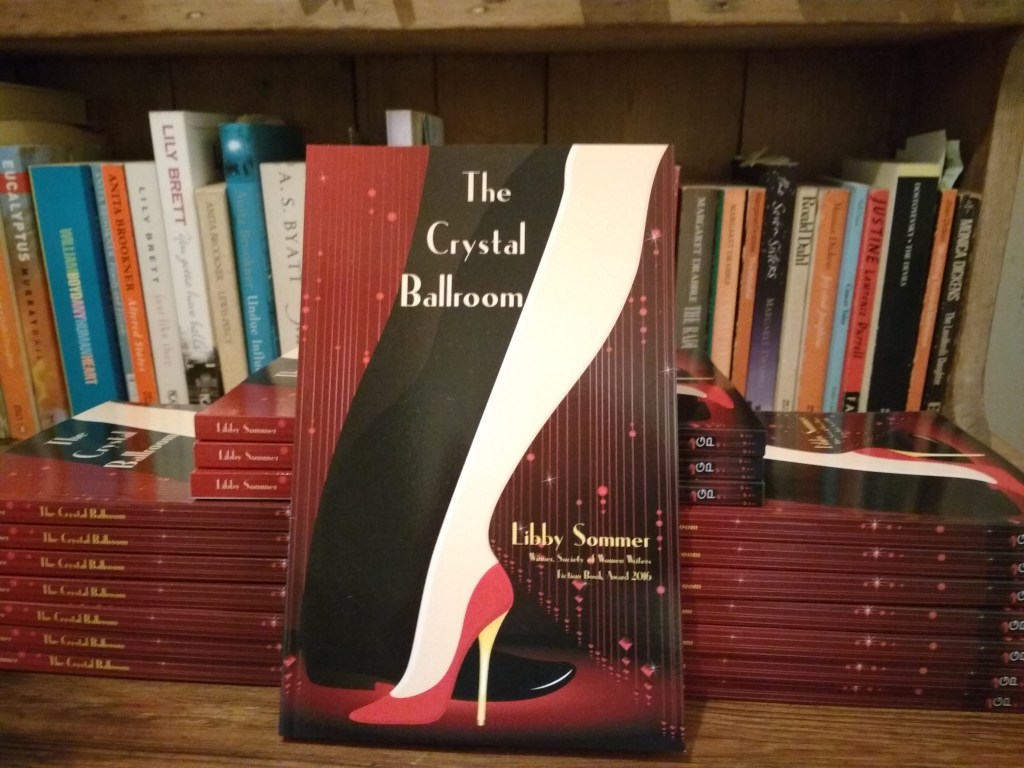
My second novel, ‘The Crystal Ballroom‘ (Ginninderra Press) is a novel-in-stories.
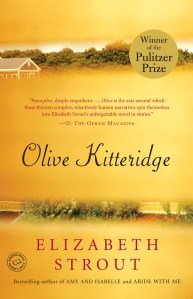
So what is a novel-in-stories? One famous example is Elizabeth Strout’s Pullitzer Prize-winning ‘Olive Kitteridge’.
‘A penetrating, vibrant exploration of the human soul, the story of Olive Kitteridge will make you laugh, nod in recognition, wince in pain, and shed a tear or two.’ – Goodreads ‘In a voice more powerful and compassionate than ever before, New York Times bestselling author Elizabeth Strout binds together thirteen rich, luminous narratives into a book with the heft of a novel, through the presence of one larger-than-life, unforgettable character: Olive Kitteridge.’
A novel-in-stories, or connected short stories that together become more than the sum of their parts, is also known as a short story cycle.
‘A short story cycle (sometimes referred to as a story sequence or compositenovel) is a collection of short stories in which the narratives are specifically composed and arranged with the goal of creating an enhanced or different experience when reading the group as a whole as opposed to its individual parts.’ – Wikipedia
‘A novel-in-stories is a book-length collection of short stories that are interconnected. (One of the very first examples of this genre is The Canterbury Tales; a more recent example is The Girl’s Guide to Hunting and Fishing, by Melissa Bank.) A novel-in-stories overcomes two key challenges for writers: the challenge of writing a novel-length work, and the challenge of publishing a book-length work of unrelated short stories. (Few publishers are willing to publish a short-story collection from an unknown writer.) So, the novel-in-stories helps you sell a story collection like you would a novel—as long as the interconnected nature of the stories is strong and acts as a compelling hook. Another advantage to novels-in-stories is that they afford you the opportunity to publish pieces of your novel in a variety of literary magazines, which might attract the attention of an editor or agent.’ – Writer’s Digest
My book, ‘The Crystal Ballroom‘ is connected by place and by a first person narrator and her friend who exchange stories about the characters they meet at the singles dances as they search for a regular dance partner.
‘The Crystal Ballroom‘ was launched into the world by Stephen Matthews OAM at Collected Works Bookshop, Melbourne at an afternoon of launches and book readings to celebrate Ginninderra Press’s 21 years of independent publishing.
Sometimes we sit at our desks to write and can’t think of anything to write about. We face the blank page. We sit there until blood pours from our foreheads, as one famous author was heard to say.
Making a list can be good. It makes you start noticing material for writing in your daily life, and your writing comes out of a relationship with your life in all its richness.
10 ideas for writing practice:
Begin with “I don’t remember”. If you get stumped, just repeat the words “I don’t remember” on the page again and keep going.
Tell about sound as it arises. Be aware of sounds from all directions as they arise: sounds near, sounds far, sounds in front, behind, to the side, above or below. Notice any spaces between sounds.
Tell me about last evening. Dinner, sitting on the couch, preparing for bed. Be as detailed as you can. Take your time to locate the specifics and relive your evening on the page.
Tell me what boredom feels like.
See in your mind a place you’ve always loved. Visualise the colours, the sounds, the smells, the tastes.
Write about “saying goodbye”. Tackle it any way you like. Write about your marriage breakup, leaving home, the death of a loved one.
What was your first job?
Write about the most scared you’ve ever been.
Write in cafes. Write what is going on around you.
Describe a parent or a child.
Some people have a jar full of words written on pieces of paper and select one piece of paper at random each day and write from that. Others use a line of a poem to start them off. Then every time they get stuck they rewrite that line and keep going.
Be honest. Cut through the crap and get to the real heart of things.
Zen Buddhist, psychotherapist, writer and teacher, Gail Sher in her book One Continuous Mistake says the solution for her came via haiku (short unrhymed Japanese poems capturing the essence of a moment).
“For several years I wrote one haiku a day and then spent hours polishing those I had written on previous days. This tiny step proved increasingly satisfying,” Gail Sher.
She said it gradually dawned on her that it was not the haiku but the “one per day.” Without even knowing it, she had developed a “practice.” Every day, no matter what, she wrote one haiku. In her mind she became the person who writes “a haiku a day.” And that was the beginning of knowing who she was.
Gail Sher suggests writing on the same subject every day for two weeks.
“Revisiting the same subject day after day will force you to exhaust stale, inauthentic, spurious thought patterns and dare you to enter places of subtler, more ‘fringe’ knowing,” Gail Sher.
She writes in One Continuous Mistake that the Four Noble Truths for writers are:
Writers write.
Writing is a process.
You don’t know what your writing will be until the end of the process.
If writing is your practice, the only way to fail is to not write.
So start coming up with your own list of ideas for practice writing. Life happening around us is good grist-for-the-mill.
At a literary lunch I overheard someone say: ‘The thing to do is put the idea in your subconscious. Your brain will do the work.’
It takes time for our experience to make its way through our consciousness. For example, it is hard to write about a journey while you are still in the midst of the adventure. We have no distance from what is happening to us. The only things we seem to be able to say are ‘having a great time’, ‘the weather is good’, ‘wish you were here’. It is also hard to write about a place we just moved to, we haven’t absorbed it yet. We don’t really know where we are, even if we can walk to the train station without losing our way. We haven’t experienced three scorching summers in this country or seen the dolphins migrating south along the coast in the winter.
“Maybe away from Paris I could write about Paris as in Paris I could write about Michigan. I did not know it was too early for that because I did not know Paris well enough.” – Ernest Hemingway, A Moveable Feast (New York: Charles Scribner’s Sons, 1964).
So we take in experience, but we need to let things make their way through our consciousness for a while and be absorbed by our whole selves. We are bower birds, collecting experience, and from the thrown away apple skins, outer lettuce layers, tea leaves, and chicken bones of our minds come our ideas for stories and poems and songs. But this does not come any time soon. It takes a very long time (three to ten years in the case of literary fiction). We need to keep picking through these scraps until some of the thoughts together form a pattern or can be organised around a central theme, something we can shape into a narrative. We mine our hidden thoughts for ideas. But the ideas need time to percolate: to slowly filter through.
Rumi, the thirteenth-century Sufi poet, summed up what could be the creative process when he wrote ‘The Guest House’:
This being human is a guest house.
Each morning a new arrival.
A joy, a depression, a meanness,
some momentary awareness comes
as an unexpected visitor.
Welcome and entertain them all!
Even if they are a crowd of sorrows,
who violently sweep your house
empty of its furniture,
still, treat each guest honorably.
He may be clearing you out
for some new delight.
The dark thought, the shame, the malice,
meet them at the door laughing and invite
them in.
Be grateful for whoever comes,
because each has been sent
as a guide from beyond.
Jalaluddin Rumi, in The Essential Rumi
Translated by Coleman Barks, 1999
Our work is to keep rummaging through the rubbish bins of our minds, exercising the writing muscle, in readiness to answer that knock at the door when it comes.
As the author Vivian Gornick said: ‘The writers life is the pits. You live alone and you work alone, every day I have to recreate myself.’ She paused and laughed. ‘But when the work is going well there is nothing that compares.’
What about you? Are you ready to answer the knock at the door? 🙂
Have a read of my poem, ‘Safe … The Pandemic’ first published in ‘Milestones’ Anthology (Ginninderra Press). It is also one of the poems in my debut collection, ‘The Cellist, a Bellydance & Other Distractions‘ (Ginninderra Press).
Is a novel a short story that keeps going, or, is it a string of stories with connective tissue and padding, or, is it something else? Essayist Greg Hollingshead believes that the primary difference between the short story and the novel is not length but the larger, more conceptual weight of meaning that the longer narrative must carry on its back from page to page, scene to scene.
“It’s not baggy wordage that causes the diffusiveness of the novel. It’s this long-distance haul of meaning.” Greg Hollingshead
There is a widespread conviction among fiction writers that sooner or later one moves on from the short story to the novel. When John Cheever described himself as the world’s oldest living short story writer, everyone knew what he meant.
Greg Hollingshead says that every once in a while, to the salvation of literary fiction, there appears a mature writer of short stories—someone like Chekhov, or Munro—whose handling of the form at its best is so undulled, so poised, so capacious, so intelligent, that the short in short story is once again revealed as the silly adjective it is, for suddenly there are simply stories, spiritual histories, narratives amazingly porous yet concentrated and undiffused.
When you decide you want to write in a particular form—a novel, short story, poem—read a lot of writing in that form. Notice the rhythm. How does it begin? What makes it complete? When you read a lot in a particular form, it becomes imprinted inside you, so when you sit at your desk to write, you produce that same structure. In reading novels your whole being absorbs the pace of the sentences, the setting of scenes, knowing the colour of the bedspread and how the writer gets her character to move down the hallway to the front door.
I sit at my desk thinking about form as a low-slung blanket of cloud blocks my view of the sky. Through the fly screen I inhale the sweet smell of earth after rain as another day of possibility beckons.
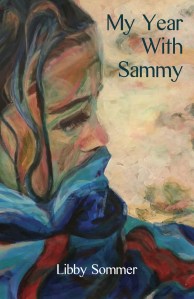
We might write five novels before we write a good one. I wrote five book-length manuscripts before one was finally accepted for publication. My skill was in the short form. I’d published dozens of short stories in prestigious literary journals. So it made sense that my first book, ‘My Year With Sammy’ (Ginninderra Press) is a novella – a small book.
What about you? Is your skill in the short form or the marathon?
Have a read of my poem, ‘Distraction’ first published in Burrow, Old Water Rat Publishing. It is one of the poems in my debut poetry collection, ‘The Cellist, a Bellydancer & Other Distractions‘ (Ginninderra Press) 2022.
Have a read of my short story ‘Art and the Mermaid’ first published in Quadrant Magazine. ‘Art and the Mermaid’ and is one of the stories in my collection ‘Stories from Bondi’ (Ginninderra Press), a series of stories set in Bondi Beach.
I hope you enjoy it.
Art and the Mermaid:
Once upon a time it came to pass, so it is said, that an enormous storm swept the coast of New South Wales, doing extensive damage to the ocean beaches – destroying jetties, breakwaters and washing away retaining walls. Mountainous seas swept Bondi Beach and dashed against the cliffs carrying ruin with every roller. At North Bondi near Ben Buckler a huge submerged block of sandstone weighing 233 tons was lifted ten feet and driven 160 feet to the edge of the cliff where it remains to this day.
One day a Sydney sculptor, Lyall Randolph, looked upon the rock and was inspired. The sculptor was a dreamer. Let us, he said, have two beautiful mermaids to grace the boulder. Using two Bondi women as models he cast the two mermaids in fibreglass and painted them in gold.
Without Council approval and at his own expense he erected The Mermaids for all to see on the giant rock that had been washed up by the sea. The Mermaids sat side by side on the rock. One shaded her eyes as she scanned the ocean and the other leant back in a relaxed fashion with an uplifted arm sweeping her hair up at the back of her neck. Their fishy tails complemented the curves and crevices of their bodies.
It so happened that less than a month after The Mermaids were put in place, one was stolen and damaged. The Council held many meetings to decide if she should be replaced using ratepayers’ money. The council had previously objected to the sculptor placing the statues there without Council permission. The sculptor had argued that before placing The Mermaids in position he had taken all necessary steps to obtain the requisite permission.
The large boulder at Ben Buckler, upon which The Mermaids were securely bolted and concreted, he said, is not in the municipality of Waverley at all. It is in the sea. According to the Australian Constitution high-tide mark is the defined limit of the Waverley Council’s domain. The Maritime Services Board and the Lands Department both advised me they had no objection to the erection of The Mermaids.
One Waverley Alderman said he wished both mermaids had been taken instead of only one. Someone else said the sculptor didn’t need the Council’s permission to put them there in the first place and the The Mermaids had given Bondi a great attraction without any cost to the Council. The sculptor said The Mermaids had brought great publicity to the Council. They had been featured in films, newspapers, television and the National Geographic magazine.
The Mayor used his casting vote in favour of the mermaid and she was re-installed.
For over ten years the two beautiful golden mermaids reclined at Ben Buckler, attracting many thousands of sightseers to the beach.
Poised on the huge boulder they braved the driving storms of winter until one day one was washed off. The Council saw its opportunity and removed the other.
Today, only the remnants of one mermaid remain – but not on the rock. In a glass cabinet in Waverley Library at Bondi Junction all that is left of the two beautiful mermaids is a figure with half a face. There’s a hole instead of a cheek, a dismembered torso, part of an uplifted arm, the tender groove of an armpit. And there, down below, a complete fish’s tail.
Have a read of my short story, ‘Painstaking Progress’, first published in Quadrant Magazine.
I hope you enjoy it.
Painstaking Progress:
I’m imagining a cloudy autumn morning. There’s a room. Half office, half bedroom. Not too large and not too small. The windows of the room face east and look out towards the ocean across the expanse of a green gully.
I picture a woman sitting on a bed with pillows behind her back. The windows are open. Perhaps it is Saturday morning. On the bedside table is a mug of tea and a photograph of the woman’s daughter on her wedding day.
The wind begins to stir the big trees outside and the morning haze is beginning to move and for a short moment the sun lightens the carpet and heavy dark wood furniture. The shadows of the curtains’ curves darken the floor, almost invisible to the woman on the bed. The morning sun lightens the CD player, the alarm clock, the piles of books stacked on the revolving Victorian bookcase.
She looks out at the water and at the triangle of beach. Sometimes it seems that nothing much changes out there, although on some days the waves break close to shore and at other times further out to sea. She can see it all from the bed, even at night time. The bed faces the beach and the ocean, and so does the desk. The room is like standing at the rail of a ship.
On the radio: ‘Waves, to me, are a reason to live,’ says the surfer. ‘When you see the roar, the jaws, there is nothing that touches it on the face of the earth.’
In June the twilight begins in the afternoon. The days close in on me, here in this room. The infinite possibilities in the sky and the sea and the possibility of nothing.
What is this writing life? It tears me to pieces every day.
Still no rain.
During a cool night, the drought continuing, my night mare is that I am stuck in a narrow laneway unable to turn back. I get out of the car to attempt to turn it with my bare hands. But when I turn around to pick the car up, it has disappeared. I took my eyes off it for one second and it disappeared. Gone in that second that I lost sight of it. The desperation descends on me.
I snap on the bedside light just before the dawn. Dawn through the gorge. Leaves slight in a breeze, the dark green of the Date Palms. This shy light is flashing a start to the day. In fifteen minutes the gorge will come alight in all its subtleties, water flowing across rocks, white butterflies.
Two paragraphs – and half the morning gone.
The driest May in over seventy years.
She’d been relieved when he left the room, so probably it’s already ending. But she isn’t sure. She pays close attention to the surroundings, to the people in tracksuits trudging through the sand on the beach, the noise of the traffic up the hill, the static that immerses the room. He glances at her. At first he looks at her as though he expects her to speak, but she doesn’t. So he says, Don’t worry, we’ll get through it. Then is silent. She doesn’t answer. She could reassure him, could say, Yes, that’s right, it’s a small thing, we’ll get through it. She says nothing.
He’d said he hates being lonely. She said she’s lonely, horribly lonely. He said: It’s a horrible thing loneliness.
Every day my father experienced a deep melancholy about living. Sometimes it lasted, sometimes it would vanish with the night. I had a father so desperate with sadness that sometimes even life’s surprises, those very special moments, couldn’t make him forget it. It happened every day. It would come on very suddenly. At a given moment every day the melancholy would make its appearance. And after that would follow the struggle to go on, to sleep, to do anything, or sometimes the anger, just the anger, and then the despair.
In the dream I was sleeping in a motel. I saw Father, like a floppy puppet with a wooden head, sitting on the far side of a room. He had strings attached to his hollow body and was unable to speak. The intensity of my grief woke me. I sat up on the big bed and I was by a lake, the sounds of a party under the window. Headlights bounced off the bridge and into the room through the thick curtains of the motel room. A small fridge clicked in the corner. I had been crying and the bones in my chest and in my cheeks were collapsed. I kicked the sheet off, curled around a pillow and stayed like that for the rest of the night. I became aware again of the powerful wind over on the beach and the waves curling and breaking and disappearing into the cold sand all the way along the Central Coast.
Today the sea is twice the depth of blue as the blue of the sky. The clouds change shape as I watch, drifting south, melting and thinning. At the end of the day their edges will be circled with pink.
When Tom came to visit the first time I was pleased he arrived in time to see the brief pink light on the gully. From the balcony where we ate we looked out over the round bowl of the gorge, ringed with blocks of apartments and filled with cypress and palm trees. Branches like whips; leaves every shade of green you can imagine. Rosellas and cockatoos. We heard the flock of kookaburras at dawn.
Then there’s the click of the front door. He walks in. His hair is tumbled, his lips stained with sunburn; she tells him he looks like he’s had a good time down at the beach and what a good arrangement it is turning out to be. He has something to tell her. Would she like a cup of tea first? He is going in to the kitchen to make one for himself.
No, no thanks. She’s had one already. But help yourself and then tell me what happened. He opens the door out on to the balcony, hangs his wetsuit on the railing. She watches him. Little by little he reemerges, becomes agreeable to her again.
Wait till you hear this, he says. Wait till you hear this story!
His eyes are large and open, nothing hidden. His hair curly and untamed. His white cotton tee shirt sticks to him, his thongs flecked with sand. His hands large and firm, although his voice is unsure, with a note of expectancy.
In late March I’d asked my aunt at the Montefore Home for memories of Father. ‘Your father!’ she’d said. ‘I can’t tell you that. But I can tell you about your grandparents. What I know. You ask the questions and I’ll try and give the answers.’
We were sitting at a round table in the cafeteria eating smoked salmon sandwiches and drinking tea when she said something that shocked me. She’d looked into her empty cup and then looked up at me. I’d started to stand up, but she’d motioned me down. She wasn’t finished. This aunt, almost bent double with the hump on her back who moved with the aid of a walking frame.
‘I felt very sorry for your mother,’ she said. ‘I think your mother’s life really improved after your father died.’
‘So what did you write this morning?’ Tom says.
‘Nothing. Nothing at all.’
He puts the mug onto a coaster and sits at the foot of the bed and looks at her.
‘Well, I’ve got something for you. Wait till you hear this.’ He takes a sip from his drink.
She gets up and turns the radio off, then gets back into the bed.
‘It’s an amazing story.’ he says. ‘It could be an idea for you, you know, something you might use,’ he laughs and moistens his lips. ‘The first thing was, I got up when it was light enough, at first light, and thought, I wonder what the swells doing. I’ll walk down to Tamarama and have a look. It was up enough so I thought, I won’t walk over to Bronte to check the swell out there, I’ll walk back up the stairs, get into my wetsuit and risk it, just go in, because I wanted to go in.’
She makes an approving noise and nods encouragement.
‘So I came back and got into my wetsuit and walked all the way back down and headed over to Bronte,’ he continues. ‘Sorry – I forgot a part there – there’s a bit of a side story. As I was going back up the stairs there was a bloke, surfer fella, went down with a blue Aloha surf board. Now remember that bit, Sof. Oh yeah, I thought. I wonder where he’s going. So I got into my wetsuit and locked the car and off I went down to Bronte. As I was walking along with my surfboard and this bloke with a goatee drove past and gave me a bit of a look. He looked at me and I looked at him wondering, What’s he looking at?’
Tom picks up his mug and looks across at her.
‘Remember that, Sofia,’ he says. ‘That bloke. That’s two fellas I’ve seen this morning.’
He laughs at what he can see is her impatience.
‘Getting closer, Sof. I’m getting closer. Then I ran. I was really stoked. Good waves, the swell was pretty good. It was much better this morning than it looked last night. So I ran down to the southern end of the beach because there’s a bit of a channel there near the rocks and you can have a go. A bit easier to get in. And I was sitting there on the sand. I was pretty tired. I’d run up those stairs and back down to the beach. So I’m doing a few stretches and then a lady came up. Starts talking to me. Said, Oh yeah the waves look all right this morning and said, Oh yeah, and Okay, and then, Have a good day. She’d had a bit of a chat and then she’d walked off. So then I was just about to walk in. No. No. Hang on. I was standing up doing some stretches and I looked out and the bloke was out there by himself. The one with the blue board.
‘He’d come in. And then he’s yelling out to me. Hey! Hey! Mate, mate! And so I thought, What’s going on here? What’s going on? He was the only one out there and I was going to be the second one. So I go over and that’s when this other bloke that I’d seen in the car appears on the beach. He was standing there too about to go in.’
‘It’s incest,’ a friend said, stirring sugar into her latte as the day closed down. ‘Except he’s not related to you.’
‘So this guy with the blue board came over,’ continues Tom, ‘and says, Mate there’s a big shark out there and look at the size of the bite mark on my board.
‘A bite mark on the board. I’d say it was that big,’ he says with wide hands. ‘The shark bit the whole nose off his board. He said he’d pushed the board into the shark.
‘The other bloke who’d looked at me in his car said, What will we do? I don’t think we’ll go in here, I said. And then one of the clubby guys came down and said, Oh – because all three of us were standing there looking at this guy show us his board. I said to him, Could you get the rubber ducky out and scare the shark off for us?
‘He said, Oh no. I can’t do that. And I wouldn’t recommend you go out there. And then he said, Well, enter at your own risk.
‘So then, Justin, the bloke in the car with the goatee said, Come on. Let’s go in. We’re umming and arring. He said, I might go in close and I said, I don’t think so. Because it’s pretty deep in close. So then, this bloke took off, the bloke with the blue board and showed everyone on the beach.
‘So is that a good story for you darling? Did I tell it well? Did I?’
‘Yes, Tom.’
‘You sent me out as shark bait!’
Sofia smiles and leans back on the pillows and pulls the sheet up under her chin.
She’d said: I want you to stop spending money on me. Stop buying me things. I don’t like it. He looked at her in surprise, asked, If that’s what you want, I won’t do it. I listen to what you tell me. Is that what you want? She said it was. He started to suffer here in this room, for the first time. He said he’d go home now if that’s what she wanted. She’d let him say it.
It’s on a family holiday at the beach. We’re together, him and us, his children. I’m five years old. My father is in the middle of the picture. I recognize the big grin on his face, the way he’s smiling, the way he waits for the moment to be over. His fixed grin, a certain tidiness to his dress, by his impenetrable expression. I can tell it’s hot, that he’s weary, that he’s anxious.
It’s sunrise over the water through the palm trees. The empty beach. Living by the sea, watching and waiting. Trying to find a way to connect the pieces.
She met Tom at a party she’d gone to alone, and then he danced with her, held her closer, asked where she lived. She didn’t often go to parties.
She wishes she could remember what they did that first day. She remembers sending him down the steps to look at the swell when he first woke up. ‘Have you got a pair of thongs I can wear,’ he said. They laughed when she showed him hers that would barely cover half his foot.
You settle into a comforting routine. Just the two of you. Get up early and look out at the swell. You show your granddaughter, four year old May Ling, his photo.
‘I’m not saying I don’t like him,’ she says. ‘But I don’t like his hair.’
‘What’s wrong with his hair?’
‘It’s curly,’ she frowns.
‘But I thought you liked curly hair. You told me I’m lucky because I’ve got curly hair.’
‘But not curly hair on a boy!’
The tables are occupied outside Café Q at Bronte, the blue and white awning is down. There is a spare seat on the lounge just inside the front door and I cross to it. The parking policewoman is kept busy checking the parking meters and writing tickets. The other regulars are here, the ones who come at this time of the day. The woman with the baby. And there’s the little white dog she ties up to the post box outside. It’s like sitting in a giant lounge room at this place. The waitress takes the baby outside to play with the buttons of the public phone. People get up from their seats and stand on the pavement watching for the white sprouts of water. Whales out to sea today.
Meanwhile the sky has turned into a light translucent grey above the pink glow of the setting sun. The sea darker out towards the east. Four spiked- headed palm trees, their trunks encircled in knots.
In the school holidays, I took May Ling to my niece’s house to play with her two children. Over a cup of tea I asked my niece for memories of her grandfather, my father. I told her I’d spoken to the aunt in the Monteforie Home and that I wanted to find these things out before everyone died.
‘A lot of them are dead already,’ she said. ‘I only know they were Russian.’
‘Russia and Poland. Your great grandmother was Polish. She was Ben Gurion’s cousin, first cousin.’
‘That’s really something!’
She told me she remembered him being sick most of the time. ‘Once I got to an age that I could remember things. I remember him as being sick, but he was quite a large presence really and I remember him in the big chair and he’d have trouble getting up and I’d often help pull him up. I really don’t have memories of him though. I remember the night he died and his funeral. It was at night. I was in bed and got up and realized that Mum and Dad were in the “grown up” lounge room and Dad went to the hospital and they’d actually said “that was it” because he’d been in hospital for awhile and I went back to my room and closed the door. I had photos of all my school friends on the back of the door and they all fell off. It was the spookiest thing. I didn’t slam the door or anything. I remember the sound of the photos fluttering to the floor.’
The clouds stretch across the sky and move south.
Tom rubbed her shoulder a little. It doesn’t really matter so much, does it, darling? Sometimes he massaged her feet and she would keep on reading. This time she pulled her feet out of his hands. He looked out at the dark blue afternoon sweltering on the sea, and sighed heavily and said he felt dreadful for upsetting her.
You have Sunday breakfasts. At the table next to you three young men talk about Rugby while eating poached eggs on toast. This cove at Clovelly that is protected from the ocean swells by the rocks. Iridescent green underside of flippers, bare-chested swimmers. Pigeons watch from the cement. Snorkellers looking for sightings of blue gropers and cuttlefish among the wildlife in this eastern beach. The occasional Port Jackson shark.
A plane flies through the low hanging cloud over the cliffs. A woman by the rocks on a stone bench pats the shoulder of the man beside her in a friendly loving manner. The man’s head, with its peaked white hat, scans the horizon.
The waves brush and break over the rocks that almost enclose the cove. Boys in flippers, snorkels and short wetsuits with heads down looking for the family of gropers. Another man ducks his head down into the sea, fills his goggles with water, then empties them. With head down he floats towards the steps.
‘There’s no need to be self-conscious,’ Tom had said in the early morning light. ‘There’s no need to be. It’s the person inside that’s important.’
Through the open door the same cool wind is breaking up the sea into chunks of moving white caps over there towards the horizon. Beside an upright and steady television aerial, down there near the beach, a palm tree sways in the breeze.
You find a photograph of your daughter when she was thirty. She’s on the balcony with her own daughter. She’s wearing a pale pink t-shirt and pearl earrings and her skin looks smooth and brown. Her smile is happy and bright. That’s not how she sees herself though, that attitude of someone happy in the moment.
He asks you questions about your family.
‘What about your father?’ he says. ‘What did he do? What was he like?’
‘My father was not an educated man,’ you say. ‘Although he was well read. He was the eldest in a working class family and he left school at the age of 8. He was a self-made businessman.’
‘I remember him as being very pale,’ she continued before deciding we needed more tea. ‘Very white hands. The translucent nails. Can’t say I knew much about his personality. Only his physicality. It’s very sad. Awful.’
Tom has strong muscled legs and large biceps. His arms grip so hard you have trouble releasing them and you can feel how tired they must get from all the paddling. In his new thongs he looks brown and taut. He is very proud of his ability in the water and is ready for any emergency between the waves. Several times a week he practices his maneuvers, conditions permitting.
‘You have fun with me don’t you?’ he says.
‘Yes.’
‘We’ll get through it. Don’t worry. Everything will be okay.’
When your brother rings to see how you are, you say, ‘I had a good weekend with Tom.’
‘You mean your little surfie handbag!’ he exclaims.
‘Make sure he doesn’t get your money,’ your sister had warned.
‘What’s his name again?’ your eldest son said. ‘I keep forgetting his name.’
‘What do you expect me to say?’ said your daughter. ‘What do you want me
to say?’
On the radio: ‘It’s really a beautiful day. I think God’s out there having a swim.’
‘What did your parents say?’ you ask Tom.
‘Dad said, Go for it son. Mum said, Toy boy.’
‘We used to go to visit every weekend,’ she said. ‘On, I think, a Sunday afternoon. We’d go and visit them and he had his bedroom and he had an organ in there. And he turned the organ on for us while the grownups chatted. And I remember his bed, his space, the smells of his room. Not a nasty smell. You know, there was the smell of the books. It wasn’t a weak smell. It was quite hard really. A sharp smell. A sharpish smell. Not a horrible smell. Not a bad smell. I remember his pill box next to the bed. It’s the first time I’d seen one of those pill boxes that had the times of the day on it. And his little boxy room. And Nana had the gorgeous gilt bedroom you know, and this huge bed and it was like Arcadia to a little girl. And then he had a single bed. I couldn’t imagine such a large man in that bed.’
‘Papa’s room.’ She stumbled on the word, the name she used to call him, barely able to remember. ‘I can’t remember us playing in Nana’s room,’ she added.
Last night at the Sushi Train at Bondi Junction a friend said, ‘I chatted to a man while waiting in the queue at MBF this morning. An older German man. He was so interesting. I found his stories of Germany fascinating. There are stories everywhere,’ she added with a rising inflection in her voice and an arching of her eyebrows.
But how to tell them?
She mixed soy sauce into the wasabi paste. ‘So you don’t think you could love someone your own age?’
‘Love someone at any age.’
‘You don’t love him?’
‘The other day he said to me, You’re well-educated and intelligent. Sometimes I wonder what you see in me.’
‘What did you say?’
‘I said what he wanted to hear. I said, You’re so handsome and such a good lover. I didn’t talk about my ambivalence.’
And the funeral? I said, reminding her that I was in South America when he died.
‘Such a big step in the recovery process is the funeral,’ she consoled me. ‘We lived in Bulkara Road and that steep driveway and there were stairs and everyone used to just go up and down the driveway instead of using the stairs. Nana was standing at the bottom of the stairs saying, “I can’t go. I can’t go. I’m not going.” Of course she went,’ she added softly.
‘And I wore …… odd shoes! Which I didn’t discover until later. Mum decided we were too young to go to the Crematorium so we went to the funeral – which I have no memory of now – I can’t remember where it was – funny. I remember going in the car and then Mum sent us home with a friend of hers. When we got to the friend’s house she gave us lunch and I realized my shoes didn’t match. My sister and I had two similar pairs of white shoes with little heels on them and I’d grabbed one of her shoes.’
‘I heard he died trying to pull all the tubes out.’
‘I didn’t know he had an operation. The children weren’t told. I remember the hospital, going there, walking through the courtyard. I don’t remember being in a room with him. Sick! Isn’t that funny?’
‘He asked me if he’d been a good father and did he marry the wrong woman?’
‘That’s why I think that I remember Nana saying, I don’t want to go to the funeral, it’s too upsetting. I always thought they were at war. I remember thinking, but he didn’t like you.’ She paused and looked at me, put her hand on mine. ‘Life’s not that simple though.’
Is there anything else you can remember?
‘I remember him being proud that I was smart.’ she said laughing at herself. ‘I remember it being a big thing for him. Which is sort of an old European thing.’
Tom’s skin is amazingly soft. A thin body, but strong in muscle tone. He’s almost hairless. Perhaps he’s weak, possibly too malleable, definitely vulnerable. She looks him in the face. Looks into his eyes. He touches her. Touches the softest parts of her, caresses her.
He is reticent to mix with the people she knows. He is just a boat builder, after all, and they may not take him seriously. Also, they might laugh at the way he speaks. They might laugh because this is the eastern suburbs of Sydney.
He does not consider himself to be intelligent, witty or articulate.
Sofia breathes in the salt air and remembers the taste of warm salt water on his skin. She pauses to watch as another wave rears up from the deep. A lone surfer out on the point. As she walks the surfer drops down the face of a big left-hander. He paddles into the path of the wave. Another wave and he’s kicking hard to mount it, rises to his feet before leaning into his first turn.
‘An around the house cutback is when you go out on to the face of the wave away from the pocket and turn back in to the whitewash and then rebound off the whitewash and back around,’ Tom said. ‘You’re really doing a cutback into a backhand re-entry off the foam. Two maneuvers in one. It’s a good point scoring maneuver, the one I use the most.’
‘Ask May Ling if she wants to come down for milk and cookies,’ my niece called out to her son.
‘And I have a memory of him at the Shabbas table and us crowding around him,’ she said. ‘But I think that memory comes from a photo, not from the real thing. How old was I when he died? He was very sick at my Batmitzvah. I would have been thirteen. He came out of hospital for my Batmitzvah and he came up to the Bima and I said, Can I put my arms around you? And I caught that he was wearing some sort of support thing under his shirt. I don’t know what it was and then I started to cry uncontrollably and everyone thought I was crying because it was my Batmitzvah, but I was crying because I felt that Papa was “not right”. And then he went back to the hospital and he didn’t come to the party. He’d made a huge effort to come to the Shule. You don’t remember, you don’t think about things at that age. I’d forgotten that memory and it came up. I remember thinking he was in a lot of pain and he struggled to be there.’
‘What do you do when you’re not working?’ Sofia asked Tom. ‘You’ve asked me that before,’ he’d said. ‘Not a great deal.’
‘I remember going to Nana’s house and the photos of her from before and I thought she looked just so glamorous. And going to Dad’s factory and he was working with Papa and they had a wall of stuff they’d brought back from other countries – he’d gone to Japan and brought things back and thinking he was Superman. Flying to other countries. But of course I’ve inherited Dad’s view of the world so I know that Dad, ‘the genius’, went into the family business and worked for his father for years and never really wanted to. Life was not what Dad wanted it to be – or was unable to accept what his life was – put it that way. I remember now, at the Minion at Nana’s house, Dad ….. I think he’d probably been drinking …. he was very emotional. He said if he hadn’t sold the business that his father would never had died and that he had all these regrets and on the one hand he wished he’d never been in the business and then on the other hand he wished he’d held on to the business. I think a doctor told Dad that Papa had nothing to live for because the business had gone.’
‘I heard him say that in hospital. I said to him there are so many things you can do now.’
My neice laughed bitterly, then said wistfully, ‘Yeah. All those grandchildren. I’m so proud of my children. Lovely family. That’s what’s important.’
‘Look at that,’ says the waiter looking out at the sea. ‘It’s coming from the east. You can never pick it this time of the year can you?’
He taps me on the arms, ‘Are you parked down the road?’
‘No. I’m on foot.’
I blow on the surface of the coffee, but it is still too hot.
A former heroine addict is being interviewed on the radio: ‘I was solemn, angry and unhappy,’ he says. ‘Determined to destroy myself. The heroin alleviated doubt, unease, discomfort.’
‘What was it like afterwards?’ asks the interviewer.
‘You feel very empty afterwards. I bottomed out. You have to decide, Do you want to live or do you want to die? It was a deep character flaw with me.’
On the radio: ‘Dangerous surf conditions with the time at five past nine.’
It is essential to separate the creator and the editor, or inner critic when you practice writing, so that the creator has plenty of room to breathe, experiment, and tell it like it really is. If the inner critic is being too much of a problem and you can’t distinguish it from your authentic writing voice, sit down whenever you find it necessary to have some distance from it and put down on paper what the critic is saying, put a spotlight on the words—“You have nothing original to say, what made you think you could write anything anyone would want to read, your writing is crap, you’re a loser, I’m humiliated, you write a load of rubbish, your work is pathetic, and your grammar stinks …” On and on it goes!
Say to yourself, It’s OK to feel this. It’s OK to be open to this.
You can learn to cultivate compassion for yourself during this internal process by practicing Mindfulness Meditation. Sit up straight, close your eyes, bring your awareness to your inner experience. Now, redirect your attention to the physical sensations of the breath in the abdomen … expanding as the breath comes in … and falling back as the breath goes out. Use each breath to anchor yourself in the present. Continue, concentrating on the breath for several minutes. Now, expand your field of awareness to include the words of the inner critic. Turn your attention to where in your body you feel the unpleasant thoughts, so you can attend, moment by moment, to the physical reactions to your thoughts.
“Stay with the bodily sensations, accepting them, letting them be, exploring them without judgment as best you can.”—Mindfulness, Mark Williams and Danny Penman.
Every time you realise that you’re judging yourself, that realisation in itself is an indicator that you’re becoming more aware.
The thing is, the more clearly you know yourself, the more you can accept the critic in you and use it. If the voice says, “You have nothing interesting to say,” hear the words as white noise, like the churning of a washing machine. It will change to another cycle and eventually end, just like your thoughts that come and go like trains at the station. But, in the meantime, you return to your notebook and practice your writing. You put the fear and the resistance down on the page.
Do you struggle with an inner critic? Any words of wisdom you’d like to share?
Have a read of my short story, ‘Around the World In Fifty Steps’. It was my first publication, back in 2001 when I’d just graduated with an MA in Professional Writing from the University of Technology Sydney. A heady time to see my name in a prestigious literary journal like Overland (progressive culture since 1954). I’d written the story originally as a synopsis for a book. Although the book never did find a publisher, I was very happy that the synopsis was published as a short story. Not bad for a high school dropout.
Around the World in Fifty Steps:
Joanna lives in a Sydney suburb with her two sons. It’s 1992 and Australia is in recession.
“I’m sick of licking arse in a service industry,” she says of her marketing business. “And I’m fed up with financial insecurity, the feast or famine of too many projects or not enough and chasing new business and getting clients to pay their bills.”
“I’m thinking of renting the house out and travelling,” she tells her grown up sons after reading “The Pitter Patter of Thirty-Year-Old Feet” in the Sydney Morning Herald.
“You’re ready to leave home are you mum?” said one son.
“Why don’t you just go on a long holiday instead,” said the other.
“I want a new beginning, a change of career, a new home, a community of people, an intimate relationship with a significant other, that sort of thing.”
“You could always get yourself a dog,” suggests a friend.
Her son moves out when she puts his rent up.
“Are you going to wait till he buys a new house for cash before you ask for a decent rent?” her mother had said.
“I’ve decided to go and live with Dad for a change,” says the other son.
“I’ll be away for six to twelve months,” Joanna says as she throws her client files on the rubbish tip.
She spends the spring in Italy. The summer in England, Scotland and Ireland, the autumn walking the gorge country of the Ardeche in France.
In the winter she rents a studio apartment in Villefranche on the French Riviera. The studio belongs to a friend of a friend so she’s able to get it at a good price. She works as a casual deck hand on one of the luxury cruisers in dry dock for maintenance. “The first thing I want you to do,” says her boss when she arrives at work on the first day, “is blitz the tender.” After a backbreaking morning of hard physical work cleaning the small run-about she goes to lunch. She orders a salad nicoise and a coffee and realises her lunch will cost her a morning’s pay.
A young and handsome French man who lives in Paris but comes to Villefranche to visit his grandmother most weekends, pursues her. Joanna comes to realise that French men love and cherish women as much as they appreciate good food.
She shops at the markets, paints and reads and falls in love with the light and the colours of the south of France.
“I’m able to live contentedly alone without a regular job, without a car, without speaking the language,” she writes to her friends back home.
In the summer she moves on again before the tourist masses arrive and the rent goes up.
She gives away to her new friends in Villefranche all the things that won’t now fit in her backpack but keeps her paint brushes and pallet knife.
On the Greek island of Skyros she joins a group of landscape artists led by a famous English painter.
“My purpose in leading this group is to help everyone find their own unique style,” says the woman.
Joanna spends the autumn in London meeting with other artists from the island and the woman becomes her mentor and they meet for a cup of tea every week and talk about the isolation of being an artist as well as many other things.
“It’s important to stop and regenerate before the creative battery runs flat,” she says.
Joanna paints every day and goes out with an English man named Clive.
“Your painting is vivid and alive,” says the famous English artist. “I’ll write you a letter of introduction to my contacts in Australia when you’re ready to exhibit this collection.”
Clive has a strong face with chiselled square cheekbones. Dark brown eyes and dark hair that falls in a square fringe on his forehead. His fingers are long and sensitive for playing the piano.
“What are you doing there?” her mother asks on the phone from across the ocean.
“I’m painting,” says Joanna.
“But what are you doing?”
“My mother is like a poisonous gas that can cross from one side of the world to the other,” Joanna says.
Joanna dreams about her sons every night and Clive tells her she cries in her sleep.
She yearns for the bright Australian light and for the sound of the ocean.
She returns to Australia for her eldest son’s wedding.
In Sydney, Joanna supplements her income from the house rental by getting a job as a casual for a clothing company. She unpacks boxes and steampresses the garments. Her back, neck and shoulders ache and she suspects she’s getting RSI from the steampresser.
Clive rings to say he’s coming to visit her.
In preparation for his arrival she moves all her furniture out of storage and rents a small place near the beach hoping that he’ll love it in Australia and decide to stay.
Two weeks before his arrival Clive rings to say he’s not coming and Joanna finds out through a friend that he’s met someone else and is moving in with her.
She tears up his photos and throws his Christmas present at the wall.
Joanna stops painting.
She reflects on the past and all that she’s lost.
I thought when love for you died, I should die. It’s dead. Alone, most strangely, I live on. Rupert Brooke.
Joanna stays in bed most days but still feels so tired that she can only remain vertical for four hours in any twenty-four hour period.
The phone stops ringing.
She rehearses her own death by going to the edge of the cliff.
From the edge she sketches the waves breaking on rocks, the lone seagull on the shore at the water’s edge.
At home she fills in the drawing, blending black charcoal and white pastel reminding herself the darkest hour is before the dawn.
And, after winter spring always comes.
Joanna sells the house where she lived with her children and spends half the money on a home unit overlooking the ocean and the rest of the money on Australian shares.
Her new home faces the east and she can smell the salt from the ocean.
“It takes twenty years to be a successful artist,” echoes in her mind.
On a new canvas she drags the colours of the sunrise across the blank white space.