Have made it to the top of the mountain

red and black book cover 'The Crystal Ballroom' by Libby Sommer

Have finally made it to the top of the second-book-publication mountain. Received pre-release copy of The Crystal Ballroom this week. Looking good. You can order copies now through the Ginninderra Press website . Also available as an ebook from Amazon, Book Depository and other online sellers.

‘Libby Sommer lays bare the foibles of human nature in her finely observed stories of love and loss in the singles dance scene. Brilliantly drawn with wit, compassion and poignancy, the characters you meet in The Crystal Ballroom are sure to remind you of someone—maybe even yourself.’ – Jan Cornall, Writer’s Journey.

 ‘Libby Sommer exposes the secret lives of the singles who dance at The Crystal Ballroom. Authentic and powerful, this unique book will be loved by the dancers and readers.’ Frida Kotlyar, ballroom, Latin and Argentine tango dancer.

 Happy happy me.

What’s stopping you?

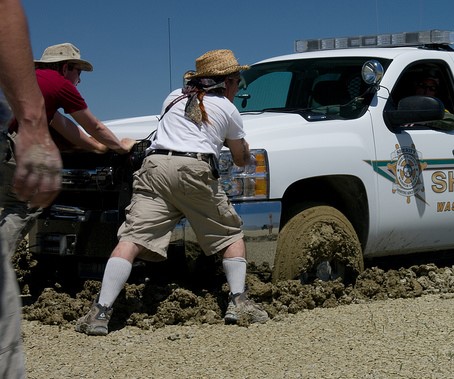
two men trying to push truck out of mud

How many wonderful ideas have we had in our lives that never became anything more than ideas?  What stopped them from becoming reality?  Probably lack of drive, or fear, or both.

If the idea of writing a story, writing a memoir, or writing a blog lights a spark within you, sets off a signal, causes you to drool—or fills you with unspeakable anxiety—then you are ready to write.  What is holding you back is not lack of drive, but fear.  Unadulterated, stark fear.

  • Fear of what?
  • Fear of being unable to write well and being criticized by others?
  • Fear of being unable to stay on track long enough to get to an ending?
  • Fear that you just don’t have what it takes to maintain focus to tell a good story?

Research into the way the brain operates has revealed that there are two sides to the brain, left and right.  Much of our fear of writing comes from the way these two sides do or don’t work together.

“We might term the right brain ‘the creator,’ for apparently it allows us to do creative things—make connections, manifest ideas, imagine situations, see pictures of events.  The left side analyses, categorizes, recalls words, and performs its learning functions in a step-by-step manner,”  Bernard Selling, Writing From Within.

The analytic left brain has a compartment that houses the “critic.”  He or she is the person in us who says,

  • Watch out!
  • You can’t do that!
  • You’ll fail, so don’t even try.
  • You know you’re not good at that!

“If those two voices in you want to fight, let them fight.  Meanwhile, the sane part of you should quietly get up, go over to your notebook, and begin to write from a deeper, more peaceful place.  Unfortunately, those two fighters often come with you to your notebook since they are inside your head.  So you might have to give them five or ten minutes of voice in your notebook.  Let them carry on in writing.  It is amazing that when you give those voices writing space, their complaining quickly gets boring and you get sick of them,” Natalie Goldberg, Writing Down the Bones.

It’s just resistance.

Sometimes, the harder you try, the more you become stuck in your own negativity.  It can feel like car tyres spinning in a bog and you just can’t move forward with ‘the work’.  Your resistance is actually greater than your desire to write.  That’s when you need to say ‘stop’ and put it aside for now.  Look for another outlet for your energy before starting again.  Take a break and read books by wonderful writers.  When I get stuck I turn to contemporary poetry for inspiration – thoughtful and passionate poems about living in the modern world.  Some of my favourite poets are:  Mary Oliver, Naomi Shihab Nye, Les Murray and Joanne Burns.

Sometimes I start another writing project before going back to the original one to get more perspective on things.  Other times I will study the beginning and endings of books to get inspiration for a new beginning or a new ending, or sometimes work backwards from the ending as a way to restart.

But don’t get caught in the endless cycle of guilt, avoidance, and pressure.  When it is your time to write, write.  Put yourself out of your misery and just do it.

What about you? Any tips you’d like to share about overcoming the resistance to write?

Header image:  Creative Commons
Is it a short story or a novel?

white laptop,black and white notepad and pen, white mobile, on desk

Is a novel a short story that keeps going, or, is it a string of stories with connective tissue and padding, or, is it something else?  Essayist Greg Hollingshead believes that the primary difference between the short story and the novel is not length but the larger, more conceptual weight of meaning that the longer narrative must carry on its back from page to page, scene to scene.

“It’s not baggy wordage that causes the diffusiveness of the novel.  It’s this long-distance haul of meaning.”  Greg Hollingshead

There is a widespread conviction among fiction writers that sooner or later one moves on from the short story to the novel.  When John Cheever described himself as the world’s oldest living short story writer, everyone knew what he meant.

Greg Hollingshead says that every once in a while, to the salvation of literary fiction, there appears a mature writer of short stories—someone like Chekhov, or Munro—whose handling of the form at its best is so undulled, so poised, so capacious, so intelligent, that the short in short story is once again revealed as the silly adjective it is, for suddenly there are simply stories, spiritual histories, narratives amazingly porous yet concentrated and undiffused.

When you decide you want to write in a particular form—a novel, short story, poem—read a lot of writing in that form.  Notice the rhythm. How does it begin?  What makes it complete?  When you read a lot in a particular form, it becomes imprinted inside you, so when you sit at your desk to write, you produce that same structure.  In reading novels your whole being absorbs the pace of the sentences, the setting of scenes, knowing the colour of the bedspread and how the writer gets her character to move down the hallway to the front door.

I sit at my desk thinking about form as a low-slung blanket of cloud blocks my view of the sky.  Through the fly screen I inhale the sweet smell of earth after rain as another day of possibility beckons.

We might write five novels before we write a good one.  I wrote five book-length manuscripts before one was finally accepted for publication. My skill was in the short form. I’d published dozens of short stories in prestigious literary journals. So it made sense that my first book, ‘My Year With Sammy’ (Ginninderra Press) is a novella –  a small book.

What about you? Is your skill in the short form or the marathon?

book cover My Year With Sammy

Click To Buy

Exciting news

yoga pose at sunrise

Delighted to announce that my short story ‘Alfresco’ will be published in the May issue of Quadrant magazine. The story is set in a fictional yoga retreat in northern Queensland.

It took me two years of rewriting to finally get this story accepted. I think you’d agree that crafting a successful piece of fiction is not easy.

Header Image:  Creative Commons

Writing in Cafes

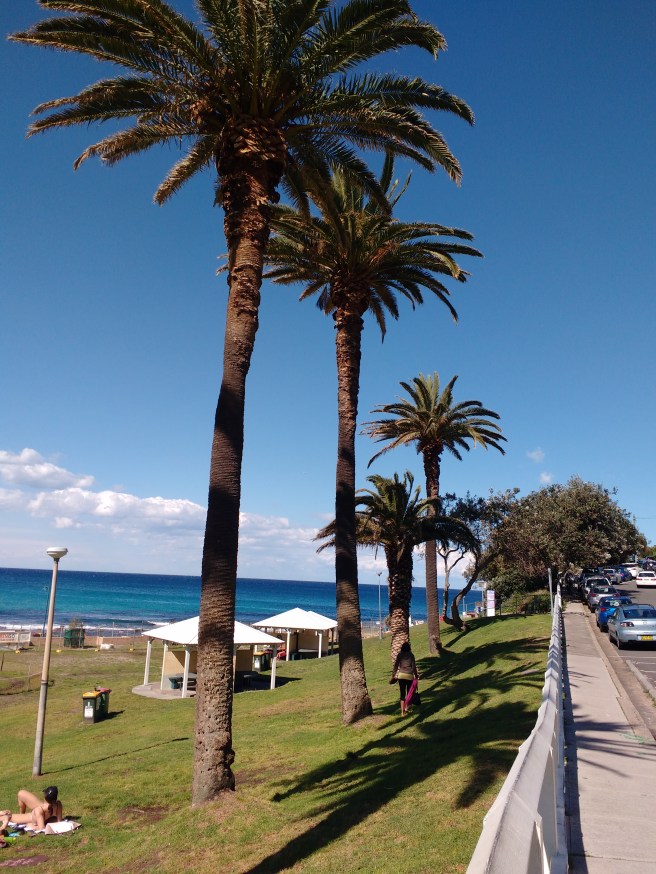
cafes, buses, palm trees, bright blue sky, cars on Bronte Road, Bronte

I am sitting in a café across the road from the beach in Bronte, Sydney.  This stretch of road has a whole row of cafes side by side facing the sea.  This is my favourite kind of writing place:  one where I can sit comfortably for a long period of time and where the owners of the café know me and welcome me.  This café is owned by a Brazilian man and his wife and has comfortable upholstered bench chairs with a direct view of the Pacific Ocean.  For my two-hour writing session my choice could be a traditional Brazilian dish such as Coxinha, Feijoda or Moqueca.  Or a cocktail like Caipirinha or  Caipiroska.  I must order something and it must be more that a Soy Cap, because I plan to be here for a long time.  I want the owners of the café to know I appreciate the time and the space they are allowing me.

However, today I’ll be very boring and order poached eggs on gluten-free bread 🙂

Why go to all this trouble to find a place to write?  Why not just stay home and work?  Because it’s good to get out and have a change of scene.  I find I need to be happy and relaxed when I’m creating on the page and sitting in a café with a pleasant vibe works for me.  Other writers need silence in order to concentrate, but I need to feel I am out and about in a beautiful place having a good time before the creative juices flow.

Strangely, working in a café can help to increase concentration.  The busy café atmosphere keeps the sensory part of you occupied and content, so that the hidden, quieter part of you that composes and focuses is allowed to do its work.  It is something like being cunning when trying to get a spoonful of food into a resistant toddler’s mouth .  You pretend to be an aeroplane with all the sound effects and movements before landing the food-laden plane inside the child’s mouth.  Mission accomplished.


What about you?  Do you need to be at your desk in total silence to write, or do you like to experience the swell of humanity around you—to be surrounded by other human beings?  Or at home listening to a particular kind of music?

Fortnightly Story: The Backpack


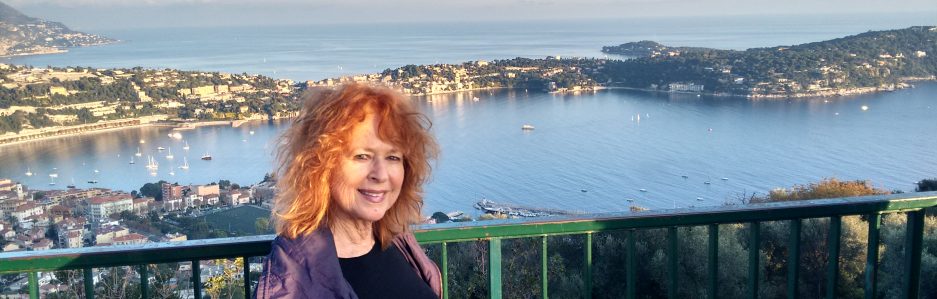
view of Villefranche sur Mer harbour from Mt Baron

What can a man who meets you at the station and offers to carry your backpack mean to a woman traveling the world alone?

I was scared, like anyone who has no sense of direction.  The journey was a series of stops and starts.  Whether to use the Eurail pass or post it back home and ask the kids to get me a refund.  Giovanni appeared one European winter, thick padded jacket, woolen beanie, scarf and gloves, tall and imposing,  I’ll carry your bag.

I was small, the backpack the length of my spine, the zip-off bag on one shoulder, the daypack positioned in front like a nine-month baby bump.  That evening, as we climbed the steps of the Corniche – the wind bitter across the Mediterranean, the metal stairs covered with slippery ice, the railing melting beneath my hand.  Soon it would become my railway platform, my steps, and Giovanni my landlord.

We walked there in the crisp night air.  My own place.  It didn’t cost much.  No-one yet knew I was here.  I could ask Giovanni if I needed any help.  I knew my children would be pleased I had a base.  I didn’t want them to worry.  It was the thing I wanted the most secretly, studying maps, absorbing travel books.  To be safe, a desire whispered to the moon that moved behind my shoulder at night.  If you guide me to a safe haven I promise to be happy.  And the moon listened.  I did my best.

The winter sky closed down and the spring began its flowering.  I took photos and painted and rang the children every week.  Watch your money, don’t talk to strangers, be careful walking at night – you know the drill.  The pebbly beach, the weekend markets, it was all there for the exploring.  A glimpse of the sea between terracotta roofs – a vision in turquoise.  The cobbled streets could show which way to follow – and none of them wrong.  A room at the top of the stairs – till June I stayed reading the English books Giovanni had left in the bookcase, shopping for food, telling my kids and friends they should come for a visit.

Where had the months gone?  Almost two years on the road.  Summer approached. The rents would go up and the tourists arrive.  Time to move on.  I could only take with me what I could carry on my back.  A Jewish gypsy they said.  One more step into the unknown.  Pack up, give away what I couldn’t manage, but keep the palette knife and miniature easel.  There was stuff happening back home.    The boys were grown and earning a living.  Their sister turned twenty-one.  People were reinventing themselves all over the place then coming back home.  A thousand train rides later, my mother nearly eighty.  I won’t be around much longer, she cried.

His was a helping hand in a world that says, but what are you doing there?  What are you doing?

First published in Quadrant

Copyright © Libby Sommer 2016


Becoming A Writer

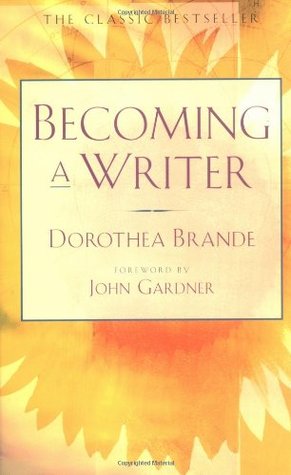
yellow sunflower bookcover of Becoming A Writer by Dorothea Brande

I highly recommend this book a friend from London gave me many years ago at the beginning of my writing journey.

‘A reissue of a classic work published in 1934 on writing and the creative process, Becoming a Writer recaptures the excitement of Dorothea Brande’s creative writing classroom of the 1920s. Decades before brain research “discovered” the role of the right and left brain in all human endeavor, Dorothea Brande was teaching students how to see again, how to hold their minds still, how to call forth the inner writer.’ – Amazon

‘Refreshingly slim, beautifully written and deliciously elegant, Dorothea Brande’s Becoming a Writer remains evergreen decades after it was first written. Brande believed passionately that although people have varying amounts of talent, anyone can write. It’s just a question of finding the “writer’s magic”–a degree of which is in us all. She also insists that writing can be both taught and learned. So she is enraged by the pessimistic authors of so many writing books who rejoice in trying to put off the aspiring writer by constantly stressing how difficult it all is.

With close reference to the great writers of her day–Wolfe, Forster, Wharton and so on–Brande gives practical but inspirational advice about finding the right time of day to write and being very self disciplined about it–“You have decided to write at four o’clock, and at four o’clock you must write.” She’s strong on confidence building and there’s a lot about cheating your unconscious which will constantly try to stop you writing by coming up with excuses. Then there are exercises to help you get into the right frame of mind and to build up writing stamina. She also shows how to harness the unconscious, how to fall into the “artistic coma,” then how to re-emerge and be your own critic.

This is Dorothea Brande’s legacy to all those who have ever wanted to express their ideas in written form. A sound, practical, inspirational and charming approach to writing, it fulfills on finding “the writer’s magic.”‘ – John Gardner


Fortnightly Story: Tom

man in black wetsuit riding a wave

May Ling steps across the skipping rope.  I’m waiting for her with her baby brother, outside the school hall, but she hasn’t seen me yet.   Every Thursday when she finishes her Hip Hop class I hang about with the other mothers and grandmothers and carers.  It’s a routine I enjoy—walking up here with the baby in the stroller and then chatting with May Ling as we walk home. Continue reading

I’m A Writing Workshop Junkie

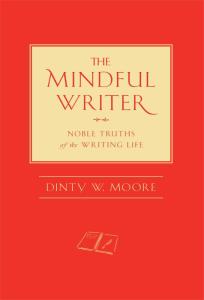
red book cover of The Mindful Writer by Dinty W. Moore

‘A writer is someone for whom writing is more difficult than it is for other people.’ – Thomas Mann

Even though I’ve had many of my short stories published, plus a novel, and a second novel accepted, I’m always wanting to learn more about the writing process – especially the link between creativity and spirituality.  Four weeks ago I enrolled in ‘The Mindful Writer’,  a course devised and presented by  Walter Mason.  Highly recommended.  He combines the insights of meditation and mindfulness with the joy of creative writing.

‘Tap into your true creative thinking through mindfulness and become aware of the vast reserves of wisdom within.’ – Walter Mason

Dinty Moore, in his book The Mindful Writer, Noble Truths of the Writing Life, says his lifelong pursuit of writing and creativity has helped to open him to the path of Buddhism:

“Find inspiration and insight on writing as a spiritual practice through astute quotes, thoughtful advice, and productive exercises on both mindfulness and craft.  This isn’t your typical “how to write” book. Author Dinty W. Moore, a well-respected writing coach and teacher, thoughtfully illuminates the creative process: where writing and creativity originate, how mindfulness plays into work, how to cultivate good writing habits and grow as a person, and what it means to live a life dedicated to writing. The Mindful Writer features bite-sized essays that will delight and inform not only writers, but also other artists, mediators and mindfulness practitioners. Built around heartening quotes from famous writers and thinkers, it is a resource that readers will turn to again and again for guidance and encouragement.” – Simon & Schuster Australia

On the never-ending path of learning more about the craft of writing, I also enrolled at the Blogging University (yet again) and took the WordPress course  Writing: Shaping Your Story – an intermediate course on the art of revision:  four weeks of self-editing and rewriting.  Dig into the process of focusing and building a story, whether fiction or nonfiction.  Lots of useful information.  And the course is free :).

So back to my desk now and to the work of crafting a new novel.