What can you do while in isolation?

photo of a woman thinking

David Dale in the Sydney Morning Herald writes about Isaac Newton’s self-isolation during the plague year 1665-66 and how he passed the time.


‘Newton was 23, a student at Cambridge. When the black plague spread there from London, he retreated to his birthplace – Woolsthorpe Manor, near the town of Grantham (later the birthplace of Margaret Thatcher). During what he called his “annus mirabilis”, or wonderful year, at Woolsthorpe, Newton did three significant things:

He invented the mathematical system called calculus,

He drilled a hole in the shutter of his bedroom window and held a prism up to the beam of sunlight that came through it, discovering that white light is made up of every colour (and giving Pink Floyd an iconic album cover), and

He watched apples falling from the trees in his garden and theorised about a force called gravity, which keeps the moon revolving around planet Earth. (He later wrote: “I can calculate the movement of heavenly bodies, but not the madness of people.”)’ – Sydney Morning Herald 


So what can you do while in isolation amid the corona virus outbreak to stay calm and centred and to concentrate your mind away from the current crisis? A writing project could be the answer.

What to write? If you’ve been wondering whether to write a short story or a novel, here are some thoughts on these two different forms of creative fiction:

Is a novel a short story that keeps going, or, is it a string of stories with connective tissue and padding, or, is it something else?  Essayist Greg Hollingshead believes that the primary difference between the short story and the novel is not length but the larger, more conceptual weight of meaning that the longer narrative must carry on its back from page to page, scene to scene.

“It’s not baggy wordage that causes the diffusiveness of the novel.  It’s this long-distance haul of meaning.”  Greg Hollingshead

There is a widespread conviction among fiction writers that sooner or later one moves on from the short story to the novel.  When John Cheever described himself as the world’s oldest living short story writer, everyone knew what he meant.

Greg Hollingshead says that every once in a while, to the salvation of literary fiction, there appears a mature writer of short stories—someone like Chekhov, or Munro—whose handling of the form at its best is so undulled, so poised, so capacious, so intelligent, that the short in short story is once again revealed as the silly adjective it is, for suddenly here are simply stories, spiritual histories, narratives amazingly porous yet concentrated and undiffused.

When you decide you want to write in a particular form—a novel, short story, poem—read a lot of writing in that form.  Notice the rhythm of the form.  How does it begin?  What makes it complete?  When you read a lot in a particular form, it becomes imprinted inside you, so when you sit at your desk to write, you produce that same structure.  In reading novels your whole being absorbs the pace of the sentences, the setting of scenes, knowing the colour of the bedspread and how the writer gets her character to move down the hallway to the front door.

I sit at my desk thinking about form as a low-slung blanket of cloud blocks my view of the sky.  Through the fly screen I inhale the sweet smell of earth after rain as another day of possibility beckons.

Self-isolation can give us an opportunity to create something new.

Good luck everyone during this horrific pandemic and please take care.

Exercise the Writing Muscle


muscle man

Writing as a daily practice is a way to exercise the writing muscle. Like working out at the gym, the more you do it, the more results you get. Some days you just don’t feel like working out and you find a million reasons not to go to the gym or out for a jog, a walk, a swim, a bike ride, but you go anyway. You exercise whether you want to or not. You don’t wait around till you feel the urge to work out and have an overwhelming desire to go to the gym. It will never happen, especially if you haven’t been into health and fitness for a long time and you are pretty out of shape. But if you force yourself to exercise regularly, you’re telling your subconscious you are serious about this and it eventually releases its grip on your resistance. You just get on and do it. And in the middle of the work out, you’re actually enjoying it. You’ve felt the endorphins kick in. When you get to the end of the jog, the walk, the bike ride, the swim, the gym workout or the Pilates, Yoga or Zumba class, you don’t want it to end and you’re looking forward to the next time.

That’s how it is with writing too. Once you’ve got the flow happening, you wonder why it took you so long to turn up on the page. Bum on chair is what I used to say to my writing students. Through daily practice your writing does improve.

In The Artist’s Way, Julia Cameron’s book on discovering and recovering your creative self, she refers to daily writing practice as the morning pages. She recommends writing three pages of longhand, strictly stream-of-consciousness—moving the hand across the page and writing whatever comes to mind every day.

Author of Writing Down the Bones, Natalie Goldberg refers to writing practice as timed exercise. She says you might time yourself for ten minutes, twenty minutes, or longer. It’s up to you, but the aim is to capture first thoughts. “First thoughts have tremendous energy. It is the way the mind first flashes on something. The internal censor usually squelches them, so we live in the realm of second and third thoughts, thoughts on thought, twice and three times removed from the direct connection of the first fresh flash.”

Her rules for writing practice are:

1. Keep your hand moving.
2. Don’t cross out.
3. Don’t worry about spelling, punctuation , grammar.
4. Lose control.
5. Don’t think. Don’t get logical.
6. Go for the jugular.

In Creative Journal Writing, author Stephanie Dowrick refers to the same process as free writing; writing without judging, comparing and censoring. “Continuing to write when you don’t know what’s coming next and especially when you feel your own resistances gathering in a mob to mock you.”

Daily writing practice has been described as clearing the driveway of snow before reaching the front door. In other words, it’s what we do as a warm up before the real writing takes place.  And it’s a way to loosen up and discover your own unique writing ‘voice’.  That’s what publishers are looking for when they read through the slush pile.  The storyteller’s voice.  The authentic writing voice of the author is what engages the reader.

What about you? Are you able to carve some time out of each day to write?

Another submission success

hands typing on typewriter

I am very happy to say my new prose poem ‘Someone I Don’t Know Sideswiped My Car’ has been accepted for publication by literary magazine Quadrant. A huge boost to my confidence as a writer. Fear of the blank page and running out of ideas never leaves me. Am very grateful that I am still producing and publishing new work.

So what is prose poetry?

Wikipedia offers this definition of prose poetry: “Prose poetry is poetry written in prose instead of using verse but preserving poetic qualities such as heightened imagery and emotional effects.”

‘A prose poem falls somewhere in the gray area between a story and a poem. Prose poetry also tends to be very, very short, often (but not always) less than one page. Prose poetry blends the styles of poetry and narrative prose.’ – Writer’s Relief

I love creating stories in this very very short form.

Book Review: ‘Stories from Bondi’

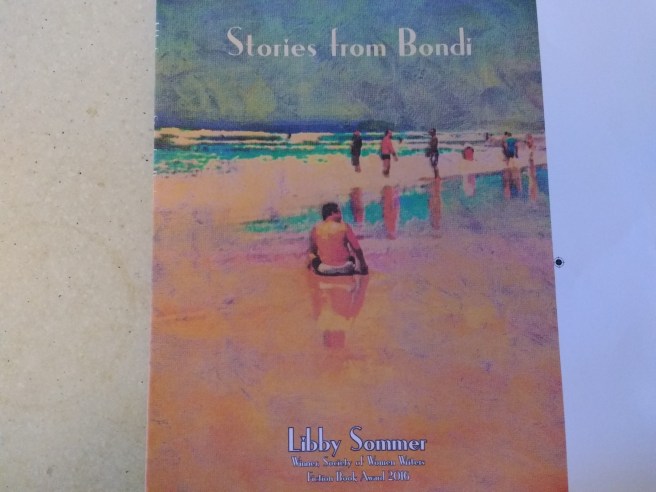
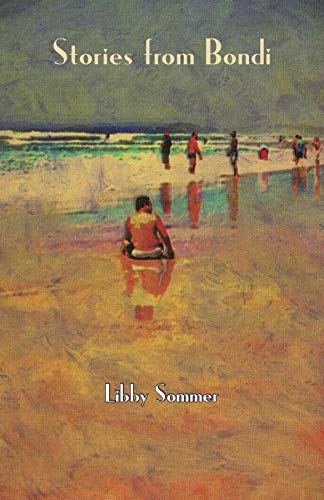
book cover of 'Stories from Bondi' showing people on the sand by the sea
Book reviewer Dr Beatriz Copello, D.C.A. (Creative Writing) U.O.W., Cultural Editor of Semanario El Español and Psychologist, has written a wonderful review of  my new book STORIES FROM BONDI.
She writes:

Stories from Bondi is a collection of short stories by Libby Sommer.  Libby Sommer is the award-winning Australian author of My Year with Sammy (2015), The Crystal Ballroom (2017) and The Usual Story (2018) and is a regular contributor of stories and poems to Quadrant Magazine.

The stories contained in this book are varied in tone, mood and themes and they go from the very light and funny to sombre and sad, and from the innocent to the complex.  Most of the stories are set in the Eastern Suburbs of Sydney and for the inhabitants of this city it is fun to recognise familiar places and people from foreign places will learn about the beauty of  Sydney.

Australian humour is sprinkled over the pages as well as truly Australian expressions, typical social comments and comments about the style of clothing the characters wear. Some authors describe characters’ clothes in a way that is pedantic.  This is not the case with Sommer, the way this author dresses her characters emphasize aspects of their personality.

Various stories are about Anny, a well-defined character who the reader gets to know through her many and varied experiences.  Through Anny’s point of view the reader encounters reflections about modern women, their issues, concerns and sexual mores.

In Stories From Bondi the sea is ever present, as well as the seagulls … seagulls flapping wings, seagulls walking on sand or seaweed, seagulls flying … seagulls who are witnesses of Anny’s life.

Strong women’s issues are covered in some of the stories, but also issues that many women readers would identify as their own, issues such as body image, for example in “After The Rain” where Anny expresses concerns about her figure, the author writes:

“Although there are fans on the ceiling, it’s very hot in the restaurant.  Anny wants to take off her cardigan but she doesn’t want to expose her upper arms that is, that are less than perfect even though she does weights and other things at the gym.

She wears a jacket or a cardigan always now to draw the eyes and attention away from that part of her body that is growing larger at a more rapid rate than the rest of her, which is causing her much alarm.”

Sommer with her imaginative mind take us to places, where many women on their own would not dare to go, like lonely overseas trips or to Sex Clubs.  Yes, Anny visits a sex club in the story titled “Around Midnight”, story which is packed with the unexpected and with humour.  Although, I enjoyed reading this story I would have loved for it to have stronger and more explicit sex scenes.  Humour is also found in other stories like in “It’s Not Easy Being On Holidays”, she writes:

“Anny said, On New Year’s Eve I ran my hand up the inside of a man’s trousers from the ankles up and discovered he wasn’t wearing any underwear either.

You discover a little something?

A big something, she said.

They both laughed.”

In the story mentioned above there are also a few really funny passages full of innocence, one of these is when Anny phones her son to tell him about her holidays, Sommer writes:

“And Pamela and Annabel all over each other in front of me.  I can’t stand it.

Would it worry you so much if they were straight?

I can’t stand anyone being passionate in front of me — straight or gay.  It makes me jealous.  It’s inconsiderate of them.

Well, what did you expect going on holidays with two gays, two lesbians, a bisexual and a dog?

You’re right.”

Sommer has the ability to create believable characters and place them in real life situations, whether these situations are arranged or occur by chance. The ‘unusual’ sometimes is found in this writer’s narrative, like when she describes different types of Glutei Maximi, for those unacquainted with Latin this mean simply ‘bums’. Sommer is a good observer and as such gives us good descriptions of ‘bums’, the character Anny comments:

“Gradually the men on the beach sauntered towards the boat with money clasped in their bare hands.  They lined up one behind the other as they waited their turn, assorted body shapes and colours.  Tight firm bums, droopy wrinkly bums. Some with tell-tale underwear marks and others browned all over.”

Slices of life are brought to the reader with cinematic qualities: sceneries, the characters, the situations, all can be seen in the mind’s eye like in a movie. The following is a small example:

“Max leant back on his elbows nibbling on a bunch of grapes.  He knocked the bottle of red wine beside him.  The bright red liquid seeped into the white sand.

A fly buzzed around the apples.

A trail of ants marched towards the bread.

The Brie softened in the sun.”

The above paragraph is the ending of one of the stories, a simple ending that says so much.

In the collection there is one very sad story of abuse and growing up too quickly and not knowing how to stop abusers who prey on innocent girls.  There are also issues experienced by the characters which are very common to women one of this is the need to feel safe, the story “The Backpack” has that need very clearly expressed by the character:

“I knew my children would be pleased I had a base.  I didn’t want them to worry. It was the thing I wanted the most secretly, studying maps, absorbing travel books. To be safe, a desire whispered to the moon that moved behind my shoulder at night.  If you guide me to a safe haven, I promise to be happy.  And the moon listened.  I did my best.”  How many women would identify with this? Many it is my guess.

All the main characters in Stories From Bondi are women, mainly writers who are portrayed as intelligent, inquisitive, reflective and observant who experience an array of emotions, men would find the stories fascinating and would learn about what goes in women’s heads.

Bondi is not the only setting mentioned in the book, other Australian cities and small towns are the background of some the stories, places like Perth, Cairns, Wee Wa, Brindabella as well as European cities.

Sometimes the author transitions from omniscient narrator to first person narrator, this works in most of the stories but in some small sections this does not happen. This minor issue does not demerit the stories at all.

There is one experimental story in the collection: “Around The World In Fifty Steps” where the author writes sentences and short paragraphs and numbers them from 1 to 50. Some of the sentences are dialogues, others propositions, information about the character and suggestions. The result is positive, the reader gets to know the character and what is going on in her life.

Some of the stories mirror women’s fantasy about escaping the routine, pain, loneliness, disappointment and sorrows as well as those close relationships that can be so complicated such as between mother and daughter. Also the reader will find sad possible romances that never get anywhere like in her previous novel The Usual Story.

Stories from Bondi is a book well written, with an interesting narrative and with characters true to life. Again Sommer brings to light another book in which the reader can submerge themselves into place and characters. Highly recommended.

About the Reviewer:

Dr Beatriz Copello, is a former member of NSW Writers Centre Management Committee, she writes poetry, reviews, fiction and plays. The author’s poetry books are: Women Souls and Shadows, Meditations At the Edge of a Dream, Flowering Roots, Under the Gums Long Shade, and Lo Irrevocable del Halcon (In Spanish).

Beatriz’s poetry has been published in literary journals such as Southerly and Australian Women’s Book Review and in many feminist publications.  She has read her poetry at events organised by the Sydney Writers Festival, the NSW Writers Centre, the Multicultural Arts Alliance, Refugee Week Committee, Humboldt University (USA), Ubud (Bali) Writers Festival.

 

Taste Life Twice – Repost

uncapped fountain pen on page

“Writers live twice. They go along with their regular life, are as fast as anyone in the grocery store, crossing the street, getting dressed for work in the morning. But there’s another part of them that they have been training. The one that lives everything a second time. That sits down and sees their life again and goes over it. Looks at the texture and the details.”  – Natalie Goldberg

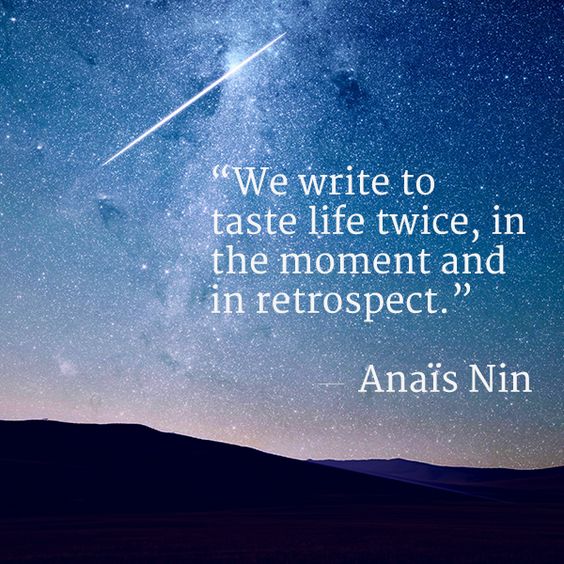
quote by Anais Nin against a night sky

What do you think? Do you taste life twice as a writer? I do. What about you?

Writing Tip: Don’t Tell, but Show – Repost

photo of a woman thinking

This is an old one, but a good one. What does it mean exactly? It means don’t tell us about loneliness (or any of those complex words like dishonesty, secrecy, jealousy, obsession, regret, death, injustice, etc) show us what loneliness is. We will read what you’ve written and feel the bite of loneliness. Don’t tell us what to feel. Show us the situation, and that feeling will be triggered in us.

When you take your child to school on their first day you may find yourself teary and relieved at the same time. Put into words what you see: the child’s face, the wave at the gate, the other mothers saying their goodbyes, another child coming up to take your son by the hand. We will get what you’re trying to say without you telling us directly.

The how-to-write books tell us to use our senses when we write stories:  sight, sound, smell, touch. Writing from the senses is a good way to penetrate your story and make friends with it. Don’t tell us about something, drop deep, enter the story and take us with you.

What about you? Do you consciously bring the senses into your creative writing?

Launch: Stories from Bondi

painting of girl lying on beach in torquoise bikini reading a book

I was very lucky to have award-winning Australian author Susanne Gervay OAM launch my 4th book STORIES FROM BONDI on 2 November at the Blue Mountains Heritage Centre.  Susanne and I first became friends about seven years ago when I stayed at her hotel in Woollahra for three weeks while recovering from major surgery. I’d mentioned our mutual friend Sharon Rundle and Susanne had said that anyone who was a friend of Sharon’s was a friend of hers. Susanne would notice me each morning in the corner of the cafe at the hotel working on my stories and she’d often come over and have a chat. Since that time she has continued to show an interest in my work and my writing career. She would encourage me to enter competitions and always remained positive about publication possibilities. Susanne is now one of my best friends. Lucky me.

It’s been a twenty year journey to book publication. I had five book length manuscripts written before I had one accepted for publication by Ginninderra Press. I am forever grateful to Stephen Matthews for giving me a chance. MY YEAR WITH SAMMY, the fifth book I’d written, went on to be Pick of the Week in Spectrum Books in the Sydney Morning Herald and was winner of the Society of Women Writers Fiction Book Award 2016.

So then I sent Stephen Matthews at Ginninderra Press manuscript numbers four, three, and two. He has published one book a year since 2015:  MY YEAR WITH SAMMY, THE CRYSTAL BALLROOM, THE USUAL STORY and now, STORIES FROM BONDI.

A massive thank you to my publisher.

And thank you to all those who supported me at the launch by buying copies of  my books.

In an animated entertaining presentation Susanne Gervay launched STORIES FROM BONDI by saying in her introduction:

‘Libby’s a red head. That’s the only thing I can think of for her extraordinary life. From my intense research, I know that redheads represent less than 2% of the population so they are a rare breed. They are sensitive, fiery, passionate, and also have more sex than blondes or brunettes. Sorry Libby, I learnt that from Cosmopolitan magazine.’

Susanne is a wonderful guest speaker. She had the whole room laughing wholeheartedly.

stories from bondi amazon cover image


Writing in Cafes – Repost


Featured Image -- 5029

I am sitting in a café across the road from the beach in Bronte, Sydney.  This stretch of road has a whole row of cafes side by side facing the sea.  This is my favourite kind of writing place:  one where I can sit comfortably for a long period of time and where the owners of the café know me and welcome me.  This café is owned by a Brazilian man and his wife and has comfortable upholstered bench chairs with a direct view of the Pacific Ocean.

For my two-hour writing session my choice could be a traditional Brazilian dish such as Coxinha, Feijoda or Moqueca.  Or a cocktail like Caipirinha or  Caipiroska.  I must order something and it must be more that a coffee, because I plan to be here for a long time.  I want the owners of the café to know I appreciate the time and the space they are allowing me.

Why go to all this trouble to find a place to write?  Why not just stay home and work?  Because it’s good to get out and have a change of scene.  I find I need to be happy and relaxed when I’m creating on the page and sitting in a café with a pleasant vibe works for me.  Other writers need silence in order to concentrate, but I need to feel I am out and about in a beautiful place having a good time before the creative juices flow.

Strangely, working in a café can help to increase concentration.  The busy café atmosphere keeps the sensory part of you occupied and content, so that the hidden, quieter part of you that composes and focuses is allowed to do its work.  It is something like being cunning when trying to get a spoonful of food into a resistant toddler’s mouth.  You pretend to be an aeroplane with all the sound effects and movements before landing the food-laden plane inside the child’s mouth.  Mission accomplished.

What about you?  Do you need to be at your desk in total silence to write, or do you like to experience the swell of humanity around you—to be surrounded by other human beings?  Or in your home office listening to a particular kind of music?

Use Declarative Sentences – Reblog

pexels-photo.jpg

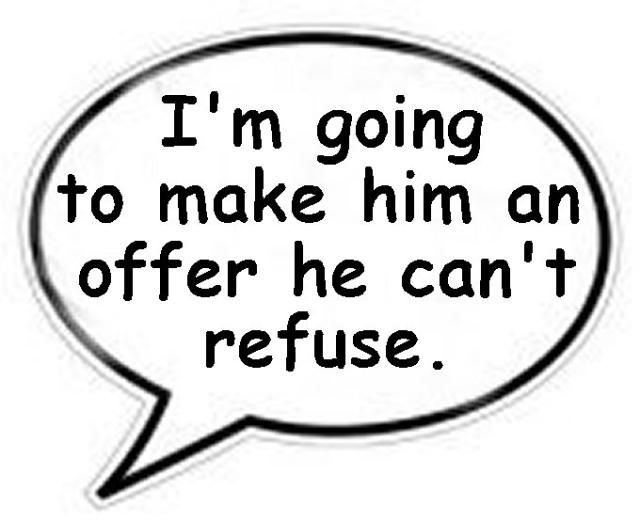
speech bubble: I'm going to make him an offer he can't refuse

This declarative sentence was spoken by Don Corleone (played by Marlon Brando) in the movie The Godfather (1972).

It is not uncommon for women and other minority groups to add qualifiers to their statements. Such as ‘Parents need to stop organising every minute of their children’s spare time, don’t you think?’ ‘I loved that movie, didn’t you?’ In our sentence structure we look for reinforcement for our thoughts and opinions. We don’t always make declarative statements. ‘This is wonderful.’ ‘This is a catastrophe.’ We look for re-enforcement from others.

Another thing we do without realising it, is use indefinite modifiers in our speech:  perhaps, maybe, somehow. ‘Maybe I’ll take a trip somewhere.’ As if the speaker has no power to make a decision. ‘Perhaps it will change.’ Again, not a clear declarative sentence like, ‘Yes, nothing stays the same.’

It is important for us as writers to express ourselves in clear assertive sentences. ‘This is excellent.’ ‘It was a red dress.’ Not ‘The thing is, I know it sounds a bit vague, but I think maybe it was a red dress.’ Speaking in declarative sentences is a good rehearsal for trusting your own ideas, in standing up for yourself, for speaking out your truth.

When I write poetry I read through early drafts with a critical eye, taking out indefinite words and modifiers. I attempt to distill each moment to its essence by peeling off the layers until the heart of the poem is exposed. We need to take risks as writers and go deep within ourselves to find our unique voices and express ourselves with clarity.

Even if you are not 100% sure about your own opinions and thoughts write as if you are sure.  Dig deep. Be clear. Don’t be vague on the page. If you keep practicing this, you will eventually reveal your own deep knowing.

Have you noticed this tendency to qualify in your conversations with others, or in your creative writing, or in blog posts? Would love to hear your thoughts.

The Writing Life – Reblog

Featured Image -- 5029

One of my favourite books on the writing process is The Writing Life by Annie Dillard. It’s a small but passionate guide to the terrain of a writer’s world.

The Writing Life by Annie Dillard book cover

Annie Dillard has written eleven books, including the memoir of her parents, An American Childhood; the Northwest pioneer epic The Living; and the nonfiction narrative Pilgrim at Tinker Creek winner of the 1975 Pullizer Prize.  A gregarious recluse, she is a member of the American Academy of Arts and Letters.


“For non-writers, The Writing Life is a glimpse into the trials and satisfactions of a life spent with words. For writers, it is a warm, rambling, conversation with a stimulating and extraordinarily talented colleague.””–Chicago Tribune””A kind of spiritual Strunk & White, a small and brilliant guidebook to the landscape of a writer’s task…Dillard brings the same passion and connective intelligence to this narrative as she has to her other work.”– “Boston Globe””For her book is…scattered with pearls. Each reader will be attracted to different bright parts…Gracefully and simply told, these little stories illuminate the writing life…Her advice to writers is encouraging and invigorating.”– “Cleveland Plain Dealer””The Writing Life is a spare volume…that has the power and force of a detonating bomb…A book bursting with metaphors and prose bristling with incident.”– “Detroit News”


Dillard begins:

When you write, you lay out a line of words. The line of words is a miner’s pick, a woodcarver’s gouge, a surgeon’s probe. You wield it, and it digs a path you follow. Soon you find yourself deep in new territory. Is it a dead end, or have you located the real subject? You will know tomorrow, or this time next year. You make the path boldly and follow it fearfully. You go where the path leads. At the end of the path, you find a box canyon. You hammer out reports, dispatch bulletins. The writing has changed, in your hands, and in a twinkling, from an expression of your notions to an epistemological tool. The new place interests you because it is not clear. You attend. In your humility, you lay down the words carefully, watching all the angles. Now the earlier writing looks soft and careless. Process is nothing; erase your tracks. The path is not the work. I hope your tracks have grown over; I hope birds ate the crumbs; I hope you will toss it all and not look back.

Which books on writing process have you found to be inspiring?