Writing Tip: Start Writing

When I used to teach classes to beginning writers, it was good.  It forced me to think back to the beginning to when I first put pen to paper.  The thing is, every time we sit down and face the blank page, it’s the same.  Every time we start a new piece of writing, we doubt that we can do it again.  A new journey with no map – like setting off towards the horizon alone in a boat and the only thing another person can do to help is to wave from the shore.

So when I used to teach a creative writing class, I had to tell them the story all over again and remember that this is the first time my students are hearing it.  I had to start at the very beginning.

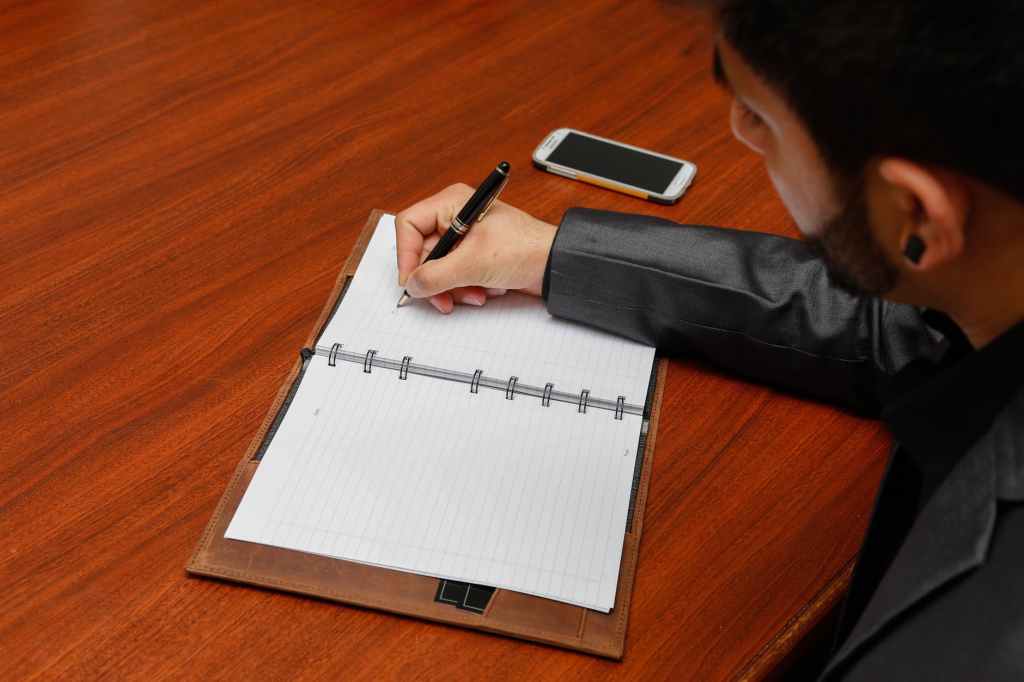
First up, there’s the pen on the page.  You need this intimate relationship between the pen and the paper to get the flow of words happening.  A fountain pen is best because the ink flows quickly.  We think faster than we can write.  It needs to be a “fat” pen to avoid RSI.

Consider, too, your notebook.  It is important.  The pen and paper are your basic tools, your equipment, and they need to be with you at all times.  Choose a notebook that allows you plenty of space to write big and loose.  A plain cheap thick spiral notepad is good.

After that comes the typing up on the computer and printing out a hard copy.  It’s a right and left brain thing.  You engage the right side of the brain, the creative side when you put pen to paper, then bring in the left side, the analytic side, when you edit the print out as you settle back comfortably with a drink (a cup of tea, even) and read what you’ve written.

Patrick White said that writing is really like shitting; and then, reading the letters of Pushkin a little later, he found Pushkin said exactly the same thing.  Writing is something you have to get out of you.

typing writing on a pink background

Whether writing a story or writing a blog, start writing, no matter what.

Story Mosaic

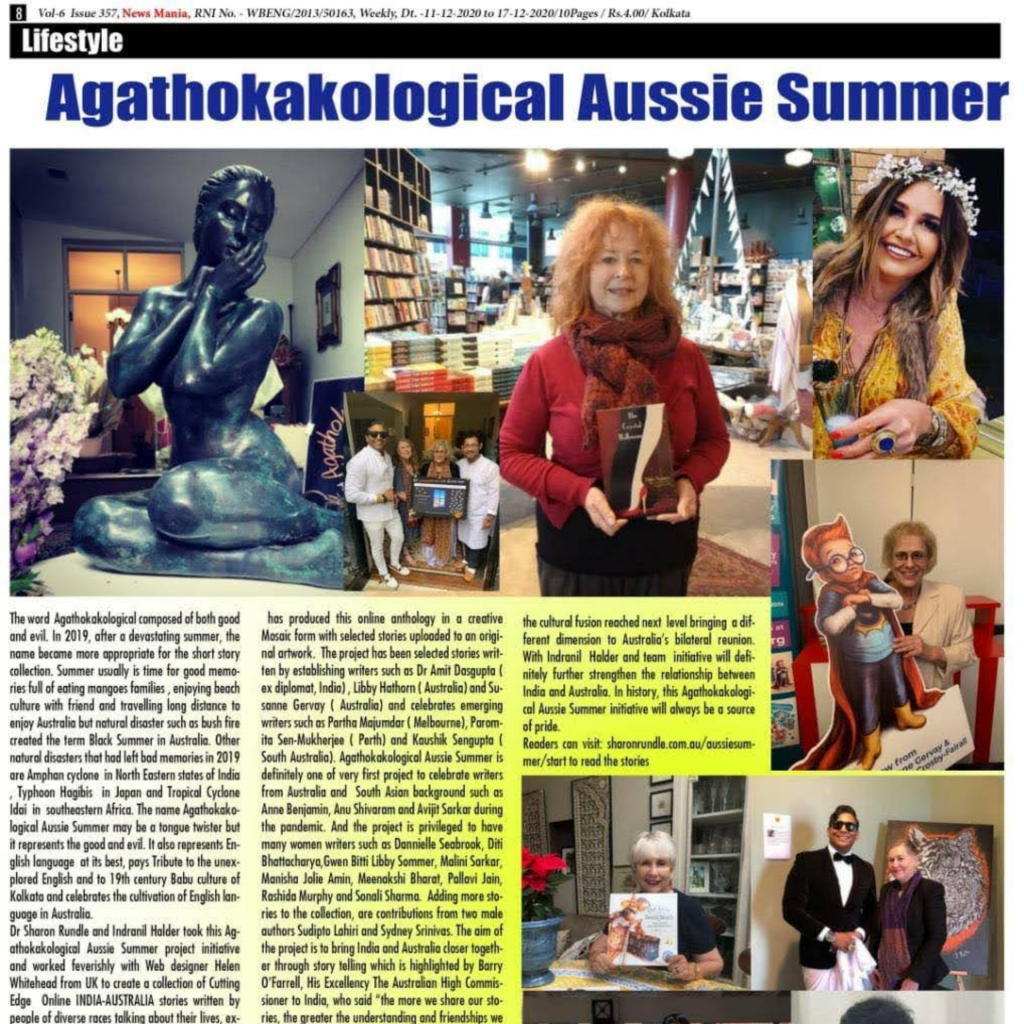
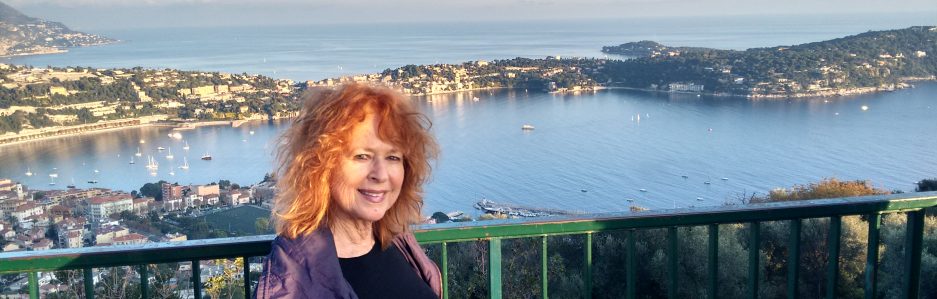
Famous in India! That’s me holding my book, ‘The Crystal Ballroom’. My stories ‘Aravind’ and ‘Aravind Again’, included in Agathokakological Aussie Summer story mosaic, are self-contained chapters from ‘The Crystal Ballroom’. A great review of the story mosaic is in Indian national newspaper, News Mania. Well done to editors Sharon Rundle and Indranil Bengal Halder

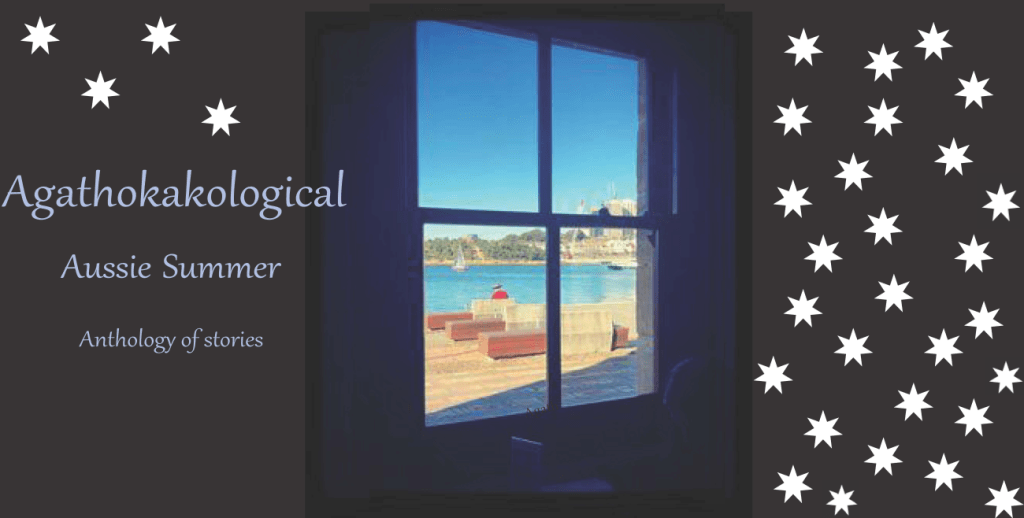
Agathokakological Aussie Summer is an Australia – India collaborative online story mosaic. All free! Enjoy the stories at:

www.sharonrundle.com.au/aussiesummer/start or

https://aussiesummer.com.au

Just press a star to begin.

Back Cover Blurb: ‘Lost in Cooper Park’

I’ve been slaving away trying to write a good blurb for my soon to be released by Ginninderra Press new book, ‘Lost in Cooper Park’.

Writing a blurb is hard hard work. There are no shortcuts or easy answers. Anyway, after a chat with a close writing friend, this is what I’ve put together for the back cover.

The story begins when, after a fierce storm, Gypsy, a golden Labrador, goes missing in Sydney’s Cooper Park.

A bittersweet comedic account of mistakes, misconceptions and reconciliations in the lives of a disparate group of urban men and women.

There’s Crystal, who wants stability with her eight-year-old daughter and new partner.  

Crystal’s ex, searching for the meaning of existence.

Doctor Sarah wanting a new beginning in France.

Rosemary and Philip who want their daughter to walk again.

Crystal’s high school sweetheart who wants another chance.

And the Homeless Girl hiding in Cooper parklands.

And then there’s the cruelty, unpredictability and beauty of life.

Back cover blurb: ‘Lost in Cooper Park’ by Libby Sommer

Tell me what you think? Would you be interested in reading this book?

My Poem ‘Quarantine’

My poem ‘Quarantine’ was published in September 2020 Quadrant magazine.

Have a read. Hope you enjoy it.

As mentioned previously, I really enjoy writing in a super-short form. I’ve been told I have the ability to distil. So … prose poems and poetry have been added to my repertoire. I’m currently working on a new collection of poetry, prose poems and flash fiction titled ‘Love & A Search for Meaning’. What do you think of this working title for a collection? Any comments much appreciated.

Quarantine:

But there still are the other things –

water’s rhythmic tumble

over rocks,

the gentle hush of wind through leaves –

we celebrate

in solitude.

Copyright © 2020 Libby Sommer

Writing Tip: Show Don’t Tell

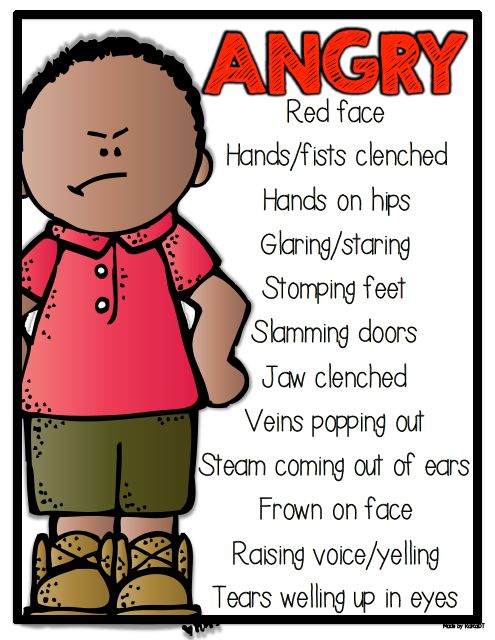
cartoon illustrating angry boy with red face

Show don’t tell is an old writing tip, but a good one.

What does it mean exactly?

It means don’t tell us about loneliness (or any of those complex words like dishonesty, secrecy, jealousy, obsession, regret, death, injustice, etc) show us what loneliness is. We will read what you’ve written and feel the bite of loneliness. Don’t tell us what to feel. Show us the situation, and that feeling will be triggered in us.

When you take your child to school on their first day you may find yourself teary and relieved at the same time. Put into words what you see: the child’s face, the wave at the gate, the other mothers saying their goodbyes, another child coming up to take your son by the hand. We will get what you’re trying to say without you telling us directly.

The how-to-write books tell us to use our senses when we write stories:  sight, sound, smell, touch. Writing from the senses is a good way to penetrate your story and make friends with it. Don’t tell us about something, drop deep, enter the story and take us with you.

What about you? Do you consciously bring the senses into your creative writing?

Writing Tip: How to Slow Things Down

So, here’s the thing:  choose something in particular to write about. For example, what it feels like having a tennis lesson after a twenty year break. Give us the specifics. Dig deep for the details, but at the same time be aware of the world around you. As you focus on what you’re writing, at the same time stay conscious of your surroundings:  the white painted cane Bentwood chairs in the café, the cool breeze from under the door on your sandaled feet, the hum of the traffic outside. Just add a sentence every now and then about the trees that overlooked the tennis courts while you were having a tennis lesson. When we focus on our writing it is good. Seeing the colour of the sky when you toss the ball gives breathing space to your story.

If you are sitting in Meditation you calm the butterfly mind by paying attention to your thoughts, giving them space by acknowledging them before returning to the breath, in and out through the nostrils. In the act of slowing down your breathing, as best you can, you remain open so that you are receptive to awareness of sounds as they arise: sounds near, sounds far, sounds in front, behind, to the side, above or below.

With every breath you take, you feel the air, the sound of the ball as it hits the racket, the  players on the other courts.

We should always be living in the present, not by ignoring the world around us, but by paying close attention. It is not easy to stay alive to ‘what is’. When we slow things down in our writing, it is good practice.

What about you? Do you find a daily meditation practice assists your writing practice?

My Microlit ‘In the Mall’

My Microlit ‘In the Mall’ was selected as an entry in the Microflix Writers Awards available to be chosen by filmmakers for adaption to a short film for the 2019 Film Awards. On the theme of SOUND it is available to view on the Microflix SOUND extracts page on the website of Australian short story publisher, Spineless Wonders.

So what is Microlit? According to writer, teacher and editor, Karen Whitelaw: Imagery is important to all writing, but none more than microlit. … Writing is a visual art; paint pictures with words. Things don’t have to be explained, merely implied. This is the beauty of the form, that behind the words a whole world is peeping through. The micro-story has to say something.

Have a read of my story. Hope you enjoy it.

IN THE MALL

In a café inside a mall in Sydney a small curly-topped girl sobbed and sobbed. She sat on her father’s lap, stabbing her finger into a slice of banana bread. Her dad soothed, whispered, coaxed. What would you like, Tara? He cut into his poached egg. Toast? he cajoled. The girl sobbed more loudly, wailing, coughing, staring out into the mall. I want my mum. She cuddled a pink soft piglet. Our eyes scanned the glass display of croissants, pies and pastries. I loved every carb that did not pass my lips. I loved the sobbing child who heard no one else in that cafe but herself, whose lungs fought hard to reach a soaring, sorrowful pitch. What have you got? an elderly woman asked her. Still crying, the child held up her toy. Her father gave up on his poached eggs and carried her out, still wailing. We went and sat at the table with the stabbed-at bread her finger had made and swept the moist crumbs into a heap.

Copyright © 2019 Libby Sommer


Writing Tip: Becoming a Writer

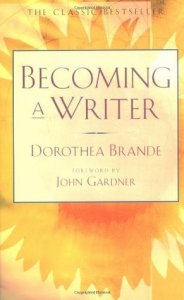
yellow sunflower bookcover of Becoming A Writer by Dorothea Brande

I highly recommend ‘Becoming A Writer’ by Dorothea Brande given to me by a friend many years ago at the beginning of my writing journey.

‘A reissue of a classic work published in 1934 on writing and the creative process, Becoming a Writer recaptures the excitement of Dorothea Brande’s creative writing classroom of the 1920s. Decades before brain research “discovered” the role of the right and left brain in all human endeavor, Dorothea Brande was teaching students how to see again, how to hold their minds still, how to call forth the inner writer.’ – Amazon

‘Refreshingly slim, beautifully written and deliciously elegant, Dorothea Brande’s Becoming a Writer remains evergreen decades after it was first written. Brande believed passionately that although people have varying amounts of talent, anyone can write. It’s just a question of finding the “writer’s magic”–a degree of which is in us all. She also insists that writing can be both taught and learned. So she is enraged by the pessimistic authors of so many writing books who rejoice in trying to put off the aspiring writer by constantly stressing how difficult it all is.

‘With close reference to the great writers of her day–Wolfe, Forster, Wharton and so on–Brande gives practical but inspirational advice about finding the right time of day to write and being very self disciplined about it–“You have decided to write at four o’clock, and at four o’clock you must write.” She’s strong on confidence building and there’s a lot about cheating your unconscious which will constantly try to stop you writing by coming up with excuses. Then there are exercises to help you get into the right frame of mind and to build up writing stamina. She also shows how to harness the unconscious, how to fall into the “artistic coma,” then how to re-emerge and be your own critic.

‘This is Dorothea Brande’s legacy to all those who have ever wanted to express their ideas in written form. A sound, practical, inspirational and charming approach to writing, it fulfills on finding “the writer’s magic.”‘ – John Gardner

Do you have a favourite book about the writing process that you’ve found to be especially useful on your writing journey?

My prose poem ‘Amber Puppy’

woman walking along a track beneath trees in a park

My prose poem ‘Amber Puppy’ was first published in Quadrant magazine in September 2019. Have a read. I do enjoy this short form of writing, a cross between a poem and a prose piece, although, according to Wikipedia,  prose poetry is poetry written in prose form instead of verse form, while preserving poetic qualities such as heightened imagery, parataxis, and emotional effects.

Have a look and tell me what you think:

Amber Puppy: 

What can an amber puppy mean in a world of Siris and driverless cars?

I was older, one of the Baby Boomers. Life was a series of warnings:  Don’t fall over rugs or loose cords, don’t overeat, don’t go to bed before nine, drink coffee after midday, watch too much Netflix. When the new puppy arrived one birthday, rich brown as a raisin, I heard it shadowing me: Don’t trip on the dog’s lead.

There was much to be anxious about. One day, walking through the park – the rain had eased, spring waterfalls spilled into the creek, soon we would cool off under the trees – I lost my grip on the lead. Into the bushes he fled, disappearing into green. Since when did parks swallow small dogs? I drove home in a frantic car. My best friend. I’d loved him and he’d loved me.

The days staggered past like drunks. I prayed silently, absorbed sunshine, climbed steps, wrote Letters to the Editor. Don’t panic, don’t shallow breathe, don’t think the worst – you could hear it all around. A reclining Buddha could show you how to deepen the breath. A bird call at first light could tell you when to get up. A storm could remember to fill the dams and the water tanks – I was meandering between the trees when I saw him scampering through the creek. Splashing around then shaking himself dry. A muddy escapee. A barking survivor.

Where had he been these three long days? I could wash him, wrap him in a towel, take him home. Unexpected good news could still happen. Dogs off-the-leash need to stay close to their mistresses. Trees shed their leaves in winter and dogs run away, but find their way back. Seventy-two hours later, what can an amber puppy tell you in a world of Botox and identity theft?

See the difference between holding on and losing your grip.

Copyright © 2019 Libby Sommer


Books on Writing Process


One of my favourite books on the writing process is The Writing Life by Annie Dillard, a small and passionate guide to the terrain of a writer’s world.

Dillard begins:

When you write, you lay out a line of words. The line of words is a miner’s pick, a woodcarver’s gouge, a surgeon’s probe. You wield it, and it digs a path you follow. Soon you find yourself deep in new territory. Is it a dead end, or have you located the real subject? You will know tomorrow, or this time next year. You make the path boldly and follow it fearfully. You go where the path leads. At the end of the path, you find a box canyon. You hammer out reports, dispatch bulletins. The writing has changed, in your hands, and in a twinkling, from an expression of your notions to an epistemological tool. The new place interests you because it is not clear. You attend. In your humility, you lay down the words carefully, watching all the angles. Now the earlier writing looks soft and careless. Process is nothing; erase your tracks. The path is not the work. I hope your tracks have grown over; I hope birds ate the crumbs; I hope you will toss it all and not look back.

Annie Dillard has written eleven books, including the memoir of her parents, An American Childhood; the Northwest pioneer epic The Living; and the nonfiction narrative Pilgrim at Tinker Creek winner of the 1975 Pullizer Prize.  A gregarious recluse, she is a member of the American Academy of Arts and Letters.

“For non-writers, The Writing Life is a glimpse into the trials and satisfactions of a life spent with words. For writers, it is a warm, rambling, conversation with a stimulating and extraordinarily talented colleague.””–Chicago Tribune””A kind of spiritual Strunk & White, a small and brilliant guidebook to the landscape of a writer’s task…Dillard brings the same passion and connective intelligence to this narrative as she has to her other work.”– “Boston Globe””For her book is…scattered with pearls. Each reader will be attracted to different bright parts…Gracefully and simply told, these little stories illuminate the writing life…Her advice to writers is encouraging and invigorating.”– “Cleveland Plain Dealer””The Writing Life is a spare volume…that has the power and force of a detonating bomb…A book bursting with metaphors and prose bristling with incident.”– “Detroit News”

Which books on writing process have you found to be inspiring?