“Writers live twice. They go along with their regular life, are as fast as anyone in the grocery store, crossing the street, getting dressed for work in the morning. But there’s another part of them that they have been training. The one that lives everything a second time. That sits down and sees their life again and goes over it. Looks at the texture and the details.” – Natalie Goldberg
Show don’t tell is an old writing tip, but a good one.
What does it mean exactly?
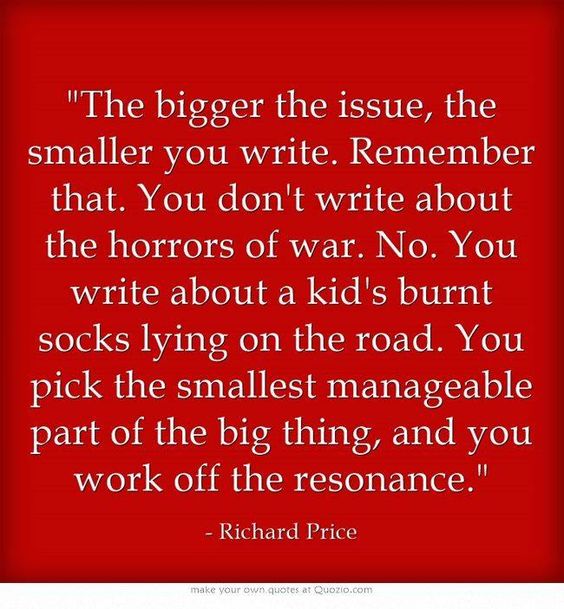
It means don’t tell us about loneliness (or any of those complex words like dishonesty, secrecy, jealousy, obsession, regret, death, injustice, etc) show us what loneliness is. We will read what you’ve written and feel the bite of loneliness. Don’t tell us what to feel. Show us the situation, and that feeling will be triggered in us.
When you take your child to school on their first day you may find yourself teary and relieved at the same time. Put into words what you see: the child’s face, the wave at the gate, the other mothers saying their goodbyes, another child coming up to take your son by the hand. We will get what you’re trying to say without you telling us directly.
The how-to-write books tell us to use our senses when we write stories: sight, sound, smell, touch. Writing from the senses is a good way to penetrate your story and make friends with it. Don’t tell us about something, drop deep, enter the story and take us with you.
What about you? Do you consciously bring the senses into your creative writing?
So, here’s the thing: choose something in particular to write about. For example, what it feels like having a tennis lesson after a twenty year break. Give us the specifics. Dig deep for the details, but at the same time be aware of the world around you. As you focus on what you’re writing, at the same time stay conscious of your surroundings: the white painted cane Bentwood chairs in the café, the cool breeze from under the door on your sandaled feet, the hum of the traffic outside. Just add a sentence every now and then about the trees that overlooked the tennis courts while you were having a tennis lesson. When we focus on our writing it is good. Seeing the colour of the sky when you toss the ball gives breathing space to your story.
If you are sitting in Meditation you calm the butterfly mind by paying attention to your thoughts, giving them space by acknowledging them before returning to the breath, in and out through the nostrils. In the act of slowing down your breathing, as best you can, you remain open so that you are receptive to awareness of sounds as they arise: sounds near, sounds far, sounds in front, behind, to the side, above or below.
With every breath you take, you feel the air, the sound of the ball as it hits the racket, the players on the other courts.
We should always be living in the present, not by ignoring the world around us, but by paying close attention. It is not easy to stay alive to ‘what is’. When we slow things down in our writing, it is good practice.
What about you? Do you find a daily meditation practice assists your writing practice?
One of my favourite books on the writing process is The Writing Life by Annie Dillard, a small and passionate guide to the terrain of a writer’s world.
Dillard begins:
When you write, you lay out a line of words. The line of words is a miner’s pick, a woodcarver’s gouge, a surgeon’s probe. You wield it, and it digs a path you follow. Soon you find yourself deep in new territory. Is it a dead end, or have you located the real subject? You will know tomorrow, or this time next year. You make the path boldly and follow it fearfully. You go where the path leads. At the end of the path, you find a box canyon. You hammer out reports, dispatch bulletins. The writing has changed, in your hands, and in a twinkling, from an expression of your notions to an epistemological tool. The new place interests you because it is not clear. You attend. In your humility, you lay down the words carefully, watching all the angles. Now the earlier writing looks soft and careless. Process is nothing; erase your tracks. The path is not the work. I hope your tracks have grown over; I hope birds ate the crumbs; I hope you will toss it all and not look back.
Annie Dillard has written eleven books, including the memoir of her parents, An American Childhood; the Northwest pioneer epic The Living; and the nonfiction narrative Pilgrim at Tinker Creek winner of the 1975 Pullizer Prize. A gregarious recluse, she is a member of the American Academy of Arts and Letters.
“For non-writers, The Writing Life is a glimpse into the trials and satisfactions of a life spent with words. For writers, it is a warm, rambling, conversation with a stimulating and extraordinarily talented colleague.””–Chicago Tribune””A kind of spiritual Strunk & White, a small and brilliant guidebook to the landscape of a writer’s task…Dillard brings the same passion and connective intelligence to this narrative as she has to her other work.”– “Boston Globe””For her book is…scattered with pearls. Each reader will be attracted to different bright parts…Gracefully and simply told, these little stories illuminate the writing life…Her advice to writers is encouraging and invigorating.”– “Cleveland Plain Dealer””The Writing Life is a spare volume…that has the power and force of a detonating bomb…A book bursting with metaphors and prose bristling with incident.”– “Detroit News”
Which books on writing process have you found to be inspiring?
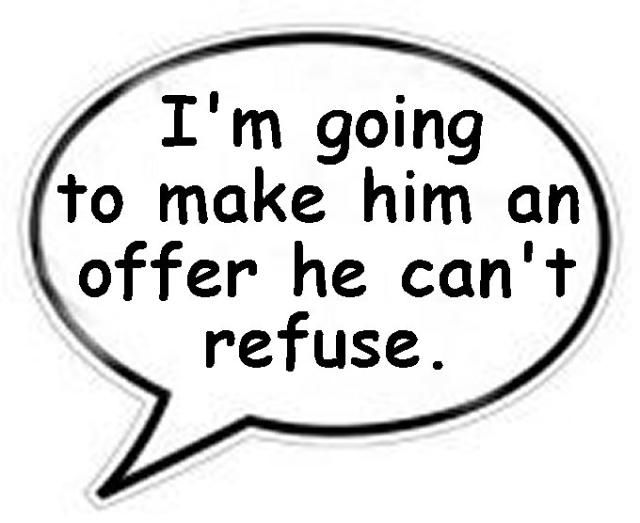
This declarative sentence was spoken by Don Corleone (played by Marlon Brando) in the movie The Godfather (1972).
We don’t always make declarative statements. It is not uncommon for women and other minority groups to add qualifiers to their statements. Such as ‘Parents need to stop organising every minute of their children’s spare time, don’t you think?’ ‘I loved that movie, didn’t you?’ In our sentence structure we look for reinforcement for our thoughts and opinions. We don’t always make declarative statements such as: ‘This is wonderful.’ ‘This is a catastrophe.’ We look for re-enforcement from others.
Another thing we do without realising it, is use indefinite modifiers in our speech: perhaps, maybe, somehow. ‘Maybe I’ll take a trip somewhere.’ As if the speaker has no power to make a decision. ‘Perhaps it will change.’ Again, not a clear declarative sentence like, ‘Yes, nothing stays the same.’
It is important for us as writers to express ourselves in clear assertive sentences. ‘This is excellent.’ ‘It was a red dress.’ Not ‘The thing is, I know it sounds a bit vague, but I think maybe it was a red dress.’ Speaking in declarative sentences is a good rehearsal for trusting your own ideas, in standing up for yourself, for speaking out your truth.
When I write poetry I read through early drafts with a critical eye, taking out indefinite words and modifiers. I attempt to distill each moment to its essence by peeling off the layers until the heart of the poem is exposed. We need to take risks as writers and go deep within ourselves to find our unique voices and express ourselves with clarity.
Even if you are not 100% sure about your own opinions and thoughts write as if you are sure. Dig deep. Be clear. Don’t be vague on the page. If you keep practicing this, you will eventually reveal your own deep knowing.
What about you? Have you noticed this tendency to qualify in your conversations with others, or in your creative writing, or in your blog posts?
In terms of creating new material during a pandemic, poetry is where I turn for inspiration. What about you?
According to Edward Mallinckrodt Distinguished Professor of English, Washington University, St. Louis, Missouri, 1976–90. Poet Laureate of the U.S., 1988–90, Poetry is literature that evokes a concentrated imaginative awareness of experience or a specific emotional response through language chosen and arranged for its meaning, sound, and rhythm.
Do you find reading and writing poetry right now is how you are able to express yourself during a troubling time?
Phyllis Klein from Women’s Therapy Services puts it this way: “Turning to poetry, poetry gives rhythm to silence, light to darkness. In poetry we find the magic of metaphor, compactness of expression, use of the five senses, and simplicity or complexity of meaning in a few lines.”
This is my pre-pandemic poem ‘Taste‘ first published in Quadrant magazine May 2019. Have a read. Hope you enjoy it.
Taste:
I rather like poems about minor calamities, bursts of tiny delights, the sun warming the tender skin of the elderly. Also, the way palm fronds conduct themselves during a southerly, dishevelled, exposing the softness of their billowing arms. Pastries in display cases do something for me too. Even cupcakes iced in gelato colours, adorned with miniature decorations … Can you see my preference for the words ‘miniature’ and ‘tiny’, an inclination towards the distilled in a world favouring often the big and the overwhelming? People with the patience to follow a complex recipe – well, that’s not me, but I like to taste what they cook. Babies in prams kicking chubby legs make me hover – how difficult not to take a bite. If you write something about a paper straw, I will be fascinated. You could try a ladybird, a pocket-size umbrella. The generalised angst of the human condition, however, may be hard for me to get a handle on. Watch that man with the disabled daughter moisten his finger after her cupcake is eaten and relish the last crumbs. Consider the rainbow-coloured wristband tied to a letterbox on the way to the park or the miniature plastic bucket and spade we found half-hidden on the beach at Bronte and packed with us for years on every visit to the sea.
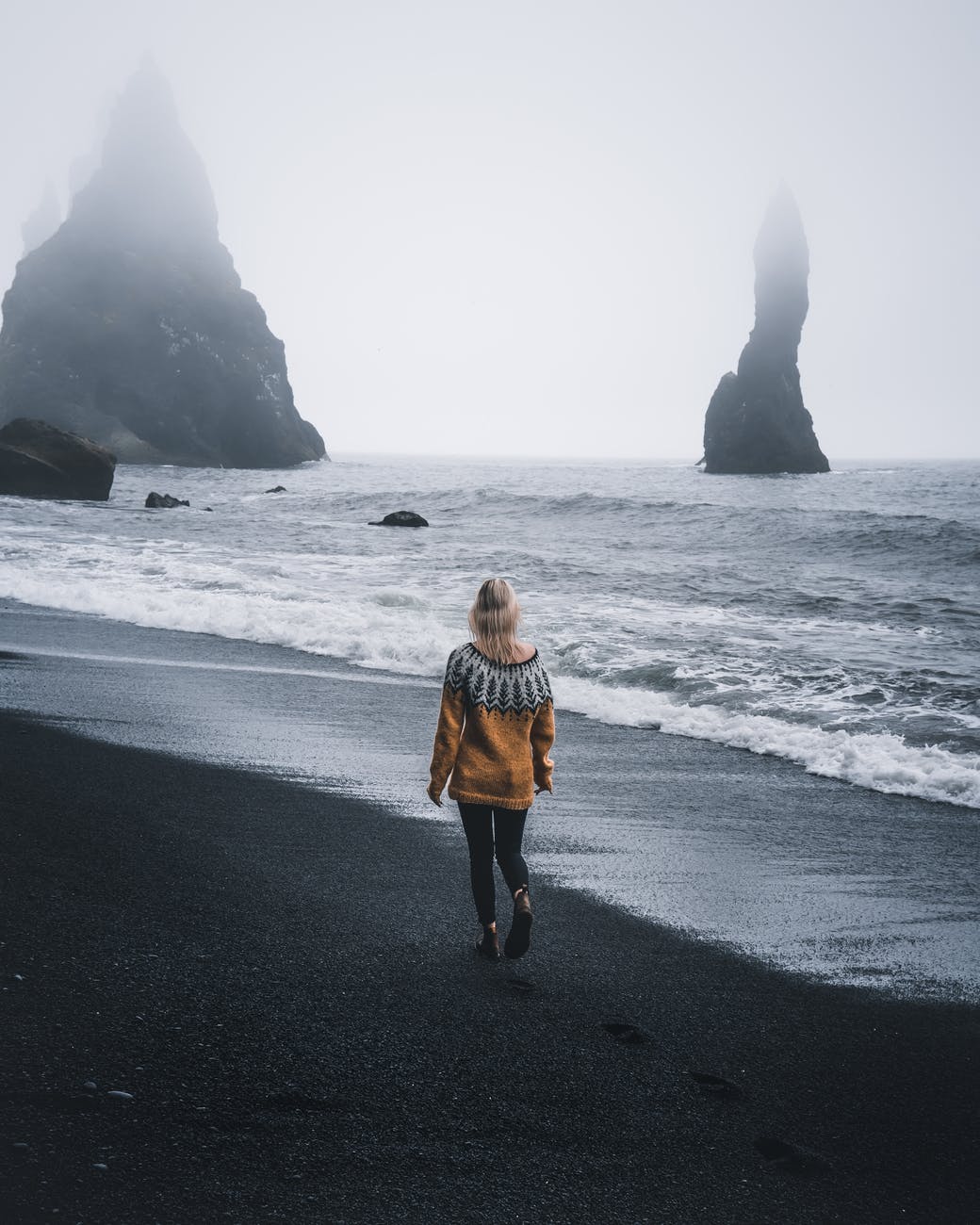
Ground your writing in a sense of place, whether landscape or cityscape. How often have you heard someone say of a book they loved: ‘I felt like I was there’.
Even if you relocate the poodle tied to a fake-cane chair, the sound of a game of tennis, the table of older men after their regular Sunday match at the café overlooking the tennis courts at Cooper Park that you drank a lemongrass and ginger tea at in Sydney into a café in a story in another state and time, the story will have originality and believability. ‘But that café was in Sydney, I can’t transport it to Adelaide.’ But you can. You can have flexibility with specific detail. The mind is able to transport details, but using actual places that you experienced will give your writing authenticity and truthfulness. It grounds your work in place, giving life and vitality to your writing, rather than a whole lot of exposition that floats in the air.
If you don’t create evocative settings, your characters seem to have their conversations in vacuums or in some beige nowhere-in-particular. – Jerome Stern
Creation of the physical world is as important to your story as action and dialogue. If your readers can be made to see the hand-knitted socks or the row of vitamins on the kitchen bench top, the scene becomes alive. Readers pay attention. Touch, sound, taste, and smell make readers feel as if their own feet are warm under the cold sheets.
Place situates the story in your reader’s mind. Fiction that seems to happen in no particular place often seems not to take place at all. – Jerome Stern
So what is a prose poem? According to the Poetry Foundation, a prose poem is a prose composition that, while not broken into verse lines, demonstrates other traits such as symbols,metaphors, and otherfigures of speech common to poetry.
If you are able to distill meaning in a very short form, you may enjoy writing prose poetry.
Have a read of my prose poem ‘Sixteen Is A Very Difficult Age, You Know’, first published in Quadrant magazine September 2018.
Sixteen Is a Very Difficult Age, You Know:
Well yes it is. This time of year isn’t easy either. It has most of us by the neck. You don’t want to get sick at Christmas. They said he needs six weeks of intensive therapy then they’ll decide about medication. How – when everything’s closed till February? Yes, he’s up and down. Better some days, but hardly ever. They said hide all the tablets and remove the kitchen knives. I ring or text to see how he’s going. He doesn’t always pick up. Don’t refer to the incident. Wait for him to say something. Well, he doesn’t say much though he’ll let me give him a hug – sometimes. So here I am trying to gather his forgotten dreams from the air. They’re drifting just outside my reach.
Before the current Sydney lockdown, in the Saturday feedback group, we began talking about the ‘off with his head’ or ‘out-it-goes’ part of writing. We acknowledged that as a group we’d always been very supportive and encouraging of each others work. That was because we were all in it together. Our critiquing was not telling lies; it was from a place of open-hearted acceptance. Everything you put on the page is acceptable.
Sometimes someone says, ‘I want a rigorous no-holds-barred assessment of my work.’ But what do you say to them when the writing is dull and boring? Don’t give up your day job? It doesn’t sit comfortably with most of us to be directly critical of someone’s writing. It’s like telling someone how ugly their baby is. All of us find it hard to separate our writing from ourselves, and are prone to take criticism personally.
The feedback sandwich is a widely known technique for giving constructive feedback, by ‘sandwiching’ the criticism between two pieces of praise or compliments.
Yesterday, as we passed around copies of our work (just a page or two) we started to address what William Faulkner famously said:
‘In writing, you must kill all your darlings.’
First of all, we looked for the juice in each piece. Where did the writing come alive? ‘Get rid of the rest,’ we said. ‘Off with his head—out it goes.’ It’s very difficult to be this honest, and not everyone wants to hear it. ‘I simply want gentle support and a few corrections,’ some of us might say.
Be willing to have the courage to look at your work with truthfulness. It’s good to know where your writing has energy and vitality, rather than to spend a lot of time trying to make something come to life that is dead on the page. Keep writing. Something new will come up. You don’t want to put your readers to sleep by writing a lot of boring stuff.
Do you have a writing group? Do you find it useful?