Writing Tip: Start Writing

When I used to teach classes to beginning writers, it was good.  It forced me to think back to the beginning to when I first put pen to paper.  The thing is, every time we sit down and face the blank page, it’s the same.  Every time we start a new piece of writing, we doubt that we can do it again.  A new journey with no map – like setting off towards the horizon alone in a boat and the only thing another person can do to help is to wave from the shore.

So when I used to teach a creative writing class, I had to tell them the story all over again and remember that this is the first time my students are hearing it.  I had to start at the very beginning.

First up, there’s the pen on the page.  You need this intimate relationship between the pen and the paper to get the flow of words happening.  A fountain pen is best because the ink flows quickly.  We think faster than we can write.  It needs to be a “fat” pen to avoid RSI.

Consider, too, your notebook.  It is important.  The pen and paper are your basic tools, your equipment, and they need to be with you at all times.  Choose a notebook that allows you plenty of space to write big and loose.  A plain cheap thick spiral notepad is good.

After that comes the typing up on the computer and printing out a hard copy.  It’s a right and left brain thing.  You engage the right side of the brain, the creative side when you put pen to paper, then bring in the left side, the analytic side, when you edit the print out as you settle back comfortably with a drink (a cup of tea, even) and read what you’ve written.

Patrick White said that writing is really like shitting; and then, reading the letters of Pushkin a little later, he found Pushkin said exactly the same thing.  Writing is something you have to get out of you.

typing writing on a pink background

Whether writing a story or writing a blog, start writing, no matter what.

Writing Tip: Writing in Cafes

I am sitting in a café across the road from a Sydney beach. This stretch of road has a whole row of cafes side by side facing the sea.  This is my favourite kind of writing place:  one where I can sit comfortably for a long period of time and where the owners of the café know me and welcome me.  This café is owned by a Brazilian man and his wife and has comfortable upholstered bench chairs with a direct view of the Pacific Ocean.  For my two-hour writing session my choice could be a traditional Brazilian dish such as Coxinha, Feijoda or Moqueca.  Or a cocktail like Caipirinha or  Caipiroska.  I must order something and it must be more that a Long Black, because I plan to be here for some time.  I want the owners of the café to know I appreciate the time and the space they are allowing me.

However, today I’ll be very boring and order poached eggs on gluten-free bread 

Why go to all this trouble to find a place to write?  Why not just stay home and work?  Because it’s good to get out and have a change of scene.  I find I need to be happy and relaxed when I’m creating on the page and sitting in a café with a pleasant vibe works for me.  Other writers need silence in order to concentrate, but I need to feel I am out and about in a beautiful place having a good time before the creative juices flow.

Strangely, working in a café can help to increase concentration.  The busy café atmosphere keeps the sensory part of you occupied and content, so that the hidden, quieter part of you that composes and focuses is allowed to do its work.  It is something like being cunning when trying to get a spoonful of food into a resistant toddler’s mouth .  You pretend to be an aeroplane with all the sound effects and movements before landing the food-laden plane inside the child’s mouth.  Mission accomplished.

What about you?  Do you need to be at your desk in total silence in order to write, or do you like to experience the swell of humanity around you—to be surrounded by other human beings?  Or at home listening to a particular kind of music?

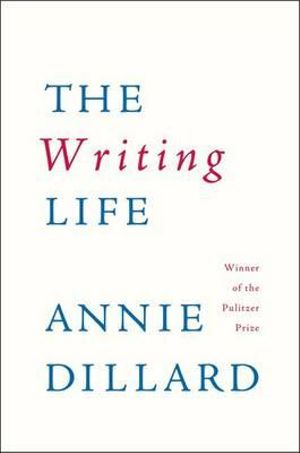
The Writing Life

Another of my favourite books on the writing process is The Writing Life by Annie Dillard. A small and passionate guide to the terrain of a writer’s world.

Annie Dillard has written eleven books, including the memoir of her parents, An American Childhood; the Northwest pioneer epic The Living; and the nonfiction narrative Pilgrim at Tinker Creek winner of the 1975 Pullizer Prize.  A gregarious recluse, she is a member of the American Academy of Arts and Letters.

“For non-writers, The Writing Life is a glimpse into the trials and satisfactions of a life spent with words. For writers, it is a warm, rambling, conversation with a stimulating and extraordinarily talented colleague.””–Chicago Tribune””A kind of spiritual Strunk & White, a small and brilliant guidebook to the landscape of a writer’s task…Dillard brings the same passion and connective intelligence to this narrative as she has to her other work.”– “Boston Globe””For her book is…scattered with pearls. Each reader will be attracted to different bright parts…Gracefully and simply told, these little stories illuminate the writing life…Her advice to writers is encouraging and invigorating.”– “Cleveland Plain Dealer””The Writing Life is a spare volume…that has the power and force of a detonating bomb…A book bursting with metaphors and prose bristling with incident.”– “Detroit News”

Dillard begins:

When you write, you lay out a line of words. The line of words is a miner’s pick, a woodcarver’s gouge, a surgeon’s probe. You wield it, and it digs a path you follow. Soon you find yourself deep in new territory. Is it a dead end, or have you located the real subject? You will know tomorrow, or this time next year. You make the path boldly and follow it fearfully. You go where the path leads. At the end of the path, you find a box canyon. You hammer out reports, dispatch bulletins. The writing has changed, in your hands, and in a twinkling, from an expression of your notions to an epistemological tool. The new place interests you because it is not clear. You attend. In your humility, you lay down the words carefully, watching all the angles. Now the earlier writing looks soft and careless. Process is nothing; erase your tracks. The path is not the work. I hope your tracks have grown over; I hope birds ate the crumbs; I hope you will toss it all and not look back.

Which books on writing process have you found to be inspiring?

My Poem, ‘Flat White, One Sugar’

Have a read of my poem ‘Flat White, One Sugar’ first published in Quadrant Magazine. It is the title poem in my latest collection ‘Flat White, One Sugar‘ (Ginninderra Press).

I hope you enjoy it.

Flat White, One Sugar:

Up above is special to the birds.

A new craft beer is special to schooner-lovers,

who know it will have a unique aftertaste

before they’ve even had a sip.

The beanie warming the newborn

is special to the mum

swaddling her in hospital.

The cough is special, wretchedly, to the throat.

The wish you hold secretly inside yourself

is special to your being.

The gumboots are special to dry feet,

more special than the joggers,

which are special only in the gym.

The video of the runners

is not special to the owner of the phone

but is special to the competitors in the race.

I don’t want to be special to baristas

who ask how was my weekend,

or people bent over hand-held devices,

not special to those who don’t listen

when I answer their questions.

I want to be as special

as a morning coffee addiction,

but in the way a scarf is special,

or warm gloves,

not because they stand out from the crowd,

but because they know

they give comfort to others.

Copyright 2024 Libby Sommer

Writing Tip: Becoming a Writer

yellow sunflower bookcover of Becoming A Writer by Dorothea Brande

I highly recommend this book a friend from London gave me many years ago at the beginning of my writing journey. It’s an old one, but a good one.

‘A reissue of a classic work published in 1934 on writing and the creative process, Becoming a Writer recaptures the excitement of Dorothea Brande’s creative writing classroom of the 1920s. Decades before brain research “discovered” the role of the right and left brain in all human endeavor, Dorothea Brande was teaching students how to see again, how to hold their minds still, how to call forth the inner writer.’ – Amazon

‘Refreshingly slim, beautifully written and deliciously elegant, Dorothea Brande’s Becoming a Writer remains evergreen decades after it was first written. Brande believed passionately that although people have varying amounts of talent, anyone can write. It’s just a question of finding the “writer’s magic”–a degree of which is in us all. She also insists that writing can be both taught and learned. So she is enraged by the pessimistic authors of so many writing books who rejoice in trying to put off the aspiring writer by constantly stressing how difficult it all is.

With close reference to the great writers of her day–Wolfe, Forster, Wharton and so on–Brande gives practical but inspirational advice about finding the right time of day to write and being very self disciplined about it–“You have decided to write at four o’clock, and at four o’clock you must write.” She’s strong on confidence building and there’s a lot about cheating your unconscious which will constantly try to stop you writing by coming up with excuses. Then there are exercises to help you get into the right frame of mind and to build up writing stamina. She also shows how to harness the unconscious, how to fall into the “artistic coma,” then how to re-emerge and be your own critic.

This is Dorothea Brande’s legacy to all those who have ever wanted to express their ideas in written form. A sound, practical, inspirational and charming approach to writing, it fulfills on finding “the writer’s magic.”‘ – John Gardner

Yep, I’d agree with John Garner. Finding “the writer’s magic” is what it’s all about.

‘Lost In Cooper Park’


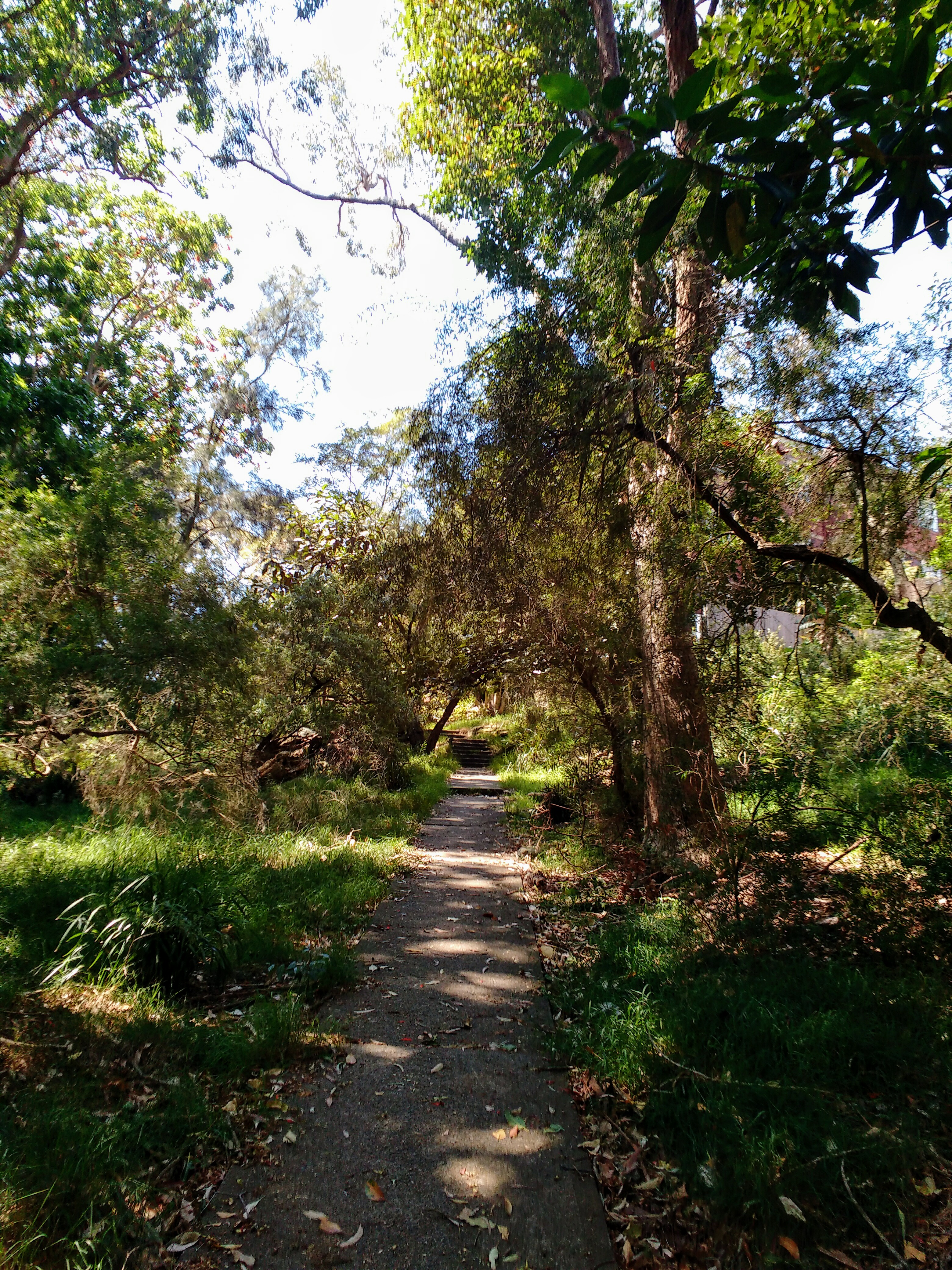
a path through the trees in Cooper Park
Cooper Park, Sydney

I’m delighted to tell you that my fifth manuscript, LOST IN COOPER PARK has been accepted for publication by small but prestigious publisher Ginninderra Press. Ginninderra is an award-winning independent publisher based in Port Adelaide, South Australia. They publish thought-provoking books for inquiring readers.

Thank g-d for Ginninderra. If it weren’t for them, my books wouldn’t be out there in the world.

LOST IN COOPER PARK is set in Cooper Park, a unique, large, natural green space in the  Eastern Suburbs of Sydney with hidden trail walks, tennis courts, picnic areas and dog walking. A great location for a writer like me to come up with a story idea. The book is a continuous narrative this time, rather than a collection of linked stories.

Ginninderra Press’s unique philosophy is:

We believe that all people – not just a privileged few – have a right to participate actively in cultural creation rather than just being passive consumers of mass media. Our culture is revitalised and enriched when everyone is encouraged to fulfil their creative potential and diminished when that creative potential is stifled or thwarted. We love to observe the transformative possibilities for people when they see their work published and acknowledged. Getting published can and does change lives.

Information about Ginninderra on the website includes:

‘Ginninderra is part of Canberra’s Belconnen area, in which Ginninderra Press operated for its first twelve years before moving to Port Adelaide in 2008. Ginninderra is an Aboriginal word said to mean ‘throwing out little rays of light’.

‘Ginninderra Press, described in The Canberra Times as ‘versatile and visionary’, is an independent book publisher set up in 1996 to provide opportunities for new and emerging authors as well as for authors writing in unfashionable genres or on non-mainstream subjects. In the words of one of our authors, we are ‘a small but significant publisher of small but significant books’. Many of our titles have won awards (to see a full list, click here).

‘Ginninderra Press recognises the fact that many people have good ideas for books but cannot get them published, either because of their inexperience in preparing manuscripts or because the potential sales are insufficient to interest a conventional publisher. Ginninderra Press offers expert editing and proofreading, as well as design and lay out services. To see submission guidelines, click here.’

Thank you, thank you, thank you to Ginninderra Press. LOST IN COOPER PARK is due for publication in November 2020. So exciting!

The Writing Life – Reblog

Featured Image -- 5029

One of my favourite books on the writing process is The Writing Life by Annie Dillard. It’s a small but passionate guide to the terrain of a writer’s world.

The Writing Life by Annie Dillard book cover

Annie Dillard has written eleven books, including the memoir of her parents, An American Childhood; the Northwest pioneer epic The Living; and the nonfiction narrative Pilgrim at Tinker Creek winner of the 1975 Pullizer Prize.  A gregarious recluse, she is a member of the American Academy of Arts and Letters.


“For non-writers, The Writing Life is a glimpse into the trials and satisfactions of a life spent with words. For writers, it is a warm, rambling, conversation with a stimulating and extraordinarily talented colleague.””–Chicago Tribune””A kind of spiritual Strunk & White, a small and brilliant guidebook to the landscape of a writer’s task…Dillard brings the same passion and connective intelligence to this narrative as she has to her other work.”– “Boston Globe””For her book is…scattered with pearls. Each reader will be attracted to different bright parts…Gracefully and simply told, these little stories illuminate the writing life…Her advice to writers is encouraging and invigorating.”– “Cleveland Plain Dealer””The Writing Life is a spare volume…that has the power and force of a detonating bomb…A book bursting with metaphors and prose bristling with incident.”– “Detroit News”


Dillard begins:

When you write, you lay out a line of words. The line of words is a miner’s pick, a woodcarver’s gouge, a surgeon’s probe. You wield it, and it digs a path you follow. Soon you find yourself deep in new territory. Is it a dead end, or have you located the real subject? You will know tomorrow, or this time next year. You make the path boldly and follow it fearfully. You go where the path leads. At the end of the path, you find a box canyon. You hammer out reports, dispatch bulletins. The writing has changed, in your hands, and in a twinkling, from an expression of your notions to an epistemological tool. The new place interests you because it is not clear. You attend. In your humility, you lay down the words carefully, watching all the angles. Now the earlier writing looks soft and careless. Process is nothing; erase your tracks. The path is not the work. I hope your tracks have grown over; I hope birds ate the crumbs; I hope you will toss it all and not look back.

Which books on writing process have you found to be inspiring?

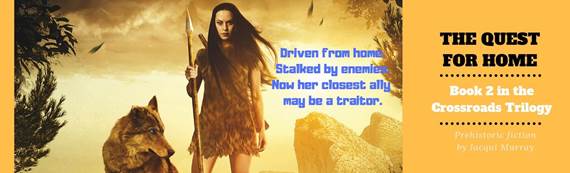
Congratulations to Jacqui Murray on her latest book, The Quest for Home

The Quest for Home book cover

Jacqui Murray is the author of the popular Building a Midshipman, the story of her daughter’s journey from high school to United States Naval Academy, the Rowe-Delamagente thrillers, and the Man vs. Nature saga. She is also the author/editor of over a hundred books on integrating tech into education, adjunct professor of technology in education, blog webmaster, an Amazon Vine Voice,  a columnist for  NEA Today, and a freelance journalist on tech ed topics. Look for her next prehistoric fiction, In the Footsteps of Giants, Winter 2020, the final chapter in the Crossroads Trilogy.

Summary

I’m excited to be part of the launch of Jacqui’s latest book, The Quest for Home. Here’s what it’s about:

Chased by a ruthless and powerful enemy, Xhosa flees with her People, leaving behind her African homeland, leading her People on a grueling journey through unknown and perilous lands. As they struggle to overcome treachery, lies, danger, tragedy, hidden secrets, and Nature herself, Xhosa must face the reality that her most dangerous enemy isn’t the one she expected. It may be one she trusts with her life. 

The story is set 850,000 years ago, a time in prehistory when man populated Eurasia. He was a violent species, fully capable of addressing the many hardships that threatened his survival except for one: future man, the one destined to obliterate any who came before.

Based on a true story, this is the unforgettable saga of hardship and determination, conflict and passion as early man makes his way across Eurasia, fleeing those who would kill him. He must be bigger-than-life, prepared time and again to do the impossible because nothing less than the future of mankind is at stake.

Book information:

 Title and author: The Quest for Home

Series: Book 2 in the Crossroads series, part of the Man vs. Nature saga

Genre: Prehistoric fiction

Available at: Kindle US   Kindle UK   Kindle CA   Kindle AU

Social Media contacts:

Amazon Author Page:        https://www.amazon.com/Jacqui-Murray/e/B002E78CQQ/

Blog:                                       https://worddreams.wordpress.com

Instagram:                             https://www.instagram.com/jacquimurraywriter/

LinkedIn:                                http://linkedin.com/in/jacquimurray

Pinterest:                                http://pinterest.com/askatechteacher

Twitter:                                   http://twitter.com/worddreams

Website:                                 https://jacquimurray.net


3 Parts to a Great Blurb

pexels-photo-325924.jpeg

Your book’s blurb is crucially important. But writing a blurb is harder than we think. A great blurb is short and sweet, gives away enough of what’s inside the book without giving any plot spoilers. It draws the reader in.

‘A three-act structure. You want to catch the reader’s attention, give them the content, and then give them a reason to care.’ – Author Unlimited

Have a look at this YouTube video by international best-selling self-published Romance writer Alessandra Torre. She tells a terrific story of how she went from 3 book sales a day to thousands by changing her blurb:  The Blurb Equation – How to Write a Kick-Butt Blurb.


The Blurb Equation (Alessandra Torre)

INTRO + HINT + CLIFFY


1. PART 1 INTRO:           the characters or situation is introduced.

2. PART 2 THE HINT:     what the story is about, the conflict or climax.

3. PART 3 THE CLIFFY:  what’s going to happen? Hooks the reader.

Alessandra says to keep the blurb short. More than four paragraphs is too long . Three paragraphs of two to three sentences is best. Don’t give away the plot.

Keeping all this excellent advice in mind (although I’m not a Romance writer), I’m continuing to sweat over the draft blurb for my new book THE USUAL STORY, due for  July release by Ginninderra Press. Please use the comments section to give any constructive feedback. I’d love to know what you think.

It’s especially difficult for me to write a satisfactory blurb for THE USUAL STORY because it is really a collection of connected short stories. I’ve linked the stories by using the tango dances and dancers, the painful ending of a brief romance, and the main character’s search in her past for answers.

Tango is the dance of passion, forcing partners into an intimate relationship. Sofia loves the tango, but at the dances she must face the truth of her ageing in our society that has very little use for anyone who is not young.

In the painful aftermath of a brief affair, Sofia goes in search of what she actually knows about herself and the past. As she looks for answers in dark corners, we begin to see, as does Sofia, the elusiveness of understanding and memory – the psychological space where recollection and loss collide.

If you liked The Crystal Ballroom you’ll love this book: a story of memory, intrigue and passion.


I hope this Blurb info is helpful. Do you have any tips you would add? Let me know in the comments and please share this post with a friend if you enjoyed it.


Enter Writing Competitions


the city of Lisbon, Portugal with sea and sky in the background
Lisbon, Portugal

One of the ways we can get noticed as writers is to enter writing competitions. You can join local and international writing groups and associations that send out newsletters letting you know when, what and where to enter.

I can’t remember entering this particular competition, or where I saw the information, but I am thrilled and delighted to tell you that an excerpt of my WIP, Lost in Cooper Park is a runner-up in 2018 Disquiet Literary Contest.  There were over 1,000 entries. I have been awarded a partial scholarship to attend the Disquiet International Literary Program in Lisbon, Portugal. Such exciting news.

The judges said of my entry:

“… an excellent domestic psychological drama, reminiscent of Sally Vickers (The Other Side of You) written in beautiful, striking prose. It has an incredible memorable opening. The author has a voice that is unique to her and that, at the same time, is particular to the narrative. The story moves between places and narratives with deftness, knowing precisely when to leave a thread open and when to pick it up again.”

Whoo hoo.

I recommend staying up to date with competition deadlines. This keeps you motivated to finish a piece of writing by the date specified. Subscribe to writing groups and newsletters that alert you to closing dates. I am a member of the NSW Writers’ Centre, Society of Women Writers’ NSW, Australian Society of Authors, and other writing groups on Facebook.

Wishing you the best of luck.

Woman walking through Cooper Park with her dog.
Cooper Park