Poetry Review

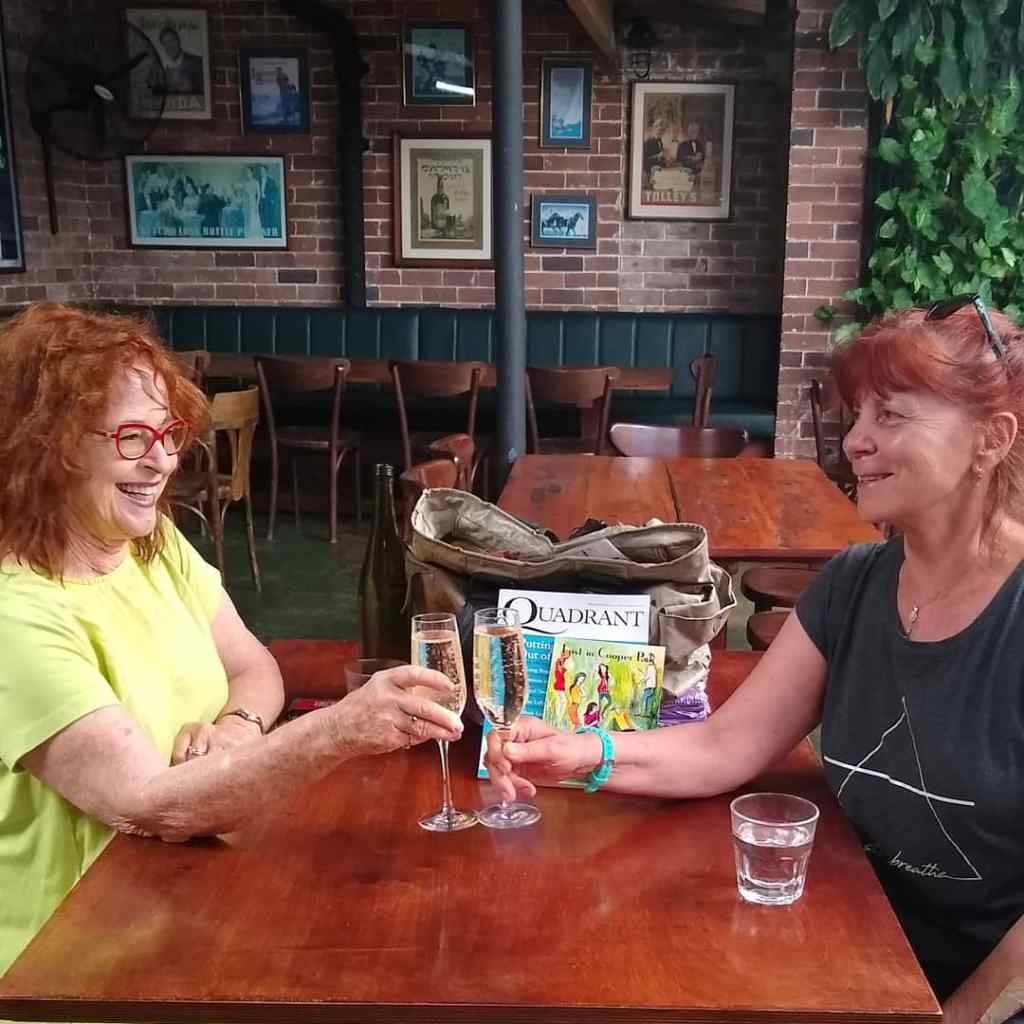
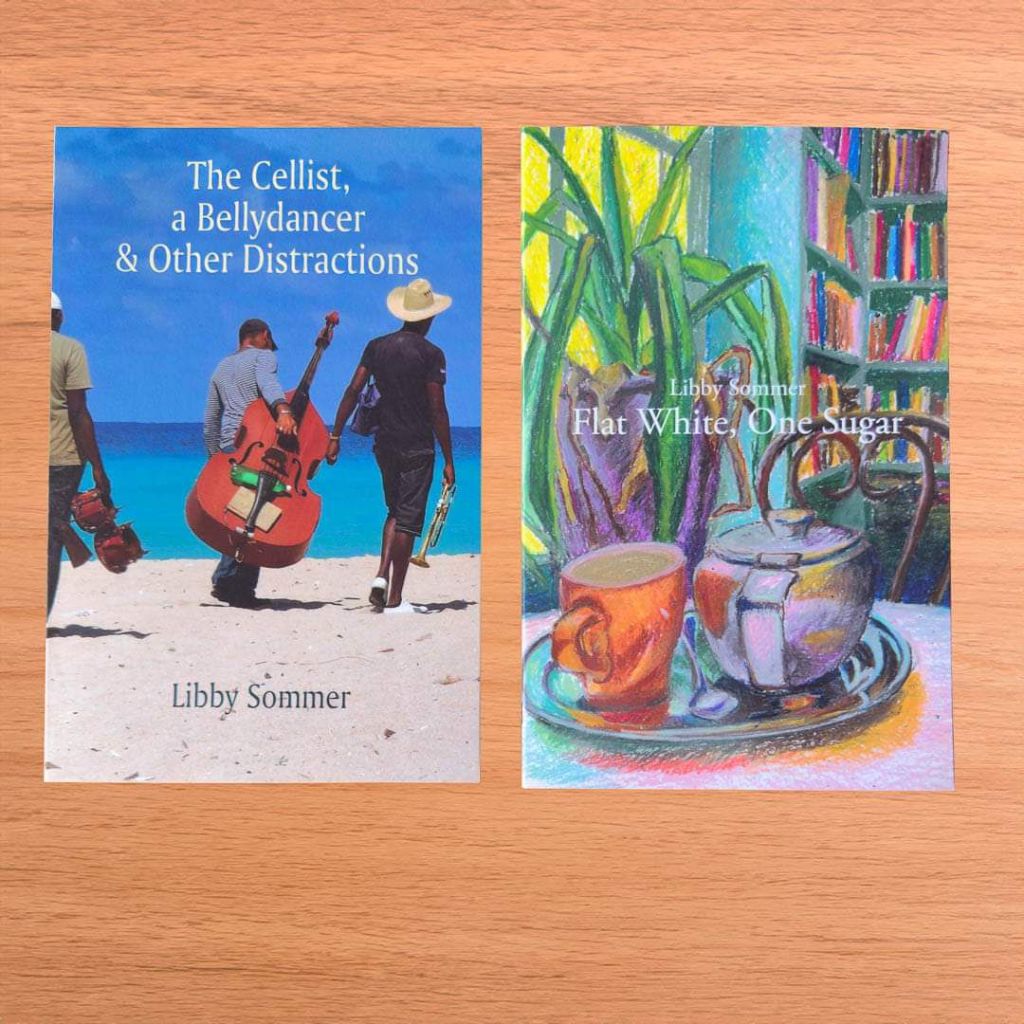
There is a fabulous extensive review by Sean Wayman in this month’s October Quadrant Magazine of my two recent poetry collections, ‘The Cellist a Bellydancer & Other Distractions’ and ‘Flat White, One Sugar ‘.

For example he writes: “… there are still many poets who resist the temptations of narcissistic self-righteousness. Libby Sommer, a prolific Australian writer of fiction and poetry, eschews the moral posturing of the ideologically pure poet to cultivate an aesthetic that is observant, curious and open to experience.”

“… it is the give-and-take between openness and particularity which give her poems their unique charisma.”

“… “‘Transience’, like many of her most beautiful passages, combines sunlight, water, and open expanses of sky:

A luminous, tangerine, and blazing expanse
burst out to the left of the blue
from the harbour to the city as the western light
lowered itself behind concrete high-rises.”

If you’d like to read the full review, Quadrant Magazine is available in newsagents and online. My books can be ordered from Ginninderra Press or from other online booksellers.

https://www.ginninderrapress.com.au/store.php?catalog/search/Libby+Sommer/date/1

Photos by Jason Painter

Book Review: ‘Stories from Bondi’

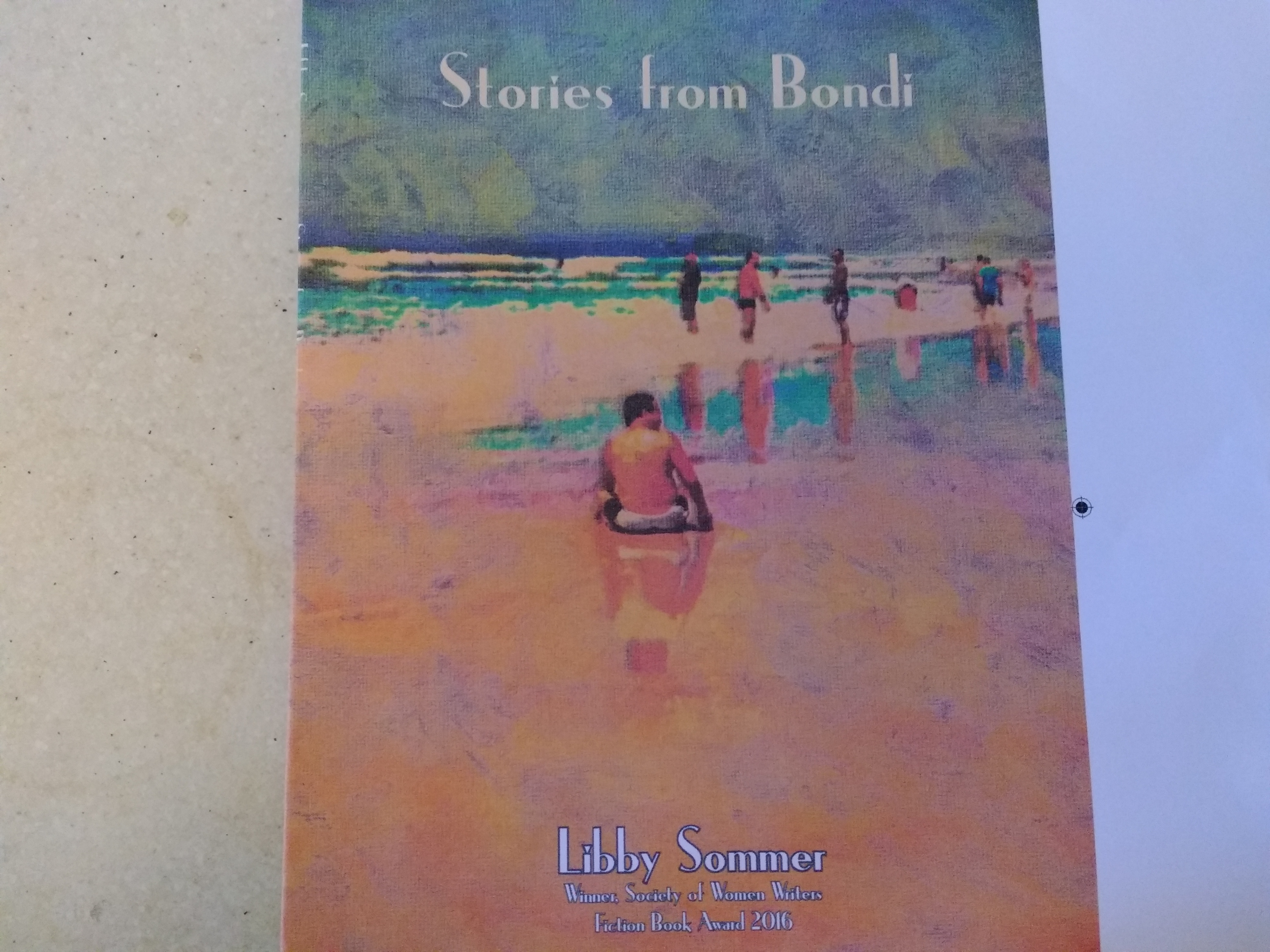
book cover of 'Stories from Bondi' showing people on the sand by the sea
Book reviewer Dr Beatriz Copello, D.C.A. (Creative Writing) U.O.W., Cultural Editor of Semanario El Español and Psychologist, has written a wonderful review of  my new book STORIES FROM BONDI.
She writes:

Stories from Bondi is a collection of short stories by Libby Sommer.  Libby Sommer is the award-winning Australian author of My Year with Sammy (2015), The Crystal Ballroom (2017) and The Usual Story (2018) and is a regular contributor of stories and poems to Quadrant Magazine.

The stories contained in this book are varied in tone, mood and themes and they go from the very light and funny to sombre and sad, and from the innocent to the complex.  Most of the stories are set in the Eastern Suburbs of Sydney and for the inhabitants of this city it is fun to recognise familiar places and people from foreign places will learn about the beauty of  Sydney.

Australian humour is sprinkled over the pages as well as truly Australian expressions, typical social comments and comments about the style of clothing the characters wear. Some authors describe characters’ clothes in a way that is pedantic.  This is not the case with Sommer, the way this author dresses her characters emphasize aspects of their personality.

Various stories are about Anny, a well-defined character who the reader gets to know through her many and varied experiences.  Through Anny’s point of view the reader encounters reflections about modern women, their issues, concerns and sexual mores.

In Stories From Bondi the sea is ever present, as well as the seagulls … seagulls flapping wings, seagulls walking on sand or seaweed, seagulls flying … seagulls who are witnesses of Anny’s life.

Strong women’s issues are covered in some of the stories, but also issues that many women readers would identify as their own, issues such as body image, for example in “After The Rain” where Anny expresses concerns about her figure, the author writes:

“Although there are fans on the ceiling, it’s very hot in the restaurant.  Anny wants to take off her cardigan but she doesn’t want to expose her upper arms that is, that are less than perfect even though she does weights and other things at the gym.

She wears a jacket or a cardigan always now to draw the eyes and attention away from that part of her body that is growing larger at a more rapid rate than the rest of her, which is causing her much alarm.”

Sommer with her imaginative mind take us to places, where many women on their own would not dare to go, like lonely overseas trips or to Sex Clubs.  Yes, Anny visits a sex club in the story titled “Around Midnight”, story which is packed with the unexpected and with humour.  Although, I enjoyed reading this story I would have loved for it to have stronger and more explicit sex scenes.  Humour is also found in other stories like in “It’s Not Easy Being On Holidays”, she writes:

“Anny said, On New Year’s Eve I ran my hand up the inside of a man’s trousers from the ankles up and discovered he wasn’t wearing any underwear either.

You discover a little something?

A big something, she said.

They both laughed.”

In the story mentioned above there are also a few really funny passages full of innocence, one of these is when Anny phones her son to tell him about her holidays, Sommer writes:

“And Pamela and Annabel all over each other in front of me.  I can’t stand it.

Would it worry you so much if they were straight?

I can’t stand anyone being passionate in front of me — straight or gay.  It makes me jealous.  It’s inconsiderate of them.

Well, what did you expect going on holidays with two gays, two lesbians, a bisexual and a dog?

You’re right.”

Sommer has the ability to create believable characters and place them in real life situations, whether these situations are arranged or occur by chance. The ‘unusual’ sometimes is found in this writer’s narrative, like when she describes different types of Glutei Maximi, for those unacquainted with Latin this mean simply ‘bums’. Sommer is a good observer and as such gives us good descriptions of ‘bums’, the character Anny comments:

“Gradually the men on the beach sauntered towards the boat with money clasped in their bare hands.  They lined up one behind the other as they waited their turn, assorted body shapes and colours.  Tight firm bums, droopy wrinkly bums. Some with tell-tale underwear marks and others browned all over.”

Slices of life are brought to the reader with cinematic qualities: sceneries, the characters, the situations, all can be seen in the mind’s eye like in a movie. The following is a small example:

“Max leant back on his elbows nibbling on a bunch of grapes.  He knocked the bottle of red wine beside him.  The bright red liquid seeped into the white sand.

A fly buzzed around the apples.

A trail of ants marched towards the bread.

The Brie softened in the sun.”

The above paragraph is the ending of one of the stories, a simple ending that says so much.

In the collection there is one very sad story of abuse and growing up too quickly and not knowing how to stop abusers who prey on innocent girls.  There are also issues experienced by the characters which are very common to women one of this is the need to feel safe, the story “The Backpack” has that need very clearly expressed by the character:

“I knew my children would be pleased I had a base.  I didn’t want them to worry. It was the thing I wanted the most secretly, studying maps, absorbing travel books. To be safe, a desire whispered to the moon that moved behind my shoulder at night.  If you guide me to a safe haven, I promise to be happy.  And the moon listened.  I did my best.”  How many women would identify with this? Many it is my guess.

All the main characters in Stories From Bondi are women, mainly writers who are portrayed as intelligent, inquisitive, reflective and observant who experience an array of emotions, men would find the stories fascinating and would learn about what goes in women’s heads.

Bondi is not the only setting mentioned in the book, other Australian cities and small towns are the background of some the stories, places like Perth, Cairns, Wee Wa, Brindabella as well as European cities.

Sometimes the author transitions from omniscient narrator to first person narrator, this works in most of the stories but in some small sections this does not happen. This minor issue does not demerit the stories at all.

There is one experimental story in the collection: “Around The World In Fifty Steps” where the author writes sentences and short paragraphs and numbers them from 1 to 50. Some of the sentences are dialogues, others propositions, information about the character and suggestions. The result is positive, the reader gets to know the character and what is going on in her life.

Some of the stories mirror women’s fantasy about escaping the routine, pain, loneliness, disappointment and sorrows as well as those close relationships that can be so complicated such as between mother and daughter. Also the reader will find sad possible romances that never get anywhere like in her previous novel The Usual Story.

Stories from Bondi is a book well written, with an interesting narrative and with characters true to life. Again Sommer brings to light another book in which the reader can submerge themselves into place and characters. Highly recommended.

About the Reviewer:

Dr Beatriz Copello, is a former member of NSW Writers Centre Management Committee, she writes poetry, reviews, fiction and plays. The author’s poetry books are: Women Souls and Shadows, Meditations At the Edge of a Dream, Flowering Roots, Under the Gums Long Shade, and Lo Irrevocable del Halcon (In Spanish).

Beatriz’s poetry has been published in literary journals such as Southerly and Australian Women’s Book Review and in many feminist publications.  She has read her poetry at events organised by the Sydney Writers Festival, the NSW Writers Centre, the Multicultural Arts Alliance, Refugee Week Committee, Humboldt University (USA), Ubud (Bali) Writers Festival.
 

First Amazon Review of ‘Glass Walls’

Editors Meenakshi Bharat and Sharon Rundle at launch of Glass Walls

First review on Amazon of GLASS WALLS, published by Orient BlackSwan, stories of tolerance and intolerance from the Indian sub-continent and Australia edited by Meenakshi Bharat and Sharon Rundle (pictured). Thrilled to see my short story HENRY received a special mention. GLASS WALLS was launched recently at the Australian Short Story Festival in Melbourne. Have a read of Punekar’s review:

“This collection of stories tackles a wide variety of subjects and is categorised into Family, Race, Gender, Religion and so on and that is why I enjoyed the book. One could pick and choose a story to read depending on one’s mood. I specifically liked the stories on Family and Gender. The stories on race brought out the dichotomy that exists in all of us, as mentioned in the introduction to the book. Right thinking people are determined not to be biased and want to do the right thing but the subconscious mind often has another agenda. The rational aspect of the personality loses out in certain circumstances. This is brought out in the stories on family too, particularly the story titled “The Wedding Gift”. Another story I liked was the one titled “Henry”. We behave in the most irrational ways but we are not bad people, not really, just human. All the stories are not equally good, but all of them touch something inside your heart.” – Punekar

GLASS WALLS is available from Indian publisher Orient BlackSwan.

Will my story resonate with anyone?

a man and woman dancing tango

When you write a story, you never know if it will resonate with anyone. Then a person like Dr Beatriz Copello writes a review and you find yourself dancing with joy, thinking how blessed you are.

Beatriz Copello’s review was published by The Compulsive Reader and you can read it below:

A review of The Usual Story by Libby Sommer

Reviewed by Beatriz Copello

The Usual Story 
by Libby Sommer
Ginninderra Press
Paperback, ISBN: 9781760415792, July 2018, $27.50, 80pp

The Usual Story by Libby Sommer takes the reader into the life and mind of Sofia.  Sofia is a middle-aged woman, a writer and very much involved in dancing, particularly Tango.

Tango, a dance that was born in the 1800s around the port of Buenos Aires, Argentina, was the dance of port workers and women of the night. Nowadays, this complicated and elegant dance is very much in vogue and danced around the world. Tango gives some sort of skeleton to a large part of The Usual Story. Other sections deal with relationships from the past and the present.

The reader gets to know Sofia as she dances and relates to the other dancers who participate in the Tango classes. In an interesting way Sommer mixes in her text Sofia’s tango adventures and lessons with her thoughts and love experiences, as well as evocative descriptions of her surroundings.

There is something in human beings that makes them ponder relationships. Sommer, with a very fine narrative, engages us in Sofia’s analysis of the past, particularly in her relationships with her parents and with two of her younger lovers J and Tom. The writer has the ability to create very believable characters. She handles feelings in a measured and unsentimental way. The author says about J:

Little by little, I’d learned new things about J. Once, when staying with him in that first summer, I found him lying on my bed with so pitiful a look on his face that I couldn’t see into it. It was very painful to realise how utterly defeated he looked; everything about him was different to what I’d seen before, out of sync, closed down, remote, his very guts hanging out in front of me.

Every now and again we encounter in the narrative some profound thoughts from Sofia. She reflects: “I think that when you are really stuck, when you have stood still in the same place for far too long, it’s almost as if a bomb needs to go off, to get you to move, to jump, and then to hope for the best.”

The Usual Story contains many things about the every day, the mundane, the routine of living but it is presented in such an engaging way that the story becomes real. It is impressive the ability of Sommer to fragment the narrative when we encounter Sofia’s visits to the psychiatrist. We read about her participation in Milongas, asking relatives about her past, and about love and its many facets. All of these interspersed with poetic descriptions of place. Sydneysiders will recognise many areas of the Eastern suburbs in Sommer’s vivid imagery. The following is one of those descriptions that has cinematic qualities:

The sea looks different every day. Today it’s a mid-grey tone, its surface moving in a gentle tugging motion as a container ship moves south along the horizon. A moist breeze brushes my cheek as the waves make a hushing noise as they curl into the sand of the beach. I watch the colour creep slowly into the clouds. A flock of lorikeets balances on the bare branches in front of me.

There is a certain melancholy in The Usual Story which I believe stems from the relationship of Sofia with her mother and her daughter. Relationship between parents and children can be very complicated. As sons and daughters we tend to arrive at a different view of them according to our age. As children, our parents are like gods; as adolescents they can be our enemies; as adults we tend to be more objective but we are too busy with our own children to spend time analysing these relationships. We may also depend on our parents to help with our progeny and this clouds our assessment. A different thing is when we get to that same period of life:  our third age. It is then, when we have lived and experienced life, that we can be more objective in the evaluation and appreciation of our parents. Sofia is at that stage and she can see clearly her mother’s distant and cold behaviour, but there must be in her a grain of insecurity so she wants to check what she thinks she knows. She wants to be sure. So she searches through memories, analysing them, confirming facts with other relatives.

Sofia’s relationship with her daughter is not perfect either. After seeing a mother and a daughter embrace each other with love she says: “They embrace and then walk to the door, still entwined. I feel a pang of wistfulness for my own daughter as I watch them walk away. My daughter who hadn’t wanted to spend a weekend away, just the two of us. She’d said we make each other tense if we’re together too much. But she’d said it in a kind voice.

‘You don’t mind, do you?’ she’d asked.

I did mind. ‘At least you’re honest with me,’ I said.”

As a psychologist, I found The Usual Story fascinating because the characters are so interesting and authentic. As a reviewer, I enjoyed the book’s clear narrative, perhaps a little leisurely at times, but the pace picks up engaging the reader with a beautiful text.

About the reviewer: Dr Beatriz Copello is a former member of NSW Writers Centre Management Committee, writes poetry, reviews, fiction and plays. Beatriz’s poetry has been published in literary journals such as Southerly and Australian Women’s Book Review and in many feminist publications.  She has read her poetry at events organised by the Sydney Writers Festival, the NSW Writers Centre, the Multicultural Arts Alliance, Refugee Week Committee, Humboldt University (USA), Ubud (Bali) Writers Festival.
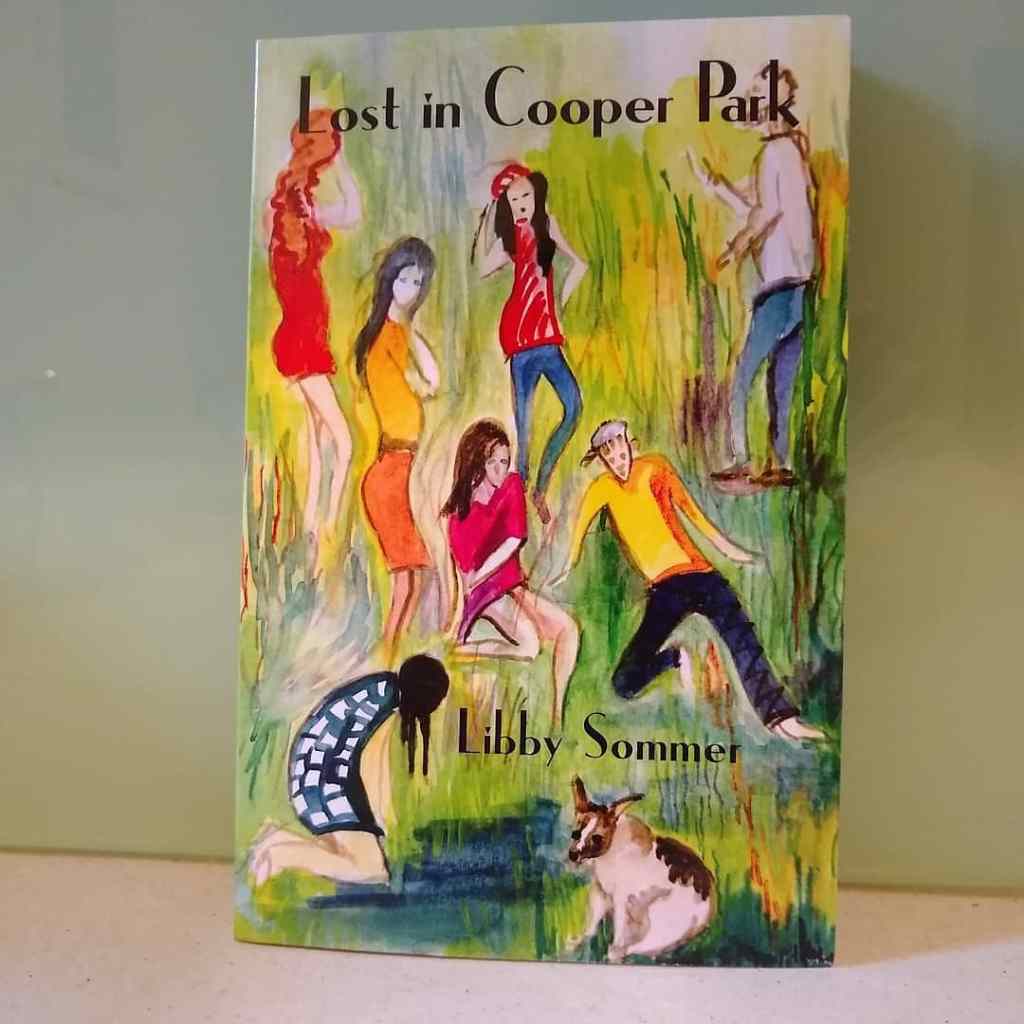
Print and ebook editions of The Usual Story available from Ginninderra Press, Amazon, Book Depository and other online booksellers.

One-Page Review of The Crystal Ballroom

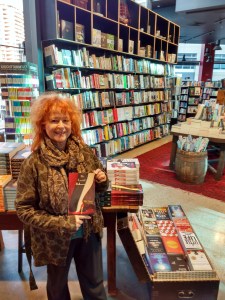
author holding copy of The Crystal Ballroom


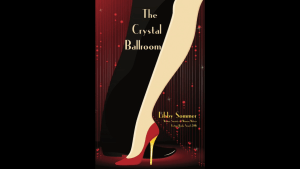
I was delighted to see a one-page review of my novel ‘The Crystal Ballroom‘ in October Quadrant magazine (available now in newsagents or on-line).

Penelope Nelson writes:

‘Have you ever heard Latin American music coming from an upper room over a shop, and lingered briefly at the sign about dancing classes? Perhaps you have seen people–a man in built-up shoes or a woman with a surfeit of silver bangles–heading for an old town hall after dark. The world of ballroom dancing and tango lessons has its own etiquette and hierarchies. Libby Sommer’s new fiction ‘The Crystal Ballroom’ lifts the lid on the delights and pitfalls of this fascinating sub-culture …

‘Sommer has great skill in creating atmosphere. The music, the swirling scents of aftershave and sweat, the decor of ballrooms, flats, motels and shared tents are powerfully evoked …

‘Some of the best passages in the book express the joy of dancing:

We’re practising walking the length of the hall. Alberto says that in Buenos Aires students of tango spend two years just learning to walk properly.  “Extend forward,” he says, “step forward, only placing the weight on the extended leg at the last moment, toes pointed, sides of the feet staying connected on the floor.” Then backwards with a straight leg, torso pulled up, chest up and out, and with a partner again, always there’s that special connection with a partner.

Hopefully, this wonderful review by Penelope Nelson will give sales of the book a boost. ‘The Crystal Ballroom’ is available directly from Gininnderra Press, in bookstores, and online.

red and black The Crystal Ballroom book cover


Another great review for The Crystal Ballroom


The Crystal Ballroom book covers

I was delighted to read another wonderful and insightful review of The Crystal Ballroom this morning. It’s on Goodreads.

Here’s an extract:

An intriguing book, neither a collection of short stories nor a novel, but a series of vignettes – snapshots − of women, no longer young, but who are determined to wring every drop of verve and excitement out of life. Most of the action is revealed in conversations over coffee or drinks, between the protagonist, Sofia and her friend Ingrid. The ‘glue’ holding the story – or rather stories − together is a love of ballroom dancing and the venues in which such events are held, in particular the Crystal Ballroom, which is a character in its own right. 

In this unusual book Libby Sommer puts women’s psyches under the microscope – their hopes and dreams, fears and foibles – yet always with a deft touch and a sympathetic ear. 

You can read the whole review here.