Click ‘Australian Poetry Book Publishers’ to read the 2024 list from Poetry Sydney.
‘Useful if you have a ms eagerly awaiting an outlet, but it’s also a guide for the reader. Explore what’s out there in this country as the press listings also have web page addresses. It’s not all bad news!’ Poet, Les Wicks.
Poetry Sydney is an independent literary organisation committed to a presence for poetry in our culture.
Have a read of my poem ‘Survival’ first published in Quadrant Magazine. ‘Survival’ is one of the poems in my debut poetry collection ‘The Cellist, a Bellydancer & Other Distractions‘ (Ginninderra Press).
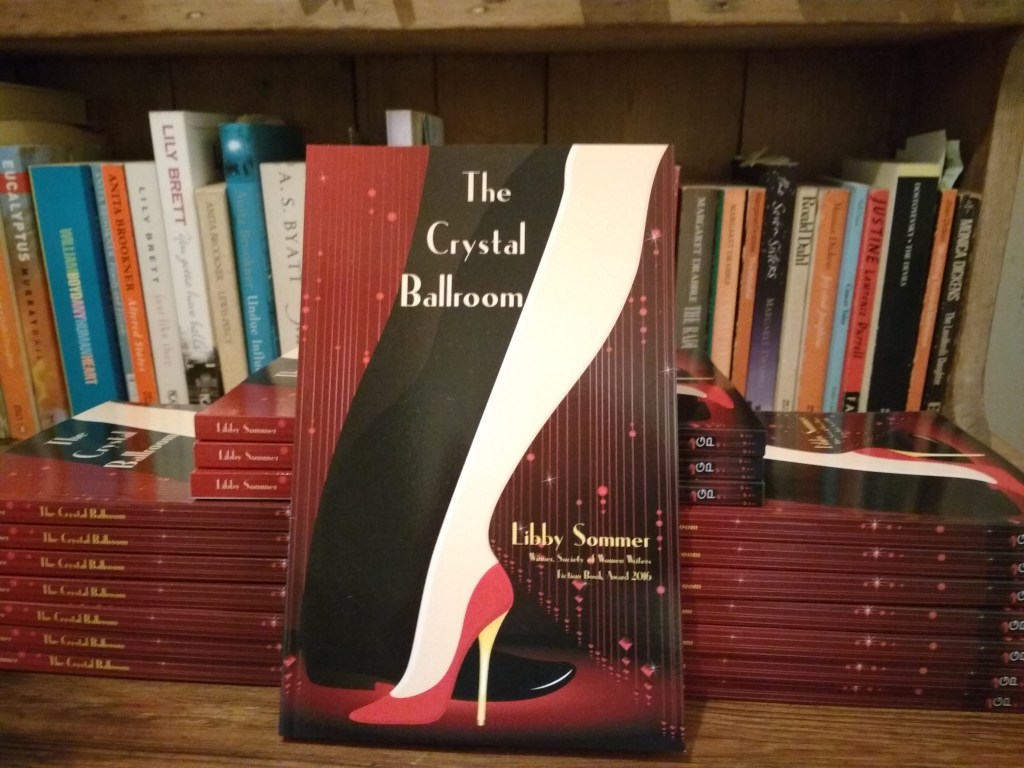
My second novel, ‘The Crystal Ballroom‘ (Ginninderra Press) is a novel-in-stories.
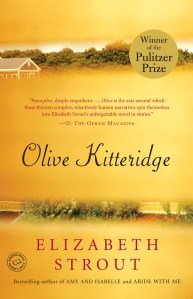
So what is a novel-in-stories? One famous example is Elizabeth Strout’s Pullitzer Prize-winning ‘Olive Kitteridge’.
‘A penetrating, vibrant exploration of the human soul, the story of Olive Kitteridge will make you laugh, nod in recognition, wince in pain, and shed a tear or two.’ – Goodreads ‘In a voice more powerful and compassionate than ever before, New York Times bestselling author Elizabeth Strout binds together thirteen rich, luminous narratives into a book with the heft of a novel, through the presence of one larger-than-life, unforgettable character: Olive Kitteridge.’
A novel-in-stories, or connected short stories that together become more than the sum of their parts, is also known as a short story cycle.
‘A short story cycle (sometimes referred to as a story sequence or compositenovel) is a collection of short stories in which the narratives are specifically composed and arranged with the goal of creating an enhanced or different experience when reading the group as a whole as opposed to its individual parts.’ – Wikipedia
‘A novel-in-stories is a book-length collection of short stories that are interconnected. (One of the very first examples of this genre is The Canterbury Tales; a more recent example is The Girl’s Guide to Hunting and Fishing, by Melissa Bank.) A novel-in-stories overcomes two key challenges for writers: the challenge of writing a novel-length work, and the challenge of publishing a book-length work of unrelated short stories. (Few publishers are willing to publish a short-story collection from an unknown writer.) So, the novel-in-stories helps you sell a story collection like you would a novel—as long as the interconnected nature of the stories is strong and acts as a compelling hook. Another advantage to novels-in-stories is that they afford you the opportunity to publish pieces of your novel in a variety of literary magazines, which might attract the attention of an editor or agent.’ – Writer’s Digest
My book, ‘The Crystal Ballroom‘ is connected by place and by a first person narrator and her friend who exchange stories about the characters they meet at the singles dances as they search for a regular dance partner.
‘The Crystal Ballroom‘ was launched into the world by Stephen Matthews OAM at Collected Works Bookshop, Melbourne at an afternoon of launches and book readings to celebrate Ginninderra Press’s 21 years of independent publishing.
Have a read of my poem ‘Jogger At My Heels’ first published in The Canberra Times. It is one of the poems in my second poetry collection, ‘Flat White, One Sugar’ due for release by Ginninderra Press this year. 51 new poems by me, 21 illustrations by my granddaughter, Natasha Sommer, a graduate of The National Art School.
Sometimes we sit at our desks to write and can’t think of anything to write about. We face the blank page. We sit there until blood pours from our foreheads, as one famous author was heard to say.
Making a list can be good. It makes you start noticing material for writing in your daily life, and your writing comes out of a relationship with your life in all its richness.
10 ideas for writing practice:
Begin with “I don’t remember”. If you get stumped, just repeat the words “I don’t remember” on the page again and keep going.
Tell about sound as it arises. Be aware of sounds from all directions as they arise: sounds near, sounds far, sounds in front, behind, to the side, above or below. Notice any spaces between sounds.
Tell me about last evening. Dinner, sitting on the couch, preparing for bed. Be as detailed as you can. Take your time to locate the specifics and relive your evening on the page.
Tell me what boredom feels like.
See in your mind a place you’ve always loved. Visualise the colours, the sounds, the smells, the tastes.
Write about “saying goodbye”. Tackle it any way you like. Write about your marriage breakup, leaving home, the death of a loved one.
What was your first job?
Write about the most scared you’ve ever been.
Write in cafes. Write what is going on around you.
Describe a parent or a child.
Some people have a jar full of words written on pieces of paper and select one piece of paper at random each day and write from that. Others use a line of a poem to start them off. Then every time they get stuck they rewrite that line and keep going.
Be honest. Cut through the crap and get to the real heart of things.
Zen Buddhist, psychotherapist, writer and teacher, Gail Sher in her book One Continuous Mistake says the solution for her came via haiku (short unrhymed Japanese poems capturing the essence of a moment).
“For several years I wrote one haiku a day and then spent hours polishing those I had written on previous days. This tiny step proved increasingly satisfying,” Gail Sher.
She said it gradually dawned on her that it was not the haiku but the “one per day.” Without even knowing it, she had developed a “practice.” Every day, no matter what, she wrote one haiku. In her mind she became the person who writes “a haiku a day.” And that was the beginning of knowing who she was.
Gail Sher suggests writing on the same subject every day for two weeks.
“Revisiting the same subject day after day will force you to exhaust stale, inauthentic, spurious thought patterns and dare you to enter places of subtler, more ‘fringe’ knowing,” Gail Sher.
She writes in One Continuous Mistake that the Four Noble Truths for writers are:
Writers write.
Writing is a process.
You don’t know what your writing will be until the end of the process.
If writing is your practice, the only way to fail is to not write.
So start coming up with your own list of ideas for practice writing. Life happening around us is good grist-for-the-mill.
Have a read of my poem ‘Here’, first published in Blue Fringe Art & Literature Exhibition 2021 Collected Works. The poem is also part of my debut poetry collection ‘The Cellist, a Bellydancer & Other Distractions‘ (Ginninderra Press).
At a literary lunch I overheard someone say: ‘The thing to do is put the idea in your subconscious. Your brain will do the work.’
It takes time for our experience to make its way through our consciousness. For example, it is hard to write about a journey while you are still in the midst of the adventure. We have no distance from what is happening to us. The only things we seem to be able to say are ‘having a great time’, ‘the weather is good’, ‘wish you were here’. It is also hard to write about a place we just moved to, we haven’t absorbed it yet. We don’t really know where we are, even if we can walk to the train station without losing our way. We haven’t experienced three scorching summers in this country or seen the dolphins migrating south along the coast in the winter.
“Maybe away from Paris I could write about Paris as in Paris I could write about Michigan. I did not know it was too early for that because I did not know Paris well enough.” – Ernest Hemingway, A Moveable Feast (New York: Charles Scribner’s Sons, 1964).
So we take in experience, but we need to let things make their way through our consciousness for a while and be absorbed by our whole selves. We are bower birds, collecting experience, and from the thrown away apple skins, outer lettuce layers, tea leaves, and chicken bones of our minds come our ideas for stories and poems and songs. But this does not come any time soon. It takes a very long time (three to ten years in the case of literary fiction). We need to keep picking through these scraps until some of the thoughts together form a pattern or can be organised around a central theme, something we can shape into a narrative. We mine our hidden thoughts for ideas. But the ideas need time to percolate: to slowly filter through.
Rumi, the thirteenth-century Sufi poet, summed up what could be the creative process when he wrote ‘The Guest House’:
This being human is a guest house.
Each morning a new arrival.
A joy, a depression, a meanness,
some momentary awareness comes
as an unexpected visitor.
Welcome and entertain them all!
Even if they are a crowd of sorrows,
who violently sweep your house
empty of its furniture,
still, treat each guest honorably.
He may be clearing you out
for some new delight.
The dark thought, the shame, the malice,
meet them at the door laughing and invite
them in.
Be grateful for whoever comes,
because each has been sent
as a guide from beyond.
Jalaluddin Rumi, in The Essential Rumi
Translated by Coleman Barks, 1999
Our work is to keep rummaging through the rubbish bins of our minds, exercising the writing muscle, in readiness to answer that knock at the door when it comes.
As the author Vivian Gornick said: ‘The writers life is the pits. You live alone and you work alone, every day I have to recreate myself.’ She paused and laughed. ‘But when the work is going well there is nothing that compares.’
What about you? Are you ready to answer the knock at the door? 🙂
Have a read of my poem, ‘Safe … The Pandemic’ first published in ‘Milestones’ Anthology (Ginninderra Press). It is also one of the poems in my debut collection, ‘The Cellist, a Bellydance & Other Distractions‘ (Ginninderra Press).
Is a novel a short story that keeps going, or, is it a string of stories with connective tissue and padding, or, is it something else? Essayist Greg Hollingshead believes that the primary difference between the short story and the novel is not length but the larger, more conceptual weight of meaning that the longer narrative must carry on its back from page to page, scene to scene.
“It’s not baggy wordage that causes the diffusiveness of the novel. It’s this long-distance haul of meaning.” Greg Hollingshead
There is a widespread conviction among fiction writers that sooner or later one moves on from the short story to the novel. When John Cheever described himself as the world’s oldest living short story writer, everyone knew what he meant.
Greg Hollingshead says that every once in a while, to the salvation of literary fiction, there appears a mature writer of short stories—someone like Chekhov, or Munro—whose handling of the form at its best is so undulled, so poised, so capacious, so intelligent, that the short in short story is once again revealed as the silly adjective it is, for suddenly there are simply stories, spiritual histories, narratives amazingly porous yet concentrated and undiffused.
When you decide you want to write in a particular form—a novel, short story, poem—read a lot of writing in that form. Notice the rhythm. How does it begin? What makes it complete? When you read a lot in a particular form, it becomes imprinted inside you, so when you sit at your desk to write, you produce that same structure. In reading novels your whole being absorbs the pace of the sentences, the setting of scenes, knowing the colour of the bedspread and how the writer gets her character to move down the hallway to the front door.
I sit at my desk thinking about form as a low-slung blanket of cloud blocks my view of the sky. Through the fly screen I inhale the sweet smell of earth after rain as another day of possibility beckons.
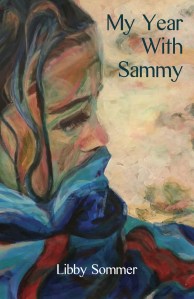
We might write five novels before we write a good one. I wrote five book-length manuscripts before one was finally accepted for publication. My skill was in the short form. I’d published dozens of short stories in prestigious literary journals. So it made sense that my first book, ‘My Year With Sammy’ (Ginninderra Press) is a novella – a small book.
What about you? Is your skill in the short form or the marathon?
Have a read of my poem, ‘Distraction’ first published in Burrow, Old Water Rat Publishing. It is one of the poems in my debut poetry collection, ‘The Cellist, a Bellydancer & Other Distractions‘ (Ginninderra Press) 2022.








 Libby Sommer, Author