
My Poem, ‘Regrets’

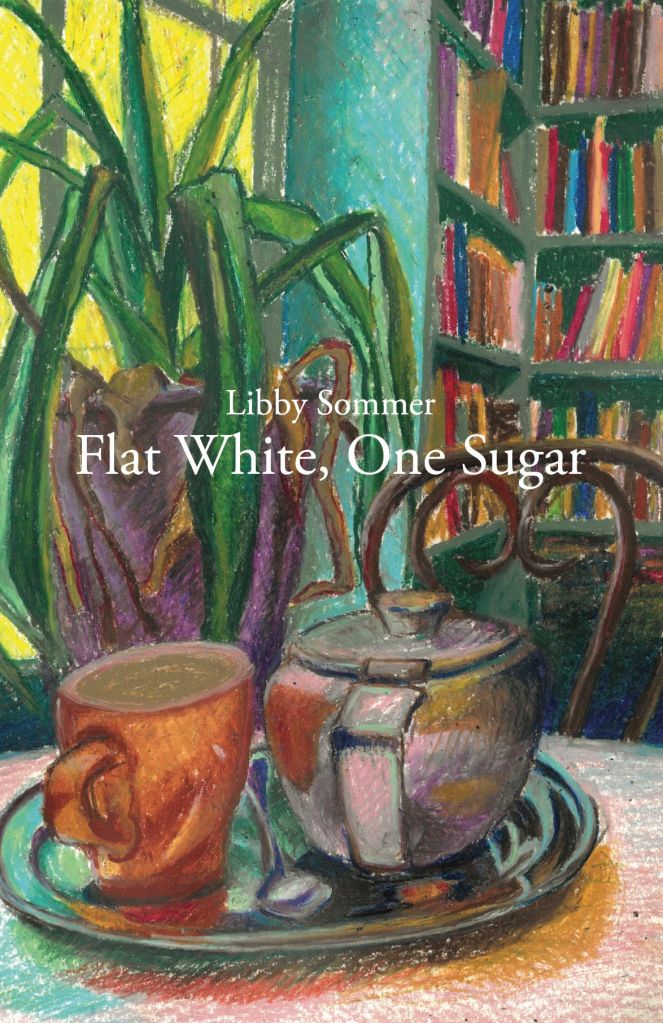
Have a read of my poem, ‘Regrets’ first published in Quadrant Magazine. ‘Regrets’ is one of the poems in my recently published second poetry collection, ‘Flat White, One Sugar’ (Gininnderra Press).

I hope you enjoy it.

Regrets:

Driving through the streets of the city

on a Sunday, we’re talking about

our crazy mistakes, the men we separated from,

the ex-husbands who remarried and married again,

those we shouldn’t have let go.

‘Yes, it’s hard having no-one to turn to,’ you say,

reversing into a “no stopping” space.

The signpost doesn’t mention Sundays.

You turn the ignition off

and cover your face with your hands.

‘I’m so hopeless at parking,’ you cry. ‘He used to tell me

we’d need to catch a cab to the kerb.’

I laugh and pat your shoulder.

‘It’s fine,’ I say. ‘You’re sticking out a bit in front,

but you can try again … or not. Nothing’s perfect.’

My words surprise me,

rising above the rush of traffic,

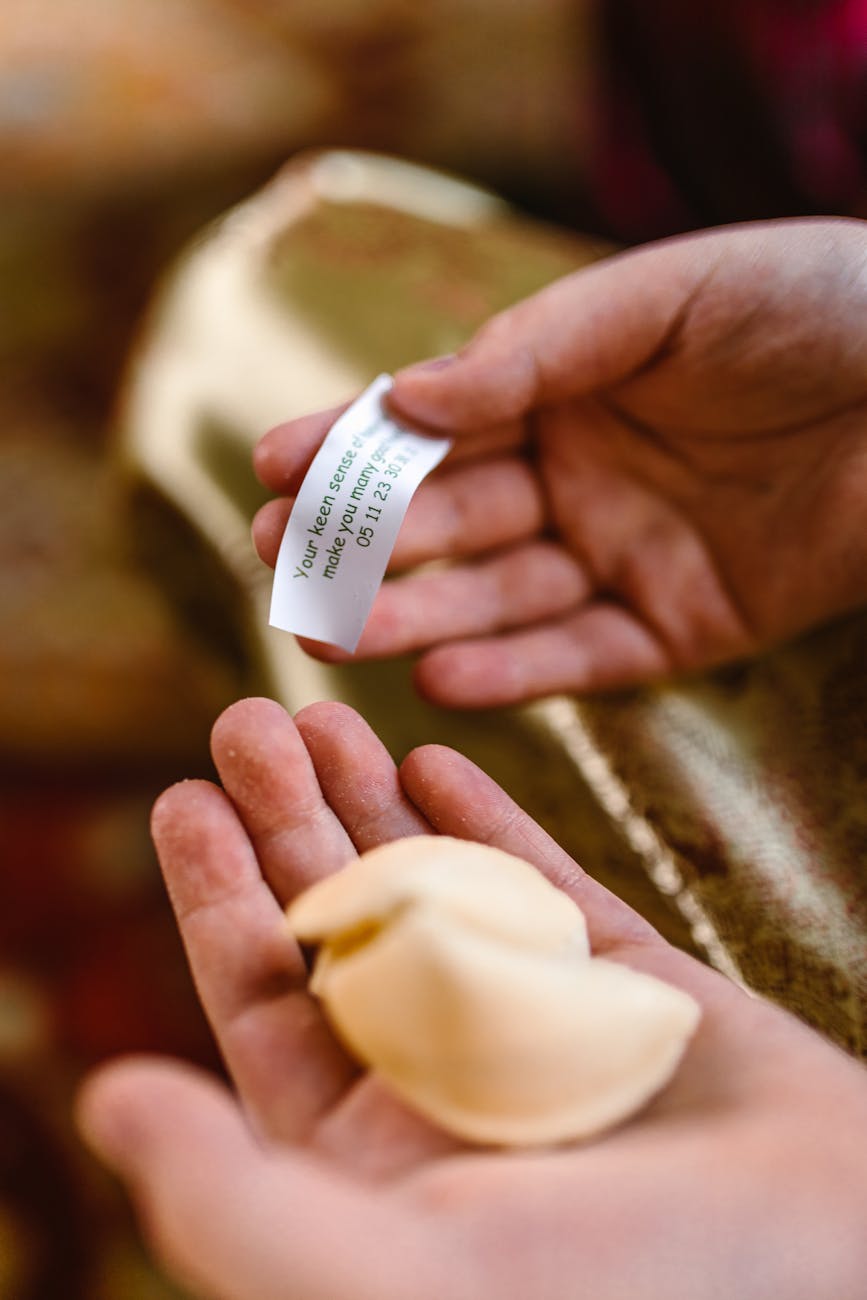
a sweet fortune cookie prediction,

forgive yourself,

you did your best.

Copyright 2024 Libby Sommer

Photo by RDNE Stock project on Pexels.com

Writing Tip: Things Said by Raymond Carver About Short Form Writing

‘My attention span had gone out on me; I no longer had the patience to try to write novels. … I know it has much to do now with why I write poems and short stories. Get in, get out. Don’t linger. Go on.’

‘Every great or even every very good writer makes the world over according to his own specifications.’

‘It is his world and no other. This is one of the things that distinguishes one writer from another. Not talent.’

‘Isak Dinesan said that she wrote a little every day, without hope and without despair.’

‘”Fundamental accuracy of statement is the ONE sole morality of writing,” Ezra Pound.’

‘It is possible to write a line of seemingly innocuous dialogue and have it send a chill along the reader’s spine – the source of artistic delight, as Nabokov would have it. That’s the kind of writing that most interests me.’

‘That’s all we have, finally, the words, and they had better be the right ones, with the punctuation in the right places so that they can best say what they are meant to say.’

‘I like it when there is some feeling of threat or sense of menace in short stories.’

‘I made the story just as I’d make a poem; one line and then the next, and the next.’

‘V.S. Pritchett’s definition of a short story is “something glimpsed from the corner of the eye, in passing.” Notice the “glimpse” part of this. First the glimpse.’

‘The short story writer’s task is to invest the glimpse with all that is in his power. He’ll bring his intelligence and literary skill to bear (his talent), his sense of proportion and sense of the fitness of things – like no one else sees them. And this is done through the use of clear and specific language, language used so as to bring to life the details that will light up the story for the reader. For the details to be concrete and convey meaning, the language must be accurate and precisely given. The words can be so precise they may even sound flat, but they can still carry, if used right, they can hit all the notes.’

Raymond Carver, Fires, Vintage 1989

So who is Raymond Carver?

Raymond Carver, in full Raymond Clevie Carver, (born May 25, 1938, Clatskanie, Oregon, U.S.—died August 2, 1988, Port Angeles, Washington), American short-story writer and poet whose realistic writings about the working poor mirrored his own life. – Encyclopedia Britannica

Photo by Suzy Hazelwood on Pexels.com

My Poem, ‘Hostilities’

Have a read of my poem, ‘Hostilities’ first published in Quadrant Magazine. I wrote the poem during the pandemic. It is one of the pieces in my debut poetry collection, ‘The Cellist, a Bellydancer & Other Distractions‘ (Ginninderra Press).

I hope you enjoy it.

Hostilities:

I worry about the ones

who disbelieve in science,

the ones on social media

with no qualifications

but a good command

of gobbledygook,

and the one who said

she’d had enough of wimps like me.

Scientists observe and calculate,

study the risks,

wave us across

as we wait by the side of the road,

even though the science of pandemics

is incomplete.

It takes a lot of guts sometimes

with those who are close to us.

Relatives, old school friends, intimates …

Anti-vaxxers still find arguments

to fire at us. I think of Aristotle’s warning:

there is only one way

to avoid criticism –

do nothing, say nothing,

and be nothing.

Copyright 2024 Libby Sommer

Photo by Edward Jenner on Pexels.com

Writing Tip: Coping with Rejection

If you are a writer, rejections aren’t just inevitable, they are a way of life — no matter who you are. Unfortunately, dealing with rejection is part of becoming successful as a published author.  

It’s really hard to handle rejection, to keep a lid on crippling self-doubt and to keep going.

We can easily play down just how hard it is to write through fear.  Fear is made much louder and much larger by rejection.

Rejection feels like a kick in the gut. We have shared our writing and shared are deepest thoughts and so it hurts like hell when we are told it is not good enough.

Writing, of course, is subjective. It may only be one person’s opinion of our work. So we have to keep putting our writing out there in front of different readers, publishers or agents.

Tell yourself as often as you need that you’re not the first writer and won’t be the last to have had a book, a short story, or a poem turned down.

Here is a list of authors who have been treated almost as badly as you have been. It’s sure to make you feel heaps better. It comes from the American literary publisher Knopf’s Archives at the Harry Ransom Humanities Research Centre at the University of Texas:

Jorge Luis Borges

‘utterly untranslatable’

Isaac Bashevis Singer

‘It’s Poland and the rich Jews again.’

Anais Nin

‘There is no commercial advantage in acquiring her, and, in my opinion, no artistic.’

Jack Kerouac

‘His frenetic and scrambled prose perfectly express the feverish travels of the Beat Generation. But is that enough? I don’t think so.’

Lady Chatterley’s Lover by D H Lawrence

‘for your own sake do not publish this book.’

The Wind in the Willows by Kenneth Grahame

‘an irresponsible holiday story’

Lord of the Flies by William Golding

‘an absurd and uninteresting fantasy which was rubbish and dull.’

Watership Down by Richard Adams

‘older children wouldn’t like it because its language was too difficult.’

On Sylvia Plath

‘There certainly isn’t enough genuine talent for us to take notice.’

Crash by J. G Ballard

‘The author of this book is beyond psychiatric help.’

The Deer Park by Norman Mailer

‘This will set publishing back 25 years.’

Gentlemen Prefer Blondes by Anita Loos

‘Do you realize, young woman, that you’re the first American writer ever to poke fun at sex.’

The Diary of Anne Frank

‘The girl doesn’t, it seems to me, have a special perception or feeling which would lift that book above the “curiosity” level.’

Lust for Life by Irving Stone

(rejected 16 times, but found a publisher and went on to sell about 25 million copies)

‘ A long, dull novel about an artist.’

Barchester Towers by Anthony Trollope

‘The grand defect of the work, I think, as a work of art is the low-mindedness and vulgarity of the chief actors. There is hardly a “lady” or “gentleman” amongst them.’

Carrie by Stephen King

‘We are not interested in science fiction which deals with negative utopias. They do not sell.’

Catch — 22 by Joseph Heller

‘I haven’t really the foggiest idea about what the man is trying to say… Apparently the author intends it to be funny — possibly even satire — but it is really not funny on any intellectual level … From your long publishing experience you will know that it is less disastrous to turn down a work of genius than to turn down talented mediocrities.’

The Spy who Came in from the Cold by John le Carré

‘You’re welcome to le Carré — he hasn’t got any future.’

Animal Farm by George Orwell

‘It is impossible to sell animal stories in the USA’

Lady Windermere’s Fan by Oscar Wilde

‘My dear sir,

I have read your manuscript. Oh, my dear sir.’

Lolita by Vladimir Nabokov

‘… overwhelmingly nauseating, even to an enlightened Freudian … the whole thing is an unsure cross between hideous reality and improbable fantasy. It often becomes a wild neurotic daydream … I recommend that it be buried under a stone for a thousand years.’

So remember, ‘For writers, rejection is a way of life.’ – author, Erica Verrillo.

My Prose Poem, ‘When the New Boyfriend Nearly Died’

Have a read of my prose poem, ‘When the New Boyfriend Nearly Died’ first published in Quadrant Magazine. The poem is included in my second poetry collection titled ‘Flat White, One Sugar‘, released this month by Ginninderra Press.

Hope you enjoy it.

When the New Boyfriend Nearly Died:

In the hospital’s public toilet, your face pleads back at you, white and worried. Far as you know, your new boyfriend had a heart attack while bouncing between your child-bearing hips. Too much of a strain. It’s not your fault. When he was admitted to Emergency you didn’t know if you’d ever see him again.

After five hours of waiting, you ask the receptionist if you can go in. When she asks you, you can’t pronounce his Polish surname. You spell out the letters. She considers you through the gap in the partition. You tell her you’re his new girlfriend. So you’re the one, she must be thinking before pressing the red button that lets you in.

He is lying in bed, a canula in his arm. His eyes are closed. You sit in a chair beside him and hold his hand. This would never have happened if it weren’t for you. Nurses and doctors hurry past clutching clipboards.

Don’t die on me, you plead.

If he dies, what you will miss are his text messages of love, the thwack of his body, and the pots of Japanese tea you shared. In bed you’d sip from tiny ceramic mugs.

You make a mental list of your strengths and weaknesses: you’re good at hedonistic pleasures, bad at Cryptics, bad at lonely Sundays, good at making new friends, bad at staying in touch, good at making loose-leaf tea after sex with an addict, good at falling for men who can’t stop swallowing uppers and downers. Good at loving your new boyfriend who took too many pills and now you’re worried he’ll die. Are you dreaming, or did he just squeeze your hand?

Copyright 2024 Libby Sommer

Photo by Kvs Sidhu on Pexels.com

Writing Tip: Plotter or Pantser?

Do you plot your stories, or fly by the seat of your pants?

Plot means the story line.  When people talk about plotting, they mostly mean how to set up the situation, where to put the turning points, and what the characters will be doing in the end.  What happens.

Some fiction writers write organically, not knowing where the story they are writing is going.  These writers say it would be boring to know what’s going to happen next and they lose their enthusiasm to tell the story because they know the outcome already.  They prefer throwing themselves over the edge and into the void.  This method can be very anxiety-producing.  It means you need a lot of faith in your process.

Other writers plan the story before they begin.  In detective fiction the story definitely needs to be worked out beforehand so information can be drip-fed to the reader.

In the past, when creating my short stories, I have worked organically and not known where my stories were headed as I wrote them.  The shorter the piece of fiction, the less need for plot.  You can write an interesting story in which not very much happens.  A woman fights with her neighbour, a man quits his job, or an unhappy family goes out for a pizza.  Simple structures work better than something too complicated when the story is short.

Now that I’m working on a new novel, I feel the need to plot.

“A plot can, like a journey, begin with a single step.   A woman making up her mind to recover her father’s oil paintings may be enough to start.  The journey begins there, as it did for Raskolnikov in Crime and Punishment when he decided to commit his crime,”  Jerome Stern Making Shapely Fiction

The plot grows and develops out of what helps and what hinders the characters’ progress toward their goals.

The Writers’ Workshop   http://www.writersworkshop.co.uk/plot2.html  ask:

  • But how do you know if your draft plot has the right amount of weight to carry an entire novel?
  • What kind of structures work?
  • Is there a quick way to design your own plot template?
  • And how do you handle a book with multiple points of view?

“A good plot has a clear motivation.  It has a clear structure.  It has an outcome.  It has subplots.  A good plot looks something like the plot structure template below,” The Writers’ Workshop.

MotivationLizzie Bennett wants to marry for love
Plot structureShe meets Darcy & Wickham. She dislikes Darcy, and starts to fall for Wickham. Wickham turns out to be a bad guy; Darcy turns out to be a good guy. She now loves Darcy.
OutcomeShe marries Darcy
Subplot 1Jane Bennett (Lizzie’s nice sister) loves Bingley. Bingley vanishes. He reappears. They get hitched.
Subplot 2Lydia Bennett (Lizzie’s idiot sister) elopes with Wickham. She’s recovered.
Subplot 3An idiot, Mr Collins, proposes marriage to Lizzie. She says no. Her friend, Charlotte, says yes.

Of course, there are a lot of things that the above plot template doesn’t tell you.  It doesn’t say where the novel is set, it doesn’t tell you anything about plot mechanics – it doesn’t say why Lizzie dislikes Mr Darcy, or how Lydia is recovered from her elopement.  It doesn’t have anything to say about character.

The Writers’ Workshop strongly advises us to build a template much like the one above before starting to write.  “If you’ve already started your MS then, for heaven’s sake, get to that template right away.”

So I’ve decided to put myself out of my misery and create a Plot Template for my new novel.  I already had my characters in place and knew what each character wanted.  But now I’m forced into planning an ending, which isn’t a bad thing.  Some writers don’t find the real beginning to their stories until they’ve written the ending.

So that’s all we need:  a beginning, a middle and an end.  Aristotle defined it like this:  a beginning is what requires nothing to precede it, an end is what requires nothing to follow it, and a middle needs something both before and after it.

Easy peasy.  Not.

What about you?  Do you plot or write organically?  What works and what sends you straight to the Writers Block Corner?

Header image:  Photo by Yogendra Singh on Pexels.com

My Poem, ‘White Ibis’

Have a read of my poem ‘White Ibis’, first published in Quadrant Magazine. ‘White Ibis’ is one of the poems in my debut poetry collection ‘The Cellist, A Bellydancer & Other Distractions‘ (Ginninderra Press).

I hope you enjoy it.

White Ibis:

We wish that nature could stay put

in their home, far away …

not urban tip turkeys, bin chickens –

not like us,

scrounging for a living in cities,

but stay where they thrive,

feeding in swamps, lagoons,

floodplains & grasslands

their black downward-curved bills

digging for crayfish and mussels.

The farmers’ friend,

featherless black heads

flocking in V-shaped flight

to locust-afflicted areas,

gorging on ravaging hordes of insects.

Unlike us, they can eliminate

plagues with ease.

There are nights when we fall asleep

dreaming of ibises

flying back home.

Copyright 2024 Libby Sommer

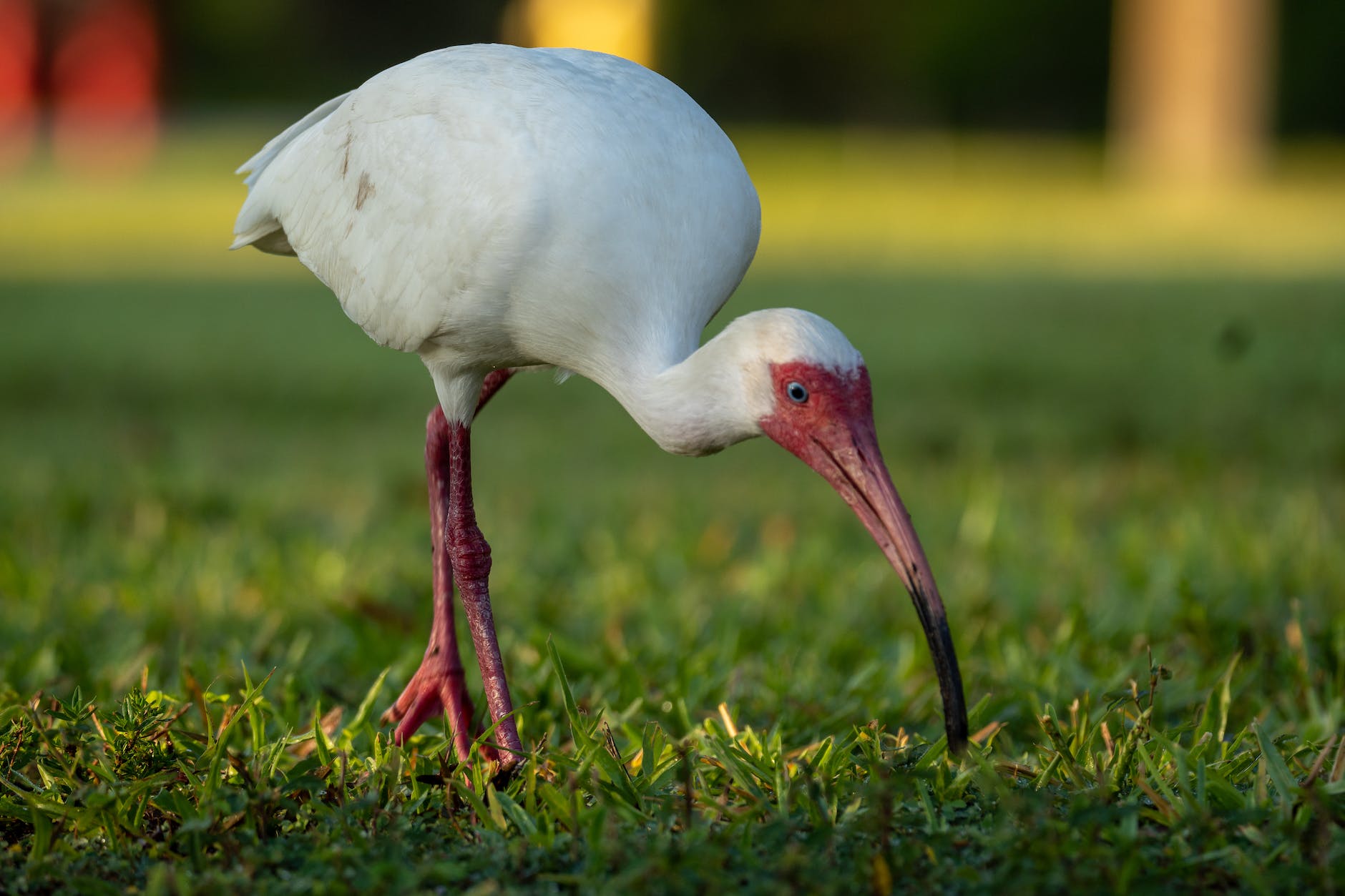
Photo by Luis Arango on Pexels.com

Australian Poetry Book Publishers 2024

Australian Poetry Book Publishers 2024.

Click ‘Australian Poetry Book Publishers’ to read the 2024 list from Poetry Sydney.

‘Useful if you have a ms eagerly awaiting an outlet, but it’s also a guide for the reader. Explore what’s out there in this country as the press listings also have web page addresses. It’s not all bad news!’ Poet, Les Wicks.

Poetry Sydney is an independent literary organisation committed to a presence for poetry in our culture.

My Poem ‘Survival’

Have a read of my poem ‘Survival’ first published in Quadrant Magazine. ‘Survival’ is one of the poems in my debut poetry collection ‘The Cellist, a Bellydancer & Other Distractions‘ (Ginninderra Press).

I hope you enjoy it.

Survival

More gusts of wind

through new high-rises

sharped-edged.

More traffic,

more construction dust

much overshadowing

in grey & black.

Newly-planted in the local streets

the bottlebrush should know why it exists:

nectar feeding of insects,

of butterflies & birds.

East of the city

blue beaches dazzle & swell.

They re-emerge

in a spring break out

giving hope to the lone crimson flower

squeezing through densely-packed leaves.

Copyright 2024 Libby Sommer