Have a read of my poem ‘Breaking Out’, first published in the Canberra Times Panorama Arts Section. ‘Breaking Out’ is one of the poems in my recently released second collection titled ‘Flat White, One Sugar‘ (Ginninderra Press).
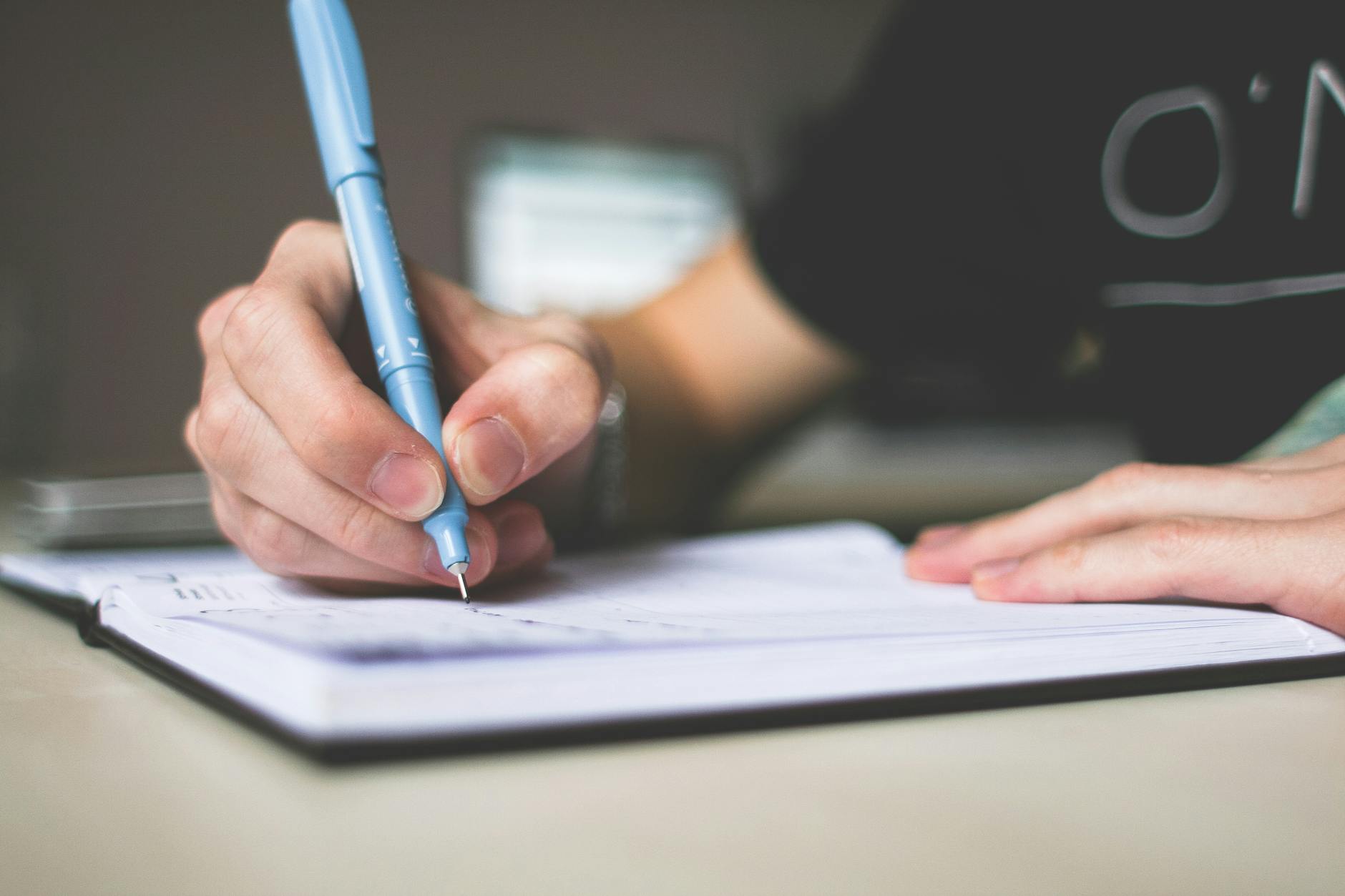
Writing as a daily practice is a way to exercise the writing muscle. Like working out at the gym, the more you do it, the more results you get. Some days you just don’t feel like working out and you find a million reasons not to go to the gym or out for a jog, a walk, a swim, a bike ride, but you go anyway. You exercise whether you want to or not. You don’t wait around till you feel the urge to work out and have an overwhelming desire to go to the gym. It will never happen, especially if you haven’t been into health and fitness for a long time and you are pretty out of shape. But if you force yourself to exercise regularly, you’re telling your subconscious you are serious about this and it eventually releases its grip on your resistance. You just get on and do it. And in the middle of the work out, you’re actually enjoying it. You’ve felt the endorphines kick in. When you get to the end of the jog, the walk, the bike ride, the swim, the gym workout or the Pilates, Yoga or Zumba class, you don’t want it to end and you’re looking forward to the next time.
That’s how it is with writing too. Once you’ve got the flow happening, you wonder why it took you so long to turn up on the page. Bum on chair is what I say to my writing students. Through daily practice your writing does improve.
In The Artist’s Way, Julia Cameron’s book on discovering and recovering your creative self, she refers to daily writing practice as the morning pages. She recommends writing three pages of longhand, strictly stream-of-consciousness—moving the hand across the page and writing whatever comes to mind every day.
Author of Writing Down the Bones, Natalie Goldberg refers to writing practice as timed exercise. She says you might time yourself for ten minutes, twenty minutes, or longer. It’s up to you, but the aim is to capture first thoughts. “First thoughts have tremendous energy. It is the way the mind first flashes on something. The internal censor usually squelches them, so we live in the realm of second and third thoughts, thoughts on thought, twice and three times removed from the direct connection of the first fresh flash.”
Her rules for writing practice are:
1. Keep your hand moving. 2. Don’t cross out. 3. Don’t worry about spelling, punctuation , grammar. 4. Lose control. 5. Don’t think. Don’t get logical. 6. Go for the jugular.
In Creative Journal Writing, author Stephanie Dowrick refers to the same process as free writing; writing without judging, comparing and censoring. “Continuing to write when you don’t know what’s coming next and especially when you feel your own resistances gathering in a mob to mock you.”
Daily writing practice has been described as clearing the driveway of snow before reaching the front door. In other words, it’s what we do as a warm up before the real writing takes place. And it’s a way to loosen up and discover our own unique writing ‘voice’. That’s what publishers are looking for when they read through the slush pile. The storyteller’s voice. The authentic writing voice of the author is what engages the reader.
Have a read of my poem ‘What Happened to the Sun‘ first published in Quadrant Magazine. ‘What Happened to the Sun‘ is one of the poems in my debut poetry collection ‘The Cellist, a Bellydancer & Other Distractions‘ (Ginninderra Press).
When people ask me where I get my ideas from, I tell them I use the world around me. Life is so abundant, if you can write down the actual details of the way things were and are, you hardly need anything else. Even if you relocate the French doors, fast-spinning overhead fan, small red Dell laptop, and low black kneeling chair from your office that you work in in Sydney into an Artist’s Atelier in the south of France at another time, the story will have truth and groundedness.
In Hermione Hoby’s interview with Elizabeth Strout in the Guardian newspaper, the Pulitzer prize winner said her stories have always begun with a person, and her eyes and ears are forever open to these small but striking human moments, squirreling them away for future use. “Character, I’m just interested in character,” she said.
“You know, there’s always autobiography in all fiction,” Strout said, referring to her novel, My Name is Lucy Barton. “There are pieces of me in every single character, whether it’s a man or a woman, because that’s my starting point, I’m the only person I know.” She went on to explain: “You can’t write fiction and be careful. You just can’t. I’ve seen it with my students over the years, and I think actually the biggest challenge a writer has is to not be careful. So many times students would say, ‘Well, I can’t write that, my boyfriend would break up with me.’ And I’d think, you have to do something that’s going to say something, and if you’re careful it’s just not going to work.”
At the launch of my debut novel My Year With Sammy, the MC Susanne Gervay OAM said: “Libby’s level of detail creates poignant insights into character and relationships. If people know Libby they may find themselves subtly entwined in one of her stories.”
On Goodreads’ website they locate The Bell Jar by Sylvia Plath under “Autobiographical Fiction” and describe the book as Plath’s shocking, realistic, and intensely emotional novel about a woman falling into the grip of insanity: “Esther Greenwood is brilliant, beautiful, enormously talented, and successful, but slowly going under—maybe for the last time. In her acclaimed and enduring masterwork, Sylvia Plath brilliantly draws the reader into Esther’s breakdown with such intensity that her insanity becomes palpably real, even rational—as accessible an experience as going to the movies. A deep penetration into the darkest and most harrowing corners of the human psyche, The Bell Jar is an extraordinary accomplishment and a haunting American classic.”
My advice to you, dear Reader, is to be awake to the details around you, but don’t be self-conscious. “So here it is. I’m at a Valentine’s Day party. It’s 33 degrees outside. The hostess is sweltering over a hot oven in the kitchen. She is serving up cheese and spinach triangles as aperitifs.” Relax, enjoy the party, be present with your eyes and ears open. You will naturally take it all in, and later, sitting at your desk, you will be able to remember just how it was to be eating outside in the heat under a canvas umbrella, attempting to make conversation with the people on either side of you, and thinking how you can best make an early exit.
In the interview with Elizabeth Strout in the Guardian, Strout said: “I don’t want to write melodrama; I’m not interested in good and bad, I’m interested in all those little ripples that we all live with. And I think that if one gets a truthful emotion down, or a truthful something down, it is timeless.”
Have a read of my poem ‘Words’ first published in Quadrant Magazine. ‘Words’ is part of my second poetry collection ‘Flat White, One Sugar’ (Ginninderra Press) published earlier this year.
The other day I was listening to someone talk about the craft of creative writing and she was speaking about the necessity of forward momentum in narrative in order to keep the reader engaged.
The speaker suggested keeping in mind the words: “but then …”
Using those two words, either on the page, or in your head, gives a twist or complication to the story.
Have a read of my poem ‘Twisted Tea’ first published in ‘For Ukraine: By Women of the World‘, a collection of powerful poetry and prose by all who identify as women about Russia’s invasion of Ukraine led by Russia’s President, Vladimir Putin.
I wrote the poem in 2022. ‘Twisted Tea’ is also one of the poems in my second poetry collection titled ‘Flat White, One Sugar‘, Ginninderra Press.
I’m reposting this from the time when we were deeply in the midst of the pandemic. It’s worth having another read about the benefits of poetry:
‘Neurologists at Exeter University, using functional magnetic resonance imaging, found that reading poetry activated different brain regions to prose – even the lyrical prose we find in fiction. When the research participants read poetry, it lit up the regions of the brain variously linked to emotion, memory, making sense of music, coherence building and moral decision-making. Poetry, the study’s authors concluded, induces a more introspective, reflective mental state among readers than does prose.’ – Sarah Holland-Batt, Weekend Australian, 21–22 March 2020
If you feel you’re losing your ability to focus on a long book while confined indoors and surrounded by digital screens (as staying up to date on a global pandemic seems to command), try turning to poetry to nurse your shrinking attention span back to life.
In the Time of Pandemic
And the people stayed home.,
And they read books, and listened, and rested, and exercised, and made art, and played games, and learned new ways of being, and were still.
And they listened more deeply. Some meditated, some prayed, some danced.
Some met their shadows. And the people began to think differently.
And the people healed.
And, in the absence of people living in ignorant, dangerous, mindless, and heartless ways, the earth began to heal.
And when the danger passed, and the people joined together again, they grieved their losses, and made new choices, and dreamed new images, and created new ways to live and heal the earth fully, as they had been healed.
—Kitty O’Meara
‘Poetry is the quiet music of being human and in these days and nights when our humanity is fully vulnerable and exposed, poetry takes a small step forward. In our separate isolations, a poem is like the Tardis: bigger on the inside. Like spring – to recall TS Eliot – poetry mixes memory and desire.’ – Carol Ann Duffy, The Guardian
This poem by poet Ian McMillan, reminds of us of just what we lose each time a library is closed.
Adult Fiction
I always loved libraries, the quiet of them, The smell of the plastic covers and the paper And the tables and the silence of them, The silence of them that if you listened wasn’t silence, It was the murmur of stories held for years on shelves And the soft clicking of the date stamp, The soft clickety-clicking of the date stamp. I used to go down to our little library on a Friday night
In late summer, just as autumn was thinking about Turning up, and the light outside would be the colour Of an Everyman cover and the lights in the library Would be soft as anything, and I’d sit at a table And flick through a book and fall in love With the turning of the leaves, the turning of the leaves.
And then at seven o’clock Mrs Dove would say In a voice that wasn’t too loud so it wouldn’t Disturb the books “Seven o’clock please …” And as I was the only one in the library’s late summer rooms I would be the only one to stand up and close my book And put it back on the shelf with a sound like a kiss, Back on the shelf with a sound like a kiss.
And I’d go out of the library and Mrs Dove would stand For a moment silhouetted by the Adult Fiction, And then she would turn the light off and lock the door And go to her little car and drive off into the night That was slowly turning the colour of ink and I would stand For two minutes and then I’d walk over to the dark library And just stand in front of the dark library.
‘The astronomer and poet Rebecca Elson (January 2, 1960–May 19, 1999) was twenty-nine when she was diagnosed with non-Hodgkins lymphoma — a blood cancer that typically invades people in their sixties and seventies. Throughout the bodily brutality of the treatment, throughout the haunting uncertainty of life in remission, she met reality on its own terms — reality creaturely and cosmic, terms chance-dealt by impartial laws — and made of that terrifying meeting something uncommonly beautiful.
Rebecca Elson, 1987
‘When she returned her atoms to the universe, not yet forty, Elson bequeathed to this world 56 scientific papers and a slender, stunning book of poetry titled A Responsibility to Awe (public library) — verses spare and sublime, drawn from a consciousness pulling the balloon string of the infinite through the loop of its own finitude, life-affirming the way only the most intimate contact with death — which means with nature — can be.’ – Maria Popova
Elson’s crowning achievement in verse is the poem “Antidotes to Fear of Death,”
ANTIDOTES TO FEAR OF DEATH by Rebecca Elson
Sometimes as an antidote To fear of death, I eat the stars.
Those nights, lying on my back, I suck them from the quenching dark Til they are all, all inside me, Pepper hot and sharp.
Sometimes, instead, I stir myself Into a universe still young, Still warm as blood:
No outer space, just space, The light of all the not yet stars Drifting like a bright mist, And all of us, and everything Already there But unconstrained by form.
And sometime it’s enough To lie down here on earth Beside our long ancestral bones:
To walk across the cobble fields Of our discarded skulls, Each like a treasure, like a chrysalis, Thinking: whatever left these husks Flew off on bright wings.
I hope you felt the positive benefits of reading these poems.
Have a read of my poem, ‘Holding On’ first published in Old Water Rat Publishing. ‘Holding On’ is one of the pieces in my second poetry collection recently released by Ginninderra Press titled ‘Flat White, One Sugar‘.
I hope you enjoy it.
Holding On:
When we are wet and cold,
we shelter under umbrellas & awnings.
When a lizard is wet and cold—often seeming
frozen or dead—they drop from trees, stunned.
They’ve shut down, no longer able to hold on.
It’s true they like to wake up in the warm sun,
just like us, even though they are cold-blooded.
Maybe a blue-tongue lizard’s easy-going nature
is what makes them a popular pet.
Maybe it’s their striking blue tongue.
You see lizards climbing the brick facade
of your house as the rain keeps pelting down.
They may hibernate in a hole in the ground,
or maybe a tree trunk or a fallen log.
City living is challenging if you’re
clinging to walls & windows. Scaling
a windowpane without falling off is one thing.
When enemies approach, some reptiles,
nicknamed the Jesus Christ lizard, can run on water.
If surprised by a predator, some lizards can detach
their tails or change colour to escape their enemies.
Repetitive strain injury often starts gradually but can soon become severely debilitating. But there are ways to nip it in the bud – and alleviate the worst symptoms.
1. Take Frequent Breaks
Take short, frequent breaks from repetitive tasks such as typing. A 10-minute break every hour. Use the computer only as much as you have to. Small hand movements, like scrolling on a screen, seem to set off RSI.
2. Type using both hands
It’s like playing the piano; correct fingering is essential. We tend to overuse one side of the body.
Become ambidextrous, e.g. use the mouse in your other hand, lift the kettle with the other hand.
3. Move
Get up from your desk every 30 minutes and move your neck and shoulders to release tension.
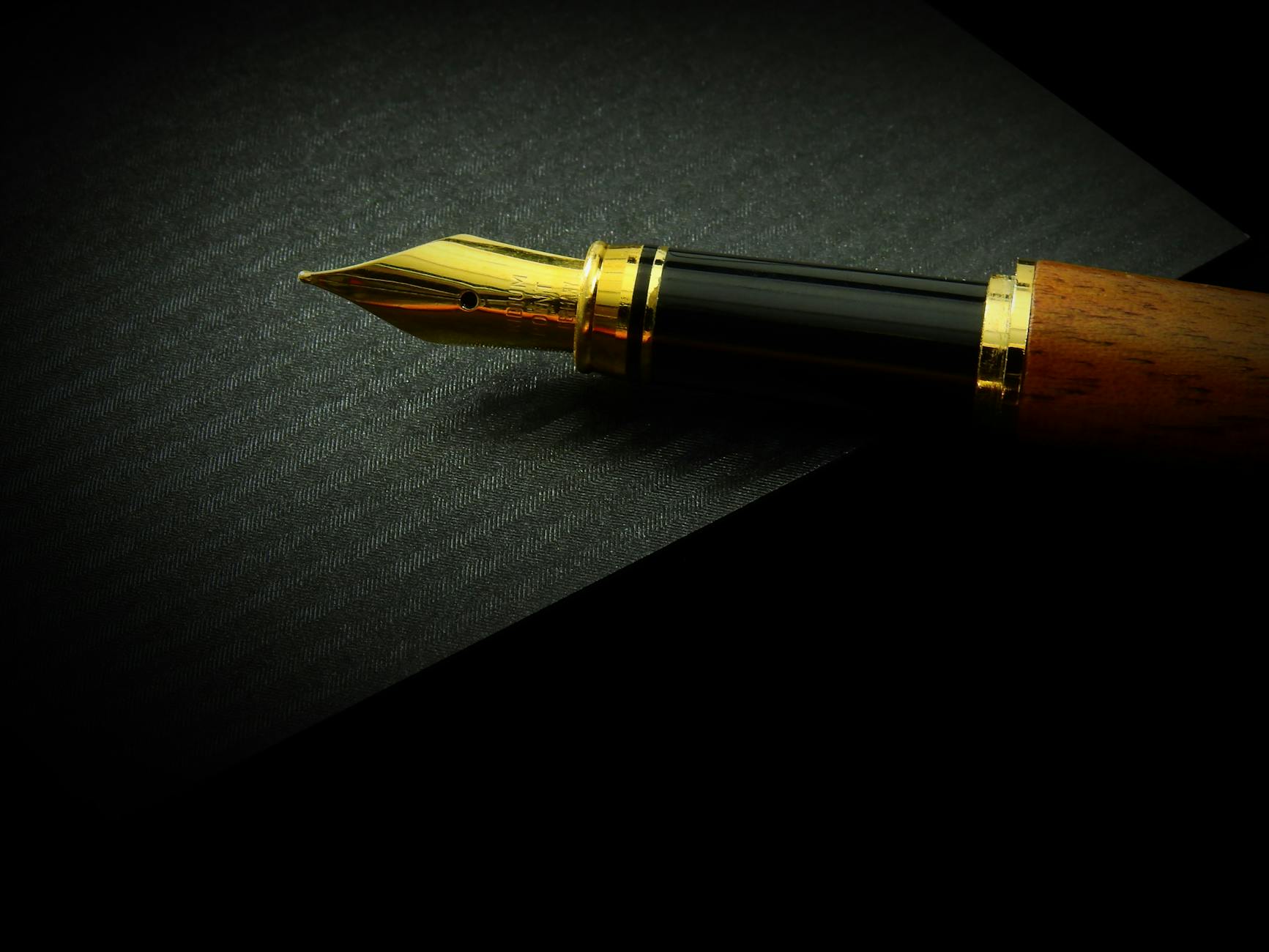
4. Use a Fountain Pen
When writing by hand, use a thick grip fountain pen that flows really well, rather than a ballpoint pen. Needing to push down on the pen, even lightly, makes the inflammation of RSI worse.
5. Check the ergonomics of your work station
Keep wrists straight and flat when typing. Sit with thighs level, feet flat on floor (or on footrest), sit up straight, shoulders relaxed, upper arms at sides, not splayed out, forearms horizontal or tilted slightly downwards, so knees and elbows are at a right angle. Keep the top of your screen at eye level and adjust the position of your keyboard, so it’s easy to reach without stretching or hunching. Don’t slouch. Use good posture. To keep wrists straight and flat use a gel wrist rest for the keyboard and the mouse.
6. Keep wrist straight when sleeping
Don’t curl your hands into a fist when sleeping. Some people wear a brace to keep their sore wrist straight.
7. Strengthen the supporting muscles
A physio will give you exercises to do to strengthen the arms. e.g. bicep curls
8. Stretch
Stretch neck, shoulders, arms, wrists. I find yoga is excellent for a full body stretch. The downward facing dog pose can cause discomfit in the hands, but I try to remember to flatten the knuckles to reduce pressure on the wrists.
9. Massage
Like yoga, a regular massage helps keep the body aligned and pain free.






 Libby Sommer, Author