Poem in Anthology

full length of man sitting on floor


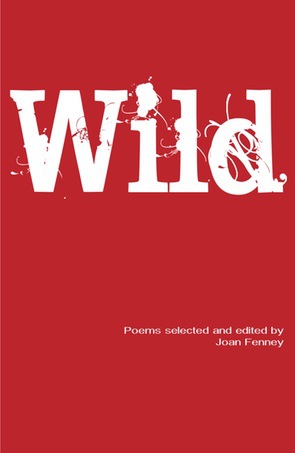
red book cover of Wild anthology

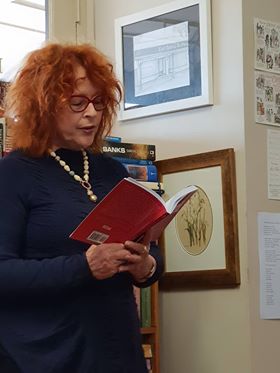
Wow! Exciting news. I’m delighted to say my poem BRONTE BEACH has been selected for inclusion in the Ginninderra Press Wild Anthology. The anthology has been edited by Joan Fenney and includes 159 talented poets from across Australia exploring the many facets of ‘wild’ – human, animal, environmental and metaphorical. The book will be launched on 7th July as part of the Ginninderra Press 10 year celebrations in Port Adelaide. I’ll be in Adelaide reading my poem at East Avenue Books in Clarence Park at 2pm on 8th July. Would be great to see you then.

Writing Tip: Don’t Forget to Pause

person standing on slope glacier mountain

Recently, I posted on Instagram that I had finished a new manuscript and had been  scratching around trying to find a new writing project to work on. I said that I had traction on something new and it was my third attempt this year  – that traction has now come to a standstill 😦 . What I didn’t do, though, was pause and acknowledge my WIP achievement: I’d recently completed a book length manuscript. After three years of hard slog I’d completed a huge project but hadn’t stopped to give myself a pat on the back. I hadn’t stopped at the top of the mountain and enjoyed the view. I was rushing onwards looking for the next mountain to climb already.

Then I read this old story about a king who wished to move palace. But because he feared that his enemies might take advantage of this to attack him and steal his treasures, he summoned his trusted general. ‘My friend,’ he said, ‘I have to move palace, and must do so within twenty-four hours. You have been my trusted servant and soldier for so long. I do not trust anyone but you to help me with this task. Only you know the network of underground passages between this palace and the other. If you are able to do this for me, and move all my most precious treasures by yourself, I will give you and your family your freedom:  you may retire from service, and as a reward for your faithfulness over so many years, I will give to you such a portion of both my wealth and my lands that you will be able to settle, and you, your wife and children and their children and grandchildren will be financially secure.’

The day came when the treasures were to be moved. The general worked hard. He was not a young man, but he persisted in his efforts. He knew that the task needed to be completed within the twenty-four-hour window. After this, it would become unsafe to continue. With minutes to spare, he completed the job. He went to see his king, who was delighted. The king was a man of his word and gave him the portion of the treasure he had promised, and the deeds to some of the most beautiful and fertile lands in the kingdom.

The general returned to his home and took a bath, and as he lay there, he looked back on all that he had achieved, and he relaxed:  he felt a great satisfaction that he could now retire, that things were dealt with, and this his major tasks were finished. For that moment, he had a sense of completeness. The story ends here.

‘Do you know what that moment is like? Perhaps you have experienced a similar moment when things have gone well for you in the past? You have felt a sense of completeness. A sense that tasks have been done.

One of the most difficult aspects of the frantic rush through a busy life is that we often do not allow even the smallest notion of ‘completion’ to enter the picture of our daily lives. We often rush from task to task, so much so that the end of one task is just the invitation to start another. There are no gaps in between in which we could take even a few seconds to sit, to take stock, to realise that we have just completed something.’ – Mindfulness (a practical guide to finding peace in a frantic world) by Mark Williams and Danny Penman.

In Mark Williams and Danny Penman’s book on Mindfulness they advise us to practise cultivating a sense of completeness – even a glimmer, right now, in this moment, with the little things of life, there is a chance that we would be better able to cope with those aspects of mind that keep telling us that we are not there yet; not yet happy, not yet fulfilled. We might learn that we are complete, whole, just as we are.

This morning in yoga class I was reminded that pauses are a traditional part of Hatha Yoga – a pause between some of the asanas (poses). The pauses aren’t about physical rest, although it’s good to rest if you need to, but the true value of pausing in a neutral asana stems from the fact that physical effort no long occupies your attention, so your mind is free to play the pause. The most obvious way to play the pause is simply to relax the body parts that were working in the preceding active asana. I guess this relates to the pause between writing projects – give the brain a break and return inwards to your centre.

What about you? Are you constantly rushing off looking for the next mountain to climb without stopping to look at the view from the top? I hope this post is useful. Do you have any tips you would add? Let me know in the comments and please share this post with a friend if you enjoyed it. 

Writing Tip: Beating Resistance

macbook apple woman computer

How many wonderful ideas have we had in our lives that never became anything more than ideas?  What stopped them from becoming reality?  Probably lack of drive, or fear, or both.

If the idea of writing a story, writing a memoir, or writing a blog lights a spark within you, sets off a signal, causes you to drool—or fills you with unspeakable anxiety—then you are ready to write.  What is holding you back is not lack of drive, but fear.  Unadulterated, stark fear.

  • Fear of what?
  • Fear of being unable to write well and being criticized by others?
  • Fear of being unable to stay on track long enough to get to an ending?
  • Fear that you just don’t have what it takes to maintain focus to tell a good story?

Research into the way the brain operates has revealed that there are two sides to the brain, left and right.  Much of our fear of writing comes from the way these two sides do or don’t work together.

“We might term the right brain ‘the creator,’ for apparently it allows us to do creative things—make connections, manifest ideas, imagine situations, see pictures of events.  The left side analyses, categorizes, recalls words, and performs its learning functions in a step-by-step manner,”  Bernard Selling, Writing From Within.

The analytic left brain has a compartment that houses the “critic.”  He or she is the person in us who says,

  • Watch out!
  • You can’t do that!
  • You’ll fail, so don’t even try.
  • You know you’re not good at that!

“If those two voices in you want to fight, let them fight.  Meanwhile, the sane part of you should quietly get up, go over to your notebook, and begin to write from a deeper, more peaceful place.  Unfortunately, those two fighters often come with you to your notebook since they are inside your head.  So you might have to give them five or ten minutes of voice in your notebook.  Let them carry on in writing.  It is amazing that when you give those voices writing space, their complaining quickly gets boring and you get sick of them,” Natalie Goldberg, Writing Down the Bones.

It’s just resistance.

Sometimes, the harder you try, the more you become stuck in your own negativity.  It can feel like car tyres spinning in a bog and you just can’t move forward with ‘the work’.  Your resistance is actually greater than your desire to write.  That’s when you need to say ‘stop’ and put it aside for now.  Look for another outlet for your energy before starting again.  Take a break and read books by wonderful writers.  When I get stuck I turn to contemporary poetry for inspiration – thoughtful and passionate poems about living in the modern world.  Some of my favourite poets are:  Mary Oliver, Naomi Shihab Nye, Les Murray and Joanne Burns.

Sometimes I start another writing project before going back to the original one to get more perspective on things.  Other times I will study the beginning and endings of books to get inspiration for a new beginning or a new ending. Or sometimes I work backwards from the ending as a way to restart.

But don’t get caught in the endless cycle of guilt, avoidance, and pressure.  When it is your time to write, write.  Put yourself out of your misery and just do it.

I hope you found this advice about beating resistance to be useful. Do you have any tips you would add? Let me know in the comments and please share this post with a friend if you enjoyed it.

3 Parts to a Great Blurb

pexels-photo-325924.jpeg

Your book’s blurb is crucially important. But writing a blurb is harder than we think. A great blurb is short and sweet, gives away enough of what’s inside the book without giving any plot spoilers. It draws the reader in.

‘A three-act structure. You want to catch the reader’s attention, give them the content, and then give them a reason to care.’ – Author Unlimited

Have a look at this YouTube video by international best-selling self-published Romance writer Alessandra Torre. She tells a terrific story of how she went from 3 book sales a day to thousands by changing her blurb:  The Blurb Equation – How to Write a Kick-Butt Blurb.


The Blurb Equation (Alessandra Torre)

INTRO + HINT + CLIFFY


1. PART 1 INTRO:           the characters or situation is introduced.

2. PART 2 THE HINT:     what the story is about, the conflict or climax.

3. PART 3 THE CLIFFY:  what’s going to happen? Hooks the reader.

Alessandra says to keep the blurb short. More than four paragraphs is too long . Three paragraphs of two to three sentences is best. Don’t give away the plot.

Keeping all this excellent advice in mind (although I’m not a Romance writer), I’m continuing to sweat over the draft blurb for my new book THE USUAL STORY, due for  July release by Ginninderra Press. Please use the comments section to give any constructive feedback. I’d love to know what you think.

It’s especially difficult for me to write a satisfactory blurb for THE USUAL STORY because it is really a collection of connected short stories. I’ve linked the stories by using the tango dances and dancers, the painful ending of a brief romance, and the main character’s search in her past for answers.

Tango is the dance of passion, forcing partners into an intimate relationship. Sofia loves the tango, but at the dances she must face the truth of her ageing in our society that has very little use for anyone who is not young.

In the painful aftermath of a brief affair, Sofia goes in search of what she actually knows about herself and the past. As she looks for answers in dark corners, we begin to see, as does Sofia, the elusiveness of understanding and memory – the psychological space where recollection and loss collide.

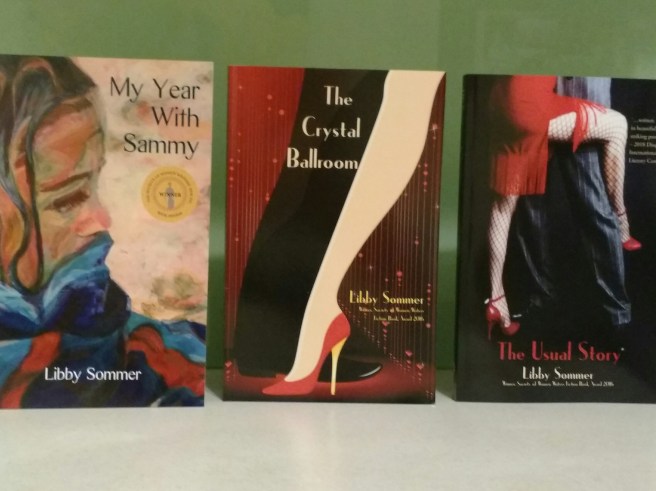
If you liked The Crystal Ballroom you’ll love this book: a story of memory, intrigue and passion.


I hope this Blurb info is helpful. Do you have any tips you would add? Let me know in the comments and please share this post with a friend if you enjoyed it.


10 Ideas for Writing Practice

pexels-photo-237447.jpeg

Sometimes we sit at our desks to write and can’t think of anything to write about.  We face the blank page.  We sit there until blood pours from our foreheads, as one famous author was heard to say.

Making a list can be good.  It makes you start noticing material for writing in your daily life, and your writing comes out of a relationship with your life in all its richness.

10 topics for writing practice:

  • Begin with “I don’t remember”. If you get stumped, just repeat the words “I don’t remember” on the page again and keep going.
  • Tell about sound as it arises. Be aware of sounds from all directions as they arise:  sounds near, sounds far, sounds in front, behind, to the side, above or below.  Notice any spaces between sounds.
  • Tell me about last evening. Dinner, sitting on the couch, preparing for bed.  Be as detailed as you can.  Take your time to locate the specifics and relive your evening on the page.
  • Tell me what boredom feels like.
  • See in your mind a place you’ve always loved. Visualise the colours, the sounds, the smells, the tastes.
  • Write about “saying goodbye”. Tackle it any way you like.  Write about your marriage breakup, leaving home, the death of a loved one.
  • What was your first job?
  • Write about the most scared you’ve ever been.
  • Write in cafes. Write what is going on around you.
  • Describe a parent or a child.

Some people have a jar full of words written on pieces of paper and select one piece of paper at random each day and write from that.  Others use a line of a poem to start them off.  Then every time they get stuck they rewrite that line and keep going.

Be honest.  Cut through the crap and get to the real heart of things.

Zen Buddhist, psychotherapist, writer and teacher, Gail Sher in her book One Continuous Mistake says the solution for her came via haiku (short unrhymed Japanese poems capturing the essence of a moment).

 “For several years I wrote one haiku a day and then spent hours polishing those I had written on previous days.  This tiny step proved increasingly satisfying,” Gail Sher.

She said it gradually dawned on her that it was not the haiku but the “one per day.”  Without even knowing it, she had developed a “practice.”  Every day, no matter what, she wrote one haiku.  In her mind she became the person who writes “a haiku a day.”  And that was the beginning of knowing who she was.

Gail Sher suggests writing on the same subject every day for two weeks.

“Revisiting the same subject day after day will force you to exhaust stale, inauthentic, spurious thought patterns and dare you to enter places of subtler, more ‘fringe’ knowing,” Gail Sher.

She writes in One Continuous Mistake that the Four Noble Truths for writers are:

  1. Writers write.
  2. Writing is a process.
  3. You don’t know what your writing will be until the end of the process.
  4. If writing is your practice, the only way to fail is to not write.

So start coming up with your own list of ideas for practice writing.  Life happening around us is good grist-for-the-mill.

I hope these ideas are useful. Do you have any suggestions you would add? Let me know in the comments and please share this post with a friend if you enjoyed it.

From acceptance to publication


tango-dancing-couple-dance-style-67238.jpeg

Over the weekend I finished correcting first proofs of THE USUAL STORY, a prequel to THE CRYSTAL BALLROOM and posted them back to Ginninderra Press in Adelaide. Final proofs next. We’re on track for a July release. An exciting time.

red and black book cover The Crystal Ballroom

This is my third book, so I’m getting used to the publication process. After acceptance of the manuscript by Ginninderra Press in July 2017, eight months later I received first proofs. These I’ve read and corrected.

In the meantime we have been discussing the cover image. Ginninderra Press is a small but prestigious publisher and I’m able to have a say in cover design. This doesn’t happen with a larger publisher. I am also in communication with GP about a quote to put on the front cover to attract sales and a blurb for the back cover.

Blurbs are very difficult to write. I had a chat with my good friend the talented author Susanne Gervay today about my blurb. She did a brainstorming session with me and I think we’ve got a few lines together that will make people want to read the book.

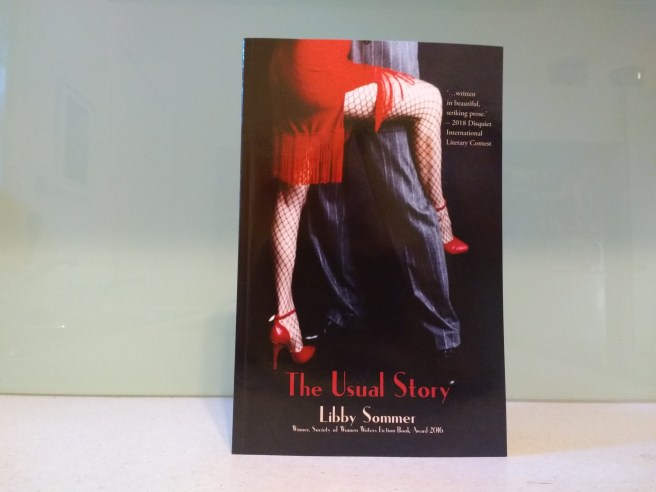
first proofs, The Usual Story by Libby Sommer

Actually, first draft of the blurb is:

‘Tango is the dance of passion, forcing partners into an intimate relationship. Sofia loves the tango, but at the dances she comes face to face with the truth of her aging in today’s culture that has very little use for anything that is not young.’

What do you think? I would LOVE some feedback on this blurb. Please give me your response in the comments section. I’m not a good big-picture-person like my friend Susanne. I’m more into observing small details, which is good for prose and poetry but not for writing pitches and blurbs.

I asked Les Murray, Nobel Prize nominee for Literature, who is also Literary Editor of Quadrant magazine, if he would read THE USUAL STORY and write a couple of lines for the back cover. He said yes. Wow! I’m so delighted. He knows my work well having published many of my short stories and poems. So first proofs have also been posted to him.

So that’s front and back cover. And then there’s a dedication page to be added, acknowledgements, etc.  Versions of three of the chapters in THE USUAL STORY were first published in Quadrant so this needs to be acknowledged.

Then comes final proofs. Professional proof readers are very expensive so I’m hoping my eldest son with the PhD will proof read for me this time. TBA.

Then comes Cover Release with a big beat up on social media. I post regularly on Instagram and Facebook and less regularly on Twitter and Pinterest. I think the cover looks terrific. It’s not all finalised yet. I asked two tango dancers I know for copyright clearance on one of their images that shows the two of them dancing the tango. It’s one of the photos they use to promote their classes at A Little Buenos Aires. They said yes, as long as I acknowledge copyright ownership. So that’s great. It’s an eye-catching pic and would look good beside THE CRYSTAL BALLROOM in book stores.

Next step is pre-release copies announcement. Social media again.

Then details of the release date of THE USUAL STORY. Champagne and balloons and a lot of brouhaha when the book is finally available to the public.

I am not planning to have a book launch. Unfortunately, I am a very shy person and hate being the centre of attention. I had a launch for my first book and it was very successful. However, I was so anxious I thought I was having a heart attack. So not doing that again. A shame because book launches are a good way to sell books. Because this book also features a lot of tango dancing, I am thinking I could have a soft launch at a milonga or tango dance. Just a slice of chocolate cake and a glass of champagne at half time. Or not.

Submit your work

sunrise over the ocean

Arrived home from hospital after joint replacement to the exciting news that my poem, ‘Between the Islands of the Pacific’ has been accepted for publication in Quadrant magazine. Feel honored to have a third poem accepted by this prestigious Australian literary publication. Happy happy me. The hard work pays off.

I do have a box full of rejection letters from over the years. My advice to you is to keep writing, keep reading, keep refining your work, keep submitting. ‘Between the Islands of the Pacific’ was the fifth poem I sent to Quadrant this year. The others were rejected.

P is for persistence and perseverence.

Enter Writing Competitions


the city of Lisbon, Portugal with sea and sky in the background
Lisbon, Portugal

One of the ways we can get noticed as writers is to enter writing competitions. You can join local and international writing groups and associations that send out newsletters letting you know when, what and where to enter.

I can’t remember entering this particular competition, or where I saw the information, but I am thrilled and delighted to tell you that an excerpt of my WIP, Lost in Cooper Park is a runner-up in 2018 Disquiet Literary Contest.  There were over 1,000 entries. I have been awarded a partial scholarship to attend the Disquiet International Literary Program in Lisbon, Portugal. Such exciting news.

The judges said of my entry:

“… an excellent domestic psychological drama, reminiscent of Sally Vickers (The Other Side of You) written in beautiful, striking prose. It has an incredible memorable opening. The author has a voice that is unique to her and that, at the same time, is particular to the narrative. The story moves between places and narratives with deftness, knowing precisely when to leave a thread open and when to pick it up again.”

Whoo hoo.

I recommend staying up to date with competition deadlines. This keeps you motivated to finish a piece of writing by the date specified. Subscribe to writing groups and newsletters that alert you to closing dates. I am a member of the NSW Writers’ Centre, Society of Women Writers’ NSW, Australian Society of Authors, and other writing groups on Facebook.

Wishing you the best of luck.

Woman walking through Cooper Park with her dog.
Cooper Park


Short Story: Helen


vf clock

Another one of my short stories, first published in Quadrant magazine June 2015, inspired by visits to France.  Each year, if possible, I rent a studio for a month in a little fishing village in the south of France. I refer to these periods of quiet time away as a Writing-Retreat-For-One. A great place to read and write and go for long walks and, hopefully, come up with story ideas.

Although she loved her nieces and nephews, it was when she turned thirty-nine that driving young children around in her car seemed to make her nervous—a tightening in the stomach.  “Aunty Helen, would you like to take Naomi to see The Muppets?  Are you free?”  Always these requests from one of her sisters looking tired and desperate—one of her younger siblings, they used to be so close—and Helen would force herself to make the effort to be the good aunty.  The responsibility of passengers in her car always made her anxious.  She was anxious about one thing or the other most of the time, but wanted to appear selfless and generous-spirited.  Her availability, or non-availability, was noted, itemised, either in her favour, or against her.  She didn’t want to be labelled self-obsessed.  She had entered an era when the nicest thing a person could say to her was, “You’re a fabulous aunty.  The kids love you.”  Continue reading

Short Story or Novel

pexels-photo.jpg

Is a novel a short story that keeps going, or, is it a string of stories with connective tissue and padding, or, is it something else?  Essayist Greg Hollingshead believes that the primary difference between the short story and the novel is not length but the larger, more conceptual weight of meaning that the longer narrative must carry on its back from page to page, scene to scene.

“It’s not baggy wordage that causes the diffusiveness of the novel.  It’s this long-distance haul of meaning.”  Greg Hollingshead

There is a widespread conviction among fiction writers that sooner or later one moves on from the short story to the novel.  When John Cheever described himself as the world’s oldest living short story writer, everyone knew what he meant.

Greg Hollingshead says that every once in a while, to the salvation of literary fiction, there appears a mature writer of short stories—someone like Chekhov, or Munro—whose handling of the form at its best is so undulled, so poised, so capacious, so intelligent, that the short in short story is once again revealed as the silly adjective it is, for suddenly here are simply stories, spiritual histories, narratives amazingly porous yet concentrated and undiffused.

When you decide you want to write in a particular form—a novel, short story, poem—read a lot of writing in that form.  Notice the rhythm of the form.  How does it begin?  What makes it complete?  When you read a lot in a particular form, it becomes imprinted inside you, so when you sit at your desk to write, you produce that same structure.  In reading novels your whole being absorbs the pace of the sentences, the setting of scenes, knowing the colour of the bedspread and how the writer gets her character to move down the hallway to the front door.

I sit at my desk thinking about form as a low-slung blanket of cloud blocks my view of the sky.  Through the fly screen I inhale the sweet smell of earth after rain as another day of possibility beckons.

The thing is, we might write five novels before we write a good one.  I wrote five book-length manuscripts before one was finally accepted for publication, even though I’d published 30 short stories.  So form is important, we need to learn form, but we should also remember to fill form with life.  All it takes is practice.

I hope this post is useful. Do you have any tips you would add? Let me know in the comments and please share this post with a friend if you enjoyed it.