
Writing Tip: Becoming a Writer

yellow sunflower bookcover of Becoming A Writer by Dorothea Brande

I highly recommend this book a friend from London gave me many years ago at the beginning of my writing journey. It’s an old one, but a good one.

‘A reissue of a classic work published in 1934 on writing and the creative process, Becoming a Writer recaptures the excitement of Dorothea Brande’s creative writing classroom of the 1920s. Decades before brain research “discovered” the role of the right and left brain in all human endeavor, Dorothea Brande was teaching students how to see again, how to hold their minds still, how to call forth the inner writer.’ – Amazon

‘Refreshingly slim, beautifully written and deliciously elegant, Dorothea Brande’s Becoming a Writer remains evergreen decades after it was first written. Brande believed passionately that although people have varying amounts of talent, anyone can write. It’s just a question of finding the “writer’s magic”–a degree of which is in us all. She also insists that writing can be both taught and learned. So she is enraged by the pessimistic authors of so many writing books who rejoice in trying to put off the aspiring writer by constantly stressing how difficult it all is.

With close reference to the great writers of her day–Wolfe, Forster, Wharton and so on–Brande gives practical but inspirational advice about finding the right time of day to write and being very self disciplined about it–“You have decided to write at four o’clock, and at four o’clock you must write.” She’s strong on confidence building and there’s a lot about cheating your unconscious which will constantly try to stop you writing by coming up with excuses. Then there are exercises to help you get into the right frame of mind and to build up writing stamina. She also shows how to harness the unconscious, how to fall into the “artistic coma,” then how to re-emerge and be your own critic.

This is Dorothea Brande’s legacy to all those who have ever wanted to express their ideas in written form. A sound, practical, inspirational and charming approach to writing, it fulfills on finding “the writer’s magic.”‘ – John Gardner

Yep, I’d agree with John Garner. Finding “the writer’s magic” is what it’s all about.

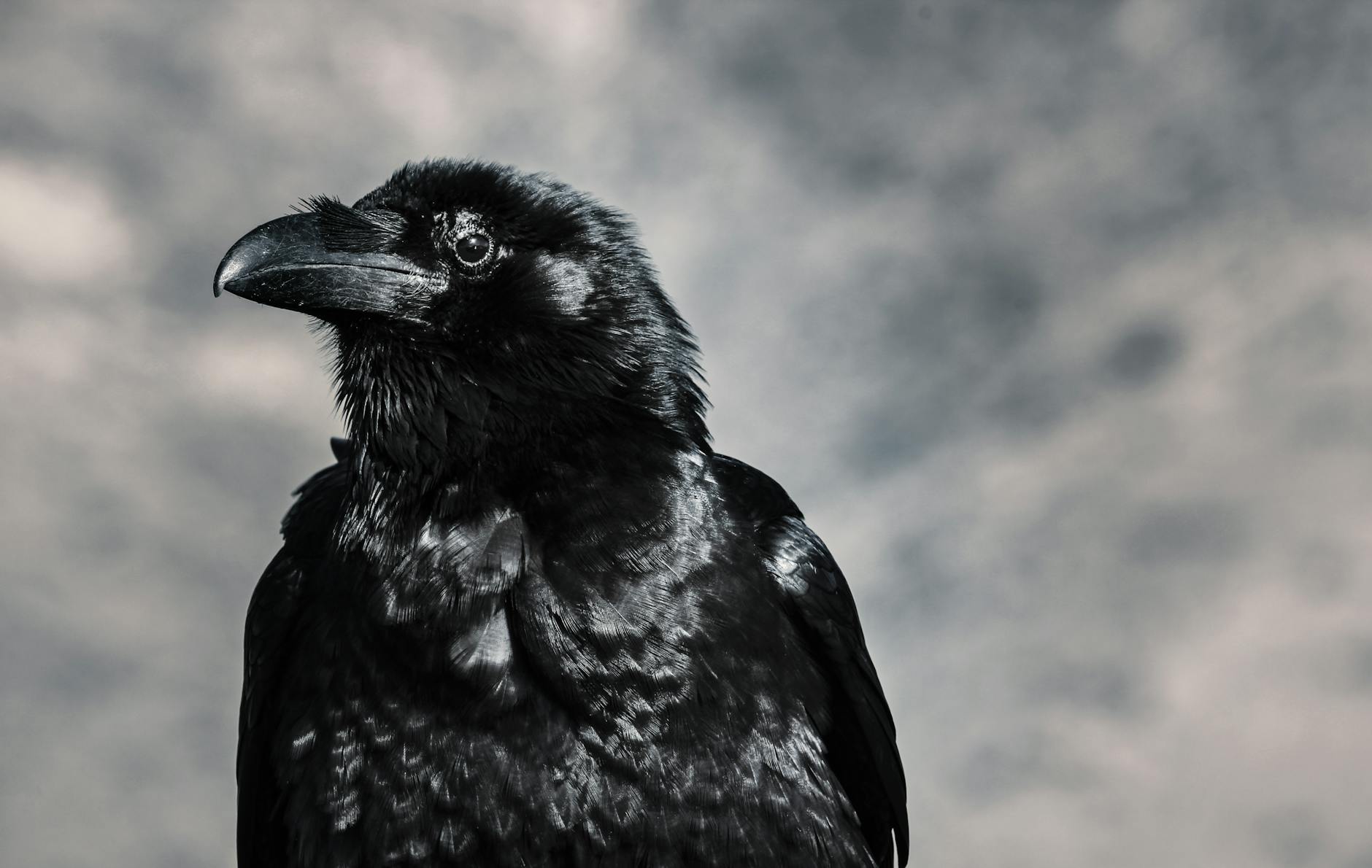
My Poem, ‘Crows Never Forget’

Have a read of my poem ‘Crows Never Forget’ first published in Quadrant Magazine. ‘Crows Never Forget’ is one of the poems in my recently released collection ‘Flat White, One Sugar‘ (Ginninderra Press).

I hope you enjoy it.

Crows Never Forget:

  can we remember like they do

through long rain-drenched months

  with their clever chat?

one warns the others   a human who scared them

years ago   but the crows when the sky cleared

  cried out loud and raucous

near the top-floor balcony

  trellised with spring buds

crow-speech channelling new connections into

  the sides of my head

Copyright 2024 Libby Sommer

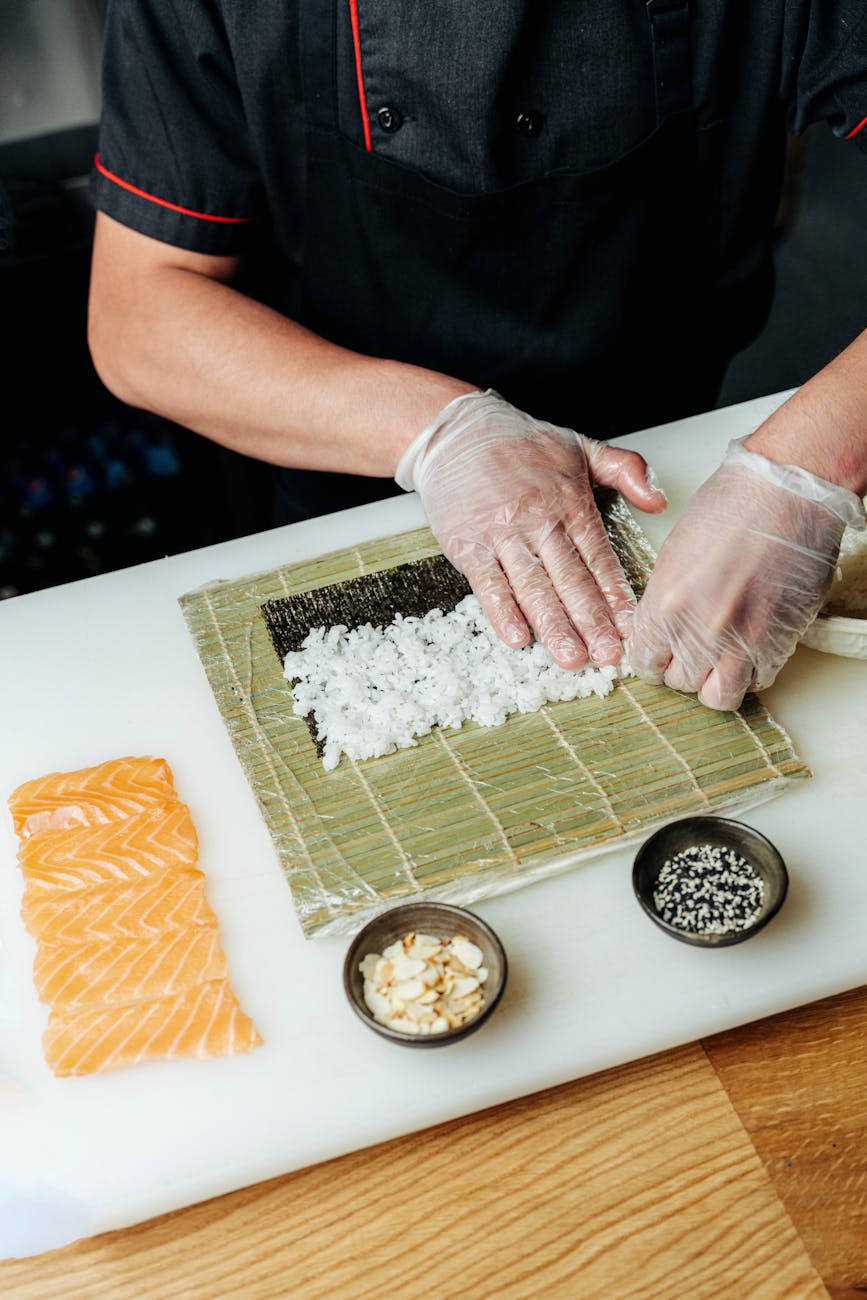
Writing is Like Making a Sushi Roll

Sometimes there would be a person in one of my creative writing classes who was obviously very talented.  I can bring to mind one in particular.  You could sense people holding their breath as she read, and often her hands shook.  The writing process opened her up.  She said she had wanted to write for years.  She was so excited about writing that she straight away wanted to write a book.  I said to her, slow down.  Just practice writing for a while.  Learn what this is all about.

In Japan becoming an itamae of sushi requires years of on-the-job training and apprenticeship.  After five years spent working with a master or teacher itamae, the apprentice is given his first important task, the preparation of the sushi rice.

Writing, like becoming a Sushi Chef,  is a life’s work and takes a lot of practice.  The process is slow, and at the start you are not sure what you are making.

Futomaki  (“thick roll” – rice on inside, nori on the outside)

Uramaki   (“inside-out roll” – rice on outside, nori on the inside)

Temaki     (“hand roll” – cone-shaped roll)

That’s how it was for me.  I thought I could jump in and write a book in 6 months.  In fact, it took me 20 years to write a publishable manuscript:  ‘My Year With Sammy’ (Ginninderra Press) the story of a difficult yet sensitive child, was my first published book in 2015. Five books have followed since then.

So cut yourself some slack before you head off on a writing marathon.

Writing is like learning to prepare the rice for sushi:  the apprenticeship is long, and in the beginning you are not sure whether a Futomaki, a Uramaki or a Temaki will be the end result.

Poetry Review

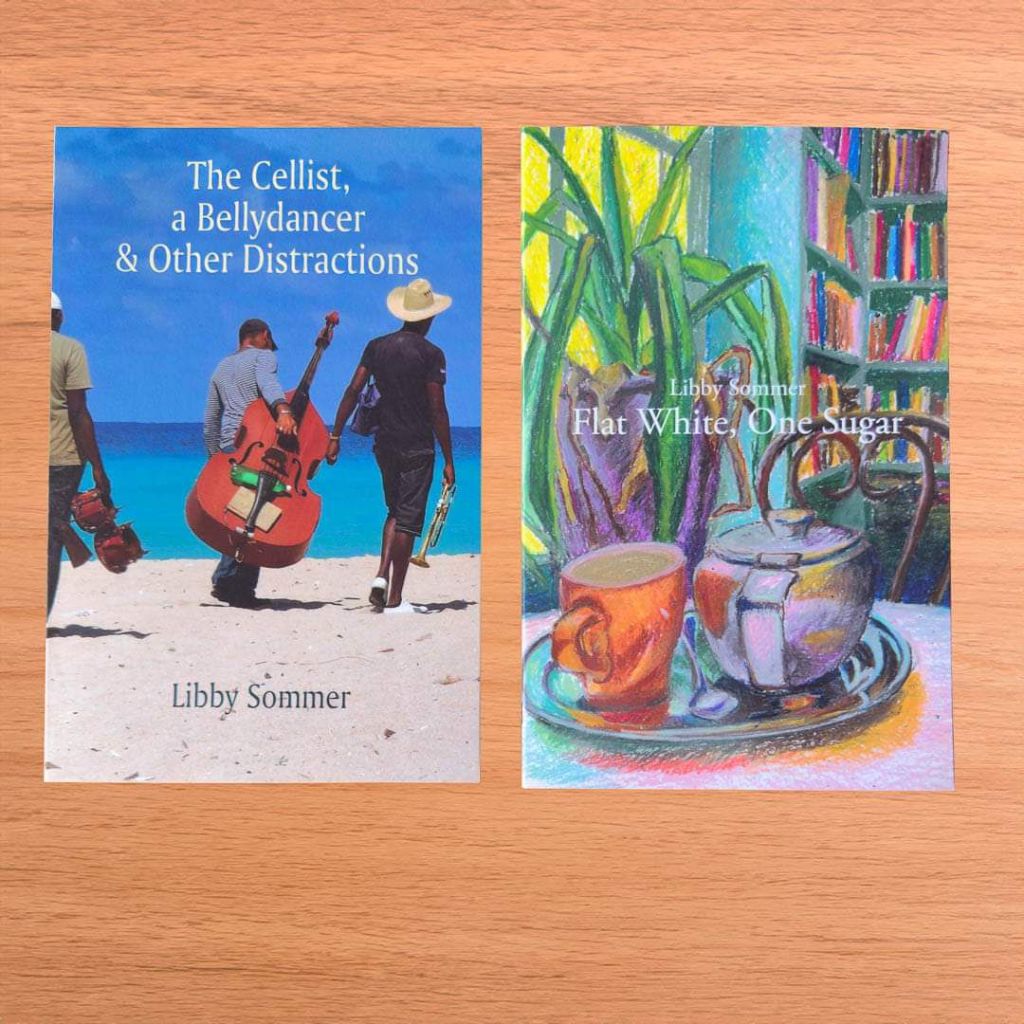
There is a fabulous extensive review by Sean Wayman in this month’s October Quadrant Magazine of my two recent poetry collections, ‘The Cellist a Bellydancer & Other Distractions’ and ‘Flat White, One Sugar ‘.

For example he writes: “… there are still many poets who resist the temptations of narcissistic self-righteousness. Libby Sommer, a prolific Australian writer of fiction and poetry, eschews the moral posturing of the ideologically pure poet to cultivate an aesthetic that is observant, curious and open to experience.”

“… it is the give-and-take between openness and particularity which give her poems their unique charisma.”

“… “‘Transience’, like many of her most beautiful passages, combines sunlight, water, and open expanses of sky:

A luminous, tangerine, and blazing expanse
burst out to the left of the blue
from the harbour to the city as the western light
lowered itself behind concrete high-rises.”

If you’d like to read the full review, Quadrant Magazine is available in newsagents and online. My books can be ordered from Ginninderra Press or from other online booksellers.

https://www.ginninderrapress.com.au/store.php?catalog/search/Libby+Sommer/date/1

Photos by Jason Painter

Writing Tip: Use Declarative Sentences

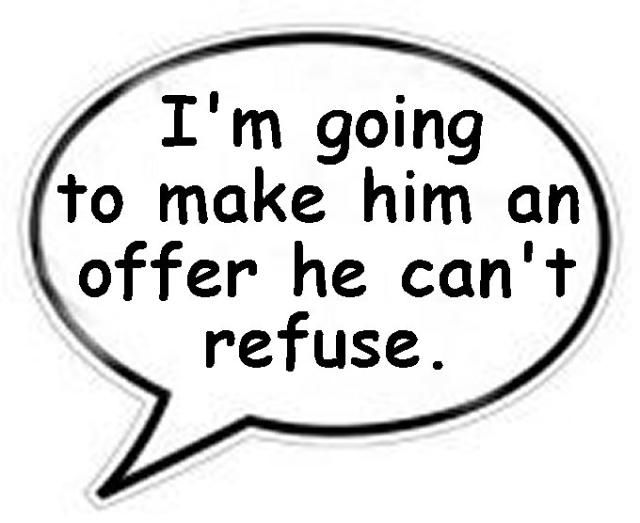
speech bubble: I'm going to make him an offer he can't refuse

This declarative sentence was spoken by Don Corleone (played by Marlon Brando) in the movie The Godfather (1972).

We don’t always make declarative statements. It is not uncommon for women and other minority groups to add qualifiers to their statements. Such as ‘Parents need to stop organising every minute of their children’s spare time, don’t you think?’ ‘I loved that movie, didn’t you?’ In our sentence structure we look for reinforcement for our thoughts and opinions. We don’t always make declarative statements such as:  ‘This is wonderful.’ ‘This is a catastrophe.’ We look for re-enforcement from others.

Another thing we do without realising it, is use indefinite modifiers in our speech:  perhaps, maybe, somehow. ‘Maybe I’ll take a trip somewhere.’ As if the speaker has no power to make a decision. ‘Perhaps it will change.’ Again, not a clear declarative sentence like, ‘Yes, nothing stays the same.’

It is important for us as writers to express ourselves in clear assertive sentences. ‘This is excellent.’ ‘It was a red dress.’ Not ‘The thing is, I know it sounds a bit vague, but I think maybe it was a red dress.’ Speaking in declarative sentences is a good rehearsal for trusting your own ideas, in standing up for yourself, for speaking out your truth.

When I write poetry I read through early drafts with a critical eye, taking out indefinite words and modifiers. I attempt to distill each moment to its essence by peeling off the layers until the heart of the poem is exposed. We need to take risks as writers and go deep within ourselves to find our unique voices and express ourselves with clarity.

Even if you are not 100% sure about your own opinions and thoughts write as if you are sure.  Dig deep. Be clear. Don’t be vague on the page. If you keep practicing this, you will eventually reveal your own deep knowing.

What about you? Have you noticed this tendency to qualify in your conversations with others, or in your creative writing, or in your blog posts?

My Poem, Electioneering on the Mall

Have a read of my poem, ‘Electioneering on the Mall’ first published in Quadrant Magazine. ‘Electioneering on the Mall’ is one of the pieces in my recently released second poetry collection, ‘Flat White, One Sugar‘ (Ginninderra Press}.

I hope you enjoy it.

Electioneering On the Mall:

Actually, I know which party

I will not be voting for.

I am a true blue Australian

hammered by our land of droughts

and flooding rains.

When it’s election

broadcast blackout time

I breathe a sigh of relief.

What? Please move so I can get by.

Yes, I know about early voting.

No, you won’t get me to

swing a different way.

Copyright 2024 Libby Sommer

Why Do We Write?

‘Samuel Beckett, answering a hopeless question from a Paris newspaper – “Why do you write?” – said it was all he was good for: “Bon qu’a ca.” Georges Bernanos said that writing was like rowing a boat out to sea: The shoreline disappears, it is too late to turn back, and the rower becomes a galley slave. When Colette was seventy-five and crippled with arthritis she said that now, at last, she could write anything she wanted without having to count on what it would bring in. Marguerite Yourcenar said that if she had inherited the estate left by her mother and then gambled away by her father, she might never have written another word. Jean-Paul Sartre said that writing is an end in itself. (I was twenty-two and working on a newspaper in Montreal when I interviewed him. I had not asked him the why of the matter but the what.) The Polish poet Aleksander Wat told me that it was like the story of the camel and the Bedouin; in the end, the camel takes over. So that was the writing life: an insistent camel.’ – extract from the Preface of The Selected Stories of Mavis Gallant.

My Poem, “A Refuge”

Have a read of my poem, “A Refuge” written during the pandemic and first published in Quadrant Magazine. “A Refuge” is one of the poems in my recently released second collection titled “Flat White, One Sugar” (Ginninderra Press).

A Refuge:

Do you know, St Honoré Bakery,

your large black & white floor tiles

show the exact space for Social Distancing?

Your blackboard menu out front

flags passage to the shopping centre.

Surely sophisticated French indulgences

upstage all else inside,

your gateaux worthy of any Parisian patisserie:

flaky puff pastry, velvety cream,

bite-sized choux balls.

But where are you on Sunday mornings, St Honoré,

when the early cyclists ride past?

Your door is closed, your ovens unlit.

Here come gumboots & wet umbrellas

as we all live through wild weather

 – back-to-back La Niñas –

and teachers from across the road arrive

in shoes with stiletto heels.

Don’t we all need a dry haven

from unrelenting winter storms?

East of the city, weather-eroded beaches

promise summer sunshine

for our light-deprived eyes.

As the ocean comes up to the land,

we hope these beaches don’t disappear.

There’s blue sky to wish for

in a gap in the clouds.

St Honoré, patron saint of bakers

& pastry cooks, I think I’m addicted to you.

I’m wondering, will your baking give

hope & warmth today?

Copyright 2024 Libby Sommer

Writing Tip: Passion

Every once in a while, when I’m scratching around for something new to write, I make a list of the things I feel passionate about. The list changes over time, but there are always new ideas to fill the gap.

It’s true that writers write about what they think about most of the time.  Things they can’t let go: things that plague them; stories they carry around in their heads waiting to be heard.

Sometimes I used to ask my creative writing groups to make a list of the topics they obsess about so they can see what occupies their thoughts during their waking hours.  After you write them down, you can use them for spontaneous writing before crafting them into stories.  They have much power.  This is where the juice is for writing.  They are probably driving your life, whether you realise it or not, so you may as well use them rather than waste your energy trying to push them away.  And you can come back to them repeatedly.

One of the things I’m always obsessing about is relationships:  relationships in families, relationships with friends, relationships with lovers.  That’s what I tend to write about when I’m creating stories.  I think to myself, Why not?  Rather than repress my obsessions, explore them, go with the flow.  And life is always changing, so new material keeps presenting  itself.

We are driven by our passions.  Am I the only one who thinks this?  For me these compulsions contain the life force energy.  We can exploit that energy.  The same with writing itself.  I’m always thinking and worrying about my writing, even when I’m on holidays.  I’m driven.

blue quote about writing on yellow background

But not all compulsions are a bad thing.  Get involved with your passions, read about them, talk to other people about them and then they will naturally become ‘grist for the mill’.

What about you? Do you find yourself telling the same stories over and over again, but from a different perspective?

My Poem, ‘On the Path’

Have a read of my poem ‘On the Path’ first published in Quadrant Magazine. ‘On the Path’ is one of the poems in my new collection ‘Flat White, One Sugar‘ (Gininnderra Press).

I hope you enjoy it.

On the Path:

It’s green out here.

There are cliffs with straight up-and-down faces,

high-rise breeding havens for mud nesters.

I’m wanting to know

what the birds have to teach us,

but their calls are intermittent,

faint and repetitive, shrill and squawking.

I gaze over the cliffs and across the valley,

a sacred mountain range turned blue

by forests of eucalyptus, where tourists

of every colour crowd the lookouts.

Are they seeking spiritual wisdom

from the mighty mountains?

I would like to know how a lyrebird

learns its complex songs,

or how to laugh heartily like a kookaburra.

We could find vantage points

above daisies and banksias,

butterflies and mountain devils.

On this bush track – the signposted path

to a waterfall – down steps made of logs,

a man stops unexpectedly in front of me.

He squeezes and inhales the leaf of a tea tree.

I too am a believer in the healing power

of plants and in mythical mountains

and holy pilgrimages.

A majestic wedge-tailed eagle

whistles a soft peal

before soaring above us.

The sound of the waterfall

draws me onward.

Copyright 2024 Libby Sommer