Repetitive strain injury often starts gradually but can soon become severely debilitating. But there are ways to nip it in the bud – and alleviate the worst symptoms.
1. Take Frequent Breaks
Take short, frequent breaks from repetitive tasks such as typing. A 10-minute break every hour. Use the computer only as much as you have to. Small hand movements, like scrolling on a screen, seem to set off RSI.
2. Type using both hands
It’s like playing the piano; correct fingering is essential. We tend to overuse one side of the body.
Become ambidextrous, e.g. use the mouse in your other hand, lift the kettle with the other hand.
3. Move
Get up from your desk every 30 minutes and move your neck and shoulders to release tension.
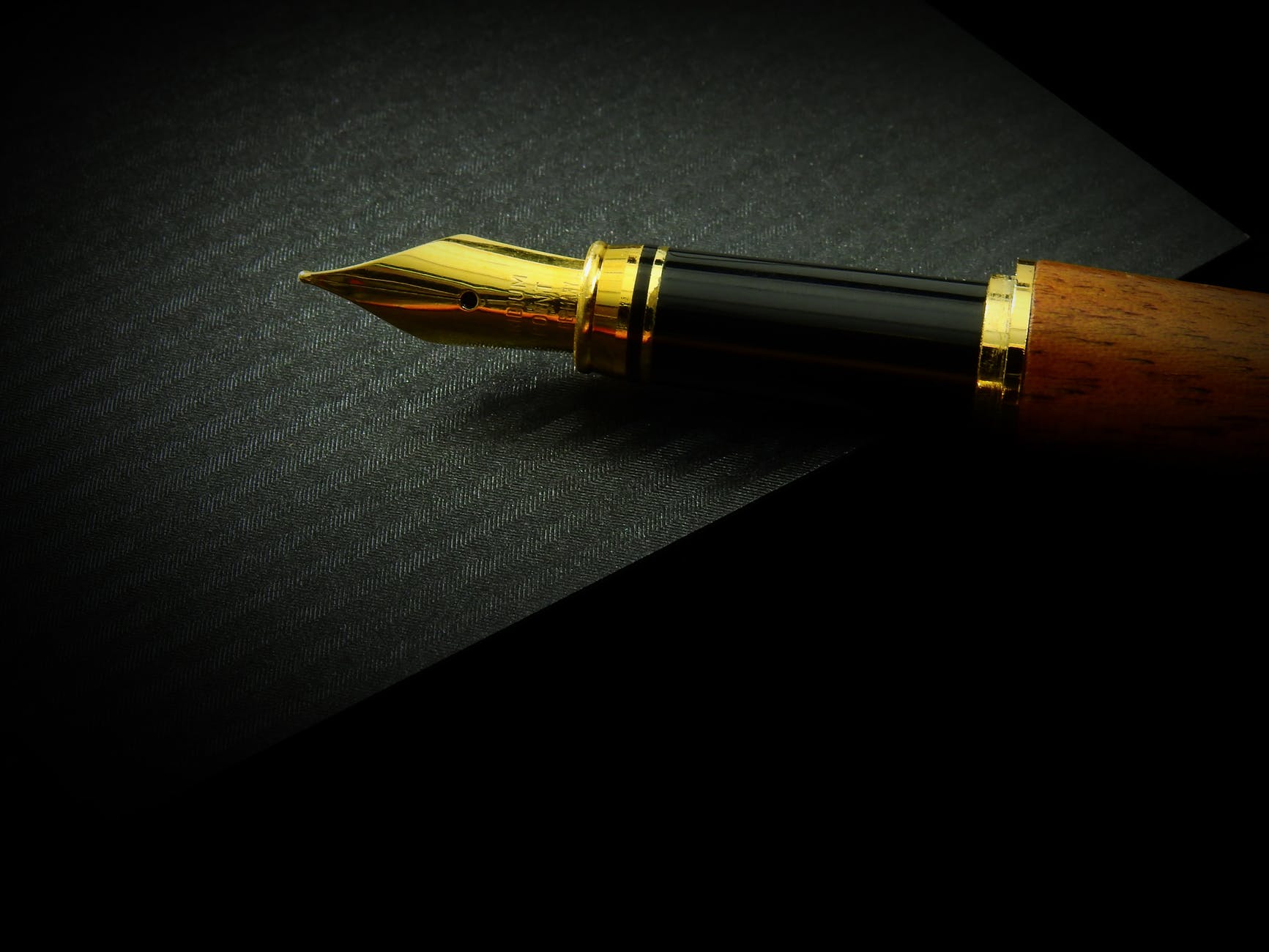
4. Use a Fountain Pen
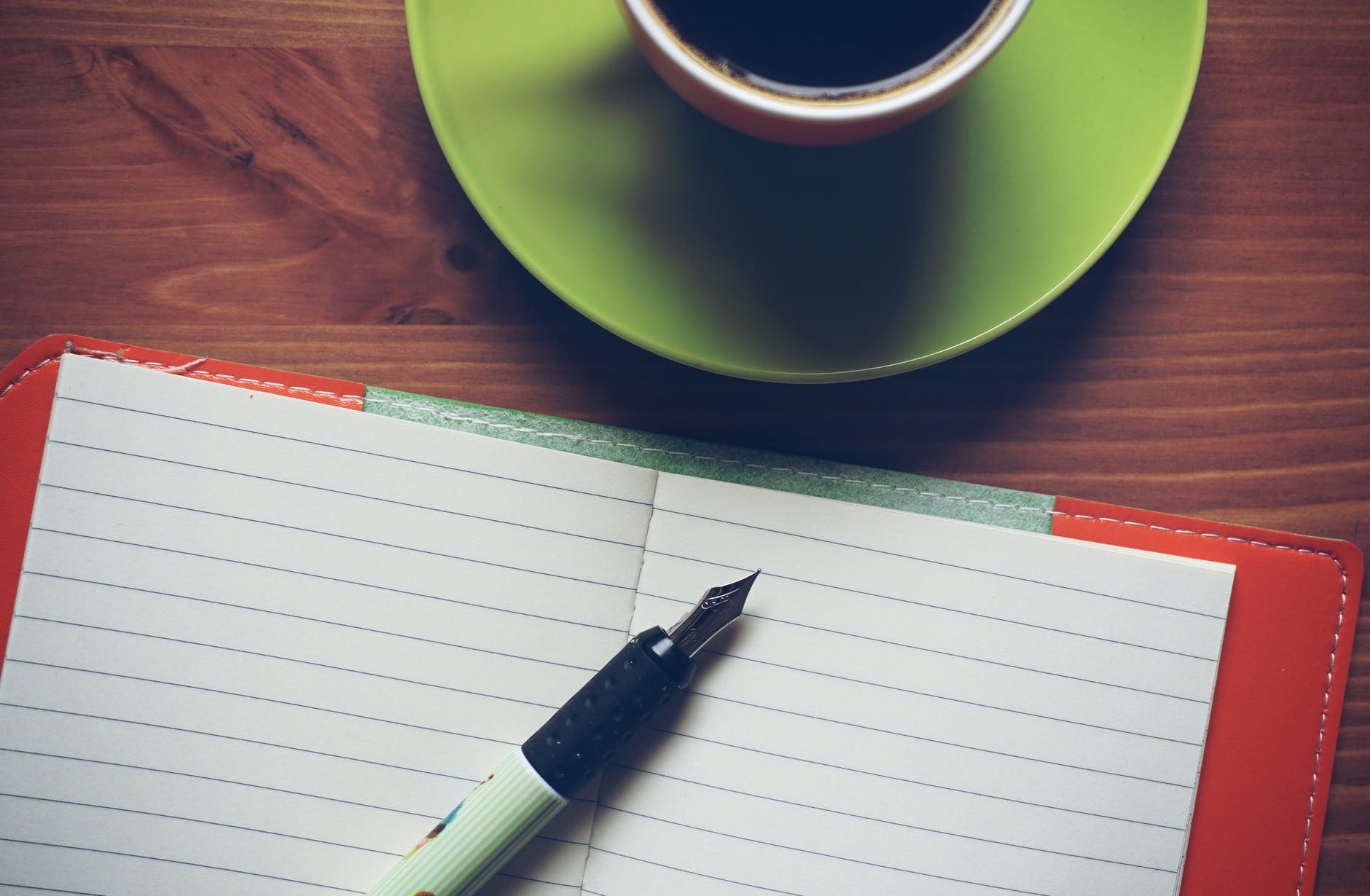
When writing by hand, use a thick grip fountain pen that flows really well, rather than a ballpoint pen. Needing to push down on the pen, even lightly, makes the inflammation of RSI worse.
5. Check the ergonomics of your work station
Keep wrists straight and flat when typing. Sit with thighs level, feet flat on floor (or on footrest), sit up straight, shoulders relaxed, upper arms at sides, not splayed out, forearms horizontal or tilted slightly downwards, so knees and elbows are at a right angle. Keep the top of your screen at eye level and adjust the position of your keyboard, so it’s easy to reach without stretching or hunching. Don’t slouch. Use good posture. To keep wrists straight and flat use a gel wrist rest for the keyboard and the mouse.
6. Keep wrist straight when sleeping
Don’t curl your hands into a fist when sleeping. Some people wear a brace to keep their sore wrist straight.
7. Strengthen the supporting muscles
A physio will give you exercises to do to strengthen the arms. e.g. bicep curls
8. Stretch
Stretch neck, shoulders, arms, wrists. I find yoga is excellent for a full body stretch. The downward facing dog pose can cause discomfit in the hands, but I try to remember to flatten the knuckles to reduce pressure on the wrists.
9. Massage
Like yoga, a regular massage helps keep the body aligned and pain free.
I’m reposting this post from last year when we were deeply in the midst of the pandemic. It’s worth having another read about the benefits of poetry:
‘Neurologists at Exeter University, using functional magnetic resonance imaging, found that reading poetry activated different brain regions to prose – even the lyrical prose we find in fiction. When the research participants read poetry, it lit up the regions of the brain variously linked to emotion, memory, making sense of music, coherence building and moral decision-making. Poetry, the study’s authors concluded, induces a more introspective, reflective mental state among readers than does prose.’ – Sarah Holland-Batt, Weekend Australian, 21–22 March 2020
If you feel you’re losing your ability to focus on a long book while confined indoors and surrounded by digital screens (as staying up to date on a global pandemic seems to command), try turning to poetry to nurse your shrinking attention span back to life.
In the Time of Pandemic
And the people stayed home.,
And they read books, and listened, and rested, and exercised, and made art, and played games, and learned new ways of being, and were still.
And they listened more deeply. Some meditated, some prayed, some danced.
Some met their shadows. And the people began to think differently.
And the people healed.
And, in the absence of people living in ignorant, dangerous, mindless, and heartless ways, the earth began to heal.
And when the danger passed, and the people joined together again, they grieved their losses, and made new choices, and dreamed new images, and created new ways to live and heal the earth fully, as they had been healed.
—Kitty O’Meara
‘Poetry is the quiet music of being human and in these days and nights when our humanity is fully vulnerable and exposed, poetry takes a small step forward. In our separate isolations, a poem is like the Tardis: bigger on the inside. Like spring – to recall TS Eliot – poetry mixes memory and desire.’ – Carol Ann Duffy, The Guardian
This poem by poet Ian McMillan, reminds of us of just what we lose each time a library is closed.
Adult Fiction
I always loved libraries, the quiet of them, The smell of the plastic covers and the paper And the tables and the silence of them, The silence of them that if you listened wasn’t silence, It was the murmur of stories held for years on shelves And the soft clicking of the date stamp, The soft clickety-clicking of the date stamp. I used to go down to our little library on a Friday night
In late summer, just as autumn was thinking about Turning up, and the light outside would be the colour Of an Everyman cover and the lights in the library Would be soft as anything, and I’d sit at a table And flick through a book and fall in love With the turning of the leaves, the turning of the leaves.
And then at seven o’clock Mrs Dove would say In a voice that wasn’t too loud so it wouldn’t Disturb the books “Seven o’clock please …” And as I was the only one in the library’s late summer rooms I would be the only one to stand up and close my book And put it back on the shelf with a sound like a kiss, Back on the shelf with a sound like a kiss.
And I’d go out of the library and Mrs Dove would stand For a moment silhouetted by the Adult Fiction, And then she would turn the light off and lock the door And go to her little car and drive off into the night That was slowly turning the colour of ink and I would stand For two minutes and then I’d walk over to the dark library And just stand in front of the dark library.
‘The astronomer and poet Rebecca Elson (January 2, 1960–May 19, 1999) was twenty-nine when she was diagnosed with non-Hodgkins lymphoma — a blood cancer that typically invades people in their sixties and seventies. Throughout the bodily brutality of the treatment, throughout the haunting uncertainty of life in remission, she met reality on its own terms — reality creaturely and cosmic, terms chance-dealt by impartial laws — and made of that terrifying meeting something uncommonly beautiful.
Rebecca Elson, 1987
‘When she returned her atoms to the universe, not yet forty, Elson bequeathed to this world 56 scientific papers and a slender, stunning book of poetry titled A Responsibility to Awe (public library) — verses spare and sublime, drawn from a consciousness pulling the balloon string of the infinite through the loop of its own finitude, life-affirming the way only the most intimate contact with death — which means with nature — can be.’ – Maria Popova
Elson’s crowning achievement in verse is the poem “Antidotes to Fear of Death,”
ANTIDOTES TO FEAR OF DEATH by Rebecca Elson
Sometimes as an antidote To fear of death, I eat the stars.
Those nights, lying on my back, I suck them from the quenching dark Til they are all, all inside me, Pepper hot and sharp.
Sometimes, instead, I stir myself Into a universe still young, Still warm as blood:
No outer space, just space, The light of all the not yet stars Drifting like a bright mist, And all of us, and everything Already there But unconstrained by form.
And sometime it’s enough To lie down here on earth Beside our long ancestral bones:
To walk across the cobble fields Of our discarded skulls, Each like a treasure, like a chrysalis, Thinking: whatever left these husks Flew off on bright wings.
Hope you felt the positive benefits of reading these poems.
Poetry Sydney is an independent literary organisation committed to a presence for poetry in our culture. On their website they have the following information re poetry publication:
The Australian Poetry Publishers directory is a portal for poets to have their poems published, to encourage Australian poetry to be purchased and to support Australian Poetry in enabling poets to have the opportunity to be published. Publishers on this list are those who publish poetry within Australia.
Dangerously Poetic (no unsolicited submissions currently) Byron based. dangerouslypoetic.com
Flying Islands (no unsolicited submissions currently) Website coming soon.
Fremantle Press WA (open for unsolicited manuscripts from new and emerging Western Australian poets) Please note that while they are open to considering work from established writers, their focus at this time is on the work of new and emerging poets. https://www.fremantlepress.com.au/
Friendly Street (open for submissions from members and residents of South Australia) friendlystreetpoets.org.au
*HunterPublishers (no unsolicited submissions currently) hunterpublishers.com.au
Interactive Publications (open for unsolicited submissions)Valuable contributor to Australian poetry, but check terms advised. Reading fee. http://www.ipoz.biz/interactive-press/
Light Trap Press (no unsolicited submissions currently, but check for open submissions in September) http://www.light-trap.net/
Lightning Source not a publisher, printing and distribution for self-publish. www.ingramspark.com
*MagabalaBooks (an Indigenous publishing house. Publishing Aboriginal and Torres Strait Islander poets – open unsolicited submissions) https://www.magabala.com
Melbourne Poets Union (MPU) Chapbooks (competition based selection for chapbooks) Several open periods during year. https://www.melbournepoetsunion.com
* Wild Weeds Press (not a publisher, but operates as a printing service for self-publishing)Western Australia based. https://www.wildweedspress.org/
This Australian Publishers directory was compiled by Les Wicks for Poetry Sydney, December 2021. All reasonable efforts were taken to ensure information is accurate. We welcome information that assists in maintaining the directory. We urge you to look at the array of links, and encourage you to buy some great Australian poetry. Inquiries should be addressed to the publisher.
Listings marked with * did not respond to our queries and those publishers marked had information gleaned from their website.
Have a read of my prose poem, ‘The Cellist’ first published in Quadrant September 2020.
Hope you enjoy it.
‘The Cellist‘:
I was grudgingly ancient. Not older, wiser and ancient. But easily recognisable as ancient. Skin was the culprit – the human body’s largest organ. I had his mobile number and he had mine, the cellist from the seniors’ dating site. I examined its configuration. Was there a pattern I needed to decode? I hated initiating, but he needed reassurance. It might take him forever to ring. Composing a text, my palms sweated. My heart thumped. Was he okay with texting? I hated my impatience. I hated my unexpected fragility. I sent the text. Yesterday’s meet-up was fun. I’d like to go for a ride on your motorbike sometime, although the helmet will squash my hair.
Then I worried I’d gone too far. My legs wrapped around him on a bike? I sounded like a whore. A desperado. A woman too long without a man. His reply was immediate. Had he been holding the phone in his hand? We can start with a short ride around the block. I’ve got a large helmet. Everyone gets hat hair.
I don’t want you to go on his motorbike, my daughter warned. I’ll go for a ride on his bike, my granddaughter offered. What sort of boat’s he got? A tinnie or a sail boat? asked my grandson. I googled: ‘what to expect when riding pillion’. Hang on. Brace for braking and acceleration by holding on to the rider’s waist. Bikes must lean to corner. Relax. Tyres provide plenty of grip.
We had dinner, exchanged silly jokes, leaned towards each other, went back to my place – and had incredible sex. The sensitivity of a stringed instrumentalist was really something else. If I knew how, I would have burst into song.
‘My attention span had gone out on me; I no longer had the patience to try to write novels. … I know it has much to do now with why I write poems and short stories. Get in, get out. Don’t linger. Go on.’
‘Every great or even every very good writer makes the world over according to his own specifications.’
‘It is his world and no other. This is one of the things that distinguishes one writer from another. Not talent.’
‘Isak Dinesan said that she wrote a little every day, without hope and without despair.’
‘”Fundamental accuracy of statement is the ONE sole morality of writing,” Ezra Pound.’
‘It is possible to write a line of seemingly innocuous dialogue and have it send a chill along the reader’s spine – the source of artistic delight, as Nabokov would have it. That’s the kind of writing that most interests me.’
‘That’s all we have, finally, the words, and they had better be the right ones, with the punctuation in the right places so that they can best say what they are meant to say.’
‘I like it when there is some feeling of threat or sense of menace in short stories.’
‘I made the story just as I’d make a poem; one line and then the next, and the next.’
‘V.S. Pritchett’s definition of a short story is “something glimpsed from the corner of the eye, in passing.” Notice the “glimpse” part of this. First the glimpse.’
‘The short story writer’s task is to invest the glimpse with all that is in his power. He’ll bring his intelligence and literary skill to bear (his talent), his sense of proportion and sense of the fitness of things – like no one else sees them. And this is done through the use of clear and specific language, language used so as to bring to life the details that will light up the story for the reader. For the details to be concrete and convey meaning, the language must be accurate and precisely given. The words can be so precise they may even sound flat, but they can still carry, if used right, they can hit all the notes.’
Raymond Carver, Fires, Vintage 1989
So who is Raymond Carver?
Raymond Carver, in full Raymond Clevie Carver, (born May 25, 1938, Clatskanie, Oregon, U.S.—died August 2, 1988, Port Angeles, Washington), American short-story writer and poet whose realistic writings about the working poor mirrored his own life. – Encyclopedia Britannica
My poem ‘My Friend Is Swiping & Scrolling’ is published in this month’s Quadrant Magazine, July-August 2022. I wrote the poem during the first year of the pandemic. Have a read. Hope you like it.
My Friend Is Swiping & Scrolling:
My friend in the dark hour before dawn. My friend with the ragged stomach who had a bad night. In a different hemisphere he is turning on the bedside light, rolling out of bed, pouring a cap of antacid at the kitchen bench. My friend who hasn’t left his neighbourhood all year. My friend in London pining for how things used to be, for the Eurostar crossings to speak German and Spanish.
My friend scrolling through Facebook to see the faces of his family. My friend living alone who aches with aloneness. My friend the glass-half-full-kind-of-guy listening out for the early morning train thinking, we’ll get through this, in time. My friend who sits through forty Zoom meetings every five days. A rush of nostalgic reflections but is everything nostalgia? We’re all in this together.
The extroverted friend and the introverted one scrolling & swiping at home, the teenage friend whose father is hospitalised for a third time, my friend in China who sends me a red envelope, my friend in France dunking a croissant as she swipes left in greyish gloom, my friend in kurta pajamas beating a tabla drum, my friend in activewear driven to over-exercise, my friend who is addicted to social media like I am.
My friend in Israel my stressed-out Barista friend behind a coffee machine my friend with only one kidney my friend in palliative care under a sign I do not want visitors my young friend who was warned at school about swiping & scrolling my friend next door, who wonders if we are complaisant already my friend who is feeling lethargic my friend who hopes everyone will go back to work soon my friend who tells me she has a problem wearing a mask my friend who pretends not to see me on the street, even she must be on Zoom with others by now, so I let her go.
Scrolling will distract me from uncomfortable emotions as the cafes near me say takeaway only and the stores where I used to window-shop have empty frontages with To Lease signs and the famous writer I wish I’d had the courage to speak to when I had the chance, is diagnosed with dementia in another country, I snatch at memories of post cards sent back and forth. So who else should I pick up the phone and dial and say, Are you okay? Who else might I never see again?
All of us scrolling & swiping in the mornings and the afternoons and in the evenings near the hotel with the old TOOTH’S SHEAF STOUT Keeps you fit! poster telling us a tantalising beer with a dry finish and a medium body.
At a literary event I heard someone say, “The thing to do is put the idea in your subconscious. Your brain will do the work.”
It takes time for our experience to make its way through our consciousness. For example, it is hard to write about a journey while you are still in the midst of the adventure. We have no distance from what is happening to us. The only things we seem to be able to say are “having a great time”, “the weather is good”, “wish you were here”. It is also hard to write about a place we just moved to, we haven’t absorbed it yet. We don’t really know where we are, even if we can walk to the train station without losing our way. We haven’t experienced three scorching summers in this country or seen the dolphins migrating south along the coast in the winter.
“Maybe away from Paris I could write about Paris as in Paris I could write about Michigan. I did not know it was too early for that because I did not know Paris well enough.” – Ernest Hemingway, A Moveable Feast (New York: Charles Scribner’s Sons, 1964).
So we take in experience, but we need to let things make their way through our consciousness for a while and be absorbed by our whole selves. We are bower birds, collecting experience, and from the thrown away apple skins, outer lettuce layers, tea leaves, and chicken bones of our minds come our ideas for stories and poems and songs. But this does not come any time soon. It takes a very long time (three to ten years in the case of literary fiction). We need to keep picking through those scraps until some of the thoughts together form a pattern or can be organised around a central theme, something we can shape into a narrative. We mine our hidden thoughts for ideas. But the ideas need time to percolate: to slowly filter through.
Rumi, the thirteenth-century Sufi poet, summed up what could be the creative process when he wrote “The Guest House”:
This being human is a guest house.
Each morning a new arrival.
A joy, a depression, a meanness,
some momentary awareness comes
as an unexpected visitor.
Welcome and entertain them all!
Even if they are a crowd of sorrows,
who violently sweep your house
empty of its furniture,
still, treat each guest honorably.
He may be clearing you out
for some new delight.
The dark thought, the shame, the malice,
meet them at the door laughing and invite
them in.
Be grateful for whoever comes,
because each has been sent
as a guide from beyond.
Jalaluddin Rumi, in The Essential Rumi, translated by Coleman Barks, 1999
Our work is to keep rummaging through the rubbish bins of our minds, exercising the writing muscle, in readiness to answer that knock at the door when it comes.
As the author Vivian Gornick said, “The writers life is the pits. You live alone and you work alone, every day I have to recreate myself.” She paused and laughed. “But when the work is going well there is nothing that compares.”
What about you? Are you ready to answer the knock at the door?
Dr Diann Rogers Healey, founder of the Australian Centre for Leadership for Women called for and brought together a collection of poetry and prose ‘For Ukraine: by Women of the World’.
35 writers from Australia, Fiji, New Zealand, United States, and the United Kingdom have written in solidarity with those impacted by Russia’s invasion of Ukraine.
I’m honoured that my poem ‘Twisted Tea’ has been included in this important collection. Professor Shirley Randell AO, wrote the Foreword. She mentions a few pieces that stood out for her including ‘Twisted Tea’.
All proceeds from the sale of the book will go to United Nations Women Australia for assistance in Ukraine. The book is available on Amazon and other online outlets. Please read and review.