My poem ‘Hostilities’ is published in this month’s Quadrant magazine, available in newsagents, good book stores and in libraries. Big thank you to Literary Editor, Barry Spurr.
45 poems written over a 20 year period, here at last. THE CELLIST, A BELLYDANCER & OTHER DISTRACTIONS is officially released. My first poetry collection is available to order in bookstores and online.
Barry Spurr, Literary Editor, Quadrant writes on the back cover:
“Libby Sommer has the true poet’s eye for the deeper meaning that can abide beneath the ordinariness and small details of our daily lives and experiences. And she expresses her insights with the genuine poet’s careful and precise attention to placing the right word in the right place.”
Barry Spurr, Literary Editor, Quadrant
Big thank you again to Stephen Matthews OAM, Ginninderra Press. And much gratitude to everyone who has offered me support, encouragement and kindness over the years.
Submissions to the fifth issue of Australian literary journal Burrow are open until July 20.
I’m very happy to say my poem ‘Holding On’ was accepted for the upcoming September edition.
The editors, Rhiannon Jillian Hall and Phillip Hall wrote:
“We are delighted to be able to publish ‘Holding On’. This is such a richly evocative and appreciative poem of place, & emotional/spatial fragility. We love it.”
I encourage my fellow poets to check out this fabulous journal. The provocation for the September issue of Burrow, Old Water Rat Publishing is : What does mental health (good or otherwise) look like through the prism of place?
It is essential to separate the creator and the editor, or inner critic when you practice writing, so that the creator has plenty of room to breathe, experiment, and tell it like it really is.
If the inner critic is being too much of a problem and you can’t distinguish it from your authentic writing voice, sit down whenever you find it necessary to have some distance from it and put down on paper what the critic is saying, put a spotlight on the words—“You have nothing original to say, what made you think you could write anything anyone would want to read, your writing is crap, you’re a loser, I’m humiliated, you write a load of rubbish, your work is pathetic, and your grammar stinks …” On and on it goes!
Say to yourself, It’s OK to feel this. It’s OK to be open to this.
You can learn to cultivate compassion for yourself during this internal process by practicing Mindfulness Meditation. Sit up straight, close your eyes, bring your awareness to your inner experience. Now, redirect your attention to the physical sensations of the breath in the abdomen … expanding as the breath comes in … and falling back as the breath goes out. Use each breath to anchor yourself in the present. Continue, concentrating on the breath for several minutes. Now, expand your field of awareness to include the words of the inner critic. Turn your attention to where in your body you feel the unpleasant thoughts, so you can attend, moment by moment, to the physical reactions to your thoughts.
“Stay with the bodily sensations, accepting them, letting them be, exploring them without judgment as best you can.”—Mindfulness, Mark Williams and Danny Penman.
Every time you realise that you’re judging yourself, that realisation in itself is an indicator that you’re becoming more aware.
The thing is, the more clearly you know yourself, the more you can accept the critic in you and use it. If the voice says, “You have nothing interesting to say,” hear the words as white noise, like the churning of a washing machine. It will change to another cycle and eventually end, just like your thoughts that come and go like trains at the station. But, in the meantime, you return to your notebook and practice your writing. You put the fear and the resistance down on the page.
Do you struggle with an inner critic? Any words of wisdom you’d like to share?
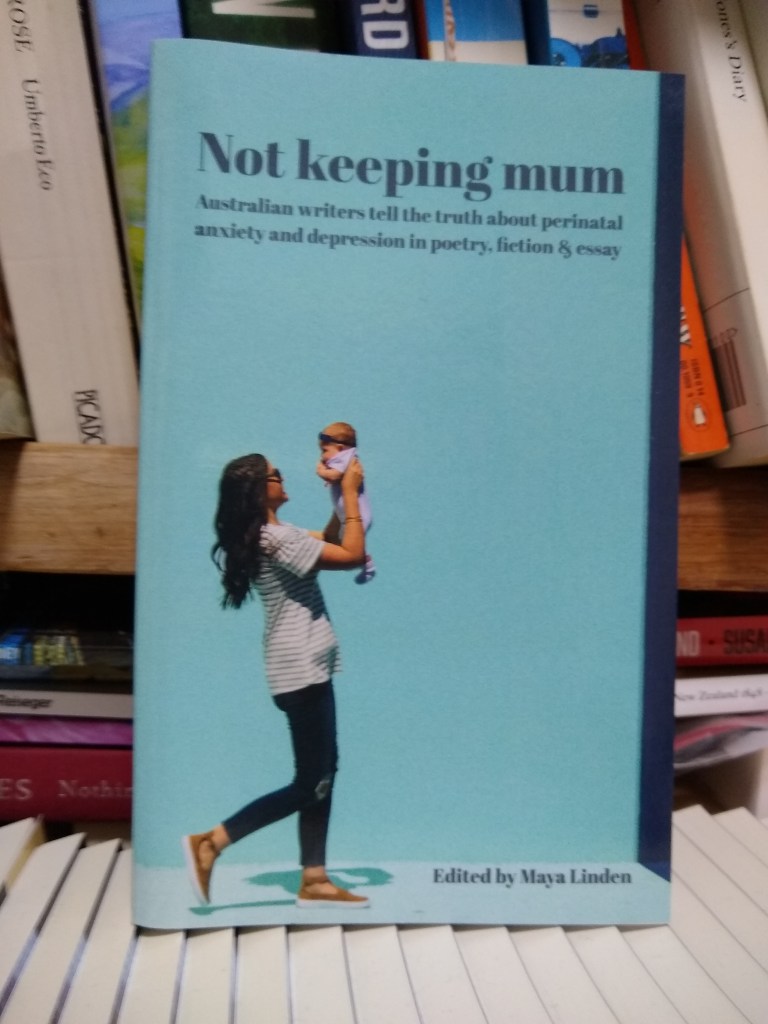
The anthology ‘Not keeping mum‘ – Australian writers tell the truth about perinatal anxiety and depression in poetry, fiction & essay – edited by Maya Linden, has been named a Finalist in the Indie Book Awards (2020-2021). My short story ‘The New Baby’, first published in Quadrant magazine, is part of the anthology. All Winners and Finalists are invited to the award ceremony in Washington DC on 24 June. Very exciting news.
“Heartfelt, at times confronting and occasionally funny, this collection gives insight into how women navigate the profound changes that occur in their bodies, relationships and lives when they become a parent, and how they find the light at the end of the tunnel.”
– Anne Buist, perinatal psychiatrist, professor women’s mental health and author of the Natalie King trilogy and The Long Shadow
Have a read of my prose poem ‘Someone I Don’t Know Side-Swiped My Car’, first published in Quadrant magazine April 2021, Hope you enjoy it.
Someone I Don’t Know Side-Swiped My Car:
Bad luck recently, you could say, after surviving some extremely unfortunate luck. For hours I sat across from you in the Emergency Bay: your face dripping with blood. They gave you a compress to stop the flow of red from your cheekbones and your nose. Every time you touched your face, it opened up the wound. Punched in both eyes and the nose. A robbery as you walked home, I hear you tell your girlfriend on the mobile. And then you’re telling the emergency nurse you can’t wait any longer to see a doctor. ‘You may have concussion,’ she cautioned.
Did you find your way home?
For days I wonder how you are. I sniff the first spring jasmine hanging over the fence and your girlfriend whom I’ve never met crowds my thoughts, till one day, peering out my bedroom window, I notice someone has side-swiped my car. Not exactly what I’d expected to see but, man, the wisteria are showing their purple blooms. A nervous possum balances on the telephone line above the road and there’s a newspaper article about an elderly cyclist who died after a freak bike accident caused by a swooping magpie. Bad luck that a second vehicle crashed into my car while it waited at the smash repair place. Look up, take care, someone or something you don’t know may sideswipe you or punch you in the nose.
Have you tried writing flash fiction yet? What does flash fiction mean?
‘A flash fiction piece is a self-contained story (beginning/middle/end), 1,000 words or less, that can entertain, intrigue, and satisfy a reader during an F5 tornado. That’s it. No genre restrictions, age requirements, or prior experience needed. Just quick, clean stories.’ – Writer’s Digest
‘Part poetry, part narrative, flash fiction–also known as sudden fiction, micro fiction, short short stories, and quick fiction—is a genre that is deceptively complex.’ – The Review Review
‘Flash fiction is a fictional work of extreme brevity that still offers character and plot development. Identified varieties, many of them defined by word count, include the six-word story, the 280-character story, the “dribble”, the “drabble”, “sudden fiction”, flash fiction, nanotale, and “micro-story”.’ – Wikipedia
I like writing in a short form. I’ve been told I have the sensibility of a poet because I have the ability to distill, so the short form suits me. You may be more of a long distance runner, rather than a sprinter, and prefer the long form of a novel.
Have a read of my flash fiction titled It’s Pot Luck When You Move Into A Unit, winner of the short short fiction UTS Alumni Competition a few years ago. Hope you enjoy it.
It’s Pot Luck When You Move Into a Unit
A nice quiet weekend? the woman downstairs said. What do you mean? I said, through the open back door, a bag of rubbish in each hand. She smoothed her ironing on the board and said, They weren’t around over the weekend—with the baby. She looked happy. I’m lucky living on the top floor, I said. She nodded towards the other side of the building. Jim isn’t so lucky—he’s got the woman upstairs, she said, When he plays the piano and she thumps on the floor. She put the iron back on its stand. She’s heavy-footed, that woman. Bang, bang, bang. I hear her coming down the stairs every morning at six, and the slam of the front door.
That night the wind knocked my vase off the window ledge. I lay awake wondering if the noise of the smash had woken up the people underneath—the ones whose barbecuing sends smoke and disgusting meat smells into my unit. Nothing clings to your furniture like the stink from last week’s burnt fat. Sorry about the crash, I muttered to the floor, It was the wind.
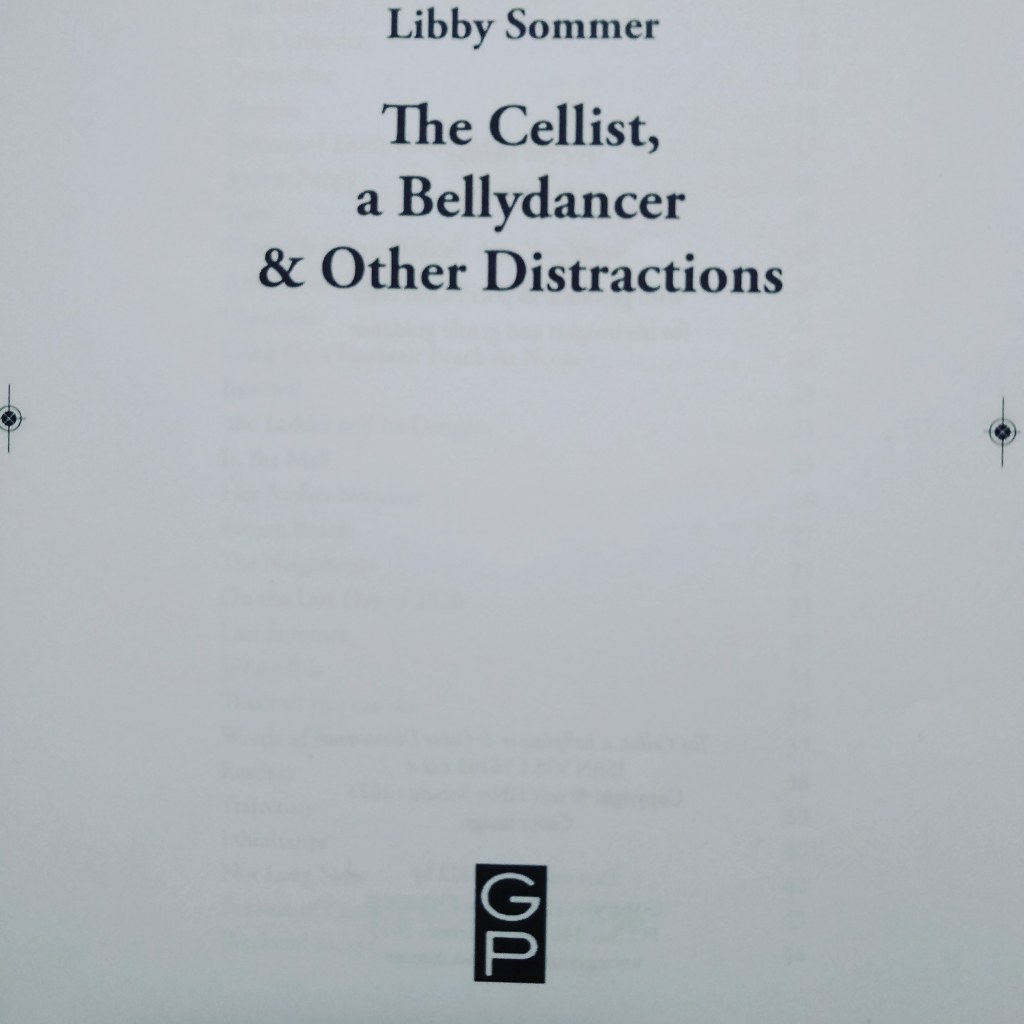
I’ve received final proofs from my publisher, Ginninderra Press for my first poetry collection, ‘The Cellist, a Bellydance & Other Distractions’. In the home stretch now for publication of my sixth book. Happy happy.
So what are final proofs?
Proofs created by the printer for approval by the publisher before going to press are called final proofs. At this stage in production, all mistakes are supposed to have been corrected and the pages are set up in imposition for folding and cutting on the press. To correct a mistake at this stage entails an extra cost per page, so authors are discouraged from making many changes to final proofs, while last-minute corrections by the in-house publishing staff may be accepted.
In the final proof stage, page layouts are examined closely. Additionally, because final page proofs contain the final pagination, if an index was not compiled at an earlier stage in production, this pagination facilitates compiling a book’s index and correcting its table of contents.
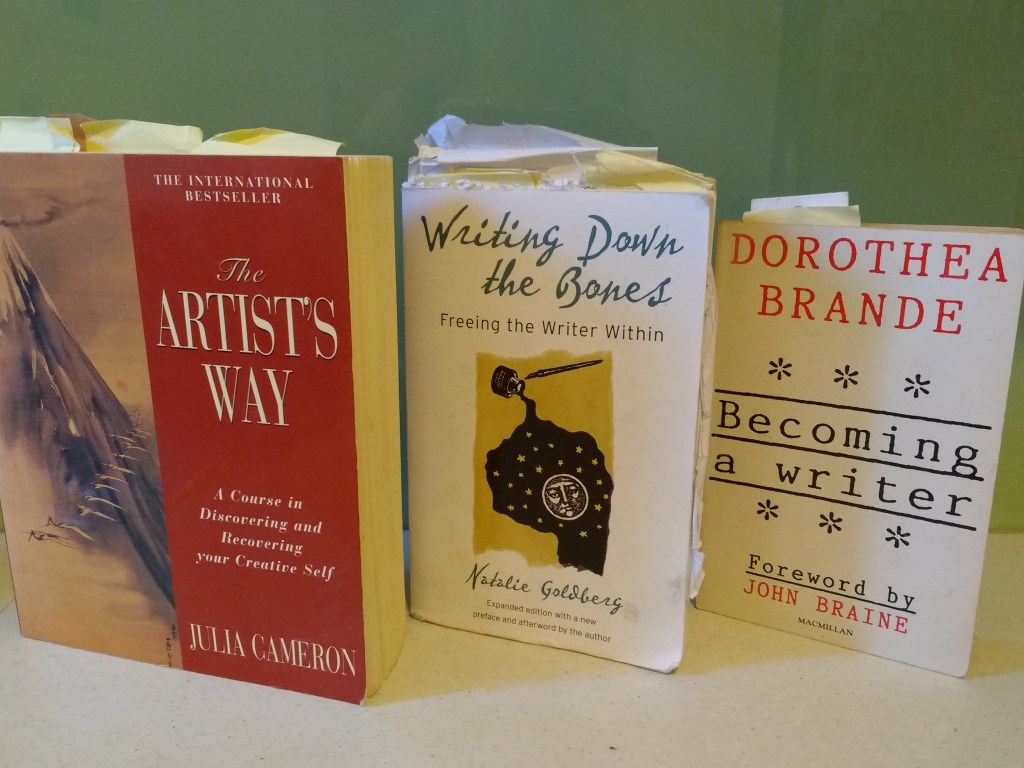
So much advice out there on writing process but these three books, old ones but good ones, are my favorites. You can see how well-loved they are by how many pages are marked with stickers. I’ve used the books many times when teaching my ‘Writing from Within’ course where we try to harness the unconscious by falling into an artistic coma.
1.
Have you ever longed to be able to draw or paint, write or compose music? In ‘The Artist’s Way’ by Julia Cameron you can discover how to unlock your latent creativity and make your dreams a reality.
‘The Artist’s Way’ provides a twelve-week course that guides you through the process of recovering your creative self. It dispels the ‘I’m not talented enough’ conditioning that holds many people back and helps you to unleash your own inner artist.
‘The Artist’s Way’ helps demystify the creative process by making it part of your daily life. It tackles your self-doubts, self-criticism and worries about time, money and the support to pursue your creative dream.
2.
In ‘Writing Down the Bones’ by Natalie Goldberg, the secret of creativity, she makes clear, is to subtract rules for writing, not add them. It’s a process of “uneducation” rather than education. Proof that she knows what she’s talking about is abundant in her own sentences. They flow with speed and grace and accuracy and simplicity. It looks easy to a reader, but writers know it is the hardest writing of all.’ – Robert Pirsig
‘Writing Down the Bones’ Natalie Goldberg’s first book, sold millions of copies and has been translated into twelve languages. For more than thirty years she practiced Zen and taught seminars in writing as a spiritual practice.
3.
‘Becoming a writer’ by Dorothea Brande is a reissue of a classic work published in 1934 on writing and the creative process. It recaptures the excitement of Dorothea Brande’s creative writing classroom of the 1920s. Decades before brain research “discovered” the role of the right and left brain in all human endeavor, Dorothea Brande was teaching students how to see again, how to hold their minds still, how to call forth the inner writer.
‘Refreshingly slim, beautifully written and deliciously elegant, Dorothea Brande’s Becoming a Writer remains evergreen decades after it was first written. Brande believed passionately that although people have varying amounts of talent, anyone can write. It’s just a question of finding the “writer’s magic”–a degree of which is in us all. She also insists that writing can be both taught and learned. So she is enraged by the pessimistic authors of so many writing books who rejoice in trying to put off the aspiring writer by constantly stressing how difficult it all is.
‘With close reference to the great writers of her day–Wolfe, Forster, Wharton and so on–Brande gives practical but inspirational advice about finding the right time of day to write and being very self disciplined about it–“You have decided to write at four o’clock, and at four o’clock you must write.” She’s strong on confidence building and there’s a lot about cheating your unconscious which will constantly try to stop you writing by coming up with excuses. Then there are exercises to help you get into the right frame of mind and to build up writing stamina.
‘This is Dorothea Brande’s legacy to all those who have ever wanted to express their ideas in written form. A sound, practical, inspirational and charming approach to writing, it fulfills on finding “the writer’s magic.”‘ – John Gardner
I hope these recommendations are helpful. Do you have useful books on writing process you would add? Let me know in the comments and please share this post with a friend if you enjoyed it.
I’ve corrected the first proofs of my first poetry collection, ‘The Cellist, a Bellydancer & Other Distractions’ and posted them back to my publisher, Ginninderra Press.
So what are first proofs?
According to Wikipedia:
In printing and publishing, proofs are the preliminary versions of publications meant for review by authors, editors, and proofreaders, often with extra-wide margins.
Proof, in the typographical sense, is a term that dates to around 1600.[4] The primary goal of proofing is to create a tool for verification that the job is accurate. All needed or suggested changes are physically marked on paper proofs or electronically marked on electronic proofs by the author, editor, and proofreaders. The compositor, typesetter, or printer receives the edited copies, corrects and re-arranges the type or the pagination, and arranges for the press workers to print the final or published copies.
So now I’m waiting for my publisher to send me final proofs. A proofreader will check the final proofs before I post them back.
Also front and back cover images and information are now being finalised.
Then comes printing of my new book. A very exciting time.
It will be about a month until release of ‘The Cellist, a Bellydancer & Other Distractions’. In the collection there is a poem about a cellist, another about a bellydancer, and one about distraction. 45 poems in total.
I’ll let you know when I’ve got a publication date.




 Libby Sommer, Author