
Teagan Berry has some great suggestions for us writers on ways to utilize Pinterest as another Social Media tool. Pinterest can help us when we need to create word pictures of characters and settings for our stories.
Uncategorized
How to increase the traffic on your blog — Roberta Pimentel

Originally posted on Roberta Pimentel: Lately I have gotten many questions on how I have been able to increase the number of readers on my blog. There is no recipe for doing this but I would like to share my strategy with you guys. When I first stated at WordPress I went through some courses that…
via How to increase the traffic on your blog — Roberta Pimentel
Things You Can Do with a Book, Apart From Reading It — boy with a hat

You can forget it in some bookshelf or other for many years, so that one day your children or grandchildren can pick it up by chance and remind you of it.
via Things You Can Do with a Book, Apart From Reading It — boy with a hat
Why Allow Re-blogging? — Write of Passage
Re-blogging and other sharing options are important to getting and maintaining blog readership. Re-blog is a powerful tool. Only recently have I come to appreciate the power of allowing my posts to be shared by others. Along the way, I have also learned other things that may be helpful to WordPress bloggers. So I am sharing my thoughts on sharing options.
Fortnightly Story: Michael
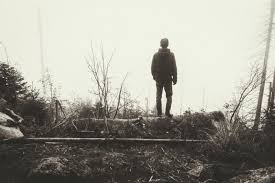
He’s waiting at the bottom of the ramp, just inside the steel fence that cordons off the entry to the station. He said to give him a ring from her mobile when the train passed Gosford. She quickens her pace, adjusts the overnight bag on her shoulder. She is close enough to see the soft fold of his graying hair, the clear smooth glow of his skin. In his white socks and slip-on loafers he looks very English. Continue reading
Passions

Every once in a while, when I’m scratching around for something new to write, I make a list of the things I obsess about. Thankfully, some of them change over time, but there are always new ones to fill the gap.
It’s true that writers write about what they think about most of the time. Things they can’t let go: things that plague them; stories they carry around in their heads waiting to be heard. Continue reading
Fortnightly Story: Painstaking Progress
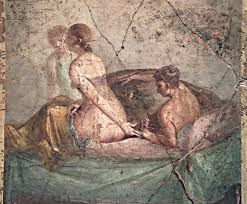
‘Painstaking Progress’
by Libby Sommer
first published in Quadrant
One can never change the past, only the hold it has on you. And while nothing in your life is reversible, you can reverse it nevertheless – Merle Shain.
1.
I’m imagining a cloudy autumn morning. There’s a room. Half office, half bedroom. Not too large and not too small. The windows of the room face east and look out towards the ocean across the expanse of a green gully.
I picture a woman sitting on a bed with pillows behind her back. The windows are open. Perhaps it is Saturday morning. On the bedside table is a mug of tea and a photograph of the woman’s daughter on her wedding day.
Writing Is Not Unlike A Sushi Roll

Sometimes there is a person in one of my creative writing classes who is obviously very talented. I can bring to mind one in particular. You could sense people holding their breath as she read, and often her hands shook. The writing process opened her up. She said she had wanted to write for years. She was so excited about writing that she straight away wanted to write a book. I said to her, slow down. Just practice writing for a while. Learn what this is all about.
In Japan becoming an itamae of sushi requires years of on-the-job training and apprenticeship. After five years spent working with a master or teacher itamae, the apprentice is given his first important task, the preparation of the sushi rice.
Writing, like becoming a Sushi Chef, is a life’s work and takes a lot of practice. The process is slow, and at the start you are not sure what you are making.
Futomaki (“thick roll” – rice on inside, nori on the outside)
Uramaki (“inside-out roll” – rice on outside, nori on the inside)
Temaki (“hand roll” – cone-shaped roll)
That’s how it was for me. I thought I could jump in and write a book in 6 months. In fact, it’s taken me 20 years to write a publishable manuscript: ‘My Year With Sammy’, the story of a difficult yet sensitive child, published by Ginninderra Press last year.
So cut yourself some slack before you head off on a writing marathon.
Writing is like learning to prepare the rice for sushi: the apprenticeship is long, and in the beginning you are not sure whether a Futomaki, a Uramaki or a Temaki will be the end result.
Fortnightly Story: Tango
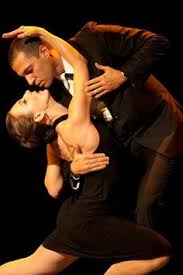
Tango is a passionate dance. A conversation between two people in which they can express every musical mood through steps and improvised movement. (Source Unknown)
1.
Just before nine o’clock in the evening, Sofya gets out of her car and looks up at the sky. She has sensed a shift in the weather. There is another breath of wind, a whispering in the air, but the clouds are stagnant against the dark night. She turns and moves downhill towards the club, ejecting the chewing gum out of her mouth with a loud splat into the bushes, feels the first drops of rain on her bare arms. She passes the public phone box where frangipanis lie on the grass, picks one up, sniffs at it, throws it back, then quickly enters the club. Continue reading
I Am Not the Stories I Tell

Sometimes when people read my stories they assume those stories are me. They are not me, even if I write in the first person. They were my thoughts and feelings at the time I wrote them. But every minute we are all changing. There is a great freedom in this. At any time we can let go of our old selves and start again. This is the writing process. Instead of blocking us, it gives us permission to move on. Just like in a progressive ballroom dance: you give your undivided attention to your partner—keep eye contact for the time you are dancing together—but then you move on to the next person in the circle. Continue reading
 Libby Sommer, Author