So what is a prose poem? According to the Poetry Foundation, a prose poem is a prose composition that, while not broken into verse lines, demonstrates other traits such as symbols,metaphors, and otherfigures of speech common to poetry.
If you are able to distill meaning in a very short form, you may enjoy writing prose poetry.
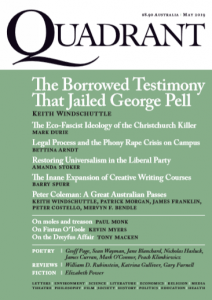
Have a read of my prose poem Sixteen Is A Very Difficult Age, You Know, first published in Quadrant magazine September 2018.
Sixteen Is a Very Difficult Age, You Know
Well yes it is. This time of year isn’t easy either. It has most of us by the neck. You don’t want to get sick at Christmas. They said he needs six weeks of intensive therapy then they’ll decide about medication. How – when everything’s closed till February? Yes, he’s up and down. Better some days, but hardly ever. They said hide all the tablets and remove the kitchen knives. I ring or text to see how he’s going. He doesn’t always pick up. Don’t refer to the incident. Wait for him to say something. Well, he doesn’t say much though he’ll let me give him a hug – sometimes. So here I am trying to gather his forgotten dreams from the air. They’re drifting just outside my reach.
I like to create a strong sense of place when I write. I find it grounds my stories and poems. Pre-pandemic, Bronte Beach was one of my favourite homes-away-from-home. I used to hang out in a cafe there writing in my notebook. My poem Bronte Beach is entirely grounded in place. It was first published in Wild anthology (Ginninderra Press, 2018). Have a read. Hope you enjoy it.
Bronte Beach:
The surf’s been hammered by rain,
and along the pavement open-faced cafes wedge side by side:
compact, glass-fronted, in flattened
Art Deco buildings, with competing blackboard menus.
Rain drips from the edge of the canvas awning,
and a smell of fried fish in rancid oil
through the mouth of the sliding door
as an oversized bus pulls in and blocks the view.
Marooned on the swell are wet-suited board riders,
unwavering as the cliff face above the rocks that define the beach.
Beyond the rock pool the waves
remain stubbornly low spreading a shallow calm.
The rain settles, rusting roof racks in the salt air,
and those expired meters will upset the fattened
people-who-lunch in the darkening afternoon.
All day the treacherous ocean scours
the man-made sea pool, where
all-weather swimmers scan the water
for migrating dolphins or whales.
A white-hulled speedboat appears
in the grey-blue, travelling north,
and the black-clad board riders wait,
grounded, legless pigeons who can,
in a heartbeat, fan their iridescent wings.
Squabbling seagulls swoop and dive
and chase each other between the palms,
each white slow and steady flap of wings
picked up by the whiteness of the backwash
of the speed boat out there on the pastel-pink ocean,
Not that most of us are in a rush to sign up for a cruise any time soon … but here is my poem, BETWEEN THE ISLANDS OF THE PACIFIC, first published in Quadrant magazine June, 2018. It’s sort of relevant to the current situation. Hope you enjoy it.
Between the Islands of the Pacific
Because by now we know everything is not so blue
out here.
The cities had tipped rubbish into the sea,
and we let them without even noticing.
Not even feeling our breathing clear
as gusts reaching ten knots cleaned up our days.
Not even. Today pure blue sky, blue sea,
out there the horizon drawing a line
below the clouds, the absoluteness of it. Nights
of diesel engines shuddering beneath us.
We lounge on chairs side by side on the deck.
At dusk, we stand at the railing of the ship as the sun
slips into the ocean. In the fresh sea air, their backs turned,
some raise a selfie-stick or light a cigarette while others
Hello everyone. Hello to all you fellow quarantiners hanging-in-there.
I’d like to share with you my poem ELSEWHERE, first published in Quadrant magazine in December 2017. Hope you like it. The poem is relevant to today’s situation, in many ways.
Elsewhere
Hair remembers how dark a room becomes
when hair is not let loose, straw fallen from the head
of a broom, drifting onto a path,
crunched underfoot by someone who never realised
it was straw. Hair drank, jogged,
ate by itself, knew how to tick ‘Like’
on Social Media. But hair felt
out of touch with itself
unable to distinguish the difference between
fear of the unknown, and fear of something
bad. Hair remembered the ultramarine blue of sea and sky
and the hundred varieties of tuna, calamari and squid.
Hair has dreams, that’s what hair does.
Covers over a shiny scalp, frames the face.
Adventure means exploration and discovery.
And hair remembers—blankets of humidity, harsh light,
residing there in the brain’s temporal lobes.
Even now, when hair is back home,
it remembers the wanting things to remain the same
‘Neurologists at Exeter University, using functional magnetic resonance imaging, found that reading poetry activated different brain regions to prose – even the lyrical prose we find in fiction. When the research participants read poetry, it lit up the regions of the brain variously linked to emotion, memory, making sense of music, coherence building and moral decision-making. Poetry, the study’s authors concluded, induces a more introspective, reflective mental state among readers than does prose.’ – Sarah Holland-Batt, Weekend Australian, 21–22 March 2020
If you feel you’re losing your ability to focus on a long book while confined indoors and surrounded by digital screens (as staying up to date on a global pandemic seems to command), try turning to poetry to nurse your shrinking attention span back to life.
In the Time of Pandemic
And the people stayed home.
And they read books, and listened, and rested, and exercised, and made art, and played games, and learned new ways of being, and were still.
And they listened more deeply. Some meditated, some prayed, some danced.
Some met their shadows. And the people began to think differently.
And the people healed.
And, in the absence of people living in ignorant, dangerous, mindless, and heartless ways, the earth began to heal.
And when the danger passed, and the people joined together again, they grieved their losses, and made new choices, and dreamed new images, and created new ways to live and heal the earth fully, as they had been healed.
—Kitty O’Meara
‘Poetry is the quiet music of being human and in these days and nights when our humanity is fully vulnerable and exposed, poetry takes a small step forward. In our separate isolations, a poem is like the Tardis: bigger on the inside. Like spring – to recall TS Eliot – poetry mixes memory and desire.’ – Carol Ann Duffy, The Guardian
This poem by poet Ian McMillan, reminds of us of just what we lose each time a library is closed.
Adult Fiction
I always loved libraries, the quiet of them,
The smell of the plastic covers and the paper
And the tables and the silence of them,
The silence of them that if you listened wasn’t silence,
It was the murmur of stories held for years on shelves
And the soft clicking of the date stamp,
The soft clickety-clicking of the date stamp.
I used to go down to our little library on a Friday night
In late summer, just as autumn was thinking about
Turning up, and the light outside would be the colour
Of an Everyman cover and the lights in the library
Would be soft as anything, and I’d sit at a table
And flick through a book and fall in love
With the turning of the leaves, the turning of the leaves.
And then at seven o’clock Mrs Dove would say
In a voice that wasn’t too loud so it wouldn’t
Disturb the books “Seven o’clock please …”
And as I was the only one in the library’s late summer rooms
I would be the only one to stand up and close my book
And put it back on the shelf with a sound like a kiss,
Back on the shelf with a sound like a kiss.
And I’d go out of the library and Mrs Dove would stand
For a moment silhouetted by the Adult Fiction,
And then she would turn the light off and lock the door
And go to her little car and drive off into the night
That was slowly turning the colour of ink and I would stand
For two minutes and then I’d walk over to the dark library
And just stand in front of the dark library.
‘The astronomer and poet Rebecca Elson (January 2, 1960–May 19, 1999) was twenty-nine when she was diagnosed with non-Hodgkins lymphoma — a blood cancer that typically invades people in their sixties and seventies. Throughout the bodily brutality of the treatment, throughout the haunting uncertainty of life in remission, she met reality on its own terms — reality creaturely and cosmic, terms chance-dealt by impartial laws — and made of that terrifying meeting something uncommonly beautiful.
Rebecca Elson, 1987
‘When she returned her atoms to the universe, not yet forty, Elson bequeathed to this world 56 scientific papers and a slender, stunning book of poetry titled A Responsibility to Awe (public library) — verses spare and sublime, drawn from a consciousness pulling the balloon string of the infinite through the loop of its own finitude, life-affirming the way only the most intimate contact with death — which means with nature — can be.’ – Maria Popova
Elson’s crowning achievement in verse is the poem “Antidotes to Fear of Death,”
ANTIDOTES TO FEAR OF DEATH by Rebecca Elson
Sometimes as an antidote
To fear of death,
I eat the stars.
Those nights, lying on my back,
I suck them from the quenching dark
Til they are all, all inside me,
Pepper hot and sharp.
Sometimes, instead, I stir myself
Into a universe still young,
Still warm as blood:
No outer space, just space,
The light of all the not yet stars
Drifting like a bright mist,
And all of us, and everything
Already there
But unconstrained by form.
And sometime it’s enough
To lie down here on earth
Beside our long ancestral bones:
To walk across the cobble fields
Of our discarded skulls,
Each like a treasure, like a chrysalis,
Thinking: whatever left these husks
Flew off on bright wings.
Hope you felt the positive benefits of reading these poems.
I am very happy to say my new prose poem ‘Someone I Don’t Know Sideswiped My Car’ has been accepted for publication by literary magazine Quadrant. A huge boost to my confidence as a writer. Fear of the blank page and running out of ideas never leaves me. Am very grateful that I am still producing and publishing new work.
So what is prose poetry?
Wikipedia offers this definition of prose poetry: “Prose poetry is poetry written in prose instead of using verse but preserving poetic qualities such as heightened imagery and emotional effects.”
‘A prose poem falls somewhere in the gray area between a story and a poem. Prose poetry also tends to be very, very short, often (but not always) less than one page. Prose poetry blends the styles of poetry and narrative prose.’ – Writer’s Relief
I love creating stories in this very very short form.
My prose poem THE CELLIST has been accepted for publication in Quadrant magazine.
And another prose poem THE LADDER AND ITS DANGERS was recently longlisted for the 2019 joanne burns Microlit Award. It will be available for inclusion in a range of multi-platform activities organised by Spineless Wonders including #storybombingNWF20, podcasts, live performance and the Microflix Awards.
I love the short short form: prose poems, microlit, flash fiction. I’m putting together a new collection of my published short form stories and prose poems. The working title is SMALL FICTIONS. What do you think?
Prolific widely-published flash fiction writer Meg Pokrass says on Facebook that:
‘The more I become involved in the editorial side of the microfiction form, the more it becomes mysterious to me. The more it seems like some kind of freaky magic. After reading thousands of stories for Best Microfiction, all I can say is that there is no formula. The other thing I can say is that we must use who we are when we write. Trying to perfect a “style” is useless. Making something that feels like you, something only you can possibly see that way, works wonders. The secret seems to be in revealing who you are through the life of a character or two, which somehow mysteriously makes us see something unusual about the world itself. Finding your own expression of something we all have felt before, in some sly and startling way that hooks us.’ – Meg Pokrass
The Poetry Foundation describes a prose poem as a prose composition that, while not broken into verse lines, demonstrates other traits such as symbols,metaphors, and otherfigures of speech common to poetry.
I’m thrilled to tell you that my latest prose poem, TASTE is published in this month’s Quadrant magazine.
TASTE
I rather like poems about minor calamities, bursts of tiny delights, the sun warming the tender skin of the elderly. Also, the way palm fronds conduct themselves during a southerly, dishevelled, exposing the softness of their billowing arms. Pastries in display cases do something for me too. Even cupcakes iced in gelato colours, adorned with miniature decorations … Can you see my preference for the words ‘miniature’ and ‘tiny’, an inclination towards the distilled in a world favouring often the big and the overwhelming? People with the patience to follow a complex recipe – well, that’s not me, but I like to taste what they cook. Babies in prams kicking chubby legs make me hover – how difficult not to take a bite. If you write something about a paper straw, I will be fascinated. You could try a ladybird, a pocket-size umbrella. The generalised angst of the human condition, however, may be hard for me to get a handle on. Watch that man with the disabled daughter moisten his finger after her cupcake is eaten and relish the last crumbs. Consider the rainbow-coloured wristband tied to a letterbox on the way to the park or the miniature plastic bucket and spade we found half-hidden on the beach at Bronte and packed with us for years on every visit to the sea.
A big thank you to Literary Editor, Professor Barry Spurr (Australia’s first Professor of Poetry) for accepting my poem. I am honored to be included alongside talented poets Geoff Page, Sean Wayman, Jane Blanchard, Nicholas Hasluck, James Curran, Mark O’Connor and Peach Klimkiewicz.
‘Though the name of the form may appear to be a contradiction, the prose poem essentially appears as prose, but reads like poetry. In the first issue of The Prose Poem: An International Journal, editor Peter Johnson explained, “Just as black humor straddles the fine line between comedy and tragedy, so the prose poem plants one foot in prose, the other in poetry, both heels resting precariously on banana peels.”
‘While it lacks the line breaks associated with poetry, the prose poem maintains a poetic quality, often utilizing techniques common to poetry, such as fragmentation, compression, repetition, and rhyme. The prose poem can range in length from a few lines to several pages long, and it may explore a limitless array of styles and subjects.’ -The Academy of American Poets
I rather enjoy writing prose poetry and am slowly (very slowly) working on a collection of published short pieces. Here is one of my Flash Fictions (a close relative of the Prose Poem), first published in Quadrant magazine, October 2014. Hope you like it.
Tell Me About What Happened On New Year’s Eve
I’d looked out the top-floor hospital window towards Coogee to the night sky lit by fireworks and saw the miserable face of the moon and thought that I’d never felt as detached from life as at that moment. At the same time, I realised that I probably felt so despicable due to the weeks spent lying in hospital and the excruciatingly slow and painful road to recovery. By sheer force of will, I stopped looking at the dark mirror of the moon. No one could have told me how much the distant celebrations, the sound of the explosions and the changing shapes and colours of the fireworks could jolt me into the present and away from the unbearable lethargy, the severed muscles and tendons and the nausea caused by the drugs and pain killers. Was it that I could sense, without glancing up again, that clouds were making their way across the moon and that made me realise: how would it be to feel this would be your last new year?




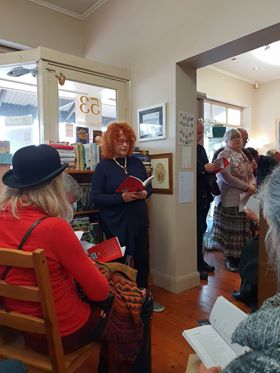
 Libby Sommer, Author