Have a read of my poem ‘Words’ first published in Quadrant Magazine. ‘Words’ is part of my second poetry collection ‘Flat White, One Sugar’ (Ginninderra Press) published earlier this year.
Have a read of my poem ‘Twisted Tea’ first published in ‘For Ukraine: By Women of the World‘, a collection of powerful poetry and prose by all who identify as women about Russia’s invasion of Ukraine led by Russia’s President, Vladimir Putin.
I wrote the poem in 2022. ‘Twisted Tea’ is also one of the poems in my second poetry collection titled ‘Flat White, One Sugar‘, Ginninderra Press.
I’m reposting this from the time when we were deeply in the midst of the pandemic. It’s worth having another read about the benefits of poetry:
‘Neurologists at Exeter University, using functional magnetic resonance imaging, found that reading poetry activated different brain regions to prose – even the lyrical prose we find in fiction. When the research participants read poetry, it lit up the regions of the brain variously linked to emotion, memory, making sense of music, coherence building and moral decision-making. Poetry, the study’s authors concluded, induces a more introspective, reflective mental state among readers than does prose.’ – Sarah Holland-Batt, Weekend Australian, 21–22 March 2020
If you feel you’re losing your ability to focus on a long book while confined indoors and surrounded by digital screens (as staying up to date on a global pandemic seems to command), try turning to poetry to nurse your shrinking attention span back to life.
In the Time of Pandemic
And the people stayed home.,
And they read books, and listened, and rested, and exercised, and made art, and played games, and learned new ways of being, and were still.
And they listened more deeply. Some meditated, some prayed, some danced.
Some met their shadows. And the people began to think differently.
And the people healed.
And, in the absence of people living in ignorant, dangerous, mindless, and heartless ways, the earth began to heal.
And when the danger passed, and the people joined together again, they grieved their losses, and made new choices, and dreamed new images, and created new ways to live and heal the earth fully, as they had been healed.
—Kitty O’Meara
‘Poetry is the quiet music of being human and in these days and nights when our humanity is fully vulnerable and exposed, poetry takes a small step forward. In our separate isolations, a poem is like the Tardis: bigger on the inside. Like spring – to recall TS Eliot – poetry mixes memory and desire.’ – Carol Ann Duffy, The Guardian
This poem by poet Ian McMillan, reminds of us of just what we lose each time a library is closed.
Adult Fiction
I always loved libraries, the quiet of them, The smell of the plastic covers and the paper And the tables and the silence of them, The silence of them that if you listened wasn’t silence, It was the murmur of stories held for years on shelves And the soft clicking of the date stamp, The soft clickety-clicking of the date stamp. I used to go down to our little library on a Friday night
In late summer, just as autumn was thinking about Turning up, and the light outside would be the colour Of an Everyman cover and the lights in the library Would be soft as anything, and I’d sit at a table And flick through a book and fall in love With the turning of the leaves, the turning of the leaves.
And then at seven o’clock Mrs Dove would say In a voice that wasn’t too loud so it wouldn’t Disturb the books “Seven o’clock please …” And as I was the only one in the library’s late summer rooms I would be the only one to stand up and close my book And put it back on the shelf with a sound like a kiss, Back on the shelf with a sound like a kiss.
And I’d go out of the library and Mrs Dove would stand For a moment silhouetted by the Adult Fiction, And then she would turn the light off and lock the door And go to her little car and drive off into the night That was slowly turning the colour of ink and I would stand For two minutes and then I’d walk over to the dark library And just stand in front of the dark library.
‘The astronomer and poet Rebecca Elson (January 2, 1960–May 19, 1999) was twenty-nine when she was diagnosed with non-Hodgkins lymphoma — a blood cancer that typically invades people in their sixties and seventies. Throughout the bodily brutality of the treatment, throughout the haunting uncertainty of life in remission, she met reality on its own terms — reality creaturely and cosmic, terms chance-dealt by impartial laws — and made of that terrifying meeting something uncommonly beautiful.
Rebecca Elson, 1987
‘When she returned her atoms to the universe, not yet forty, Elson bequeathed to this world 56 scientific papers and a slender, stunning book of poetry titled A Responsibility to Awe (public library) — verses spare and sublime, drawn from a consciousness pulling the balloon string of the infinite through the loop of its own finitude, life-affirming the way only the most intimate contact with death — which means with nature — can be.’ – Maria Popova
Elson’s crowning achievement in verse is the poem “Antidotes to Fear of Death,”
ANTIDOTES TO FEAR OF DEATH by Rebecca Elson
Sometimes as an antidote To fear of death, I eat the stars.
Those nights, lying on my back, I suck them from the quenching dark Til they are all, all inside me, Pepper hot and sharp.
Sometimes, instead, I stir myself Into a universe still young, Still warm as blood:
No outer space, just space, The light of all the not yet stars Drifting like a bright mist, And all of us, and everything Already there But unconstrained by form.
And sometime it’s enough To lie down here on earth Beside our long ancestral bones:
To walk across the cobble fields Of our discarded skulls, Each like a treasure, like a chrysalis, Thinking: whatever left these husks Flew off on bright wings.
I hope you felt the positive benefits of reading these poems.
Have a read of my poem, ‘Holding On’ first published in Old Water Rat Publishing. ‘Holding On’ is one of the pieces in my second poetry collection recently released by Ginninderra Press titled ‘Flat White, One Sugar‘.
I hope you enjoy it.
Holding On:
When we are wet and cold,
we shelter under umbrellas & awnings.
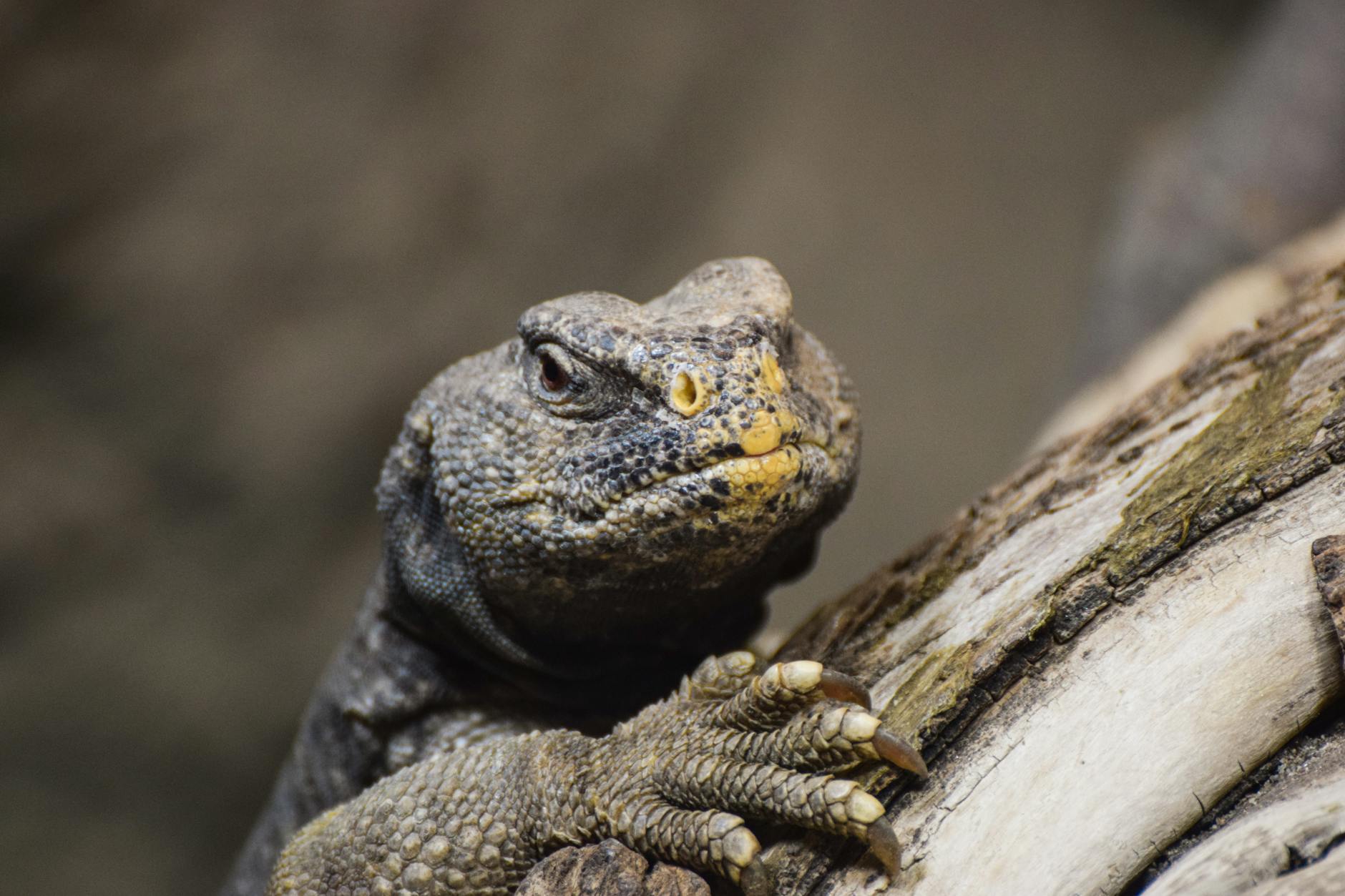
When a lizard is wet and cold—often seeming
frozen or dead—they drop from trees, stunned.
They’ve shut down, no longer able to hold on.
It’s true they like to wake up in the warm sun,
just like us, even though they are cold-blooded.
Maybe a blue-tongue lizard’s easy-going nature
is what makes them a popular pet.
Maybe it’s their striking blue tongue.
You see lizards climbing the brick facade
of your house as the rain keeps pelting down.
They may hibernate in a hole in the ground,
or maybe a tree trunk or a fallen log.
City living is challenging if you’re
clinging to walls & windows. Scaling
a windowpane without falling off is one thing.
When enemies approach, some reptiles,
nicknamed the Jesus Christ lizard, can run on water.
If surprised by a predator, some lizards can detach
their tails or change colour to escape their enemies.
Have a read of my poem, ‘My Friend Is Swiping & Scrolling’ first published in Quadrant Magazine. I wrote the poem during the pandemic and it is included in my debut poetry collection, ‘The Cellist, a Bellydancer & Other Distractions‘ (Ginninderra Press).
I hope you enjoy it.
My Friend Is Swiping & Scrolling:
My friend in the dark hour before dawn. My friend with the ragged stomach who had a bad night. In a different hemisphere he is turning on the bedside light, rolling out of bed, pouring a cap of antacid at the kitchen bench. My friend who hasn’t left his neighbourhood all year. My friend in London pining for how things used to be, for the Eurostar crossings to speak German and Spanish.
My friend scrolling through Facebook to see the faces of his family. My friend living alone who aches with aloneness. My friend the glass-half-full-kind-of-guy listening out for the early morning train thinking, we’ll get through this, in time. My friend who sits through forty Zoom meetings every five days. A rush of nostalgic reflections but is everything nostalgia? We’re all in this together.
The extroverted friend and the introverted one scrolling & swiping at home, the teenage friend whose father is hospitalised for a third time, my friend in China who sends me a red envelope, my friend in France dunking a croissant as she swipes left in greyish gloom, my friend in kurta pajamas beating a tabla drum, my friend in activewear driven to over-exercise, my friend who is addicted to social media like I am.
My friend in Israel my stressed-out Barista friend behind a coffee machine my friend with only one kidney my friend in palliative care under a sign I do not want visitors my young friend who was warned at school about swiping & scrolling my friend next door, who wonders if we are complaisant already my friend who is feeling lethargic my friend who hopes everyone will go back to work soon my friend who tells me she has a problem wearing a mask my friend who pretends not to see me on the street, even she must be on Zoom with others by now, so I let her go.
Scrolling will distract me from uncomfortable emotions as the cafes near me say takeaway only and the stores where I used to window-shop have empty frontages with To Lease signs and the famous writer I wish I’d had the courage to speak to when I had the chance, is diagnosed with dementia in another country, I snatch at memories of post cards sent back and forth. So who else should I pick up the phone and dial and say, Are you okay? Who else might I never see again?
All of us scrolling & swiping in the mornings and the afternoons and in the evenings near the hotel with the old TOOTH’S SHEAF STOUT Keeps you fit! poster telling us a tantalising beer with a dry finish and a medium body.
Have a read of my poem, ‘Regrets’ first published in Quadrant Magazine. ‘Regrets’ is one of the poems in my recently published second poetry collection, ‘Flat White, One Sugar’ (Gininnderra Press).
I hope you enjoy it.
Regrets:
Driving through the streets of the city
on a Sunday, we’re talking about
our crazy mistakes, the men we separated from,
the ex-husbands who remarried and married again,
those we shouldn’t have let go.
‘Yes, it’s hard having no-one to turn to,’ you say,
reversing into a “no stopping” space.
The signpost doesn’t mention Sundays.
You turn the ignition off
and cover your face with your hands.
‘I’m so hopeless at parking,’ you cry. ‘He used to tell me
we’d need to catch a cab to the kerb.’
I laugh and pat your shoulder.
‘It’s fine,’ I say. ‘You’re sticking out a bit in front,
but you can try again … or not. Nothing’s perfect.’
Have a read of my poem, ‘Hostilities’ first published in Quadrant Magazine. I wrote the poem during the pandemic. It is one of the pieces in my debut poetry collection, ‘The Cellist, a Bellydancer & Other Distractions‘ (Ginninderra Press).
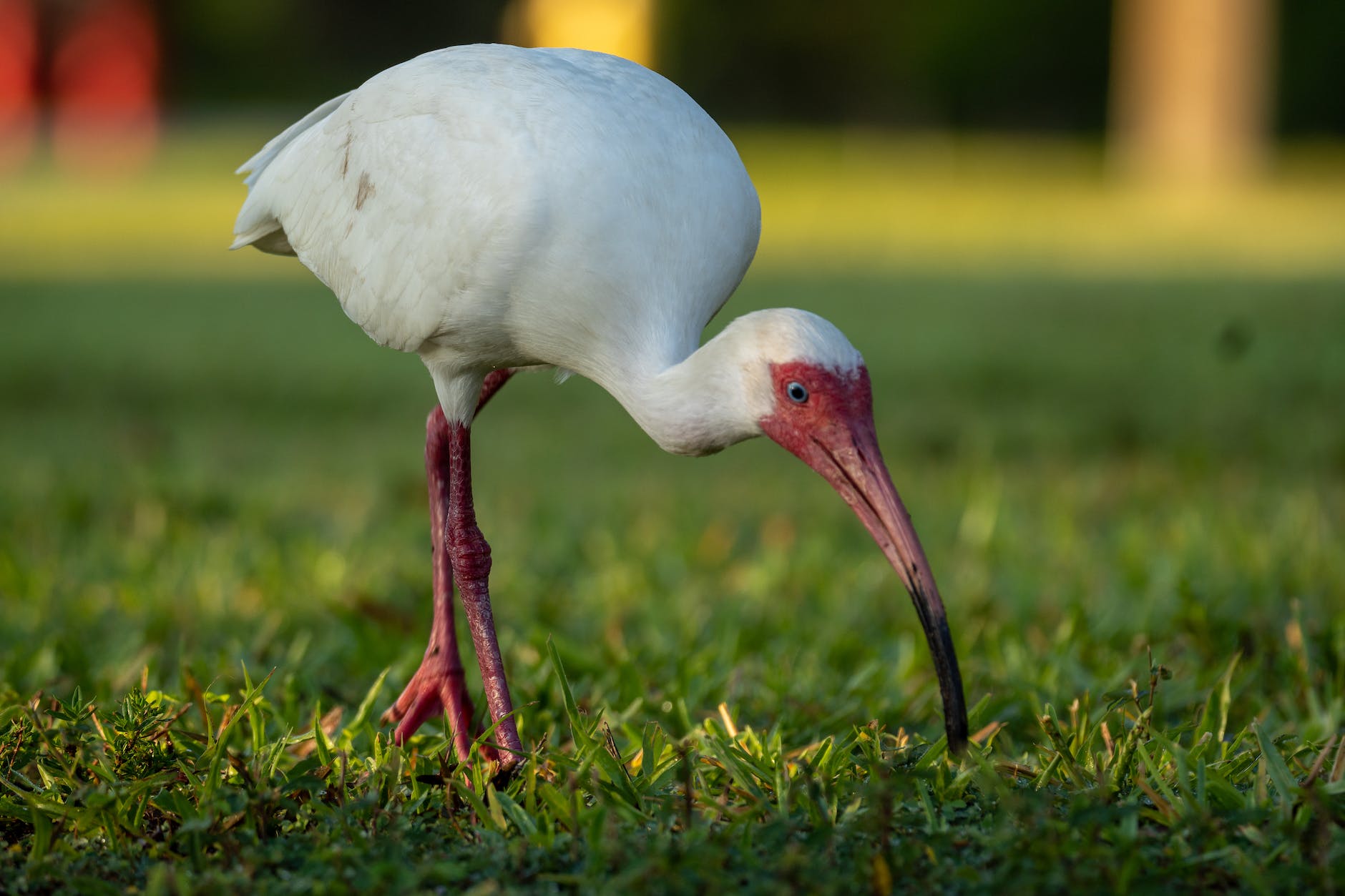
Have a read of my poem ‘White Ibis’, first published in Quadrant Magazine. ‘White Ibis’ is one of the poems in my debut poetry collection ‘The Cellist, A Bellydancer & Other Distractions‘ (Ginninderra Press).
Have a read of my poem ‘Survival’ first published in Quadrant Magazine. ‘Survival’ is one of the poems in my debut poetry collection ‘The Cellist, a Bellydancer & Other Distractions‘ (Ginninderra Press).
Have a read of my poem ‘Here’, first published in Blue Fringe Art & Literature Exhibition 2021 Collected Works. The poem is also part of my debut poetry collection ‘The Cellist, a Bellydancer & Other Distractions‘ (Ginninderra Press).





 Libby Sommer, Author