
My Poem, Electioneering on the Mall

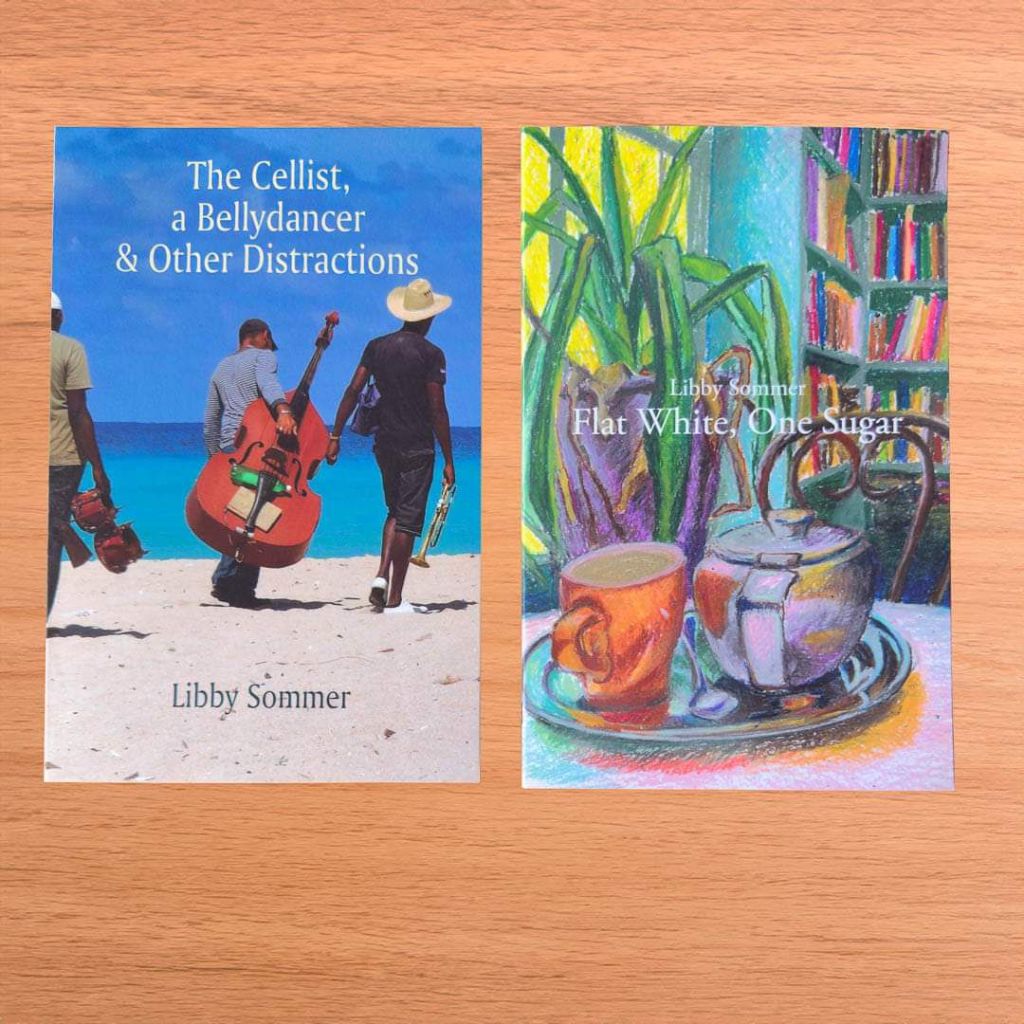
Have a read of my poem, ‘Electioneering on the Mall’ first published in Quadrant Magazine. ‘Electioneering on the Mall’ is one of the pieces in my recently released second poetry collection, ‘Flat White, One Sugar‘ (Ginninderra Press}.

I hope you enjoy it.

Electioneering On the Mall:

Actually, I know which party

I will not be voting for.

I am a true blue Australian

hammered by our land of droughts

and flooding rains.

When it’s election

broadcast blackout time

I breathe a sigh of relief.

What? Please move so I can get by.

Yes, I know about early voting.

No, you won’t get me to

swing a different way.

Copyright 2024 Libby Sommer

My Poem, “A Refuge”

Have a read of my poem, “A Refuge” written during the pandemic and first published in Quadrant Magazine. “A Refuge” is one of the poems in my recently released second collection titled “Flat White, One Sugar” (Ginninderra Press).

A Refuge:

Do you know, St Honoré Bakery,

your large black & white floor tiles

show the exact space for Social Distancing?

Your blackboard menu out front

flags passage to the shopping centre.

Surely sophisticated French indulgences

upstage all else inside,

your gateaux worthy of any Parisian patisserie:

flaky puff pastry, velvety cream,

bite-sized choux balls.

But where are you on Sunday mornings, St Honoré,

when the early cyclists ride past?

Your door is closed, your ovens unlit.

Here come gumboots & wet umbrellas

as we all live through wild weather

 – back-to-back La Niñas –

and teachers from across the road arrive

in shoes with stiletto heels.

Don’t we all need a dry haven

from unrelenting winter storms?

East of the city, weather-eroded beaches

promise summer sunshine

for our light-deprived eyes.

As the ocean comes up to the land,

we hope these beaches don’t disappear.

There’s blue sky to wish for

in a gap in the clouds.

St Honoré, patron saint of bakers

& pastry cooks, I think I’m addicted to you.

I’m wondering, will your baking give

hope & warmth today?

Copyright 2024 Libby Sommer

My Poem, ‘On the Path’

Have a read of my poem ‘On the Path’ first published in Quadrant Magazine. ‘On the Path’ is one of the poems in my new collection ‘Flat White, One Sugar‘ (Gininnderra Press).

I hope you enjoy it.

On the Path:

It’s green out here.

There are cliffs with straight up-and-down faces,

high-rise breeding havens for mud nesters.

I’m wanting to know

what the birds have to teach us,

but their calls are intermittent,

faint and repetitive, shrill and squawking.

I gaze over the cliffs and across the valley,

a sacred mountain range turned blue

by forests of eucalyptus, where tourists

of every colour crowd the lookouts.

Are they seeking spiritual wisdom

from the mighty mountains?

I would like to know how a lyrebird

learns its complex songs,

or how to laugh heartily like a kookaburra.

We could find vantage points

above daisies and banksias,

butterflies and mountain devils.

On this bush track – the signposted path

to a waterfall – down steps made of logs,

a man stops unexpectedly in front of me.

He squeezes and inhales the leaf of a tea tree.

I too am a believer in the healing power

of plants and in mythical mountains

and holy pilgrimages.

A majestic wedge-tailed eagle

whistles a soft peal

before soaring above us.

The sound of the waterfall

draws me onward.

Copyright 2024 Libby Sommer

My Poem, “When Will It End?”

Have a read of my poem “When Will It End?” first published in Quadrant Magazine. I wrote the poem in response to the war in Ukraine. “When Will It End” is one of the poems in my second poetry collection “Flat White, One Sugar” (Ginninderra Press).

I hope you like it.

When Will It End?

The woman is weeping for her husband,

his ashes lined up with the unclaimed

urns at the crematorium.

How could this happen again?

The man is weeping for his dead wife

& unborn child stretchered out from

the bombed maternity hospital.

The woman says, “We had to flee. His ashes

were left behind.”

What use is a city of rubble?

The brother is weeping beside his mother at the grave

of his twin. The brothers had strapped on fatigues,

taken up weapons, knowing they may die—sons,

brothers, husbands & fathers.

Each day the mind grapples: no power,

no water, starvation,

but Ukrainians, bigger than their fears,

face the Goliath. Church bells ring

calling the world to stand beside them.

Look at this man in body armour on the news

saying farewell to his wife and child.

Last week a teacher of children, today a soldier,

when will he see his school again?

Copyright 2024 Libby Sommer

My Poem, ‘Transience’

Have a read of my poem, ‘Transience’ first published in Quadrant Magazine. ‘Transience’ is one of the poems in my second collection titled ‘Flat White, One Sugar‘ (Ginninderra Press).

I hope you enjoy it.

Transience:

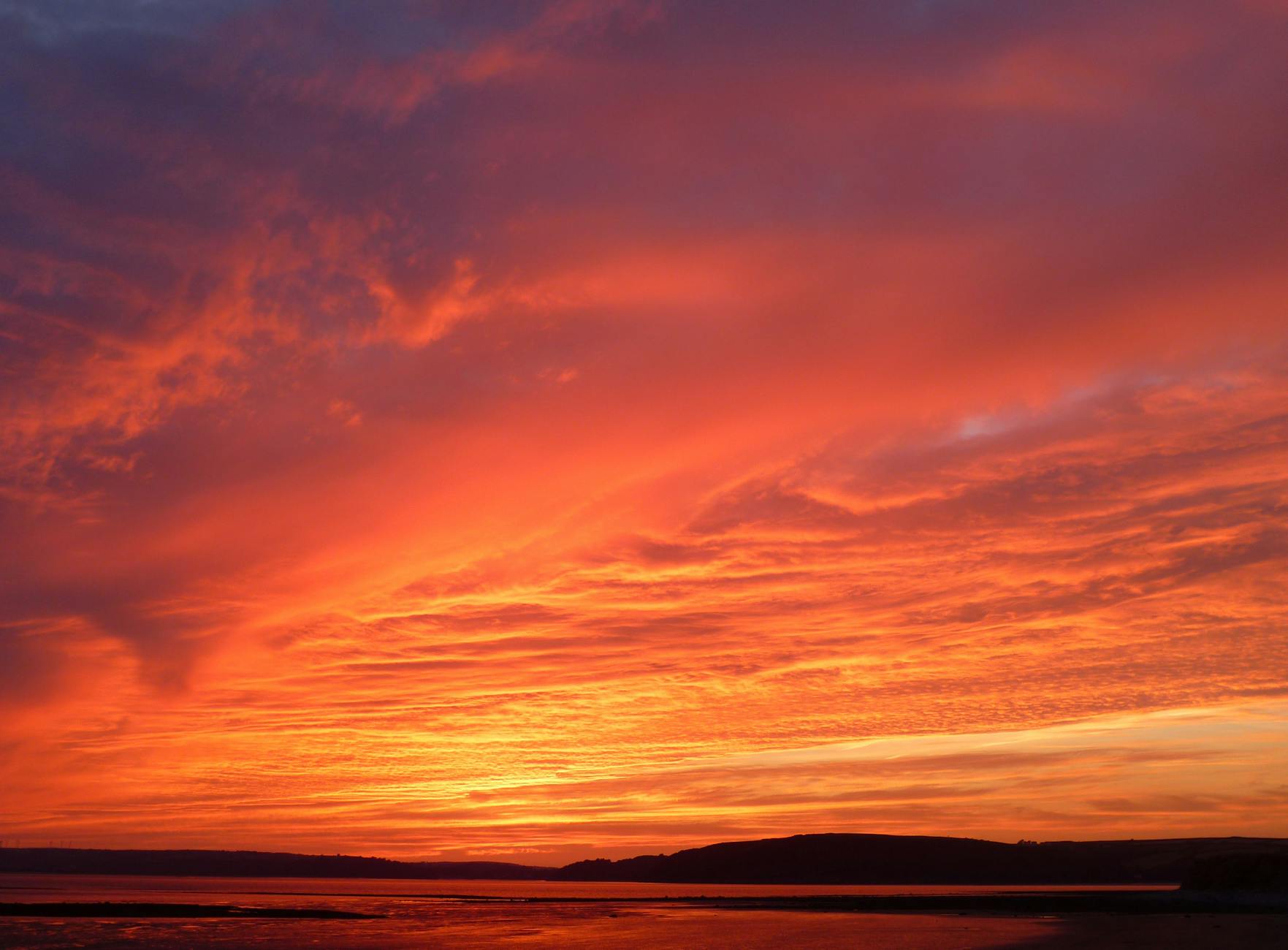
A luminous, tangerine, and blazing expanse

burst out to the left of the blue

from the harbour to the city as the western light

lowered itself behind concrete high-rises.

We watched from the hill,

took a seat on the park bench,

the lawn with its after-the-rain moistness

too wet to lie back on.

We knew we had to seize

this fleeting moment.

We were spectators of that sensational

display, after enduring the restrictions

that made us change and mutate,

shape-shifting during the months,

then the years, of the pandemic,

wearing us down, teaching us

adapt, adapt, adapt,

change, change, change.

Today we search for the brilliance

unfolding in the sky.

Copyright 2024 Libby Sommer

My Poem, ‘Breaking Out’

Have a read of my poem ‘Breaking Out’, first published in the Canberra Times Panorama Arts Section. ‘Breaking Out’ is one of the poems in my recently released second collection titled ‘Flat White, One Sugar‘ (Ginninderra Press).

I hope you enjoy it.

Breaking Out

See that white terrace house?

You could live in the attic there.

Yes, I like an eyrie, looking

out on the world. I wanted to be locked

in a tower, a princess in a fairy tale,

when I was a child.

I’m still the girl dreaming of breaking out.

Maybe she’s learnt to abseil now.

Some terraces have small colourful gardens

at the front. I prefer fragrant cut flowers

in a vase. I belong to

that discreet sect of law-breakers

who snip buds over a fence. A close escape

gives me an adrenaline kick.

Copyright 2024 Libby Sommer

My Poem, ‘What Happened to the Sun’

Have a read of my poem ‘What Happened to the Sun‘ first published in Quadrant Magazine. ‘What Happened to the Sun‘ is one of the poems in my debut poetry collection ‘The Cellist, a Bellydancer & Other Distractions‘ (Ginninderra Press).

I hope you enjoy it.

What Happened to the Sun:

We took that hot ball of glowing gases

at the heart of our solar system for granted,

so much intense energy and heat

bearing down on green city spaces

when she went out to walk the dog,

winter warmth brightening her face. Sometimes

under a large red gum she stopped

to watch a mother and son

play cricket or an elderly tennis player

limp towards the courts, ‘No running

today, eh?’ calls out his opponent. ‘I’ll keep

the ball on your forehand.’

Difficult to stay upbeat sometimes

when you see so much change. You

wish for things to be how they were before,

nourished by moon on water,

first stars, mountains, ocean,

a dog pulling on a lead under a bright sky,

beneath a cache of clouds,

wanting the time before,

before polar bears were in danger,

when, ignorantly, you basted your skin

in coconut oil on the hot sand,

before we were all bound by rules,

distanced in unusual ways

burning in the sun side by side

on a crowded beach.

Copyright 2024 Libby Sommer

Photo by Brett Jordan on Pexels.com

My Poem, ‘Words’

Have a read of my poem ‘Words’ first published in Quadrant Magazine. ‘Words’ is part of my second poetry collection ‘Flat White, One Sugar’ (Ginninderra Press) published earlier this year.

I hope you enjoy it.

Words:

Belly expansions and contractions,

turning our attention to sensations,

we remember the three things you said:

breathe light, breathe slow, breathe deep.

We take control. Above us

the air conditioner hums.

At your own pace,

no need to rush.

Next door a conference

of 43 dentists learn

sensation management.

I swallow the urge to laugh.

A full exhale,

let it all go.

Your words give comfort

as they enter the gaps

between in and out,

slowing down.

Everything will

be just fine.

Afterwards, the morning looks different.

Good work everyone.

Well done.

We roll up our mats,

head for our cars –

safe from the pain,

for now.

Copyright 2024 Libby Sommer

Photo by Negative Space on Pexels.com

My Poem ‘Twisted Tea’

Have a read of my poem ‘Twisted Tea’ first published in ‘For Ukraine: By Women of the World‘, a collection of powerful poetry and prose by all who identify as women about Russia’s invasion of Ukraine led by Russia’s President, Vladimir Putin.

I wrote the poem in 2022. ‘Twisted Tea’ is also one of the poems in my second poetry collection titled ‘Flat White, One Sugar‘, Ginninderra Press.

I hope you enjoy it.

Twisted Tea:

I splattered the last of my favourite

loose leaf tea all over the floor today,

when I lost my grip on the lid.

Twisted Oolong produced in Ukraine

it said on the label.

But it is a time of such sadness,

a spilt canister of loose leaf

is hardly worth mentioning.

So many shattered tea sets

buried in the rubble.

Ceramic pots and porcelain mugs,

smashed.

Fierce railroads bombed, buildings, farms.

Civilians tortured.

“Filthy scumbags,”

said President Zelensky.

“What else can you call them?”

I watch a woman sob on camera.

“Their soldiers are barbaric.

They don’t understand.

They are murderers.”

It is hard to consider sipping tea

without crying into the cup.

Will the small tea plantation

—out of the line of fire for now—

be spared?

I’m holding as tight as I can

to the thought that one day

we’ll be able to celebrate

with a pot of rare twisted oolong loose

leaf tea produced on a small farm

tucked away somewhere

in a corner of Ukraine.

Copyright 2024 Libby Sommer

Photo by koko rahmadie on Pexels.com

The Benefits of Poetry

I’m reposting this from the time when we were deeply in the midst of the pandemic. It’s worth having another read about the benefits of poetry:

‘Neurologists at Exeter University, using functional magnetic resonance imaging, found that reading poetry activated different brain regions to prose – even the lyrical prose we find in fiction. When the research participants read poetry, it lit up the regions of the brain variously linked to emotion, memory, making sense of music, coherence building and moral decision-making. Poetry, the study’s authors concluded, induces a more introspective, reflective mental state among readers than does prose.’ – Sarah Holland-Batt, Weekend Australian, 21–22 March 2020

If you feel you’re losing your ability to focus on a long book while confined indoors and surrounded by digital screens (as staying up to date on a global pandemic seems to command), try turning to poetry to nurse your shrinking attention span back to life.

In the Time of Pandemic

And the people stayed home.,

And they read books, and listened, and rested, and exercised, and made art, and played games, and learned new ways of being, and were still.

And they listened more deeply. Some meditated, some prayed, some danced.

Some met their shadows. And the people began to think differently.

And the people healed.

And, in the absence of people living in ignorant, dangerous, mindless, and heartless ways, the earth began to heal.

And when the danger passed, and the people joined together again, they grieved their losses, and made new choices, and dreamed new images, and created new ways to live and heal the earth fully, as they had been healed.

—Kitty O’Meara

‘Poetry is the quiet music of being human and in these days and nights when our humanity is fully vulnerable and exposed, poetry takes a small step forward. In our separate isolations, a poem is like the Tardis: bigger on the inside. Like spring – to recall TS Eliot – poetry mixes memory and desire.’ – Carol Ann Duffy, The Guardian

This poem by poet  Ian McMillan,  reminds of us of just what we lose each time a library is closed.

Adult Fiction

I always loved libraries, the quiet of them,
The smell of the plastic covers and the paper
And the tables and the silence of them,
The silence of them that if you listened wasn’t silence,
It was the murmur of stories held for years on shelves
And the soft clicking of the date stamp,
The soft clickety-clicking of the date stamp. I used to go down to our little library on a Friday night

In late summer, just as autumn was thinking about
Turning up, and the light outside would be the colour
Of an Everyman cover and the lights in the library
Would be soft as anything, and I’d sit at a table
And flick through a book and fall in love
With the turning of the leaves, the turning of the leaves.

And then at seven o’clock Mrs Dove would say
In a voice that wasn’t too loud so it wouldn’t
Disturb the books “Seven o’clock please …”
And as I was the only one in the library’s late summer rooms
I would be the only one to stand up and close my book
And put it back on the shelf with a sound like a kiss,
Back on the shelf with a sound like a kiss.

And I’d go out of the library and Mrs Dove would stand
For a moment silhouetted by the Adult Fiction,
And then she would turn the light off and lock the door
And go to her little car and drive off into the night
That was slowly turning the colour of ink and I would stand
For two minutes and then I’d walk over to the dark library
And just stand in front of the dark library.

From Talking Myself Home, published by John Murray, 2008

‘The astronomer and poet Rebecca Elson (January 2, 1960–May 19, 1999) was twenty-nine when she was diagnosed with non-Hodgkins lymphoma — a blood cancer that typically invades people in their sixties and seventies. Throughout the bodily brutality of the treatment, throughout the haunting uncertainty of life in remission, she met reality on its own terms — reality creaturely and cosmic, terms chance-dealt by impartial laws — and made of that terrifying meeting something uncommonly beautiful.

Rebecca Elson, 1987

‘When she returned her atoms to the universe, not yet forty, Elson bequeathed to this world 56 scientific papers and a slender, stunning book of poetry titled A Responsibility to Awe (public library) — verses spare and sublime, drawn from a consciousness pulling the balloon string of the infinite through the loop of its own finitude, life-affirming the way only the most intimate contact with death — which means with nature — can be.’ – Maria Popova

Elson’s crowning achievement in verse is the poem “Antidotes to Fear of Death,”

ANTIDOTES TO FEAR OF DEATH
by Rebecca Elson

Sometimes as an antidote
To fear of death,
I eat the stars.

Those nights, lying on my back,
I suck them from the quenching dark
Til they are all, all inside me,
Pepper hot and sharp.

Sometimes, instead, I stir myself
Into a universe still young,
Still warm as blood:

No outer space, just space,
The light of all the not yet stars
Drifting like a bright mist,
And all of us, and everything
Already there
But unconstrained by form.

And sometime it’s enough
To lie down here on earth
Beside our long ancestral bones:

To walk across the cobble fields
Of our discarded skulls,
Each like a treasure, like a chrysalis,
Thinking: whatever left these husks
Flew off on bright wings.

I hope you felt the positive benefits of reading these poems.

Photo by Ena Marinkovic on Pexels.com