Launch: Stories from Bondi

painting of girl lying on beach in torquoise bikini reading a book

I was very lucky to have award-winning Australian author Susanne Gervay OAM launch my 4th book STORIES FROM BONDI on 2 November at the Blue Mountains Heritage Centre.  Susanne and I first became friends about seven years ago when I stayed at her hotel in Woollahra for three weeks while recovering from major surgery. I’d mentioned our mutual friend Sharon Rundle and Susanne had said that anyone who was a friend of Sharon’s was a friend of hers. Susanne would notice me each morning in the corner of the cafe at the hotel working on my stories and she’d often come over and have a chat. Since that time she has continued to show an interest in my work and my writing career. She would encourage me to enter competitions and always remained positive about publication possibilities. Susanne is now one of my best friends. Lucky me.

It’s been a twenty year journey to book publication. I had five book length manuscripts written before I had one accepted for publication by Ginninderra Press. I am forever grateful to Stephen Matthews for giving me a chance. MY YEAR WITH SAMMY, the fifth book I’d written, went on to be Pick of the Week in Spectrum Books in the Sydney Morning Herald and was winner of the Society of Women Writers Fiction Book Award 2016.

So then I sent Stephen Matthews at Ginninderra Press manuscript numbers four, three, and two. He has published one book a year since 2015:  MY YEAR WITH SAMMY, THE CRYSTAL BALLROOM, THE USUAL STORY and now, STORIES FROM BONDI.

A massive thank you to my publisher.

And thank you to all those who supported me at the launch by buying copies of  my books.

In an animated entertaining presentation Susanne Gervay launched STORIES FROM BONDI by saying in her introduction:

‘Libby’s a red head. That’s the only thing I can think of for her extraordinary life. From my intense research, I know that redheads represent less than 2% of the population so they are a rare breed. They are sensitive, fiery, passionate, and also have more sex than blondes or brunettes. Sorry Libby, I learnt that from Cosmopolitan magazine.’

Susanne is a wonderful guest speaker. She had the whole room laughing wholeheartedly.

stories from bondi amazon cover image


‘Mountain Secrets’ launch

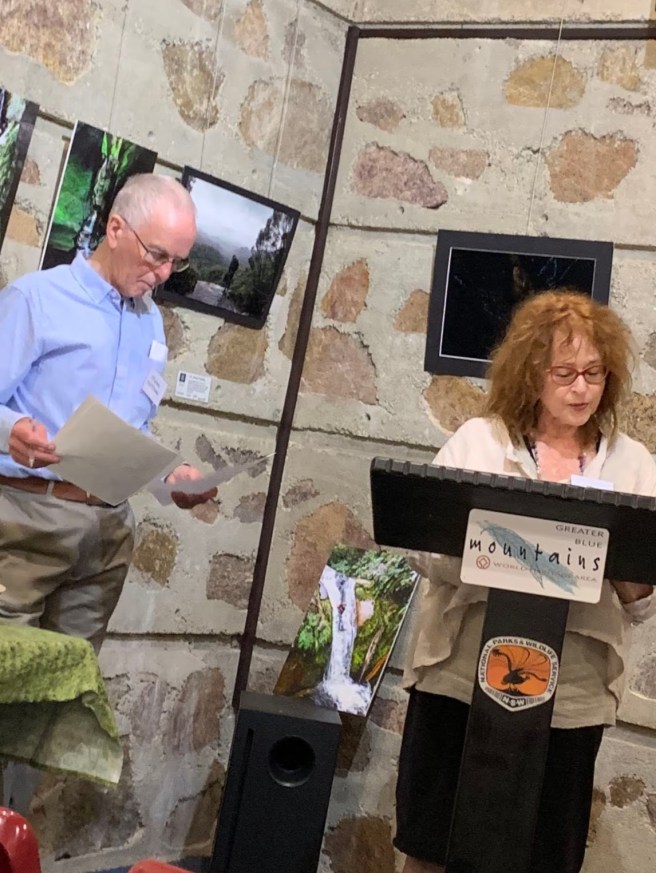
Libby Sommer reading her poem at podium watched by publisher Stephen Matthews
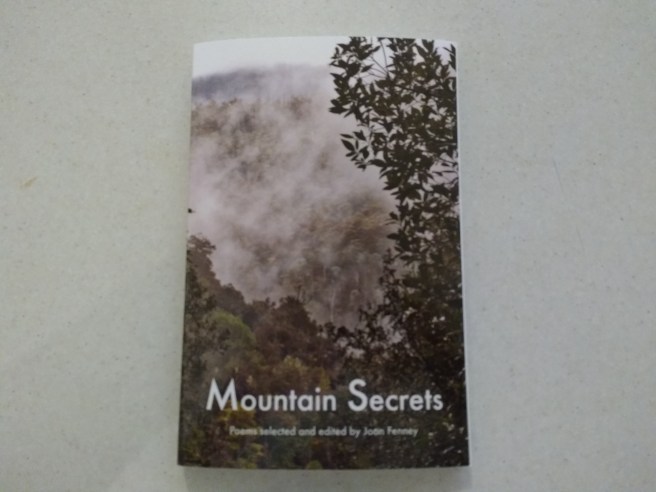
‘Mountains are constant but continually changing. Captive to the seasons, they reveal many faces: in winter shrouded in snow and mist, yet so visibly majestic in the summer months that they appear to touch the sky. Lost in clouds at times, so discernible at others. Places of solitude yet at the mercy of mountaineers who swarm them. Both revered and feared; mystical and earthy; elusive but tangible. Does the mystery of mountains lie in the many paradoxes that surround them? Join more than 150 poets from across Australia in a tantalising exploration of mountains around the world, real and imagined, literal and figurative.’ – Joan Fenney
That’s me reading my prose poem AMBER PUPPY at the Blackheath Heritage Centre for launch last Saturday of the anthology MOUNTAIN SECRETS (Ginninderra Press) edited by Joan Fenney. Publisher Stephen Matthews looks on.
In the Introduction to MOUNTAIN SECRETS Joan Fenney writes:
‘Mountains symbolise many aspects – overcoming obstacles, spiritual elevation, constancy, isolation and challenges. They inspire adventurers to scale their heights, and writers, lyricist, artists and photographers to portray them with words and images.’
A big thank you to Ginninderra Press for inviting all of us GP poets to bring our creativity to this anthology, exploring themes of love, loss, hurt, courage, awe, reverence and solitude. Such an honour to be included.
Mountain Secrets book cover

First Amazon Review of ‘Glass Walls’

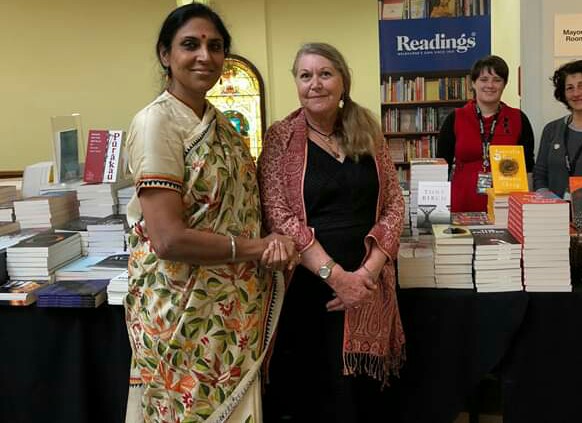
Editors Meenakshi Bharat and Sharon Rundle at launch of Glass Walls

First review on Amazon of GLASS WALLS, published by Orient BlackSwan, stories of tolerance and intolerance from the Indian sub-continent and Australia edited by Meenakshi Bharat and Sharon Rundle (pictured). Thrilled to see my short story HENRY received a special mention. GLASS WALLS was launched recently at the Australian Short Story Festival in Melbourne. Have a read of Punekar’s review:

“This collection of stories tackles a wide variety of subjects and is categorised into Family, Race, Gender, Religion and so on and that is why I enjoyed the book. One could pick and choose a story to read depending on one’s mood. I specifically liked the stories on Family and Gender. The stories on race brought out the dichotomy that exists in all of us, as mentioned in the introduction to the book. Right thinking people are determined not to be biased and want to do the right thing but the subconscious mind often has another agenda. The rational aspect of the personality loses out in certain circumstances. This is brought out in the stories on family too, particularly the story titled “The Wedding Gift”. Another story I liked was the one titled “Henry”. We behave in the most irrational ways but we are not bad people, not really, just human. All the stories are not equally good, but all of them touch something inside your heart.” – Punekar

GLASS WALLS is available from Indian publisher Orient BlackSwan.

Book shop supports local author


Exterior of Harry Hartog Bookseller

It’s so good to have the support of a local bookstore. Harry Hartog Bookseller at Bondi Junction keep my books in stock.

Bookshelves displaying New & Staff Favourites in Harry Hartog Bookseller

There’s my newly released STORIES FROM BONDI  in the ‘New & Staff Favourites’ section. Bottom shelf in the middle, next to Jeanette Winterson’s latest book.

If anyone would like to buy one of my books, they can be ordered from any book store. Otherwise order directly from publisher Ginninderra Press or online from Amazon, Book Depository and others.


Glass Walls anthology launch update

glasswalls cover

Exciting news from Meenakshi Bharat re launch of GLASS WALLS in India on Tuesday 24 September: ‘Her Excellency Ms Harinder Sidhu, the Australian High Commissioner in Delhi has kindly agreed to release Glass Walls.’

The Australian launch of GLASS WALLS will be Sunday 20 October in Melbourne as part of the Australian Short Story Festival.. I am honored to have a story included in this collection of stories of tolerance and intolerance from the Indian subcontinent and Australia. There’s my name on the back cover alongside literary greats such as David Malouf and Elizabeth Jolley.

So what is the Australian Short Story Festival?

The Australian Short Story Festival is an annual celebration of short stories in written and spoken forms. The Festival brings together local, national and international short story authors and oral storytellers in a culturally diverse and vibrant celebration of storytelling in the shorter form.

My favourite contemporary short story writer is Canadian Alice Munro. I have five of her collections on my bookshelves.

Alice Ann Munro is a Canadian short-story writer who won the Nobel Prize in Literature in 2013. Munro’s work has been described as having revolutionized the architecture of short stories, especially in its tendency to move forward and backward in time. Wikipedia

When it comes to the classics, it’s hard to beat the gigantic talent of writer James Joyce.

James Augustine Aloysius Joyce was an Irish novelist, short story writer, poet, teacher, and literary critic. He contributed to the modernist avant-garde and is regarded as one of the most influential and important authors of the 20th century. Wikipedia

His most often referred to short story is The Dead.

“The Dead” is the final short story in the 1914 collection Dubliners by James Joyce. The other stories in the collection are shorter, whereas at 15,952 words, “The Dead” is almost long enough to be described as a novella.

This is the last paragraph of James Joyce’s, “The Dead” and an explanation of what it means by sparknotes:
Yes, the newspapers were right: snow was general all over Ireland. It was falling on every part of the dark central plain, on the treeless hills, falling softly upon the Bog of Allen and, farther westward, softly falling into the dark mutinous Shannon waves. It was falling, too, upon every part of the lonely churchyard on the hill where Michael Furey lay buried.
—“The Dead”

‘In the very last paragraph of “The Dead,” and hence the last paragraph of Dubliners, Gabriel gazes out of his hotel window, watching the falling snow and reflecting on his wife Gretta’s recent confession about her childhood love, Michael Furey. Previously in the story, Gabriel had been intoxicated and energized by Gretta’s preoccupied mood, which reminded him of their courtship, but her outburst of sobbing undermines his self-assurance. This quiet moment of contemplation portrays Gabriel’s muted, hushed acceptance that he was not Gretta’s first love, and that in fact he has never felt love at all. The blanket of snow suggests this sense of numbness in Gabriel’s character—he is literally frigid to emotion—but also the commonality of this trait. The snow does not fall only outside of Gabriel’s window, but, as he envisions it, across the country, from the Harbor of Dublin in the east, to the south in Shannon, and to the west. In other words, everyone, everywhere, is as numb as he is.

‘In this image, Gabriel also contemplates his mortality, and how his living experience intersects with death and the dead. Snow falls everywhere in Ireland, including on the grave of Michael Furey, who has so recently entered his life. In his speech at his aunts’ party, Gabriel had called for the need to live one’s life without brooding over the memories of the dead, but here he realizes the futility of such divisions and the lack of feeling they expose in his character. Gretta cannot forget the pain of the dead in her life, and her acute suffering illustrates for Gabriel that the dead are very much a part of the lives around him, including his own. That Gabriel’s reflections occur in the nighttime adds to the significance of this quote. As he now broods over the dead, he hovers in that flickering state that separates the vibrancy of one daytime from the next. The darkness above the ground mirrors the darkness beneath the ground, where coffins of the dead rest.’ – sparknotes

I love a well written short story. What about you?
The Writing Life – Reblog

Featured Image -- 5029

One of my favourite books on the writing process is The Writing Life by Annie Dillard. It’s a small but passionate guide to the terrain of a writer’s world.

The Writing Life by Annie Dillard book cover

Annie Dillard has written eleven books, including the memoir of her parents, An American Childhood; the Northwest pioneer epic The Living; and the nonfiction narrative Pilgrim at Tinker Creek winner of the 1975 Pullizer Prize.  A gregarious recluse, she is a member of the American Academy of Arts and Letters.


“For non-writers, The Writing Life is a glimpse into the trials and satisfactions of a life spent with words. For writers, it is a warm, rambling, conversation with a stimulating and extraordinarily talented colleague.””–Chicago Tribune””A kind of spiritual Strunk & White, a small and brilliant guidebook to the landscape of a writer’s task…Dillard brings the same passion and connective intelligence to this narrative as she has to her other work.”– “Boston Globe””For her book is…scattered with pearls. Each reader will be attracted to different bright parts…Gracefully and simply told, these little stories illuminate the writing life…Her advice to writers is encouraging and invigorating.”– “Cleveland Plain Dealer””The Writing Life is a spare volume…that has the power and force of a detonating bomb…A book bursting with metaphors and prose bristling with incident.”– “Detroit News”


Dillard begins:

When you write, you lay out a line of words. The line of words is a miner’s pick, a woodcarver’s gouge, a surgeon’s probe. You wield it, and it digs a path you follow. Soon you find yourself deep in new territory. Is it a dead end, or have you located the real subject? You will know tomorrow, or this time next year. You make the path boldly and follow it fearfully. You go where the path leads. At the end of the path, you find a box canyon. You hammer out reports, dispatch bulletins. The writing has changed, in your hands, and in a twinkling, from an expression of your notions to an epistemological tool. The new place interests you because it is not clear. You attend. In your humility, you lay down the words carefully, watching all the angles. Now the earlier writing looks soft and careless. Process is nothing; erase your tracks. The path is not the work. I hope your tracks have grown over; I hope birds ate the crumbs; I hope you will toss it all and not look back.

Which books on writing process have you found to be inspiring?

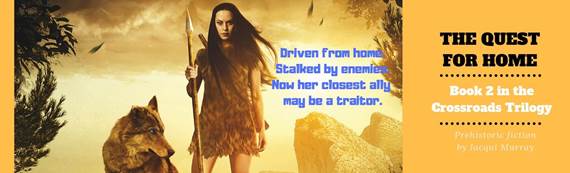
Congratulations to Jacqui Murray on her latest book, The Quest for Home

The Quest for Home book cover

Jacqui Murray is the author of the popular Building a Midshipman, the story of her daughter’s journey from high school to United States Naval Academy, the Rowe-Delamagente thrillers, and the Man vs. Nature saga. She is also the author/editor of over a hundred books on integrating tech into education, adjunct professor of technology in education, blog webmaster, an Amazon Vine Voice,  a columnist for  NEA Today, and a freelance journalist on tech ed topics. Look for her next prehistoric fiction, In the Footsteps of Giants, Winter 2020, the final chapter in the Crossroads Trilogy.

Summary

I’m excited to be part of the launch of Jacqui’s latest book, The Quest for Home. Here’s what it’s about:

Chased by a ruthless and powerful enemy, Xhosa flees with her People, leaving behind her African homeland, leading her People on a grueling journey through unknown and perilous lands. As they struggle to overcome treachery, lies, danger, tragedy, hidden secrets, and Nature herself, Xhosa must face the reality that her most dangerous enemy isn’t the one she expected. It may be one she trusts with her life. 

The story is set 850,000 years ago, a time in prehistory when man populated Eurasia. He was a violent species, fully capable of addressing the many hardships that threatened his survival except for one: future man, the one destined to obliterate any who came before.

Based on a true story, this is the unforgettable saga of hardship and determination, conflict and passion as early man makes his way across Eurasia, fleeing those who would kill him. He must be bigger-than-life, prepared time and again to do the impossible because nothing less than the future of mankind is at stake.

Book information:

 Title and author: The Quest for Home

Series: Book 2 in the Crossroads series, part of the Man vs. Nature saga

Genre: Prehistoric fiction

Available at: Kindle US   Kindle UK   Kindle CA   Kindle AU

Social Media contacts:

Amazon Author Page:        https://www.amazon.com/Jacqui-Murray/e/B002E78CQQ/

Blog:                                       https://worddreams.wordpress.com

Instagram:                             https://www.instagram.com/jacquimurraywriter/

LinkedIn:                                http://linkedin.com/in/jacquimurray

Pinterest:                                http://pinterest.com/askatechteacher

Twitter:                                   http://twitter.com/worddreams

Website:                                 https://jacquimurray.net


Release of my new collection


painting of girl lying on beach in torquoise bikini reading a book

My new book STORIES FROM BONDI, a collection of stories set mostly in Bondi, is now available for pre-order. Target US are even advertising it! Don’t know how that happened. The book will be released as a paperback on 13 September but can be purchased as Kindle Edition from Amazon and as an eBook from Booktopia and other online sites now. As a paperback it can be ordered from bookstores, online and from the publisher, Ginninderra Press.

And here’s my author page on Amazon. Click the link. Feeling pretty proud. I think my four books look fabulous together, if I may say so myself 🙂


Back Cover Blurb: ‘Stories from Bondi’

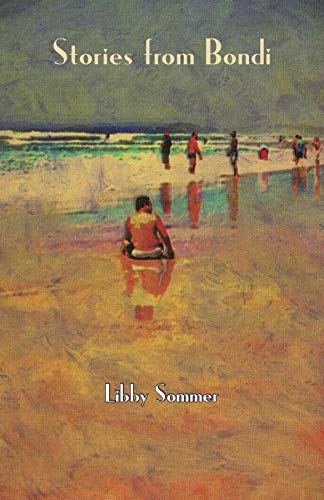
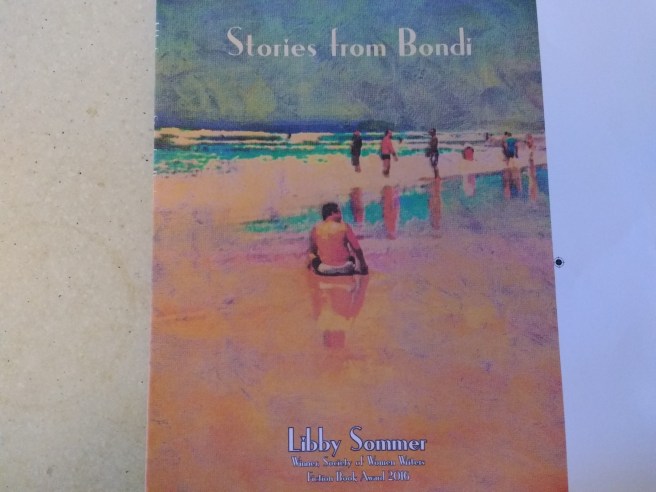
book cover of 'Stories from Bondi' showing people on the sand by the sea

Here is the back cover blurb for STORIES FROM BONDI due for September release by Ginninderra Press. What do you think?

Libby Sommer’s sensitively-drawn characters live and breathe within the echoes of the everyday. Stories from Bondi centre on women – their joys, doubts, loves and realisations. The foibles of human nature, with all their pathos and humour, are laid bare for the reader.

“From the opening story ‘Art and the Mermaid’, to a moving piece set in a health retreat that closes the collection, these stories beautifully capture the intimacies of women. Like My Year With Sammy and The Crystal Ballroom, this is classic Sommer.” – SUSANNE GERVAY OAM, author.

So what is a book blurb?

blurb is a short promotional piece accompanying a piece of creative work. It may be written by the author or publisher or quote praise from others. Blurbs were originally printed on the back or rear dust-jacket of a book, and are now found on web portals and news websites. – Wikipedia

A big thank you to fellow author Roslyn McFarland for giving me feedback on the blurb.  I’d only reworked it about a thousand times, but still Ros was able to help me make it clearer.


Cover Reveal: Stories from Bondi

book cover of 'Stories from Bondi' showing people on the sand by the sea

In the final stretch now towards publication next month of STORIES FROM BONDI. I received final proofs from the publisher Ginninderra Press. They are now being read by another set of eyes before posting back to Adelaide. 19 contemporary stories about men and women and life and the whole damn thing set mostly in and around Bondi. 

There will be a launch of the book in the Blue Mountains on 2 November. Details to follow.

So what are final proofs?

‘Proofs created by the printer for approval by the publisher before going to press are called final proofs. At this stage in production, all mistakes are supposed to have been corrected and the pages are set up in imposition for folding and cutting on the press. To correct a mistake at this stage entails an extra cost per page, so authors are discouraged from making many changes to final proofs, while last-minute corrections by the in-house publishing staff may be accepted.

‘In the final proof stage, page layouts are examined closely. Additionally, because final page proofs contain the final pagination, if an index was not compiled at an earlier stage in production, this pagination facilitates compiling a book’s index and correcting its table of contents.’ – Wikipedia

I’m very excited and can’t help boasting that this is my fourth book in four years. Phew. What a marathon it’s been!