Every once in a while, when I’m scratching around for something new to write, I make a list of the things I obsess about. Thankfully, some of them change over time, but there are always new ones to fill the gap.
It’s true that writers write about what they think about most of the time. Things they can’t let go: things that plague them; stories they carry around in their heads waiting to be heard. Continue reading →
One can never change the past, only the hold it has on you. And while nothing in your life is reversible, you can reverse it nevertheless – Merle Shain.
1.
I’m imagining a cloudy autumn morning. There’s a room. Half office, half bedroom. Not too large and not too small. The windows of the room face east and look out towards the ocean across the expanse of a green gully.
I picture a woman sitting on a bed with pillows behind her back. The windows are open. Perhaps it is Saturday morning. On the bedside table is a mug of tea and a photograph of the woman’s daughter on her wedding day.
Sometimes there is a person in one of my creative writing classes who is obviously very talented. I can bring to mind one in particular. You could sense people holding their breath as she read, and often her hands shook. The writing process opened her up. She said she had wanted to write for years. She was so excited about writing that she straight away wanted to write a book. I said to her, slow down. Just practice writing for a while. Learn what this is all about.
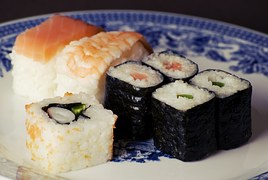
In Japan becoming an itamae of sushi requires years of on-the-job training and apprenticeship. After five years spent working with a master or teacher itamae, the apprentice is given his first important task, the preparation of the sushi rice.
Writing, like becoming a Sushi Chef, is a life’s work and takes a lot of practice. The process is slow, and at the start you are not sure what you are making.
Futomaki (“thick roll” – rice on inside, nori on the outside)
Uramaki (“inside-out roll” – rice on outside, nori on the inside)
Temaki (“hand roll” – cone-shaped roll)
That’s how it was for me. I thought I could jump in and write a book in 6 months. In fact, it’s taken me 20 years to write a publishable manuscript: ‘My Year With Sammy’, the story of a difficult yet sensitive child, published by Ginninderra Press last year.
So cut yourself some slack before you head off on a writing marathon.
Writing is like learning to prepare the rice for sushi: the apprenticeship is long, and in the beginning you are not sure whether a Futomaki, a Uramaki or a Temaki will be the end result.
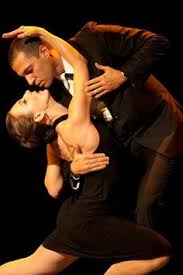
Tango is a passionate dance. A conversation between two people in which they can express every musical mood through steps and improvised movement. (Source Unknown)
1.
Just before nine o’clock in the evening, Sofya gets out of her car and looks up at the sky. She has sensed a shift in the weather. There is another breath of wind, a whispering in the air, but the clouds are stagnant against the dark night. She turns and moves downhill towards the club, ejecting the chewing gum out of her mouth with a loud splat into the bushes, feels the first drops of rain on her bare arms. She passes the public phone box where frangipanis lie on the grass, picks one up, sniffs at it, throws it back, then quickly enters the club. Continue reading →
Sometimes when people read my stories they assume those stories are me. They are not me, even if I write in the first person. They were my thoughts and feelings at the time I wrote them. But every minute we are all changing. There is a great freedom in this. At any time we can let go of our old selves and start again. This is the writing process. Instead of blocking us, it gives us permission to move on. Just like in a progressive ballroom dance: you give your undivided attention to your partner—keep eye contact for the time you are dancing together—but then you move on to the next person in the circle. Continue reading →
‘Being a parent is harder than being a Prime Minister,’ said British Prime Minister Tony Blair. His 16 year old son had just been arrested after being found lying drunk on the footpath in London’s West End.
In the second month after the baby was born Kate came out to meet her mother wiping her hands on her grey tracksuit pants. Kate’s hair was tied back off her face revealing tiny white milk spots above her cheeks. Anny told her that already she looked so slim and good. Kate ran her hand over her rounded stomach, arched her back and stuck her belly out at her mother.
It is essential to separate the creator and the editor, or inner critic when you practice writing, so that the creator has plenty of room to breathe, experiment, and tell it like it really is. If the inner critic is being too much of a problem and you can’t distinguish it from your authentic writing voice, sit down whenever you find it necessary to have some distance from it and put down on paper what the critic is saying, put a spotlight on the words—“You have nothing original to say, what made you think you could write anything anyone would want to read, your writing is crap, you’re a loser, I’m humiliated, you write a load of rubbish, your work is pathetic, and your grammar stinks …” On and on it goes!
Say to yourself, It’s OK to feel this. It’s OK to be open to this.
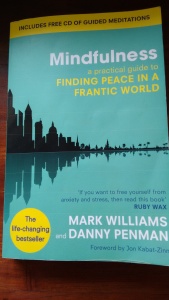
You can learn to cultivate compassion for yourself during this internal process by practicing Mindfulness Meditation. Sit up straight, close your eyes, bring your awareness to your inner experience. Now, redirect your attention to the physical sensations of the breath in the abdomen … expanding as the breath comes in … and falling back as the breath goes out. Use each breath to anchor yourself in the present. Continue, concentrating on the breath for several minutes. Now, expand your field of awareness to include the words of the inner critic. Turn your attention to where in your body you feel the unpleasant thoughts, so you can attend, moment by moment, to the physical reactions to your thoughts.
“Stay with the bodily sensations, accepting them, letting them be, exploring them without judgment as best you can.”—Mindfulness, Mark Williams and Danny Penman.
Every time you realise that you’re judging yourself, that realisation in itself is an indicator that you’re becoming more aware.
May-Ling calls out to me as I get out of the car. She is fourteen months old and her sweet voice bounces out through the screen door where she is standing and out on to the street in North Ryde where her Chinese grandparents live. I climb over the small white iron gate that leads to the front door. Every week she waits for my arrival after Playschool has finished on television. May-Ling has soft chubby legs and tiny artistic fingers. Her hands are so well co-ordinated that now she is able to grasp a spoon and feed herself. She has almond shaped brown eyes and very white teeth that you get to see very often because she laughs so much. In her pink and white gingham floppy hat that she wears to the park, she looks even cuter. What a cutie, say people on the street when I take her out for a walk in the stroller. What a cutie.
I am the apprentice grandmother. The Chinese grandmother shows me what to do. She might correct my nappy changing skills, show me that I have done the nappy up too tight, that I need to be able to slip my hand in between the nappy and May-Ling’s fat tummy. Or she might show me how I need to rock May-Ling back and forth and pat her gently on the bottom so she’ll fall asleep in my arms before putting her into the cot.
At a literary lunch this week I overheard someone say: ‘The thing to do is put the idea in your subconscious. Your brain will do the work.’
The thing is, it takes time for our experience to make its way through our consciousness. For example, it is hard to write about a journey while you are still in the midst of the adventure. We have no distance from what is happening to us. The only things we seem to be able to say are ‘having a great time’, ‘the weather is good’, ‘wish you were here’. It is also hard to write about a place we just moved to, we haven’t absorbed it yet. We don’t really know where we are, even if we can walk to the train station without losing our way. We haven’t experienced three scorching summers in this country or seen the dolphins migrating south along the coast in the winter.
Anny saw him again today. He looked older. Their paths crossed on the cliffs between Bronte and Bondi. He walked with a woman she had never seen before. The woman had long beautiful legs – bronzed a clear nut-brown. She was wearing a man’s undershirt and brown shorts and had a crochet bag hanging loosely from a black nylon strap draped over her hips. Her hair was long and it flicked out in golden corkscrews over her shoulders and down her back. They were laughing. He walked right past Anny and kept right on walking.
2.
The beach seems unusually quiet today apart from a yoga class taking place on the grassy verge behind the Pavillion. On the ocean, surfers in wetsuits loll motionless on surfboards. On the sand, a gaggle of seagulls stand rigid as Irish dancers. And over on the rocks at the southern end of the beach other seagulls laze in the early sun in groups of three or four, or six or eight – their chests puffed out, feathers bristling in the spring breeze, as they nestle into the face of the rock. Continue reading →




 Libby Sommer, Author