
Happy New Year dear Friends and Followers. Thank you so much for your ongoing support and enthusiasm during the year. Very much appreciated. Best wishes to you all for good health and happiness in 2017.
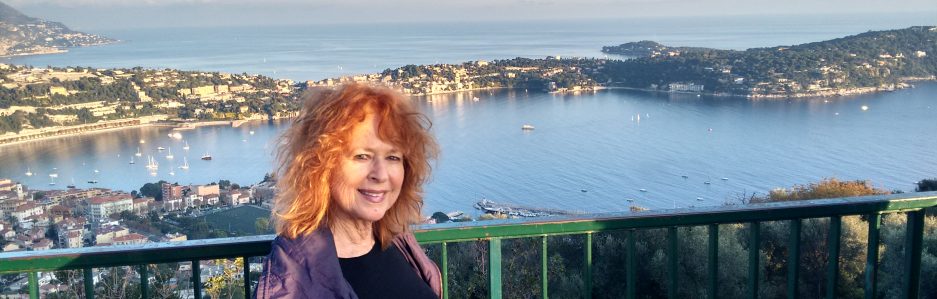
Happy New Year dear Friends and Followers. Thank you so much for your ongoing support and enthusiasm during the year. Very much appreciated. Best wishes to you all for good health and happiness in 2017.
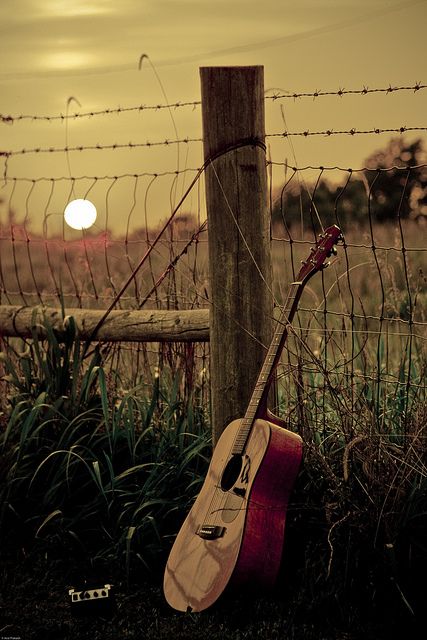
It was six o’clock in the evening when she finally passed the wind turbines. There, at last, stood Lake George, where long-woolled sheep grazed the field and to the west the Brindabella mountain range was coloured grey and pink by the setting sun. On she drove along an ink-black strip of road where, on either side, tall green-grey eucalypts had formed a welcoming archway. The way flattened out then curved into a narrow empty road. Not one person did she see, not one building, just a handful of brown-bellied cows and later a group of kangaroos standing formidable and still in the headlights. The turn for Watson wasn’t clearly sign-posted but she felt confident in turning east along the row of liquid ambers in autumn bloom that took her to the cabins. Continue reading
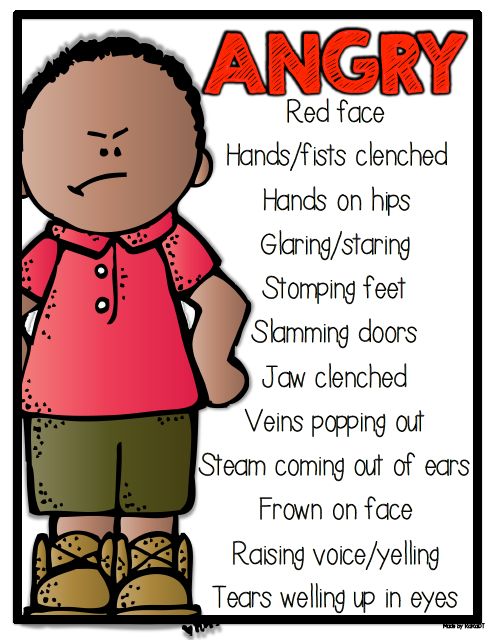
This is an old one, but a good one. What does it mean exactly? It means don’t tell us about loneliness (or any of those complex words like dishonesty, secrecy, jealousy, obsession, regret, death, injustice, etc) show us what loneliness is. We will read what you’ve written and feel the bite of loneliness. Don’t tell us what to feel. Show us the situation, and that feeling will be triggered in us.
When you take your child to school on their first day you may find yourself teary and relieved at the same time. Put into words what you see: the child’s face, the wave at the gate, the other mothers saying their goodbyes, another child coming up to take your son by the hand. We will get what you’re trying to say without you telling us directly.
The how-to-write books tell us to use our senses when we write stories: sight, sound, smell, touch. Writing from the senses is a good way to penetrate your story and make friends with it. Don’t tell us about something, drop deep, enter the story and take us with you.
What about you? Do you consciously bring the senses into your creative writing?
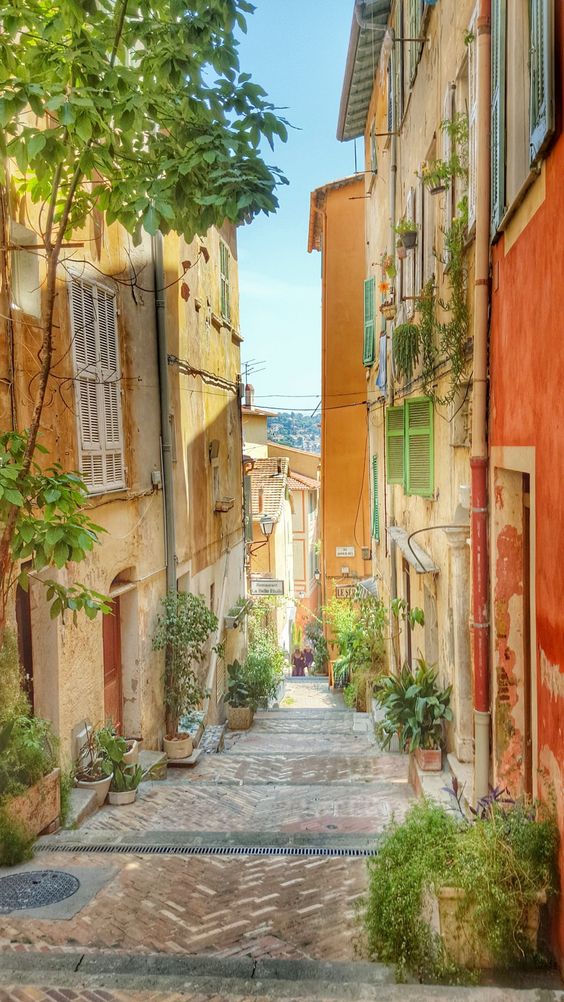
Although she loved her nieces and nephews, it was when she turned thirty-nine that driving young children around in her car seemed to make her nervous—a tightening in the stomach. “Aunty Helen, would you like to take Naomi to see The Muppets? Are you free?” Always these requests from one of her sisters looking tired and desperate—one of her younger siblings, they used to be so close—and Helen would force herself to make the effort to be the good aunty. The responsibility of passengers in her car always made her anxious. She was anxious about one thing or the other most of the time, but wanted to appear selfless and generous-spirited. Her availability, or non-availability, was noted, itemised, either in her favour, or against her. She didn’t want to be labelled self-obsessed. She had entered an era when the nicest thing a person could say to her was, “You’re a fabulous aunty. The kids love you.” Continue reading

“Writers live twice. They go along with their regular life, are as fast as anyone in the grocery store, crossing the street, getting dressed for work in the morning. But there’s another part of them that they have been training. The one that lives everything a second time. That sits down and sees their life again and goes over it. Looks at the texture and the details.” – Natalie Goldberg

A nice quiet weekend? the woman downstairs said. What do you mean? I said, through the open back door, a bag of rubbish in each hand. She smoothed her ironing on the board and said, They weren’t around over the weekend—with the baby. She looked happy. I’m lucky living on the top floor, I said. She nodded towards the other side of the building. Jim isn’t so lucky—he’s got the woman upstairs, she said, When he plays the piano and she thumps on the floor. She put the iron back on its stand. She’s heavy-footed, that woman. Bang, bang, bang. I hear her coming down the stairs every morning at six, and the slam of the front door.
That night the wind knocked my vase off the window ledge. I lay awake wondering if the noise of the smash had woken up the people underneath—the ones whose barbecuing sends smoke and disgusting meat smells into my unit. Nothing clings to your furniture like the stink from last week’s burnt fat. Sorry about the crash, I muttered to the floor, It was the wind.
Copyright © 2016 Libby Sommer
Winning entry UTS Alumni Short Short Story Competition 2014
First published UTS Writers Connect

As the world mourns the death of legendary songwriter and musician Leonard Cohen, his art lives on.
The Hallelujah singer’s death last week sparked a massive outpouring of grief across the internet, from fans and fellow musicians alike, including Beck, Courtney Love, A Tribe Called Quest’s Q-Tip and Nick Cave.
“For many of us, Leonard Cohen was the greatest songwriter of them all. Utterly unique and impossible to imitate, no matter how hard we tried,” Cave wrote.
News of Cohen’s death, coming on the heels of the US presidential election results, was also praised by tweeters as the singer’s last compassionate corrective to hateful political chatter, bringing the world’s attention back to the redeeming beauty of art.
“The date of Leonard Cohen’s death is not a coincidence,” went one widely shared tweet. “He did it so we’d stop talking about an imbecile, and instead focus on poetry.”- Sydney Morning Herald
Leonard Cohen made his name as a poet before he came to worldwide attention as a singer and songwriter.
He wrote the poems in Book of Longing his first book of poetry in more than twenty years during his five-year stay at a Zen monastery on Southern California’s Mount Baldy, and in Los Angeles, Montreal, and Mumbai. This dazzling collection is enhanced by the author’s playful and provocative drawings, which interact in exciting, unexpected ways on the page with poetry that is timeless, meditative, and often darkly humorous. An international sensation, Book of Longing contains all the elements that have brought Cohen’s artistry with language worldwide recognition. – Book Depository
The poems in Book of Longing show the full range of one of the most influential and enigmatic writers of his generation.
The book of longing
I can’t make the hills
The system is shot
I’m living on pills
For which I thank G-d
I followed the course
From chaos to art
Desire the horse
Depression the cart
I sailed like a swan
I sank like a rock
But time is long gone
Past my laughing stock
My page was too white
My ink was too thin
The day wouldn’t write
What the night penciled in
My animal howls
My angel’s upset
But I’m not allowed
A trace of regret
For someone will use
What I couldn’t be
My heart will be hers
Impersonally
She’ll step on the path
She’ll see what I mean
My will cut in half
And freedom between
For less than a second
Our lives will collide
The endless suspended
The door open wide
Then she will be born
To someone like you
What no one has done
She’ll continue to do
I know she is coming
I know she will look
And that is the longing
And this is the book – Leonard Cohen
Who do you think should have won the Nobel Prize for Literature, Bob Dylan or Leonard Cohen?

I’d looked out the top-floor hospital window towards Coogee to the night sky lit by fireworks and saw the miserable face of the moon and thought that I’d never felt as detached from life as at that moment. At the same time, I realised that I probably felt so despicable due to the weeks spent lying in hospital and the excruciatingly slow and painful road to recovery. By sheer force of will, I stopped looking at the dark mirror of the moon. No one could have told me how much the distant celebrations, the sound of the explosions and the changing shapes and colours of the fireworks could jolt me into the present and away from the unbearable lethargy, the severed muscles and tendons and the nausea caused by the drugs and pain killers. Was it that I could sense, without glancing up again, that clouds were making their way across the moon and that made me realise: how would it be to feel this would be your last new year?
Copyright © 2016 Libby Sommer
First published in Quadrant

It was a great honour to be awarded the Society of Women Writer’s Fiction Book Award 2016 for my debut novel, My Year With Sammy (Ginninderra Press) at a ceremony in the historic Dixson Room at the State Library of NSW Very exciting. Was presented with a beautiful crystal trophy 🙂

So, here’s the thing: choose something in particular to write about. For example, what it felt like having a tennis lesson after a twenty year break. Give us the specifics. Dig deep for the details, but at the same time be aware of the world around you. As you focus on what you’re writing, at the same time stay conscious of your surroundings: the white painted cane Bentwood chairs in the café, the cool breeze from under the door on your sandaled feet, the hum of the traffic outside. Just add a sentence every now and then about the trees that overlooked the tennis courts while you were having a tennis lesson. When we focus on our writing it is good. Seeing the colour of the sky when you toss the ball gives breathing space to your story.
If you are sitting in Meditation you calm the butterfly mind by paying attention to your thoughts, giving them space by acknowledging them before returning to the breath, in and out through the nostrils. In the act of slowing down your breathing, as best you can, you remain open so that you are receptive to awareness of sounds as they arise: sounds near, sounds far, sounds in front, behind, to the side, above or below.
With every breath you take, you feel the air, the sound of the ball as it hits the racket, the players on the other courts.
We should always be living in the present, not by ignoring the world around us, but by paying close attention. It is not easy to stay alive to ‘what is’. When we slow things down in our writing, it is good practice.
What about you? Do you find a daily meditation practice assists your writing practice?
 Libby Sommer, Author