Writing Tip: Writing In Cafes

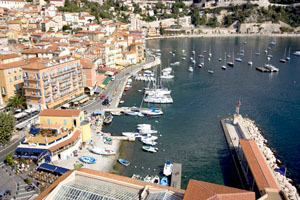
cafes, buses, palm trees, bright blue sky, cars on Bronte Road, Bronte

I am sitting in a café across the road from the beach in Bronte, Sydney.  This stretch of road has a whole row of cafes side by side facing the sea.  This is my favourite kind of writing place:  one where I can sit comfortably for a long period of time and where the owners of the café know me and welcome me.  This café is owned by a Brazilian man and his wife and has comfortable upholstered bench chairs with a direct view of the Pacific Ocean.  For my two-hour writing session my choice could be a traditional Brazilian dish such as Coxinha, Feijoda or Moqueca.  Or a cocktail like Caipirinha or  Caipiroska.  I must order something and it must be more that a Soy Cap, because I plan to be here for a long time.  I want the owners of the café to know I appreciate the time and the space they are allowing me.

However, today I’ll be very boring and order poached eggs on gluten-free bread 🙂

Why go to all this trouble to find a place to write?  Why not just stay home and work?  Because it’s good to get out and have a change of scene.  I find I need to be happy and relaxed when I’m creating on the page and sitting in a café with a pleasant vibe works for me.  Other writers need silence in order to concentrate, but I need to feel I am out and about in a beautiful place having a good time before the creative juices flow.

Strangely, writing in a café can help to increase concentration.  The busy café atmosphere keeps the sensory part of you occupied and content, so that the hidden, quieter part of you that composes and focuses is allowed to do its work.  It is something like being cunning when trying to get a spoonful of food into a resistant toddler’s mouth:  You pretend to be an aeroplane with all the sound effects and movements before landing the food-laden plane inside the child’s mouth.  Mission accomplished.

It is preferable not to turn up at a cafe for a cup of coffee and a writing session at the cafe’s busiest times, like breakfast or lunch. Go at the in between hours when they are pleased to see you because they don’t want the place to look deserted. The beach cafes are places I frequent in spring, autumn and winter, but not much in the summer. Far too crowded and noisy.

There is a real art to finding the right place to write. For me the best place  is one that has comfortable chairs, a pleasant outlook (preferably a view of the the sky and/or green or water). A welcoming, almost homely, atmosphere.

What about you?  Do you need to be at your desk in total silence to write, or do you like to experience the swell of humanity around you—to be surrounded by other human beings?  Or at home listening to a particular kind of music? Let me know in the comments and please share this post with a friend if you enjoyed it. 

Path to Publication

Libby Sommer holding a copy of The Crystal Ballroom in book store

Interviewer: I would like you to tell me about your Path to Publication from first idea to finished book. I’d like to know your inspirations and how The Crystal Ballroom became more than an idea. I also want to know about your writing process. Do you sit at a desk 9-5 or at a cafe during snatched lunches? Did you write the book in a spurt of three months … how long did it take from start to finish? Did you have cold readers, send it to an agent or to a publisher? Were you accepted straight away? How many rewrites and drafts?

Me:  I usually write stories about places and people that I know well. I take real events and characters but change things around and shake them all about and make things up. So, for The Crystal Ballroom, I had been dancing Argentine tango, rock and roll, jive, swing, Latin American and ballroom dancing for many many years. I used to dance five nights a week. I’d drive all over Sydney for technique classes and to dance at different venues. The place, ‘The Crystal Ballroom’, is a fiction but this dance hall becomes a character in the novel. I was inspired by the people I met at the dances and the politics of the ‘dance scene’.

I don’t sit at a desk 9-5 but I am extremely disciplined with my writing. I write 7 days a week. I treat my manuscript like an old friend, someone I need to stay in touch with regularly. I also exercise 7 days a week. So my routine is to go to a cafe before the gym with a print out of the previous day’s work. I edit from this hard copy and write the next scene. After the gym I walk home, type out the revisions, print out, go to another cafe in the afternoon. Repeat the process. I only work in the AM on a Sunday 🙂

It took me 4 years to write The Crystal Ballroom. The chapters are self-contained, so I was able to send some of the discreet episodes out to Quadrant magazine for publication.

I belong to a weekly feedback writing group where we critique each others’ work. So I write to that weekly deadline. In the early years, when I’d finish a manuscript I’d pay an editor or mentor to read it and give me feedback. I’d also ask a couple of friends to read it and give feedback. I never send a manuscript to an agent or a publisher that hasn’t been reworked 20 to 100 times – that includes the rewriting along the way.

My Year With Sammy was my first published book. It was accepted straight away by Ginninderra Press, a small but prestigious publisher (thought-provoking books for inquiring readers). It was my fifth book length manuscript. I had sent the previous books to agents and large publishers. All my confidence had been knocked out of me by all the rejections leading up to the fifth manuscript. Now though, I have Ginninderra Press who seem to like my work. They also published The Crystal Ballroom this year. The Usual Story will be published by Ginninderra Press next year.

It’s an extremely difficult road to publication and some people decide to self-publish rather than continue to be rejected. But other people are able to write a best-seller, an airport book that sells lots of copies, so big publishers like their work very much. Unfortunately, or fortunately, my books are classified as literary fiction, so a very small market. Big publishers are not interested in books that do not conform to the norm. Not enough money in it for them.

I am very grateful to have my small but prestigious publisher.

The Writing Life


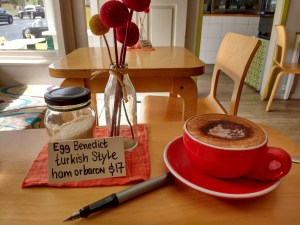
pen and cup of coffee on cafe table

It’s a tough gig being a writer. Lots of isolation, lots of intense concentration, lots of rejection from publishers and agents. Sitting in a cafe with coffee and fountain pen is one of the good bits.

Why do I write? It’s a good question to ask yourself.

  1.  Because I’m a fool.
  2.  Because I want to impress my old school friends.
  3.  So people will like me.
  4.  So my friends will hate me.
  5.  I’m no good at speaking up.
  6.  So I can invent a new way of looking at the world.
  7.  In order to write the great Australian novel and become famous.
  8.  Because I’m a nut case.
  9.  Because I’m an undiscovered literary genius.
  10.  Because I have something to tell.
  11.  Because I have nothing to tell.

Hemingway has said, ‘Not the why, but the what.’ It’s enough to know you want to write. Write.

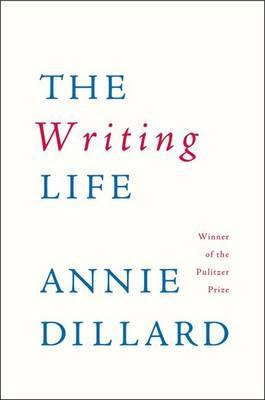
One of my favourite books on the writing process is The Writing Life by Pullitzer Prize winning Annie Dillard. It’s a small and passionate guide to the terrain of a writer’s world.

Book cover 'The Writing Life' by Annie Dillard

 Dillard begins:

When you write, you lay out a line of words. The line of words is a miner’s pick, a woodcarver’s gouge, a surgeon’s probe. You wield it, and it digs a path you follow. Soon you find yourself deep in new territory. Is it a dead end, or have you located the real subject? You will know tomorrow, or this time next year. You make the path boldly and follow it fearfully. You go where the path leads. At the end of the path, you find a box canyon. You hammer out reports, dispatch bulletins. The writing has changed, in your hands, and in a twinkling, from an expression of your notions to an epistemological tool. The new place interests you because it is not clear. You attend. In your humility, you lay down the words carefully, watching all the angles. Now the earlier writing looks soft and careless. Process is nothing; erase your tracks. The path is not the work. I hope your tracks have grown over; I hope birds ate the crumbs; I hope you will toss it all and not look back.

“A writer who waits for ideal conditions under which to work will die without putting a word on paper.” —E. B. White

There is a famous story in the Zen world:

The student, newly arrived at the monastery, asks the master, “What work will I do as I seek enlightenment?”

The master replies, “Chop wood, carry water.”

“And what work will I do once I achieve enlightenment?” asks the student.

“Chop wood, carry water,” says the master.

So how does this stay apply to the writing life? A writer writes. That’s all there is to it.

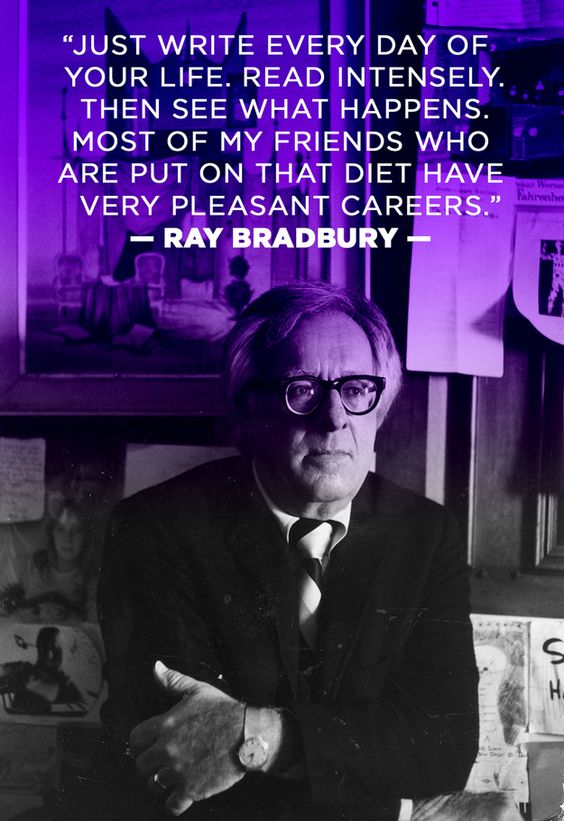
“You’ll fail only if you stop writing.” – Ray Bradbury

Harry Potter book cover

Rowling has said that Harry Potter “simply fell into [her] head” and “all of the details bubbled up in [her] brain.” She “[had] never felt such a huge rush of excitement and [she] knew immediately that it was going to be such fun to write.”

Sounds like a fairy tale beginning to a fairy tale ending, doesn’t it? Perhaps that’s all ordinary readers need to know about Rowling’s path to literary fame, but us writers need more.

We need to know the not-so-glamorous version of what it was like to write Harry Potter. We need to appreciate how disciplined Rowling had to be to develop her idea into seven hefty books. We have to know that she wasn’t lazily sipping mochas for two decades while jotting down a continuous stream of words like a literary Fountain of Youth.

All too often we convince ourselves that we would write more if only we were well-known, or had more money, or could find more time. But none of that is what makes a writer a writer. It’s simply that a writer writes. – The Friendly Editor

writing quote by Ray Bradbury with author pic

That’s why I write. What about you? Let me know in the comments and please share this post with a friend if you enjoyed it. 

One-Page Review of The Crystal Ballroom

author holding copy of The Crystal Ballroom


I was delighted to see a one-page review of my novel ‘The Crystal Ballroom‘ in October Quadrant magazine (available now in newsagents or on-line).

Penelope Nelson writes:

‘Have you ever heard Latin American music coming from an upper room over a shop, and lingered briefly at the sign about dancing classes? Perhaps you have seen people–a man in built-up shoes or a woman with a surfeit of silver bangles–heading for an old town hall after dark. The world of ballroom dancing and tango lessons has its own etiquette and hierarchies. Libby Sommer’s new fiction ‘The Crystal Ballroom’ lifts the lid on the delights and pitfalls of this fascinating sub-culture …

‘Sommer has great skill in creating atmosphere. The music, the swirling scents of aftershave and sweat, the decor of ballrooms, flats, motels and shared tents are powerfully evoked …

‘Some of the best passages in the book express the joy of dancing:

We’re practising walking the length of the hall. Alberto says that in Buenos Aires students of tango spend two years just learning to walk properly.  “Extend forward,” he says, “step forward, only placing the weight on the extended leg at the last moment, toes pointed, sides of the feet staying connected on the floor.” Then backwards with a straight leg, torso pulled up, chest up and out, and with a partner again, always there’s that special connection with a partner.

Hopefully, this wonderful review by Penelope Nelson will give sales of the book a boost. ‘The Crystal Ballroom’ is available directly from Gininnderra Press, in bookstores, and online.

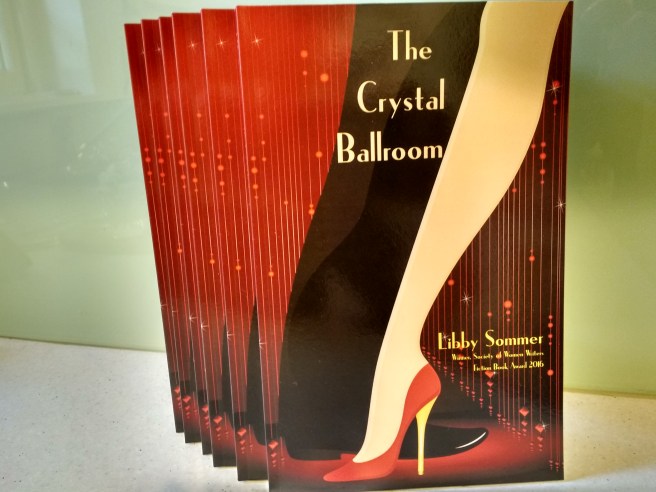
red and black The Crystal Ballroom book cover


3 of the Best: Finding the Writer’s Magic

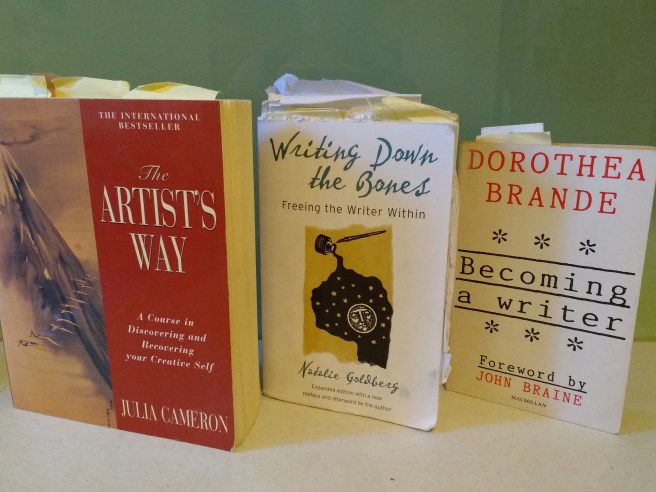
three book covers: The Artist's Way, Writing Down the Bones, Becoming a writer

So much advice out there on writing process but these three books, old ones but good ones, are my favorites. You can see how well-loved they are by how many pages are marked with stickers. I’ve used the books many times when teaching my ‘Writing from Within’ course where we try to harness the unconscious by falling into an artistic coma.

1.

Have you ever longed to be able to draw or paint, write or compose music? In ‘The Artist’s Way’ by Julia Cameron you can discover how to unlock your latent creativity and make your dreams a reality.

‘The Artist’s Way’  provides a twelve-week course that guides you through the process of recovering your creative self. It dispels the ‘I’m not talented enough’ conditioning that holds many people back and helps you to unleash your own inner artist.

‘The Artist’s Way’ helps demystify the creative process by making it part of your daily life. It tackles your self-doubts, self-criticism and worries about time, money and the support to pursue your creative dream.

2.

In ‘Writing Down the Bones’ by Natalie Goldberg, the secret of creativity, she makes clear, is to subtract rules for writing, not add them. It’s a process of “uneducation” rather than education. Proof that she knows what she’s talking about is abundant in her own sentences. They flow with speed and grace and accuracy and simplicity. It looks easy to a reader, but writers know it is the hardest writing of all.’ – Robert Pirsig

‘Writing Down the Bones’  Natalie Goldberg’s first book, sold millions of copies and has been translated into twelve languages. For more than thirty years she practiced Zen and taught seminars in writing as a spiritual practice.

3.

‘Becoming a writer’ by Dorothea Brande is a reissue of a classic work published in 1934 on writing and the creative process. It recaptures the excitement of Dorothea Brande’s creative writing classroom of the 1920s. Decades before brain research “discovered” the role of the right and left brain in all human endeavor, Dorothea Brande was teaching students how to see again, how to hold their minds still, how to call forth the inner writer.

‘Refreshingly slim, beautifully written and deliciously elegant, Dorothea Brande’s Becoming a Writer remains evergreen decades after it was first written. Brande believed passionately that although people have varying amounts of talent, anyone can write. It’s just a question of finding the “writer’s magic”–a degree of which is in us all. She also insists that writing can be both taught and learned. So she is enraged by the pessimistic authors of so many writing books who rejoice in trying to put off the aspiring writer by constantly stressing how difficult it all is.

‘With close reference to the great writers of her day–Wolfe, Forster, Wharton and so on–Brande gives practical but inspirational advice about finding the right time of day to write and being very self disciplined about it–“You have decided to write at four o’clock, and at four o’clock you must write.” She’s strong on confidence building and there’s a lot about cheating your unconscious which will constantly try to stop you writing by coming up with excuses. Then there are exercises to help you get into the right frame of mind and to build up writing stamina.

‘This is Dorothea Brande’s legacy to all those who have ever wanted to express their ideas in written form. A sound, practical, inspirational and charming approach to writing, it fulfills on finding “the writer’s magic.”‘ – John Gardner

I hope these recommendations are helpful. Do you have useful books on writing process you would add? Let me know in the comments and please share this post with a friend if you enjoyed it.

Another great review for The Crystal Ballroom


The Crystal Ballroom book covers

I was delighted to read another wonderful and insightful review of The Crystal Ballroom this morning. It’s on Goodreads.

Here’s an extract:

An intriguing book, neither a collection of short stories nor a novel, but a series of vignettes – snapshots − of women, no longer young, but who are determined to wring every drop of verve and excitement out of life. Most of the action is revealed in conversations over coffee or drinks, between the protagonist, Sofia and her friend Ingrid. The ‘glue’ holding the story – or rather stories − together is a love of ballroom dancing and the venues in which such events are held, in particular the Crystal Ballroom, which is a character in its own right. 

In this unusual book Libby Sommer puts women’s psyches under the microscope – their hopes and dreams, fears and foibles – yet always with a deft touch and a sympathetic ear. 

You can read the whole review here.

Writing from Within

Trees and shrubs leading to glass door of Brahma Kumaris Centre
Brahma Kumaris Centre for Spiritual Learning

I’m running a writing workshop this Saturday at the Brahma Kumaris Centre for Spiritual Learning in Wilton, New South Wales. It is part of the Society of Women Writers Retreat weekend. I’ve titled my course ‘Writing from Within’ because the aim is to tap into the right side of the brain, leaving aside that nasty critical left side, and really getting to the heart of what you want to write. I’ve run workshops like this before. Usually I use a combination of meditation techniques, and a guided colour exercise for relaxation and then spontaneous writing, or timed writing. It’s truly amazing what people write when they are able to get into the zone and not be held back by negative thinking.

These are the rules of timed writing according to Natalie Goldberg in ‘Writing Down the Bones’:

  1. Keep your hand moving. (Don’t pause to reread the line you have just written. That’s stalling and trying to get control of what you’re saying.)

  2. Don’t cross out. (That is editing as you write. Even if you write something you didn’t mean to write, leave it.)

  3. Don’t worry about spelling, punctuation, grammar. (Don’t even care about staying within the margins and lines on the page.)

  4. Lose control.

  5. Don’t think. Don’t get logical.

  6. Go for the jugular. (If something comes up in your writing that is scary or naked, dive right into it. It probably has lots of energy.)

Should be a excellent weekend featuring publisher Catherine Milne and presentations from authors Emily Maguire, Susanne Gervay, Kathryn Heyman, Libby Hathorn, Beverley George.

book cover of Writing Down the Bones by Natalie Goldberg

Writing Tip: A Sense of Place

writing desk with keyboard, screen and printer in front of window
My home office

I’m sitting at my writing desk this spring morning in Sydney thinking about the need to ground our writing in a sense of place, whether landscape or cityscape.

How often have you heard someone say of a book they loved:  ‘I felt like I was there.’

Even if you relocate the poodle tied to a fake-cane chair, the sound of a game of tennis, the table of older men after their regular Sunday match at the café overlooking the tennis courts at Cooper Park that you drank a lemongrass and ginger tea at in Sydney into a café in a story in another state and time, the story will have originality and believability.  ‘But that café was in Sydney, I can’t transport it to Adelaide.’  But you can.  You can have flexibility with specific detail.  The mind is able to transport details, but using actual places that you experienced will give your writing authenticity and truthfulness.  It grounds your work in place, giving life and vitality to your writing, rather than a whole lot of exposition that floats in the air.

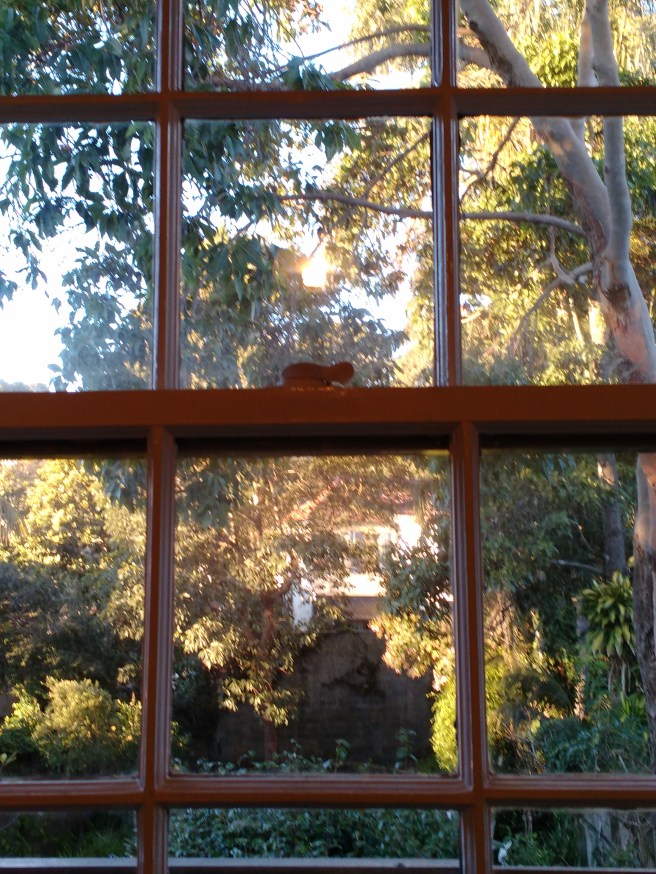
trees and house seen outside French paneled window
looking out the window from my writing desk

 If you don’t create evocative settings, your characters seem to have their conversations in vacuums or in some beige nowhere-in-particular. –  Jerome Stern

Creation of the physical world is as important to your story as action and dialogue.  If your readers can be made to see the hand-knitted socks or the row of vitamins on the kitchen benchtop, the scene becomes alive.  Readers pay attention.  Touch, sound, taste, and smell make readers feel as if their own feet are warm under the cold sheets.

Place situates the story in your reader’s mind.  Fiction that seems to happen in no particular place often seems not to take place at all. –  Jerome Stern

I hope this tip on creating a sense of place is helpful. Do you have any suggestions you would add? Let me know in the comments and please share this post with a friend if you enjoyed it.

2 Years Rewriting Short Story

close up of September Quadrant magazine cover

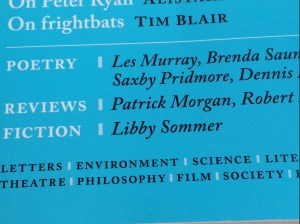
My short story On Valentine’s Day appears in the September Quadrant available now in newsagents and good book stores. It took two years of rewriting before the story was accepted for publication. In Friday’s mail I received my contributor’s copy and a generous cheque. My name is on the front cover. Always a thrill. It took many years of my stories appearing in Quadrant before my name made it to the cover 🙂

The first paragraph of On Valentine’s Day reads:

You had to get out of them occasionally, those Australian country towns with the funny names:  Wagga Wagga, Wee Waa, Woy Woy. Once, after a devastating week wiped out more than $4 trillion from the global stock exchanges, one of the local papers boasted a banner headline:  WAGGA WAGGA WOMAN WEDS WOY WOY TOY BOY. You had to make an effort from time to time to get out, even if it meant flying all the way across the Nullarbor to go to a Valentine’s Day party.


My critique group will recognize the first paragraph. We meet weekly at the New South Wales Writers Centre to give and receive feedback on two pages of our writing. I brought sections of the 4,000 word On Valentine’s Day many times to the Women Writers Network at the Centre. Two dear friends also read the  story and commented. Very much appreciated. More than once my two friends read the whole of On Valentine’s Day and offered constructive criticism. I couldn’t have got the story to a publishable standard without my writing group and my two friends. Lucky me.

Quadrant is a highly regarded literary magazine: http://quadrant.org.au/september-quadrant-now-sale/

Quadrant blue magazine cover

I can’t emphasize enough how useful it is to have a weekly writing group. I work to that deadline. We take a couple of pages each and have 12 minutes to read and receive feedback. I think of it as ‘off Broadway’ and ‘on Broadway’.  Famous comedians like Jerry Seinfeld and Woody Allen say they test their material out on an ‘off Broadway’ audience before performing ‘on Broadway’.

picture of the New South Wales Writers Centre with trees in foreground
New South Wales Writers Centre

What about you? Are you in a writing group? Do you find it useful?

I Wrote 5 Books Before Publication

fountain pen on page of writing

I wrote five book length manuscripts before one was finally accepted for publication by Ginninderra Press, a small but prestigious publisher. Rejection didn’t stop me from writing.

‘You write, you re-write, you edit, you tweak and when it’s perfect, you submit. And then you get rejected. Many times, maybe by a person who didn’t even read it. Rejection is painful because it instantly devalues your creation. Someone says this isn’t worth publishing. Rejectees, take heart. Many now-famous writers have been rejected before they made it big. Stephen King wrote his first novel, “Carrie,” and it was rejected 30 times. Rejections were so devastating that he threw the manuscript in the trash. “Chicken Soup for the Soul” was rejected 140 times. Margaret Mitchell’s “Gone With The Wind” was rejected by 38 publishers (and she did give a damn). James Joyce’s “Dubliner” was rejected 18 times and took nine years before it reached publication.’ – Ronald H. Balson

There are days when you feel like giving up and is seems that you are not making any progress. It’s during days like these, that sheer determination and persistence is all that’s left.

“Nothing in this world can take the place of persistence. Talent will not; nothing is more common than unsuccessful people with talent. Genius will not; unrewarded genius is almost a proverb. Education will not; the world is full of educated derelicts. Persistence and determination alone are omnipotent. The slogan “press on” has solved and always will solve the problems of the human race.” – Calvin Coolidge

Some writers continually submit the same manuscript until it is accepted. Others chose to do a more polished draft before sending it out again. A few learn from the lessons of submissions, to write a completely new book. What we all have in common is a persistence to never give up on our dream. Some decide to self-publish.

I’m very happy to say that persistence has paid off for me, and a third manuscript has now been accepted for publication by Ginninderra Press . ‘The Usual Story’ will be available in bookstores and online in July 2018.

As the saying goes: a writer writes. Writers continue to write.

A dear friend, who is also a former mentor, wrote this to me recently:  Libby, I’m not sure how you found your way to Ginninderra, but what a blessing for you and for readers! I was thinking the other day of your commitment for so many years when the door to publishing a book just wouldn’t open, and how much I admire your resolve and, of course, your amazing talent! Wonderful that the books are in the world now.

I hope this reminder about persistence is helpful. Do you have any tips you would add? Let me know in the comments and please share this post with a friend if you enjoyed it.