5 Tips: Should You Write a Short Story or Novel?

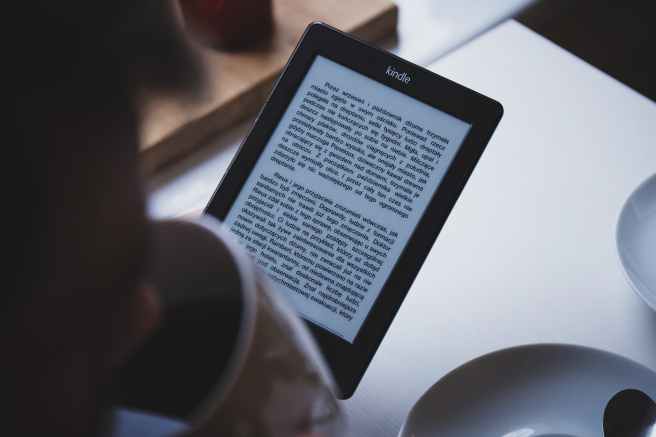
adult book book store bookcase

Should you write short stories or work on a novel? Some say the difference between a short story and a novel is in the pacing. Are you a sprinter or a long distance runner?

Even though a short story and a novel have many similarities, such as characters, dialogue, plot, etc., there are aspects that a short story must have that a novel can live without. You can be looser when writing a novel, take your time building suspense, revealing information about the characters, and meander your way to the ending. The short story writer doesn’t have this freedom. Every sentence counts. The short story is an art form. It needs special skills and talents on the part of the author that novels do not.

And then there are novels-in-stories. My last two books, The Crystal Ballroom (2017) and The Usual Story (2018), are novels-in-stories:

‘While the short story pauses to explore an illuminated moment, and the novel chugs toward a grand conclusion, the novel-in-stories moves in spirals and loops, a corkscrewing joy ride.’ – Danielle Trussoni

Here are 5 tips on whether you should write a short story or a novel from Elizabeth Sims, Writer’s Digest

1. DURATION OF STORY
Obviously, the short story is short; the novel is long. But while short fiction typically ranges from 1,000–5,000 words, there’s another kind of length to discuss: time frame. One of the most prevalent characteristics of a short story is a concentrated time frame. A few hours, a day, a week. A short story that spans years or generations risks leaving the reader unsatisfied.

The novel, on the other hand, is the ideal form for a story that is literally extended in length. If you want to explore the effects of time on your characters, the novel is the more suitable vehicle.

So consider: How much time might your story require?

2. NUMBER OF CHARACTERS
Counting characters might seem simplistic, but actually it’s one of the best criteria for determining the scope of your story. If your cast keeps growing as you flesh out your plot—let’s say you’ll be portraying a large family, or a complex group—then a short story won’t serve. You simply don’t have room in 2,000 or even 7,000 words to draw more than a few characters effectively, giving each one enough presence for the reader to keep them straight, let alone relate
to them.

On the flip side, beware of relying on just a select few characters to carry a novel. On one hand, you’ll be able to develop those characters deeply, but on the other, you’ll risk losing readers who are restless for quicker pacing.

What about point of view? In a novel, the number of points of view is up to you. For short stories, it’s sensible to stick with the classic single POV, either first person or third limited. Briefer stories can also work well with the POV shifting between two characters, but when you get to three or more, the varying perspectives can dilute the power of the story.

3. PLOTS AND SUBPLOTS
I once had an editor advise me, as I was revising one of my early novels, to add more characters. I played around with the idea. As soon as I’d decided to add a few fresh faces and give them something to do, I realized that what my editor had really asked for was more plot.

Ding. More characters equal
more action.

Most short stories have but one plot. The very best, however, have what I call a plot-and-a-half—that is, a main plot and a small subplot that feeds in a twist or an unexpected piece of business that adds crunch and flavor to the story as
a whole.

Consider how much plot you’ve got worked out so far. Does one plot strand, or perhaps a plot-and-a-half, feel just right? Or is your story straining to bust out and explore territory you haven’t seen yet? Which leads us to …

4. THEMES
Coincidentally, when I got the assignment to write this piece, I’d been rereading Anton Chekhov’s short stories. My copy, a sublime little clothbound volume issued by the Modern Library in 1932, features marginalia written by previous owners. In the blank half-page after “Grief,” a story about a bereaved hackney driver and his callously abusive passengers, someone wrote, “Second-lowest man has one job in life: to keep the lowest man down.”

Now that is an incisive reading of the story. One vest-pocket-sized tale was all the great Chekhov needed to pierce our hearts with that truth. Just like Chekhov, in a short story you should be trying to get at one or two poignant aspects of being human. In a novel, you can create characters, let them loose, follow them and see what they do. If you feel your story will be more a journey than a statement, you may be leaning toward a novel.

5. COMMITMENT
Writing a novel could take a year or more, and whether you publish it or not, it’s a huge investment of time, energy, and mental and emotional strength. If you feel you’ve got a novel on your hands, consider these most important questions:

Do you lie awake thinking about your story? Do your characters come to you at odd moments and stand silently, waiting for you to do something with them?

Are you fully committed to doing whatever it takes to pour out your best? (It bears mentioning that in order to get your best, you often must pour out your worst—and be willing to toss it all in the trash one day.)

Are you afraid of wasting your time on something that might not succeed? (Everybody is.) The real question: Will fear turn you away from this task, or will you push through fear, risking failure but opening untold possibilities?

Will you be sorry if you don’t have a go at it?

Elizabeth Sims adds, ‘Whichever form you select, novel or short story, you should work with joy, with passion and without haste. And hey, you can always change your mind. Writing is a journey.’

For further reading, check out my posts Writing Is Like Becoming a Sushi Chef and Writing Tip: Use Your Obsessions. And to make sure not to miss anything from Libby Sommer Author you can follow me on Facebook  or Instagram.
You Can Read Forever on a Kindle

kindle technology amazon tablet

I never thought I’d prefer reading on a Kindle to reading a real book. It’s just that it’s so quick and easy to keep downloading to Kindle, and the books are not expensive. If you finish a novel at 10pm and are desperate to read the next book in the series, as I was with the Elena Ferrante novels, it takes mere seconds to have a new story in your hands.

At the moment I’m reading Sapiens: A Brief History of Humankind by Yuval Noah Harari. Fabulous. Highly recommended.

Dymocks says about Sapiens,

What makes us brilliant? What makes us deadly? What makes us Sapiens? This bestselling history of our species challenges everything we know about being human.

Planet Earth is 4.5 billion years old. In just a fraction of that time, one species among countless others has conquered it. Us.

We are the most advanced and most destructive animals ever to have lived. What makes us brilliant? What makes us deadly? What makes us Sapiens?

In this bold and provocative book, Yuval Noah Harari explores who we are, how we got here and where we’re going.

Sapiens is a thrilling account of humankind’s extraordinary history – from the Stone Age to the Silicon Age – and our journey from insignificant apes to rulers of the world

‘It tackles the biggest questions of history and of the modern world, and it is written in unforgettably vivid language. You will love it!’ Jared Diamond, author of Guns, Germs and Steel

Amazon says about Sapiens:

A Summer Reading Pick for President Barack Obama, Bill Gates, and Mark Zuckerberg

From a renowned historian comes a groundbreaking narrative of humanity’s creation and evolution—a #1 international bestseller—that explores the ways in which biology and history have defined us and enhanced our understanding of what it means to be “human.”

One hundred thousand years ago, at least six different species of humans inhabited Earth. Yet today there is only one—homo sapiens. What happened to the others? And what may happen to us?

Most books about the history of humanity pursue either a historical or a biological approach, but Dr. Yuval Noah Harari breaks the mold with this highly original book that begins about 70,000 years ago with the appearance of modern cognition. From examining the role evolving humans have played in the global ecosystem to charting the rise of empires, Sapiens integrates history and science to reconsider accepted narratives, connect past developments with contemporary concerns, and examine specific events within the context of larger ideas.

Dr. Harari also compels us to look ahead, because over the last few decades humans have begun to bend laws of natural selection that have governed life for the past four billion years. We are acquiring the ability to design not only the world around us, but also ourselves. Where is this leading us, and what do we want to become?

A terrific book. I think reading is one of the best way to relax, especially during this crazy holiday period.

For tips on writing process, check out my posts  Writing Tip: Use Your Obsessions and Writing Is Like Becoming a Sushi Chef.  And to make sure not to miss anything from Libby Sommer Author you can follow me on Facebook or Instagram.

5 Ways to Recharge Your Creative Batteries


beach scene

Feel like you are running on empty? Take time to recharge. You do it for your phone. Why not do it for your self? Sometimes the best way to recharge our batteries is to unplug them. Take a break this holiday season.

Here are 5 suggestions to recharge your creative batteries by Audience Productions

1. CONSUME MEDIA

Sometimes, when you’re stuck on a creative problem, the  best thing to do is see how someone else tackled it. That might involve reading a scene in a novel that gets across a lot of exposition without being boring, or discovering how different line thicknesses makes comics come to life. In a film we’re working on, there’s a transitional scene where the main characters are walking through a park, that needs to show time has passed. So we watched a similar scene in The King’s Speech, which handled the problem in a really cool way. We won’t replicate it exactly, of course, but it has given us some good ideas on making our park scene work well.

2. GET PHYSICAL

If you’re getting restless or bored, go to the gym and bliss out with something physical instead of mental. On the treadmill or cross-trainer, you don’t have to look at emails or think about work. We like to rewatch a rugby league game that our team has won, but you might get the same effect from listening to music or a stand-up comedy album.

3. WORK ON A PERSONAL PROJECT

When client-based work hits a snag, or you feel you’re not giving it your best, turn to a project of your own. We came up with an idea in Sedona. The place we were staying had a litter of Hemingway kittens – who have six fingers on their paws instead of five. We came up with an awful image of them getting drowned in a bag, and that spurred the idea of how horrific it would be to find that, which led to a film idea. This week, we took a day away from other tasks to work on developing the script, which has given us some time to subconsciously reflect on other jobs in the queue instead of brute-forcing solutions.

4. GET A FRESH PERSPECTIVE

If you’re working on something, get other people involved indirectly by posing some specific questions related to their area of expertise. For example, our Sedona script’s main character is a little girl, who finds the bag of kittens. There’s a house number on the bag that spurs the story, so we needed to know how young kids are when they start recognising numbers. So we contacted a friend of ours, who’s a mother of three girls, through Facebook. We ended up chatting for most of the morning, asking questions like, “Would you let your daughter ride alone on a bike?” to find out what would be realistic. That was really helpful, took the story in different directions than we anticipated, and kept us enthused about the project.

5. GO TO THE PUB

Editing is a solitary pursuit, and it can be easy to wall yourself off from other people. The best solution is to go somewhere with friends – which doesn’t have to be the pub, of course – and take in some new experiences, get some fresh stimuli and soak up the outside world. Who knows? You might rescue a bag of drowning kittens and get a great idea for a film!


See you next year.

For further reading, check out my posts  Writing Tip: The Feedback Sandwich and Make Friends With Your Feelings.  And to make sure not to miss anything from Libby Sommer Author you can follow me on Facebook  or Instagram.

 

Small Fictions

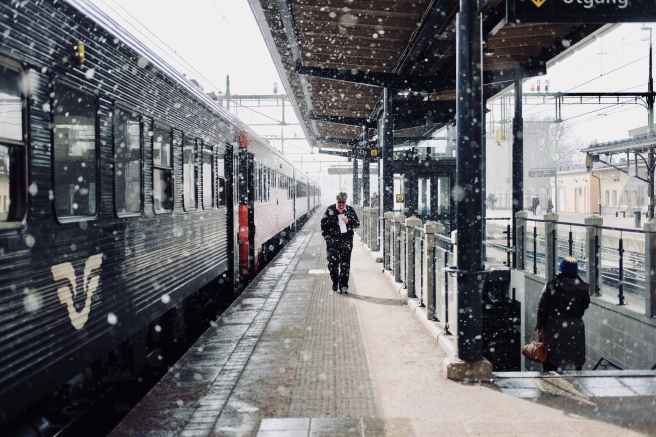
man walks beside train

Have you tried the short short form yet? I might have mentioned before that I am working on a book length series of small fictions – flash fictions and prose poems, some already published in literary journals.

This is one of my flash fictions, THE BACK PACK first published in Quadrant magazine in July 2011. Hope you enjoy it.

The Back Pack

What can a man who meets you at the station and offers to carry your backpack mean to a woman traveling the world alone?

I was scared, like anyone who has no sense of direction.  The journey was a series of stops and starts.  Whether to use the Eurail pass or post it back home and ask the kids to get me a refund.  Giovanni appeared one European winter, thick padded jacket, woolen beanie, scarf and gloves, tall and imposing,  I’ll carry your bag.

I was small, the backpack the length of my spine, the zip-off bag on one shoulder, the daypack positioned in front like a nine-month baby bump.  That evening, as we climbed the steps of the Corniche – the wind bitter across the Mediterranean, the metal stairs covered with slippery ice, the railing melting beneath my hand.  Soon it would become my railway platform, my steps, and Giovanni my landlord.

We walked there in the crisp night air.  My own place.  It didn’t cost much.  No-one yet knew I was here.  I could ask Giovanni if I needed any help.  I knew my children would be pleased I had a base.  I didn’t want them to worry.  It was the thing I wanted the most secretly, studying maps, absorbing travel books.  To be safe, a desire whispered to the moon that moved behind my shoulder at night.  If you guide me to a safe haven I promise to be happy.  And the moon listened.  I did my best.

The winter sky closed down and the spring began its flowering.  I took photos and painted and rang the children every week.  Watch your money, don’t talk to strangers, be careful walking at night – you know the drill.  The pebbly beach, the weekend markets, it was all there for the exploring.  A glimpse of the sea between terracotta roofs – a vision in turquoise.  The cobbled streets could show which way to follow – and none of them wrong.  A room at the top of the stairs – till June I stayed reading the English books Giovanni had left in the bookcase, shopping for food, telling my kids and friends they should come for a visit.

Where had the months gone?  Almost two years on the road.  Summer approached. The rents would go up and the tourists arrive.  Time to move on.  I could only take with me what I could carry on my back.  A Jewish gypsy they said.  One more step into the unknown.  Pack up, give away what I couldn’t manage, but keep the palette knife and miniature easel.  There was stuff happening back home.    The boys were grown and earning a living.  Their sister turned twenty-one.  People were reinventing themselves all over the place then coming back home.  A thousand train rides later, my mother nearly eighty.  I won’t be around much longer, she cried.

His was a helping hand in a world that says, but what are you doing there?  What are you doing?

Copyright © Libby Sommer 2011

For further reading, check out my posts  What Is A Prose Poem? and Writing Tip: A Sense of Place. And to make sure not to miss anything from Libby Sommer Author you can follow me on Facebook  or Instagram.
Best wishes for the festive season, dear WordPress friends.


What does ‘show don’t tell’ mean exactly?

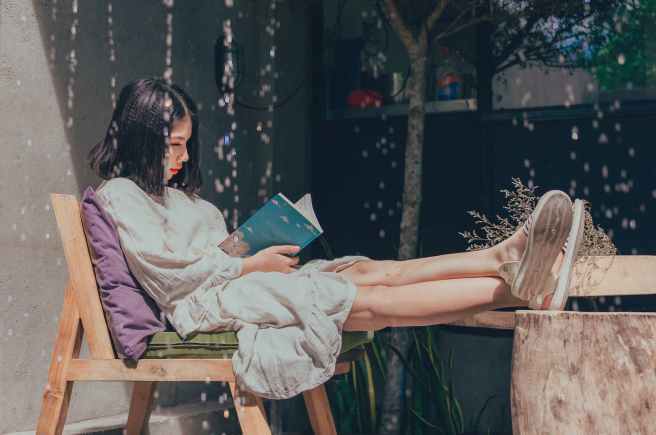
woman sitting on chair while reading book

What does ‘show don’t tell’ mean? It means don’t tell us about loneliness (or any of those complex words like dishonesty, secrecy, jealousy, obsession, regret, death, injustice, etc) show us what loneliness is. We will read what you’ve written and feel the bite of loneliness. Don’t tell us what to feel. Show us the situation, and that feeling will be triggered in us.

When you take your child to school on their first day you may find yourself teary and relieved at the same time. Put into words what you see: the child’s face, the wave at the gate, the other mothers saying their goodbyes, another child coming up to take your son by the hand. We will get what you’re trying to say without you telling us directly.

When you write, be conscious of the senses and how they connect to the experiences you are writing about. Use sight, sound, smell, touch to create concrete pictures. The senses allow you to get as close as humanly possible in words to the wedding, the sunrise, the dog, the suitcase. It’s the best way to penetrate your story and breathe life into it. Don’t tell us about something, drop deep, enter the story and take us with you.

‘Use strong, specific verbs, and avoid overusing adverbs. Provoke emotion through character reactions and vivid writing, don’t simply tell readers how to feel. Use well-placed details to bring scenes to life. Use expressive dialogue to show characters’ emotions and attitudes.’ – Creative Writing 101, Wright State University

For further reading, check out my posts  Have You Tried Flash Fiction Yet? and Is There A Link Between Spirituality and Creativity?. And to make sure not to miss anything from Libby Sommer Author you can follow me on Facebook  or Instagram.

Writing Tip: Endings

pen writing notes studying

Beginnings and endings are the hardest part of creating a successful story and the most important. More important than plot and character, in my opinion, especially in short stories. “Conclusions are the weak points of most authors,” George Eliot remarked, “but some of the fault lies in the very nature of a conclusion, which is at best a negation.”

“As Jane Austen pointed out in a metafictional aside in Northanger Abbey, a novelist cannot conceal the timing of the end of the story (as a dramatist or film-maker can, for instance) because of the telltale compression of the pages.” – The Art of Fiction

The closer and closer you get to the ending, the more weight every word has, so that by the time you get to the last several words each one carries an enormous meaning. A single gesture or image at the end can outweigh all that has gone before. Choose each word carefully – even simple words like dark or down, light or up drastically affect the sense of the ending and therefore the entire story. Anything revelatory or portentous at the end of the story is very heavy indeed. Heavy-handed, in fact, is the way it’s likely to come out.

In beginning the story certain tensions, ideas, and characters have been launched. These themes then fly in intricate formations. The ending doesn’t have to provide a surprise. All it has to do is land safely. – Jerome Stern, Making Shapely Fiction

I’m rather proud of this ending to my short story Jean-Pierre, first published in Quadrant in July-August 2016. It’s the last page of a 5,000 word piece.

During that last day she thought of nothing but Jean-Pierre as she packed and cleaned out her little apartment.

‘What do you do, you have a stopover in Dubai?’ Jean-Pierre said, standing next to her at the taxi rank in the early morning chill.  A bitter wind blew from the mountains.  He had come over to carry her bag down the stairs.

‘I go straight through.  It’s three hours on the ground in Dubai, so I walk around the airport then read my book.’

Jean-Pierre looked directly into her eyes.  ‘I’ve bought you a little gift,’ he said.

‘You have?’

‘Don’t unwrap it until you’re on the plane.’

She smiled.  ‘Okay.”  Then she looked at his face, to place him clearly in her mind.  He was wearing a white t-shirt and blue jeans under a padded coat.  She kissed him on the lips, then got into the taxi.

‘Something to take with you,’ he said, leaning in the window.  In his hand he clasped a small gift-wrapped box.  The sun, still low on the horizon, cast an amber glow on his precious face.

‘Thank you,’ she said.  She reached for his hand through the window and then put on her seatbelt.

And she thought about this all twenty-four hours of the journey across the Indian Ocean.  She would keep opening the little box to admire the marquisite earrings he’d given her.  She would catch a taxi from the airport and at home notice the house smelt musty; she would open all the doors and windows to let the air move through, the curtains blowing and air coming in and out.  From a far-away-place, and at night, he would ring to say, resignedly, ‘My mother is living with me now.’  His gift, when she’d take the earrings out of their black box, would remind her of something that had happened to her once.

She felt like someone who she had always known, that old friend of herself, grounded in home, decisions already made, and behind her somewhere, like the shadow of an identical twin, her other self, who must remain in the far-off distance,  never to be exposed to the light.

Copyright © Libby Sommer 2016

For further reading, check out my posts  My 3 Favourite How-To-Write Books and Why Do You Write?. And to make sure not to miss anything from Libby Sommer Author you can follow me on Facebook  or Instagram.



Will my story resonate with anyone?

a man and woman dancing tango

When you write a story, you never know if it will resonate with anyone. Then a person like Dr Beatriz Copello writes a review and you find yourself dancing with joy, thinking how blessed you are.

Beatriz Copello’s review was published by The Compulsive Reader and you can read it below:

A review of The Usual Story by Libby Sommer

Reviewed by Beatriz Copello

The Usual Story 
by Libby Sommer
Ginninderra Press
Paperback, ISBN: 9781760415792, July 2018, $27.50, 80pp

The Usual Story by Libby Sommer takes the reader into the life and mind of Sofia.  Sofia is a middle-aged woman, a writer and very much involved in dancing, particularly Tango.

Tango, a dance that was born in the 1800s around the port of Buenos Aires, Argentina, was the dance of port workers and women of the night. Nowadays, this complicated and elegant dance is very much in vogue and danced around the world. Tango gives some sort of skeleton to a large part of The Usual Story. Other sections deal with relationships from the past and the present.

The reader gets to know Sofia as she dances and relates to the other dancers who participate in the Tango classes. In an interesting way Sommer mixes in her text Sofia’s tango adventures and lessons with her thoughts and love experiences, as well as evocative descriptions of her surroundings.

There is something in human beings that makes them ponder relationships. Sommer, with a very fine narrative, engages us in Sofia’s analysis of the past, particularly in her relationships with her parents and with two of her younger lovers J and Tom. The writer has the ability to create very believable characters. She handles feelings in a measured and unsentimental way. The author says about J:

Little by little, I’d learned new things about J. Once, when staying with him in that first summer, I found him lying on my bed with so pitiful a look on his face that I couldn’t see into it. It was very painful to realise how utterly defeated he looked; everything about him was different to what I’d seen before, out of sync, closed down, remote, his very guts hanging out in front of me.

Every now and again we encounter in the narrative some profound thoughts from Sofia. She reflects: “I think that when you are really stuck, when you have stood still in the same place for far too long, it’s almost as if a bomb needs to go off, to get you to move, to jump, and then to hope for the best.”

The Usual Story contains many things about the every day, the mundane, the routine of living but it is presented in such an engaging way that the story becomes real. It is impressive the ability of Sommer to fragment the narrative when we encounter Sofia’s visits to the psychiatrist. We read about her participation in Milongas, asking relatives about her past, and about love and its many facets. All of these interspersed with poetic descriptions of place. Sydneysiders will recognise many areas of the Eastern suburbs in Sommer’s vivid imagery. The following is one of those descriptions that has cinematic qualities:

The sea looks different every day. Today it’s a mid-grey tone, its surface moving in a gentle tugging motion as a container ship moves south along the horizon. A moist breeze brushes my cheek as the waves make a hushing noise as they curl into the sand of the beach. I watch the colour creep slowly into the clouds. A flock of lorikeets balances on the bare branches in front of me.

There is a certain melancholy in The Usual Story which I believe stems from the relationship of Sofia with her mother and her daughter. Relationship between parents and children can be very complicated. As sons and daughters we tend to arrive at a different view of them according to our age. As children, our parents are like gods; as adolescents they can be our enemies; as adults we tend to be more objective but we are too busy with our own children to spend time analysing these relationships. We may also depend on our parents to help with our progeny and this clouds our assessment. A different thing is when we get to that same period of life:  our third age. It is then, when we have lived and experienced life, that we can be more objective in the evaluation and appreciation of our parents. Sofia is at that stage and she can see clearly her mother’s distant and cold behaviour, but there must be in her a grain of insecurity so she wants to check what she thinks she knows. She wants to be sure. So she searches through memories, analysing them, confirming facts with other relatives.

Sofia’s relationship with her daughter is not perfect either. After seeing a mother and a daughter embrace each other with love she says: “They embrace and then walk to the door, still entwined. I feel a pang of wistfulness for my own daughter as I watch them walk away. My daughter who hadn’t wanted to spend a weekend away, just the two of us. She’d said we make each other tense if we’re together too much. But she’d said it in a kind voice.

‘You don’t mind, do you?’ she’d asked.

I did mind. ‘At least you’re honest with me,’ I said.”

As a psychologist, I found The Usual Story fascinating because the characters are so interesting and authentic. As a reviewer, I enjoyed the book’s clear narrative, perhaps a little leisurely at times, but the pace picks up engaging the reader with a beautiful text.

About the reviewer: Dr Beatriz Copello is a former member of NSW Writers Centre Management Committee, writes poetry, reviews, fiction and plays. Beatriz’s poetry has been published in literary journals such as Southerly and Australian Women’s Book Review and in many feminist publications.  She has read her poetry at events organised by the Sydney Writers Festival, the NSW Writers Centre, the Multicultural Arts Alliance, Refugee Week Committee, Humboldt University (USA), Ubud (Bali) Writers Festival.

Print and ebook editions of The Usual Story available from Ginninderra Press, Amazon, Book Depository and other online booksellers.

Writing Tip: Small Fictions


Libby Sommer with her book The Crystal Ballroom in book store
At Harry Hartog Bookseller

I love writing small fictions, also known as hybrid fiction:  flash, micro fiction, prose poetry.  The form is gaining in traction and you can enter your stories in various competitions like the New Flash Fiction Review.

‘New Flash Fiction Review has chosen to honor master storyteller Anton Chekhov through holding an annual award for excellence in flash fiction— or as they might have said, back in Chekhov’s time, “very short fiction”. Anton Pavlovich Chekhov was a Russian playwright and short-story writer, who is considered to be among the greatest writers of short fiction in history. Chekhov’s mastery for saying a lot with a little makes him one of the flash fiction’s spiritual inspirations. Over one-hundred years before the term “flash” was invented, Chekhov himself was writing short stories in under 1,000 words, stories such as “After the Theatre”, “A Country Cottage”, and “Bliss”. In 1886, Chekhov wrote in a letter to his brother, “… you’ll have a moonlit night if you write that on the mill dam a piece of glass from a broken bottle glittered like a bright little star, and that the black shadow of a dog or a wolf rolled past like a ball.”’ – New Flash Fiction Review

My small fiction titled Undulations was first published in Quadrant magazine. Hope you enjoy it.

Undulations

So we’re sitting in Melbourne in a vegan restaurant reminiscing about our school days spent mucking-up in the back row and Jane (her hair still red, short and frizzy, like childhood) remembers daring me to ask our fourth-grade Geography teacher how to spell ‘undulations’.  What?  “Because I wanted to write her a message,” Jane says.  “An unsigned message saying, ‘The way you run your hands over your boobs to demonstrate undulations is disgusting,’ but didn’t know how to spell it.  So I told you that if you were my friend, you’d ask her.  You know how she always said to speak up if we couldn’t spell something?  For some reason she wrote the word down on a piece of paper, rather than on the blackboard.  Maybe she thought you couldn’t see properly from our eyrie.  So you got back to your desk and passed it to me under the chair.  I wrote in my best handwriting, ‘Your demonstrations of undulations are gross,’ blotted it carefully, and placed it furtively on her table after the recess bell had cleared the room.  When we filed in after lunch, I saw her open it up.”  Jane taps me on the arm enthusiastically.  “What happened then?” I say.  “Was she angry?  Did she think it was me?  Did I get punished?”  How forgetful was I?  Jane had mastered the art of getting the ink from the inkwell to the pen nib to the paper—no ugly blotches—her cursive as good as a professional engraver’s.  Even after all this time, she still prefers a fountain pen and has a proclivity for setting wrongs right.  “She threw the chalk in the bin, reached for her cardigan and draped it over her shoulders,” Jane says, grinning.  “Yes, that’s what happened.  And she didn’t demonstrate undulating landscapes on herself or on any of us ever again.”

Copyright © 2018 Libby Sommer

Or you can study this growing-in-popularity short form by getting a copy of Best Small Fictions by Sonder Press:  ‘The Best Small Fictions is the first ever contemporary anthology solely dedicated to anthologizing the best short hybrid fiction published in a given calendar year.’

“If you are a writer of any kind, this book is also a must read because it will only enhance and inspire your own work, particularly through models of stellar openings/endings and meticulous editing.” — JMWW


Why Do You Write?

woman lying on green grass while holding pencil

It’s a tough gig being a writer. Lots of isolation, lots of intense concentration, lots of rejection from publishers and agents.

Why do I write? It’s a good question to ask yourself.

  1.  Because I’m a fool.
  2.  Because I want to impress my old school friends.
  3.  So people will like me.
  4.  So my friends will hate me.
  5.  I’m no good at speaking up.
  6.  So I can invent a new way of looking at the world.
  7.  In order to write the great Australian novel and become famous.
  8.  Because I’m a nut case.
  9.  Because I’m an undiscovered literary genius.
  10.  Because I have something to tell.
  11.  Because I have nothing to tell.

One of my favourite books on the writing process is The Writing Life by Pullitzer Prize winning Annie Dillard. It’s a small and passionate guide to the terrain of a writer’s world.

Dillard begins:

When you write, you lay out a line of words. The line of words is a miner’s pick, a woodcarver’s gouge, a surgeon’s probe. You wield it, and it digs a path you follow. Soon you find yourself deep in new territory. Is it a dead end, or have you located the real subject? You will know tomorrow, or this time next year. You make the path boldly and follow it fearfully. You go where the path leads. At the end of the path, you find a box canyon. You hammer out reports, dispatch bulletins. The writing has changed, in your hands, and in a twinkling, from an expression of your notions to an epistemological tool. The new place interests you because it is not clear. You attend. In your humility, you lay down the words carefully, watching all the angles. Now the earlier writing looks soft and careless. Process is nothing; erase your tracks. The path is not the work. I hope your tracks have grown over; I hope birds ate the crumbs; I hope you will toss it all and not look back.

There is a famous story in the Zen world:

The student, newly arrived at the monastery, asks the master, “What work will I do as I seek enlightenment?”

The master replies, “Chop wood, carry water.”

“And what work will I do once I achieve enlightenment?” asks the student.

“Chop wood, carry water,” says the master.

So how does this stay apply to the writing life? A writer writes. That’s all there is to it.

“A writer who waits for ideal conditions under which to work will die without putting a word on paper.” —E. B. White

What about you? Why do you write?

18 Years of Notes and Cards

woman dressed as mermaid swimming underwater

The year is 2000. I’m slogging away at a Masters in Writing at UTS. I’d had two careers already, in film and television production at the ABC (an engine-room role) and as Principal of my own PR agency, but my dream had always been to become a writer. My children were grown up and living their own lives. One day towards the end of that year the phone rang and someone left a message saying they were Les Murray. Ha ha, I thought. As if Australia’s most famous living poet would be ringing me. I had sent a story titled Art and the Mermaid to the address on the Quadrant website. Imagine my disbelief and indescribable joy when I found out it wasn’t a friend playing a trick on me, but was in fact the real Les Murray, Literary Editor of Quadrant. He said he’d like to take Art and the Mermaid for Quadrant.

That phone call began an 18-year friendship and working relationship. It changed my life.

The thrill of seeing my work published regularly in Quadrant has given me credibility as a fiction writer and, more recently, as a poet. I’ve felt encouraged to continue to explore unique ways of expressing my thoughts and ideas.

Where would I be if it wasn’t for Les Murray? My writing career may never had started, or continued. To date, three books published, a fourth coming out next year – each book containing chapters that were first published in Quadrant.

Les’s inclusion of my work in the magazine has been instrumental in my development. He’s lifted my confidence, inspired me and made me proud of being a writer. Published in Quadrant was public validation and acceptance into the literary world.

We communicated about my stories and poetry through notes and postcards over all these years: I’d post him a submission and a short letter and he’d respond with either a chatty postcard to say ‘Yes’, or a note saying ‘Alas, …’

When Quadrant published my first story Art and the Mermaid in 2001, I had no idea the next 18 years would lead to 22 more stories and 4 poems published in Quadrant.

With the retirement of Les Murray as Literary Editor, it’s the poignant end of the era of Les at Quadrant. However, Les’s impact continues through the new and established writers he has fostered and who continue their careers. I am forever grateful that I was one of those writers. Congratulations. Literary Editor at Quadrant since March 1990.

Here is my story Art and the Mermaid, first published in Quadrant:

Once upon a time it came to pass, so it is said, that an enormous storm swept the coast of New South Wales, doing extensive damage to the ocean beaches – destroying jetties, breakwaters and washing away retaining walls.  Mountainous seas swept Bondi Beach and dashed against the cliffs carrying ruin with every roller.  At North Bondi near Ben Buckler a huge submerged block of sandstone weighing 233 tons was lifted ten feet and driven 160 feet to the edge of the cliff where it remains to this day.

One day a Sydney sculptor, Lyall Randolph, looked upon the rock and was inspired.  The sculptor was a dreamer.  Let us, he said, have two beautiful mermaids to grace the boulder.  Using two Bondi women as models he cast the two mermaids in fibreglass and painted them in gold.

Without Council approval and at his own expense he erected The Mermaids for all to see on the giant rock that had been washed up by the sea.  The Mermaids sat side by side on the rock.  One shaded her eyes as she scanned the ocean and the other leant back in a relaxed fashion with an uplifted arm sweeping her hair up at the back of her neck.  Their fishy tails complemented the curves and crevices of their bodies.

It so happened that less than a month after The Mermaids were put in place, one was stolen and damaged.  The Council held many meetings to decide if she should be replaced using ratepayers’ money.  The council had previously objected to the sculptor placing the statues there without Council permission.  The sculptor had argued that before placing The Mermaids in position he had taken all necessary steps to obtain the requisite permission.

The large boulder at Ben Buckler, upon which The Mermaids were securely bolted and concreted, he said, is not in the municipality of Waverley at all.  It is in the sea.  According to the Australian Constitution high-tide mark is the defined limit of the Waverley Council’s domain.  The Maritime Services Board and the Lands Department both advised me they had no objection to the erection of The Mermaids.

One Waverley Alderman said he wished both mermaids had been taken instead of only one.  Someone else said the sculptor didn’t need the Council’s permission to put them there in the first place and the The Mermaids had given Bondi a great attraction without any cost to the Council.  The sculptor said The Mermaids had brought great publicity to the Council.  They had been featured in films, newspapers, television and the National Geographic magazine.

The Mayor used his casting vote in favour of the mermaid and she was re-installed.

For over ten years the two beautiful golden mermaids reclined at Ben Buckler, attracting many thousands of sightseers to the beach.

Poised on the huge boulder they braved the driving storms of winter until one day one was washed off.  The Council saw its opportunity and removed the other.

Today, only the remnants of one mermaid remain – but not on the rock.  In a glass cabinet in Waverley Library at Bondi Junction all that is left of the two beautiful mermaids is a figure with half a face.  There’s a hole instead of a cheek, a dismembered torso, part of an uplifted arm, the tender groove of an armpit.  And there, down below, a complete fish’s tail.

Copyright © 2018 Libby Sommer

Header image:  Creative Commons