
Facing the blank page or the blank screen, the eternal question: What will I write about?
As Natalie Goldberg says, “Write what disturbs you, what you fear, what you have not been willing to speak about. Be willing to be split open.”
Facing the blank page or the blank screen, the eternal question: What will I write about?
As Natalie Goldberg says, “Write what disturbs you, what you fear, what you have not been willing to speak about. Be willing to be split open.”

When I used to teach classes to beginning writers, it was good. It forced me to think back to the beginning to when I first put pen to paper. The thing is, every time we sit down and face the blank page, it’s the same. Every time we start a new piece of writing, we doubt that we can do it again. A new journey with no map – like setting off towards the horizon alone in a boat and the only thing another person can do to help is to wave from the shore.
So when I used to teach a creative writing class, I had to tell them the story all over again and remember that this is the first time my students are hearing it. I had to start at the very beginning.
First up, there’s the pen on the page. You need this intimate relationship between the pen and the paper to get the flow of words happening. A fountain pen is best because the ink flows quickly. We think faster than we can write. It needs to be a “fat” pen to avoid RSI.
Consider, too, your notebook. It is important. The pen and paper are your basic tools, your equipment, and they need to be with you at all times. Choose a notebook that allows you plenty of space to write big and loose. A plain cheap thick spiral notepad is good.
After that comes the typing up on the computer and printing out a hard copy. It’s a right and left brain thing. You engage the right side of the brain, the creative side when you put pen to paper, then bring in the left side, the analytic side, when you edit the print out as you settle back comfortably with a drink (a cup of tea, even) and read what you’ve written.
Patrick White said that writing is really like shitting; and then, reading the letters of Pushkin a little later, he found Pushkin said exactly the same thing. Writing is something you have to get out of you.

Whether writing a story or writing a blog, start writing, no matter what.
Sounds, sights, and smells are all part of creating an atmosphere.
‘The creation of the physical world is as crucial to your story as action and dialogue. If your readers can be made to see the glove without fingers or the crumpled yellow tissue, the scene becomes vivid. Readers become present. Touch, sound, taste and smell make readers feel as if their own fingers are pressing the sticky windowsill.
‘If you don’t create evocative settings, your characters seem to have their conversations in vacuums or in some beige nowhere-in-particular. Some writers love description too much. They go on and on as if they were setting places at the table for an elaborate dinner that will begin later on. Beautiful language or detailed scenery does not generate momentum. Long descriptions can dissipate tension or seem self-indulgent. Don’t paint pictures. Paint action.’ – Jerome Stern, Making Shapely Fiction
Bringing in sensory detail is a way to enrich a story with texture to create the fullness of experience, to make the reader be there.
What about you? Do you use the senses, apart from sight, to create atmosphere?
A fantastic example of this writing advice is Kurt Vonnegut’s Slaughterhouse-Five.
Poignant and hilarious, threaded with compassion and, behind everything, the cataract of a thundering moral statement. – The Boston Globe
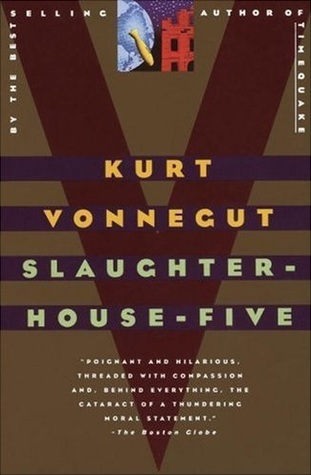
Kurt Vonnegut’s absurdist classic Slaughterhouse-Five introduces us to Billy Pilgrim, a man who becomes unstuck in time after he is abducted by aliens from the planet Tralfamadore. In a plot-scrambling display of virtuosity, we follow Pilgrim simultaneously through all phases of his life, concentrating on his (and Vonnegut’s) shattering experience as an American prisoner of war who witnesses the firebombing of Dresden.
Don’t let the ease of reading fool you – Vonnegut’s isn’t a conventional, or simple, novel. He writes, “There are almost no characters in this story, and almost no dramatic confrontations, because most of the people in it are so sick, and so much the listless playthings of enormous forces. One of the main effects of war, after all, is that people are discouraged from being characters.”
Slaughterhouse-Five is not only Vonnegut’s most powerful book, it is also as important as any written since 1945. Like Catch- 22, it fashions the author’s experiences in the Second World War into an eloquent and deeply funny plea against butchery in the service of authority. Slaughterhouse-Five boasts the same imagination, humanity, and gleeful appreciation of the absurd found in Vonnegut’s other works, but the book’s basis in rock-hard, tragic fact gives it a unique poignancy – and humor. – Goodreads
A masterpiece.

Where to begin a piece of creative writing?
Begin with the inciting incident. The Inciting Incident is the event or decision that begins a story’s problem.
Here is an excellent quote from Evan Marshall about creating a strong beginning for a story:
Some writers don’t write, or rewrite, the beginning of their stories until they get to the end. Once they’ve written to the end, they know more clearly what it is they want to say.
The main thing though with creating on the page, is to put words down. To get going. To make a start. It doesn’t matter where. After all, writing is rewriting.
I hope you find this advice useful. Let me know.

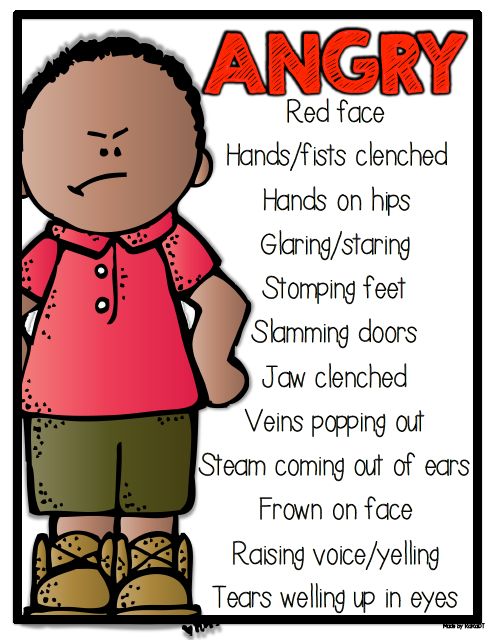
This is an old one, but a good one. Tell Don’t Show.
What does it mean exactly? It means don’t tell us about loneliness (or any of those complex words like dishonesty, secrecy, jealousy, obsession, regret, death, injustice, etc) show us what loneliness is. We will read what you’ve written and feel the bite of loneliness.
Don’t tell us what to feel. Show us the situation, and that feeling will be triggered in us.
When you take your child to school on their first day you may find yourself teary and relieved at the same time. Put into words what you see: the child’s face, the wave at the gate, the other mothers saying their goodbyes, another child coming up to take your son by the hand. We will get what you’re trying to say without you telling us directly.
The how-to-write books tell us to use our senses when we write stories: sight, sound, smell, touch. Writing from the senses is a good way to penetrate your story and make friends with it. Don’t tell us about something, drop deep, enter the story and take us with you.
What about you? Do you consciously bring the senses into your creative writing?
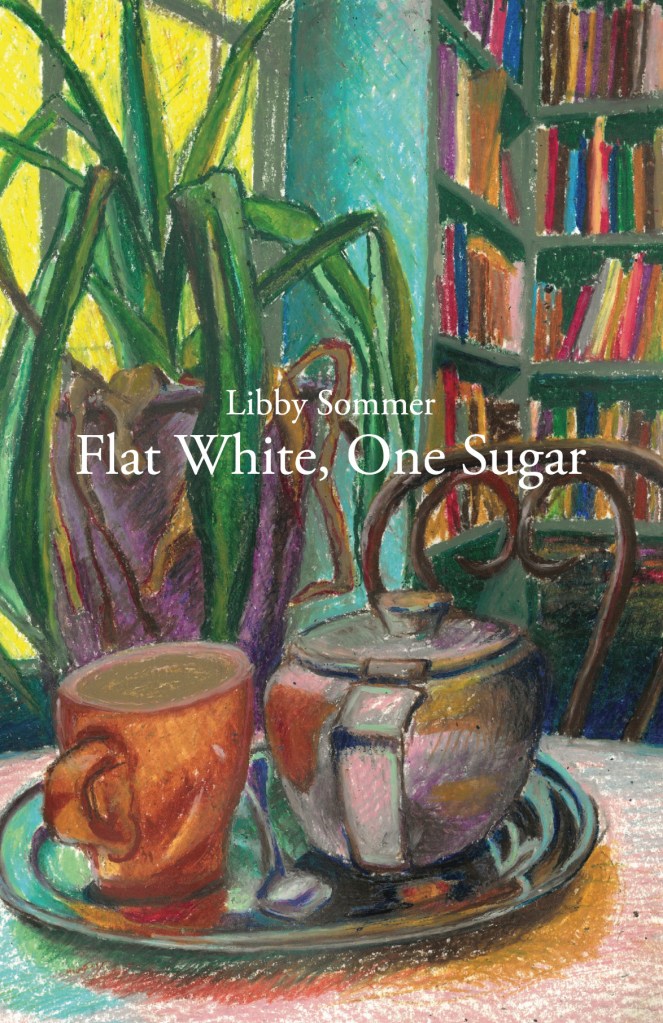
Have a read of my poem ‘Bewildered’, first published in Quadrant Magazine and one of the poems in my collection, ‘Flat White, One Sugar‘ (Ginninderra Press). The book is illustrated by my granddaughter, Natasha Sommer, a graduate of the National Art School.
I hope you enjoy it.
Bewildered:
When I was four
I asked my big brother
Is mum the wicked
queen from Snow White?
He fell about with laugher,
then wrestled me to the ground
using his knees to pin
my shoulders to the floor.
My brother, the bully.
But I loved him.
Years later, when our mother said she
had heart problems, my brother told her
it was impossible.
How can you? he said.
You don’t have a heart.
The questions still disturb me to this day.
Copyright 2024 Libby Sommer

Anais Nin famously said that we write to taste life twice, in the moment and in retrospect.
And Natalie Goldberg: “Writers live twice. They go along with their regular life, are as fast as anyone in the grocery store, crossing the street, getting dressed for work in the morning. But there’s another part of them that they have been training. The one that lives everything a second time. That sits down and sees their life again and goes over it. Looks at the texture and the details.”
Fabulous quotes. Do you agree with them?

Have a read of my poem ‘Tactics’, first published in Quadrant Magazine. ‘Tactics’, inspired by my own struggles on the tennis court, is one of the poems in my latest poetry collection, ‘Flat White, One Sugar‘, Ginninderra Press.
I hope you enjoy it.
Tactics:
A woman is hitting back & forth
across the net, a peaked cap
secured by her ponytail.
Can she overcome the self-doubt,
anxiety & lapses of concentration?
She mustn’t let her mind
be the winner in this battle.
Right here, right now,
she’s in control,
even in the wind,
alternating her drives
to the far corners of the court.
Nothing distracts her,
not the noisy leaf blower
or her male opponent
with superior physical strength.
Tactics are her best weapon.
Now she is serving,
tossing the ball high,
straight as an arrow,
reaching up,
accelerating,
out wide
to his lefthanded backhand.
She ignores her cap
escaping with the wind
as she executes
a perfect follow through.
She smiles.
Ace! It’s an ace.
Copyright 2025 Libby Sommer

I am sitting in a café across the road from a Sydney beach. This stretch of road has a whole row of cafes side by side facing the sea. This is my favourite kind of writing place: one where I can sit comfortably for a long period of time and where the owners of the café know me and welcome me. This café is owned by a Brazilian man and his wife and has comfortable upholstered bench chairs with a direct view of the Pacific Ocean. For my two-hour writing session my choice could be a traditional Brazilian dish such as Coxinha, Feijoda or Moqueca. Or a cocktail like Caipirinha or Caipiroska. I must order something and it must be more that a Long Black, because I plan to be here for some time. I want the owners of the café to know I appreciate the time and the space they are allowing me.
However, today I’ll be very boring and order poached eggs on gluten-free bread
Why go to all this trouble to find a place to write? Why not just stay home and work? Because it’s good to get out and have a change of scene. I find I need to be happy and relaxed when I’m creating on the page and sitting in a café with a pleasant vibe works for me. Other writers need silence in order to concentrate, but I need to feel I am out and about in a beautiful place having a good time before the creative juices flow.
Strangely, working in a café can help to increase concentration. The busy café atmosphere keeps the sensory part of you occupied and content, so that the hidden, quieter part of you that composes and focuses is allowed to do its work. It is something like being cunning when trying to get a spoonful of food into a resistant toddler’s mouth . You pretend to be an aeroplane with all the sound effects and movements before landing the food-laden plane inside the child’s mouth. Mission accomplished.
What about you? Do you need to be at your desk in total silence in order to write, or do you like to experience the swell of humanity around you—to be surrounded by other human beings? Or at home listening to a particular kind of music?

