
Release of my new collection


painting of girl lying on beach in torquoise bikini reading a book

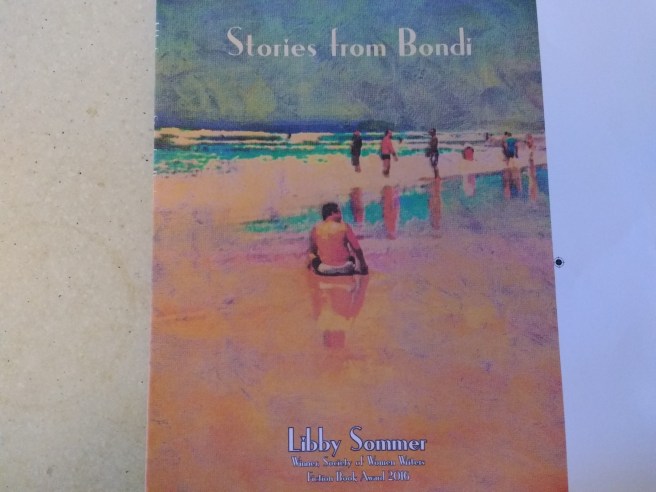
My new book STORIES FROM BONDI, a collection of stories set mostly in Bondi, is now available for pre-order. Target US are even advertising it! Don’t know how that happened. The book will be released as a paperback on 13 September but can be purchased as Kindle Edition from Amazon and as an eBook from Booktopia and other online sites now. As a paperback it can be ordered from bookstores, online and from the publisher, Ginninderra Press.

And here’s my author page on Amazon. Click the link. Feeling pretty proud. I think my four books look fabulous together, if I may say so myself 🙂


Writing Tip: Ground Your Writing in a Sense of Place – Reblog


tennis court surrounded by green leafy trees

Ground your writing in a sense of place, whether landscape or cityscape. How often have you heard someone say of a book they loved:  ‘I felt like I was there’.

Even if you relocate the poodle tied to a fake-cane chair, the sound of a game of tennis, the table of older men after their regular Sunday match at the cafĂ© overlooking the tennis courts at Cooper Park that you drank a lemongrass and ginger tea at in Sydney into a cafĂ© in a story in another state and time, the story will have originality and believability.  ‘But that cafĂ© was in Sydney, I can’t transport it to Adelaide.’  But you can.  You can have flexibility with specific detail.  The mind is able to transport details, but using actual places that you experienced will give your writing authenticity and truthfulness.  It grounds your work in place, giving life and vitality to your writing, rather than a whole lot of exposition that floats in the air.

 If you don’t create evocative settings, your characters seem to have their conversations in vacuums or in some beige nowhere-in-particular. –  Jerome Stern

Creation of the physical world is as important to your story as action and dialogue.  If your readers can be made to see the hand-knitted socks or the row of vitamins on the kitchen bench top, the scene becomes alive.  Readers pay attention.  Touch, sound, taste, and smell make readers feel as if their own feet are warm under the cold sheets.

Place situates the story in your reader’s mind.  Fiction that seems to happen in no particular place often seems not to take place at all. –  Jerome Stern

Agree?

Back Cover Blurb: ‘Stories from Bondi’

book cover of 'Stories from Bondi' showing people on the sand by the sea

Here is the back cover blurb for STORIES FROM BONDI due for September release by Ginninderra Press. What do you think?

Libby Sommer’s sensitively-drawn characters live and breathe within the echoes of the everyday. Stories from Bondi centre on women – their joys, doubts, loves and realisations. The foibles of human nature, with all their pathos and humour, are laid bare for the reader.

“From the opening story ‘Art and the Mermaid’, to a moving piece set in a health retreat that closes the collection, these stories beautifully capture the intimacies of women. Like My Year With Sammy and The Crystal Ballroom, this is classic Sommer.” – SUSANNE GERVAY OAM, author.

So what is a book blurb?

A blurb is a short promotional piece accompanying a piece of creative work. It may be written by the author or publisher or quote praise from others. Blurbs were originally printed on the back or rear dust-jacket of a book, and are now found on web portals and news websites. – Wikipedia

A big thank you to fellow author Roslyn McFarland for giving me feedback on the blurb.  I’d only reworked it about a thousand times, but still Ros was able to help me make it clearer.


Cover Reveal: Stories from Bondi

book cover of 'Stories from Bondi' showing people on the sand by the sea

In the final stretch now towards publication next month of STORIES FROM BONDI. I received final proofs from the publisher Ginninderra Press. They are now being read by another set of eyes before posting back to Adelaide. 19 contemporary stories about men and women and life and the whole damn thing set mostly in and around Bondi. 

There will be a launch of the book in the Blue Mountains on 2 November. Details to follow.

So what are final proofs?

‘Proofs created by the printer for approval by the publisher before going to press are called final proofs. At this stage in production, all mistakes are supposed to have been corrected and the pages are set up in imposition for folding and cutting on the press. To correct a mistake at this stage entails an extra cost per page, so authors are discouraged from making many changes to final proofs, while last-minute corrections by the in-house publishing staff may be accepted.

‘In the final proof stage, page layouts are examined closely. Additionally, because final page proofs contain the final pagination, if an index was not compiled at an earlier stage in production, this pagination facilitates compiling a book’s index and correcting its table of contents.’ – Wikipedia

I’m very excited and can’t help boasting that this is my fourth book in four years. Phew. What a marathon it’s been!


‘Glass Walls’ Pre-launch


'glass walls' book cover

Such a thrill to see my name in the list of contributors to ‘Glass Walls’, stories of tolerance and intolerance from the Indian Subcontinent and Australia, alongside famous authors  including David Malouf, Elizabeth Jolley, Bruce Pascoe, Debra Adelaide, Roanna Gonsalves.

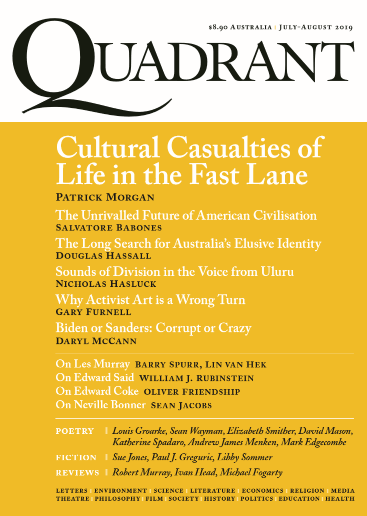
‘Glass Walls’ had a pre-launch at SAFAL (South Asian Festival of Art and Literature) at the weekend.  At the event I was invited to read my short story ‘Henry’ (first published in Quadrant). Am honoured to have my work in this important book published by Orient BlackSwan, edited by Meenakshi Bharat and Sharon Rundle. The book will be released this month.  It will be fully launched at the Australian Short Story Festival 2019 in Melbourne October 18-20.

‘Glass Walls’ challenges readers to look deeply into their own prejudices and reveals how small intimacies of intolerance become the bedrock of world tragedies that tear humanity apart. A powerful anthology.’ – Susanne Gervay OAM

book cover 'Glass Walls'

What is a Feedback Sandwich? Reblog

wheat bread sandwich

In the Saturday-afternoon feedback group, we began talking about the ‘off with his head’ or ‘out-it-goes’ part of writing.  We acknowledged that as a group we’d always been very supportive and encouraging of each others work.  That was because we were all in it together.  Our critiquing was not telling lies; it was from a place of open-hearted acceptance.  Everything you put on the page is acceptable.

Sometimes someone says, ‘I want a rigorous no-holds-barred assessment of my work.’  But what do you say to them when the writing is dull and boring?  Don’t give up your day job?  It doesn’t sit comfortably with most of us to be directly critical of someone’s writing.  It’s like telling someone how ugly their baby is.  All of us find it hard to separate our writing from ourselves, and are prone to take criticism personally.

The feedback sandwich is a widely known technique for giving constructive feedback, by ‘sandwiching’ the criticism between two pieces of praise or compliments.

Yesterday, as we passed around copies of our work (just a page or two) we started to address what William Faulkner famously said:

‘In writing, you must kill all your darlings.’

First of all, we looked for the juice in each piece.  Where did the writing come alive?  ‘Get rid of the rest,’ we said.  ‘Off with his head—out it goes.’   It’s very difficult to be this honest, and not everyone wants to hear it.  ‘I simply want gentle support and a few corrections,’ some of us might say.

Be willing to have the courage to look at your work with truthfulness.  It’s good to know where your writing has energy and vitality, rather than to spend a lot of time trying to make something come to life that is dead on the page.   Keep writing.  Something new will come up.    You don’t want to put your readers to sleep by writing a lot of boring material.

‘Stories From Bondi’

painting of girl lying on beach in torquoise bikini reading a book

Woohoo. I finished correcting first proofs of my new collection STORIES FROM BONDI due for publication by Ginninderra Press in September. A big job. Final proofs are the next step in the publishing process.

So what are first proofs?

Initial proofs of the book from the typesetter, sometimes still delivered in galley format.

For the author, this first set of author proofs can be a challenge because often what is delivered is the raw typesetting output. Text will have been formatted and a key task for the author is to check that no text corruptions occurred at the file conversion stage of typesetting.

However, because tables, illustrations, etc. may not yet have been added, what these first proofs still lack are the real page breaks and an indication of the book’s final extent. For this reason, careful scrutiny still needs to be given to the final proofs.

This definition is extracted (and expanded on) from the book Getting Published: A Companion for the Humanities and Social Sciences by Gerald Jackson and Marie Lenstrup.

How is Writing Like a Sushi Roll?

close up photo of sushi served on table

Sometimes there’d be a person in one of my creative writing classes who was obviously very talented.  I can bring to mind one in particular.  You could sense people holding their breath as she read, and often her hands shook.  The writing process opened her up.  She said she had wanted to write for years.  She was so excited about writing that she straight away wanted to write a book.  I said to her, slow down.  Just practice writing for a while.  Learn what this is all about.

The journey to completing a book reminds me of training to become a sushi chef.

In Japan becoming an itamae of sushi requires years of on-the-job training and apprenticeship.  After five years spent working with a master or teacher itamae, the apprentice is given his first important task, the preparation of the sushi rice.

Writing, like becoming a Sushi Chef,  is a life’s work and takes a lot of practice.  The process is slow, and at the start you are not sure what you are making.

Futomaki  (“thick roll” – rice on inside, nori on the outside)

Uramaki   (“inside-out roll” – rice on outside, nori on the inside)

Temaki     (“hand roll” – cone-shaped roll)

That’s how it was for me.  I thought I could jump in and write a book in 6 months.  In fact, it took me 20 years to write a publishable manuscript. My debut novel,  ‘My Year With Sammy’, the story of a difficult yet sensitive child, published by Ginninderra Press in 2015 went on to be Pick of the Week in Spectrum Books and winner of the Society of Women Writers Fiction Book Award in 2016.

So cut yourself some slack before you head off on a writing marathon.

Writing is like learning to prepare the rice for sushi:  the apprenticeship is long, and in the beginning you are not sure whether a Futomaki, a Uramaki or a Temaki will be the end result.

9 Tips to Manage Writers RSI

yoga pose at sunrise

Repetitive strain injury often starts gradually but can soon become severely debilitating. But there are ways to nip it in the bud – and alleviate the worst symptoms.

1. Take Frequent Breaks

Take short, frequent breaks from repetitive tasks such as typing. A 10-minute break every hour. Use the computer only as much as you have to. Small hand movements, like scrolling on a screen, seem to set off RSI.

2. Type using both hands

It’s like playing the piano; correct fingering is essential. We tend to overuse one side of the body.

Become ambidextrous, e.g. use the mouse in your other hand, lift the kettle with the other hand.

3. Move

Get up from your desk every 30 minutes and move your neck and shoulders to release tension.

4. Use a Fountain Pen

When writing by hand, use a thick grip fountain pen that flows really well, rather than a ballpoint pen. Needing to push down on the pen, even lightly, makes the inflammation of RSI worse.

5. Check the ergonomics of your work station

Keep wrists straight and flat when typing. Sit with thighs level, feet flat on floor (or on footrest), sit up straight, shoulders relaxed, upper arms at sides, not splayed out, forearms horizontal or tilted slightly downwards, so knees and elbows are at a right angle. Keep the top of your screen at eye level and adjust the position of your keyboard, so it’s easy to reach without stretching or hunching. Don’t slouch. Use good posture. To keep wrists straight and flat use a gel wrist rest for the keyboard and the mouse.

6. Keep wrist straight when sleeping

Don’t curl your hands into a fist when sleeping. Some people wear a brace to keep their sore wrist straight.

7. Strengthen the supporting muscles

A physio will give you exercises to do to strengthen the arms. e.g. bicep curls

8. Stretch

Stretch neck, shoulders, arms, wrists. I find yoga is excellent for a full body stretch. The downward facing dog pose can cause discomfit in the hands, but I try to remember to flatten the knuckles to reduce pressure on the wrists.

9. Massage

Like yoga, a regular massage helps keep the body aligned and pain free.


Hope you find these tips useful. Good luck.