The Benefits of Poetry

photo of person walking on beach
Photo by Tomas Anunziata on Pexels.com

‘Neurologists at Exeter University, using functional magnetic resonance imaging, found that reading poetry activated different brain regions to prose – even the lyrical prose we find in fiction. When the research participants read poetry, it lit up the regions of the brain variously linked to emotion, memory, making sense of music, coherence building and moral decision-making. Poetry, the study’s authors concluded, induces a more introspective, reflective mental state among readers than does prose.’ – Sarah Holland-Batt, Weekend Australian, 21–22 March 2020

If you feel you’re losing your ability to focus on a long book while confined indoors and surrounded by digital screens (as staying up to date on a global pandemic seems to command), try turning to poetry to nurse your shrinking attention span back to life.

In the Time of Pandemic

And the people stayed home.

And they read books, and listened, and rested, and exercised, and made art, and played games, and learned new ways of being, and were still.

And they listened more deeply. Some meditated, some prayed, some danced.

Some met their shadows. And the people began to think differently.

And the people healed.

And, in the absence of people living in ignorant, dangerous, mindless, and heartless ways, the earth began to heal.

And when the danger passed, and the people joined together again, they grieved their losses, and made new choices, and dreamed new images, and created new ways to live and heal the earth fully, as they had been healed.

—Kitty O’Meara

‘Poetry is the quiet music of being human and in these days and nights when our humanity is fully vulnerable and exposed, poetry takes a small step forward. In our separate isolations, a poem is like the Tardis: bigger on the inside. Like spring – to recall TS Eliot – poetry mixes memory and desire.’ – Carol Ann Duffy, The Guardian

This poem by poet  Ian McMillan,  reminds of us of just what we lose each time a library is closed.

Adult Fiction

I always loved libraries, the quiet of them,
The smell of the plastic covers and the paper
And the tables and the silence of them,
The silence of them that if you listened wasn’t silence,
It was the murmur of stories held for years on shelves
And the soft clicking of the date stamp,
The soft clickety-clicking of the date stamp. I used to go down to our little library on a Friday night

In late summer, just as autumn was thinking about
Turning up, and the light outside would be the colour
Of an Everyman cover and the lights in the library
Would be soft as anything, and I’d sit at a table
And flick through a book and fall in love
With the turning of the leaves, the turning of the leaves.

And then at seven o’clock Mrs Dove would say
In a voice that wasn’t too loud so it wouldn’t
Disturb the books “Seven o’clock please …”
And as I was the only one in the library’s late summer rooms
I would be the only one to stand up and close my book
And put it back on the shelf with a sound like a kiss,
Back on the shelf with a sound like a kiss.

And I’d go out of the library and Mrs Dove would stand
For a moment silhouetted by the Adult Fiction,
And then she would turn the light off and lock the door
And go to her little car and drive off into the night
That was slowly turning the colour of ink and I would stand
For two minutes and then I’d walk over to the dark library
And just stand in front of the dark library.

From Talking Myself Home, published by John Murray, 2008

‘The astronomer and poet Rebecca Elson (January 2, 1960–May 19, 1999) was twenty-nine when she was diagnosed with non-Hodgkins lymphoma — a blood cancer that typically invades people in their sixties and seventies. Throughout the bodily brutality of the treatment, throughout the haunting uncertainty of life in remission, she met reality on its own terms — reality creaturely and cosmic, terms chance-dealt by impartial laws — and made of that terrifying meeting something uncommonly beautiful.

Rebecca Elson, 1987

‘When she returned her atoms to the universe, not yet forty, Elson bequeathed to this world 56 scientific papers and a slender, stunning book of poetry titled A Responsibility to Awe (public library) — verses spare and sublime, drawn from a consciousness pulling the balloon string of the infinite through the loop of its own finitude, life-affirming the way only the most intimate contact with death — which means with nature — can be.’ – Maria Popova

Elson’s crowning achievement in verse is the poem “Antidotes to Fear of Death,”

ANTIDOTES TO FEAR OF DEATH
by Rebecca Elson

Sometimes as an antidote
To fear of death,
I eat the stars.

Those nights, lying on my back,
I suck them from the quenching dark
Til they are all, all inside me,
Pepper hot and sharp.

Sometimes, instead, I stir myself
Into a universe still young,
Still warm as blood:

No outer space, just space,
The light of all the not yet stars
Drifting like a bright mist,
And all of us, and everything
Already there
But unconstrained by form.

And sometime it’s enough
To lie down here on earth
Beside our long ancestral bones:

To walk across the cobble fields
Of our discarded skulls,
Each like a treasure, like a chrysalis,
Thinking: whatever left these husks
Flew off on bright wings.

Hope you felt the positive benefits of reading these poems.

Stay safe and be well everyone.

Australian Poetry Publishers

I am thrilled and delighted that my first poetry collection, ‘The Cellist, A Bellydancer & Other Distractions’ has been accepted for publication by Ginninderra Press. The book is due for release in May 2022.

Below is information about the Australian Poetry Publishers directory.

AUSTRALIAN POETRY PUBLISHERS – Poetry Sydney. The Australian Poetry Publishers directory is a portal for poets to have their poems published, to encourage Australian poetry to be purchased and to support Australian Poetry Publishers in enabling poets to have the opportunity to be published.

Here is the link:

Good luck with your submission.

By the way, when I attended an online course recently titled ‘Pathway to Poetry Publication’, we were told to aim for 100 rejections a year. To apply for everything.

Writing Tip: Things Raymond Carver has said about the short form in writing

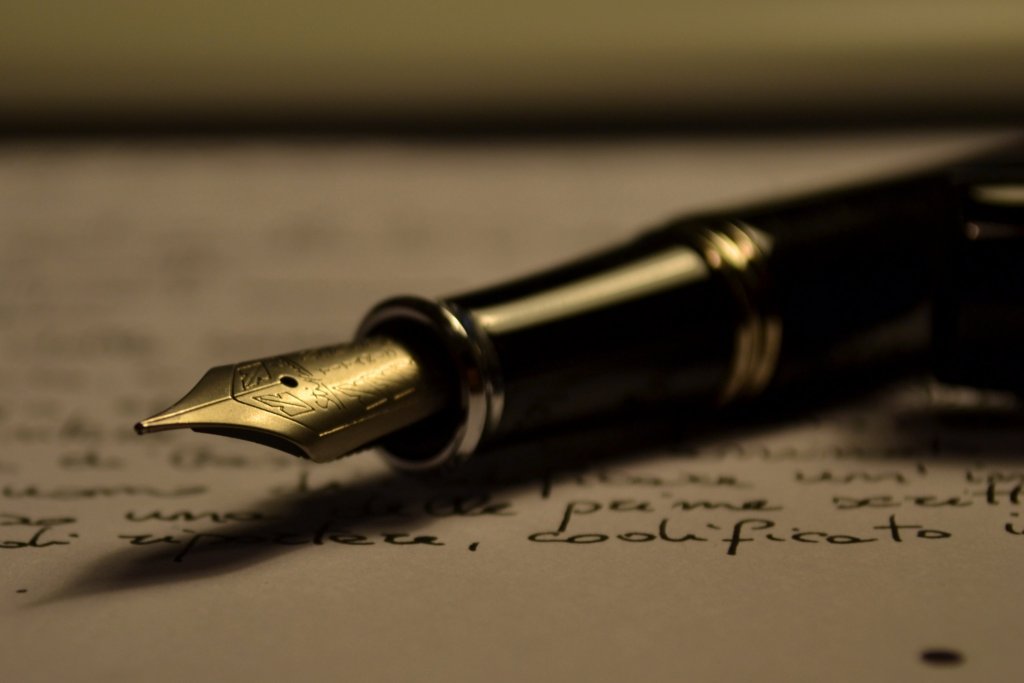
uncapped fountain pen on page

‘My attention span had gone out on me; I no longer had the patience to try to write novels. … I know it has much to do now with why I write poems and short stories. Get in, get out. Don’t linger. Go on.’

‘Every great or even every very good writer makes the world over according to his own specifications.’

‘It is his world and no other. This is one of the things that distinguishes one writer from another. Not talent.’

‘Isak Dinesan said that she wrote a little every day, without hope and without despair.’

‘”Fundamental accuracy of statement is the ONE sole morality of writing,” Ezra Pound.’

‘It is possible to write a line of seemingly innocuous dialogue and have it send a chill along the reader’s spine – the source of artistic delight, as Nabokov would have it. That’s the kind of writing that most interests me.’

‘That’s all we have, finally, the words, and they had better be the right ones, with the punctuation in the right places so that they can best say what they are meant to say.’

‘I like it when there is some feeling of threat or sense of menace in short stories.’

‘I made the story just as I’d make a poem; one line and then the next, and the next.’

‘V.S. Pritchett’s definition of a short story is “something glimpsed from the corner of the eye, in passing.” Notice the “glimpse” part of this. First the glimpse.’

‘The short story writer’s task is to invest the glimpse with all that is in his power. He’ll bring his intelligence and literary skill to bear (his talent), his sense of proportion and sense of the fitness of things – like no one else sees them. And this is done through the use of clear and specific language, language used so as to bring to life the details that will light up the story for the reader. For the details to be concrete and convey meaning, the language must be accurate and precisely given. The words can be so precise they may even sound flat, but they can still carry, if used right, they can hit all the notes.’

Raymond Carver, Fires, Vintage 1989

So who is Raymond Carver?

Raymond Carver, in full Raymond Clevie Carver, (born May 25, 1938, Clatskanie, Oregon, U.S.—died August 2, 1988, Port Angeles, Washington), American short-story writer and poet whose realistic writings about the working poor mirrored his own life. – Encyclopedia Britannica

My Latest Published Prose Poem

Photo by Pixabay on Pexels.com

Have a read of my latest prose poem, Someone I Don’t Know Side-Swiped My Car, first published in Quadrant magazine April 2021, Hope you enjoy it:

Someone I Don’t Know Side-Swiped My Car

Bad luck recently, you could say, after surviving some extremely unfortunate luck. For hours I sat across from you in the Emergency Bay:  your face dripping with blood. They gave you a compress to stop the flow of red from your cheekbones and your nose. Every time you touched your face, it opened up the wound. Punched in both eyes and the nose. A robbery as you walked home, I hear you tell your girlfriend on the mobile. And then you’re telling the emergency nurse you can’t wait any longer to see a doctor. ‘You may have concussion,’ she cautioned.

Did you find your way home?

For days I wonder how you are. I sniff the first spring jasmine hanging over the fence and your girlfriend whom I’ve never met crowds my thoughts, till one day, peering out my bedroom window, I notice someone has side-swiped my car. Not exactly what I’d expected to see but, man, the wisteria are showing their purple blooms. A nervous possum balances on the telephone line above the road and there’s a newspaper article about an elderly cyclist who died after a freak bike accident caused by a swooping magpie. Bad luck that a second vehicle crashed into my car while it waited at the smash repair place. Look up, take care, someone or something you don’t know may sideswipe you or punch you in the nose.

Copyright 2021 Libby Sommer

Writing Tip: Finding the Writer’s Magic

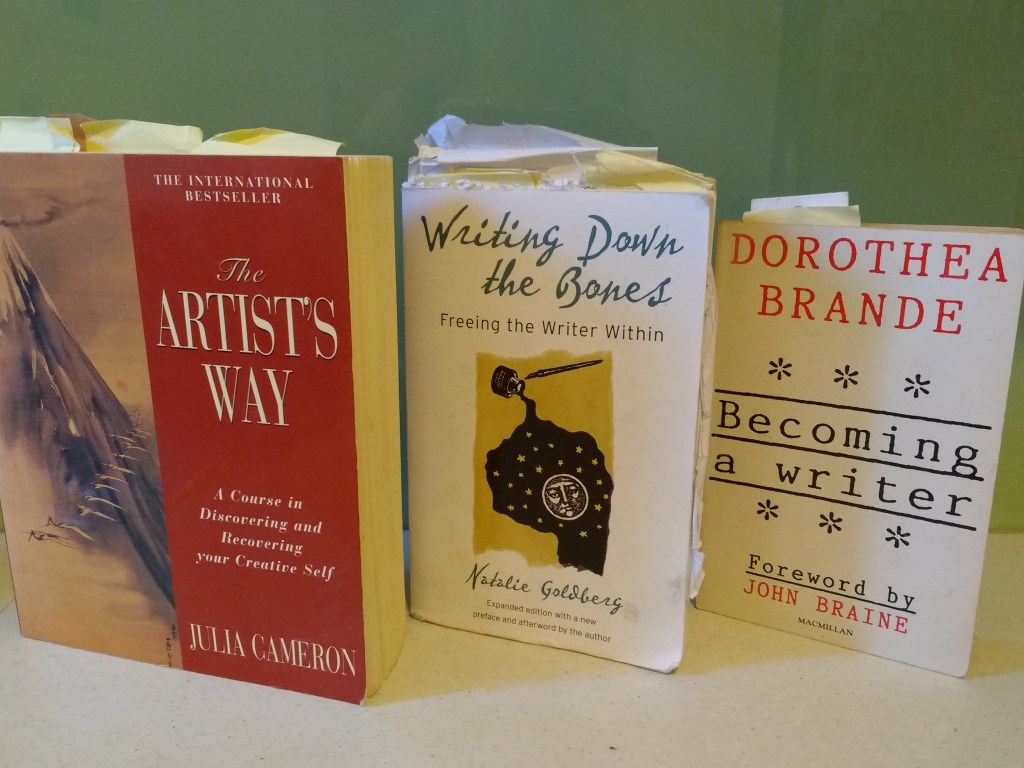
So much advice out there on writing process but these three books, old ones but good ones, are my favorites. You can see how well-loved they are by how many pages are marked with stickers. I’ve used the books many times when teaching my ‘Writing from Within’ course where we try to harness the unconscious by falling into an artistic coma.

1.

Have you ever longed to be able to draw or paint, write or compose music? In ‘The Artist’s Way’ by Julia Cameron you can discover how to unlock your latent creativity and make your dreams a reality.

‘The Artist’s Way’  provides a twelve-week course that guides you through the process of recovering your creative self. It dispels the ‘I’m not talented enough’ conditioning that holds many people back and helps you to unleash your own inner artist.

‘The Artist’s Way’ helps demystify the creative process by making it part of your daily life. It tackles your self-doubts, self-criticism and worries about time, money and the support to pursue your creative dream.

2.

In ‘Writing Down the Bones’ by Natalie Goldberg, the secret of creativity, she makes clear, is to subtract rules for writing, not add them. It’s a process of “uneducation” rather than education. Proof that she knows what she’s talking about is abundant in her own sentences. They flow with speed and grace and accuracy and simplicity. It looks easy to a reader, but writers know it is the hardest writing of all.’ – Robert Pirsig

‘Writing Down the Bones’  Natalie Goldberg’s first book, sold millions of copies and has been translated into twelve languages. For more than thirty years she practiced Zen and taught seminars in writing as a spiritual practice.

3.

‘Becoming a writer’ by Dorothea Brande is a reissue of a classic work published in 1934 on writing and the creative process. It recaptures the excitement of Dorothea Brande’s creative writing classroom of the 1920s. Decades before brain research “discovered” the role of the right and left brain in all human endeavor, Dorothea Brande was teaching students how to see again, how to hold their minds still, how to call forth the inner writer.

‘Refreshingly slim, beautifully written and deliciously elegant, Dorothea Brande’s Becoming a Writer remains evergreen decades after it was first written. Brande believed passionately that although people have varying amounts of talent, anyone can write. It’s just a question of finding the “writer’s magic”–a degree of which is in us all. She also insists that writing can be both taught and learned. So she is enraged by the pessimistic authors of so many writing books who rejoice in trying to put off the aspiring writer by constantly stressing how difficult it all is.

‘With close reference to the great writers of her day–Wolfe, Forster, Wharton and so on–Brande gives practical but inspirational advice about finding the right time of day to write and being very self disciplined about it–“You have decided to write at four o’clock, and at four o’clock you must write.” She’s strong on confidence building and there’s a lot about cheating your unconscious which will constantly try to stop you writing by coming up with excuses. Then there are exercises to help you get into the right frame of mind and to build up writing stamina.

‘This is Dorothea Brande’s legacy to all those who have ever wanted to express their ideas in written form. A sound, practical, inspirational and charming approach to writing, it fulfills on finding “the writer’s magic.”‘ – John Gardner

I hope these recommendations are helpful. Do you have useful books on writing process you would add? Let me know in the comments and please share this post with a friend if you enjoyed it.

Writing Tip: Rejection

If you are a writer, rejections aren’t just inevitable, they are a way of life — no matter who you are. Unfortunately, dealing with rejection is part of becoming successful as a published author.  

It’s really hard to handle rejection, to keep a lid on crippling self-doubt and to keep going.

We can easily play down just how hard it is to write through fear.  Fear is made much louder and much larger by rejection.

Rejection feels like a kick in the gut. We have shared our writing and shared are deepest thoughts and so it hurts like hell when we are told it is not good enough.

Writing, of course, is subjective. It may only be one person’s opinion of our work. So we have to keep putting our writing out there in front of different readers, publishers or agents.

Tell yourself as often as you need that you’re not the first writer and won’t be the last to have had a book, a short story, or a poem turned down.

Here is a list of authors who have been treated almost as badly as you have been. It’s sure to make you feel heaps better. It comes from the American literary publisher Knopf’s Archives at the Harry Ransom Humanities Research Centre at the University of Texas:

Jorge Luis Borges

‘utterly untranslatable’

Isaac Bashevis Singer

‘It’s Poland and the rich Jews again.’

Anais Nin

‘There is no commercial advantage in acquiring her, and, in my opinion, no artistic.’

Jack Kerouac

‘His frenetic and scrambled prose perfectly express the feverish travels of the Beat Generation. But is that enough? I don’t think so.’

Lady Chatterley’s Lover by D H Lawrence

‘for your own sake do not publish this book.’

The Wind in the Willows by Kenneth Grahame

‘an irresponsible holiday story’

Lord of the Flies by William Golding

‘an absurd and uninteresting fantasy which was rubbish and dull.’

Watership Down by Richard Adams

‘older children wouldn’t like it because its language was too difficult.’

On Sylvia Plath

‘There certainly isn’t enough genuine talent for us to take notice.’

Crash by J. G Ballard

‘The author of this book is beyond psychiatric help.’

The Deer Park by Norman Mailer

‘This will set publishing back 25 years.’

Gentlemen Prefer Blondes by Anita Loos

‘Do you realize, young woman, that you’re the first American writer ever to poke fun at sex.’

The Diary of Anne Frank

‘The girl doesn’t, it seems to me, have a special perception or feeling which would lift that book above the “curiosity” level.’

Lust for Life by Irving Stone

(rejected 16 times, but found a publisher and went on to sell about 25 million copies)

‘ A long, dull novel about an artist.’

Barchester Towers by Anthony Trollope

‘The grand defect of the work, I think, as a work of art is the low-mindedness and vulgarity of the chief actors. There is hardly a “lady” or “gentleman” amongst them.’

Carrie by Stephen King

‘We are not interested in science fiction which deals with negative utopias. They do not sell.’

Catch — 22 by Joseph Heller

‘I haven’t really the foggiest idea about what the man is trying to say… Apparently the author intends it to be funny — possibly even satire — but it is really not funny on any intellectual level … From your long publishing experience you will know that it is less disastrous to turn down a work of genius than to turn down talented mediocrities.’

The Spy who Came in from the Cold by John le Carré

‘You’re welcome to le Carré — he hasn’t got any future.’

Animal Farm by George Orwell

‘It is impossible to sell animal stories in the USA’

Lady Windermere’s Fan by Oscar Wilde

‘My dear sir,

I have read your manuscript. Oh, my dear sir.’

Lolita by Vladimir Nabokov

‘… overwhelmingly nauseating, even to an enlightened Freudian … the whole thing is an unsure cross between hideous reality and improbable fantasy. It often becomes a wild neurotic daydream … I recommend that it be buried under a stone for a thousand years.’

So remember, ‘For writers, rejection is a way of life.’ – author, Erica Verrillo.

Writing Tip: Beating Resistance

How many wonderful ideas have we had in our lives that never became anything more than ideas?  What stopped them from becoming reality?  Probably lack of drive, or fear, or both.

If the idea of writing a story, writing a memoir, or writing a blog lights a spark within you, sets off a signal, causes you to drool—or fills you with unspeakable anxiety—then you are ready to write.  What is holding you back is not lack of drive, but fear.  Unadulterated, stark fear.

  • Fear of what?
  • Fear of being unable to write well and being criticized by others?
  • Fear of being unable to stay on track long enough to get to an ending?
  • Fear that you just don’t have what it takes to maintain focus to tell a good story?

Research into the way the brain operates has revealed that there are two sides to the brain, left and right.  Much of our fear of writing comes from the way these two sides do or don’t work together.

“We might term the right brain ‘the creator,’ for apparently it allows us to do creative things—make connections, manifest ideas, imagine situations, see pictures of events.  The left side analyses, categorizes, recalls words, and performs its learning functions in a step-by-step manner,”  Bernard Selling, Writing From Within.

The analytic left brain has a compartment that houses the “critic.”  He or she is the person in us who says,

  • Watch out!
  • You can’t do that!
  • You’ll fail, so don’t even try.
  • You know you’re not good at that!

“If those two voices in you want to fight, let them fight.  Meanwhile, the sane part of you should quietly get up, go over to your notebook, and begin to write from a deeper, more peaceful place.  Unfortunately, those two fighters often come with you to your notebook since they are inside your head.  So you might have to give them five or ten minutes of voice in your notebook.  Let them carry on in writing.  It is amazing that when you give those voices writing space, their complaining quickly gets boring and you get sick of them,” Natalie Goldberg, Writing Down the Bones.

It’s just resistance.

Sometimes, the harder you try, the more you become stuck in your own negativity.  It can feel like car tyres spinning in a bog and you just can’t move forward with ‘the work’.  Your resistance is actually greater than your desire to write.  That’s when you need to say ‘stop’ and put it aside for now.  Look for another outlet for your energy before starting again.  Take a break and read books by wonderful writers.  When I get stuck I turn to contemporary poetry for inspiration – thoughtful and passionate poems about living in the modern world.  Some of my favourite poets are:  Mary Oliver, Naomi Shihab Nye, Les Murray and Joanne Burns.

Sometimes I start another writing project before going back to the original one to get more perspective on things.  Other times I will study the beginning and endings of books to get inspiration for a new beginning or a new ending, or sometimes work backwards from the ending as a way to restart.

But don’t get caught in the endless cycle of guilt, avoidance, and pressure.  When it is your time to write, write.  Put yourself out of your misery and just do it.

Writing Tip: The Writing Process

At a literary event I heard someone say, “The thing to do is put the idea in your subconscious.  Your brain will do the work.”

It takes time for our experience to make its way through our consciousness.  For example, it is hard to write about a journey while you are still in the midst of the adventure.  We have no distance from what is happening to us.  The only things we seem to be able to say are “having a great time”, “the weather is good”, “wish you were here”.  It is also hard to write about a place we just moved to, we haven’t absorbed it yet.  We don’t really know where we are, even if we can walk to the train station without losing our way.  We haven’t experienced three scorching summers in this country or seen the dolphins migrating south along the  coast in the winter.

“Maybe away from Paris I could write about Paris as in Paris I could write about Michigan.  I did not know it was too early for that because I did not know Paris well enough.” – Ernest Hemingway, A Moveable Feast  (New York:  Charles Scribner’s Sons, 1964).

So we take in experience, but we need to let things make their way through our consciousness for a while and be absorbed by our whole selves.  We are bower birds, collecting experience, and from the thrown away apple skins, outer lettuce layers, tea leaves, and chicken bones of our minds come our ideas for stories and poems and songs.  But this does not come any time soon.  It takes a very long time (three to ten years in the case of literary fiction).  We need to keep picking through those scraps until some of the thoughts together form a pattern or can be organised around a central theme, something  we can shape into a narrative.  We mine our hidden thoughts for ideas.  But the ideas need time to percolate:  to slowly filter through.

Rumi, the thirteenth-century Sufi poet, summed up what could be the creative process when he wrote “The Guest House”:

This being human is a guest house.

Each morning a new arrival.

A joy, a depression, a meanness,

some momentary awareness comes

as an unexpected visitor.

Welcome and entertain them all!

Even if they are a crowd of sorrows,

who violently sweep your house

empty of its furniture,

still, treat each guest honorably.

He may be clearing you out

for some new delight.

The dark thought, the shame, the malice,

meet them at the door laughing and invite

them in.

Be grateful for whoever comes,

because each has been sent

as a guide from beyond.

Jalaluddin Rumi, in The Essential Rumi

Translated by Coleman Barks, 1999

Our work is to keep rummaging through the rubbish bins of our minds, exercising the writing muscle, in readiness to answer that knock at the door when it comes.

As the author Vivian Gornick said, “The writers life is the pits.  You live alone and you work alone, every day I have to recreate myself.”  She paused and laughed.  “But when the work is going well there is nothing that compares.”

What about you? Are you ready to answer the knock at the door?  

Poetry Competitions

As well as submitting poems to magazines and journals, it’s a good idea to enter your work in competitions. With that in mind, I did a quick search online today. Here is a list from The Hunter Writers Centre. Note that the submission deadline for the first one is 31 March, 2021. So get those entries in now.

W B Yeats Poetry Prize for Australia

Adelaide Plains Poets Inc Poetry Competition – Poetic Pause blogspot

National Henry Lawson Society Poetry Competition

Bronze Swagman Award

Stinging Fly

The Bruce Dawe National Poetry Prize

Eastwood/Hills Fellowship of Australian Writers Literary Competition

Dorothea Mackellar Poetry Awards

Scribes Writers – “Poetic Licence”

Ledbury Poetry Festival Poetry Competition

Vallum Award for Poetry

Ipswich Poetry Feast International Poetry Writing Competition

Montreal Poetry Prize

Australian Bush Poetry Events Calendar including latest The Kembla Flame

Knightville Poetry Contest- The New Guard Review

Thunderbolt Prize

Woorilla Poetry Prize

Peter Porter Poetry Prize

KSP Poetry Awards

Something or Other Publishing: Anthology Program

Writing Tip: Use Your Inner Critic


It is essential to separate the creator and the editor, or inner critic when you practice writing, so that the creator has plenty of room to breathe, experiment, and tell it like it really is.  If the inner critic is being too much of a problem and you can’t distinguish it from your authentic writing voice, sit down whenever you find it necessary to have some distance from it and put down on paper what the critic is saying, put a spotlight on the words—“You have nothing original to say, what made you think you could write anything anyone would want to read, your writing is crap, you’re a loser, I’m humiliated, you write a load of rubbish, your work is pathetic, and your grammar stinks …”  On and on it goes!
Say to yourself, It’s OK to feel this.  It’s OK to be open to this.
You can learn to cultivate compassion for yourself  during this internal process by practicing Mindfulness Meditation.  Sit up straight, close your eyes, bring your awareness to your inner experience.  Now,  redirect your attention to the physical sensations of the breath in the abdomen … expanding as the breath comes in … and falling back as the breath goes out.  Use each breath to anchor yourself in the present.   Continue, concentrating on the breath for several minutes.  Now, expand your field of awareness to include the words of the inner critic.  Turn your attention to where in your body you feel the unpleasant thoughts, so you can attend, moment by moment, to the physical reactions to your thoughts.
 “Stay with the bodily sensations, accepting them, letting them be, exploring them without judgment as best you can.”—Mindfulness, Mark Williams and Danny Penman.
Every time you realise that you’re judging yourself, that realisation in itself is an indicator that you’re becoming more aware.
The thing is, the more clearly you know yourself, the more you can accept the critic in you and use it.  If the voice says, “You have nothing interesting to say,” hear the words as white noise, like the churning of a washing machine.  It will change to another cycle and eventually end, just like your thoughts that come and go like trains at the station.  But, in the meantime, you return to your notebook and practice your writing.  You put the fear and the resistance down on the page.
*
Do you struggle with an inner critic?  Any words of wisdom you’d like to share?