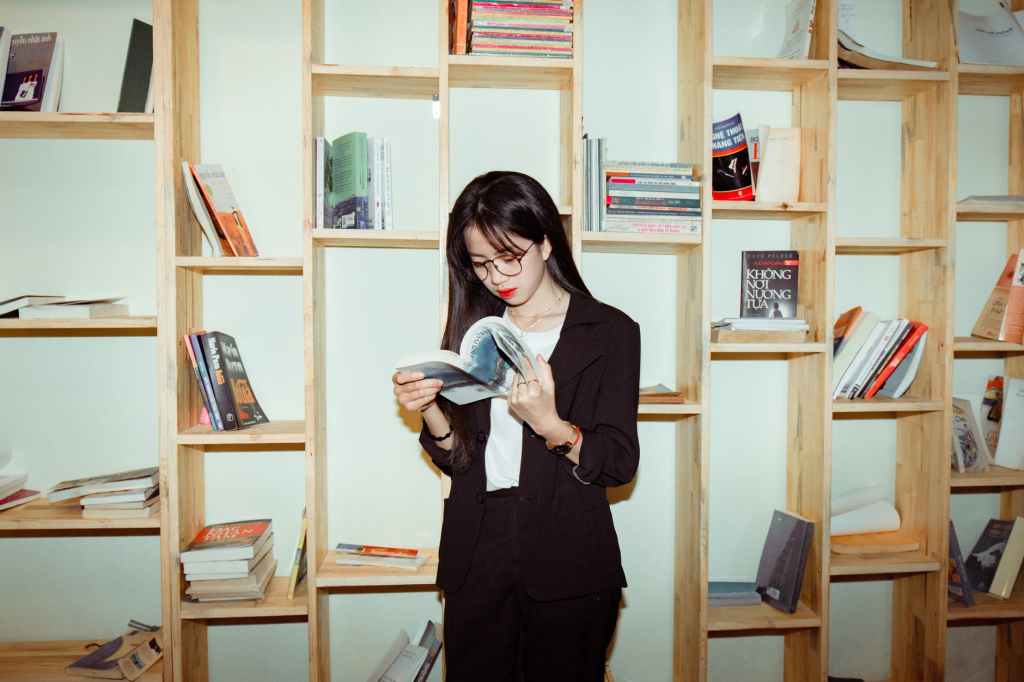
During the pandemic I find myself turning more and more to poetry, to the reading and the writing of poetry.
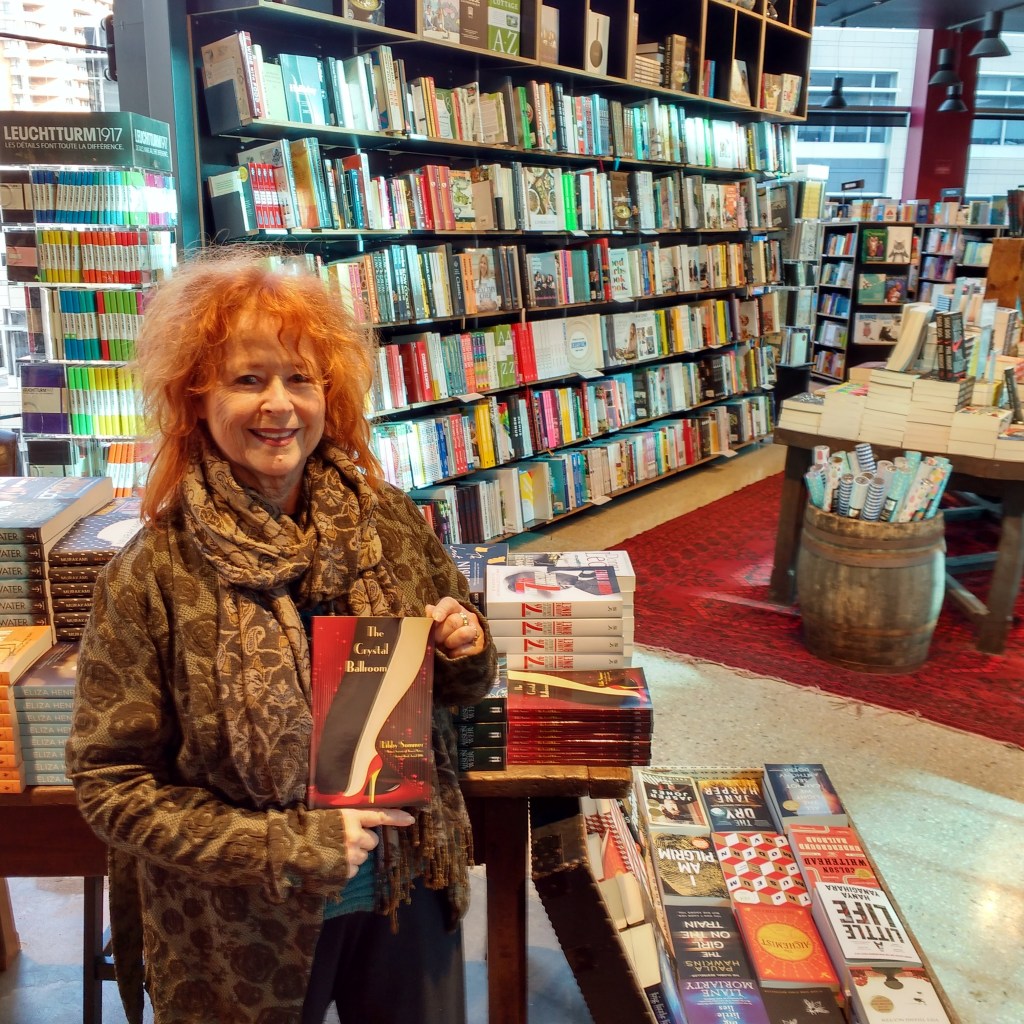
My first poetry collection ‘The Cellist, A Bellydancer & Other Distractions’ will be published by Ginninderra Press in May 2022. I’m currently working on a second collection, loosely themed around mental health.
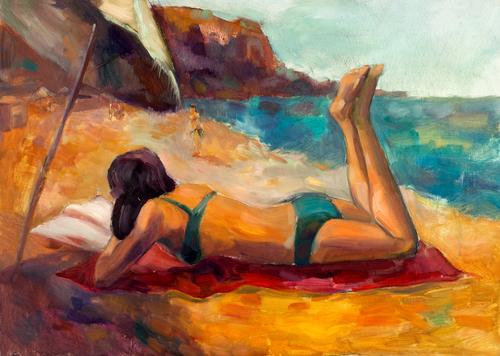
My poem Lying On A Harbour Beach At Noon was first published in Quadrant magazine January 2017. Have a read. Hope you enjoy it:
‘Lying On A Harbour Beach At Noon‘
There is an opening out of the self which happens
when the sun is high in a cloudless blue
and its warmth sinks into the body.
It occurs on a gentle beach.
It is a slow opening,
like waking up in
your own cosy apartment.
When all the tenants wake up
and the blinds snap
the windows open wide.
If you are in bed you struggle to open to the bright light.
If you are elsewhere, feeling your separateness, alienated,
you long for home and think you’re falling apart.
You are not falling apart.
You could open into your own particular self,
feel your skin move away from the bone,
your belly like an open wound tightening
then opening with everything exposed.
You know you can stop the empty grasping if you want to
‘In the first draft of a story, no rules apply. You write and write, ideas come, characters change, situations grow, dialogues take off, speeches become scenes, and surprises occur. … After this first draft exists, then you can bring to bear some of your critical faculties and see what you can see about your creation.’
‘When does a novel begin? The question is almost as difficult to answer as the question, when does the human embryo become a person? Certainly the creation of a novel rarely begins with the penning or typing of its first words. Most writers do some preliminary work, if it is only in their heads. Many prepare the ground carefully over weeks or months, making diagrams of the plot, compiling c.v.s for their characters, filling a notebook with ideas, settings, situations, jokes, to be drawn on in the process of composition. Every writer has his or her own way of working.
Hope you find this post useful. Let me know in the comments if there’s something you’d like to add about your own experience of writing a story beginning.
My poem Between the Islands of the Pacific was first published in June, 2018 in Quadrant magazine alongside poems by Les Murray, Barbara Fisher, Craig Kurtz, Geoff Page, Dan Guenther, Gabriel Fitzmaurice and Graeme Hetherington. Big thank you to Literary Editor, the late Les Murray.
Have a read. Hope you enjoy it.
Between the Islands of the Pacific:
Because by now we know everything is not so blue
out here.
The cities had tipped rubbish into the sea,
and we let them without even noticing.
Not even feeling our breathing clear
as gusts reaching ten knots cleaned up our days.
Not even. Today pure blue sky, blue sea,
out there the horizon drawing a line
below the clouds, the absoluteness of it. Nights
of diesel engines shuddering beneath us.
We lounge on chairs side by side on the deck.
At dusk, we stand at the railing of the ship as the sun
slips into the ocean. In the fresh sea air, their backs turned,
some raise a selfie-stick or light a cigarette while others
As we enter lockdown again, I am reminded of the article David Dale wrote last year in the Sydney Morning Herald about Isaac Newton’s self-isolation during the plague year 1665-66 and how he passed the time.
‘Newton was 23, a student at Cambridge. When the black plague spread there from London, he retreated to his birthplace – Woolsthorpe Manor, near the town of Grantham (later the birthplace of Margaret Thatcher). During what he called his “annus mirabilis”, or wonderful year, at Woolsthorpe, Newton did three significant things:
He invented the mathematical system called calculus,
He drilled a hole in the shutter of his bedroom window and held a prism up to the beam of sunlight that came through it, discovering that white light is made up of every colour (and giving Pink Floyd an iconic album cover), and
He watched apples falling from the trees in his garden and theorised about a force called gravity, which keeps the moon revolving around planet Earth. (He later wrote: “I can calculate the movement of heavenly bodies, but not the madness of people.”)’
I’m very happy to say that I have been publishing short stories and poems in literary journals for 21 years.
‘Around the World In Fifty Step’ was my first published story. It appeared in Overland Literary Journal Autumn, 2000. Since then, more than 40 have been published.
Have a read of this first one. Hope you enjoy it.
Around the World In Fifty Steps:
Joanna lives in a Sydney suburb with her two sons. It’s 1992 and Australia is in recession.
“I’m sick of licking arse in a service industry,” she says of her marketing business. “And I’m fed up with financial insecurity, the feast or famine of too many projects or not enough and chasing new business and getting clients to pay their bills.”
“I’m thinking of renting the house out and travelling,” she tells her grown up sons after reading “The Pitter Patter of Thirty-Year-Old Feet” in the Sydney Morning Herald.
“You’re ready to leave home are you mum?” said one son.
“Why don’t you just go on a long holiday instead,” said the other.
“I want a new beginning, a change of career, a new home, a community of people, an intimate relationship with a significant other, that sort of thing.”
“You could always get yourself a dog,” suggests a friend.
Her son moves out when she puts his rent up.
“Are you going to wait till he buys a new house for cash before you ask for a decent rent?” her mother had said.
“I’ve decided to go and live with Dad for a change,” says the other son.
“I’ll be away for six to twelve months,” Joanna says as she throws her client files on the rubbish tip.
She spends the spring in Italy. The summer in England, Scotland and Ireland. The autumn walking the gorge country of the Ardeche in France.
In the winter she rents a studio apartment in Villefranche on the French Riviera. The studio belongs to a friend of a friend so she’s able to get it at a good price. She works as a casual deck hand on one of the luxury cruisers in dry dock for maintenance. “The first thing I want you to do,” says her boss when she arrives at work on the first day, “is blitz the tender.” After a backbreaking morning of hard physical work cleaning the small run-about she goes to lunch. She orders a salad nicoise and a coffee and realises her lunch will cost her a morning’s pay.
A young and handsome French man who lives in Paris but comes to Villefranche to visit his grandmother most weekends, pursues her. Joanna comes to realise that French men love and cherish women as much as they appreciate good food.
She shops at the markets, paints and reads and falls in love with the light and the colours of the south of France.
“I’m able to live contentedly alone without a regular job, without a car, without speaking the language,” she writes to her friends back home.
In the summer she moves on again before the tourist masses arrive and the rent goes up.
She gives away to her new friends in Villefranche all the things that won’t now fit in her backpack but keeps her paint brushes and pallet knife.
On the Greek island of Skyros she joins a group of landscape artists led by a famous English painter.
“My purpose in leading this group is to help everyone find their own unique style,” says the woman.
Joanna spends the autumn in London meeting with other artists from the island and the woman becomes her mentor and they meet for a cup of tea every week and talk about the isolation of being an artist as well as many other things.
“It’s important to stop and regenerate before the creative battery runs flat,” she says.
Joanna paints every day and goes out with an English man named Clive.
“Your painting is vivid and alive,” says the famous English artist. “I’ll write you a letter of introduction to my contacts in Australia when you’re ready to exhibit this collection.”
Clive has a strong face with chiselled square cheekbones. Dark brown eyes and dark hair that falls in a square fringe on his forehead. His fingers are long and sensitive for playing the piano.
“What are you doing there?” her mother asks on the phone from across the ocean.
“I’m painting,” says Joanna.
“But what are you doing?”
“My mother is like a poisonous gas that can cross from one side of the world to the other,” Joanna says.
Joanna dreams about her sons every night and Clive tells her she cries in her sleep.
She yearns for the bright Australian light and for the sound of the ocean.
She returns to Australia for her eldest son’s wedding.
In Sydney, Joanna supplements her income from the house rental by getting a job as a casual for a clothing company. She unpacks boxes and steampresses the garments. Her back, neck and shoulders ache and she suspects she’s getting RSI from the steampresser.
Clive rings to say he’s coming to visit her.
In preparation for his arrival she moves all her furniture out of storage and rents a small place near the beach hoping that he’ll love it in Australia and decide to stay.
Two weeks before his arrival Clive rings to say he’s not coming and Joanna finds out through a friend that he’s met someone else and is moving in with her.
She tears up his photos and throws his Christmas present at the wall.
Joanna stops painting.
She reflects on the past and all that she’s lost.
I thought when love for you died, I should die. It’s dead. Alone, most strangely, I live on. Rupert Brooke.
Joanna stays in bed most days but still feels so tired that she can only remain vertical for four hours in any twenty-four hour period.
The phone stops ringing.
She rehearses her own death by going to the edge of the cliff.
From the edge she sketches the waves breaking on rocks, the lone seagull on the shore at the water’s edge.
At home she fills in the drawing, blending black charcoal and white pastel reminding herself the darkest hour is before the dawn.
And, after winter spring always comes.
Joanna sells the house where she lived with her children and spends half the money on a home unit overlooking the ocean and the rest of the money on Australian shares.
Her new home faces the east and she can smell the salt from the ocean.
“It takes twenty years to be a successful artist,” echoes in her mind.
On a new canvas she drags the colours of the sunrise across the blank white space.
Repetitive strain injury often starts gradually but can soon become severely debilitating. But there are ways to nip it in the bud – and alleviate the worst symptoms.
1. Take Frequent Breaks
Take short, frequent breaks from repetitive tasks such as typing. A 10-minute break every hour. Use the computer only as much as you have to. Small hand movements, like scrolling on a screen, seem to set off RSI.
2. Type using both hands
It’s like playing the piano; correct fingering is essential. We tend to overuse one side of the body.
Become ambidextrous, e.g. use the mouse in your other hand, lift the kettle with the other hand.
3. Move
Get up from your desk every 30 minutes and move your neck and shoulders to release tension.
4. Use a Fountain Pen
When writing by hand, use a thick grip fountain pen that flows really well, rather than a ballpoint pen. Needing to push down on the pen, even lightly, makes the inflammation of RSI worse.
5. Check the ergonomics of your work station
Keep wrists straight and flat when typing. Sit with thighs level, feet flat on floor (or on footrest), sit up straight, shoulders relaxed, upper arms at sides, not splayed out, forearms horizontal or tilted slightly downwards, so knees and elbows are at a right angle. Keep the top of your screen at eye level and adjust the position of your keyboard, so it’s easy to reach without stretching or hunching. Don’t slouch. Use good posture. To keep wrists straight and flat use a gel wrist rest for the keyboard and the mouse.
6. Keep wrist straight when sleeping
Don’t curl your hands into a fist when sleeping. Some people wear a brace to keep their sore wrist straight.
7. Strengthen the supporting muscles
A physio will give you exercises to do to strengthen the arms. e.g. bicep curls
8. Stretch
Stretch neck, shoulders, arms, wrists. I find yoga is excellent for a full body stretch. The downward facing dog pose can cause discomfit in the hands, but I try to remember to flatten the knuckles to reduce pressure on the wrists.
9. Massage
Like yoga, a regular massage helps keep the body aligned and pain free.
ABR (Australian Book Review) Podcast: Released weekly Wednesdays: reviews, poetry, fiction, interviews, and commentary. For a discussion of Kazuo Ishiguro’s novel Klara and the Sun, his first novel since winning the Nobel Prize, see: https://www.australianbookreview.com.au/podcast.
Apothecary Archive Publishing Hosts The 5 Islands Press Archive: As well as publishing new books by Anne Elder Award-winning poet Gareth Jenkins and ‘Outsider’ artist Anthony Mannix, and the sold-out Sweet Forme: Shake-Speare’s Perfect Sonnets, AAP has taken on the task of archiving the history of 5 Islands, the press founded by Ron Pretty in 1986 (which has published 250 books). See https://apothecaryarchive.com/the-5-islands-press-archive and https://apothecaryarchive.com/the-apothecary-archive-press-1
Australian Haiku Society: Information on Haiku events, journals and a calls forsubmissions to Awards. With links to haiku groups around Australia. https://australianhaikusociety.org/
BBC Radio 4: The Poet Laureate Has Gone To His Shed. Guests such as poet Kate Tempest, actor Maxine Peake, hip-hop performer Testament and more join UK poet Simon Armitage in his writing shed to discuss poetry, creativity, rapping and more. Details, see: https://www.bbc.co.uk/programmes/p085jg48/episodes/player
Brisbane Writers Festival: Recordings of 2020 BWF events with writers such as Evie Wyld, David Mitchell and more via the site and BWF youtube channel. Donations welcomed to pay the artists. See https://bwf.org.au/online-events
Free Film Downloads (NSW, Victoria and ACT): See your local library for access to Kanopy and/or Beamfilm, the free on-demand streaming services providing access to more than 30,000 classic Australian, independent and world movies for library card-holders.
Girls On Key YouTube Channel: See the channel for archived videos (7 months and previous) of female poets and gender-diverse poets from Australia and worldwide. https://www.youtube.com/c/GirlsonKeyPoetry/videos
Indigenous Literacy Day: The Indigenous Literacy Foundation’s work continues year-round. See the site for ways to support including volunteering or making a one-off or regular donation. If you missed it on the day, the virtual ILF Celebration is available on youtube: https://www.copyright.com.au/2020/09/anita-heiss-indigenous-literacy/
Instituto Cervantes: 2 Quixotes Podcast Series. Sydney’s Instituto Cervantes presents five podcasts (archived) examining all aspects of Cervantes’ famous work Don Quixote, past and present; includes Cervantes and Shakespeare and Planet Quixote: Fans and Detractors. Available to play via https://soundcloud.com/twoquixotes; iTunes, Android or see https://sidney.cervantes.es/en/special_activity.htm for other archived events.
James Laidler LitPoetry Australia: See the site for posts, interviews and links to videos of poems set to music including Adrienne Rich’s Diving Into The Wreck:https://www.facebook.com/jameslaidler3280/?fref=mentions&__tn__=KH-R). Also see recently uploaded video (https://www.youtube.com/watch?v=Z3LcxgIdQeQ) of “Litpoetry’s first partnership with a practising poet: Michelle Seminara. Michelle sent me some of her fantastic poetry from her soon to be published collection, Surburban fantasy (coming out in June by UWAP Press), and I chose one of these to interpret into video form” (James Laidler).
Literary Hub: On-line journal with a weekly and daily e-newsletter offers articles on-site or linked. Recent topics include Why Do Some Writers Burn Their Work? More details, see: https://lithub.com/category/features/
Newcastle Writers Festival 2020: Multiple YouTube videos, including Millennial Panic Poems – Readings with Claire Albrecht, Hera Lindsay Bird and Bastian Fox Phelan (57 mins.) See https://www.youtube.com/watch?v=we0ocIv1ra4
NFSA Is OnLine: National Film & Sound Archive. Offers silent shorts, and vintage and more recent newsreels from Canberra’s NFSA, including ‘Brisbane Time Capsule’, ‘Australian Tennis Greats’ and more. See https://www.nfsa.gov.au/
Penguin Books: See the Australian site for The Huddle, an online book club which offers the chance for readers to chat with authors; free to join via https://www.penguin.com.au/book-clubs/2604-the-huddle. See the UK site for collated short articles by writers, agents and publishers.
Pitt Street Poetry: The LEGERE Online Poetry Festival. Weekly-scheduled online event with friends of the PSP press Melinda Smith, Simeon Kronenberg, Geoff Page and more, reading their own poems and poems they love. See:youtube.com/channel/UCYtSvjO3cM8XvelGYDR7ONQ
Poetic City Canberra: See the site (https://www.poeticcitycbr.com/) for recordings of events at the 2021 Poetic City Festival, including: Poet Hazel Hall’s ‘urban nature’ haiga workshop in Glebe Park on 17 April, where participants used their phones to create image and haiku combinations, inspired by the Japanese tradition of haiga (brush painting with calligraphy); see https://www.poeticcitycbr.com/urban-nature-haiku). “Seven poets were commissioned by hosts Aaron Kirby and Zoe Anderson to write poems reflecting a positive vision of the future for the Poetic City Good Future Slam, held on 20 March 2021. See ‘Good Future’ at https://www.poeticcitycbr.com/callouts-and-submissions, a compilation of these poems. (Other highlights include) the Not Very Quiet Drop-in Poetry Writing Session. On 20 March, the editors of Not Very Quiet women’s online poetry journal, Sandra Renew and Moya Pacey, hosted a drop-in poetry writing session at Gang Gang cafe, providing prompts and guidance. These are the poems that resulted.”
Poetry On The Move Podcast: Podcast on contemporary poetics from the International Poetry Studies Institute (IPSI). POTM is an initiative of the University of Canberra’s Centre for Creative and Cultural Research, Faculty of Arts and Design. See https://www.poetryonthemove.net/
Poets.Org: The site for the Academy of American Poets with poets reading their poems, features and more. See https://poets.org/;
Poets Reading The News: California-based collective re-verses news and pop culture; and offers a newsletter with articles and poems. For links and more details, see: https://www.facebook.com/PoetsReadingTheNews/
Queensland Poetry Festival: The Panacea Poets Readings. A twice-weekly offering of short readings from renowned poets and authors including Kirli Saunders and Eileen Myles.See: https://queenslandpoetryfestival.com/panacea-poets/
WriteOutLoud:Poetry-focused British-based site with news, blogs and discussions; an extensive poetry publishing directory; and more. See https://www.writeoutloud.net/news/
Writers Victoria: See the site for news, events, competitions and informative blogs, articles and interviews on self-publishing pitfalls, writers in film, the freelance life, and more at https://writersvictoria.org.au/writing-life
WritersWrite.com (USA): Offers extensive links to sites (mostly US-based) for submissions and no-fee contests; literary, music and film news; ‘Types of Rhyme’; ‘Poems For Kids’; collections of famous poems. https://www.writerswrite.com/poetry/
The Writes4Women Podcasts: Celebrating women’s voices in literature, media and publishing with interviews, launches and podcasts. Free; listen via site or subscribe. See https://www.writes4women.com/
‘Neurologists at Exeter University, using functional magnetic resonance imaging, found that reading poetry activated different brain regions to prose – even the lyrical prose we find in fiction. When the research participants read poetry, it lit up the regions of the brain variously linked to emotion, memory, making sense of music, coherence building and moral decision-making. Poetry, the study’s authors concluded, induces a more introspective, reflective mental state among readers than does prose.’ – Sarah Holland-Batt, Weekend Australian, 21–22 March 2020
If you feel you’re losing your ability to focus on a long book while confined indoors and surrounded by digital screens (as staying up to date on a global pandemic seems to command), try turning to poetry to nurse your shrinking attention span back to life.
In the Time of Pandemic
And the people stayed home.
And they read books, and listened, and rested, and exercised, and made art, and played games, and learned new ways of being, and were still.
And they listened more deeply. Some meditated, some prayed, some danced.
Some met their shadows. And the people began to think differently.
And the people healed.
And, in the absence of people living in ignorant, dangerous, mindless, and heartless ways, the earth began to heal.
And when the danger passed, and the people joined together again, they grieved their losses, and made new choices, and dreamed new images, and created new ways to live and heal the earth fully, as they had been healed.
—Kitty O’Meara
‘Poetry is the quiet music of being human and in these days and nights when our humanity is fully vulnerable and exposed, poetry takes a small step forward. In our separate isolations, a poem is like the Tardis: bigger on the inside. Like spring – to recall TS Eliot – poetry mixes memory and desire.’ – Carol Ann Duffy, The Guardian
This poem by poet Ian McMillan, reminds of us of just what we lose each time a library is closed.
Adult Fiction
I always loved libraries, the quiet of them, The smell of the plastic covers and the paper And the tables and the silence of them, The silence of them that if you listened wasn’t silence, It was the murmur of stories held for years on shelves And the soft clicking of the date stamp, The soft clickety-clicking of the date stamp. I used to go down to our little library on a Friday night
In late summer, just as autumn was thinking about Turning up, and the light outside would be the colour Of an Everyman cover and the lights in the library Would be soft as anything, and I’d sit at a table And flick through a book and fall in love With the turning of the leaves, the turning of the leaves.
And then at seven o’clock Mrs Dove would say In a voice that wasn’t too loud so it wouldn’t Disturb the books “Seven o’clock please …” And as I was the only one in the library’s late summer rooms I would be the only one to stand up and close my book And put it back on the shelf with a sound like a kiss, Back on the shelf with a sound like a kiss.
And I’d go out of the library and Mrs Dove would stand For a moment silhouetted by the Adult Fiction, And then she would turn the light off and lock the door And go to her little car and drive off into the night That was slowly turning the colour of ink and I would stand For two minutes and then I’d walk over to the dark library And just stand in front of the dark library.
‘The astronomer and poet Rebecca Elson (January 2, 1960–May 19, 1999) was twenty-nine when she was diagnosed with non-Hodgkins lymphoma — a blood cancer that typically invades people in their sixties and seventies. Throughout the bodily brutality of the treatment, throughout the haunting uncertainty of life in remission, she met reality on its own terms — reality creaturely and cosmic, terms chance-dealt by impartial laws — and made of that terrifying meeting something uncommonly beautiful.
Rebecca Elson, 1987
‘When she returned her atoms to the universe, not yet forty, Elson bequeathed to this world 56 scientific papers and a slender, stunning book of poetry titled A Responsibility to Awe (public library) — verses spare and sublime, drawn from a consciousness pulling the balloon string of the infinite through the loop of its own finitude, life-affirming the way only the most intimate contact with death — which means with nature — can be.’ – Maria Popova
Elson’s crowning achievement in verse is the poem “Antidotes to Fear of Death,”
ANTIDOTES TO FEAR OF DEATH by Rebecca Elson
Sometimes as an antidote To fear of death, I eat the stars.
Those nights, lying on my back, I suck them from the quenching dark Til they are all, all inside me, Pepper hot and sharp.
Sometimes, instead, I stir myself Into a universe still young, Still warm as blood:
No outer space, just space, The light of all the not yet stars Drifting like a bright mist, And all of us, and everything Already there But unconstrained by form.
And sometime it’s enough To lie down here on earth Beside our long ancestral bones:
To walk across the cobble fields Of our discarded skulls, Each like a treasure, like a chrysalis, Thinking: whatever left these husks Flew off on bright wings.
Hope you felt the positive benefits of reading these poems.
I am thrilled and delighted that my first poetry collection, ‘The Cellist, A Bellydancer & Other Distractions’ has been accepted for publication by Ginninderra Press. The book is due for release in May 2022.
Below is information about the Australian Poetry Publishers directory.
AUSTRALIAN POETRY PUBLISHERS – Poetry Sydney. The Australian Poetry Publishers directory is a portal for poets to have their poems published, to encourage Australian poetry to be purchased and to support Australian Poetry Publishers in enabling poets to have the opportunity to be published.
By the way, when I attended an online course recently titled ‘Pathway to Poetry Publication’, we were told to aim for 100 rejections a year. To apply for everything.
‘My attention span had gone out on me; I no longer had the patience to try to write novels. … I know it has much to do now with why I write poems and short stories. Get in, get out. Don’t linger. Go on.’
‘Every great or even every very good writer makes the world over according to his own specifications.’
‘It is his world and no other. This is one of the things that distinguishes one writer from another. Not talent.’
‘Isak Dinesan said that she wrote a little every day, without hope and without despair.’
‘”Fundamental accuracy of statement is the ONE sole morality of writing,” Ezra Pound.’
‘It is possible to write a line of seemingly innocuous dialogue and have it send a chill along the reader’s spine – the source of artistic delight, as Nabokov would have it. That’s the kind of writing that most interests me.’
‘That’s all we have, finally, the words, and they had better be the right ones, with the punctuation in the right places so that they can best say what they are meant to say.’
‘I like it when there is some feeling of threat or sense of menace in short stories.’
‘I made the story just as I’d make a poem; one line and then the next, and the next.’
‘V.S. Pritchett’s definition of a short story is “something glimpsed from the corner of the eye, in passing.” Notice the “glimpse” part of this. First the glimpse.’
‘The short story writer’s task is to invest the glimpse with all that is in his power. He’ll bring his intelligence and literary skill to bear (his talent), his sense of proportion and sense of the fitness of things – like no one else sees them. And this is done through the use of clear and specific language, language used so as to bring to life the details that will light up the story for the reader. For the details to be concrete and convey meaning, the language must be accurate and precisely given. The words can be so precise they may even sound flat, but they can still carry, if used right, they can hit all the notes.’
Raymond Carver, Fires, Vintage 1989
So who is Raymond Carver?
Raymond Carver, in full Raymond Clevie Carver, (born May 25, 1938, Clatskanie, Oregon, U.S.—died August 2, 1988, Port Angeles, Washington), American short-story writer and poet whose realistic writings about the working poor mirrored his own life. – Encyclopedia Britannica