‘Samuel Beckett, answering a hopeless question from a Paris newspaper – “Why do you write?” – said it was all he was good for: “Bon qu’a ca.” Georges Bernanos said that writing was like rowing a boat out to sea: The shoreline disappears, it is too late to turn back, and the rower becomes a galley slave. When Colette was seventy-five and crippled with arthritis she said that now, at last, she could write anything she wanted without having to count on what it would bring in. Marguerite Yourcenar said that if she had inherited the estate left by her mother and then gambled away by her father, she might never have written another word. Jean-Paul Sartre said that writing is an end in itself. (I was twenty-two and working on a newspaper in Montreal when I interviewed him. I had not asked him the why of the matter but the what.) The Polish poet Aleksander Wat told me that it was like the story of the camel and the Bedouin; in the end, the camel takes over. So that was the writing life: an insistent camel.’ – extract from the Preface of The Selected Stories of Mavis Gallant.
Have a read of my short story, ‘The New Baby’ first published in Quadrant Magazine. Hope you enjoy it.
THE NEW BABY;
In the second month after the baby was born Kate came out to meet her mother wiping her hands on her grey tracksuit pants. Kate’s hair was tied back off her face revealing tiny white milk spots above her cheeks. Anny told her that already she looked so slim and good. Kate ran her hand over her rounded stomach, arched her back and stuck her belly out at her mother.
They both laughed.
Anny had rushed out early that morning to get to the supermarket before going over to her daughter’s house to babysit. But she was happy to be available to help Kate. After all, her own mother had been too busy to help her when Kate was born.
Kate had rung over the weekend and asked what Anny’s plans were for Monday.
‘I can fit in with you,’ her mother had said. ‘I can come over whenever it suits you.’
‘I’ll go to aqua aerobics then. I should be back by ten thirty. So if you can get here at nine. And bring lunch.’
‘Will I stay on and make dinner?’
‘No. Don’t stay on.’
‘We’ll see then. We’ll see how we go.’
After Anny had been to the supermarket she’d discovered that she’d forgotten to bring the Marie Claire cookbook and the soy sauce, the ginger and the vegetable stock cubes that she had already in her kitchen. So she had to quickly dash back home to Bondi. And then, just before the Cahill Expressway there’d been a breakdown and the traffic was lined up and she was stuck in a bloody traffic jam before reaching the Harbour Tunnel.
‘What kept you?’ Kate asked by way of a greeting as her mother lifted the shopping bags and the laptop computer out of the boot.
Anny’s own body shape was disguised in black trousers and a black vee-necked tea shirt, although she’d contrasted and softened the black with a long amethyst necklace.
Kate inspected the necklace around her mother’s neck. She picked it up, tugged at it. Banged it playfully against her chest. Is it new? Had she bought it recently? she accused Anny. Or did Anny only imagine it was an accusation? No. It wasn’t new. She’d bought the necklace at the markets in Beijing last year when she’d done that Cycling in China trip. She’d chosen the stones and had it made up on the spot.
Kate gave her a final inspection. Flicked her eyes up and down her mother’s body before giving her the okay to proceed towards the front door.
The windows of the red brick house rattled as a news helicopter vibrated in towards landing at Gore Hill.
*
Kate and Anny carried the shopping bags to the kitchen. They tiptoed along the wooden corridor past the closed door of the baby’s room. ‘Don’t use the doorbell anymore because the noise wakes the baby,’ said Kate. ‘Just let yourself in with your key.’ Anny breathed in the familiar smell of baby shampoo and fresh linen in the bathroom. The morning sun shone through the blues and reds of the leadlight window highlighting the plastic baby bath that was turned upside down inside the big bath.
*
Just weeks before the baby was born Kate and Anny had gone to choose a baby bath. They had already begun the habit of Mondays together. It had taken ages to find the right white plastic baby bath. They must have looked at every bath in Chatswood. Kate had wanted one that had a hole down one end and a plug so she could empty the bath without tipping the whole thing up. They’d walked the length and breadth of Chatswood.
Back home they’d re-arranged things in the spare room to make space for the baby. They’d emptied drawers, taken underwear and socks out of one place and stacked them in with others, re-organised the shelves of the laundry, re-located Kate’s husband’s wine collection.
Dan didn’t complain about his wine being re-located, but he did say he didn’t want his mother-in-law handling his underwear. ‘It’s all a matter of intimacy and certain things being private,’ he’d said.
In the weeks after the baby was born Anny had come over every day to help. She’d cleaned up the kitchen, unstacked the dishwasher, made lunch, folded up the clean linen, brought the washing in.
*
As Anny unpacked the shopping Kate gave her mother the instructions:
‘Don’t feed him before ten. Preferably not before 10.30. The breast milk is in a bottle in the fridge.’
‘Yes. I didn’t realise that it’s better to feed him later rather than sooner so he’s more willing to take the bottle from me.’
Last time Kate had come home early and he’d refused the bottle because he could smell his mother and knew he had a better option.
‘Run the water from cold to hot,’ Kate continued. ‘Then let it sit in the hot water for five minutes. Check it on the inside of your wrist. And don’t forget to give it a good shake.’
‘Yes. Yes. I know how to do it but show me again anyway.’
In the small bright kitchen two hand-painted ceramic plates were secured on either side of the wooden window that looked out on to the backyard. Anny put the food into the fridge and then set up the computer on the dining room table.
Kate waited by the front door for her friend.
She sat down on the steps.
*
The wind picked up flapping the blue and white awning of the house next door. In the front garden a pile of magnolia petals lay in a heap on the grass. Kate sat there at the top of the stone steps at the front door. She leant down. Rested her head in her hands. She felt the pounding of her heart against her chest, the cold sweat on her hands. She tried to breath in. Tried to slow her breathing. She’d never had this before. Gasping for breath. It would happen even when she was lying on her bed trying to rest. Her heart would bang hard against her. Bang, bang, bang. Expecting the baby to wake at any moment. The sensation frightened her. Was she going crazy? And the recurring nightmares. The house burning down and she couldn’t get the baby out in time. And the crying, wanting to cry all the time. And at strange times. Like when she was out shopping with the baby. She couldn’t even go shopping and get a couple of things without him putting on a performance.
*
Anny heard her in the hallway pacing up and down.
‘Why don’t you ring and check your friend is coming for sure?’ she said to her daughter.
‘Because we spoke only yesterday and confirmed the arrangement.’
Kate couldn’t keep the irritation out of her voice.
She walked down the hallway and into the bedroom to check the time on the
clock beside the bed. She sat down on the white linen bedspread. Looked across at the antique pine dressing table and her books piled high: “Settling Techniques, Newborn to 6 Months”, “The Baby 0-9 Months”, “Motherhood: making it work for you”, “Meditations for Women Who Do Too Much”, “The Baby Swings Book”, “Baby Love”. She got up and went back into the kitchen to look at the time on the microwave clock.
‘Damn it,’ said Kate. ‘Now we’ll be late for the class.’
‘Why don’t you go on your own and I’ll tell her that you’ve gone when she arrives?’
A car door slammed outside.
Kate picked up her swimming bag and hurried to the door. It was someone for next door. She came back in.
Anny suggested again that she ring her friend and say she’d meet her there.
Kate checked the time on my watch. Then picked up the cordless phone and dialled.
‘I thought I could meet you there,’ she said into the phone. ‘I thought you might be rushing and it would save you some time.’
Silence as she listened to her friend’s reply.
‘Tell her you’ll meet her there,’ Anny insisted.
‘I’ll wait then,’ Kate sighed into the phone. She hung up. With the phone still in her hand she moved towards her mother. Her eyebrows were pressed together in an angry frown.
She used the aerial of the phone to prod Anny in the arm.
‘Stop it,’ she hissed. ‘Just stop it.’
*
‘Stay out as long as you like,’ Anny encouraged when Kate’s friend finally pulled up in the car. “Make the most of it. If I need you I can ring on the mobile.’
Kate hoisted her swimming bag up on to her shoulder. Kissed her mother on the cheek.
‘I can handle him,’ Anny assured her. ‘I feel confident. The only thing I can’t manage is if he gets hysterical like he did last night.’
‘Take him for a walk in the pram if he cries too much. He got hysterical last night because he was overtired.’
Anny waved goodbye from the front door.
*
After Kate left Anny swung into action. Watered the pot plants, adjusted her rearrangements from last week – moved the wooden plant stand from the lounge room to the dining room, the blue and white porcelain plant holder to the top of the plant stand. Kate said it was okay. If Dan didn’t like the re-arranging he’d put everything back where it was.
Eleven fifteen and no sound yet from the baby’s room. Anny shut down the computer and went into his room to check he was still breathing. She opened his door moving quietly as she stepped over a teddy bear on the floor. She approached his white painted cradle and looked down at him as he lay on his back, his head slightly to the side and tipped down against his chest. His long eyelashes fluttered against his cheeks, the tip of his button nose catching the light from the window. His rosebud lips pulsed ever so slightly together.
When he woke up she warmed the milk and carried him into the lounge room. She held him close against her body for the twenty minutes it took him to drink the bottle. One of his tiny perfect hands stayed wrapped around her thumb.
*
The drought in NSW continued through the winter. ‘Even Sydney has experienced one of the driest stretches since European settlement,’ said Agriculture Minister, Richard Amery.
Anny had been to the gym and hoped to ease the aches in her legs by relaxing in a hot bath. The telephone rang while she was running the bath. She stopped and listened and then switched off the taps. She went to answer the telephone.
‘Hello,’ she said. ‘Anny here.’
‘Mum. It’s me.’
‘How are you darling? I’ve been thinking about you and wondering how you were going.’
‘I so much didn’t want this to happen,’ she said. ‘I was at breaking point. Things were getting worse and worse. But they’ve looked after me here. They’ve looked after me very well.’
‘That’s good darling,’ Anny said trying to sound calm and positive.
‘I expressed for the last couple of days and they gave him the bottle at 3.30 in the morning. He slept for seven hours last night. The first time ever. And the first time I’ve slept deeply since he was born.’
Anny could hear gentle classical music playing in the background.
‘Who wouldn’t go a bit mad with the sleep deprivation alone? said Kate. ‘Let alone all the other stuff. And the hormone thing. It’s like having PMT for three months.’
So what do you think you’ve learnt from the week?’
‘I suppose for me not to feel that I have to be totally responsible and committed to him twenty-four hours a day and being with mothers in a similar situation helps too. That there are a lot of people whose support I can utilise. I was able to hand over to the midwives and have a rest. It took the whole responsibility off me. They pretty much said that he’d picked up where I was at.’
‘Did they say anything else?’
‘Take a chill pill.’
‘A chill pill? How will you do that?’
‘It’s an expression. Try and go with the flow much more. They said it’s not good for the baby for me to be like this, which makes me feel great! They offered to show me more information about the effects on the baby, but I didn’t want to see. My counsellor said that people like me are much more connected. We are sensitive and intelligent people. Qualities that she really likes in a person. I asked her couldn’t I just do Cognitive Behaviour Therapy, and go to yoga twice a week. She said all those things will help, but they won’t change the brain chemistry. And she said I’ll bash myself up even more because I’m not able to change my thinking with the CBT.’
From the window, as Anny watched, a storm came in, rolling in across the dark metallic grey of the sea. She cradled the phone between her neck and her shoulder. Pressed her hands against the window. Felt the cold glass against her palms. Watched the imprint of hands recede as she held the phone to her ear.
‘So what can the people who love and care about you do for you?’ she said.
‘When someone is at my place that I can go out and have a break from him. Giving me time away from him. I was thinking of going home for a week or two and see how I feel before making a decision about going on medication.’
The first of the rain started to fall as Anny watched.
‘I always felt total love and connection to him,’ said Kate. ‘But I knew he was unhappy and there was nothing I could do. That was very painful for me. To see my baby so distressed and not being able to do anything for him.’
The wind blew the leaves on the trees in front of Anny helter skelter as the storm built up. Hail the size of small marbles landed on the railing of the balcony, bounced to the ground, hit the pot plants.
‘I may go into denial when I get home,’ said Kate. I need you and Dan to tell me if I get worse. I need Dan to say, “Honey, you’re getting worse.” You could say that to me too. So how’s the week been for you?’
‘Okay. I didn’t worry too much about you because I knew you were in good hands – that you were being looked after. I knew you were in the best possible place. I didn’t worry as much as I do sometimes. It’s hard not to because we’re so inter … inter- connected. You and me.’
‘Inter-woven.’
‘Yes. That’s a better word. Interwoven. We’re interwoven.’
The rain eased. The pot plants all wet and shiny.
‘How did the parents’ night go at the hospital?’
‘The idea was for the fathers to talk about how they’re feeling but it didn’t turn out that way. They got on to talking about settling the baby – and the conversation stayed on settling.’
*
Anny walked into the bathroom and turned the taps back on. She added a scoop of Radox, picked up a washer from the end of the bath. She warmed it in the hot water, pressed it against her face. Then lay back against the porcelain. She closed her eyes. Thought about her own feeling of helplessness as she’d watched her daughter in distress.
She remembered when Kate was a baby. Her own mother’s nagging. Was the baby getting enough to eat? Did Anny have enough breast milk? The constant worrying about why the baby was crying. And her mother undermining her confidence, telling her that the baby was crying because she didn’t have enough milk to feed her baby.
‘Shut the door and walk away,’ was her mother’s advice. But the doctor had said she wasn’t to leave Kate to cry. He said Kate was a sensitive baby and would withdraw from her if she was left alone to cry.
Anny rubbed the coarse fabric up and down her arms, then up and down her legs. She lay in the bath for a time and then got out. She looked in the mirror as she dried herself. Turned her body sideways to the mirror. Pulled her stomach in, tucked her bottom under, stood up straight.
*
A warm day. Anny watched the sun rise in the morning. Saw the red sun hidden behind a cluster of clouds. The colours of the clouds changed each part of a second as she watched. More pink. Less mauve. The glow extended out along the horizon. The sea flat. The birds making noises like soft percussion triangles.
*
Kate and her mother sat on the floor of the bathroom as Kate bathed the baby in the big bath. A deep old-fashioned porcelain bath perched above black and white tiles. Kate kept splashing warm water on to his back to keep him warm as he stood up inspecting the taps, investigating the exit of the water from the faucet. His back wet and shiny. His bottom dimpled.
Kate looked across at her mother, a frown on her face and a dipped inflection in her voice. ‘I heard a terrible story this week, she said.. ‘It’s a horrible story.’
Anny could tell by Kate’s tone that perhaps it would be better if she didn’t tell her the story. But she didn’t say this. She took a deep breath instead.
‘You know Vivian who lives across the road?’ Kate said. ‘Vivian from the mothers’ group.’
Anny nodded.
‘Well it’s a friend of Vivian’s. They’ve known each other since they were children and their mothers are friends. The friend’s mother thought her daughter seemed not herself after the birth of the baby. The friend’s mother had said to her son-in-law that she wanted to discuss it with him. Before she was able to talk to him the daughter tried to kill her husband. She attacked him. Tried to strangle him. Then she jumped off the balcony with the baby in her arms.’
‘Oh no! That’s dreadful!’
‘The baby died and the woman is in hospital.’
‘That’s a dreadful, dreadful story.’
‘She’d thought that if she killed the whole family then they’d all be together in heaven.’
The baby sat down in the bath, then picked up a blue plastic scooper and used it to drink the bathwater. He smiled up at Kate and Anny as they leant over the bath. He pushed some plastic toys down from the side of the bath and watched the toys splash into the water.
‘How will it be for her when she realises she’s killed her baby?’ said Kate. And what about her relationship with her husband?’
Anny and Kate looked at each other. Kate reached down and picked the baby up out of the bath. As she wrapped a towel around him he put his arms down by his sides and leant his head against her chest. She held him tight against her.
*
Anny could hear Kate and her friend and the friend’s baby as they came in the front door. Kate introduced the friend to her mother. Her name was Alice. Anny offered Alice a cup of tea and the three of them sat around the dining room table. They drank tea out of pretty china cups – half open buds and violets and forget-me knots. The midday sun slanted through the window.
Alice fidgeted with the teaspoon on her saucer. She picked the spoon up, turned it over, put it down again. ‘I wish my mother was here,’ she said.
‘Where’s your mother?’ Anny asked.
‘In England. She lives in England. England is so far away. I ring her up but she’s busy doing her thing. And my father complains about the phone bills.’
‘That’s a shame,’ Anny commiserated.
Alice’s baby watched her, listened, turned his head towards her. Her voice lowered. ‘It would be so nice to sit down with my mother and to be able to talk like this. To be able to say, “The baby did this or she did that. The baby rolled over.”’
Kate and Anny looked at each other and nodded in agreement.
*
Anny remembered the last time she had seen her own mother. Anny had always felt that her mother wasn’t any good at the business of mothering. Motherhood hadn’t come easily to her. Perhaps she should never have been a mother; certainly she was one too soon. But hers was not an age in which women felt they had a choice.
It was five years ago now since that afternoon before she died. They were sitting in the visitors’ sunroom of the Jewish Hospital in Woollahra. Her mother’s hair an immaculate coiffure as always. A pale pink dressing gown tied around her waist. Anny had rung her children and arranged to meet them at the hospital. What she remembers most clearly about that afternoon is her mother’s anger because Anny had taken so long to wash and dry one of her nighties. Taken longer than her older sister who usually took the dirty nighties home and who had a clothes dryer. Anny had hung the nightie on a clothesline in the sun in her backyard and she’d thought it smelt particularly fresh and clean. But her mother was angry with her for not bringing the nightie back sooner. What took her so long? Wasn’t there anything she could do properly? Couldn’t she get anything right?
*
The scent of spring jasmine in the cooling air. A row of cherry blossom trees blossomed soft pink against dark wooden stems. Anny stood at the front door and waved goodbye to Alice as Kate helped her out to the car. She looked across at a blood-red hibiscus in the garden next door. A dog asleep on the grass.
Kate came back and stood beside her mother at the front door. Put her arm all the way around her. Patted her on the back. They leant into each other. Then went inside and closed the front door.
In the Saturday-afternoon feedback group recently, we talked about the ‘off with his head’ or ‘out-it-goes’ part of writing. We acknowledged that as a group we’d always been very supportive and encouraging of each others work. That was because we were all in it together. Our critiquing was not telling lies; it was from a place of open hearted acceptance. Everything you put on the page is acceptable.
Sometimes someone says, ‘I want a rigorous no-holds-barred assessment of my work.’ But what do you say to them when the writing is dull and boring? Don’t give up your day job? It doesn’t sit comfortably with most of us to be directly critical of someone’s writing. It’s like telling someone how ugly their baby is. All of us find it hard to separate our writing from ourselves, and are prone to take criticism personally.
The feedback sandwich is a widely known technique for giving constructive feedback, by ‘sandwiching’ the criticism between two pieces of praise or compliments.
Yesterday, as we passed around copies of our work (just a page or two) we started to address what William Faulkner famously said:
‘In writing, you must kill all your darlings.’
First of all, we looked for the juice in each piece. Where did the writing come alive? ‘Get rid of the rest,’ we said. ‘Off with his head—out it goes.’ It’s very difficult to be this honest, and not everyone wants to hear it. ‘I simply want gentle support and a few corrections,’ some of us might say.
Be willing to have the courage to look at your work with truthfulness. It’s good to know where your writing has energy and vitality, rather than to spend a lot of time trying to make something come to life that is dead on the page. Keep writing. Something new will come up. You don’t want to put your readers to sleep by writing a lot of boring stuff.
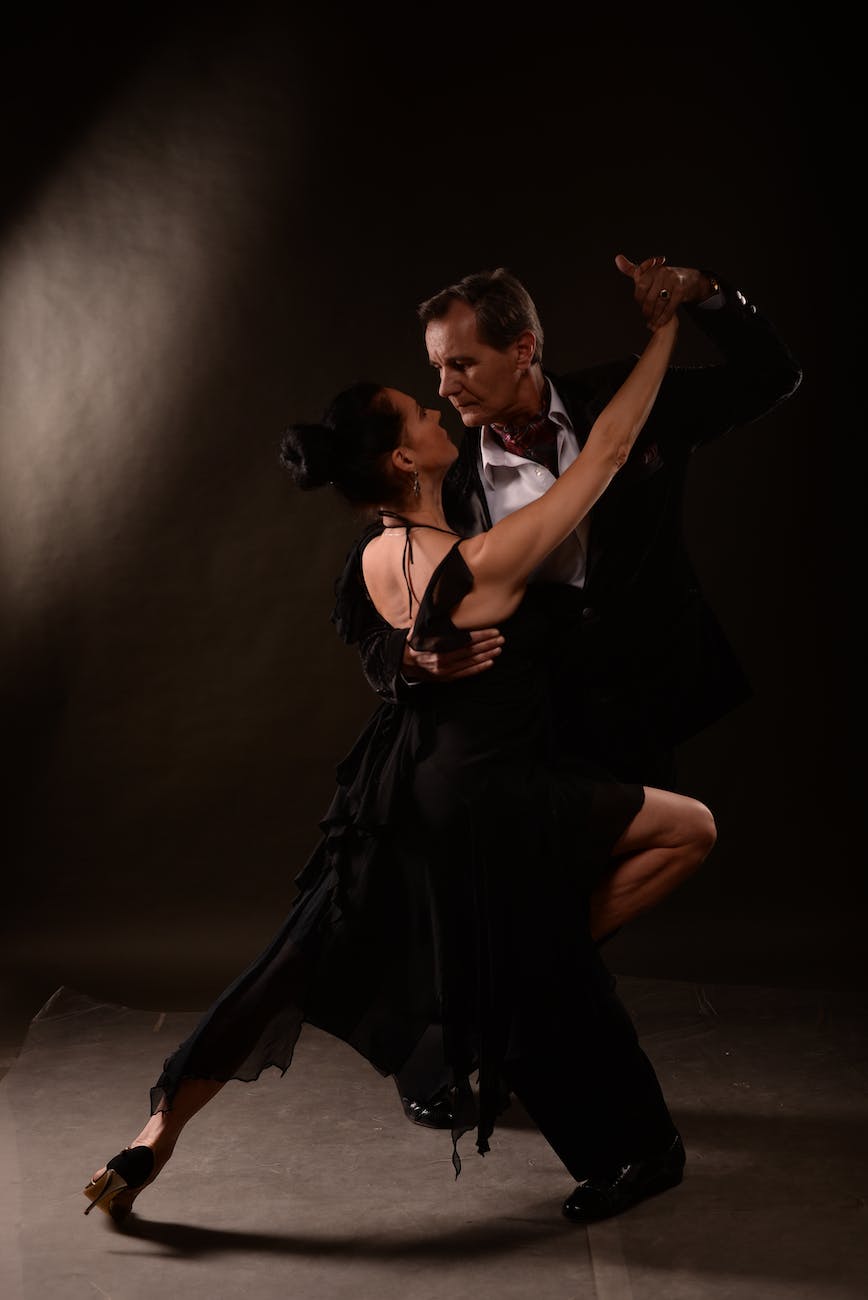
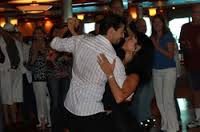
Tango is a passionate dance. A conversation between two people in which they can express every musical mood through steps and improvised movement. (Source Unknown)
1.
Just before nine o’clock in the evening, Sofya gets out of her car and looks up at the sky. She has sensed a shift in the weather. There is another breath of wind, a whispering in the air, but the clouds are stagnant against the dark night. She turns and moves downhill towards the club, ejecting the chewing gum out of her mouth with a loud splat into the bushes, feels the first drops of rain on her bare arms. She passes the public phone box where frangipanis lie on the grass, picks one up, sniffs at it, throws it back, then quickly enters the club.
It is not one of her best days. She doesn’t know why. Her dress is not uncomfortable, her skirt just right around the waist, the outfit not faded or balled, her black strappy shoes high, not too high, wrapped around her feet following the shape of her instep, and the new shampoo and conditioner make her hair curl naturally around her face. For reassurance she strokes the pearl and bronze necklace nestled into the groove of her neck.
At reception she pauses to flash her card and takes the lift to the third floor and then continues along the long hall, at the end of which is the thud and bounce of Latin American dance music.
She turns into the room, which is set up with tables and chairs in a horseshoe shape around the wooden dance floor, the dee jay on the stage above and a bar at the back of the room. She sees Nino down the front sitting with that older couple he usually sits with and wonders whether to join them or not. It is not easy coming to these places. It takes a whole day of psyching herself up.
2.
‘Sofya, you’ll never find a rich husband if you’re fat,’ said Mother, raising her glass. It was Mother’s 53rd birthday. Her hair was silvery with flecks of white now that she’d let her own natural colour grow through.
‘How would you know?’ Sofya’s older brother said picking his nose and flicking the snot across the table at his mother. Everyone said he was a radical, that boy. He did things a certain way. But somehow they still thought the sun shone out of his arse. Everyone laughed. The entire family – even the aunt and uncle and the two boy cousins – drinking the kosher wine at the seder table. The moment passed.
Alone in her room, Sofya sang along with the radio station, turned way up. The Happy Wanderer. ‘I love to go a wandering along the mountain streams, and as I go I love to sing, my knapsack on my back.’
She would practice her leaps across the room in front of the mirror. See how far she could cross in one amazing jump, her back leg extended behind her as she leapt into the air from a running start.
3.
She dances with Nino at the Randwick dance every Friday night. Now that Nino is semi-retired he dances four nights a week, plays tennis and works out at the gym when he’s not working part-time as an accountant. He has grey hair combed back from a high forehead and around his neck is a brown leather thong with a small silver medallion. The leather thong makes him look more attractive, more unusual, more interesting. He likes to show the younger women how to dance.
The tall Portuguese man with the dyed black hair (she assumes it’s dyed), described Nino as a vampire. But then he is probably jealous of the number of different women that Nino is able to get to join him at his table.
Jordan, the taxi driver, who dances to keep his weight down, said that Nino only likes to dance the tango so he can feel the women’s breasts pressed against him.
‘He didn’t say that,’ said Sofya in disbelief. ‘Nino is a gentleman, he wouldn’t say that.’
Jordan was ready to wave Nino over to confirm the story.
Sometimes Sofya sits by herself with her coat on the chair beside her, pretending she is here with a friend, and the friend is on the dance floor and that’s why she’s sitting there alone.
4.
Sofya works freelance and is working on a book of family history that she has been commissioned to write. Things have changed very much, several times since she grew up, and like everyone in Sydney, she has led several lives and she still leads some of them. Since she started the book she has gone out with two South American tango dancers, one Irish dance teacher, and a revolutionary playwright who patted her thigh and said, ‘Where is this relationship going? I would like it to be more. My wife isn’t interested in sex any more.’
Her children are grown up and lead their own lives. Sometimes the sheer unpredictability, the randomness of the way she is living, what she is doing, fills her with exhilaration.
For the past six months she had been seeing a man from Leichhardt. As far as she can see, this is over. She calls him J, as if he were a character in a novel that pretends to be true.
J is the first letter of his name, but she chose it also because it seems to suit him. The letter J seems to give a promise of youth and vitality. It is upright and strong, with very straight vertebrae. And using just the letter, not needing a name, is in line with a system she often employs these days. She says to herself, France, 1993, and she sees a whole succession of scenes, the apricots and salmons of the buildings and the turquoise of the Mediterranean Sea.
5.
Dressed for salsa? said the doctor with a grin as he closed the door behind her.
I don’t remember telling you that I danced salsa, she said as he extracted her file from the drawer of the metal filing cabinet. I think you’re getting me confused with someone else.
In O’Connell Street or Liverpool Street. I can picture it.
I used to dance at Glebe Town Hall on Sunday nights, but that was ages ago.
Your salsa phase, he confirmed.
He moved from the filing cabinet to the large grey seat opposite her.
Any stallions beating at your door? he said with a note of expectancy in his voice.
They’re all pathetic. It’s hopeless.
He gasped in a pretending way.
Not all of them, she corrected herself. Just the ones I engage with.
He wrote that down.
It’s all over with the Fireman, she volunteered. He’s married anyway.
You can cross Fireman off the list now.
I’ve been through the list. It’s been so many years. I’ve met one of everything.
Z, he said with a smirk. Of course. Zookeeper.
She shrugged, remembering the organic gardener.
I’ve probably met one of those too.
6.
The last time she saw J, or rather, what she thought would be the last time, she was standing at the turnstiles at Town Hall station and he came through the gate sweating, his face and body flushed, his hair damp.
It was a hot night in September. They’d had a meal together at a Spanish Restaurant in the city. She remembers how flushed his skin was, but has to imagine his boots, his broad white thighs as he crouched or sat, and the open friendly expression he must have worn on his face, talking to her, she, who wanted nothing from him anymore. She knows she was conscious of how she looked standing there under the neon light, and that in this glare she might seem even older to him than she was, and also that he might find her less attractive.
He went to get a cup of coffee, then came back out. He stood beside her and looked down with his arm almost around her. She sensed his hesitation to touch her. She kissed him on the cheek and he looked deep into her eyes and she knew what he wanted her to say. Saw the pleading expression he must have worn on his face.
7.
Have you lost weight? she asks Dan, one of her regular dance partners as she flicks her foot back and behind his knee into a gancho. The movement is like a horse trying to shake its shoe from its hoof.
Make sure your heel is up when you do the gancho, Alfred had told her. Sweep your leg along the floor and out. Not up with the leg, but up with the heel.
She reminds herself to make sure her shoulders are down. Firm arms, shoulders down. She’s sure that’s why she gets so much neck pain.
Alfred, bald, shiny-headed Alfred, who Nino says looks like a gangster with his shaved head and black tee shirt, still thinks everyone on the dance floor sets out to block his movement around the room. There’s no doubt about him. At least he started out friendly enough.
Dan smells good for a change and he’s lost his big stomach that used to come between them. Sometimes she would gag with the smell of him.
Yes, he says as they bounce lightly to the beat of a milonga. I got sick with the flu for a couple of weeks last year and decided to keep the weight off.
During a break in the sets she sits down next to Alfred.
What do I look like? Alfred says inclining his head towards the dance floor. I wish I knew what I looked like.
I don’t know, she says. I wasn’t watching you.
He sighs with disappointment.
And he’s made up a step. She must tell him she doesn’t want to do his stupid made up step which is a cross with her left leg, but when she feels his opposite hip against hers she doesn’t know if it’s a gancho or not. But the main problem, which she must tell him, is that he pulls her off her axis, her centre.
Would you do it if it wasn’t made up? he says now they’re up and dancing a vals.
It’s not that I won’t do it, she says. I can’t do it. I’m not deliberately not doing it, she says unable to disguise her anger. Should she make a scene and leave the dance floor and leave him standing there because he’s being so rude and aggressive because she can’t do his stupid made up step?
Do you speak to the other women like you speak to me?’ She says not caring who can hear.
I can’t understand why you won’t do it.
I can’t do it.
I wish I knew what that little voice was saying in your head.
His hip pushes hard into her, very hard, so she is forced into the backward lock from the left leg.
8.
Wheep wheep, wheep wheep, wheep wheep, went the big shiny knife against the hard grey stone. Father would carve the roast lamb each week for the Sunday lunch. After lunch they’d go to the hospital to visit Grandpa. Grandpa without his left leg, then without his right leg. Gangrene. He died piece by piece.
Left foot, left leg. Right foot, right leg.
9.
The women at the dances look beautiful in a cruel way, with their blood-red lips and their nails long and sharp. They are not very friendly. Sofya is just a casual, after all. She hasn’t signed up for a ten week course and she doesn’t go to the beginners lesson at 7.30.
Things have not changed very much on the dance scene since she started there so many years ago. ‘Same old, same old,’ as she heard the Turkish woman describe the previous Saturday’s dance at Marrickville to the Egyptian woman with the red red lips.
What a beautiful smile you have, said the woman on the door who takes the money. Did anyone tell you that your whole face smiles when you smile?
She’s nice. She’s the partner of the man who runs the dance. She says she doesn’t mind that she doesn’t get to dance on the Friday nights because she dances nearly every other night of the week at the lessons. She’s very beautiful. Russian with long blonde hair against her tanned smooth olive skin, very long shiny legs and always one of her very short cut up the side skirts that she makes herself. She’s Sofya’s age.
10.
When Father came back from the factory in the evenings, the children, pale and silent, joined him for his dinner. After dinner, Father listened to the radio in the lounge with his newspaper, and at seven Mother, having washed up, joined him. The family were together only at dinner, after which Mother and Father sat behind their newspapers and the children went upstairs to their rooms. Sometimes a stupid child would pull the wings off a fly or even a butterfly and watch it suffer.
11.
A new man makes his way around the dance floor. Good posture. Straight back, strong arm position. Looks like he’d be a good strong lead.
The music stops and he comes over and sits on the spare seat beside Sofya.
‘It’s all too heat making for an old man like me,’ he jokes as he fans himself furiously with a Bingo brochure. ‘I’m a Postman from Perth on holiday in Sydney,’ he says by way of an introduction in a well-modulated English voice. ‘I could have had a two week holiday in Paris for the price of his three day trip to Sydney.’
She smiles. ‘Have you read The Post Office by Charles Bukowski?’
‘We’re not very cultural in Perth.’
‘You speak very well for a Postman.’
‘Well,’ he shrugs, as if that is a whole other story that he will not go into at this stage. ‘Dancing the tango allows me to meet famous people all over the world,’ he says. ‘In Paris, London, New York. My name is Fabian by the way.’
‘That’s a very romantic name. I grew up in the era of Fabian the pop star.’
‘In Perth we all live in one big Waiting Room,’ he adds. ‘We’re all waiting. Not much culture or adventure. There are many French and Italian speaking women who dress like the women you see in Paris. The tango community is very close. If one person learns a new step, then everyone learns it. Two weeks later, we’re all doing it.’
12.
‘You’ve lost weight?’ the doctor said when she’d walked in.
She shrugged. ‘It’s wonderful what black does. Just one item of black.’
He looked down at his shoes with the regular pattern of holes punched towards the pointed toes. ‘What about black shoes?’ he asked.
‘Your feet look smaller,’ she reassured him.
‘You know what they say about small feet,’ he laughed.
She assumed he meant small feet, small penis. She sat down opposite him, a box of tissues between them on the small square table. ‘It’s hands,’ she says. ‘Not feet. Fingers.’
He uncapped his pen, looked down at his notes.
‘You’re not going to start on that track already are you?’ she said. ‘Not so early in the session.’
13.
I grew up dancing the polka in Italy, says Nino as they turn into a Viennese walz.
How was your holiday? she says.
Very boring.
Didn’t you play tennis with your grandsons?
He pulls a face.
Did you meet any nice European men while you were away, he asks.
I was married to an Austrian. From Vienna.
Did you see him there?
He lives in Sydney.
She says this simply to establish that she had a husband once, that she had been married, and to a European man, an interesting man, a man of cultural heritage. She wants to assure Nino that she was not always alone, unattached.
Does Anthony ask you to dance? Nino asks.
No. He doesn’t.
He should.
There are no shoulds. I asked him once and he went off across the floor doing his own thing. It was very humiliating.
Nino nods and grins with no understanding in his demeanour.
Anthony has many choices, he says, as if that would explain it. He’s young and he’s a good dancer. A lot of the women are after him.
14.
She remembers Mother saying to her when she was a teenager: ‘It’s a man’s world.’ But Mother had two children by the time she was 17.
Sofya’s daughter is an artist. Sometimes Sofya minds Kate’s two children while Kate goes out painting. This afternoon she was over at Kate’s house looking after the baby and the two year old.
‘I feel like Superman when I mind the kids and then go out tango dancing,’ Sofya likes to tell her friends. ‘At three o’clock I’m on the oval kicking a football around with my grandson and then at 7.30 I’m changing into my tight skirt with a split up the side and my red top and my strappy high heeled shoes and I’m out the door again. Like Clarke Kent changing into his Superman cape.’
Have you got a dance partner? her friends, or maybe her brother, might ask.
Various, she’ll say. I’ve got various. Several.
Today when Kate got back Sofya told her she’d brought the washing in because it had started to sprinkle with rain.
Was it dry?
I think so.
You think so?
Well I was rushing to bring it in before it poured with rain and I had two children to look after at the same time and the baby was awake and the noise of the builders next door and the electrician with his ladder and his cords everywhere and I couldn’t even get to the toilet.
Well, when you brought the washing in did you do all the ironing? Did you iron all the clothes when you brought them in?
They both laughed. It was a joke.
15.
Sofya doesn’t really own a tight skirt with a split up the side, but she wishes she did have one. And nice long legs to show off. Instead she usually wears the same pair of black trousers that she hopes will slim her down, and one of her many pretty tops. Well, actually, that’s not true either. She wears the same black camisole top, or one of the two similar black camisole tops, and a sheer cardigan on the top to disguise, to cover, to conceal, to pretend, that her arms aren’t so fat, that her freckled skin doesn’t look so blotchy in the light. But usually it gets so hot she has to strip down to the black pants and the black camisole top with her hair pulled high on top of her head so it doesn’t hang in wet cats tails around her face.
16.
‘I think the baby looks like me,’ Sofya said to Kate as she reached for the old brown photo album.
‘Have a look,’ she said pointing to a photograph of herself in Class 8. ‘Here I am. Can you see me?’
‘Oh yes.’
‘I’m the one on the end. The little Miss Perfect sitting up so straight.’
‘You do look different to the others.’
‘I’m the one trying too hard.’
‘You’re the only one wearing a tie.’
17.
‘Can we get a photocopy of her,’ Alfred says as Jordan comes over and leads her towards the dance floor.
Jordan’s style is firm and masculine. She likes the smell of the mint that he always sucks or chews. After a good half hour of dancing in the hot auditorium, he speaks, ‘If they have a Latin bracket,’ he says. ‘Will you dance it with me?’
Afterwards they sit back at Nino’s table with the much older couple.
‘You and Jordan dance well together,’ says the man so stiff with arthritis it takes him a long time to stand up, to unwrap his legs and put his whole weight on his feet. But he does. He gets up each week to dance with his lady friend and they shuffle around over in a dark corner after a couple of glasses of white wine and they are into their second packet of potato chips.
‘You look like you should be married,’ the older man continues. ‘Like you should have babies together.’
‘Who? Me and Jordan?’ Sofya says, trying to sound casual about the possibility of her and Jordan. She quite likes Jordan. But only because he dances salsa and rhumba and rock and roll so well. He smells nice, he dances well, what more could she want? But of course Jordan has a regular girlfriend, but the girlfriend doesn’t come to the Friday night dances.
Jordan laughs. ‘She’s a grandmother already,’ he says with a dismissive flick of his hand towards Sofya. ‘We couldn’t have children together.’
18.
‘Here is a photo of Grandpa and me. I’m standing beside his wheelchair. It’s a black and white photo that shows him only from just above the knees, which is where the rug would have ended that covers his lap. I look about 13 in this picture. My tall gawky stage. Long hair pulled back severely, a cardigan to hide my developing breasts. Mother hated my hair. I think she must have spent her whole life telling me how dreadful my hair looked. I’m smiling in the photo and leaning down to put my face a little bit closer to Grandpa.’
19.
Outside a bird chimed in a cheerful tone and the leaves of the jacaranda tree whispered in the wind. The beautiful jacaranda tree. They had one like that once. She thought she’d miss that tree and that house but although she did at first, after a while she came to love the different place where she moved to. And then this place where she lives now, by the sea, the place where J came to live with her. The place where they pretended they could live together. Where he went off to work every day and she kissed him goodbye at the front door. The place where he’d come home to her at night.
20.
‘I’ll fill in a form for you to have a blood test whenever you want. You won’t have to come and see me first. You can go straight there.’
He walks over to his desk. ‘Anything else you want tested?’
‘You’d better add iron. And the test for blood sugar. A family history of diabetes.’
‘Those arms look like they’ve done a lot of work,’ said the nurse as she tightened the strap around Sofya’s arm.
‘What do you mean? How can you tell?’
‘The veins. You’ve got good veins. The veins are connected to the muscles.’
21.
When she was a teenager she’d wanted to have dance lessons. ‘I learnt to dance without lessons,’ Mother had said. ‘So you can too.’
There were huge waves out to sea after the winds of the night. The biggest she’d ever seen in fact. They really were magnificent. She’d listened to the winds as they’d thrashed the ocean waves through the branches of the trees.
22.
Step further across for the forwards ochos, said the visiting Argentinian dance teacher. Step further back behind me for the turn and swivel. Keep your left hip down when doing a forwards ocho. Caress the floor with your feet. No feet in the air. Relax your right shoulder. Keep your shoulders down. Do the cross whether the man leads you into it or not (she thinks that’s what he said). Be heavy on the front foot in the cross. Weight forwards.
Keep your knees together when you do an adornment. Keep the adornments simple. Just do one or two. Polish the leg and then down again; then step over. Slow down on the turns. Don’t run. Keep your right wrist firm. In the open embrace let your arms go up and down the man’s arm. Up to behind his neck and then down to his forearm.’
‘You’ve had a lesson with the best,’ said Pedro.
‘I’ve been saving myself,’ she’d said proudly.
23.
It was about 6.30 on a Friday. Early summer. The bougainvilleas and the jacarandas were already in bloom but no frangipanis yet. She’d been waiting for J to come home, looking forward to his return from the city, hoping they’d sit together with a drink outside on the balcony. He’d have a shower and get changed and then they’d go out for the meal that he’d promised her.
Instead he was on the phone, his face slightly in shadow but well lit enough for her to see the ever present cigarette. Half inside, half outside so he could exhale out the door. His voice droned on and on. The wind increased in force. A strong wind, blowing against her head, her hair, her hands. Her furious heart beat hard against the walls of her ribs. Then the wind died down again and she could only hear his voice ; not the sound of the birds anymore or the movement of the leaves on the trees.
It rained a lot that night. The sound of the waterfall below. The sound of water after rain.
24.
It’s all your fault anyway, she said to the doctor.
He looked puzzled.
You said to me, ‘It’s your body. You can do what you like with it,’ in that moralising tone of yours.
I would have only said that, he said gently, if I thought you were being too generous with your body.
After that bit of moralising I’ve turned that whole side of myself off. Anyway, I have no libido. So it’s not such an issue anymore.
Well, that’s good.
He took a sip of his coffee that surely must be cold already.
There’s more to me than you think, he said.
You’re very blinkered, she said. She held up her hands beside her face to imitate a horse with covers at the side of his eyes. Straight. You haven’t got an open mind, in some areas, she clarified.
He pulled a face.
I bet your daughter, or daughters, tell you that.
They’re too polite.
Your daughter looked lovely by the way. The one I saw last time.
The blonde?
Yes. I thought you had a son and a daughter.
No. I’ve got three daughters.
Three daughters? And a son?
Yes. So you think I need to open my chakras? he joked.
She shrugged. Chakras spin, they don’t open.
You might be surprised. I could be a Buddhist.
Is my time up? She said with an anxious glance at the clock.
It’s okay, he reassured her. I hadn’t noticed.
25.
At dusk the last of the brightness of the pink sighed above the horizon. The sea a woolly blanket of blue and white. The same four palm trees all in a row between the road and the beach. The pale face of the moon two thirds of the way to the sky. One eighth of the side of its face missing but still the moon looked down, almost expressionless. A woman flashed the blue of her helmet as she cycled with strong thighs up Bronte Road, head bent in concentration on the road ahead as a bus bellowed black dust. The pink of the sky turned into mauve mixed with blue as the French cook arrived with his pale blue scarve knotted like a boy scout tight around his neck. With his right hand he checked his balls for reassurance as he mounted the step into the café.
It is unusual for Sofya to be outside these days, but no more odd than spending hours inside at the Mitchell Library looking at microfilm or walking through Waverley Cemetry looking for graves, no more odd than her work, or the people stuck on hot trains and buses trying to get home from work, or other places where people find themselves as they struggle to get through their days.
Times change, your life changes and you need to shift.
26.
At our age we’re not going to improve our game of tennis, said the man on Bare Island.
Speak for yourself, she’d said.
The brown bird with a black triangle on his head jumped on the green see saw of a branch. Up and down he went, up and down, until he flew off again in a southerly direction.
27.
‘The bastards,’ the doctor said as a joke, with a tilt of his head and a puffing out his cheeks as if he was about to spit on the ground in disgust.
‘I love it when you do that,’ she laughed. ‘That’s the way it is exactly.’
28.
Back home after the dance, she’d gone straight to her room. She’d turned on the lamp and knelt on the bed to pile the cushions up. Tears came almost to her eyes, her stomach empty with sadness. It was all such a bloody fantasy. She stared around at the night silence, then huddled in her bed.
She had a box of 100 Dilmah tea bags that she’d bought especially for J. When the box is empty, she told herself, the pain will have eased.
Six months later, she walked outside to the balcony, sat on the chaisse lounge that they’d chosen together and looked down the gully at the grey sea. She drank the last tea bag from the box.
The tea was strong and hot, and so bitter it parched her tongue.
Sometimes when people read my stories they assume those stories are me. They are not me, even if I write in the first person. They were my thoughts and feelings at the time I wrote them. But every minute we are all changing. There is a great freedom in this. At any time we can let go of our old selves and start again. This is the writing process. Instead of blocking us, it gives us permission to move on. Just like in a progressive ballroom dance: you give your undivided attention to your partner—keep eye contact for the time you are dancing together—but then you move on to the next person in the circle.
The ability to express yourself on the page—to write how you feel about an old lover, a favourite pair of dance shoes, or the memory of a dance on a chilly winter’s night in the Southern Highlands—that moment you can support how you feel inside with what you say on the page. You experience a great freedom because you are not suppressing those feelings. You have accepted them, aligned yourself with them.
I have a poem titled ‘This is what it feels like’—it’s a short poem. I always think of it with gratitude because I was able to write in a powerful way how it was to be desperate and frightened. The act of self expression made me feel less of a victim. But when people read it they often say nothing. I remind myself, I am not the poem, I am not the stories I write. People react from where they are in their own lives. That’s the way things are. The strength is in the act of writing, of putting pen to paper. Write your stories and poems, show them to the world, then move on. The stories are not you. They are moments in time that pass through you.
Plot means the story line. When people talk about plotting, they mostly mean how to set up the situation, where to put the turning points, and what the characters will be doing in the end. What happens.
Some fiction writers write organically, not knowing where the story they are writing is going. These writers say it would be boring to know what’s going to happen next and they lose their enthusiasm to tell the story because they know the outcome already. They prefer throwing themselves over the edge and into the void. This method can be very anxiety-producing. It means you need a lot of faith in your process.
Other writers plan the story before they begin. In detective fiction the story definitely needs to be worked out beforehand so information can be drip-fed to the reader.
In the past, when creating my short stories, I have worked organically and not known where my stories were headed as I wrote them. The shorter the piece of fiction, the less need for plot. You can write an interesting story in which not very much happens. A woman fights with her neighbour, a man quits his job, or an unhappy family goes out for a pizza. Simple structures work better than something too complicated when the story is short.
Now that I’m working on a new novel, I feel the need to plot.
“A plot can, like a journey, begin with a single step. A woman making up her mind to recover her father’s oil paintings may be enough to start. The journey begins there, as it did for Raskolnikov in Crime and Punishment when he decided to commit his crime,” Jerome Stern Making Shapely Fiction
The plot grows and develops out of what helps and what hinders the characters’ progress toward their goals.
But how do you know if your draft plot has the right amount of weight to carry an entire novel?
What kind of structures work?
Is there a quick way to design your own plot template?
And how do you handle a book with multiple points of view?
“A good plot has a clear motivation. It has a clear structure. It has an outcome. It has subplots. A good plot looks something like the plot structure template below,” The Writers’ Workshop.
Motivation
Lizzie Bennett wants to marry for love
Plot structure
She meets Darcy & Wickham. She dislikes Darcy, and starts to fall for Wickham. Wickham turns out to be a bad guy; Darcy turns out to be a good guy. She now loves Darcy.
Outcome
She marries Darcy
Subplot 1
Jane Bennett (Lizzie’s nice sister) loves Bingley. Bingley vanishes. He reappears. They get hitched.
Subplot 2
Lydia Bennett (Lizzie’s idiot sister) elopes with Wickham. She’s recovered.
Subplot 3
An idiot, Mr Collins, proposes marriage to Lizzie. She says no. Her friend, Charlotte, says yes.
Of course, there are a lot of things that the above plot template doesn’t tell you. It doesn’t say where the novel is set, it doesn’t tell you anything about plot mechanics – it doesn’t say why Lizzie dislikes Mr Darcy, or how Lydia is recovered from her elopement. It doesn’t have anything to say about character.
The Writers’ Workshop strongly advises us to build a template much like the one above before starting to write. “If you’ve already started your MS then, for heaven’s sake, get to that template right away.”
So I’ve decided to put myself out of my misery and create a Plot Template for my new novel. I already had my characters in place and knew what each character wanted. But now I’m forced into planning an ending, which isn’t a bad thing. Some writers don’t find the real beginning to their stories until they’ve written the endings.
So that’s all we need: a beginning, a middle and an end. Aristotle defined it like this: a beginning is what requires nothing to precede it, an end is what requires nothing to follow it, and a middle needs something both before and after it.
Easy peasy. Not.
*
What about you? Do you plot or write organically? I’d love to hear what works for you and what sends you straight to the Writers Block Corner.
Sometimes we sit at our desks to write and can’t think of anything to write. We face the blank page. We sit there until blood pours from our foreheads, as one famous author was heard to say.
Making a list can be good. It makes you start noticing material for writing in your daily life, and your writing comes out of a relationship with your life in all its richness.
10 ideas for writing practice:
Begin with “I don’t remember”. If you get stumped, just repeat the words “I don’t remember” on the page again and keep going.
Tell about sound as it arises. Be aware of sounds from all directions as they arise: sounds near, sounds far, sounds in front, behind, to the side, above or below. Notice any spaces between sounds.
Tell me about last evening. Dinner, sitting on the couch, preparing for bed. Be as detailed as you can. Take your time to locate the specifics and relive your evening on the page.
Tell me what boredom feels like.
See in your mind a place you’ve always loved. Visualise the colours, the sounds, the smells, the tastes.
Write about “saying goodbye”. Tackle it any way you like. Write about your marriage breakup, leaving home, the death of a loved one.
What was your first job?
Write about the most scared you’ve ever been.
Write in cafes. Write what is going on around you.
Describe a parent or a child.
Some people have a jar full of words written on pieces of paper and select one piece of paper at random each day and write from that. Others use a line of a poem to start them off. Then every time they get stuck they rewrite that line and keep going.
Be honest. Cut through the crap and get to the real heart of things.
Zen Buddhist, psychotherapist, writer and teacher, Gail Sher in her book One Continuous Mistake says the solution for her came via haiku (short unrhymed Japanese poems capturing the essence of a moment).
“For several years I wrote one haiku a day and then spent hours polishing those I had written on previous days. This tiny step proved increasingly satisfying,” Gail Sher.
She said it gradually dawned on her that it was not the haiku but the “one per day.” Without even knowing it, she had developed a “practice.” Every day, no matter what, she wrote one haiku. In her mind she became the person who writes “a haiku a day.” And that was the beginning of knowing who she was.
Gail Sher suggests writing on the same subject every day for two weeks.
“Revisiting the same subject day after day will force you to exhaust stale, inauthentic, spurious thought patterns and dare you to enter places of subtler, more ‘fringe’ knowing,” Gail Sher.
She writes in One Continuous Mistake that the Four Noble Truths for writers are:
Writers write.
Writing is a process.
You don’t know what your writing will be until the end of the process.
If writing is your practice, the only way to fail is to not write.
So start coming up with your own list of ideas for practice writing. Life happening around us is good grist-for-the-mill.
My short story ‘After the Games’ was first published in Quadrant magazine and is included in my collection of short fictions titled ‘Stories from Bondi’ published by Ginninderra Press. Have a read. Hope you enjoy it.
After the Games:
1.
Anny saw him again today. He looked older. Their paths crossed on the cliffs between Bronte and Bondi. He walked with a woman she had never seen before. The woman had long beautiful legs – bronzed a clear nut-brown. She was wearing a man’s undershirt and brown shorts and had a crochet bag hanging loosely from a black nylon strap draped over her hips. Her hair was long and it flicked out in golden corkscrews over her shoulders and down her back. They were laughing. He walked right past Anny and kept right on walking.
2.
The beach seems unusually quiet today apart from a yoga class taking place on the grassy verge behind the Pavillion. On the ocean, surfers in wetsuits loll motionless on surfboards. On the sand, a gaggle of seagulls stand rigid as Irish dancers. And over on the rocks at the southern end of the beach other seagulls laze in the early sun in groups of three or four, or six or eight – their chests puffed out, feathers bristling in the spring breeze, as they nestle into the face of the rock.
It is shortly after the Sydney 2000 Olympic Games and Anny is on a rostered day off from her job with the ABC. She is also a poet but she doesn’t refer to that unless it is something people know already. She doesn’t think of making a living as a poet, not only because the income would be non-existent, but because she thinks, as she has innumerable times in her life, that probably she will not write any more poems.
On the grass a woman works out with her female personal trainer. The trainer holds an oblong plastic cushion at waist height while the woman kicks the bag.
One, two, three, calls out the trainer.
Kick, kick, kick, goes the woman’s leg hard into the cushion.
Four, five, six.
Kick, kick.
That’s the way, the trainer encourages.
Nine, ten, she continues with a rising inflection in her voice.
The trainer is forced backwards slightly with each kick but makes a quick recovery to her original position.
3.
A man and a woman lie together kissing, sheltered by the shadow of the rocks at the southern end of the beach. Anny came here at night with Howard and they sat over there near the rocks with their arms around each other into the night. The pull of the tide kept bringing the waves closer to their feet. Anny saw the froth advancing and retreating and her own toes digging into the sand. All the time he spoke she saw her feet and when they started to go numb in the damp sand she knew without looking up what he was going to say; the whole of her seemed to be in her toes. Her love was in the waves. For some reason she thought that if the waves reached her, things would work out between them. The waves advanced and retreated but never quite reached the rock where they sat: never quite bridged the gap, the space between them and the ocean.
4.
On the sand a one-legged seagull hops towards the water laboring over the crumbs of loose sand which break away and roll down as he passes over them. The one-legged seagull seems to have a definite goal in sight differing from the high-hopping tangerine-footed bird who attempts to cross in front of him, and who waits for a moment with his black beak trembling as if in deliberation, and then hops off as rapidly and strangely in the opposite direction. A line of seaweed with deep green lakes in the hollows lies between the seagull and the water’s edge where the other gulls are pecking for food. The seagull waits, undecided whether to circumvent the mountain of seaweed or to breast it.
Anny stops and watches the struggle of the seagull.
5.
The ocean is grey and flat today. It is so quiet in fact that she can hear the tiny whisper of the breeze, the rustling of the waves approaching the shore, the creaking of the wings of a gull-like bird which flies low over the Promenade and the flapping of her own thin skirt as it blows against her legs. But there is no wind, nothing but a steady pressure forward as she progresses along the beach. Somewhere behind the veil of clouds there is a pale sun which can be seen, in the far distance, that casts a white gleam on the water.
Who would know there had been a Beach Volleyball Stadium here on the beach at Bondi? She bought tickets for the preliminaries for herself and her son. They hadn’t been out, just the two of them, since he was a little boy when she took him to a Kiss concert.
After the game they’d walked back to her place and he’d come in briefly for a glass of water before saying goodbye. She’d kissed him on the neck – on that soft groove that she used to know so well when he was a little boy.
When he’d left she couldn’t think of anything for the rest of the afternoon except that soft part of his neck and the kiss.
6.
Near the end of the Promenade a woman cradles a baby in her arms. Anny can see the baby’s face clearly as it is lit by the sun. She can almost smell the baby’s soft hair, that familiar baby smell she once knew so well. The woman strokes the baby and looks down at it and the baby looks back up at her. She looks up again with a faraway gaze that all new mothers seem to have and rocks slowly from side, to side, her feet shuffling against the cement. The light picks up the woman’s high cheekbones and glints off her glasses.
Anny moves to the left as a woman pushing a three wheeled stroller runs past. The baby clutches the sides of the pram, the front wheel lifting as the woman negotiates the corner.
7.
Anny first met Howard at a dinner party at a mutual friend’s house. He’d talked business with the host and she hadn’t really connected with him. It was only towards the end of the meal when he’d passed her the chocolate-covered strawberries and encouraged her to eat one that she’d warmed to him slightly. Go on, he’d said. Have one. Chocolate is good for you. He was a chunky sort of a bloke, a thick head of brown hair, greying at the sides. She had to admit that she wasn’t attracted to him when they first met. You were disappointed I could tell, he said later. A week after the dinner he’d rung and asked her out for dinner. He’d come over to pick her up and they’d walked down to Bondi. Coming back to her place later he told her he knew she was interested in him because she kept brushing into his arm as they walked up the hill.
8.
Anny trusts what she makes of things – usually. She trusts what she thinks about friends and chance acquaintances, but she feels stupid and helpless when contemplating the collision of herself and Howard. She has plenty to say about it, given the chance, because she likes to explain things, but she doesn’t trust what she says, even to herself; it doesn’t help her.
Because everything and everyone else in his life came before me, she might say. His two businesses, his children, his ex-wife who lived across the road.
9.
The one-legged seagull has now considered every possible method of reaching his goal without going round the line of seaweed or climbing over it. Aside from the effort required to climb the seaweed, he is doubtful whether the slippery texture will bear his weight. This determines him finally to creep beneath it, for there is a point where the seaweed curves high enough from the ground to admit him. He inserts his head in the opening and takes stock of the high brown roof and is getting used to the cool brown light before deciding what to do next.
10.
Howard had said he uses his air rifle to kill birds. He said he’s proud to shoot introduced birds around his house – and has no hesitation in killing dive-bombing magpies and noisy possums.
She remembers his house well. Big, two-stories, red-brick, four bedrooms, two bathrooms, a swimming pool out the back. Black leather and chrome, art books on the coffee tables. Huge original paintings on the walls.
He’d stay in the family room when his children were visiting, which was seven days out of fourteen – everyone in their own special seat at a computer or watching television or talking on the telephone. There was no spare seat for Anny and not enough light to read by.
She bought flowers. She bought presents for his children; clothes for the girls; she talked music with his son. She learned pathways around the house and found places outside where she could sit.
She’d felt flattered when he said that he wanted her to move in with him. He offered to build her a studio out the back. A dog house, a friend had said. He wants you out the back in the dog house so he can keep an eye on you. So you can be on hand whenever it suits him.
Howard talked about all the women his friends had lined up for him – waiting to be introduced. He spoke about a former girlfriend and how he wanted her to move in with him but she wouldn’t, so he ended the relationship. Later Anny found out that Howard had kept on seeing the former girlfriend even ringing her from Paris from the conference Anny had foolishly agreed to attend with him. She’d stupidly insisted on paying her own business class airfare, which she couldn’t afford, in order to be by his side.
She didn’t know any of this until it was too late – until she’d become needy and dependent.
You just want a handbag, a doormat, a warm body in the bed, she’d accused him.
I have a fatal flaw, he’d explained. I only want what I cannot have.
And what are Anny’s flaws? Angry, demanding, unco-operative Anny. Anny, the unsatisfactory poet.
11.
Two pigeons waddle along the concrete in search of food. Their tails wag back and forth, their necks jut in and out like finely linked springs moving to the rhythm of their webbed feet. On the grass the men and women practicing yoga twist their bodies into unimaginable knots and drop into breathtaking back bends, seeming to hang suspended in the air as they jump from one position to the next. The clear measured voice of the female yoga teacher calls out instructions:
Push down through the buttocks
Pull up through the rib cage
Relax the head down
Spread the fingers out wide
Toes under
Push the hips up
Keep the mind focussed in the moment
Roll over on to your back
And come into the corpse position
If you live alone and you can’t close your hand, it makes life very difficult as you get older, says the yoga instructor. Not being able to open a jar or turn a key in the lock. Every morning when I wake up I take the time to stretch out my body, she continues. I rotate my ankles, stretch out my feet and arms, and then I stand up and stretch out my neck. How many of you stretch in the mornings? Living in the city takes a toll on our health. We sit at a desk writing or sit at the computer – but we need to stretch the hands, the wrists, the hip flexors and to keep our bodies moving.
Anny wonders if the early morning stretches are only for people who live alone – for people who don’t wake up with their lover beside them.
12.
The last time she saw Howard they sat in her car near Ben Buckler in the rain. She rested her hands against the steering wheel, then leant back and listened as the windscreen started to fog. She felt the rise and the fall of her own breathing but she couldn’t hear her heart or her breath. She knew without seeing that the waves were colliding. Below, the swells rolled against the brown cliffs that she couldn’t see.
When she drove back to her apartment she sat down on a chair in her bedroom. She sat for an hour or so, then went to the bathroom, undressed, put on her nightgown, and got into bed. In bed she felt relief, that she had got myself home safely and would not have to think about anything any more.
In fact her only memory now is of the sound of the windscreen wipers swinging back and forth as she and Howard sat in silence in her car.
After the Maccabi bridge collapse in Israel she rang to see if his daughter had been involved. She left a message on his answer machine but he never returned her call.
He wrote to her care of the ABC, to say he’d pack and send her things.
13.
The grey underside of wings flap as a triangle of seagulls fly past in perfect formation above the rocks. They climb to a thousand feet, then, flapping their wings as hard as they can, they push over into a blazing steep dive toward the waves. They pull sharply upward again into a full loop and then fly all the way around to a dead-slow stand-up landing on the sand.
14.
Effortlessly the one-legged seagull spreads his wings and lifts into the air. In the light breeze he curves his feathers to lift himself without a single flap of wing from sand to cloud and down again.
He climbs two thousand feet above the sea, and without a moment for thought of failure and death, he brings his fore wings tight in to his body, leaving only the narrow swept wingtips extended into the wind, and falls into a vertical dive.
With the faintest twist of his wingtips he eases out of the dive and shoots above the waves, a gray cannonball under the sun.
He trembles ever so slightly with delight.
15.
She had his sweater draped over her shoulders. They were laughing. Anny watched their backs move away. She waited by the sea until the sun went down.
16.
The swell is up, the Pacific Ocean expressing its power across the rocks below Anny in spectacular explosions of spray.
It is colder now and the day is fading. A little wind has blown up. The wind tears at her hair. With a wild gesture she pulls her hair loose from its side combs and lets it stream across her face and then lets it fly back in the wind.
A weak sun emerges. She stands still and lifts her face.
17.
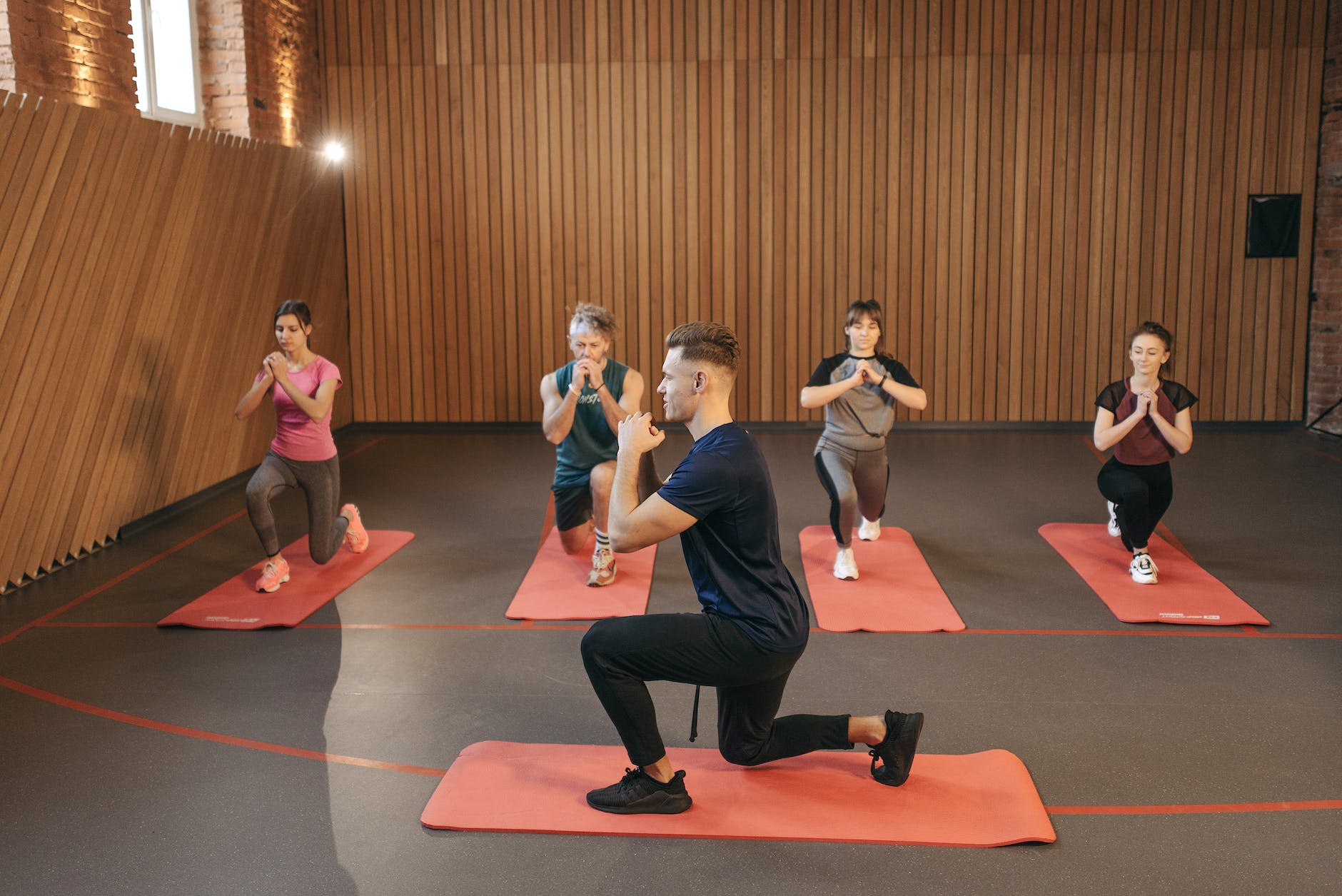
Keep your hips still, swing your arms, keep your lower abdominals tight to protect your back. Try to keep your chest high, a nice long neck. Keep your arms out nice and long. Relax the shoulders. Stand tall. Go over to the right side, keep your knees soft. Very slowly. And the other side. Forward roll. Drop the chin into the neck. Hold it. Keep your knees soft and come back up. Really concentrate on spinal articulation here – vertebrae by vertebrae slowly roll it up, shoulders relaxed. Chin in, roll it down. Keep those knees soft. Bend your knees as much as you have to. Go down for four, push it in. Stretch out the shoulders there. Hold it and release the hands on to the ground and roll it back up. Take your right leg out in front. Hands on the hips, keep the hips square. We’re going over in a nice square line. Should be able to stretch the hamstrings there.
Writing as a daily practice is a way to exercise the writing muscle. Like working out at the gym, the more you do it, the more results you get. Some days you just don’t feel like working out and you find a million reasons not to go to the gym or out for a jog, a walk, a swim, a bike ride, but you go anyway. You exercise whether you want to or not. You don’t wait around till you feel the urge to work out and have an overwhelming desire to go to the gym. It will never happen, especially if you haven’t been into health and fitness for a long time and you are pretty out of shape. But if you force yourself to exercise regularly, you’re telling your subconscious you are serious about this and it eventually releases its grip on your resistance. You just get on and do it. And in the middle of the work out, you’re actually enjoying it. You’ve felt the endorphines kick in. When you get to the end of the jog, the walk, the bike ride, the swim, the gym workout or the Pilates, Yoga or Zumba class, you don’t want it to end and you’re looking forward to the next time.
That’s how it is with writing too. Once you’ve got the flow happening, you wonder why it took you so long to turn up on the page. Bum on chair is what I say to my writing students. Through daily practice your writing does improve.
In The Artist’s Way, Julia Cameron’s book on discovering and recovering your creative self, she refers to daily writing practice as the morning pages. She recommends writing three pages of longhand, strictly stream-of-consciousness—moving the hand across the page and writing whatever comes to mind every day.
Author of Writing Down the Bones, Natalie Goldberg refers to writing practice as timed exercise. She says you might time yourself for ten minutes, twenty minutes, or longer. It’s up to you, but the aim is to capture first thoughts. “First thoughts have tremendous energy. It is the way the mind first flashes on something. The internal censor usually squelches them, so we live in the realm of second and third thoughts, thoughts on thought, twice and three times removed from the direct connection of the first fresh flash.”
Her rules for writing practice are:
1. Keep your hand moving. 2. Don’t cross out. 3. Don’t worry about spelling, punctuation , grammar. 4. Lose control. 5. Don’t think. Don’t get logical. 6. Go for the jugular.
In Creative Journal Writing, author Stephanie Dowrick refers to the same process as free writing; writing without judging, comparing and censoring. “Continuing to write when you don’t know what’s coming next and especially when you feel your own resistances gathering in a mob to mock you.”
Daily writing practice has been described as clearing the driveway of snow before reaching the front door. In other words, it’s what we do as a warm up before the real writing takes place. And it’s a way to loosen up and discover our own unique writing ‘voice’. That’s what publishers are looking for when they read through the slush pile. The storyteller’s voice. The authentic writing voice of the author is what engages the reader.
Have a read of my short story ‘May-Ling’ first published in Quadrant magazine. I hope you enjoy it.
May-Ling:
May-Ling calls out to me as I get out of the car. She is fourteen months old and her sweet voice bounces out through the screen door where she is standing and out on to the street in North Ryde where her Chinese grandparents live. I climb over the small white iron gate that leads to the front door. Every week she waits for my arrival after Playschool has finished on television. May-Ling has soft chubby legs and tiny artistic fingers. Her hands are so well co-ordinated that now she is able to grasp a spoon and feed herself. She has almond shaped brown eyes and very white teeth that you get to see very often because she laughs so much. In her pink and white gingham floppy hat that she wears to the park, she looks even cuter. What a cutie, say people on the street when I take her out for a walk in the stroller. What a cutie.
I am the apprentice grandmother. The Chinese grandmother shows me what to do. She might correct my nappy changing skills, show me that I have done the nappy up too tight, that I need to be able to slip my hand in between the nappy and May-Ling’s fat tummy. Or she might show me how I need to rock May-Ling back and forth and pat her gently on the bottom so she’ll fall asleep in my arms before putting her into the cot.








 Libby Sommer, Author