Have a read of my short story ‘JM’ first published in Quadrant Magazine. ‘JM’ is part of my collection ‘Stories from Bondi‘ (Ginninderra Press) – the stories centre on women – their joys, doubts, loves and realisations. The foibles of human nature, with all their pathos and humour, …
JM:
I’ve never told anyone. To think about it makes my hands sweat and nausea rise from my stomach. It happened the year I turned eighteen on a sunny late afternoon in February, on the top floor of a building in Double Bay. I was recently engaged to be married and the wedding was booked for the end of June. We had gone to the photographer’s studio to have our engagement photos taken. The photographer was a good friend of my future brother-in-law. I had met him several times before and had thought of him as old, as my parents seemed to be old, but he can’t in those days have been more than fifty. He was tiny like a jockey, his trademark cravat tied at the neck beneath a tailored shirt. His accent, foreign but very English. His shirt covered the numbers branded on his arm – a childhood survivor of the holocaust.
I remember his navy and white cravat tied at the throat, but have to imagine his small white hands as he poured Vodka into liqueur glasses and the smile he must have worn on his face, encouraging me to watch the development process in the dark room after my fiancée went back to work.
Looking back at that afternoon I see myself as an ignorant half-adolescent, half-woman, shy, dreamy and vulnerable, in a rush to be grown up and living away from my parents. I longed for marriage to set me free.
I remember the way he held his fingers when he sipped from the Vodka, as if drinking from a delicate china cup. He had challenged me. Said, ‘You’re a woman now, aren’t you?’
I have lost touch with that person I used to be at eighteen, with what it felt like to be about to be married to a man who I loved more than he loved me.
It is almost spring. I am walking through the gulley of a park near where I live, from one end to the other. Walking is a form of relaxation, in which the legs take over. They go their own way. I watch the ground, all the way there and back, take stock of the sounds and smells, and the physical transformations, when I feel my shoulders return to their sockets as I wander along the path by the creek and through the trees.
During the period of our engagement I was being checked out by my future brother-in-law re my suitability to marry his wife’s brother. It was a reminder that I needed to show I could fit in to a European lifestyle: home-baked ghugelhoff and bishops bread, veal schnitzel, thinly sliced cucumbers soaked in vinegar and sugar, hot milk for the coffee served in a ceramic jug, Persian rugs on wooden floors.
I had emerged from dumpy adolescence into tiny-waisted, exciting womanhood. By spending whole afternoons in front of the bedroom mirror and catching my reflection in shop windows, and from the attention of some of the boys at the Saturday night dances, I discovered I had changed, from a large adolescent into a petit woman. I had brown curly hair like my aunt and my skin burnt and freckled in the sun before turning a honey-gold.
My father had seemed surprised that a mature man with his own successful business and good financial prospects began to visit our house. “Is he married already?’ he asked, his eyebrows in a scowl above his newspaper.
He was shocked, now that he saw me through a man’s eyes, at how far I had come from the young girl I was, my hair wound into curls like Shirley Temple by my mother’s home-perm kit, wearing frilly dresses he brought back from America from his business trips. If only my mother had been stricter with me, this older man wanting to marry me would never have happened. It was all my mother’s fault for letting me grow up too quickly, like letting me buy that strapless dress for the school dance. ‘You want to attract attention from boys,’ he accused me from across the breakfast table.
The fact is, I had exceeded, almost beyond my own expectations, in making myself look older. My mother must have wondered at times if I could ever be toned down with my body-hugging dresses, my geometric-cut hair with its dark rinse (wanting to look like Elizabeth Taylor), the black kohl pencil around the eyes, the eyeshadow, the stick-on false eyelashes, the thick foundation applied with a wet sponge. Not that this helped the outbreaks of pimples. I was out of their control and the pimples were out of my control. My mother was proud that I was getting married. When my father complained, she shook her head and dismissed him.
This is one of the places where I like to go, this park that is a creek valley with trees, shrubs and grasses growing on the sides of the basin and a watercourse where lizards and frogs laze. Twelve hectares of urban bush land not far from where I live.
I enjoy walking along the winding network of paths, down through the bush vegetation that link a series of gazebos, bridges and staircases. On the sides of the lower valley, where the tennis courts are, rainforest plants of Blueberry Ash, Lillipilli and Black Wattle reflect the afternoon light.
I stop at a café near the courts, where lilac wisteria drapes the white painted wooden posts of the verandah. The branches of the wisteria are twisted around its own trunk. The sound of the punch of a tennis ball between two women on the court. In the café are cane high-backed chairs around small square tables. A group of white-clad tennis ladies stands up to leave. On the table are their water glasses beside screwed-up white paper serviettes and an empty water jug. When they leave, the glasses, the serviettes and the jug are the only sign that they have visited this place.
I am back in the photographic studio on that summer afternoon.
He unlocked the darkroom, rested his shoulder against the door and motioned me into the room. It was heavy with the smell of chemicals. I walked towards the tanks where the film lay and then moved around the edge of the baths. I was surrounded by darkness.
‘Ah,’ he said, sighing. ‘This is where it all happens.’
The room was appearing through the dark as my eyes became accustomed to the shadows. The black-clad windows, hanging trapped in the dark, kept out the outside streets, where people were doing their shopping or drinking short blacks at the sidewalk cafes or driving around looking for somewhere to park in the congested streets.
He pointed to one of the tanks and I moved over to look. ‘There,’ he said, ‘that’s the film in developing agent.’
He handed me my glass and moved around beside me. ‘What you can see is the first step of processing – can you see?’
I looked. It was remarkable. Later it was the pre-soaking, the dilution of the developer, submerging of the film, the timer, the push-cap on the tank, the ringing of the timer. The magic of developing photographs.
‘I still feel euphoric when working in the darkroom,’ he said.
Why didn’t I say something? His body rubbing against mine, his hands, his lips. What are you doing?
I watched. It was miraculous. The pre-soaking, the dilution of the developer, the submerging of the film, the click of the push-cap on the tank … and, then, the ringing of the timer. The stop bath, the Fixer, the film exposed to light, the wetting agent, submerging the reel. ‘You hang it up for drying for four to eight hours so it has enough time to dry and harden,’ he said.
I wasn’t used to alcohol, especially spirits. It immobilized me. My back pushed against a tank. I was overwhelmed, felt no power to control the moves. But I must have known what was going on.
He came very quickly.
My eyes were blurred with tears as I searched for my handbag in the reception area. I did not turn and face him, did not say anything, agreeing in my youthful ignorance, in a silence that was as good as a handshake, to carry the weight of this secret. With my high heels clicking on the concrete I walked unsteadily down the narrow passageway of the stairs that led out to the street and out into the daylight of the life that lay ahead.
The sound of water flowing over rocks in the creek hides lizards and tadpoles in the park. Smooth-barked Apple, Eucalyptus and Tick Bush on the sandy slopes. A blue-tongue lizard backs away as I pass, his chubby-splayed feet clutching at the path. Another lizard darts to safety, his body curling and curving into escape.
A small cement truck grinds down the cobbled pathway by the tennis courts. It tips cement into the mould for a wheelchair access ramp to the cafe. So many men to make a simple ramp – one carrying a wooden plank, one tapping at the wooden structure, two others in fluorescent vests who watch, instruct and chat. Their hair is spiked and hatless in the sun. Dark glasses wrap their browned faces.
‘I married you because you were suitable,’ my husband said. ‘I wasn’t wearing rose-coloured glasses.’
It all comes back.
All these years later, it is difficult to see the point in being back there, to be that ignorant, vulnerable eighteen-year-old girl I used to be.
The orange revolving light on top of the small concrete truck flashes. I look around at the tiny buds of spring that are framed by sticky spider webs. The webs don’t loosen their grip in the breeze.
The frangipani tree is devoid of foliage or flowers. But spring is on its way. The afternoon light on the tips of the green leaves on the terraced sides and layered rock shelves, barely move in the soft breeze.
Is this the end of one thing and the beginning of another? Will all that is familiar change into something else? Walking home I have no sense that anything has happened, that a shift may have taken place. Was it something in myself that has been waiting for so long and was finally brought to consciousness, that triggered something in me? Is it seeing the park poised to burst into spring, or watching the transformation of cement into a bridge connecting the cobbled path to the wooden verandah that make me realize that nothing is final or beyond change?
I highly recommend this book a friend from London gave me many years ago at the beginning of my writing journey. It’s an old one, but a good one.
‘A reissue of a classic work published in 1934 on writing and the creative process, Becoming a Writer recaptures the excitement of Dorothea Brande’s creative writing classroom of the 1920s. Decades before brain research “discovered” the role of the right and left brain in all human endeavor, Dorothea Brande was teaching students how to see again, how to hold their minds still, how to call forth the inner writer.’ – Amazon
‘Refreshingly slim, beautifully written and deliciously elegant, Dorothea Brande’s Becoming a Writer remains evergreen decades after it was first written. Brande believed passionately that although people have varying amounts of talent, anyone can write. It’s just a question of finding the “writer’s magic”–a degree of which is in us all. She also insists that writing can be both taught and learned. So she is enraged by the pessimistic authors of so many writing books who rejoice in trying to put off the aspiring writer by constantly stressing how difficult it all is.
With close reference to the great writers of her day–Wolfe, Forster, Wharton and so on–Brande gives practical but inspirational advice about finding the right time of day to write and being very self disciplined about it–“You have decided to write at four o’clock, and at four o’clock you must write.” She’s strong on confidence building and there’s a lot about cheating your unconscious which will constantly try to stop you writing by coming up with excuses. Then there are exercises to help you get into the right frame of mind and to build up writing stamina. She also shows how to harness the unconscious, how to fall into the “artistic coma,” then how to re-emerge and be your own critic.
This is Dorothea Brande’s legacy to all those who have ever wanted to express their ideas in written form. A sound, practical, inspirational and charming approach to writing, it fulfills on finding “the writer’s magic.”‘ – John Gardner
Have a read of my short story, ‘Mother’ first published in Quadrant Magazine. ‘Mother’ is one of the self-contained chapters in my book, The Usual Story (Ginninderra Press) – a delicately fragmented story of memory, intrigue and passion.
MOTHER:
The day is softening into night, my desk in shadow as the sun moves behind the building. Birds hover in the trees as the wind blows across the surface of the sea. It’s hard to know which way to go. Every day I fear that I can’t do it. So I’m watching as it gets dark.
Tonight I’m thinking about the saddest bits. Thinking, for example, that the night was alight with thunder. Lightening cracked the sky. Just a flash and then darkness again.
That I loved him, and sometimes he loved me too.
I’ll begin with the birds. Three birds flying in perfect but constantly changing alignment. So often there are three. And then a lone bird darts across the sky in the opposite direction.
On the radio a voice says: ‘We need to know the history, the history of the before, and then to know how the person chose to continue living, what baggage they chose to bring with them, to incorporate the memory into themselves or to leave it behind.’
A door bangs shut behind me; footsteps sound on the concrete driveway leading from the back door just a second or two after the door bangs. The flame tree throws a shadow on the cane chairs on the balcony. I stop working, put my hands and then my arms around my body and think of the feel of his skin.
How appealing, how irresistible that prospect of intimacy is, with the very person who can never give it.
After a day in which I have evoked Jack again, all the pain and disappointment and wanting him all over again came back. I try to guess where he might be and what he might be doing but cannot imagine it. His absence is still as heavy as the wave about to break above me, a wave that has appeared suddenly, and then it curls over me forcing me down to the bottom of the sea where I am helpless in the power and pull of its rip.
Last night I dreamt about a man with a hook for an arm. I didn’t realise at first that the man had a disability because he’d kept it hidden behind the counter. On the spur of the moment I told the man I was going to see a free film as part of the film festival and asked if he would like to come with me. To my surprise he closed up the shop, put on a freshly laundered shirt and said he’d come. That’s when I saw the hook arm. As the evening progressed I was surprised by how very quick and skilful he was in the use of it. He hooked me a chair and one for himself when we found the small cinema where the film was shown. He seemed interested in me but I wondered how I would cope with his disability.
Sitting at my desk this morning, trying to work, I saw the line of the horizon as the sun beat down, heating up something outside so that its taint floated in on a breeze. It was the dank scent of the earth after rain, entering through the open door. It reminded me of the smell of his hair in the mornings and it came between me and my work. I wondered why all of this has to go on for so long.
*
It’s dark tonight with only a small crescent-shaped moon over the sea. I’ve decided to take a walk to the house where I lived as a child. I put on a cardigan and step out into the night.
The house itself is no longer there. It has been torn down and a block of units stands in its place. As I walk down the steps towards the beach and mount the hill, waves loom in the fading light; streaks of white against the dark sea. Above me clouds gather against a starless sky. I walk up the steps then stand at the lookout as the sea rolls in.
When I was growing up, this suburb was full of large houses and blocks of art deco units. Some of the houses were very grand and others fallen into disrepair like ours. Mother was ashamed of our house. It was basically a mass of rooms surrounded on three sides by wide verandas and wooden painted rails.
Walking along my old street and its rows of gums and mix of glass and chrome home units and white-painted mansions, I see the stairs that connect this street to Birriga Road. Those stairs that I walked up every day to catch the bus to school until Mother decided it was important that she drive me to school before she went to work. ‘What will the neighbours think with you talking to boys at the bus stop?’
And there’s the house where the boy with diabetes used to live. The boy who used to double me on his bicycle. I can still feel the imprint of his ribs under my hands. ‘It’s not ladylike for a girl to ride a bike,’ Mother said. This boy’s house had seemed a long walk from mine but now it seems just a short distance as I walk up our old driveway.
Sixty apartments share our old address. Forty units across the back yard and twenty on the driveway. The trees I used to climb in the back yard are all gone. No wild foliage, just bricks, concrete and cement, although one scrawny hibiscus droops over garage number twelve. A couple of branchless tree trunks wedge between the units and the fence of the block next door. Nowhere for the trees to branch out. No sunlight. Suffocating. Vines strangling trunks. Trees choking to death. I feel a thudding in my chest.
Drowning again and again. A recurring dream. And then I would wake and lie there waiting for the sound of the birds and the light of the dawn. I’d count slowly: one, two, three on the in breath, one, two, three on the out breath until I would notice the waves lapping up and into my bedroom again.
It was already too late when I was eight. I grew old at eight. It came on very suddenly. I saw the blood spreading over my grey school bloomers. As the year lightened and turned hot, it got worse. ‘Don’t tell anyone,’ whispered Mother. ‘Especially your brother.’ January was too bright so I stayed in bed in the darkened bedroom. I was ashamed of how I’d changed. I wasn’t prepared for it. I leant against the pillow in disgust. I lost the desire to move. But as dusk came one evening in February, there was the gentle sound of the wind through the leaves.
I see my former self. The small child with hair pulled severely back at the sides of her large forehead revealing an open face that seems always to be frowning. I can bring to mind a tall gawky adolescent with pimply skin with her arms crossed over her chest. She wears dark wool skirts in the winter with long shapeless jumpers over the top, perhaps a long pendant, or cotton print dresses in the summer with a cardigan. Her hands would clasp and unclasp in front of her. Ridiculous. Her hair looked ridiculous. The hair must have been cut into a fringe but instead it bounced up into one tight little ridiculous ball in the middle of her forehead.
So I was eight and three quarters. Mother made me wear dresses with pleats and frills. I wore them with loathing. I looked fat and childish in the dresses that were gathered at the waist and had a Peter Pan collar at the neck.
That day my hair was in bunches hanging down to my shoulders, not cut short at the back as usual, but long enough for me to put an elastic band at each side. To my own hair I had added the hair of our housekeeper. I wore her hair attached to my own. I was using makeup already. A crème pancake base that Mother had given me. ‘Cover up those hideous freckles.’ I don’t know where I got the pink lipstick and the clear nail polish. Perhaps I stole them. I was wearing a little 4711 eau de Cologne.
*
Today the early morning light shines through the thick curtains, the mysterious light when it’s raining but the sun is still shining through the clouds. But there is the exhausting and suffocating heat of Sydney’s humid summer days and nights to cope with. It’s seven forty-five already. I have overslept. There is no sound in the building. No footsteps, no cars reversing. I guess that everyone has gone to work.
On the radio: ‘Just a couple of drops of rain during the night here and there.’
I’m remembering Mother reclining in bed. Her eyes closed and her hands crossed against her chest. Her mouth open. Now and then she’d catch her breath as if gulping the air. At that moment, she appeared to be asleep.
Beside her I pulled the dead bits off the flowers. I put the vase into place on the shelf above the bed and stared at a Picasso print of a woman’s body sectioned into geometric pieces. I smiled at its startling arrangement of shapes. I reached for another vase and began my pruning.
Mother leaned towards me, and in a rush of tenderness, unusual in her, tried to hug me. I recoiled, unable to check the repugnance I felt for the touch of her.
My half-sister entered the room quietly. I got up at once throwing the bruised and browning petals into the wire basket by the door. I went over to the bed, and looked at Mother, who kept her eyes closed.
‘She’s resting,’ I said.
My sister went over and turned off the bedside light until there was only the weak light from the window. She sat down so she could see Mother. She stroked Mother’s forehead; leaned down over the face, using her fingers to exert pressure on the place between Mother’s eyes, pulled the skin across her forehead, pressed gently into the sides of her face.
Mother opened her eyes. ‘You smell of garlic. I can smell it on your breath.’ But then she let herself sink again. ‘You are very good to me,’ she whispered. ‘I don’t deserve all the things that you do for me.’
Inez continued to massage her head and face until Mother fell asleep.
Inez said, ‘I think about Mother nearly every day. When Mother spoke to me in her clipped determined way, I often didn’t understand what she wanted from me. I tried so hard, but of course I never managed to please her. Then she’d show her impatience. She was always impatient. With all of us. She’d had a hard life and I forgive her. I loved her because she was so—I don’t know what to say, exactly—because she was always such an overpowering presence. But she could be so cold. I would come to her wanting some affection, some understanding even, she’d turn away from me and be so cruel or she was just too busy to listen. Yet I felt for her, I understood, and now that I’m older I forgive her totally. If only I could see her again and tell her I wish now that I had tried harder and that if I had, things may have turned out differently.’
‘Your sister has decided to smooth the surfaces and to remember her mother as a saint,’ Dr Ross concluded. ‘Her mother had a hard life and now she’s turned her into a saint.’
I’m imagining walking into the old house. Across a big enclosed verandah and in through the front door. A coat cupboard to the right, along another corridor to the maid’s room and bathroom, painted a light green, then out to the back porch and the lockup garage. To the left of the maid’s room is the large kitchen with a table in the middle and a pantry to the side. Behind the kitchen is the laundry, the room where I’d do the ironing.
Mother is at the table with Father in the dining room, with its mahogany furniture and red and gold flocked wallpaper. It is already dark and the thick lined curtains are closed. The silver candlesticks on top of the white linen tablecloth reflect the light of the chandelier.
Husband and wife are dressed formally. Perhaps they’ve been to synagogue, or else they’ve been to the Chevra Kaddisha to pray for a dead relative, or they may have been to an afternoon tea at a friend’s house.
Father is two years younger; his face jowled, his mouth relaxed, his eyes small and piercing; his smile is kindly but wary. His hands shake slightly. His hands are broad, with thick blunt fingers, and are mottled with pigmentation spots. The short moustache and the grey hair are neatly trimmed.
Husband and wife eat in silence. The silence is full of contempt—a shared contempt.
She wears white gold wedding rings that are simple in design, and two diamond rings. And around her neck is a necklace of marquisette with drop earrings to match. He has given her many presents of jewellery over the years.
He turns to Mother and tells her he’s going to adjourn into the lounge room with the newspapers, is she going to join him?
She shakes her head. He shrugs at this, confirming: Let’s see who will break first. Who will be weakest in this mutual destruction of each other.
‘What are you laughing at?’ he says.
‘Nothing. I’m not laughing.’
‘Will we listen to a record in the lounge or will we go upstairs to bed?’
‘I don’t want to hear any records, thanks.’
She knocks the sugar bowl over as she reaches for the teapot. The fine bone china dish breaks into pieces and the brown granules spread over the white cloth. She glances at him in barely disguised fear, but he keeps on stirring his tea, looks straight ahead. He finishes his tea, wipes his moustache with meticulous care then throws the creased napkin onto the table and stands up.
‘It’s getting late. See you up there.’
To the right of the top of the staircase is their bedroom. I imagine Mother sitting down at the dressing table and taking the pins out of her hair. It falls to her shoulders, the heavy weight of it released. She puts on her nightgown and then stands in the middle of the room.
‘It’s a man’s world,’ she says in an absent-minded, dispassionate voice.
Father enters the bedroom, walks towards her. He is wearing a navy blue satin dressing gown and is holding a book in his hand, his glasses pushed up high on his forehead. She walks past him, pulls back the sheet. The sheet is spotted with blood. He sees the blood. She smiles to herself.
*
At twilight the sky is a deeper darker shade of blue. The clouds are puffy but stagnant. Faint hush of the sea. Traffic noises in the distance. A brief hammering. The sea turns from blue to soft grey as the waves move south in lines of darker grey. Thudding music from the house in front starts up but then it stops. The rumble of a plane overhead as it nears and then recedes. Moves closer—moves away. Kitchen sounds from the unit next door. Another plane rumbles in the distance.
The heat is leaving the day although the leaves and branches of the trees are not moving. Then a breeze picks up. A dog barks; the cicadas start up. Street lights, headlights. The sea darkens and the thudding party starts up again in the house in front.
It’s enough for me now just to think of Jack’s face with that peculiar, stricken look. Was it only later that as I searched for the memory of his face and looked at it and then his whole body, so often motionless and turned in on itself that I either took his face out of my memory or returned it to when I stood looking at him still asleep in the bed?
If he is living around here, he may be beginning a day’s work just now, since he never was one for an early start, or he may be sleeping with the doona over his head, unable to face another day. He may be listening to the sounds of the people around him preparing for work. Or he could be with that woman with the three children. Or he could just as well be living out west again.
Mother thought that God was cruel and hard. But in her prayers she still turned to Christ. She converted to Judaism when she married Father. I’m imagining her long honey hair rolled in a bun, her fine cheekbones, her mouth held in an ungenerous curve.
Her eyes are red with lack of sleep. She had been lying for several hours wandering whether to get up or not. It’s better to get up, straighten out the body, turn on the bedside light, try and read.
She gets up and stands for a long time by the hospital window. There is moisture on the pebbles of the veranda outside. Everything out there in the garden is blurred and hazy.
‘Thank you dear Lord for giving me daughters. I needn’t worry so much about what will happen … sometimes I think I’ve had enough of this world. How am I to cope?’ She lets herself sink. There is only one solution.
She turns off the bedside light then hears footsteps in the corridor. A nurse comes in and takes her pulse and her temperature, makes notes on the clipboard before replacing it at the end of the bed.
Or this is how I imagined it.
Outside the window a bird clutches a branch. Leaves surround and envelop him as the wind moves through the leaves. He trills a contralto then darts off towards the sky, swift as an arrow. The wind heaves the branches and scatters the leaves as another bird with a flurry of wings and a nod of his head darts off.
I must have been five when I came running in with a painting to show Mother, the picture of the birds in front of the clouds, the red sun to the left with its rays of sunlight. ‘I’ve got a present for you,’ I said. ‘Close your eyes.’ I put the painting in her hands. ‘Open your eyes.’ She looked at it. I pointed at the birds. ‘One bird, two birds, three, four, five, six black birds,’ I said. ‘It’s alright,’ she said in her dismissive voice. ‘You don’t have to count them all.’ I showed her the swirls of blue. ‘And this is me with my feet in the water,’ I said. ‘And this is you standing behind me watching. And this is the purple woolly rug that we had on the picnic. This is you and this is me.’
This may be the last time that I make the effort of remembering Jack. The last time that I let him make me suffer. It’s the forgetting that takes so long.
Memories of Mother have almost faded altogether. I don’t remember if I ever loved her. In my mind I no longer have the feel of her skin, nor in my ears the sound of her voice. I can’t remember the exact colour of her eyes, except sometimes I can see them all misty and watery with some secret. Her weeping I can’t hear any more – neither her weeping nor her laughter. It’s over with her, I don’t recall the details.
That night in June a strong wind had blown through the leaves. So strong it blew small branches off the trees and on to the car. Dirt blew along the road. Thunder, louder this time. A car alarm sounded for three beats and then it was silent again. A plane flew into the grey, its lights flickering as the horizon blurred and the sea turned into deep dark grey. People had flocked to the beach during the 34 degrees but now they hurried home as lightning split the sky. The thunder grew louder but, strangely, the sky was still blue above the ocean still lit by the setting sun even as it began to rain.
I’d taken off my nightie and sunk into the hot salt and oil, stretched out as the phone continued to ring. I lay there and listened. He hung up without leaving a message.
I’d felt the grief rising up from my stomach.
A bird plummets to the earth and Jack is no longer here. I sometimes find it hard to bear. After all this time I am talking about it to be free of it all, although I know I never can be. Over there to the east is the same sky reflected in the same water. But I am not the same, not the same as I was then, and not the same after telling it.
Dawn through the curtains casts long shafts of light across the carpet. There is a gentle breeze through the bamboo as I step outside and notice a white sail in front of the low hanging cloud. I stand there and watch as the yacht progresses along the flat line of the horizon.
Another of my favourite books on the writing process is The Writing Life by Annie Dillard. A small and passionate guide to the terrain of a writer’s world.
Annie Dillard has written eleven books, including the memoir of her parents, An American Childhood; the Northwest pioneer epic The Living; and the nonfiction narrative Pilgrim at Tinker Creek winner of the 1975 Pullizer Prize. A gregarious recluse, she is a member of the American Academy of Arts and Letters.
“For non-writers, The Writing Life is a glimpse into the trials and satisfactions of a life spent with words. For writers, it is a warm, rambling, conversation with a stimulating and extraordinarily talented colleague.””–Chicago Tribune””A kind of spiritual Strunk & White, a small and brilliant guidebook to the landscape of a writer’s task…Dillard brings the same passion and connective intelligence to this narrative as she has to her other work.”– “Boston Globe””For her book is…scattered with pearls. Each reader will be attracted to different bright parts…Gracefully and simply told, these little stories illuminate the writing life…Her advice to writers is encouraging and invigorating.”– “Cleveland Plain Dealer””The Writing Life is a spare volume…that has the power and force of a detonating bomb…A book bursting with metaphors and prose bristling with incident.”– “Detroit News”
Dillard begins:
When you write, you lay out a line of words. The line of words is a miner’s pick, a woodcarver’s gouge, a surgeon’s probe. You wield it, and it digs a path you follow. Soon you find yourself deep in new territory. Is it a dead end, or have you located the real subject? You will know tomorrow, or this time next year. You make the path boldly and follow it fearfully. You go where the path leads. At the end of the path, you find a box canyon. You hammer out reports, dispatch bulletins. The writing has changed, in your hands, and in a twinkling, from an expression of your notions to an epistemological tool. The new place interests you because it is not clear. You attend. In your humility, you lay down the words carefully, watching all the angles. Now the earlier writing looks soft and careless. Process is nothing; erase your tracks. The path is not the work. I hope your tracks have grown over; I hope birds ate the crumbs; I hope you will toss it all and not look back.
Which books on writing process have you found to be inspiring?
Have a read of my short story, ‘Michael’, first published in Quadrant Magazine. The story is part of my collection titled ‘The Crystal Ballroom‘ (Ginninderra Press) – stories of love and loss in the singles dance scene. Hope you enjoy the story.
Michael:
He’s waiting at the bottom of the ramp, just inside the steel fence that cordons off the entry to the station. He said to give him a ring from her mobile when the train passed Gosford. She quickens her pace, adjusts the overnight bag on her shoulder. She is close enough to see the soft fold of his graying hair, the clear smooth glow of his skin. In his white socks and slip-on loafers he looks very English.
It wasn’t easy to get herself on a train and up to the Central Coast. It took a lot of encouragement on his part and a steely determination on her side of things to get out of Sydney. But now she’s glad already that he kept pressing. ‘It will do you good,’ he said on the phone, ‘to get out of the city for a couple of days. It will give you a new perspective on things.’
He knows about her tendency to brood and her struggle to manage the drowsiness that follows. They talk about these things on the telephone. He also struggles to get through the days, suffers with the same lethargy. He says he prefers to tell people he has ‘chronic fatigue’. People understand the term ‘chronic fatigue’.
He sees the deepening of laugh lines around her mouth and eyes, her face browned by the sun, her hair spiked and in shock. He tells her that she looks the same as he remembers. She assures him he looks very well and living away from the city obviously agrees with him.
Would she like a coffee? Or would she prefer to have a shower first? Some people needed to have a shower before they could do anything.
For goodness sake. It was only a couple of hours on the train. She would like to wash her hands though. They smelt of the tuna sandwich she’d eaten on the train.
Sure, sure. He’s been waiting all day for a coffee. They’ll go somewhere close by.
She’d agreed on the phone that there’d be no post mortem. ‘Don’t worry,’ she said. ‘I’m happy to be in the present. I don’t need any analysis. You’re the one who goes on and on … on the telephone.’
How well she remembers that first time she had seen him. He was at one of the Saturday night dances that she used to frequent. He was standing at the side of the hall, his thick blonde hair brushed back off his forehead. He’d asked her to dance, said she danced well. Then they’d met up regularly and got to know each other. He wanted them to hire a hall and practice their dance routines. ‘But we mustn’t get involved, you and me,’ he warned. ‘Too dangerous.’ They were sitting in his car at the time, so close in the front seat that she could smell the Palmolive soap on his skin. She watched his hands as he put the car into gear and reversed up the driveway.
Now, he opens the back door of his car and motions for her to get in.
‘Sorry about the mess,’ he says. ‘It’s easier if you sit in the back. Easier than moving all that stuff on the front seat.’
It’s the same car as last time, an orangy-red Mitsubishi with scratches down the side, the same cracked glass of the headlights. She slides across the vinyl of the back seat, her eyes dazzled by a blaze of early-summer sunlight passing through the spotted salt stains on the windscreen.
He puts her bag in the boot and she pushes the tapes and DVDs and beach towels a little more to the other side. She snaps on the seatbelt, looks through the window at an older man in loose baggy clothes slumped on a wooden bench staring at the concrete of the pavement between his knees. She imagines she can hear his sighs.
Michael opens the window across from the driver’s side as he drives, then rests his arm along the empty front passenger seat and turns to speak to her. ‘Is it too windy for you?’
She reminds him his fast driving makes her nervous.
‘I didn’t know that. I’ll slow down, now that you’ve told me. I’d better anyway because I’ve lost my license.’
‘Again? Every time I see you it’s the same story.’
‘That’s a bit harsh. It’s a lesson I still need to learn.’
It’s like being in a taxi in a way, sitting in the back like this, not too close to the driver. A memory flashes into her mind of when she was a child and had seen a taxi parked by the side of the road. She’d looked in as she walked past. The driver had his hand between a woman’s legs and the woman, an older woman, not a young woman, maybe the same age as she is now, had a funny glazed look on her face that she, Madelaine, had never seen before. She remembers it vividly. The man, the odd position of the two of them in the front seat, the look on the woman’s face.
‘How come you’ve lost your license again?’ she asks.
‘The twelve points were up,’ he says. ‘You lose three points for an infringement?’
‘Parking infringement?’
‘No. If you get an infringement in the holiday period they double the points, so it doesn’t take much from there to get to the twelve points.’
‘Speeding?’
‘You’ve got to be very careful where the schools are, which are forty. Six double demerit points.’
With one arm resting on the ledge of the open window he runs his fingers through his hair. He’d been ringing every few weeks since they reconnected. Sometimes she tries to ring him, to save him the expense of the long telephone calls, but he’s impossible to contact. It was only recently that he gave her his address. No answer machine, no mobile, no internet, and he doesn’t answer the telephone. In fact he said he pulls the phone out of its socket.
He belongs to some strange group that he won’t give a name. Calls it a meditation group, but she knows it’s something else. At first she thought it must be AA but now she thinks it might be some kind of a secret sect.
He honks his horn at the woman in front as they wait at a roundabout. ‘This wouldn’t happen in the U.K.,’ he says. ‘They don’t know how to use roundabouts here.’
It was always his dream to work hard and then retire young and live somewhere by the sea. He finds a place to park in the shade on the top floor of a shopping centre, so they can walk straight in. He takes her hand when they get out of the car.
‘We’re holding hands are we?’ she says. She lets him do it, passively leaves her hand in his. ‘Don’t forget they smell fishy.’
He shrugs.
They find a seat near the back. She had been looking forward to sitting by the water somewhere and breathing in the salt air, rather than sitting in a shopping centre, but doesn’t express her disappointment.
On the phone he’d said something about telling people in the cafe that she’s his wife. That they could read their newspapers while drinking coffee each day. She said they’d look like an old married couple if they drank coffee hidden behind their separate papers. That’s when he said he’d tell everyone they were married.
‘They only give you one shot of coffee at this place,’ he says. ‘Other cafes give you two.’
Shots? The word reminds her of the days when his drinking was out of control. Not that she knew him then.
Now that they are seated together he says, ‘I knew it would be like this. That we’d pick up from where we left off. No different from last time.’
*
How dull all sounds are by the water, she thinks. Dull but sharp, like the cheepings in the branches of the trees in front of the motel. It must be the serenity of so much water. She decided to take the motel option even though he said she could stay in the guest room at his house. His front door was broken and you had to climb in through the back, the water taps were temperamental, the sliding glass door on the shower needed to be handled just so, the carpet in front of the television only to be walked on with bare feet.
‘Why don’t you get the lock fixed?’ she asked when they walked back out to his car.
‘Not before I go away,’ he said. ‘When I go to Europe to visit my mother I’ll get the door fixed.’
His mother again. He’s been saying for the last two years that he’s going back to the U.K. to visit his mother.
Madelaine chose to stay at the first place he showed her, a motel across the road from the beach. It was just a couple of minutes drive from his house, so they could still meet up each day. It’s an upstairs room, with two beds and a view of the road and the palm trees in front.
She lay on top of the covers on the spare bed of the motel room, reading. He said if it was him, he’d sleep on that bed. You’d get more of a through breeze.
He’s been to the beach for a swim. He arrived unannounced at the sliding screen door, knocked and walked in. Now he is looking at himself in the mirror in front of the bed. He turns from side to side inspecting his body, admiring his reflection, bare chest above the white shorts, says something about her being a good five years older than him.
‘I’m not older than you,’ she scowls. ‘You say that every time. We’re the same age.’
He rubs her foot a little. It doesn’t really matter so much, does it? We’re friends, aren’t we? He was getting ready to say that they’d known each other for a long time, when she turns on him and says, If you say we’ve known each other a long time again and it doesn’t matter, I’ll scream.
*
The family, who own the motel, are very friendly. The old grandfather sweeps the leaves on the driveway each morning and the grandchildren go off to school with a bang of their screen door. The children’s father hands the local newspaper up to her through the railing when he sees her sitting outside her room eating breakfast. They probably watch when Michael picks her up in his car and she climbs into the back seat.
Now that she’s here on his home territory he won’t go on any walks with her, won’t show her where the tracks lead. Says it’s best if she finds out for herself.
She says in the city she wouldn’t head out on an unknown bush track on her own.
‘The city,’ he sighs from the front seat where she can’t see his face. ‘Ah … I keep thinking they’ll design a new Almanac Cognac.’
‘Cognac?’
He laughs.
It’s a shame he didn’t take her with him when he went for a swim, she would like to know the best place to go for a dip. She’s enjoying being a passenger though, being chauffeured around.
‘I tried to ring you at Christmas to see how you were going,’ she says. ‘I know it’s a difficult time for you, with no family here. I tried at least six times – in the mornings and in the night times.’
‘There’s no point in ringing in the mornings,’ he says. ‘The phone doesn’t go back on till after coffee.’
‘What do you mean?’
‘I take it off the hook when I go to sleep, I don’t want people ringing from the other side of the world. They forget it’s an eleven hour time difference. So I don’t put it back on the hook until I come back from having a coffee. I don’t want the phone breaking up my morning routine. And at night time I don’t come back in from the garden until after eight.’
Probably avoiding his mother. ‘I’ve rung after eight,’ she says. ‘You’re so hard to contact. It’s a wonder you’ve got any friends at all. I sent you a Christmas card by the way. Did you get it?’
He shakes his head.
‘That’s a shame. I sent the card to your post office box, like you said.’
‘I’m going to get rid of my post box at the house. Every time the postman rides his bike up he ruins the grass.’ He sniffs deeply, with a heaving of his chest. ‘When I go to the shopping centre there’s nowhere to park in the holiday period and people park on the lawns. I guess it’s like that in the city?’
‘Probably. I try and walk everywhere. I’m trying to lose weight.’
‘That’s good. Cutting back on the pasta?’
Her eyes narrow at the back of his head. ‘I don’t eat pasta.’
He twists around and smirks. ‘That’s right. You’re into healthy foods.’
Back at his place he’d tried to play with her bare feet when he sat next to her on the couch. She’d pulled them away. On the bed in the motel room he’d hugged her and wanted to lie back on the bed.
When he turns off the motor she opens the door slowly and lets the strong salty wind flood into the car in one cool, cleansing breath.
His words are carried off into the breeze.
*
They’ve had an altercation, in a café down near the beach. The diamond in the nostril of the girl behind the coffee machine had flared beneath the fluorescent light. The girl was silently mouthing the words to a song playing in the background when Madelaine got up and walked out.
‘You should speak up sooner,’ he called after her. ‘You should speak up before it gets to this point.’
She has heard this before, or something like it. She turned around briefly but did not stop.
‘You send knives into the heart when you speak like that,’ he called. ‘Madelaine?’
She kept walking until she got to the bush track by the sea. She heard the echo of her own footsteps on the earth. He made her so angry. She wanted to be free of him. He made it so impossible.
‘You need to be careful,’ he’d said. ‘Or you’ll go under. All the way under.’
An insistent fly buzzed near her face.
She walks.
The track keeps weaving away from the sea and makes it difficult to keep close to the water. She has no idea where she is headed or how far she needs to go to escape her anger. Tree roots stumble away from her sandshoes. Flies buzz too close to her ears. She brings to mind a bird that she saw with friends recently. She can’t recall exactly who she was with and where she was, just that someone said, ‘Look at that bird. It’s so big.’ A black and white bird with a large wing span flying through a gorge. Maybe that’s where she was? Cataract Gorge, in Launceston. Walking along that track alone, but with all those other people going in the same direction. The best part was approaching the gorge and being so surprised to see such natural beauty in the middle of a city.
She walks. After all, she’s free as a bird. Her children are grown up and lead their own lives. He always said he prefers a woman who’s had children. There’s something about women who’ve had children that he finds very appealing. The sound of the wind in the trees; the setting sun over her shoulder casts shadows on the dirt track. The sweet smell of earth. So why did she come then? She wanted to get out of Sydney, that’s all. A change of scene. She needed a holiday and she didn’t want to be alone.
As she moves deeper into the bush of the landscape – the ebb and the flow of the waves to her left – she begins to forget his limitations … and her own.
Loneliness. That’s all.
In the mid-afternoon haze, she just feels the need to keep going, to keep moving on. When she’s ready she will go back and apologise for her behaviour. After all, they’ve known each other a long time.
She lets him diminish from her thoughts, and moves deeper into the tender late-afternoon light. The sea, always in motion, not too far away. She walks, and the great swelling of sound begins to recede behind her. Her feet at last on the ground. ‘Put your feet on the ground, sit up with a straight back,’ the counsellor had said in an attempt to get her to pull herself together. Perhaps the counsellor was uncomfortable with all the tears. But who knows? The last counsellor had let her cry, but not too much. Do they let you cry for a set period of time at those places?
They’d slept together only once. It took him five years to speak to her again. Five years. Later, he said something about her breasts reminding him of his mother’s.
The bird sounds have softened, got gentler, more mellow. As the sun makes its slow arch, she observes the changes in the bush, what is revealed, and what is hidden. It’s so peaceful she’s almost afraid to breath.
There is no specific place she is heading towards. She could stop at any time, turn around, go back. The stillness of it all. An insect flitters between the twigs.
The landscape of shrubs and trees she has been moving through is now more like a rainforest. She watches the filtered light between the long thin strands of fern. All around is a canopy of leaves – fern leaves, frond leaves, mossy leaves – bright green leaves skating on the breeze. And tree trunks: hollered out, split in two, grooved and gnarled.
She looks up. What direction are the clouds traveling? She’s lost her bearings. She forgot to look for the position of the setting sun before she entered the forest. It is so hot. She is sweating.
But, as she walks on she is happy in her own self. In a new self, not the old one that she’s left behind.
She looks back the way she’s come.
Is she lost?
She reminds herself not to panic and, standing there absorbing the landscape, breathes in deeply to the count of four, and then out again … four, three, two, one.
She sees another insect on a rollercoaster with the air. The web of a spider made visible in the glow.
In the humidity and sleepy afternoon light, she could keep going forever, all the way back to Sydney.
This declarative sentence was spoken by Don Corleone (played by Marlon Brando) in the movie The Godfather (1972).
We don’t always make declarative statements. It is not uncommon for women and other minority groups to add qualifiers to their statements. Such as ‘Parents need to stop organising every minute of their children’s spare time, don’t you think?’ ‘I loved that movie, didn’t you?’ In our sentence structure we look for reinforcement for our thoughts and opinions. We don’t always make declarative statements such as: ‘This is wonderful.’ ‘This is a catastrophe.’ We look for re-enforcement from others.
Another thing we do without realising it, is use indefinite modifiers in our speech: perhaps, maybe, somehow. ‘Maybe I’ll take a trip somewhere.’ As if the speaker has no power to make a decision. ‘Perhaps it will change.’ Again, not a clear declarative sentence like, ‘Yes, nothing stays the same.’
It is important for us as writers to express ourselves in clear assertive sentences. ‘This is excellent.’ ‘It was a red dress.’ Not ‘The thing is, I know it sounds a bit vague, but I think maybe it was a red dress.’ Speaking in declarative sentences is a good rehearsal for trusting your own ideas, in standing up for yourself, for speaking out your truth.
When I write poetry I read through early drafts with a critical eye, taking out indefinite words and modifiers. I attempt to distill each moment to its essence by peeling off the layers until the heart of the poem is exposed. We need to take risks as writers and go deep within ourselves to find our unique voices and express ourselves with clarity.
Even if you are not 100% sure about your own opinions and thoughts write as if you are sure. Dig deep. Be clear. Don’t be vague on the page. If you keep practicing this, you will eventually reveal your own deep knowing.
What about you? Have you noticed this tendency to qualify in your conversations with others, or in your creative writing, or in your blog posts?
Have a read of my short story ‘Painstaking Progress’, first published in Quadrant Magazine. It’s one of the stories in my collection ‘The Usual Story‘ (Ginninderra Press).
Painstaking Progress:
One can never change the past, only the hold it has on you. And while nothing in your life is reversible, you can reverse it nevertheless – Merle Shain.
1.
I’m imagining a cloudy autumn morning. There’s a room. Half office, half bedroom. Not too large and not too small. The windows of the room face east and look out towards the ocean across the expanse of a green gully.
I picture a woman sitting on a bed with pillows behind her back. The windows are open. Perhaps it is Saturday morning. On the bedside table is a mug of tea and a photograph of the woman’s daughter on her wedding day.
The wind begins to stir the big trees outside and the morning haze is beginning to move and for a short moment the sun lightens the carpet and heavy dark wood furniture. The shadows of the curtains’ curves darken the floor, almost invisible to the woman on the bed. The morning sun lightens the CD player, the alarm clock, the piles of books stacked on the revolving Victorian bookcase.
She looks out at the water and at the triangle of beach. Sometimes it seems that nothing much changes out there, although on some days the waves break close to shore and at other times further out to sea. She can see it all from the bed, even at night time. The bed faces the beach and the ocean, and so does the desk. The room is like standing at the rail of a ship.
On the radio: ‘Waves, to me, are a reason to live,’ says the surfer. ‘When you see the roar, the jaws, there is nothing that touches it on the face of the earth.’
In June the twilight begins in the afternoon. The days close in on me, here in this room. The infinite possibilities in the sky and the sea and the possibility of nothing.
What is this writing life? It tears me to pieces every day.
2.
Still no rain.
During a cool night, the drought continuing, my night mare is that I am stuck in a narrow laneway unable to turn back. I get out of the car to attempt to turn it with my bare hands. But when I turn around to pick the car up, it has disappeared. I took my eyes off it for one second and it disappeared. Gone in that second that I lost sight of it. The desperation descends on me.
I snap on the bedside light just before the dawn. Dawn through the gorge. Leaves slight in a breeze, the dark green of the Date Palms. This shy light is flashing a start to the day. In fifteen minutes the gorge will come alight in all its subtleties, water flowing across rocks, white butterflies.
Two paragraphs – and half the morning gone.
The driest May in over seventy years.
3.
She’d been relieved when he left the room, so probably it’s already ending. But she isn’t sure. She pays close attention to the surroundings, to the people in tracksuits trudging through the sand on the beach, the noise of the traffic up the hill, the static that immerses the room. He glances at her. At first he looks at her as though he expects her to speak, but she doesn’t. So he says, Don’t worry, we’ll get through it. Then is silent. She doesn’t answer. She could reassure him, could say, Yes, that’s right, it’s a small thing, we’ll get through it. She says nothing.
He’d said he hates being lonely. She said she’s lonely, horribly lonely. He said: It’s a horrible thing loneliness.
4.
Every day my father experienced a deep melancholy about living. Sometimes it lasted, sometimes it would vanish with the night. I had a father so desperate with sadness that sometimes even life’s surprises, those very special moments, couldn’t make him forget it. It happened every day. It would come on very suddenly. At a given moment every day the melancholy would make its appearance. And after that would follow the struggle to go on, to sleep, to do anything, or sometimes the anger, just the anger, and then the despair.
5.
In the dream I was sleeping in a motel. I saw Father, like a floppy puppet with a wooden head, sitting on the far side of a room. He had strings attached to his hollow body and was unable to speak. The intensity of my grief woke me. I sat up on the big bed and I was by a lake, the sounds of a party under the window. Headlights bounced off the bridge and into the room through the thick curtains of the motel room. A small fridge clicked in the corner. I had been crying and the bones in my chest and in my cheeks were collapsed. I kicked the sheet off, curled around a pillow and stayed like that for the rest of the night. I became aware again of the powerful wind over on the beach and the waves curling and breaking and disappearing into the cold sand all the way along the Central Coast.
6.
Today the sea is twice the depth of blue as the blue of the sky. The clouds change shape as I watch, drifting south, melting and thinning. At the end of the day their edges will be circled with pink.
When Tom came to visit the first time I was pleased he arrived in time to see the brief pink light on the gully. From the balcony where we ate we looked out over the round bowl of the gorge, ringed with blocks of apartments and filled with cypress and palm trees. Branches like whips; leaves every shade of green you can imagine. Rosellas and cockatoos. We heard the flock of kookaburras at dawn.
7.
Then there’s the click of the front door. He walks in. His hair is tumbled, his lips stained with sunburn; she tells him he looks like he’s had a good time down at the beach and what a good arrangement it is turning out to be. He has something to tell her. Would she like a cup of tea first? He is going in to the kitchen to make one for himself.
No, no thanks. She’s had one already. But help yourself and then tell me what happened. He opens the door out on to the balcony, hangs his wetsuit on the railing. She watches him. Little by little he reemerges, becomes agreeable to her again.
Wait till you hear this, he says. Wait till you hear this story!
His eyes are large and open, nothing hidden. His hair curly and untamed. His white cotton tee shirt sticks to him, his thongs flecked with sand. His hands large and firm, although his voice is unsure, with a note of expectancy.
8.
In late March I’d asked my aunt at the Montefoire Home for memories of Father. ‘Your father!’ she’d said. ‘I can’t tell you that. But I can tell you about your grandparents. What I know. You ask the questions and I’ll try and give the answers.’
We were sitting at a round table in the cafeteria eating smoked salmon sandwiches and drinking tea when she said something that shocked me. She’d looked into her empty cup and then looked up at me. I’d started to stand up, but she’d motioned me down. She wasn’t finished. This aunt, almost bent double with the hump on her back who moved with the aid of a walking frame.
‘I felt very sorry for your mother,’ she said. ‘I think your mother’s life really improved after your father died.’
9.
‘So what did you write this morning?’ Tom says.
‘Nothing. Nothing at all.’
He puts the mug onto a coaster and sits at the foot of the bed and looks at her. ‘Well, I’ve got something for you. Wait till you hear this.’ He takes a sip from his drink. She gets up and turns the radio off, then gets back into the bed.
‘It’s an amazing story.’ he says. ‘It could be an idea for you, you know, something you might use,’ he laughs and moistens his lips. ‘The first thing was, I got up when it was light enough, at first light, and thought, I wonder what the swells doing. I’ll walk down to Tamarama and have a look. It was up enough so I thought, I won’t walk over to Bronte to check the swell out there, I’ll walk back up the stairs, get into my wetsuit and risk it, just go in, because I wanted to go in.’
She makes an approving noise and nods encouragement.
‘So I came back and got into my wetsuit and walked all the way back down and headed over to Bronte,’ he continues. ‘Sorry – I forgot a part there – there’s a bit of a side story. As I was going back up the stairs there was a bloke, surfer fella, went down with a blue Aloha surf board. Now remember that bit, Sof. Oh yeah, I thought. I wonder where he’s going. So I got into my wetsuit and locked the car and off I went down to Bronte. As I was walking along with my surfboard and this bloke with a goatee drove past and gave me a bit of a look. He looked at me and I looked at him wondering, What’s he looking at?’
Tom picks up his mug and looks at her.
‘Remember that, Sofia,’ he says. ‘That bloke. That’s two fellas I’ve seen this morning.’
He laughs at what he can see is her impatience.
‘Getting closer, Sof. I’m getting closer. Then I ran. I was really stoked. Good waves, the swell was pretty good. It was much better this morning than it looked last night. So I ran down to the southern end of the beach because there’s a bit of a channel there near the rocks and you can have a go. A bit easier to get in. And I was sitting there on the sand. I was pretty tired. I’d run up those stairs and back down to the beach. So I’m doing a few stretches and then a lady came up. Starts talking to me. Said, Oh yeah the waves look all right this morning and said, Oh yeah, and Okay, and then, Have a good day. She’d had a bit of a chat and then she’d walked off. So then I was just about to walk in. No. No. Hang on. I was standing up doing some stretches and I looked out and the bloke was out there by himself. The one with the blue board.
‘He’d come in. And then he’s yelling out to me. Hey! Hey! Mate, mate! And so I thought, What’s going on here? What’s going on? He was the only one out there and I was going to be the second one. So I go over and that’s when this other bloke that I’d seen in the car appears on the beach. He was standing there too about to go in.’
10.
‘It’s incest,’ a friend said, stirring sugar into her latte as the day closed down. ‘Except he’s not related to you.’
11.
‘So this guy with the blue board came over,’ continues Tom, ‘and says, Mate there’s a big shark out there and look at the size of the bite mark on my board.
‘A bite mark on the board. I’d say it was that big,’ he says with wide hands. ‘The shark bit the whole nose off his board. He said he’d pushed the board into the shark.
‘The other bloke who’d looked at me in his car said, What will we do? I don’t think we’ll go in here, I said. And then one of the clubby guys came down and said, Oh – because all three of us were standing there looking at this guy show us his board. I said to him, Could you get the rubber ducky out and scare the shark off for us?
‘He said, Oh no. I can’t do that. And I wouldn’t recommend you go out there. And then he said, Well, enter at your own risk.
‘So then, Justin, the bloke in the car with the goatee said, Come on. Let’s go in. We’re umming and arring. He said, I might go in close and I said, I don’t think so. Because it’s pretty deep in close. So then, this bloke took off, the bloke with the blue board and showed everyone on the beach.
‘So is that a good story for you darling? Did I tell it well? Did I?’
‘Yes, Tom.’
‘You sent me out as shark bait!’
Sofia smiles and leans back on the pillows and pulls the sheet up under her chin.
12.
She’d said: I want you to stop spending money on me. Stop buying me things. I don’t like it. He looked at her in surprise, asked, If that’s what you want, I won’t do it. I listen to what you tell me. Is that what you want? She said it was. He started to suffer here in this room, for the first time. He said he’d go home now if that’s what she wanted. She’d let him say it.
13.
It’s on a family holiday at the beach. We’re together, him and us, his children. I’m five years old. My father is in the middle of the picture. I recognize the big grin on his face, the way he’s smiling, the way he waits for the moment to be over. His fixed grin, a certain tidiness to his dress, by his impenetrable expression. I can tell it’s hot, that he’s weary, that he’s anxious.
14.
It’s sunrise over the water through the palm trees. The empty beach. Living by the sea, watching and waiting. Trying to find a way to connect the pieces.
15.
She met Tom at a party she’d gone to alone, and then he danced with her, held her closer, asked where she lived. She didn’t often go to parties.
She wishes she could remember what they did that first day. She remembers sending him down the steps to look at the swell when he first woke up. ‘Have you got a pair of thongs I can wear,’ he said. They laughed when she showed him hers that would barely cover half his foot.
16.
You settle into a comforting routine. Just the two of you. Get up early and look out at the swell. You show your granddaughter, four year old May Ling, his photo.
‘I’m not saying I don’t like him,’ she says. ‘But I don’t like his hair.’
‘What’s wrong with his hair?’
‘It’s curly,’ she frowns.
‘But I thought you liked curly hair. You told me I’m lucky because I’ve got curly hair.’
‘But not curly hair on a boy!’
17.
The tables are occupied outside Café Q at Bronte, the blue and white awning is down. There is a spare seat on the lounge just inside the front door and I cross to it. The parking policewoman is kept busy checking the parking meters and writing tickets. The other regulars are here, the ones who come at this time of the day. The woman with the baby. And there’s the little white dog she ties up to the post box outside. It’s like sitting in a giant lounge room at this place. The waitress takes the baby outside to play with the buttons of the public phone. People get up from their seats and stand on the pavement watching for the white sprouts of water. Whales out to sea today.
Meanwhile the sky has turned into a light translucent grey above the pink glow of the setting sun. The sea darker out towards the east. Four spiked- headed palm trees, their trunks encircled in knots.
In the school holidays, I took May Ling to my niece’s house to play with her two children. Over a cup of tea I asked my niece for memories of her grandfather, my father. I told her I’d spoken to the aunt in the Monteforie Home and that I wanted to find these things out before everyone died.
‘A lot of them are dead already,’ she said. ‘I only know they were Russian.’
‘Russia and Poland. Your great grandmother was Polish. She was Ben Gurion’s cousin, first cousin.’
‘That’s really something!’
She told me she remembered him being sick most of the time. ‘Once I got to an age that I could remember things. I remember him as being sick, but he was quite a large presence really and I remember him in the big chair and he’d have trouble getting up and I’d often help pull him up. I really don’t have memories of him though. I remember the night he died and his funeral. It was at night. I was in bed and got up and realized that Mum and Dad were in the “grown up” lounge room and Dad went to the hospital and they’d actually said “that was it” because he’d been in hospital for awhile and I went back to my room and closed the door. I had photos of all my school friends on the back of the door and they all fell off. It was the spookiest thing. I didn’t slam the door or anything. I remember the sound of the photos fluttering to the floor.’
18.
The clouds stretch across the sky and move south.
Tom rubbed her shoulder a little. It doesn’t really matter so much, does it, darling? Sometimes he massaged her feet and she would keep on reading. This time she pulled her feet out of his hands. He looked out at the dark blue afternoon sweltering on the sea, and sighed heavily and said he felt dreadful for upsetting her.
19.
You have Sunday breakfasts. At the table next to you three young men talk about Rugby while eating poached eggs on toast. This cove at Clovelly that is protected from the ocean swells by the rocks. Iridescent green underside of flippers, bare-chested swimmers. Pigeons watch from the cement. Snorkellers looking for sightings of blue gropers and cuttlefish among the wildlife in this eastern beach. The occasional Port Jackson shark.
A plane flies through the low hanging cloud over the cliffs. A woman by the rocks on a stone bench pats the shoulder of the man beside her in a friendly loving manner. The man’s head, with its peaked white hat, scans the horizon.
The waves brush and break over the rocks that almost enclose the cove. Boys in flippers, snorkels and short wetsuits with heads down looking for the family of gropers. Another man ducks his head down into the sea, fills his goggles with water, then empties them. With head down he floats towards the steps.
20.
‘There’s no need to be self-conscious,’ Tom had said in the early morning light. ‘There’s no need to be. It’s the person inside that’s important.’
21.
Through the open door the same cool wind is breaking up the sea into chunks of moving white caps over there towards the horizon. Beside an upright and steady television aerial, down there near the beach, a palm tree sways in the breeze.
You find a photograph of your daughter when she was thirty. She’s on the balcony with her own daughter. She’s wearing a pale pink t-shirt and pearl earrings and her skin looks smooth and brown. Her smile is happy and bright. That’s not how she sees herself though, that attitude of someone happy in the moment.
22.
He asks you questions about your family.
‘What about your father?’ he says. ‘What did he do? What was he like?’
‘My father was not an educated man,’ you say. ‘Although he was well read. He was the eldest in a working class family and he left school at the age of 8. He was a self-made businessman.’
23.
‘I remember him as being very pale,’ she continued before deciding we needed more tea. ‘Very white hands. The translucent nails. Can’t say I knew much about his personality. Only his physicality. It’s very sad. Awful.’
24.
Tom has strong muscled legs and large biceps. His arms grip so hard you have trouble releasing them and you can feel how tired they must get from all the paddling. In his new thongs he looks brown and taut. He is very proud of his ability in the water and is ready for any emergency between the waves. Several times a week he practices his maneuvers, conditions permitting.
‘You have fun with me don’t you?’ he says.
‘Yes.’
‘We’ll get through it. Don’t worry. Everything will be okay.’
25.
When your brother rings to see how you are, you say, ‘I had a good weekend with Tom.’
‘You mean your little surfie handbag!’ he exclaims.
‘Make sure he doesn’t get your money,’ your sister had warned.
‘What’s his name again?’ your eldest son said. ‘I keep forgetting his name.’
‘What do you expect me to say?’ said your daughter. ‘What do you want me
to say?’
26.
On the radio: ‘It’s really a beautiful day. I think God’s out there having a swim.’
‘What did your parents say?’ you ask Tom.
‘Dad said, Go for it son. Mum said, Toy boy.’
27.
‘We used to go to visit every weekend,’ she said. ‘On, I think, a Sunday afternoon. We’d go and visit them and he had his bedroom and he had an organ in there. And he turned the organ on for us while the grownups chatted. And I remember his bed, his space, the smells of his room. Not a nasty smell. You know, there was the smell of the books. It wasn’t a weak smell. It was quite hard really. A sharp smell. A sharpish smell. Not a horrible smell. Not a bad smell. I remember his pill box next to the bed. It’s the first time I’d seen one of those pill boxes that had the times of the day on it. And his little boxy room. And Nana had the gorgeous gilt bedroom you know, and this huge bed and it was like Arcadia to a little girl. And then he had a single bed. I couldn’t imagine such a large man in that bed.’
28.
‘Papa’s room.’ She stumbled on the word, the name she used to call him, barely able to remember. ‘I can’t remember us playing in Nana’s room,’ she added.
29.
Last night at the Sushi Train at Bondi Junction a friend said, ‘I chatted to a man while waiting in the queue at MBF this morning. An older German man. He was so interesting. I found his stories of Germany fascinating. There are stories everywhere,’ she added with a rising inflection in her voice and an arching of her eyebrows.
But how to tell them?
She mixed soy sauce into the wasabi paste. ‘So you don’t think you could love someone your own age?’
‘Love someone at any age.’
‘You don’t love him?’
‘The other day he said to me, You’re well-educated and intelligent. Sometimes I wonder what you see in me.’
‘What did you say?’
‘I said what he wanted to hear. I said, You’re so handsome and such a good lover. I didn’t talk about my ambivalence.’
30.
And the funeral? I said, reminding her that I was in South America when he died.
‘Such a big step in the recovery process is the funeral,’ she consoled me. ‘We lived in Bulkara Road and that steep driveway and there were stairs and everyone used to just go up and down the driveway instead of using the stairs. Nana was standing at the bottom of the stairs saying, “I can’t go. I can’t go. I’m not going.” Of course she went,’ she added softly.
‘And I wore …… odd shoes! Which I didn’t discover until later. Mum decided we were too young to go to the Crematorium so we went to the funeral – which I have no memory of now – I can’t remember where it was – funny. I remember going in the car and then Mum sent us home with a friend of hers. When we got to the friend’s house she gave us lunch and I realized my shoes didn’t match. My sister and I had two similar pairs of white shoes with little heels on them and I’d grabbed one of her shoes.’
‘I heard he died trying to pull all the tubes out.’
‘I didn’t know he had an operation. The children weren’t told. I remember the hospital, going there, walking through the courtyard. I don’t remember being in a room with him. Sick! Isn’t that funny?’
‘He asked me if he’d been a good father and did he marry the wrong woman?’
‘That’s why I think that I remember Nana saying, I don’t want to go to the funeral, it’s too upsetting. I always thought they were at war. I remember thinking, but he didn’t like you.’ She paused and looked at me, put her hand on mine. ‘Life’s not that simple though.’
31.
Is there anything else you can remember?
‘I remember him being proud that I was smart.’ she said laughing at herself. ‘I remember it being a big thing for him. Which is sort of an old European thing.’
32.
Tom’s skin is amazingly soft. A thin body, but strong in muscle tone. He’s almost hairless. Perhaps he’s weak, possibly too malleable, definitely vulnerable. She looks him in the face. Looks into his eyes. He touches her. Touches the softest parts of her, caresses her.
He is reticent to mix with the people she knows. He is just a boat builder, after all, and they may not take him seriously. Also, they might laugh at the way he speaks. They might laugh because this is the eastern suburbs of Sydney.
He does not consider himself to be intelligent, witty or articulate.
33.
Sofia breathes in the salt air and remembers the taste of warm salt water on his skin. She pauses to watch as another wave rears up from the deep. A lone surfer out on the point. As she walks the surfer drops down the face of a big left-hander. He paddles into the path of the wave. Another wave and he’s kicking hard to mount it, rises to his feet before leaning into his first turn.
‘An around the house cutback is when you go out on to the face of the wave away from the pocket and turn back in to the whitewash and then rebound off the whitewash and back around,’ Tom said. ‘You’re really doing a cutback into a backhand re-entry off the foam. Two maneuvers in one. It’s a good point scoring maneuver, the one I use the most.’
34.
‘Ask May Ling if she wants to come down for milk and cookies,’ my niece called out to her son.
‘And I have a memory of him at the Shabbas table and us crowding around him,’ she said. ‘But I think that memory comes from a photo, not from the real thing. How old was I when he died? He was very sick at my Batmitzvah. I would have been thirteen. He came out of hospital for my Batmitzvah and he came up to the Bima and I said, Can I put my arms around you? And I caught that he was wearing some sort of support thing under his shirt. I don’t know what it was and then I started to cry uncontrollably and everyone thought I was crying because it was my Batmitzvah, but I was crying because I felt that Papa was “not right”. And then he went back to the hospital and he didn’t come to the party. He’d made a huge effort to come to the Shule. You don’t remember, you don’t think about things at that age. I’d forgotten that memory and it came up. I remember thinking he was in a lot of pain and he struggled to be there.’
35.
‘What do you do when you’re not working?’ Sofia asked Tom. ‘You’ve asked me that before,’ he’d said. ‘Not a great deal.’
36.
‘I remember going to Nana’s house and the photos of her from before and I thought she looked just so glamorous. And going to Dad’s factory and he was working with Papa and they had a wall of stuff they’d brought back from other countries – he’d gone to Japan and brought things back and thinking he was Superman. Flying to other countries. But of course I’ve inherited Dad’s view of the world so I know that Dad, ‘the genius’, went into the family business and worked for his father for years and never really wanted to. Life was not what Dad wanted it to be – or was unable to accept what his life was – put it that way. I remember now, at the Minion at Nana’s house, Dad ….. I think he’d probably been drinking …. he was very emotional. He said if he hadn’t sold the business that his father would never had died and that he had all these regrets and on the one hand he wished he’d never been in the business and then on the other hand he wished he’d held on to the business. I think a doctor told Dad that Papa had nothing to live for because the business had gone.’
‘I heard him say that in hospital. I said to him there are so many things you can do now.’
My niece laughed bitterly, then said wistfully, ‘Yeah. All those grandchildren. I’m so proud of my children. Lovely family. That’s what’s important.’
37.
‘Look at that,’ says the waiter looking out at the sea. ‘It’s coming from the east. You can never pick it this time of the year can you?’
He taps me on the arms, ‘Are you parked down the road?’
‘No. I’m on foot.’
I blow on the surface of the coffee, but it is still too hot.
38.
A former heroine addict is being interviewed on the radio: ‘I was solemn, angry and unhappy,’ he says. ‘Determined to destroy myself. The heroin alleviated doubt, unease, discomfort.’
‘What was it like afterwards?’ asks the interviewer.
‘You feel very empty afterwards. I bottomed out. You have to decide, Do you want to live or do you want to die? It was a deep character flaw with me.’
On the radio: ‘Dangerous surf conditions with the time at five past nine.’
Sometimes there would be a person in one of my creative writing classes who was obviously very talented. I can bring to mind one in particular. You could sense people holding their breath as she read, and often her hands shook. The writing process opened her up. She said she had wanted to write for years. She was so excited about writing that she straight away wanted to write a book. I said to her, slow down. Just practice writing for a while. Learn what this is all about.
In Japan becoming an itamae of sushi requires years of on-the-job training and apprenticeship. After five years spent working with a master or teacher itamae, the apprentice is given his first important task, the preparation of the sushi rice.
Writing, like becoming a Sushi Chef, is a life’s work and takes a lot of practice. The process is slow, and at the start you are not sure what you are making.
Futomaki (“thick roll” – rice on inside, nori on the outside)
Uramaki (“inside-out roll” – rice on outside, nori on the inside)
Temaki (“hand roll” – cone-shaped roll)
That’s how it was for me. I thought I could jump in and write a book in 6 months. In fact, it took me 20 years to write a publishable manuscript: ‘My Year With Sammy’ (Ginninderra Press) the story of a difficult yet sensitive child, was my first published book in 2015. Five books have followed since then.
So cut yourself some slack before you head off on a writing marathon.
Writing is like learning to prepare the rice for sushi: the apprenticeship is long, and in the beginning you are not sure whether a Futomaki, a Uramaki or a Temaki will be the end result.
Have a read of my short story, ‘Michael’, first published in Quadrant Magazine. It’s one of the stories in my collection ‘The Crystal Ballroom‘ (Ginninderra Press).
Michael:
He’s waiting at the bottom of the ramp, just inside the steel fence that cordons off the entry to the station. He said to give him a ring from her mobile when the train passed Gosford. She quickens her pace, adjusts the overnight bag on her shoulder. She is close enough to see the soft fold of his graying hair, the clear smooth glow of his skin. In his white socks and slip-on loafers he looks very English.
It wasn’t easy to get herself on a train and up to the Central Coast. It took a lot of encouragement on his part and a steely determination on her side of things to get out of Sydney. But now she’s glad already that he kept pressing. ‘It will do you good,’ he said on the phone, ‘to get out of the city for a couple of days. It will give you a new perspective on things.’
He knows about her tendency to brood and her struggle to manage the drowsiness that follows. They talk about these things on the telephone. He also struggles to get through the days, suffers with the same lethargy. He says he prefers to tell people he has ‘chronic fatigue’. People understand the term ‘chronic fatigue’.
He sees the deepening of laugh lines around her mouth and eyes, her face browned by the sun, her hair spiked and in shock. He tells her that she looks the same as he remembers. She assures him he looks very well and living away from the city obviously agrees with him.
Would she like a coffee? Or would she prefer to have a shower first? Some people needed to have a shower before they could do anything.
For goodness sake. It was only a couple of hours on the train. She would like to wash her hands though. They smelt of the tuna sandwich she’d eaten on the train.
Sure, sure. He’s been waiting all day for a coffee. They’ll go somewhere close by.
She’d agreed on the phone that there’d be no post mortem. ‘Don’t worry,’ she said. ‘I’m happy to be in the present. I don’t need any analysis. You’re the one who goes on and on … on the telephone.’
How well she remembers that first time she had seen him. He was at one of the Saturday night dances that she used to frequent. He was standing at the side of the hall, his thick blonde hair brushed back off his forehead. He’d asked her to dance, said she danced well. Then they’d met up regularly and got to know each other. He wanted them to hire a hall and practice their dance routines. ‘But we mustn’t get involved, you and me,’ he warned. ‘Too dangerous.’ They were sitting in his car at the time, so close in the front seat that she could smell the Palmolive soap on his skin. She watched his hands as he put the car into gear and reversed up the driveway.
Now, he opens the back door of his car and motions for her to get in.
‘Sorry about the mess,’ he says. ‘It’s easier if you sit in the back. Easier than moving all that stuff on the front seat.’
It’s the same car as last time, an orangy-red Mitsubishi with scratches down the side, the same cracked glass of the headlights. She slides across the vinyl of the back seat, her eyes dazzled by a blaze of early-summer sunlight passing through the spotted salt stains on the windscreen.
He puts her bag in the boot and she pushes the tapes and DVDs and beach towels a little more to the other side. She snaps on the seatbelt, looks through the window at an older man in loose baggy clothes slumped on a wooden bench staring at the concrete of the pavement between his knees. She imagines she can hear his sighs.
Michael opens the window across from the driver’s side as he drives, then rests his arm along the empty front passenger seat and turns to speak to her. ‘Is it too windy for you?’
She reminds him his fast driving makes her nervous.
‘I didn’t know that. I’ll slow down, now that you’ve told me. I’d better anyway because I’ve lost my license.’
‘Again? Every time I see you it’s the same story.’
‘That’s a bit harsh. It’s a lesson I still need to learn.’
It’s like being in a taxi in a way, sitting in the back like this, not too close to the driver. A memory flashes into her mind of when she was a child and had seen a taxi parked by the side of the road. She’d looked in as she walked past. The driver had his hand between a woman’s legs and the woman, an older woman, not a young woman, maybe the same age as she is now, had a funny glazed look on her face that she, Madelaine, had never seen before. She remembers it vividly. The man, the odd position of the two of them in the front seat, the look on the woman’s face.
‘How come you’ve lost your license again?’ she asks.
‘The twelve points were up,’ he says. ‘You lose three points for an infringement?’
‘Parking infringement?’
‘No. If you get an infringement in the holiday period they double the points, so it doesn’t take much from there to get to the twelve points.’
‘Speeding?’
‘You’ve got to be very careful where the schools are, which are forty. Six double demerit points.’
With one arm resting on the ledge of the open window he runs his fingers through his hair. He’d been ringing every few weeks since they reconnected. Sometimes she tries to ring him, to save him the expense of the long telephone calls, but he’s impossible to contact. It was only recently that he gave her his address. No answer machine, no mobile, no internet, and he doesn’t answer the telephone. In fact he said he pulls the phone out of its socket.
He belongs to some strange group that he won’t give a name. Calls it a meditation group, but she knows it’s something else. At first she thought it must be AA but now she thinks it might be some kind of a secret sect.
He honks his horn at the woman in front as they wait at a roundabout. ‘This wouldn’t happen in the U.K.,’ he says. ‘They don’t know how to use roundabouts here.’
It was always his dream to work hard and then retire young and live somewhere by the sea. He finds a place to park in the shade on the top floor of a shopping centre, so they can walk straight in. He takes her hand when they get out of the car.
‘We’re holding hands are we?’ she says. She lets him do it, passively leaves her hand in his. ‘Don’t forget they smell fishy.’
He shrugs.
They find a seat near the back. She had been looking forward to sitting by the water somewhere and breathing in the salt air, rather than sitting in a shopping centre, but doesn’t express her disappointment.
On the phone he’d said something about telling people in the cafe that she’s his wife. That they could read their newspapers while drinking coffee each day. She said they’d look like an old married couple if they drank coffee hidden behind their separate papers. That’s when he said he’d tell everyone they were married.
‘They only give you one shot of coffee at this place,’ he says. ‘Other cafes give you two.’
Shots? The word reminds her of the days when his drinking was out of control. Not that she knew him then.
Now that they are seated together he says, ‘I knew it would be like this. That we’d pick up from where we left off. No different from last time.’
*
How dull all sounds are by the water, she thinks. Dull but sharp, like the cheepings in the branches of the trees in front of the motel. It must be the serenity of so much water. She decided to take the motel option even though he said she could stay in the guest room at his house. His front door was broken and you had to climb in through the back, the water taps were temperamental, the sliding glass door on the shower needed to be handled just so, the carpet in front of the television only to be walked on with bare feet.
‘Why don’t you get the lock fixed?’ she asked when they walked back out to his car.
‘Not before I go away,’ he said. ‘When I go to Europe to visit my mother I’ll get the door fixed.’
His mother again. He’s been saying for the last two years that he’s going back to the U.K. to visit his mother.
Madelaine chose to stay at the first place he showed her, a motel across the road from the beach. It was just a couple of minutes drive from his house, so they could still meet up each day. It’s an upstairs room, with two beds and a view of the road and the palm trees in front.
She lay on top of the covers on the spare bed of the motel room, reading. He said if it was him, he’d sleep on that bed. You’d get more of a through breeze.
He’s been to the beach for a swim. He arrived unannounced at the sliding screen door, knocked and walked in. Now he is looking at himself in the mirror in front of the bed. He turns from side to side inspecting his body, admiring his reflection, bare chest above the white shorts, says something about her being a good five years older than him.
‘I’m not older than you,’ she scowls. ‘You say that every time. We’re the same age.’
He rubs her foot a little. It doesn’t really matter so much, does it? We’re friends, aren’t we? He was getting ready to say that they’d known each other for a long time, when she turns on him and says, If you say we’ve known each other a long time again and it doesn’t matter, I’ll scream.
*
The family, who own the motel, are very friendly. The old grandfather sweeps the leaves on the driveway each morning and the grandchildren go off to school with a bang of their screen door. The children’s father hands the local newspaper up to her through the railing when he sees her sitting outside her room eating breakfast. They probably watch when Michael picks her up in his car and she climbs into the back seat.
Now that she’s here on his home territory he won’t go on any walks with her, won’t show her where the tracks lead. Says it’s best if she finds out for herself.
She says in the city she wouldn’t head out on an unknown bush track on her own.
‘The city,’ he sighs from the front seat where she can’t see his face. ‘Ah … I keep thinking they’ll design a new Almanac Cognac.’
‘Cognac?’
He laughs.
It’s a shame he didn’t take her with him when he went for a swim, she would like to know the best place to go for a dip. She’s enjoying being a passenger though, being chauffeured around.
‘I tried to ring you at Christmas to see how you were going,’ she says. ‘I know it’s a difficult time for you, with no family here. I tried at least six times – in the mornings and in the night times.’
‘There’s no point in ringing in the mornings,’ he says. ‘The phone doesn’t go back on till after coffee.’
‘What do you mean?’
‘I take it off the hook when I go to sleep, I don’t want people ringing from the other side of the world. They forget it’s an eleven hour time difference. So I don’t put it back on the hook until I come back from having a coffee. I don’t want the phone breaking up my morning routine. And at night time I don’t come back in from the garden until after eight.’
Probably avoiding his mother. ‘I’ve rung after eight,’ she says. ‘You’re so hard to contact. It’s a wonder you’ve got any friends at all. I sent you a Christmas card by the way. Did you get it?’
He shakes his head.
‘That’s a shame. I sent the card to your post office box, like you said.’
‘I’m going to get rid of my post box at the house. Every time the postman rides his bike up he ruins the grass.’ He sniffs deeply, with a heaving of his chest. ‘When I go to the shopping centre there’s nowhere to park in the holiday period and people park on the lawns. I guess it’s like that in the city?’
‘Probably. I try and walk everywhere. I’m trying to lose weight.’
‘That’s good. Cutting back on the pasta?’
Her eyes narrow at the back of his head. ‘I don’t eat pasta.’
He twists around and smirks. ‘That’s right. You’re into healthy foods.’
Back at his place he’d tried to play with her bare feet when he sat next to her on the couch. She’d pulled them away. On the bed in the motel room he’d hugged her and wanted to lie back on the bed.
When he turns off the motor she opens the door slowly and lets the strong salty wind flood into the car in one cool, cleansing breath.
His words are carried off into the breeze.
*
They’ve had an altercation, in a café down near the beach. The diamond in the nostril of the girl behind the coffee machine had flared beneath the fluorescent light. The girl was silently mouthing the words to a song playing in the background when Madelaine got up and walked out.
‘You should speak up sooner,’ he called after her. ‘You should speak up before it gets to this point.’
She has heard this before, or something like it. She turned around briefly but did not stop.
‘You send knives into the heart when you speak like that,’ he called. ‘Madelaine?’
She kept walking until she got to the bush track by the sea. She heard the echo of her own footsteps on the earth. He made her so angry. She wanted to be free of him. He made it so impossible.
‘You need to be careful,’ he’d said. ‘Or you’ll go under. All the way under.’
An insistent fly buzzed near her face.
She walks.
The track keeps weaving away from the sea and makes it difficult to keep close to the water. She has no idea where she is headed or how far she needs to go to escape her anger. Tree roots stumble away from her sandshoes. Flies buzz too close to her ears. She brings to mind a bird that she saw with friends recently. She can’t recall exactly who she was with and where she was, just that someone said, ‘Look at that bird. It’s so big.’ A black and white bird with a large wing span flying through a gorge. Maybe that’s where she was? Cataract Gorge, in Launceston. Walking along that track alone, but with all those other people going in the same direction. The best part was approaching the gorge and being so surprised to see such natural beauty in the middle of a city.
She walks. After all, she’s free as a bird. Her children are grown up and lead their own lives. He always said he prefers a woman who’s had children. There’s something about women who’ve had children that he finds very appealing. The sound of the wind in the trees; the setting sun over her shoulder casts shadows on the dirt track. The sweet smell of earth. So why did she come then? She wanted to get out of Sydney, that’s all. A change of scene. She needed a holiday and she didn’t want to be alone.
As she moves deeper into the bush of the landscape – the ebb and the flow of the waves to her left – she begins to forget his limitations … and her own.
Loneliness. That’s all.
In the mid-afternoon haze, she just feels the need to keep going, to keep moving on. When she’s ready she will go back and apologise for her behaviour. After all, they’ve known each other a long time.
She lets him diminish from her thoughts, and moves deeper into the tender late-afternoon light. The sea, always in motion, not too far away. She walks, and the great swelling of sound begins to recede behind her. Her feet at last on the ground. ‘Put your feet on the ground, sit up with a straight back,’ the counsellor had said in an attempt to get her to pull herself together. Perhaps the counsellor was uncomfortable with all the tears. But who knows? The last counsellor had let her cry, but not too much. Do they let you cry for a set period of time at those places?
They’d slept together only once. It took him five years to speak to her again. Five years. Later, he said something about her breasts reminding him of his mother’s.
The bird sounds have softened, got gentler, more mellow. As the sun makes its slow arch, she observes the changes in the bush, what is revealed, and what is hidden. It’s so peaceful she’s almost afraid to breath.
There is no specific place she is heading towards. She could stop at any time, turn around, go back. The stillness of it all. An insect flitters between the twigs.
The landscape of shrubs and trees she has been moving through is now more like a rainforest. She watches the filtered light between the long thin strands of fern. All around is a canopy of leaves – fern leaves, frond leaves, mossy leaves – bright green leaves skating on the breeze. And tree trunks: hollered out, split in two, grooved and gnarled.
She looks up. What direction are the clouds traveling? She’s lost her bearings. She forgot to look for the position of the setting sun before she entered the forest. It is so hot. She is sweating.
But, as she walks on she is happy in her own self. In a new self, not the old one that she’s left behind.
She looks back the way she’s come.
Is she lost?
She reminds herself not to panic and, standing there absorbing the landscape, breathes in deeply to the count of four, and then out again … four, three, two, one.
She sees another insect on a rollercoaster with the air. The web of a spider made visible in the glow.
In the humidity and sleepy afternoon light, she could keep going forever, all the way back to Sydney.
Every once in a while, when I’m scratching around for something new to write, I make a list of the things I feel passionate about. The list changes over time, but there are always new ideas to fill the gap.
It’s true that writers write about what they think about most of the time. Things they can’t let go: things that plague them; stories they carry around in their heads waiting to be heard.
Sometimes I used to ask my creative writing groups to make a list of the topics they obsess about so they can see what occupies their thoughts during their waking hours. After you write them down, you can use them for spontaneous writing before crafting them into stories. They have much power. This is where the juice is for writing. They are probably driving your life, whether you realise it or not, so you may as well use them rather than waste your energy trying to push them away. And you can come back to them repeatedly.
One of the things I’m always obsessing about is relationships: relationships in families, relationships with friends, relationships with lovers. That’s what I tend to write about when I’m creating stories. I think to myself, Why not? Rather than repress my obsessions, explore them, go with the flow. And life is always changing, so new material keeps presenting itself.
We are driven by our passions. Am I the only one who thinks this? For me these compulsions contain the life force energy. We can exploit that energy. The same with writing itself. I’m always thinking and worrying about my writing, even when I’m on holidays. I’m driven.
But not all compulsions are a bad thing. Get involved with your passions, read about them, talk to other people about them and then they will naturally become ‘grist for the mill’.
What about you? Do you find yourself telling the same stories over and over again, but from a different perspective?
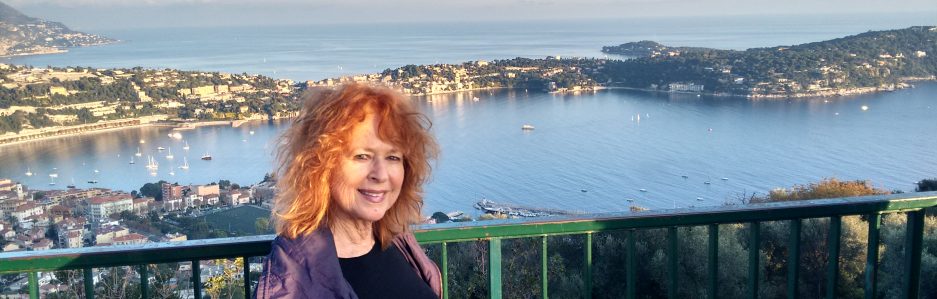


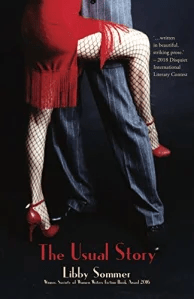
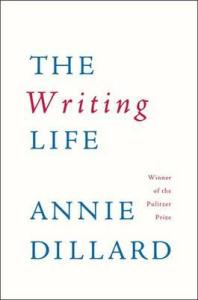




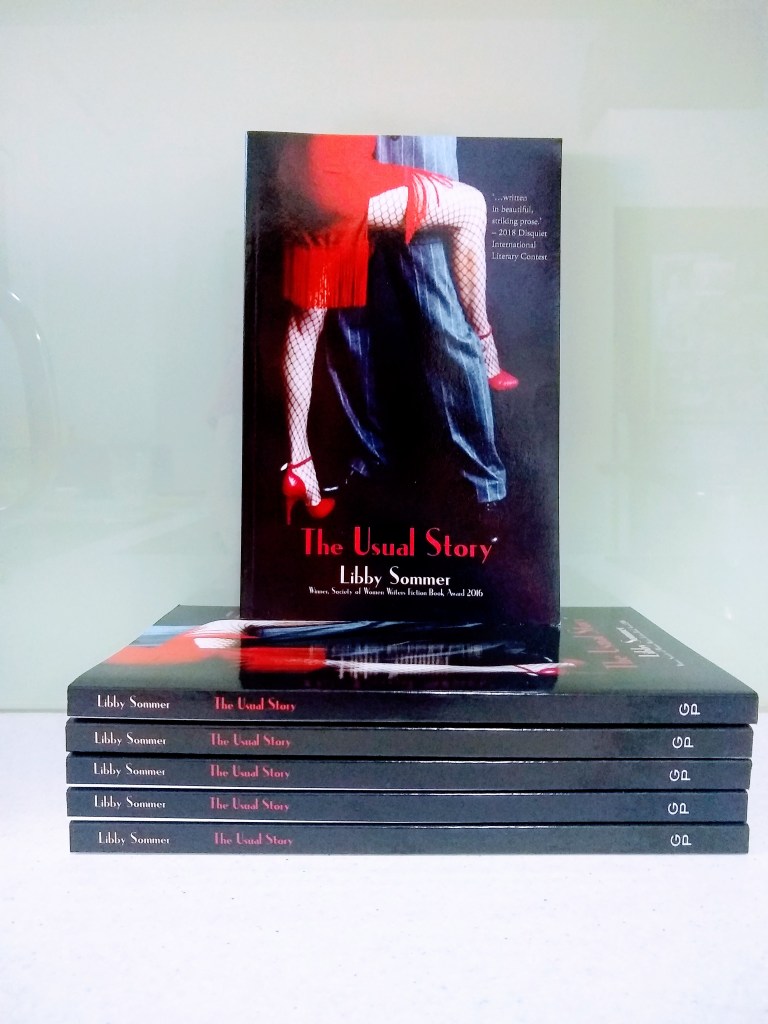


 Libby Sommer, Author