Writing Tip: Becoming a Writer

yellow sunflower bookcover of Becoming A Writer by Dorothea Brande

I highly recommend this book a friend from London gave me many years ago at the beginning of my writing journey. It’s an old one, but a good one.

‘A reissue of a classic work published in 1934 on writing and the creative process, Becoming a Writer recaptures the excitement of Dorothea Brande’s creative writing classroom of the 1920s. Decades before brain research “discovered” the role of the right and left brain in all human endeavor, Dorothea Brande was teaching students how to see again, how to hold their minds still, how to call forth the inner writer.’ – Amazon

‘Refreshingly slim, beautifully written and deliciously elegant, Dorothea Brande’s Becoming a Writer remains evergreen decades after it was first written. Brande believed passionately that although people have varying amounts of talent, anyone can write. It’s just a question of finding the “writer’s magic”–a degree of which is in us all. She also insists that writing can be both taught and learned. So she is enraged by the pessimistic authors of so many writing books who rejoice in trying to put off the aspiring writer by constantly stressing how difficult it all is.

With close reference to the great writers of her day–Wolfe, Forster, Wharton and so on–Brande gives practical but inspirational advice about finding the right time of day to write and being very self disciplined about it–“You have decided to write at four o’clock, and at four o’clock you must write.” She’s strong on confidence building and there’s a lot about cheating your unconscious which will constantly try to stop you writing by coming up with excuses. Then there are exercises to help you get into the right frame of mind and to build up writing stamina. She also shows how to harness the unconscious, how to fall into the “artistic coma,” then how to re-emerge and be your own critic.

This is Dorothea Brande’s legacy to all those who have ever wanted to express their ideas in written form. A sound, practical, inspirational and charming approach to writing, it fulfills on finding “the writer’s magic.”‘ – John Gardner

Yep, I’d agree with John Garner. Finding “the writer’s magic” is what it’s all about.

My Poem, ‘Crows Never Forget’

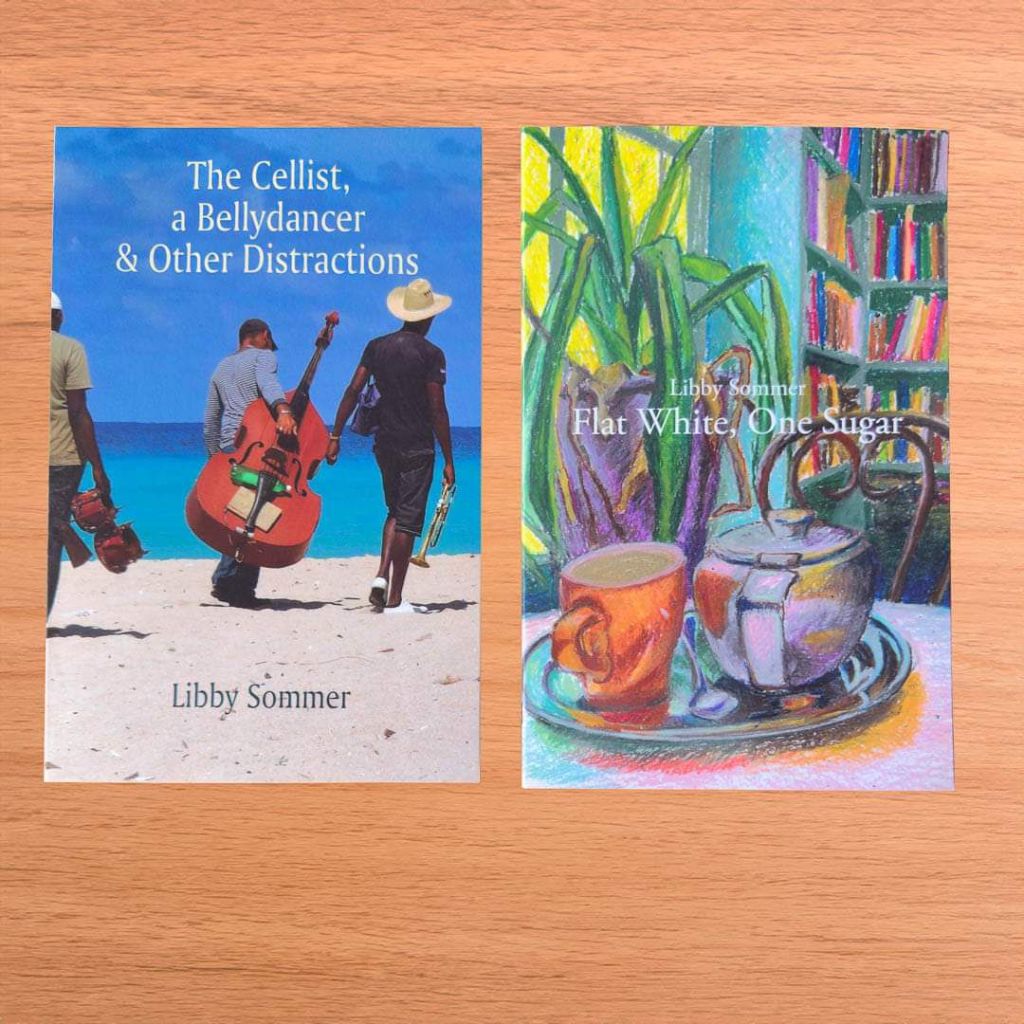
Have a read of my poem ‘Crows Never Forget’ first published in Quadrant Magazine. ‘Crows Never Forget’ is one of the poems in my recently released collection ‘Flat White, One Sugar‘ (Ginninderra Press).

I hope you enjoy it.

Crows Never Forget:

  can we remember like they do

through long rain-drenched months

  with their clever chat?

one warns the others   a human who scared them

years ago   but the crows when the sky cleared

  cried out loud and raucous

near the top-floor balcony

  trellised with spring buds

crow-speech channelling new connections into

  the sides of my head

Copyright 2024 Libby Sommer

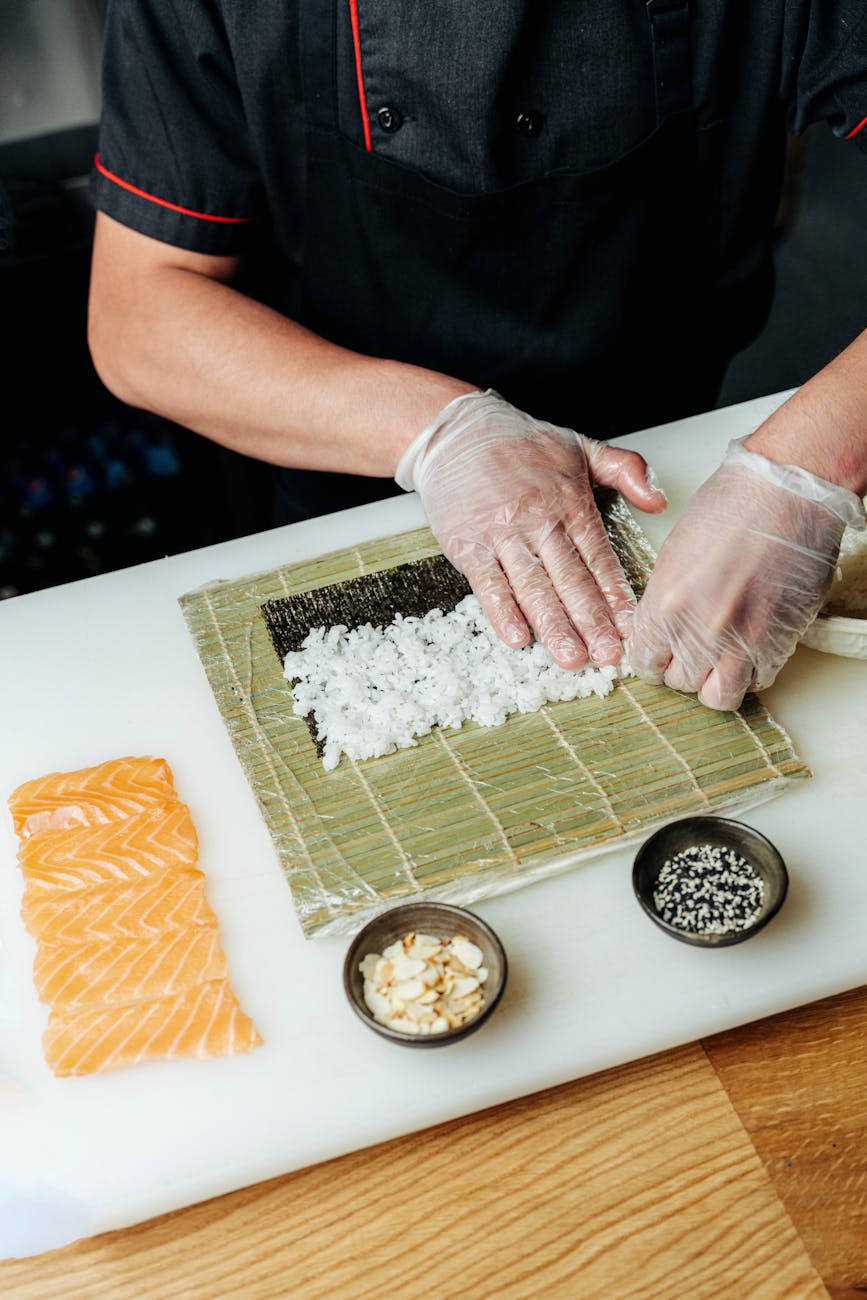
Writing is Like Making a Sushi Roll

Sometimes there would be a person in one of my creative writing classes who was obviously very talented.  I can bring to mind one in particular.  You could sense people holding their breath as she read, and often her hands shook.  The writing process opened her up.  She said she had wanted to write for years.  She was so excited about writing that she straight away wanted to write a book.  I said to her, slow down.  Just practice writing for a while.  Learn what this is all about.

In Japan becoming an itamae of sushi requires years of on-the-job training and apprenticeship.  After five years spent working with a master or teacher itamae, the apprentice is given his first important task, the preparation of the sushi rice.

Writing, like becoming a Sushi Chef,  is a life’s work and takes a lot of practice.  The process is slow, and at the start you are not sure what you are making.

Futomaki  (“thick roll” – rice on inside, nori on the outside)

Uramaki   (“inside-out roll” – rice on outside, nori on the inside)

Temaki     (“hand roll” – cone-shaped roll)

That’s how it was for me.  I thought I could jump in and write a book in 6 months.  In fact, it took me 20 years to write a publishable manuscript:  ‘My Year With Sammy’ (Ginninderra Press) the story of a difficult yet sensitive child, was my first published book in 2015. Five books have followed since then.

So cut yourself some slack before you head off on a writing marathon.

Writing is like learning to prepare the rice for sushi:  the apprenticeship is long, and in the beginning you are not sure whether a Futomaki, a Uramaki or a Temaki will be the end result.

Poetry Review

There is a fabulous extensive review by Sean Wayman in this month’s October Quadrant Magazine of my two recent poetry collections, ‘The Cellist a Bellydancer & Other Distractions’ and ‘Flat White, One Sugar ‘.

For example he writes: “… there are still many poets who resist the temptations of narcissistic self-righteousness. Libby Sommer, a prolific Australian writer of fiction and poetry, eschews the moral posturing of the ideologically pure poet to cultivate an aesthetic that is observant, curious and open to experience.”

“… it is the give-and-take between openness and particularity which give her poems their unique charisma.”

“… “‘Transience’, like many of her most beautiful passages, combines sunlight, water, and open expanses of sky:

A luminous, tangerine, and blazing expanse
burst out to the left of the blue
from the harbour to the city as the western light
lowered itself behind concrete high-rises.”

If you’d like to read the full review, Quadrant Magazine is available in newsagents and online. My books can be ordered from Ginninderra Press or from other online booksellers.

https://www.ginninderrapress.com.au/store.php?catalog/search/Libby+Sommer/date/1

Photos by Jason Painter